How we make this list: we compare pricing pages, product documentation and public user reviews. Rankite is independent; if a vendor ever pays for a featured spot, that listing is clearly labeled Partner.
Key takeaways
- Mobile payment apps (ParkMobile, Passport, HONK) solve the driver experience, while platforms like T2 Systems and Flowbird run the back office: permits, enforcement, PARCS and revenue control.
- T2 Systems, now part of Verra Mobility, remains the default choice for universities and municipalities that need permits, citations and enforcement in one system.
- Flowbird is the strongest pick when hardware matters, with pay stations, kiosks and sensors alongside its software.
- Two names that used to appear on these lists, ParkHub and Smarking, now redirect into JustPark, so buy from whoever holds the contract today, not the brand you remember.
Quick comparison
| Tool | Best for | Starting price | Free plan |
|---|
 ParkMobile ParkMobile | consumer parking payments at scale | See website | No |
 Passport Passport | municipal mobile payments and enforcement | See website | No |
 Flowbird Flowbird | hardware plus software parking systems | See website | No |
 T2 Systems T2 Systems | universities and municipal permit management | See website | No |
 Flash Parking Flash Parking | PARCS and cloud-based garage management | See website | No |
 TIBA Parking TIBA Parking | PARCS hardware with cloud software | See website | No |
 HONK HONK | contactless pay-by-plate for operators | See website | No |
 iParq iParq | permit and enforcement for campuses | See website | No |
 Parking BOXX Parking BOXX | pay stations and revenue control | See website | No |
 Premium Parking Premium Parking | full-service parking operations | See website | No |
Is your product missing or out of date?
We review this list regularly. Vendors can request a listing, send updated pricing or ask about featured placement.
The best parking management software
Starting priceSee website
Free planNo
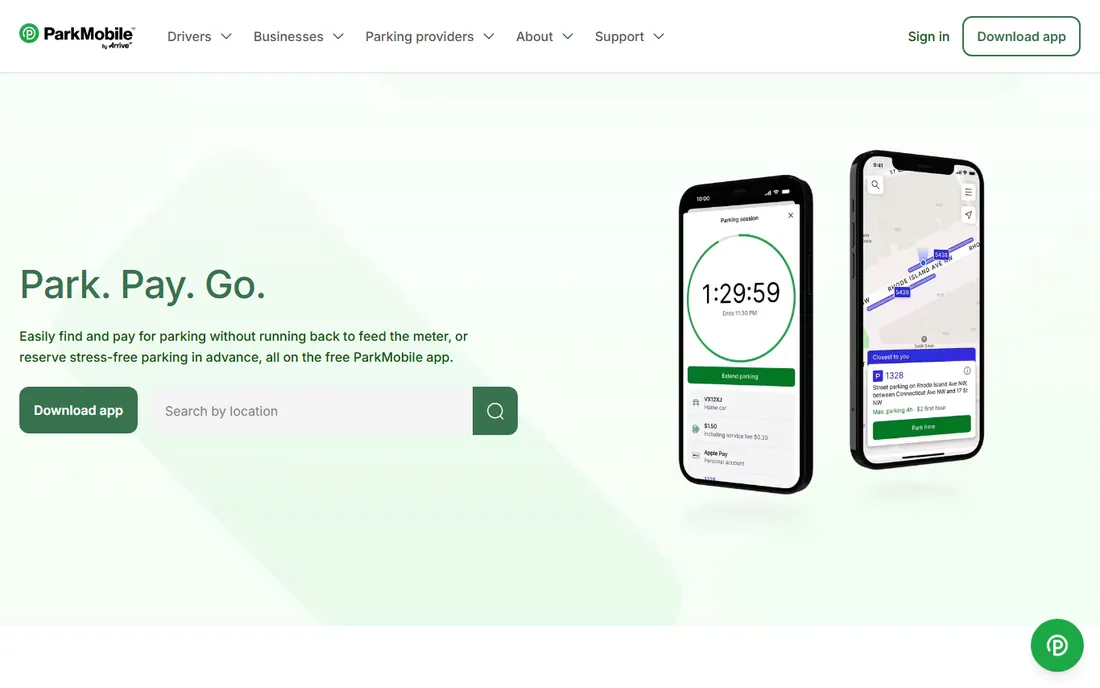
ParkMobile is the app most American drivers already have on their phones, which is exactly why operators adopt it. Owned by Arrive (the rebranded EasyPark Group), it processes hundreds of thousands of parking transactions daily across on-street zones, garages, airports, universities and event venues. Drivers pay by zone number, extend time remotely and get expiry alerts, all without touching a meter.
For a parking operator or municipality, the pitch is adoption. When drivers already have the app, payment compliance rises and cash handling falls. ParkMobile also supports reservations for events and venues, and its business products cover fleet parking. The company keeps expanding white-label versions for cities that want their own branded app powered by the same engine.
The catch is on the operator side. ParkMobile is primarily a payment channel, not a full management platform. It does not run your gates, permits or enforcement operation. Drivers also complain about convenience fees, which can sour the relationship your city has with its parkers. Price it as one channel in a multi-channel strategy rather than the whole system.
What we like- Enormous driver install base across North America
- On-street, garage, event and airport coverage
- Guest checkout without an account
Watch out for- Per-transaction convenience fees annoy drivers
- The operator side is thinner than full PARCS platforms
Starting priceSee website
Free planNo
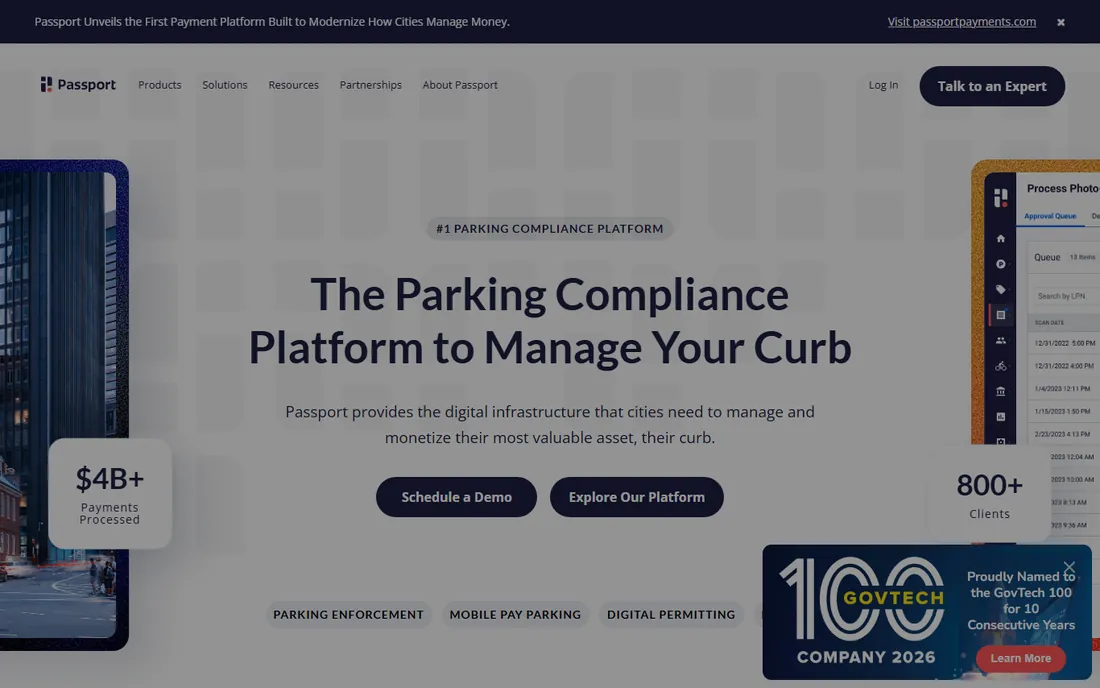
Passport is the enterprise platform behind parking payments for hundreds of cities, universities and private operators in the US and Canada. The Charlotte-based company covers the full curb: mobile payments, digital permits, enforcement with license plate recognition workflows, and integrations with towing and citation management. Its developer platform lets larger agencies pull parking data into their own systems.
What sets Passport apart is that it was built for municipal operations from the start. Rate structures, zone management, validation programs and event pricing are all first-class features rather than add-ons. Universities like the permit side, which handles student, faculty and visitor permits in one place. The company has raised substantial funding and keeps shipping, including QR code payment flows that reduce reliance on physical signage.
The honest drawback is that buying Passport is an enterprise procurement. Expect demos, security reviews and a structured implementation, not a self-serve signup. Smaller operators sometimes find the process heavier than the product needs to be. Pricing is quote-based and tied to transaction volume and modules.
What we like- Purpose-built for cities, universities and transit agencies
- Strong enforcement and permit modules
- Used by hundreds of agencies
Watch out for- Enterprise sales process
- Implementation needs real project management
Starting priceSee website
Free planNo
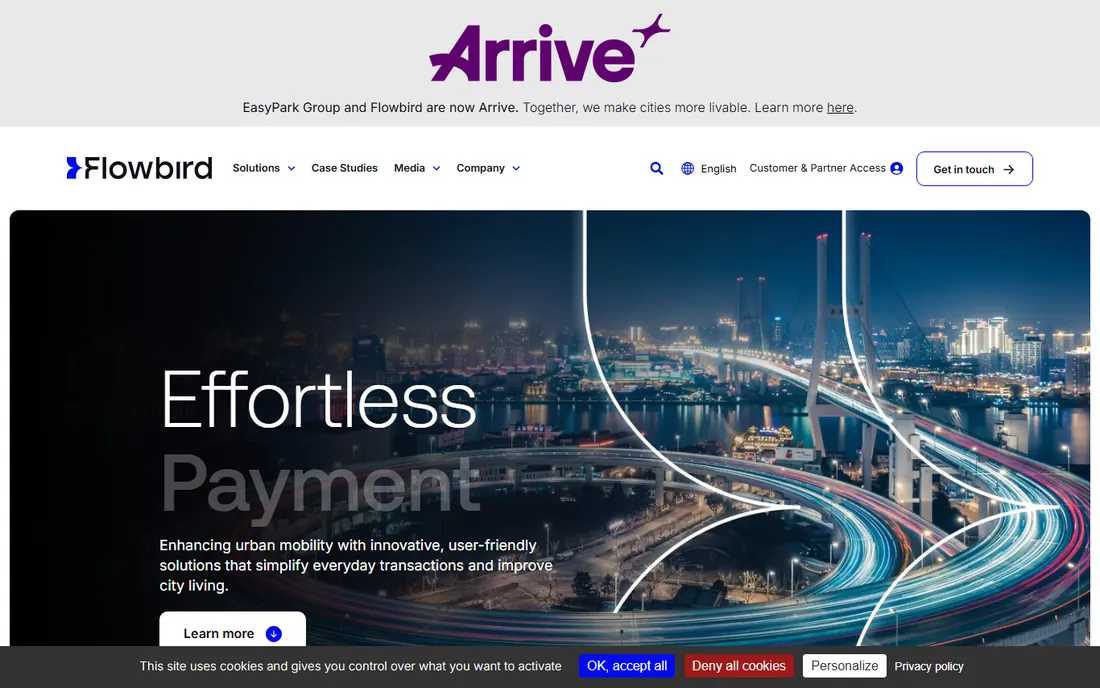
Flowbird Group, formed from the merger of Parkeon and Cale, is one of the few vendors that sells the whole stack: smart pay stations, parking kiosks, sensors and the cloud back office that ties them together. Transit agencies like SEPTA have deployed Flowbird kiosks and its white-label app across commuter rail parking, and the company is active across North America and Europe.
The advantage is single-vendor accountability. When the kiosk, the app and the back office come from one company, there is nobody to blame but them when something breaks. The hardware is genuinely good: solar-powered stations for lots without power runs, full-color touchscreens and contactless payment support. The Flowbird GO back office handles permits, validations and digital parking sessions.
The trade-off is that you are buying into hardware. Total project cost includes equipment, installation and maintenance, and the software interface is functional rather than delightful. If you only need mobile payments, a lighter vendor will get you live faster. For agencies replacing aging meter infrastructure, though, Flowbird is one of the short-list names.
What we like- Pay stations, kiosks and sensors from one vendor
- Strong in transit-adjacent parking
- Solar-powered options for remote lots
Watch out for- Hardware commitments raise total cost
- Software UX trails pure-software rivals
Starting priceSee website
Free planNo
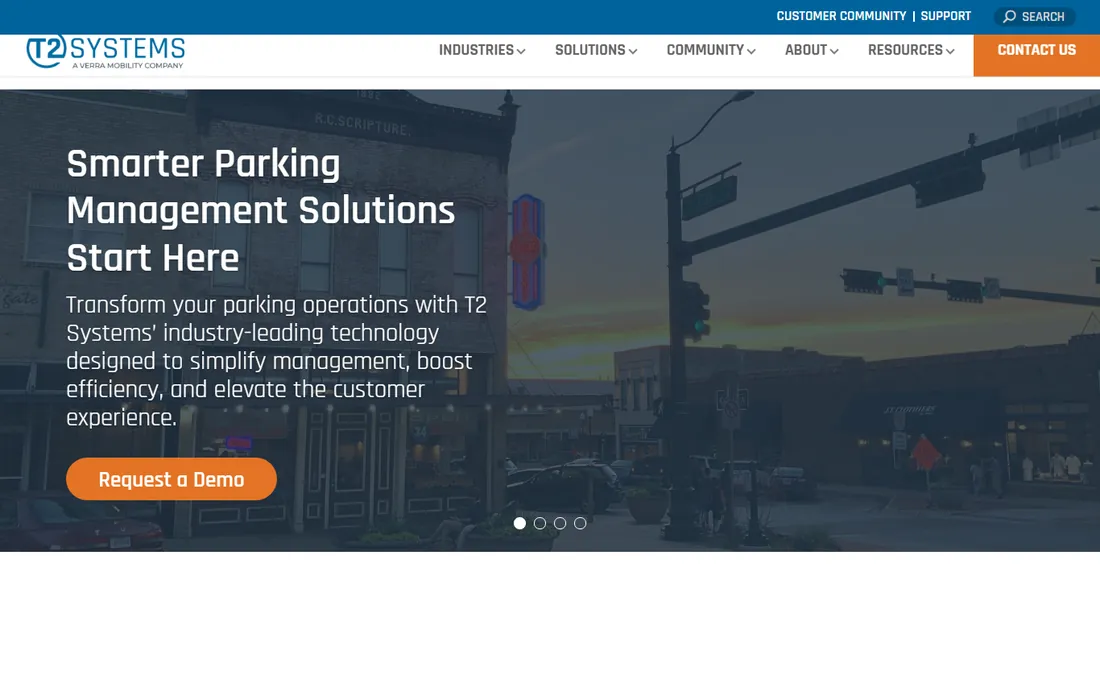
T2 Systems has been the default parking technology provider for North American universities and municipalities for decades, and its acquisition by Verra Mobility only extended that reach. The T2 Flex platform handles permit management, enforcement, license plate recognition, PARCS (gated access and revenue control), event parking and citation management in one system. Thousands of parking professionals use it across all 50 states and Canadian provinces.
The reason T2 keeps winning campus RFPs is depth in the unglamorous parts: permit sales and renewals, appeal workflows, citation collections and integration with student information systems. The PARCS side has been modernized with encrypted payment processing and mobile wallet support. For an operation that needs gates, permits and enforcement talking to each other, few vendors cover as much ground.
The catch is complexity and cost. A full T2 deployment is a major project with a long timeline, and the price reflects enterprise positioning. Small lots and single garages will find it more than they need. Get the implementation milestones in the contract, because projects this broad are where scope creeps.
What we like- T2 Flex covers permits, enforcement, PARCS and citations
- Huge university customer base
- Now backed by Verra Mobility
Watch out for- Breadth makes implementations long
- Pricing is enterprise-grade
Starting priceSee website
Free planNo
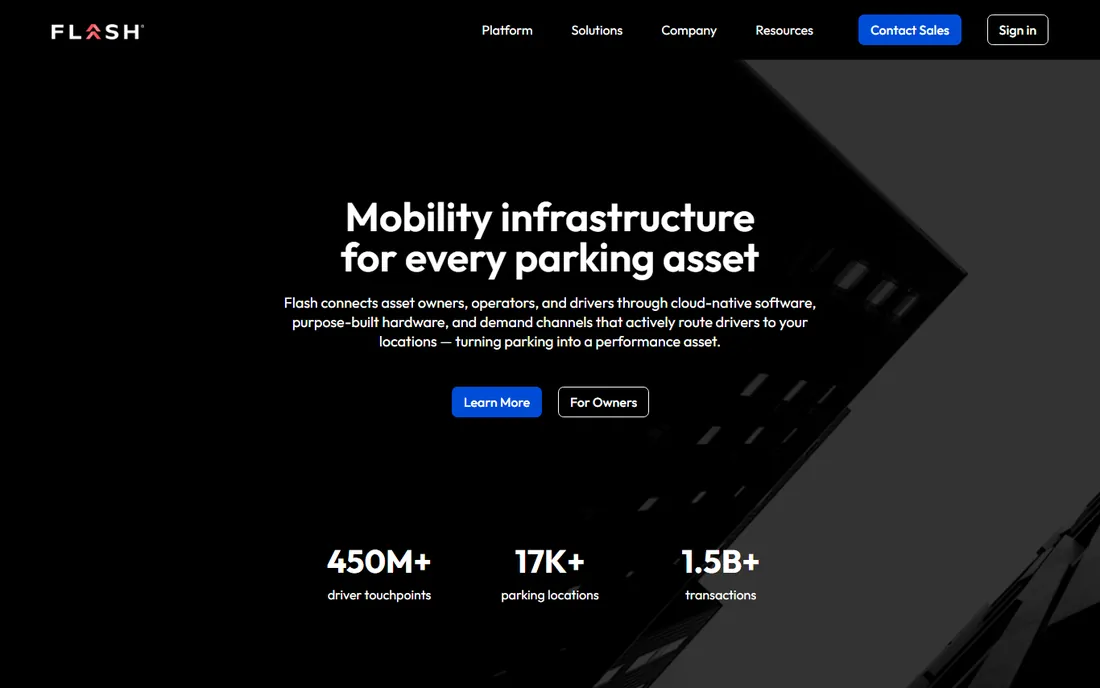
Flash Parking (FlashPARCS) built its name on modernizing gated parking with cloud software instead of the server closets that legacy PARCS required. The platform covers access control, payment processing, monthly parking, validations and real-time revenue reporting, with options for gateless and mobile-first operation. It is widely used in commercial garages, airports, hospitals and mixed-use developments.
The product feels newer than legacy PARCS competitors. Dashboards show live occupancy and revenue, monthly parkers manage accounts online, and the system integrates with reservation channels. For a garage operator replacing 15-year-old equipment, Flash is usually on the short list against T2 and TIBA.
The limitation is municipal on-street parking, where Flash has less presence than Passport or Flowbird. It is also a hardware-plus-software purchase, so total cost includes equipment and installation. Pricing is quote-based, and you should compare the full project cost, not just the software line.
What we like- Modern cloud PARCS with real-time data
- Strong in commercial garages and airports
- Mobile and gateless options
Watch out for- Less municipal on-street presence
- Quote-based pricing with hardware costs
Starting priceSee website
Free planNo
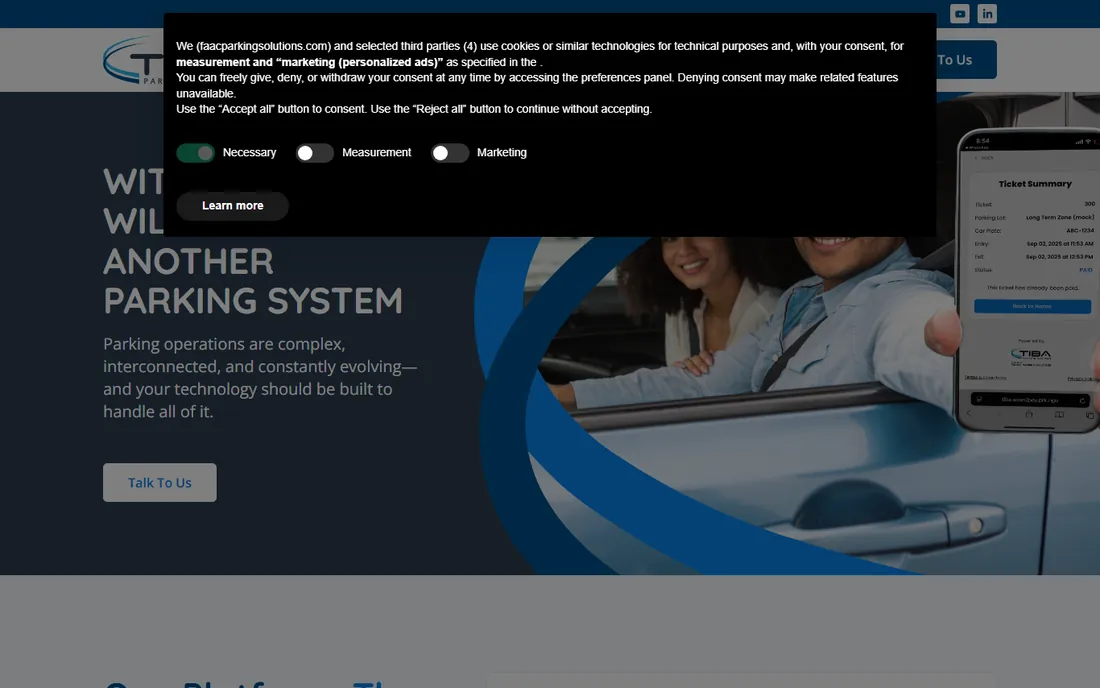
TIBA Parking has manufactured parking access and revenue control equipment since 1986, and its SPARK platform brings that hardware into a cloud-managed world. Operators get barrier gates, pay stations, ticket dispensers and license plate recognition cameras managed through web software with real-time monitoring and reporting. The company is active across North America with a large installed base.
The strength is the equipment. TIBA's hardware is proven in high-volume environments like airports and hospitals, and the SPARK cloud layer means operators can monitor lanes, adjust rates and pull reports without on-site servers. Integration with third-party systems, including ParkHub-style reservation platforms, is supported.
The honest catch is that TIBA sells like a hardware company. The buying process revolves around equipment quotes and dealer relationships, and the software experience depends on how the deployment is configured. If you want a pure software play, look elsewhere. If you need gates that survive a decade of weather and traffic, TIBA belongs in the evaluation.
What we like- Long-established PARCS manufacturer
- SPARK cloud platform for remote management
- Broad hardware lineup
Watch out for- Hardware-centric sales model
- Software experience varies by deployment
Starting priceSee website
Free planNo
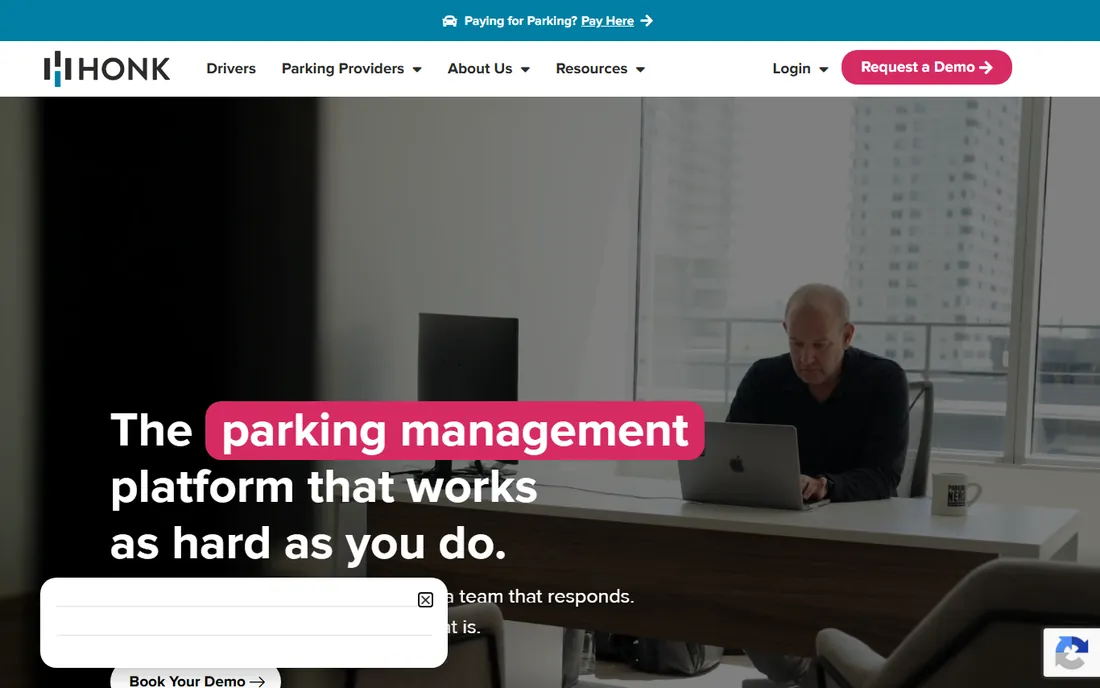
HONK, formerly known as HonkMobile, takes a deliberately light approach to parking payments. Drivers scan a QR code or enter a zone number and pay by plate without downloading an app or creating an account. For operators, the pitch is that there is nothing to install: no meters to replace, no kiosks to power, just signs with payment instructions and a cloud dashboard.
The product covers the pieces a small operator needs: hourly and daily payments, monthly and semester permits, event parking and a management dashboard. It integrates with existing infrastructure, so a lot can go digital before any hardware changes. Canadian universities and municipalities were early adopters, and the company has been expanding in the US.
The limitation is scale. HONK does not have the driver install base of ParkMobile or the municipal roster of Passport, so adoption depends on clear on-site signage rather than an app drivers already carry. Enforcement integration is lighter than the enterprise platforms. For small lots, campuses and private operators that want digital payments this month, it is a practical pick.
What we like- No app download required for drivers
- Works with existing meters and signage
- Permit sales on the same platform
Watch out for- Smaller footprint than ParkMobile or Passport
- Brand recognition still building
Starting priceSee website
Free planNo
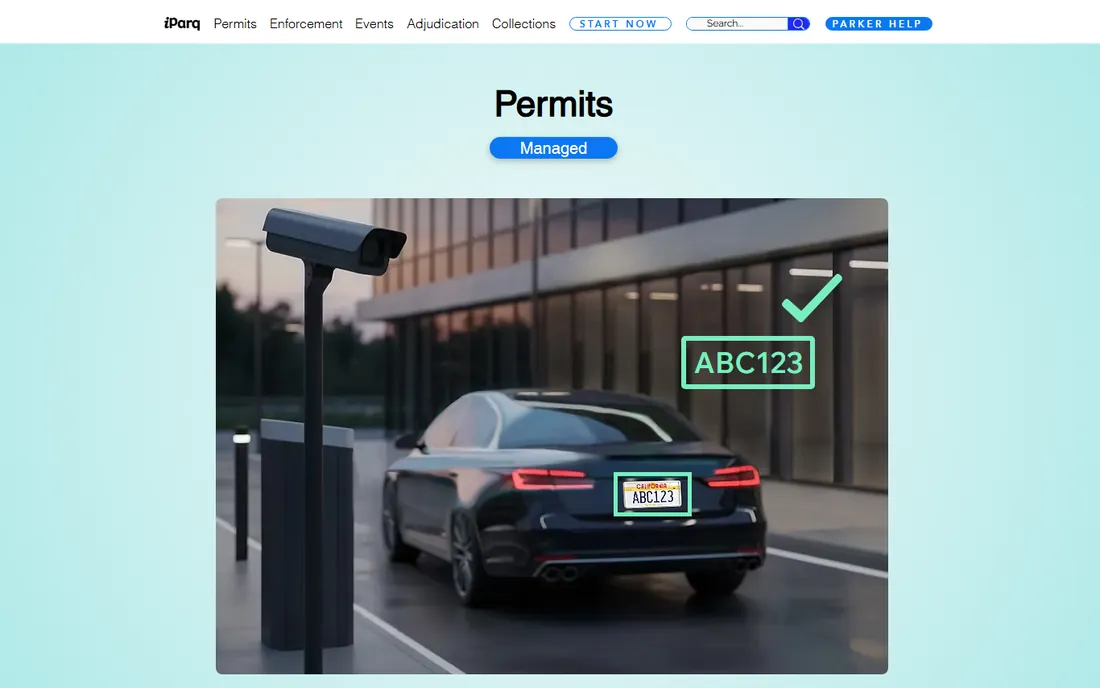
iParq sells parking management software aimed squarely at colleges, universities and municipalities that need permits, enforcement and citation handling without a full PARCS project. The cloud platform covers online permit sales, license plate based enforcement, ticket issuance and appeals, and payment processing.
Its niche focus is the selling point. Campus parking offices deal with student permits, faculty allocations, visitor passes and event parking, and iParq models those workflows directly instead of forcing a generic system to fit. Implementation is lighter than the enterprise platforms, which suits smaller parking departments.
The drawback is breadth. If you later need gated access control, advanced PARCS or city-wide on-street enforcement, you will likely outgrow it or bolt on another vendor. As a smaller company it has less third-party review coverage, so lean on reference customers during evaluation. Pricing is quote-based.
What we like- Focused permit management and enforcement suite
- Popular with colleges and universities
- Cloud-based
Watch out for- Narrower feature set than T2
- Smaller company with less analyst coverage
Starting priceSee website
Free planNo
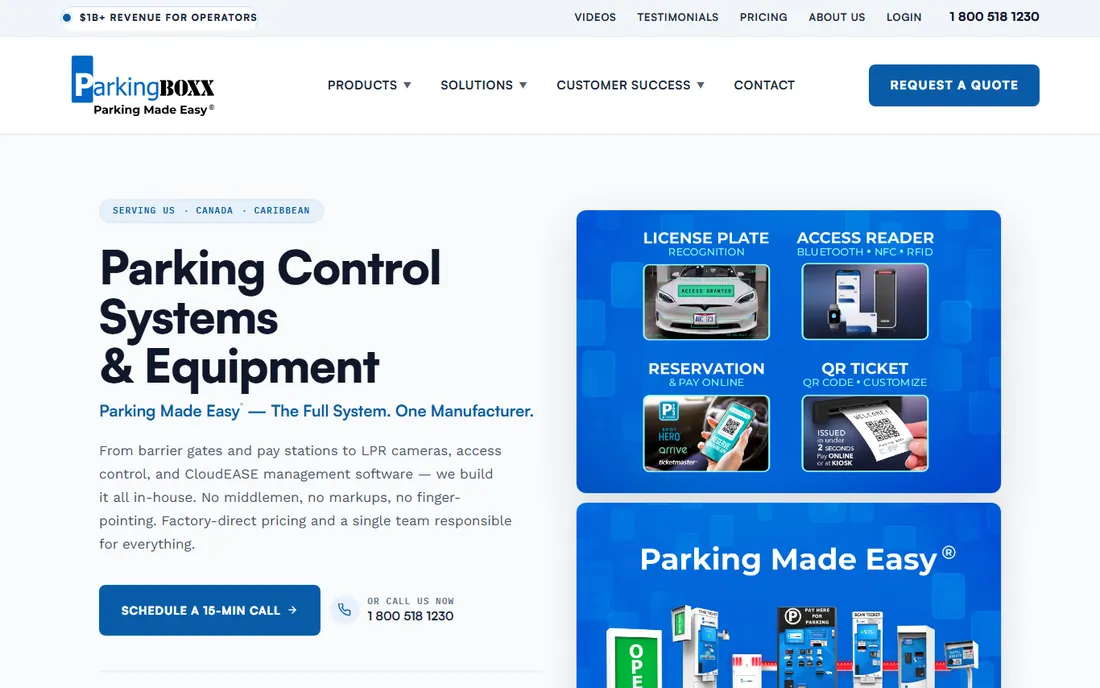
Parking BOXX is a North American manufacturer of parking control equipment and software with roots going back decades. Its systems include pay stations, access control hardware and the CloudEASE platform for real-time revenue analytics, transaction monitoring and settlement reporting. The company serves airports, hospitals, hotels, municipalities and commercial sites through a dealer network.
The appeal is a complete revenue-control system from one vendor: gates, pay-on-foot stations, validations, coupons and multi-rate structures, all feeding one dashboard. Recent payment upgrades added EMV, contactless and mobile wallet support. For operators that want proven hardware with modern reporting, it is a credible alternative to TIBA and Flash.
The honest catch is the buying model. This is equipment sold through dealers with professional installation, not software you trial online. Total project cost includes hardware, and the software experience is part of the equipment ecosystem. Get competing quotes from at least two PARCS vendors before committing, because equipment pricing varies widely.
What we like- Decades of parking equipment experience
- CloudEASE analytics dashboard
- Serves small lots to large complexes
Watch out for- Hardware-led buying process
- Software is tied to the equipment ecosystem
Starting priceSee website
Free planNo
Premium Parking is different from everything else on this list: it is a parking operator, not a software vendor. The company manages lots and garages end to end, bringing its own technology stack: a consumer app with mobile payments and reservations, monthly parking subscriptions, license plate recognition and centralized operations. If you own a lot and want someone else to run it, that is the product.
The advantage is that you get operations expertise with the technology. Revenue management, enforcement, customer service and maintenance are handled by people who do this all day. The app experience for drivers is solid, with reservations, monthly billing and session history.
The limitation is obvious: this only works if you want an operator. If your city or company wants to self-operate and just needs software, the other nine entries are the right comparison. Evaluate Premium Parking against other operators on revenue share and service terms, not against software vendors on features.
What we like- Operates lots end-to-end, not just software
- Strong in urban markets
- Consumer app with reservations and monthly billing
Watch out for- It is an operator, so you hire them rather than buy software
- Less fit if you want to self-operate
How parking software pricing actually works
Almost nobody in parking publishes prices, and there is a reason: every deal mixes software licenses, transaction fees, hardware and installation differently. Mobile payment vendors typically charge a per-transaction convenience fee, sometimes paid by the driver and sometimes absorbed by the operator. PARCS vendors quote equipment plus software licenses plus installation, and the hardware line usually dominates. Permit and enforcement platforms tend toward annual licenses based on space count or account volume.
When you compare quotes, normalize them to a three-year total cost. Ask each vendor to break out software, hardware, installation, transaction fees and support separately, because the cheapest software quote can hide the most expensive hardware. Ask who owns the data and what export looks like if you leave. And run a pilot on one lot or zone before committing a whole city or campus; parking software always behaves differently in production than in the demo.
What to check before you buy
Start with the enforcement question. A payment app without enforcement integration is a suggestion box; drivers learn quickly whether anyone checks. Confirm how your enforcement officers will see paid sessions, whether license plate recognition is supported, and how citations flow into collections.
Second, map your rate reality. Event pricing, validations, permits, graduated rates and special zones all need to work on day one. Make the vendor configure your actual rate structure in the demo, not a simplified version. Third, check the driver experience yourself. Download the app, pay for parking in a live zone and extend a session. If it takes more than a minute, your compliance rate will show it.
Finally, verify integrations with your existing systems: student information systems for campuses, financial systems for cities, and reservation marketplaces if you sell event parking. A parking system that cannot talk to the rest of your operation creates manual work that never goes away.
How we chose
We built this list from vendor documentation, product pages and public review sources including Slashdot, SourceForge and industry press, then confirmed every vendor homepage was live in October 2026. Two former list regulars, ParkHub and Smarking, now redirect their domains into JustPark, so we replaced them with active vendors rather than listing dead brands. Pricing in this industry is quote-based across the board, so where no vendor-published price exists we say so. Nothing here reflects hands-on testing; assessments come from documentation, feature lists and public customer feedback.
Frequently asked questions
Do parking apps charge drivers extra fees?
Usually yes. Most mobile payment vendors add a convenience fee per transaction, typically paid by the driver on top of the parking rate. Some operators absorb the fee to encourage adoption. Ask each vendor who pays the fee before you sign, because it affects driver satisfaction directly.
Can we keep our existing meters and gates?
Often yes. Payment apps like HONK and ParkMobile work with signage alone and need no hardware changes. PARCS vendors like TIBA, Flash and Parking BOXX replace or upgrade gates and pay stations, but many offer phased rollouts. Confirm compatibility with your current equipment during the demo.
What is PARCS?
PARCS stands for Parking Access and Revenue Control System: the gates, ticket dispensers, pay stations and software that run a gated lot or garage. Vendors like T2, Flash, TIBA and Parking BOXX sell PARCS. It is a different purchase from a mobile payment app, with hardware, installation and a much larger budget.
How long does implementation take?
A mobile payment app can go live in weeks once signage is up. Permit and enforcement platforms take one to three months. Full PARCS installations with new gates and pay stations take three to nine months depending on site count. Hardware lead times, not software, usually set the schedule.
Should a small lot buy enterprise parking software?
Probably not. A single lot or small campus gets faster value from a light platform like HONK or iParq than from an enterprise PARCS deployment. Match the purchase to your enforcement needs and growth plans, and re-evaluate when you add sites.
Sources we checked (13)
- https://parkmobile.io
- https://www.passportinc.com
- https://www.flowbird.com
- https://www.t2systems.com
- https://www.flashparking.com
- https://www.tibaparking.com
- https://www.honkmobile.com
- https://www.iparq.com
- https://parkingboxx.com
- https://www.premiumparking.com
- https://slashdot.org/software/comparison/ParkHub-vs-ParkingPass/
- https://slashdot.org/software/comparison/FlashPARCS-vs-ParkHub/
- https://www.nasdaq.com/press-release/parkhub-and-justpark-agree-to-merge-alongside-strategic-growth-investment-from-ftv
Is your product missing or out of date?
We review this list regularly. Vendors can request a listing, send updated pricing or ask about featured placement.

Shihab Mia · Founder, Rankite
Shihab has spent more than a decade helping SaaS and e-commerce brands grow through search. He writes Rankite's software buying guides from pricing pages, documentation and public user reviews. More about Shihab.