How we make this list: we compare pricing pages, product documentation and public user reviews. Rankite is independent; if a vendor ever pays for a featured spot, that listing is clearly labeled Partner.
Key takeaways
- Enterprise ecommerce splits into SaaS platforms (Shopify Plus, BigCommerce), experience clouds (Adobe Commerce, Salesforce), ERP-adjacent suites (SAP, Oracle) and headless composable (commercetools, Elastic Path, Shopware).
- Shopify Plus wins on speed to value; Adobe Commerce and Salesforce win on customization depth; commercetools leads composable headless.
- The platform decision is a 5-to-10-year commitment; replatforming costs dwarf license differences.
- Total cost includes implementation, integrations and team, not just the platform fee.
Quick comparison
Is your product missing or out of date?
We review this list regularly. Vendors can request a listing, send updated pricing or ask about featured placement.
Starting priceSee website
Free planNo

Shopify Plus is the enterprise tier of the commerce platform millions use: high-volume checkout, automation workflows (Shopify Flow), wholesale channels and dedicated support, with the reliability of Shopify's infrastructure behind it.
The speed-to-value is unmatched in enterprise commerce. Brands launch in months, not years, on infrastructure that handles flash sales without drama. The app ecosystem covers nearly every need, and the admin is usable by merchandisers, not just developers.
The honest trade-off is control. Deep customization hits platform limits that Adobe Commerce or composable architectures do not have. Large enterprises with complex B2B needs sometimes outgrow it. But for DTC brands that want to sell now and scale reliably, it is the pragmatic enterprise choice.
What we like- Fastest time to value
- Huge app ecosystem
- Reliable at scale
Watch out for- Less customization than open platforms
- Transaction fee considerations
Starting priceSee website
Free planFree trial
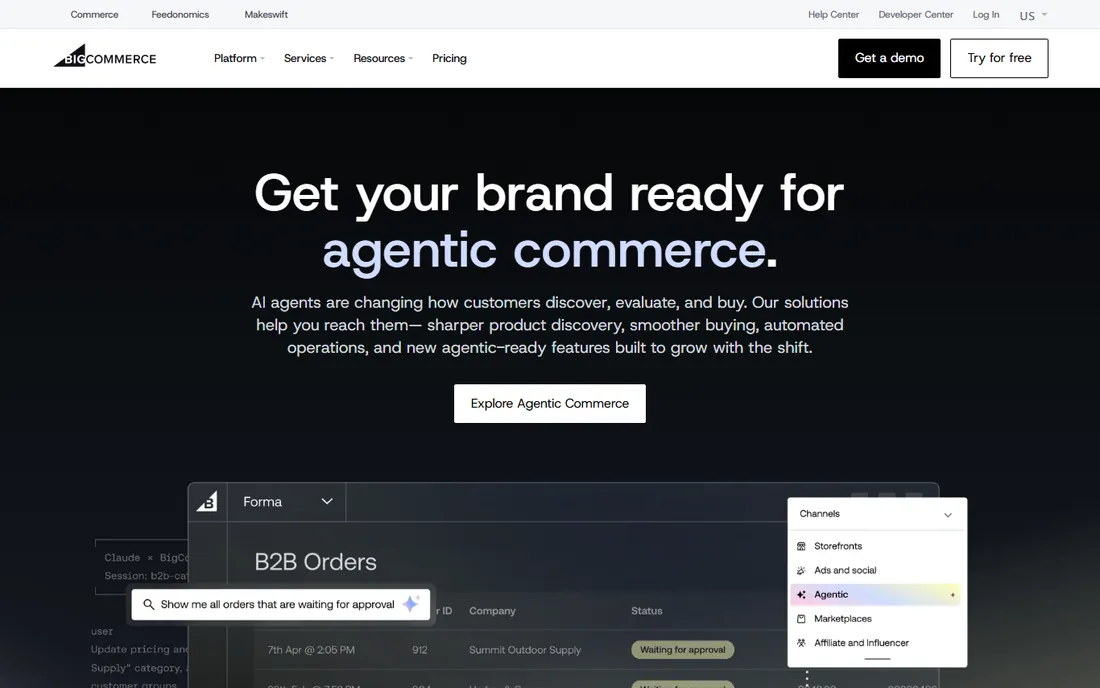
BigCommerce positions as the open SaaS enterprise platform: API-first architecture, headless commerce support, built-in B2B functionality and no transaction fees on any plan. Mid-market and enterprise merchants get SaaS simplicity with unusual flexibility.
The openness is the differentiator. Storefront APIs, checkout SDK and multi-storefront support let developers build custom experiences on SaaS infrastructure. The B2B edition handles quotes, price lists and buyer organizations natively.
The trade-off is ecosystem scale. The app marketplace and agency network are smaller than Shopify's, and enterprise brand recognition is thinner. For the merchant wanting SaaS without Shopify's constraints, it is the credible alternative.
What we like- Open APIs and headless-ready
- No transaction fees
- Strong B2B
Watch out for- Smaller ecosystem than Shopify
- Enterprise mindshare thinner

#3
Adobe Commerce
Best for: customizable enterprise (Magento)
Visit adobe.com
Starting priceSee website
Free planNo
Adobe Commerce, the former Magento Commerce, is the customizable enterprise platform: open-source roots with enterprise cloud hosting, unlimited customization and a marketplace of thousands of extensions. Complex B2B and B2C requirements bend to it.
The flexibility is the reason enterprises choose it. Multi-brand, multi-region, complex pricing and custom workflows are all achievable with the right development team. The Adobe integration (Analytics, Target, Experience Manager) serves the experience-led enterprise.
The honest costs are build and run. Implementation needs experienced Magento developers, hosting and maintenance are real operations and upgrades take planning. For the enterprise with complex requirements and the team to match, it delivers. For simplicity seekers, it is the wrong choice.
What we like- Deepest customization
- Huge extension marketplace
- Adobe ecosystem
Watch out for- Expensive to build and run
- Needs serious development
Starting priceSee website
Free planNo
Salesforce Commerce Cloud connects commerce to the CRM: customer data, marketing, service and commerce on one platform with Einstein AI personalization. Enterprises invested in Salesforce get the unified customer view.
The integration is the moat. Commerce data flows into Marketing Cloud journeys, Service Cloud cases and the CRM, enabling the personalized experiences Salesforce promises. The B2B and DTC capabilities cover both models.
The trade-off is the Salesforce commitment. Pricing is premium, implementation needs Salesforce expertise and the platform assumes the Salesforce worldview. For the Salesforce enterprise, the coherence justifies it. Others should compare the specialists.
What we like- Deep Salesforce integration
- Strong personalization
- Enterprise scale
Watch out for- Premium pricing
- Complexity of the Salesforce world

#5
SAP Commerce Cloud
Best for: SAP-integrated commerce
Visit sap.com
Starting priceSee website
Free planNo
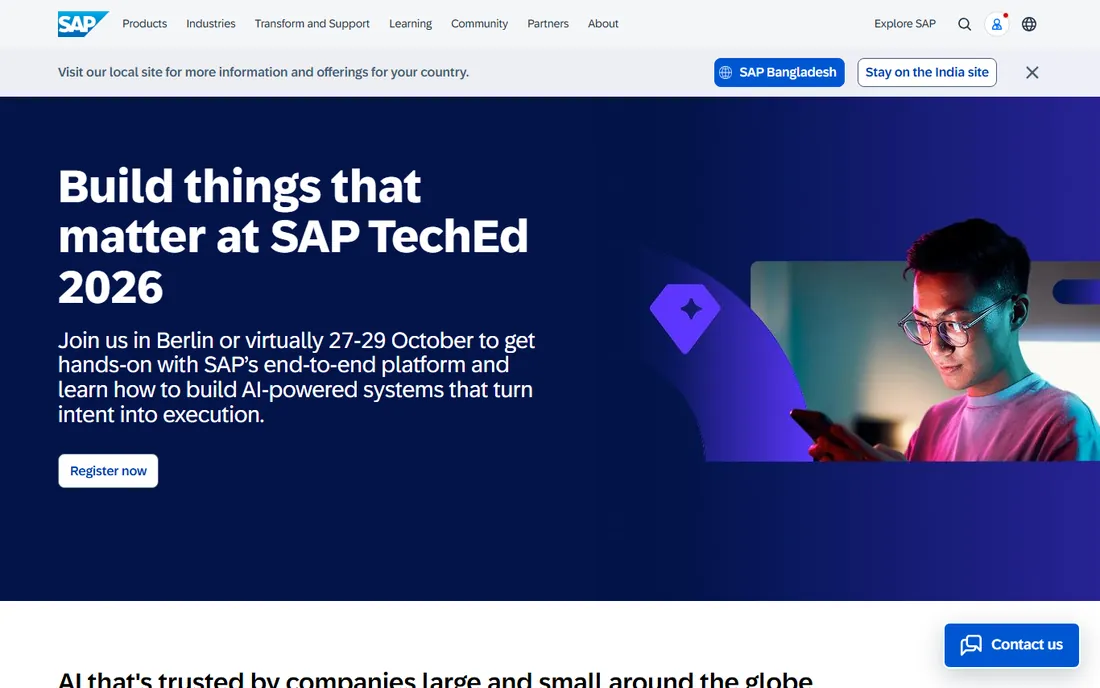
SAP Commerce Cloud, the former Hybris, is the commerce platform for SAP enterprises: deep integration with S/4HANA, strong B2B commerce and the global scale that multinationals require. Manufacturing and distribution companies standardize on it.
The ERP integration is everything. Product data, pricing, inventory and order management flow natively with SAP backends, which is the daily reality for SAP shops. The B2B functionality handles the complexity of business buying.
The honest assessment is the ecosystem lock. Outside SAP, the value proposition thins considerably, and the complexity and cost are enterprise-grade. For the SAP enterprise, it is the coherent choice. For others, the independents fit better.
What we like- Native SAP ERP integration
- Strong B2B
- Global enterprise scale
Watch out for- Complex and expensive
- SAP ecosystem assumed
Starting priceSee website
Free planNo
Oracle Commerce serves enterprises in the Oracle world: commerce integrated with Oracle's ERP, CX and database stack, proven on large B2B and B2C deployments. The platform heritage (ATG and Endeca) runs deep.
The stack integration suits Oracle enterprises. Order management, customer data and analytics connect within the Oracle portfolio, and the platform handles the transaction volumes large businesses generate.
The trade-off is momentum. The commerce market's innovation has centered on SaaS and composable players, and Oracle's licensing complexity is legendary. For the committed Oracle enterprise, it works. For new evaluations, the modern alternatives deserve first looks.
What we like- Oracle ecosystem integration
- Proven at scale
- B2B and B2C
Watch out for- Innovation pace
- Oracle licensing complexity
Starting priceSee website
Free planFree trial
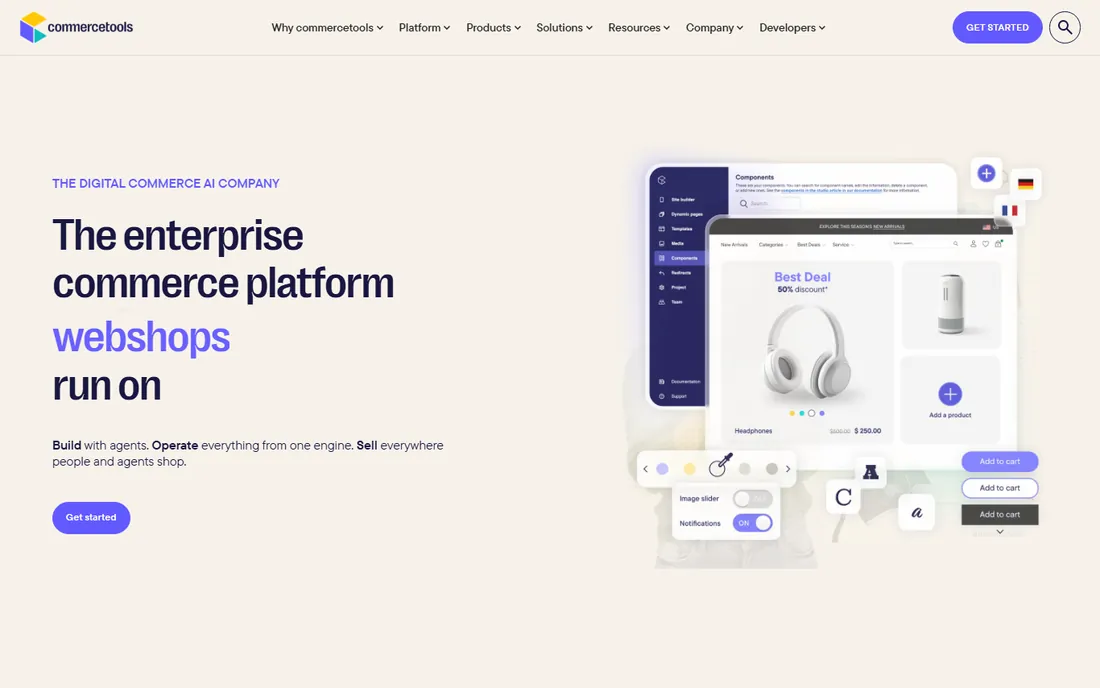
commercetools pioneered composable headless commerce: API-first microservices for carts, products, orders and pricing that developers assemble into custom commerce experiences. Enterprises escaping monolithic platforms choose it for freedom.
The composable architecture is the future many enterprises want. Best-of-breed services combine freely, frontends deploy independently and the cloud-native platform scales elastically. The MACH Alliance leadership gives it ecosystem credibility.
The honest requirement is engineering. This is a developer platform, not a store-in-a-box; organizations need real engineering teams. Simple stores should choose Shopify. For the enterprise building differentiated commerce, it is the architectural leader.
What we like- The composable commerce leader
- API-first
- Cloud-native scale
Watch out for- Needs development team
- Not for simple stores
Starting priceSee website
Free planNo
Elastic Path is the headless commerce platform for enterprises with complex requirements: API-first commerce with strong product modeling, multi-brand support and the flexibility to embed commerce anywhere. It competes in the composable space with a pragmatic approach.
The flexibility suits complex catalogs and business models. Brands, manufacturers and telcos with non-standard commerce needs get the API foundation to build exactly their experience. The pre-composed solutions accelerate common patterns.
The trade-off is ecosystem scale versus the leader. Fewer partners and extensions than commercetools, with enterprise sales throughout. For the composable evaluation, it belongs on the shortlist alongside the leader.
What we like- Headless flexibility
- Good for complex catalogs
- EP Payments
Watch out for- Smaller ecosystem than commercetools
- Enterprise sales
Starting priceSee website
Free planYes
Shopware is the flexible commerce platform dominant in German-speaking Europe: open-source roots, API-first architecture and a community edition that is genuinely free. Mid-market merchants get enterprise-like flexibility without enterprise cost.
The value proposition is flexibility per euro. The open platform, extension store and headless capabilities serve merchants who outgrow SaaS simplicity but cannot justify Adobe Commerce budgets. European data residency and support matter for the core market.
The honest limits are geography and ecosystem. US presence and partner networks are thinner, and the largest enterprises may need more. For the European mid-market merchant wanting open, flexible commerce, it is the regional champion.
What we like- Open and flexible
- Strong in Europe
- Community edition free
Watch out for- Smaller US presence
- Enterprise ecosystem thinner
SaaS vs. headless vs. traditional
Three architectures compete. SaaS (Shopify Plus, BigCommerce) trades control for speed and reliability: fastest launch, least customization. Traditional licensed platforms (Adobe Commerce, Salesforce, SAP) offer depth with operational burden. Headless composable (commercetools, Elastic Path, Shopware's headless) gives maximum flexibility for engineering-led organizations.
The decision hinges on differentiation needs and team. If commerce is the business and the experience must differ, invest in headless or Adobe. If commerce must work reliably while the team focuses elsewhere, choose SaaS. Replatforming between architectures is the expensive mistake; choose the architecture for the 5-year vision.
What to check before you buy
Start with the business model: DTC, B2B, marketplace or hybrid; each platform leads differently. Second, assess the team's engineering capacity honestly; headless without engineers fails. Third, map the integrations: ERP, PIM, OMS, CRM and payments all constrain the choice.
Fourth, model total cost over five years: licenses, implementation, integrations, team and replatforming risk. Fifth, verify the specific B2B features if relevant; they vary enormously. Finally, talk to reference customers in your industry and size; vendor case studies are optimistic by design.
How we chose
We compared vendor product pages, analyst coverage and merchant sources, then confirmed every homepage was live in October 2026. Where we could not verify a vendor-published price we say so. Nothing here reflects hands-on testing; assessments come from documentation, feature lists and public user feedback.
Frequently asked questions
What is the best enterprise ecommerce platform?
It depends on priorities: Shopify Plus for speed, Adobe Commerce for customization, Salesforce for CRM integration, SAP/Oracle for ERP alignment, commercetools for composable architecture. Define the priorities first.
How much does enterprise ecommerce cost?
SaaS enterprise plans start in the low thousands monthly plus implementation. Licensed platforms involve six-to-seven-figure implementations. Headless projects cost engineering time plus service fees. The five-year total matters more than year one.
Should we go headless?
If you need differentiated customer experiences and have engineering capacity, yes. If you need reliable commerce fast with a small team, SaaS serves better. Headless is an architecture for organizations, not just a technology.
What is composable commerce?
Building commerce from best-of-breed microservices (cart, search, CMS, payments) connected by APIs, rather than one monolithic platform. commercetools pioneered it; it maximizes flexibility at the cost of integration effort.
How long does implementation take?
SaaS: months. Licensed platforms: 6-18 months for complex builds. Headless: varies with scope, often 6-12 months. Data migration, integrations and organizational change usually take longer than the platform setup.
Should we replatform or optimize what we have?
Replatform only when the current system blocks growth: missing B2B features, checkout conversion problems, international expansion or technical debt that costs more than migration. If the platform works and the problems are merchandising or marketing, fix those first. Replatforming is the most expensive project most retailers ever do, so the case needs to be airtight and the ROI modeled over five years, not one.
What team do we need to run enterprise ecommerce?
At minimum: an ecommerce manager, developers or an agency retainer, and merchandising support. Headless and licensed platforms need more engineering; SaaS needs less. Budget the team alongside the platform, because the best software with no one to run it fails just as fast as the wrong software.
Sources we checked (9)
- https://www.shopify.com
- https://www.bigcommerce.com
- https://www.adobe.com
- https://www.salesforce.com
- https://www.sap.com
- https://www.oracle.com
- https://commercetools.com
- https://www.elasticpath.com
- https://www.shopware.com
Is your product missing or out of date?
We review this list regularly. Vendors can request a listing, send updated pricing or ask about featured placement.

Shihab Mia · Founder, Rankite
Shihab has spent more than a decade helping SaaS and e-commerce brands grow through search. He writes Rankite's software buying guides from pricing pages, documentation and public user reviews. More about Shihab.
 Shopify Plus
 BigCommerce
 Salesforce Commerce Cloud
 Oracle Commerce
 commercetools
 Elastic Path
 Shopware