How we make this list: we compare pricing pages, product documentation and public user reviews. Rankite is independent; if a vendor ever pays for a featured spot, that listing is clearly labeled Partner.
The short version
- There is no single best platform to sell stuff: eBay has the biggest audience but takes 13.25% to 13.6% per sale, while Facebook Marketplace and OfferUp charge nothing for local sales.
- Fee math decides everything. On a $50 sale, Poshmark keeps $10, Mercari keeps $5, and Facebook Marketplace keeps $0 if you meet the buyer locally.
- Handmade and vintage sellers should start on Etsy despite its layered fees; resellers of everyday items usually do better on Mercari or eBay.
- If you sell the same products repeatedly, Shopify's $39 per month beats marketplace commissions once volume grows.
Side by side
| Platform |
Best for |
Starting price |
Free plan |
| eBay |
Widest reach for almost anything |
Free to list; 13.25%-13.6% final value fee |
Yes |
| Etsy |
Handmade, vintage and craft goods |
$0.20 per listing + 6.5% transaction fee |
No |
| Amazon |
New products at serious volume |
$39.99 per month + 8%-15% referral fee |
No |
| Facebook Marketplace |
Local sales with zero fees |
Free for local sales |
Yes |
| Shopify |
Your own branded online store |
$39 per month |
Free trial |
| Poshmark |
Clothing and fashion resale |
Free to list; 20% commission on $15+ sales |
Yes |
| Mercari |
Quick sales of everyday items |
Free to list; 10% selling fee |
Yes |
| OfferUp |
Local pickup of bulky goods |
Free for local sales |
Yes |
| Bonanza |
A lower-fee alternative to eBay |
$14.99 setup; 11% final value fee |
No |
Here is the uncomfortable truth about selling online: the platform matters less than the fee math and the audience. A marketplace with 100 million buyers that takes 20% can leave you poorer than a free local sale to a neighbor. Every platform below takes a different cut and delivers a different crowd. The right one depends on what you sell, how fast you want it gone, and how much of each sale you are willing to give up.
Starting priceFree to list; 13.25%-13.6% final value fee
Free planYes (free to list; fees only when you sell)
eBay remains the default answer for a reason: when you list something unusual, collectible or niche, this is where the buyers already are. The audience spans 190 markets, and the auction format still extracts the best price for rare items that are hard to price. Listing is free up to monthly limits, so experimenting costs nothing until something sells.
The bill arrives at checkout. Most categories pay a 13.25% to 13.6% final value fee on the total including shipping and tax, plus a $0.30 to $0.40 per-order fee. On thin-margin reselling, that is the difference between profit and hobby. Price with the fee baked in, and use the fee calculator before listing anything under $20.
What we like- Largest buyer audience of any resale marketplace
- Auction and fixed-price formats
- Strong shipping tools and seller protections
Watch out for- Final value fees are among the highest
- Fee structure is complicated
- Competition is fierce in popular categories
Starting price$0.20 per listing + 6.5% transaction fee
Free planNo (you pay per listing)
Etsy owns the market for things that feel personal: handmade jewelry, vintage clothing, craft supplies, custom gifts. If you make or curate that kind of product, no other platform delivers buyers with the same intent. Opening a shop takes an afternoon, and the $0.20 listing fee per item is trivial.
Watch the stacked fees. The 6.5% transaction fee plus 3% + $0.25 payment processing plus listing fees lands around 10% on a typical sale, and Etsy's Offsite Ads program adds 12% to 15% when it drives the sale, mandatory for shops over $10,000 per year. That is the real cost of Etsy's traffic. It is still worth it for the right products, but model the full stack before you celebrate a sale.
What we like- Buyers arrive looking for unique and handmade goods
- Shop setup is simple
- Strong brand trust with gift shoppers
Watch out for- Fee stack reaches 10%+ once processing is included
- Offsite Ads fee of 12-15% can surprise sellers
- Crowded categories need promotion
Starting price$39.99 per month (Professional) + 8%-15% referral fee
Free planNo (Individual plan charges $0.99 per item sold)
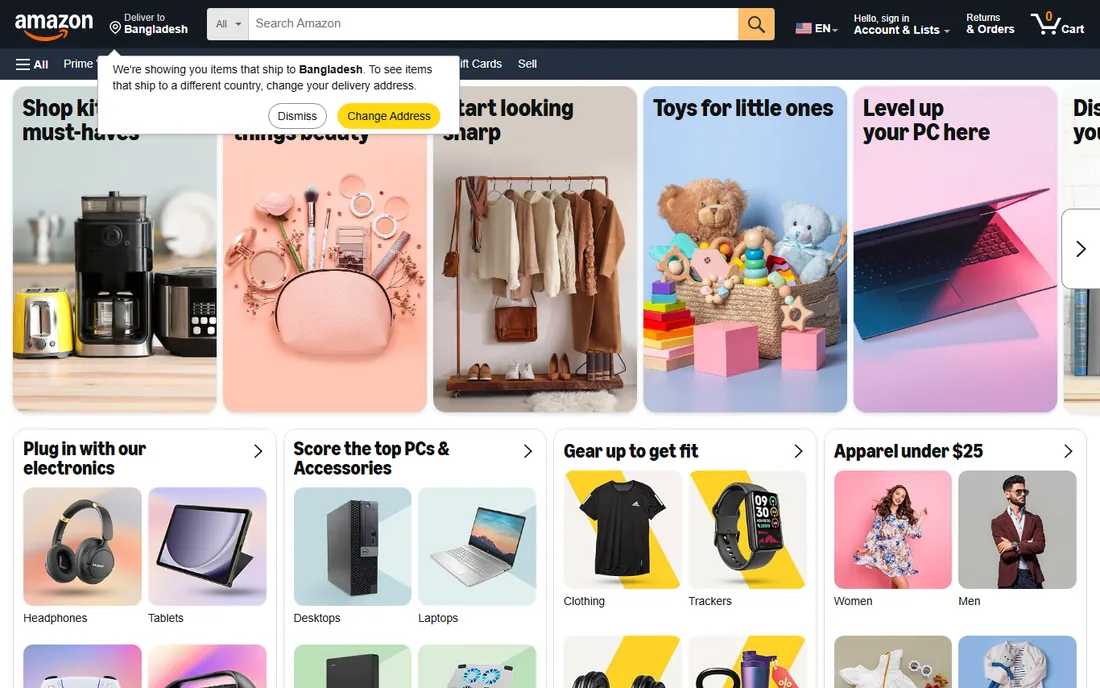
Amazon is not for clearing out your closet. It is for sellers with new, repeatable products who can compete on price, reviews and fulfillment speed. The traffic is unlike anything else: buyers arrive with credit cards out. Fulfillment by Amazon removes the logistics headache entirely, at a per-unit cost.
The price of admission is steep. The Professional plan costs $39.99 per month, referral fees run 8% to 15% by category, and FBA adds fulfillment and storage fees on top. New sellers should expect fees to consume 15% to 20% of revenue before product costs. Start on the Individual plan at $0.99 per item if you sell under 40 units a month, and only upgrade when the math demands it.
What we like- Unmatched buyer traffic and purchase intent
- FBA handles storage, packing and shipping
- Trusted checkout converts well
Watch out for- Referral fees of 8% to 15% plus the monthly plan fee
- Strict performance rules and suspension risk
- Brutal competition
Starting priceFree for local sales
Free planYes (free local listings and sales)
For selling a couch, a bike or baby gear to someone nearby, nothing beats free. Facebook Marketplace charges no fees on local sales, listing takes two minutes from your phone, and the buyer pool is everyone on Facebook within driving distance. Most sellers get messages within hours for fairly priced items.
The trade-offs are human, not financial. You will deal with hagglers, no-shows and "is this available" messages from people who never follow up. Meet in public places, take cash or verified payment, and never ship to someone you met on Marketplace without using its purchase protection flow. For local selling, the fee savings outweigh the annoyance for most people.
What we like- No fees on local cash sales
- Enormous local buyer pool
- Fast, conversational selling through Messenger
Watch out for- No protection on cash deals
- No-shows and lowball offers are common
- Shipped sales carry fees
Starting price$39 per month ($29 per month billed annually)
Free planFree trial (3 days, then $1 per month for 3 months)

Shopify is the answer when you are done renting customers from marketplaces. You get your own store, your own checkout and your own email list, which means repeat buyers cost you nothing to reach. The platform handles hosting, payments and security, and the app store covers everything from subscriptions to print-on-demand. New stores get a 3-day trial followed by three months at $1 per month.
The catch is traffic. Marketplaces bring buyers; Shopify brings software. You will need ads, SEO, social media or an existing audience, and that costs money or time. The math flips in your favor once monthly marketplace commissions exceed the $39 plan fee plus processing. If you sell the same products every week, do that calculation early.
What we like- Full control of branding, pricing and customer data
- No marketplace commission per sale
- Huge app ecosystem
Watch out for- Monthly fee starts before your first sale
- You must drive your own traffic
- Card processing costs 2.9% + 30 cents
Starting priceFree to list; 20% commission on $15+ sales
Free planYes (free to list; you pay only when you sell)
Poshmark turned closet cleanouts into a social activity, and for fashion resale it works. Listing is free and fast, the buyer community is engaged, and the flat 20% commission on sales of $15 or more (or $2.95 under $15) is easy to understand. Shipping is simple too: buyers pay a flat rate and you print the prepaid label.
That 20% is the highest commission here, and the $2.95 flat fee on sub-$15 sales means a $10 sale nets you barely $7. Price accordingly, bundle small items into single listings, and reserve Poshmark for brands and pieces with real resale value. For non-fashion items, look elsewhere; the audience is not browsing for electronics.
What we like- Built-in audience of fashion buyers
- Simple, predictable fee structure
- Prepaid shipping labels included
Watch out for- 20% commission is the steepest on this list
- $2.95 flat fee eats cheap items
- Fashion-only focus limits what sells
Starting priceFree to list; 10% selling fee
Free planYes (no listing fees)
Mercari is the easy button for selling everyday stuff: electronics, toys, home goods, clothes that are not worth Poshmark's 20%. Listing takes about a minute, there are no listing fees, and the flat 10% selling fee on the item price plus buyer-paid shipping is refreshingly simple. Items tend to move fast because the audience expects deals.
After a brief experiment with zero seller fees, Mercari settled in 2025 on a split model: sellers pay 10%, buyers pay a 3.6% protection fee. In practice, that buyer fee makes shoppers more price-resistant, so many sellers price 10% to 15% below other platforms to stay competitive. Factor that into your margins. For fast turnover of ordinary items, it remains one of the cheapest options.
What we like- Simplest listing process of any marketplace
- 10% fee undercuts eBay and Poshmark
- Prepaid shipping options
Watch out for- Buyer-side fees can make shoppers price-sensitive
- Smaller audience than eBay
- Focused on the US market
Starting priceFree for local sales
Free planYes
OfferUp is now a local-only marketplace. It ended nationwide shipping in October 2025, so every sale is an in-person pickup with no seller fee. For furniture, appliances, tools and anything too bulky to ship profitably, that is exactly right: the buyer pool is your metro area, and you keep 100% of the price.
The obvious limitation is reach. You cannot sell to someone three states away, which makes OfferUp wrong for niche collectibles or anything needing a national audience. It also plays second fiddle to Facebook Marketplace on sheer user numbers in most cities. Use it for big, heavy, local items where shipping would destroy the margin anyway.
What we like- No seller fees on local sales
- Strong for furniture, cars and local goods
- In-app messaging and profiles
Watch out for- Nationwide shipping ended in October 2025
- Smaller reach than Facebook
- Haggling is the norm
Starting price$14.99 one-time setup; 11% minimum final value fee
Free planNo ($14.99 setup fee; fees apply on sale)
Bonanza pitches itself as the seller-friendly eBay alternative, and on fees it delivers: an 11% minimum final value fee plus $0.25 per transaction undercuts eBay's 13.25%+, and the eBay listing importer makes switching easy. Listings also surface on Google Shopping, which brings in buyers who never visit Bonanza directly.
Traffic is the problem. Bonanza's buyer audience is a fraction of eBay's, so items can sit longer. There is also a $14.99 non-refundable setup fee for new booths, and the optional advertising program charges 9% to 30% of the sale. It works best as a second channel alongside eBay rather than a replacement: import your listings, pay lower fees on what sells, and keep expectations modest.
What we like- Lower fees than eBay
- Built-in eBay listing importer
- Google Shopping exposure for listings
Watch out for- Far less buyer traffic than eBay
- $14.99 non-refundable setup fee
- Advertising fees reach 30% if you opt in
Match the platform to the product, not the other way around. One-off household items and furniture go to Facebook Marketplace or OfferUp, where zero fees and local buyers win. Fashion and brand-name clothing belong on Poshmark, despite the 20% commission, because that is where fashion buyers browse. Handmade and vintage goods belong on Etsy. New, repeatable products belong on Amazon or your own Shopify store.
Volume changes the answer. Selling five items a month, fee percentages barely matter; pick wherever listing is easiest. Selling fifty, the spread between 10% and 20% is real money, and a Shopify store starts looking smart. Also consider your tolerance for people: local platforms mean messages, haggling and meetups, while Amazon and Shopify are comparatively hands-off after setup.
Fee math: what you actually keep
Run the numbers before you list. On a $50 sale: Facebook Marketplace or OfferUp local keeps $50. Mercari keeps about $45 after the 10% fee. Bonanza keeps about $44. eBay keeps around $43 after the final value and per-order fees. Poshmark keeps $40. Etsy keeps roughly $45 before any Offsite Ads fee, which can take another $6 to $7.50. Amazon keeps about $42.50 on the Professional plan before FBA costs.
These are approximations, and shipping, taxes and category differences move them. The point is that platform choice swings your take-home by up to 20% on identical items. For a side hustle doing $1,000 a month in sales, the gap between the cheapest and priciest channel is roughly $150 to $200 monthly. That is worth ten minutes with a fee calculator.
How this ranking was put together
We did not sell on these platforms for this guide. We worked from each platform's published fee schedules and help documentation, 2026 fee analyses that cross-checked official rates, and public seller discussions about audience quality and ease of use. Every fee above reflects 2026 rates; where a fee could not be verified from the vendor, we wrote See website. We excluded platforms that shut down, pivoted away from general selling, or could not demonstrate a real US seller base.
Frequently asked questions
What is the cheapest platform to sell stuff?
Facebook Marketplace and OfferUp are cheapest for local sales because they charge no seller fees. For shipped sales, Mercari's flat 10% and Bonanza's 11% final value fee are among the lowest, while Poshmark's 20% is the highest.
Should I sell on eBay or Amazon?
Sell on eBay for used, vintage, collectible or one-of-a-kind items where auctions help. Sell on Amazon for new, repeatable products you can source consistently. They serve different sellers, and many businesses use both.
Is it better to sell on a marketplace or my own website?
Marketplaces bring ready buyers but take commissions of 10% to 20%. Your own Shopify store costs $39 per month plus processing but keeps the customer relationship. Start on marketplaces to validate demand, then move repeat products to your own store when commissions exceed the subscription cost.
Do I need a business license to sell online?
For casual selling of used items, usually not. Once you sell regularly for profit, most states expect you to handle sales tax collection and possibly a business license. Marketplaces now report seller income to tax authorities above certain thresholds, so keep records from day one.
How do fees work on Etsy?
Etsy charges $0.20 per listing, a 6.5% transaction fee on the sale including shipping, and about 3% + $0.25 for payment processing. If Etsy drives the sale through Offsite Ads, add 12% to 15%. The realistic all-in cost is around 10% before ads.
Can I sell on multiple platforms at once?
Yes, and most serious resellers do. Cross-listing exposes inventory to different buyer pools, but track inventory carefully to avoid selling the same item twice. Tools exist to sync listings, or you can simply delist promptly after each sale.
Sources we checked (17)
- https://www.ebay.com
- https://www.etsy.com
- https://www.amazon.com
- https://www.facebook.com/
- https://www.shopify.com
- https://poshmark.com
- https://www.mercari.com
- https://offerup.com
- https://www.bonanza.com
- https://support.bonanza.com/hc/en-us/articles/360000605292-Bonanza-Pricing
- https://tallycrunch.com/blog/online-marketplace-seller-fees-statistics
- https://www.vintedfeecalculator.com/
- https://flipprofithq.com/poshmark-fee-calculator/
- https://newisty.com/mercari-fee-calculator
- https://www.underpriced.app/blog/how-to-sell-on-offerup-craigslist-local-selling-guide-2026
- https://bushe.co/blog/shopify-pricing/
- https://www.marknology.com/blogs/latest-e-commerce-news/amazon-seller-fees-2026
Is your product missing or out of date?
We review this list regularly. Vendors can request a listing, send updated pricing or ask about featured placement.

Shihab Mia · Founder, Rankite
Shihab has spent more than a decade helping SaaS and e-commerce brands grow through search. He writes Rankite's software buying guides from pricing pages, documentation and public user reviews. More about Shihab.