How we make this list: we compare pricing pages, product documentation and public user reviews. Rankite is independent; if a vendor ever pays for a featured spot, that listing is clearly labeled Partner.
Key takeaways
- eBay still reaches the widest buyer pool, but its 13.6% final value fee is among the highest here.
- Vinted and Depop charge US sellers little or nothing, which makes them strong picks for clothing.
- Local-first platforms (Facebook Marketplace, OfferUp) skip fees entirely on in-person sales, but shipped orders carry fees.
- Niche platforms like Swappa and Etsy often deliver better prices for electronics and handmade goods.
Quick comparison
| Tool | Best for | Starting price | Free plan |
|---|
 eBay eBay | widest audience for almost anything | Free to list; 13.6% final value fee on most categories up to $7,500, then 2.35%, plus $0.30 per order | Yes |
 Facebook Marketplace Facebook Marketplace | fast local sales with no listing fees | Free for local sales; selling fee applies to shipped orders | Yes |
 Poshmark Poshmark | reselling clothing and accessories | $2.95 flat fee on sales under $15; 20% commission on sales of $15 or more | Yes |
 Mercari Mercari | simple selling for casual resellers | Free to list; 10% selling fee | Yes |
 Etsy Etsy | handmade, vintage, and craft supplies | $0.20 per listing; 6.5% transaction fee; 3% + $0.25 payment processing | No |
 Depop Depop | trendy and vintage fashion | Free to list; no selling fee for US sellers; 3.3% + $0.45 payment processing | Yes |
 Vinted Vinted | zero-fee clothing resale | Free to list; no seller fees (buyers pay a buyer protection fee) | Yes |
 OfferUp OfferUp | local deals plus shipped sales | Free for local sales; 12.9% service fee (minimum $1.99) on shipped sales | Yes |
 Swappa Swappa | used phones and tech | Free to list; 3% seller fee (buyers pay a 3% fee as well) | Yes |
Is your product missing or out of date?
We review this list regularly. Vendors can request a listing, send updated pricing or ask about featured placement.
Starting priceFree to list; 13.6% final value fee on most categories up to $7,500, then 2.35%, plus $0.30 per order
Free planYes
eBay is usually the first place to look because almost anything sells there, from collectibles and car parts to refurbished laptops and bulk clothing lots.
The fee structure is the part to study before you list. Most sellers get a monthly allowance of free listings, then pay insertion fees beyond that. On each sale, eBay takes a final value fee of 13.6% on most categories for the first $7,500 of the sale price, dropping to 2.35% above that, plus a $0.30 per-order fee. Payment processing is handled through eBay's managed payments, with payouts typically landing in your bank account within 1 to 3 business days. New sellers should expect temporary fund holds and listing limits until they build a track record.
Promoted listings let you pay extra for placement in search results, which helps in crowded categories but adds to the cost per sale. For sheer reach, nothing else in this list competes, but the fees mean eBay suits items that sell for enough to absorb them.
What we like- Enormous buyer base across categories
- Auction format can drive prices up
- Strong seller protection on shipped orders
Watch out for- Fees are steep on higher-priced items
- New sellers face listing limits and holds on funds
Starting priceFree for local sales; selling fee applies to shipped orders
Free planYes
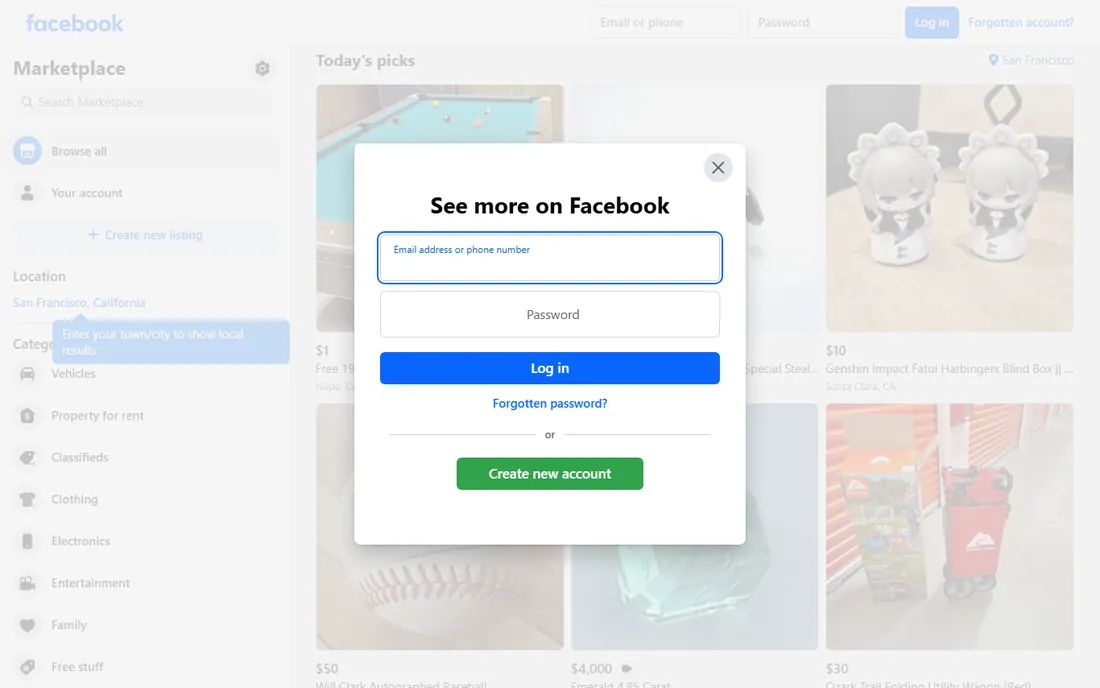
Facebook Marketplace is where a couch sells in an afternoon. Listing takes a couple of minutes from the phone app, local buyers browse by distance, and there are no listing fees or commissions on in-person sales. For furniture, bikes, baby gear, and anything bulky that costs too much to ship, it is often the fastest path from listing to cash.
The trade-off is that you are on your own. There is no structured seller protection for local cash deals, buyers flake, and lowball offers are part of the culture. Shipping orders go through Facebook's checkout, which adds a selling fee and gives both sides more protection, but many sellers stick to local pickup precisely to avoid fees and shipping hassle. Meeting in a public place and accepting cash or instant payment keeps things simple.
Because there is no seller subscription or listing cost, trying Marketplace costs nothing but your time. Treat it as a high-volume, low-effort channel for local goods rather than a full storefront.
What we like- Huge built-in audience at no cost
- No fees on local pickup sales
- Fast to list from your phone
Watch out for- More no-shows and haggling than managed marketplaces
- Limited seller protection on local deals
Starting price$2.95 flat fee on sales under $15; 20% commission on sales of $15 or more
Free planYes

Poshmark built its name on turning closets into storefronts. If your inventory is mostly clothing, shoes, and accessories, its audience of fashion-focused buyers is hard to match. Listing is quick, the app nudges you to share listings to themed parties for visibility, and buyers can bundle items, which lifts average order value.
The fee math deserves a calculator moment. Sales under $15 carry a flat $2.95 fee, which is painful on a $6 shirt. Sales of $15 or more take a 20% commission, so a $50 dress nets you $40 before shipping. Poshmark provides prepaid shipping labels (up to 5 pounds), and buyers pay for shipping, which removes one headache but makes pricing strategy important. Payouts go to your Poshmark balance and can be redeemed to a bank account, usually within a few days. Poshmark works best for sellers who list consistently and engage with the social features.
What we like- Built-in audience of fashion buyers
- Prepaid shipping labels simplify logistics
- Social features drive discovery
Watch out for- 20% commission is steep
- Best suited to clothing, weaker for other categories
Starting priceFree to list; 10% selling fee
Free planYes
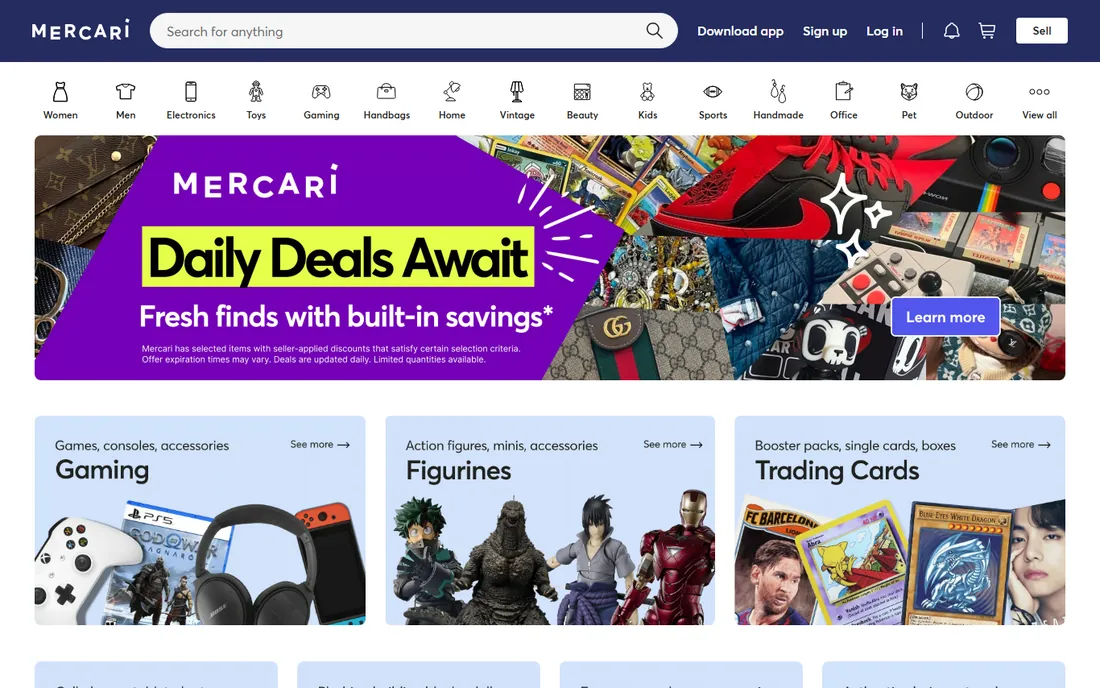
Mercari is the low-friction option for people who want to sell a bit of everything without learning a complex seller dashboard. The listing flow takes minutes, the app handles shipping labels, and the 10% selling fee is simple to understand: sell for $100, pay $10. That flat structure makes it easy to price items with confidence.
Buyer-paid shipping is the default, which protects your margins but can make your listings look pricier next to competitors who offer free shipping. Mercari also runs frequent promotions and coupon campaigns that drive buyer traffic, though the resulting sales can be unpredictable. Payouts go to your Mercari balance and transfer to a bank account within a few business days. Mercari suits casual and part-time resellers who value simplicity over squeezing out the last dollar.
What we like- Very easy listing flow
- Broad category mix
- Shipping labels built in
Watch out for- 10% fee plus processing adds up
- Smaller buyer pool than eBay
Starting price$0.20 per listing; 6.5% transaction fee; 3% + $0.25 payment processing
Free planNo
Etsy is not a general resale marketplace, but for vintage items (20 years or older), handmade goods, and craft supplies, it commands prices that general platforms cannot. Buyers come to Etsy specifically looking for one-of-a-kind pieces, which means a vintage jacket or a restored lamp can sell for two or three times its eBay price.
The fee stack is the catch. Each listing costs $0.20 and lasts four months, every sale takes a 6.5% transaction fee, and payment processing adds 3% plus $0.25. Offsite ads can add another 12 to 15% fee on sales they drive, and Etsy enrolls many sellers in that program automatically above a revenue threshold. Payouts are scheduled daily, weekly, or monthly depending on your settings, with funds typically available within a few days of a sale.
Etsy provides solid shop analytics and seller support through chat and email. It rewards sellers who invest in photography, SEO-friendly titles, and consistent inventory. If your goods are genuinely vintage or handmade, the premium prices usually justify the fees.
What we like- Buyers arrive intending to buy unique goods
- Strong search for niche and vintage items
- Good shop branding tools
Watch out for- Fees stack up across listing, transaction, and processing
- Crowded categories need ad spend to stand out
Starting priceFree to list; no selling fee for US sellers; 3.3% + $0.45 payment processing
Free planYes
Depop is where streetwear, Y2K fashion, and vintage band tees change hands. Its feed looks more like a social app than a marketplace, which suits sellers who already live on Instagram and TikTok. For US sellers, the headline feature is the fee structure: no Depop selling fee, just payment processing of 3.3% plus $0.45 per transaction. On a $60 sale, that keeps far more in your pocket than Poshmark's 20%.
The audience is the limitation. Depop buyers skew young and trend-focused, so classic professional clothing and non-fashion categories move slowly. Sellers need good photos and on-trend descriptions; the algorithm rewards active shops that list and refresh regularly. Shipping is on the seller to arrange, though Depop offers discounted labels through partners in some cases.
Payouts go through Depop's payments system to your bank account within a few business days. If your inventory is vintage or streetwear and your buyers are under 30, Depop's fee advantage makes it one of the best value platforms in this list.
What we like- No selling fee for US sellers
- Young, trend-driven buyer base
- Social feed style discovery
Watch out for- Audience skews young, limiting some categories
- Disputes can be slow to resolve
Starting priceFree to list; no seller fees (buyers pay a buyer protection fee)
Free planYes
Vinted's pitch is simple: sellers pay nothing. No listing fees, no commission, no payment processing cut from your side. Instead, buyers pay a protection fee on top of the item price. For a casual seller clearing out a closet, that means the number on the price tag is the number you receive, which no other major platform in this list can claim.
The catch is that the buyer's fee comes out of what they are willing to pay. A buyer comparing your $30 jacket on Vinted with a $30 jacket elsewhere sees a higher total on Vinted, which can push realized prices down slightly. There is also no auction format, so pricing is fixed or negotiated through offers. Shipping labels can be generated through the platform with prepaid options, and payouts transfer to your bank account. For pure closet cleanouts where keeping every dollar matters, Vinted is the cheapest way to sell.
What we like- Sellers pay no fees at all
- Simple listing process
- Growing US presence
Watch out for- Buyers pay the protection fee, which can suppress prices
- No auction format
Starting priceFree for local sales; 12.9% service fee (minimum $1.99) on shipped sales
Free planYes
OfferUp sits between Facebook Marketplace and eBay. Like Marketplace, it is free for local, in-person sales, with buyers browsing by location. Unlike Marketplace, it has a built-in shipping program that lets you sell to buyers across the country, with OfferUp handling the label and payment. That flexibility makes it a good second channel for sellers who already list locally.
Shipped sales carry a 12.9% service fee with a $1.99 minimum, which is steep enough that you should price accordingly or reserve shipping for higher-value items. OfferUp's TruYou verification and in-app messaging add some safety, but scam attempts still happen, so keep transactions inside the app and meet in public places for local deals. Payouts for shipped orders go to your account and transfer to a bank within a few business days. OfferUp works best as a complement to a local-sales strategy: list everything locally for free, and enable shipping selectively on items worth the fee.
What we like- Strong local buyer network
- No fees on in-person sales
- Shipped option expands reach
Watch out for- 12.9% shipped fee is high
- Scam attempts are common and need vigilance
Starting priceFree to list; 3% seller fee (buyers pay a 3% fee as well)
Free planYes
Swappa is the specialist pick for phones, laptops, tablets, and other tech. Both buyer and seller pay a 3% fee, which is a fraction of what general marketplaces charge, and the buyer base knows the value of what it is buying. A used iPhone in good condition typically fetches a better price here than on a general platform, because listings must meet strict condition and functionality standards.
Those standards are the barrier. Every device listing requires verification details, devices must be fully functional and not blacklisted, and listings that do not meet the criteria get rejected. That keeps buyer trust high but means you cannot just snap a photo and post. Sales go through PayPal or Swappa's payment processing, with seller protection on completed transactions. If you resell electronics regularly, Swappa's low fees and knowledgeable buyers make it the best value in its niche.
What we like- Low 3% seller fee
- Tech-savvy buyers pay fair prices
- Strict listing requirements keep quality high
Watch out for- Limited to tech categories
- Listings must meet condition standards
How we chose
We started with the resale platforms US sellers actually use in 2026, then kept only marketplaces that accept new sellers today and fit the category of reselling used or new items online. For each platform we checked the company's own fee and help pages, read seller discussions on Reddit, and reviewed public feedback on review sites to see where sellers praise payouts or complain about holds and disputes. We compared fee structures, audience size and fit, listing effort, payout timing, and seller protection. We did not claim hands-on testing; every fact here comes from company pages and public sources.
Seller fees, explained in plain terms
Marketplace fees come in four flavors, and most platforms mix them. Listing fees charge you to post an item, whether or not it sells. Final value or commission fees take a percentage of the sale price. Payment processing takes a smaller percentage plus a fixed amount per transaction.
The number that matters is your net payout per item. A 20% commission on a $100 sale costs $20, while a 3% fee costs $3, but the cheaper platform only wins if the item actually sells there at a comparable price. High-fee platforms with bigger audiences sometimes deliver higher sale prices that offset the fee. Run the math per item: expected sale price minus all fees minus shipping equals what you keep.
Watch for the extras that do not appear in the headline rate. Promoted listing fees, offsite ad fees, and currency conversion all eat margin. New sellers on several platforms also face temporary payment holds, which affect cash flow even though they are not a cost.
What to check before you list
Picking a platform is a business decision, not a habit. These checks keep you from leaving money on the table.
Match the platform to the item
Clothing sells best where fashion buyers browse: Poshmark, Depop, and Vinted. Electronics get better prices and lower fees on Swappa. Handmade and vintage goods belong on Etsy. Bulky items that cost a fortune to ship do best on local platforms like Facebook Marketplace and OfferUp. General goods with broad appeal belong on eBay or Mercari.
Understand payout timing
Payout speed affects your cash flow. Most platforms release funds 1 to 3 business days after a sale or delivery confirmation, but new sellers often face holds of a week or more. Check the hold policy before you list your first item.
Read the seller protection rules
Protection usually covers shipped orders with tracking, not local cash deals. Know what happens if a buyer claims an item never arrived. For high-value items, that protection is worth paying for.
Frequently asked questions
Which platform has the lowest seller fees?
Vinted charges sellers nothing, and Depop charges US sellers no selling fee beyond payment processing. Swappa's 3% is the lowest among platforms that take a commission.
Should I list the same item on multiple platforms?
It can work, but it creates double-sale risk if an item sells in two places at once. If you cross-list, track inventory carefully and remove listings the moment something sells.
How do taxes work when reselling online?
Marketplaces generally issue a 1099-K once your sales cross the IRS reporting threshold, and thresholds have changed in recent years, so check the current rules. Keep records of what you paid for inventory and what you spent on fees and shipping.
Is it better to offer free shipping or charge the buyer?
Buyer-paid shipping protects your margin and is standard on Poshmark and Mercari. Free shipping can lift conversion on eBay and Etsy, where buyers compare total prices.
How do I avoid scams as a seller?
Keep all communication and payment inside the platform, never accept overpayment with a refund request, and ship only to the address on the order with tracking. For local sales, meet in public places. If a deal feels wrong, walk away.
Can I resell as a business, or is it just for casual sellers?
Both. Every platform here supports high-volume sellers, and several offer business tools like bulk listing, analytics, and promoted placements. Just make sure your sourcing, taxes, and record-keeping are set up like a real business from the start.
Sources we checked (9)
- https://www.ebay.com/
- https://www.facebook.com/marketplace
- https://poshmark.com/
- https://www.mercari.com/
- https://www.etsy.com/
- https://www.depop.com/
- https://www.vinted.com/
- https://offerup.com/
- https://swappa.com/
Is your product missing or out of date?
We review this list regularly. Vendors can request a listing, send updated pricing or ask about featured placement.

Shihab Mia · Founder, Rankite
Shihab has spent more than a decade helping SaaS and e-commerce brands grow through search. He writes Rankite's software buying guides from pricing pages, documentation and public user reviews. More about Shihab.