How we make this list: we compare pricing pages, product documentation and public user reviews. Rankite is independent; if a vendor ever pays for a featured spot, that listing is clearly labeled Partner.
Key takeaways
- If you sell video memberships and want branded apps without hiring developers, Uscreen and Flicknexs are the two most approachable starting points, with entry plans at $49 and $349 per month.
- If you need a full Netflix-style service with DRM, multiple monetization models, and no per-user fees, Muvi is the most complete turnkey option at $399 per month.
- If you already have a website and just need dependable video delivery with a paywall, Dacast gives you broadcast-grade streaming from $39 per month with no per-subscriber fees.
- If you run an enterprise, university, or telecom operation, Brightcove, Kaltura, JWX, and Setplex sell through sales teams with quote-based pricing, so budget for a longer buying process and annual contracts.
Quick comparison
| Tool | Best for | Starting price | Free plan |
|---|
 Uscreen Uscreen | Creators selling video memberships | $49/month (Starter) | Free trial (14 days) |
 Muvi Muvi | Full white-label streaming services | $399/month (billed monthly; $339/month billed annually) | Free trial (14 days) |
 Dacast Dacast | Live events and VOD delivery | $39/month (billed annually) | Free trial (14 days) |
 Brightcove Brightcove | Large media enterprises | See website | See website |
 Kaltura Kaltura | Enterprises and education | See website | See website |
 Wowza Wowza | Self-hosted streaming infrastructure | $195/month (Streaming Engine, Basic Monthly) | Free trial |
 JWX JWX | Publishers monetizing video with ads | See website | See website |
 Setplex Setplex | IPTV and telecom operators | See website | See website |
 Streann Media Streann Media | Engagement-heavy OTT services | See website | See website |
 Flicknexs Flicknexs | Fast budget-friendly white-label launches | $349/month (billed annually) | Free trial (14 days) |
Is your product missing or out of date?
We review this list regularly. Vendors can request a listing, send updated pricing or ask about featured placement.
You have the content. What you do not have is six months and a development team to build the apps, the billing system, the video encoding pipeline, and the content protection. That is the exact problem white-label OTT platforms solve. They hand you a finished streaming service with your branding on it, and you focus on content and subscribers.
The catch is that these platforms are not interchangeable. Some are built for individual creators selling memberships. Some are built for enterprises running TV networks. Picking the wrong type costs far more than the monthly fee, because migrating a subscriber base later is painful.
Starting price$49/month (Starter)
Free planFree trial (14 days)
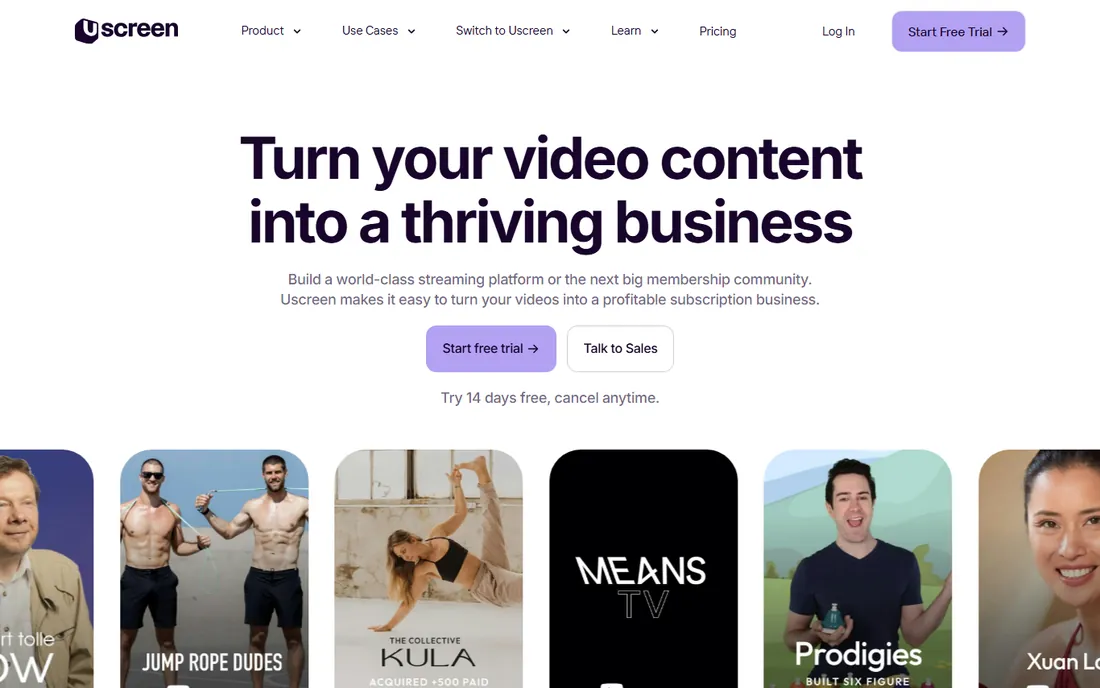
Uscreen is built for a specific person: a creator with an audience who wants to sell subscriptions instead of depending on ad revenue. The Starter plan at $49 per month gets you a working web platform with up to 100 subscribers and no per-subscriber fee, a low-risk way to test whether people will pay for your content.
The honest catch is the per-subscriber fee structure. Once you pass a few hundred paying members, the $1.99 per subscriber on Growth or $0.99 on App Essentials becomes a meaningful line item. TV apps, community channels, and API access sit on the Custom plan with quote-based pricing, so get that quote before you commit if you need them from day one.
What we like- Branded mobile and TV apps with no coding
- Built-in community, live streaming, and marketing tools
- Starter plan has no per-subscriber fee
Watch out for- Per-subscriber fees on higher plans ($1.99 on Growth, $0.99 on App Essentials) add up at scale
- TV apps and community features are reserved for the Custom plan
Starting price$399/month (billed monthly; $339/month billed annually)
Free planFree trial (14 days)
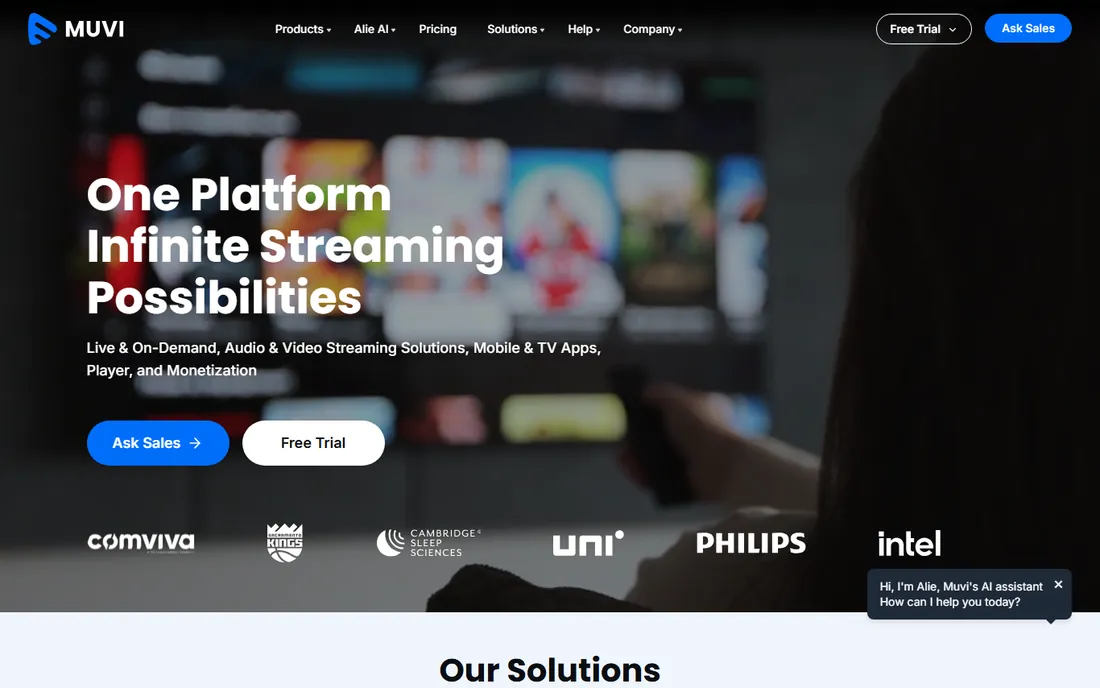
Muvi is the closest thing to a turnkey Netflix in this list. One subscription gets you the CMS, CDN, transcoding, DRM, payment gateways, subscriber management, analytics, and apps for web, mobile, and TV. The Standard plan at $399 per month (or $339 per month on annual billing) includes unlimited content, subscribers, and views, so your bill does not grow as your audience does.
Where Muvi gets expensive is the app layer. Only one website or app is included; each additional app runs $299 to $499 per month depending on the plan. A service shipping on web, iOS, Android, Roku, Fire TV, and Apple TV can see app fees exceed the base subscription. The 14-day free trial needs no credit card, so confirm the feature set matches your launch plan before talking to sales about app pricing.
What we like- More than 500 features out of the box including DRM and multiple monetization models
- No per-user fees and no contracts
- One website or app included on every plan
Watch out for- $399 per month is steep for small creators
- Extra TV and mobile apps cost $299 to $499 per app per month on top
Starting price$39/month (billed annually)
Free planFree trial (14 days)
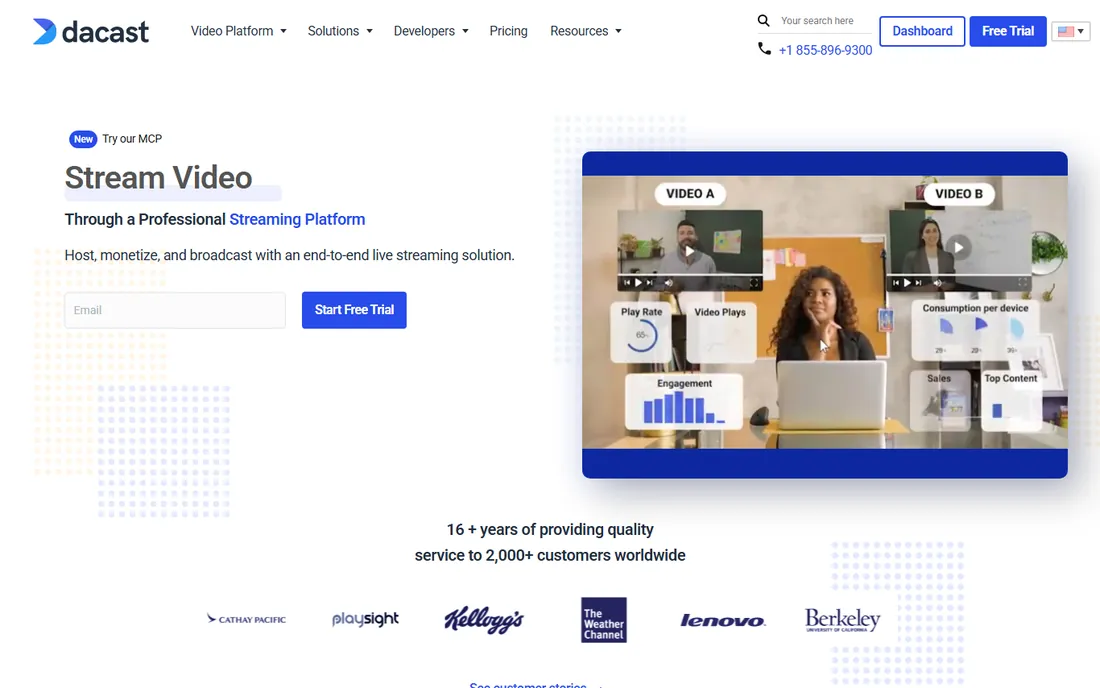
Dacast is delivery infrastructure with a business model attached, not a membership platform. The Starter plan costs $39 per month billed annually ($468 upfront) and includes 2.4 TB of annual bandwidth plus 500 GB of storage. The Event plan at $63 per month suits one-off broadcasts, while Scale at $165 per month billed annually adds API access, an M3U8 player for live channels, and ad insertion. There are no per-subscriber or per-viewer fees on any plan.
This is the right pick when you already have a website and only need the video layer: hosting, transcoding, a white-label player, and a paywall. It is the wrong pick if you want someone to hand you finished apps and a subscriber dashboard, because Dacast does not build those. The 14-day trial includes 10 GB of bandwidth with no credit card required, enough to run a real test stream.
What we like- Transparent bandwidth-based pricing with no per-subscriber fees
- White-label HTML5 player and paywall included
- Mainland China delivery available
Watch out for- No built-in website, apps, or community features, you bring your own front end
- Starter and Event plans require full annual payment upfront
Starting priceSee website
Free planSee website
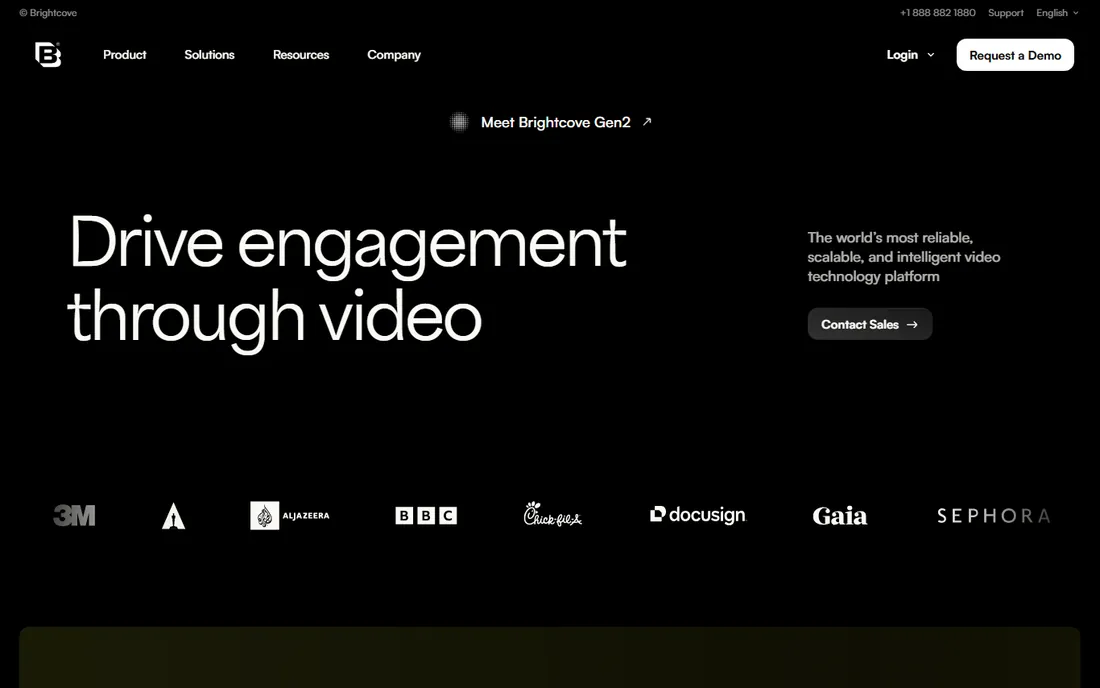
Brightcove has been running enterprise video for close to two decades, and it shows in the product. The platform covers the full chain from ingest and transcoding to delivery, monetization, and analytics, with the kind of reliability guarantees that broadcasters and large publishers demand. If your requirements include strict SLAs, advanced ad workflows, and dedicated support, Brightcove belongs on the shortlist.
The trade-off is the buying experience. There is no public pricing and no self-serve trial path; everything runs through the sales team, and packaging changed after the company's 2025 acquisition, so older pricing references online are unreliable.
What we like- Broadcast-grade reliability and delivery at global scale
- Deep analytics and advertising integrations
- Long track record with major media brands
Watch out for- Quote-only pricing with packaging that is not fully transparent
- Far more platform than a small or mid-size team needs
Starting priceSee website
Free planSee website
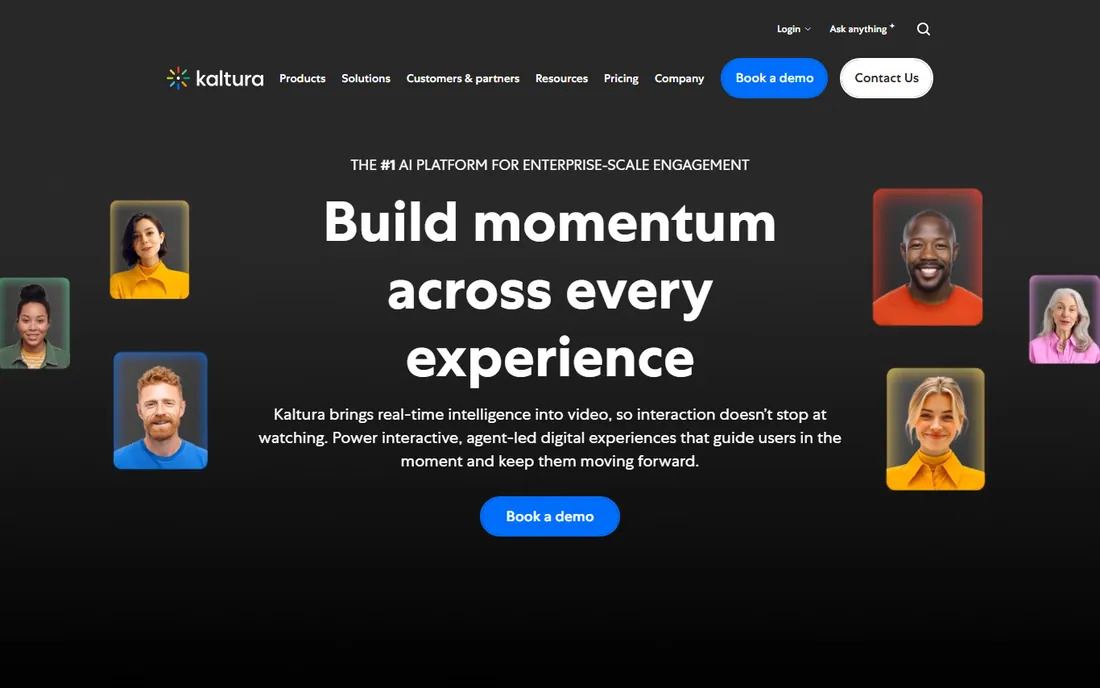
Kaltura sells video as enterprise infrastructure rather than as a single product. Universities run their lecture capture and learning portals on it, media companies run OTT and internal communications on it, and enterprises run virtual events on it. The platform's strength is that one vendor covers use cases that would otherwise need three or four separate tools.
That breadth is also the weakness. Kaltura is not a quick launch; implementations involve scoping, integration work, and training, and pricing is negotiated per deal. If you are a creator or a small media company looking for a fast white-label launch, Muvi or Flicknexs will get you live sooner.
What we like- Broad platform covering virtual events, video portals, and learning workflows
- Strong footprint in higher education and media
- Open-source core with commercial editions
Watch out for- Quote-only pricing with no public plans
- The breadth of the platform makes onboarding and administration heavy
Starting price$195/month (Streaming Engine, Basic Monthly)
Free planFree trial
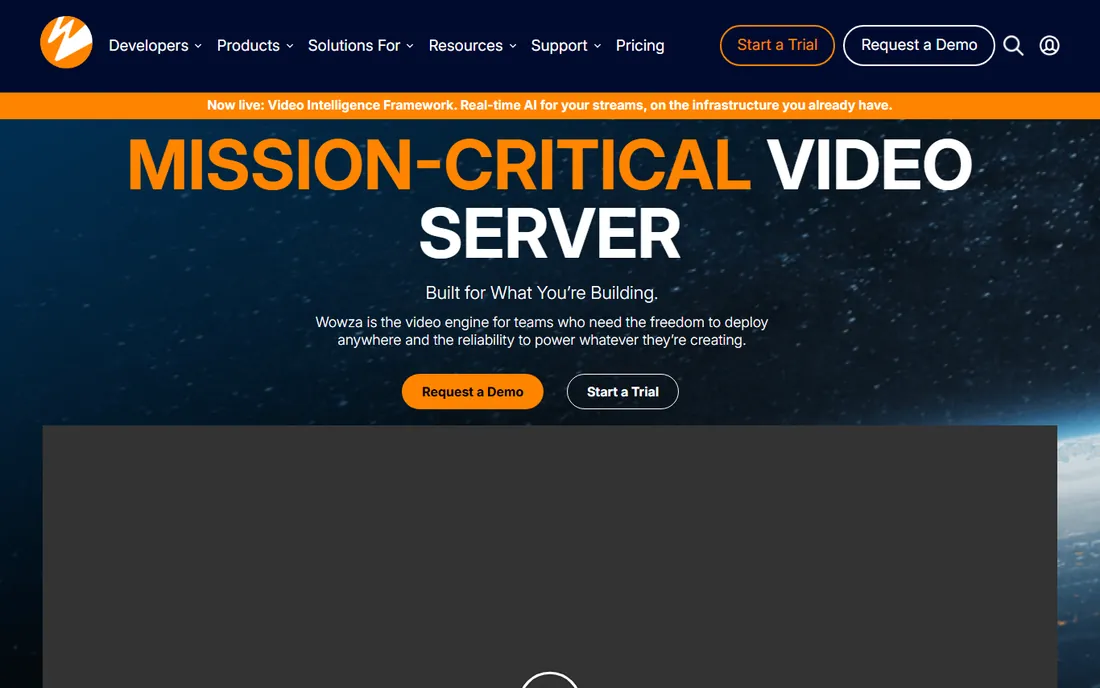
Wowza is for teams that want to own the streaming stack instead of renting a finished service. Wowza Streaming Engine runs on your servers or your cloud, ingests everything from RTMP and SRT to WebRTC and IP cameras, and delivers HLS, LL-HLS, and MPEG-DASH anywhere. The Basic Monthly license is $195 per month per instance, and a one-time $295 license covers a single month of streaming for events. Wowza Video, the managed cloud product, bills on usage starting from a low monthly base.
The honest catch is that Wowza gives you an engine, not a car. There is no subscriber management, no paywall, no mobile apps, and no billing out of the box. You or your developers build all of that on top of the APIs. For engineering-led teams and broadcasters with existing infrastructure, that control is the point.
What we like- Deploy anywhere, on-premises, cloud, edge, or air-gapped
- Full control over protocols, codecs, and transcoding
- One-time $295 option for short-term needs
Watch out for- It is infrastructure, not a finished OTT product, so apps, billing, and storefronts are your job
- Server and bandwidth costs are separate from the license
#7
JWX
Best for: Publishers monetizing video with ads
Visit jwx.com
Starting priceSee website
Free planSee website
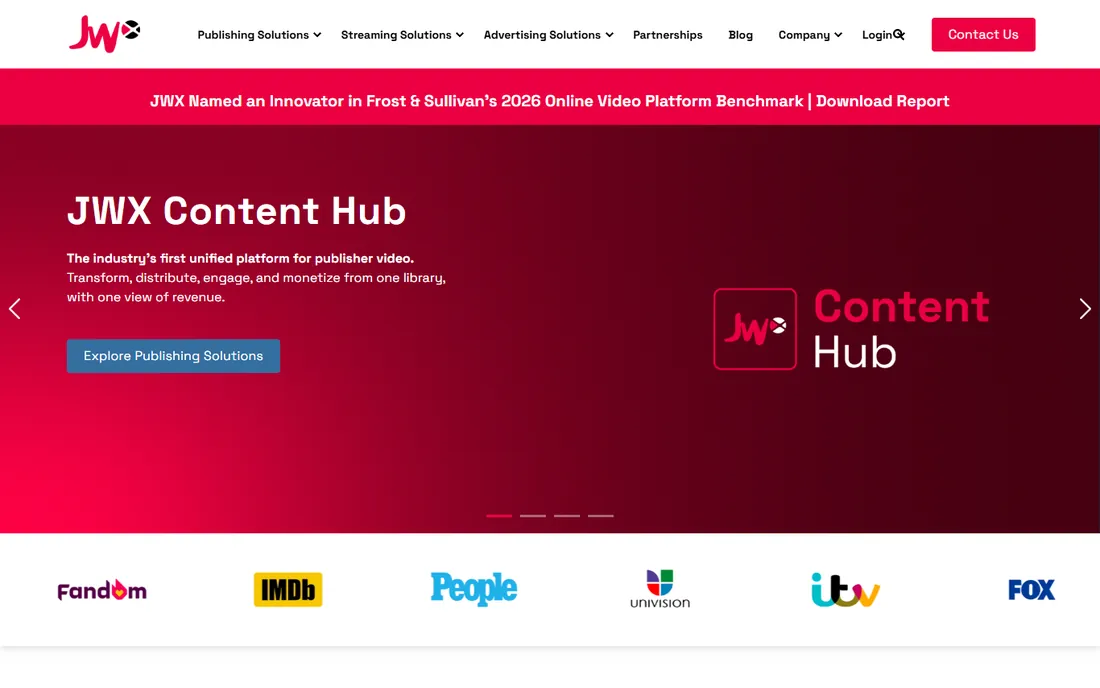
JWX is the new name for JW Player, and the rebrand reflects where the company went: from a video player vendor to an enterprise video technology platform for publishers, streamers, and advertisers. The current lineup centers on media management, VOD and live delivery, monetization with flexible ad models, and data intelligence for yield optimization. Customers include large digital publishers running video at serious scale.
The buying reality is enterprise. JWX does not publish pricing and sells through negotiated engagements, with tiers like Express, Publishing, and Broadcasting quoted per deal. If you are a publisher whose business runs on video ad revenue, the ad-tech depth justifies the sales process.
What we like- Strong ad-tech and monetization stack for publishers
- Enormous delivery scale across billions of monthly plays
- Unified media management, delivery, and data in one platform
Watch out for- No public pricing, everything runs through enterprise sales
- The JW Player to JWX rebrand means older reviews describe a different product mix
Starting priceSee website
Free planSee website

Setplex, now positioning its platform as Zapflex, sells to a different buyer than everyone else on this list: telecom operators, ISPs, and broadcasters launching or modernizing streaming services. Device coverage spans Apple TV, Android TV, Roku, Fire TV, Samsung, LG, and more.
If you are an operator, that completeness matters. If you are a creator or a small media brand, this is not your product. There is no pricing page, no trial, and no self-serve signup. Expect demos, scoping calls, and a negotiated contract.
What we like- End-to-end operator platform covering content preparation, secure delivery, and preconfigured apps
- Supports all major devices and TV platforms
- Modular, so operators can adopt parts of the stack
Watch out for- Built for service operators, not creators, with no self-serve pricing or trial
- The sales-led process means a longer path to launch
Starting priceSee website
Free planSee website
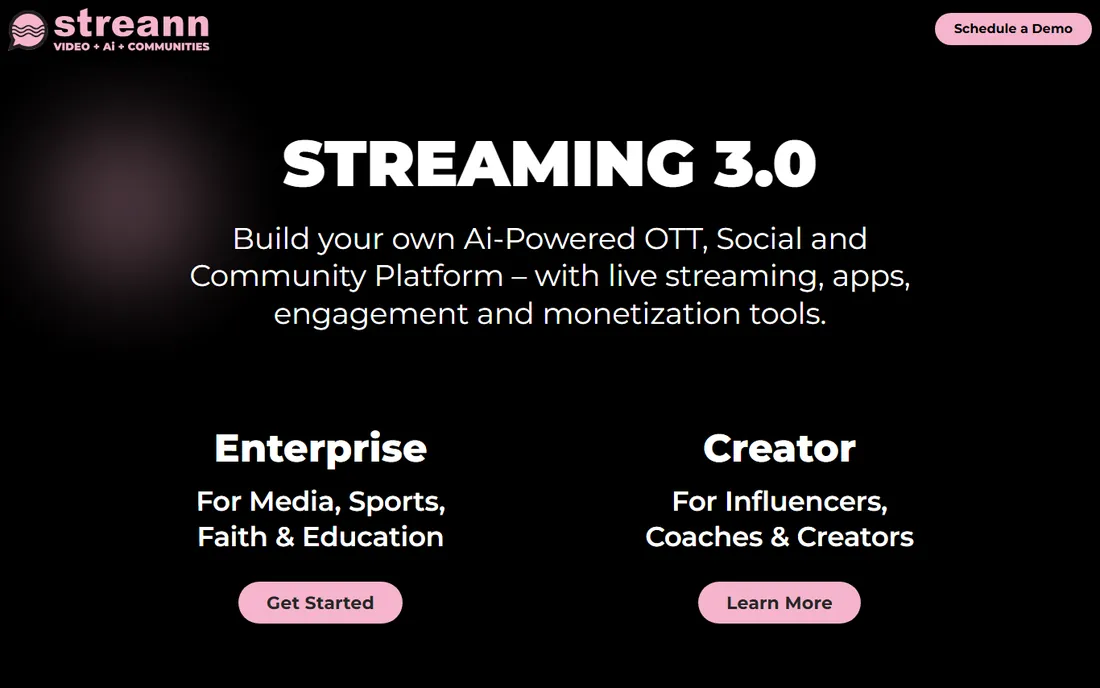
Streann Media's pitch is that watching should be interactive. Alongside the standard OTT stack of live streaming, VOD, apps, and monetization, the platform bakes in engagement mechanics, polls, trivia, watch parties, and social features, that are designed to keep viewers inside the app longer. It offers an Enterprise tier for media, sports, faith, and education organizations, plus a Creator tier for influencers and coaches.
The platform has collected industry awards and claims tens of thousands of creators on board. The gap is transparency: there is no public pricing page and no trial you can start yourself, so you will need to talk to their team to learn what your configuration costs.
What we like- Interactive engagement features like polls, trivia, and live chat built into the viewing experience
- Separate Enterprise and Creator tiers
- Social and community tools alongside streaming
Watch out for- No public pricing, so budgeting requires a sales conversation
- Smaller partner and integration ecosystem than the larger platforms
Starting price$349/month (billed annually)
Free planFree trial (14 days)
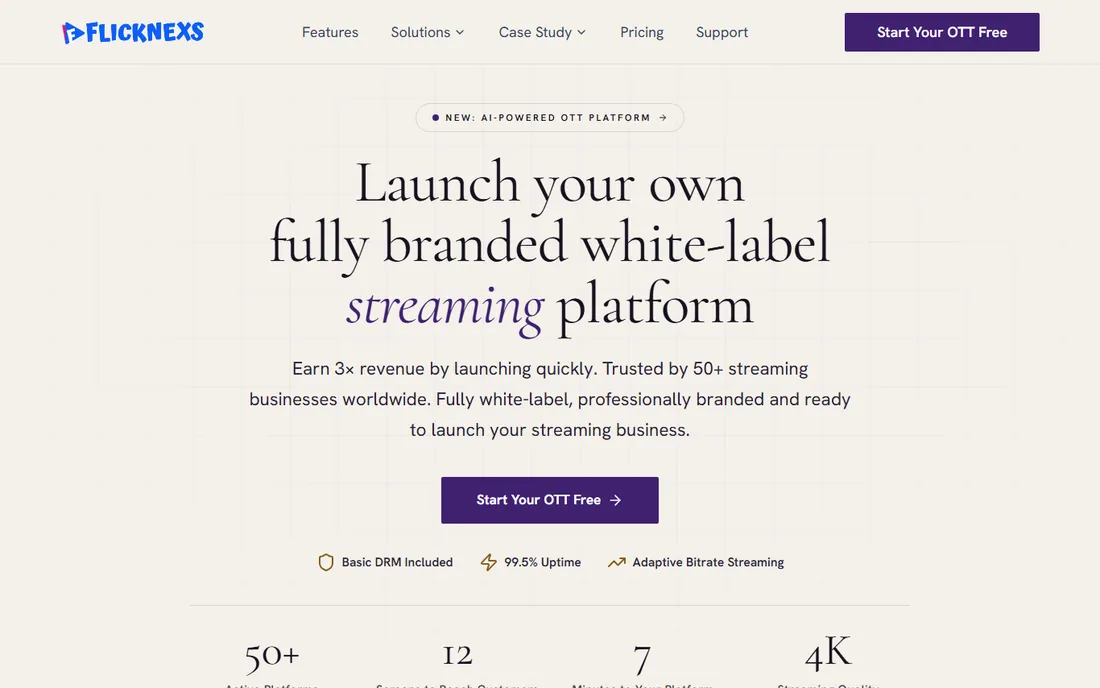
Flicknexs is the value play in the turnkey category. The F1 Standard plan runs $349 per month on annual billing and includes 20 TB of yearly bandwidth, 300 GB of storage, and a fully white-labeled platform with your branding and your domain. Every plan includes basic DRM, signed playback URLs, geo-fencing, and a player watermark, and the company takes no commission on your subscriptions or sales. Apps ship from your own developer accounts, so the listings, ratings, and install base stay yours if you ever leave.
The trade-offs are what you would expect at this price. Flicknexs is a younger company serving around 50 streaming businesses, so the ecosystem of integrations is thinner than the established players. Advanced multi-DRM and custom enterprise needs move you to a negotiated plan.
What we like- Platform provisions in minutes with transparent flat pricing
- Basic DRM included on every plan
- Native apps for 12-plus platforms with no revenue share
Watch out for- Younger company with a smaller client base than Muvi or Uscreen
- Full multi-DRM with Widevine, FairPlay, and PlayReady requires an enterprise plan
What to check before signing an OTT contract
The monthly fee is only part of the deal. Before you commit, work through these five questions, because the answers determine your real cost and your freedom to leave.
First, how the money flows. Some platforms charge flat fees, some add per-subscriber fees, and some meter bandwidth. Model your bill at your current size and at triple that size. Per-subscriber and per-app fees look small at launch and grow fast.
Second, who owns the apps and the customer data. The strongest setup is apps published under your own developer accounts with full export of your subscriber list. If the vendor holds the app listings or will not export your data, you are renting your business, not owning it.
Third, contract length. Enterprise platforms usually mean annual contracts through sales. Self-serve platforms let you pay monthly and cancel. Match the commitment to your confidence level.
Fourth, content protection. Confirm exactly which DRM is included. Basic DRM, token authentication, and geo-blocking cover most cases. Studio-grade multi-DRM usually sits on enterprise tiers.
Fifth, the exit. Ask how you get your videos, metadata, and subscriber records out, and what it costs. Vendors that answer clearly are usually the ones worth trusting.
The ten tools above split into three groups, and knowing which group you belong in saves the most time.
The turnkey group, Uscreen, Muvi, Streann Media, and Flicknexs, hands you a finished service. You bring content and branding; they handle apps, billing, and delivery. Choose this group when speed matters more than control and you have no developers on staff.
The infrastructure group, Wowza, JWX, Brightcove, and Kaltura, hands you powerful components and expects your team to assemble the product. Choose this group when you have engineering resources or scale that justifies custom architecture.
The middle group is Dacast and Setplex. Dacast is the delivery layer for teams that already have a front end. Setplex is the operator platform for telecoms and service providers. If neither fits, you belong in the turnkey group.
How we chose
We started from the shortlists that working OTT buyers actually compare: G2 and Capterra category pages, Reddit threads from streaming operators, and vendor comparison content. We opened each vendor's homepage to confirm the current brand and URL, since this market rebrands often, and checked each vendor's own pricing page for the starting price and trial terms. Where pricing is quote-only, we say so instead of repeating third-party estimates.
Frequently asked questions
How much does it cost to launch an OTT platform?
A self-serve launch starts around $39 to $49 per month for delivery-focused tools like Dacast or membership tools like Uscreen, and around $349 to $399 per month for full white-label services like Flicknexs or Muvi. Enterprise and operator platforms are quote-based and typically run into five or six figures annually. Budget separately for app store accounts, payment processing fees, and per-subscriber or per-app add-ons.
Do I need coding skills to launch a streaming service?
Not with the turnkey platforms. Uscreen, Muvi, Streann Media, and Flicknexs are built for non-technical owners and provision a branded service without code. You will need developers for infrastructure products like Wowza, or for deep customizations through APIs.
Who owns my apps and subscriber data?
It depends on the vendor. The best arrangement is apps published under your own developer accounts with full data export, which Flicknexs does by default. Confirm app ownership and export terms in writing before you sign, because migrating subscribers away from a platform that holds your data is difficult.
What does white-label OTT mean?
The streaming platform runs under your brand instead of the vendor's: your logo, your domain, your apps in the app stores, with no vendor branding visible to viewers. All ten platforms here offer white-labeling, though the depth varies.
Can I migrate from one OTT platform to another later?
Yes, with planning. Video files and metadata usually transfer without much trouble. The hard parts are subscriber billing continuity, app store listings, and user credentials. Platforms that publish apps under your own accounts and export clean subscriber data make migration far easier.
Sources we checked (12)
- https://uscreen.tv/
- https://www.muvi.com/pricing
- https://dacast.com/
- https://www.dacast.com/blog/10-best-live-streaming-platforms-for-pros/
- https://www.brightcove.com/
- https://kaltura.com/
- https://wowza.com/
- https://jwx.com/
- https://setplex.com/
- https://streann.com/
- https://flicknexs.com/
- https://flicknexs.com/flicknexs-vs-jw-player
Is your product missing or out of date?
We review this list regularly. Vendors can request a listing, send updated pricing or ask about featured placement.

Shihab Mia · Founder, Rankite
Shihab has spent more than a decade helping SaaS and e-commerce brands grow through search. He writes Rankite's software buying guides from pricing pages, documentation and public user reviews. More about Shihab.