How we make this list: we compare pricing pages, product documentation and public user reviews. Rankite is independent; if a vendor ever pays for a featured spot, that listing is clearly labeled Partner.
Key takeaways
- Every tool on this list is genuinely open source and still maintained in 2026. Phabricator is dead (unmaintained since June 2021) and Focalboard was folded into Mattermost, so neither made the cut.
- Want a full Jira replacement with Gantt charts and time tracking? Start with OpenProject or Taiga. Both are free to self-host and cover the classic-to-agile range.
- Just need boards? Wekan and Planka are light Trello-style kanban tools that run on modest hardware and take an afternoon to deploy.
- Development teams that live in code review should look at Phorge (the maintained Phabricator fork) and Tuleap (agile plus Git/SVN in one box).
- "Free" means the license is free. Budget for a server, backups and somebody who can run updates, because that is the real cost of every tool here.
Quick comparison
| Tool | Best for | Starting price | Free plan |
|---|
 OpenProject OpenProject | Teams that want the closest open-source match to Jira plus Microsoft Project | Free (self-hosted Community edition); Enterprise cloud and on-premises plans are paid | Yes (Community edition, free with no user limit) |
 Taiga Taiga | Cross-functional agile teams that run Scrum, Kanban, or both | Free (self-hosted) | Yes (open source, free) |
 Redmine Redmine | Technical teams that want a battle-tested, endlessly extensible tracker | Free (self-hosted) | Yes (open source, GPL) |
 Leantime Leantime | Small teams, startups and founders who find Jira overwhelming | Free (self-hosted) | Yes (open source) |
 Plane Plane | Product and engineering teams that want a modern, fast Jira alternative | Free (self-hosted); paid cloud plans available | Yes (self-hosted Community edition is free) |
 Wekan Wekan | Teams that want a private, self-hosted Trello replacement and nothing more | Free (self-hosted, MIT licensed) | Yes (fully open source) |
 Tuleap Tuleap | Engineering organizations that want agile planning and code hosting in one system | Free (self-hosted Community edition); Enterprise plans are paid | Yes (Community edition, open source) |
 Phorge Phorge | Development teams that liked Phabricator and want it maintained | Free (self-hosted) | Yes (fully open source) |
 Planka Planka | Teams that want the most polished free kanban board available | Free (self-hosted Community edition); Pro and Enterprise plans are paid | Yes (Community edition is free) |
Is your product missing or out of date?
We review this list regularly. Vendors can request a listing, send updated pricing or ask about featured placement.
Most "open source" roundups are padded with tools that quietly went closed-source years ago, or with projects whose last commit was in 2019. I checked each of these nine against its repository and homepage in October 2026. Every one is licensed as open source, accepts community contributions, and shipped releases recently. The trade is always the same: no license fees, but you supply the server and the maintenance. Pick based on how much process your team actually needs, not on feature count.
#1
OpenProject
Best for: Teams that want the closest open-source match to Jira plus Microsoft Project
Visit openproject.org
Starting priceFree (self-hosted Community edition); Enterprise cloud and on-premises plans are paid
Free planYes (Community edition, free with no user limit)
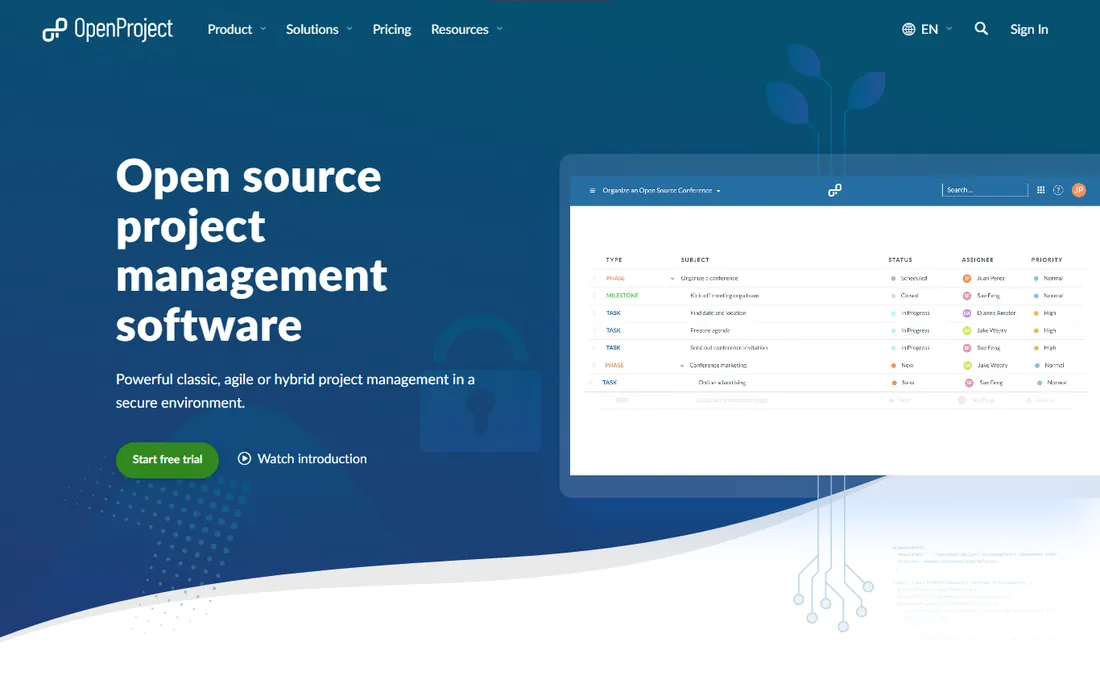
OpenProject is the default answer when someone asks for an open-source Jira replacement, and the scope backs it up. Work packages, Gantt charts with dependencies, Scrum and Kanban boards, time logging, cost tracking against budgets, plus wikis, forums and meeting minutes. The Community edition is genuinely free without user limits, which makes the math simple for small companies.
The honest catch is weight. This is a Rails plus Angular application that wants real server resources and some care during upgrades. Teams that only need a task board will find it overbuilt. But if your projects need schedules, baselines and cost control, nothing else free comes this close.
What we like- Full Gantt scheduling, agile boards, time tracking, cost reporting, budgets, wikis and meeting management in one install
- Strong data-sovereignty story with EU-based company and on-premises option
- Active development with regular releases
Watch out for- Heavier than the kanban tools here and needs a capable server
- The interface carries a lot of options, so new users face a learning curve
#2
Taiga
Best for: Cross-functional agile teams that run Scrum, Kanban, or both
Visit taiga.io
Starting priceFree (self-hosted)
Free planYes (open source, free)
Taiga has been the friendly face of open-source agile tooling for a decade. Backlogs, sprint planning with burndown charts, Kanban with WIP limits and swimlanes, plus issue tracking and a wiki per project. Setup through Docker is documented and quick, and the interface stays out of the way for non-technical teammates.
Two things to know. First, Taiga is lighter on traditional project management than OpenProject: no real Gantt or cost management. Second, the maintainers have been building the next generation of the product under the name Tenzu, which means the classic Taiga you install today may eventually be superseded. For teams that want agile done simply, it remains one of the easiest self-hosted starts.
What we like- Clean Scrum and Kanban workflows with epics, user stories, tasks and issues in one project
- Easy to start, with importers from Trello, Jira, Asana and GitHub
- Translated into 20-plus languages
Watch out for- The classic version's frontend is aging
- The team is rebuilding the product as Tenzu, so long-term buyers should watch where development focus goes
#3
Redmine
Best for: Technical teams that want a battle-tested, endlessly extensible tracker
Visit redmine.org
Starting priceFree (self-hosted)
Free planYes (open source, GPL)
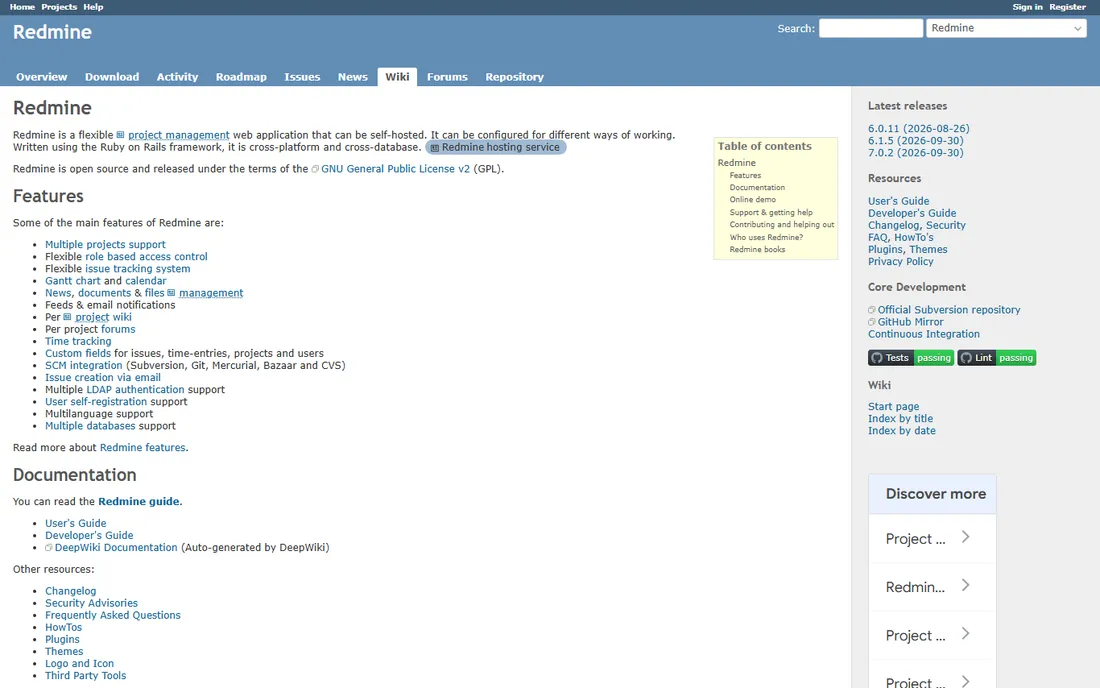
Redmine is the old workhorse of this list. It does issue tracking across many projects with custom fields, custom workflows, time tracking, news, document and file management, and repository browsing for Git and Subversion. Thousands of teams run it for years without drama, and the plugin directory covers nearly every gap, including agile boards and CRM-lite features.
The price of that maturity is a 2006-era user experience and a setup process that expects you to know your way around a Linux server. Non-technical teams will bounce off it. But for engineering-led teams that want a tracker they can shape exactly to their process and never pay for, Redmine is still hard to beat.
What we like- Extremely stable with a huge plugin and theme ecosystem built over 15-plus years
- Multi-project support, Gantt, calendars, per-project wikis and fine-grained roles out of the box
- Runs on modest hardware
Watch out for- The interface looks dated and agile boards need plugins
- Installation and upgrades assume comfort with Ruby and server admin
#4
Leantime
Best for: Small teams, startups and founders who find Jira overwhelming
Visit leantime.io
Starting priceFree (self-hosted)
Free planYes (open source)
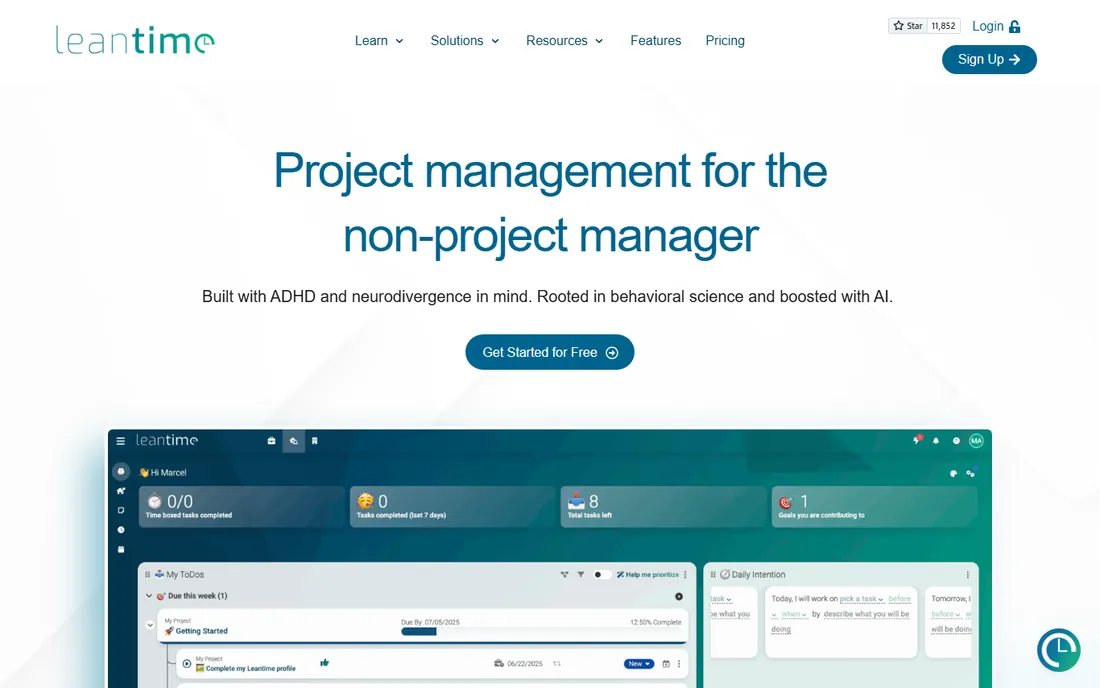
Leantime starts from the opposite end of OpenProject: instead of asking what methodology you run, it asks what goal you are chasing. Projects hold blueprints for the "why," milestones group the work, and to-dos live in Kanban, list or table views. Time tracking, invoicing-adjacent timesheets and project dashboards cover the small-agency basics.
The trade is ecosystem depth. You will not find hundreds of plugins or native integrations with every dev tool. What you get is software your whole team might actually open every day, which is the failure point of most PM rollouts. Docker deployment is straightforward, and the project ships regularly.
What we like- Goals-first structure (strategy to milestones to tasks) that suits non-project-managers
- Includes idea boards, retrospectives, timesheets and client-facing features
- Deliberately low cognitive load, designed with neurodivergent users in mind
Watch out for- Smaller community and fewer third-party integrations than the big names
- Not the pick for complex portfolio management across dozens of teams
#5
Plane
Best for: Product and engineering teams that want a modern, fast Jira alternative
Visit plane.so
Starting priceFree (self-hosted); paid cloud plans available
Free planYes (self-hosted Community edition is free)
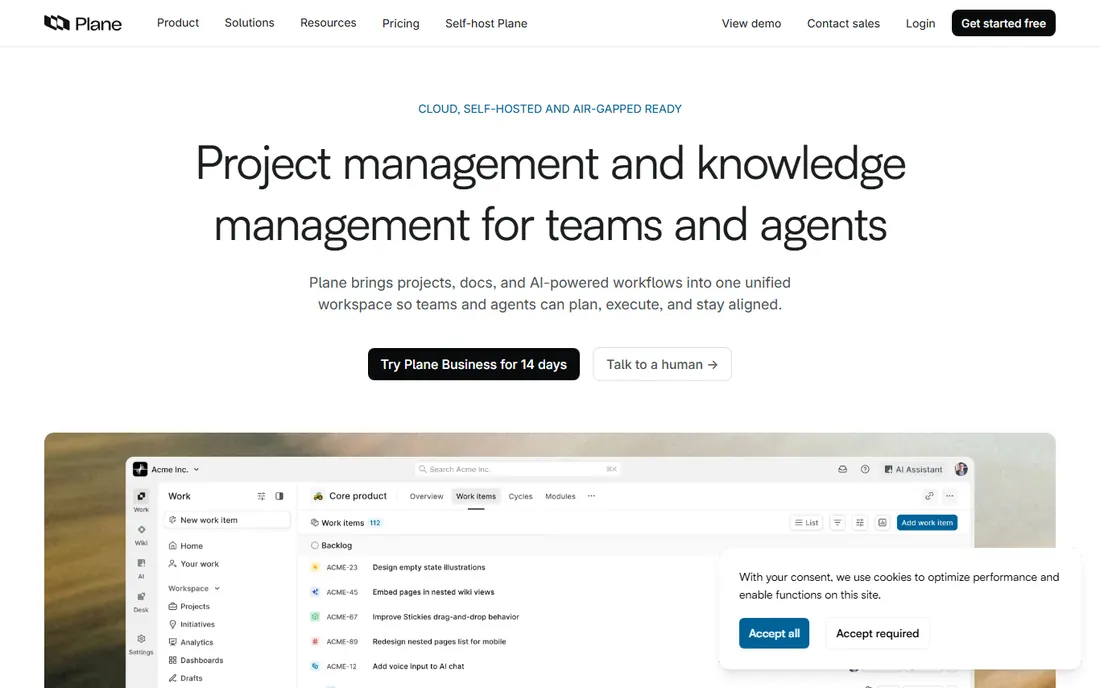
Plane is the newest full-featured option here and it shows in the interface: quick keyboard-driven issue triage, multiple views per project, cycle analytics and built-in docs. It positions itself directly against Jira and Linear, and the migration tooling reflects that ambition.
The honest weakness is youth. Edge-case workflows that Jira admins take for granted may not exist yet, and the project is evolving fast enough that upgrade notes deserve a read. For a product team starting fresh in 2026 that wants modern UX without per-seat fees, though, Plane is the most credible free Jira alternative on this list.
What we like- Modern interface with issues, cycles (sprints), modules, roadmaps, pages and analytics
- Self-hosts on your own infrastructure with Docker or Kubernetes
- Imports from Jira, Linear, Asana, ClickUp and Monday
Watch out for- A young project, so some advanced workflows and the integration catalog are still catching up
- Self-hosting needs Postgres and Redis, which is more moving parts than a kanban-only tool
#6
Wekan
Best for: Teams that want a private, self-hosted Trello replacement and nothing more
Visit wekan.fi
Starting priceFree (self-hosted, MIT licensed)
Free planYes (fully open source)
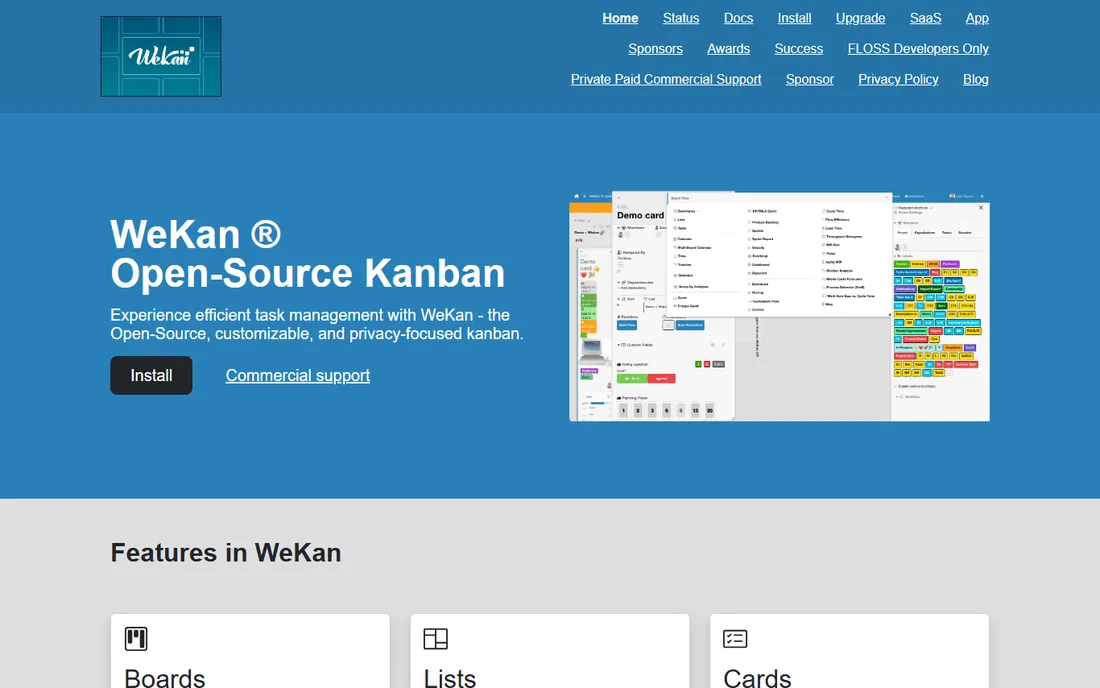
Wekan does one thing: Trello-style boards you own completely. Cards, lists, drag and drop, WIP limits, custom fields and calendar view cover the core, and it stays fast because it does not try to be a platform. Installation via Snap or Docker takes minutes, which makes it the quickest win on this list.
Do not adopt it expecting it to grow into Jira. There is no backlog grooming workflow, no reporting suite and no built-in agile ceremonies. For support queues, content pipelines, hiring boards and personal task management, that simplicity is the point. Commercial support is available from the maintainer if you need a contract behind it.
What we like- Lightweight kanban boards with checklists, labels, due dates, attachments and swimlanes
- Runs happily on small servers or a Raspberry Pi-class machine
- No per-user fees ever
Watch out for- Kanban only, so no sprints, Gantt or time tracking without workarounds
- Development pace depends on a small maintainer community
#7
Tuleap
Best for: Engineering organizations that want agile planning and code hosting in one system
Visit tuleap.org
Starting priceFree (self-hosted Community edition); Enterprise plans are paid
Free planYes (Community edition, open source)

Tuleap is an application lifecycle management platform, not just a task tracker. Trackers model requirements, bugs and change requests; planning tools run Scrum and Kanban; and the built-in Git hosting with Jenkins integration keeps code and planning in one place. That combination is why it shows up in aerospace, automotive and other traceability-heavy industries.
The cost is complexity. Expect a serious server, a careful install and an admin who owns it. Small teams should not start here. But an engineering org that would otherwise buy Jira plus Bitbucket plus Confluence can replace a large chunk of that stack with Tuleap's free edition.
What we like- Combines Scrum/Kanban planning with Git and Subversion repositories, code review, CI hooks and document management
- Strong traceability from requirement to test, which regulated teams need
- Unlimited users in the Community edition
Watch out for- Installation and administration are the most demanding on this list
- The interface feels enterprise-dated next to Plane or Taiga
#8
Phorge
Best for: Development teams that liked Phabricator and want it maintained
Visit phorge.it
Starting priceFree (self-hosted)
Free planYes (fully open source)
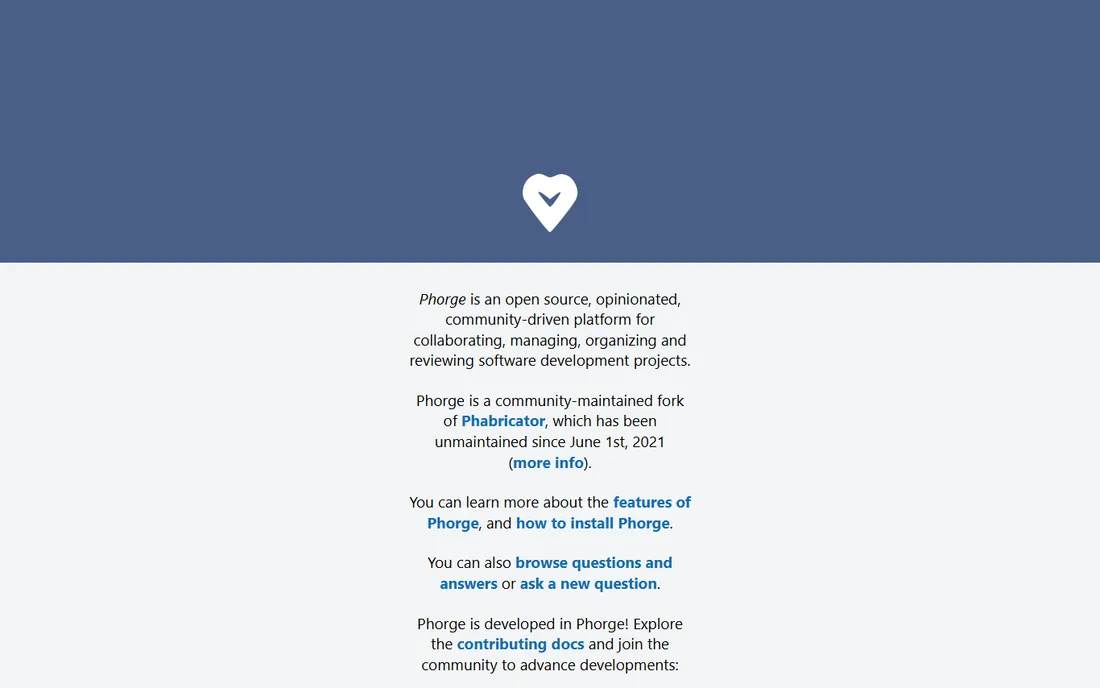
When Phabricator's company shut it down, the community forked it as Phorge and kept shipping. You get the full suite: pre-commit and post-commit code review, task management with workboards, project wikis, file hosting and repository management for Git, Mercurial and Subversion. Teams with a strict review culture often prefer its Differential workflow to pull requests.
The honest catch is momentum. The contributor base is dedicated but small, and the UI will not win over anyone judging by screenshots. If your team already knows the Phabricator way of working, Phorge is the only maintained path forward. New teams usually pick something more modern.
What we like- The community-maintained continuation of Phabricator, which went unmaintained in June 2021
- Combines code review (Differential), task tracking (Maniphest), wikis and repository hosting in one suite
- Solid for teams with a review-heavy workflow
Watch out for- The interface is unmistakably a 2010s design
- Installation is more involved than the kanban tools and the community is smaller than GitLab's
#9
Planka
Best for: Teams that want the most polished free kanban board available
Visit planka.app
Starting priceFree (self-hosted Community edition); Pro and Enterprise plans are paid
Free planYes (Community edition is free)
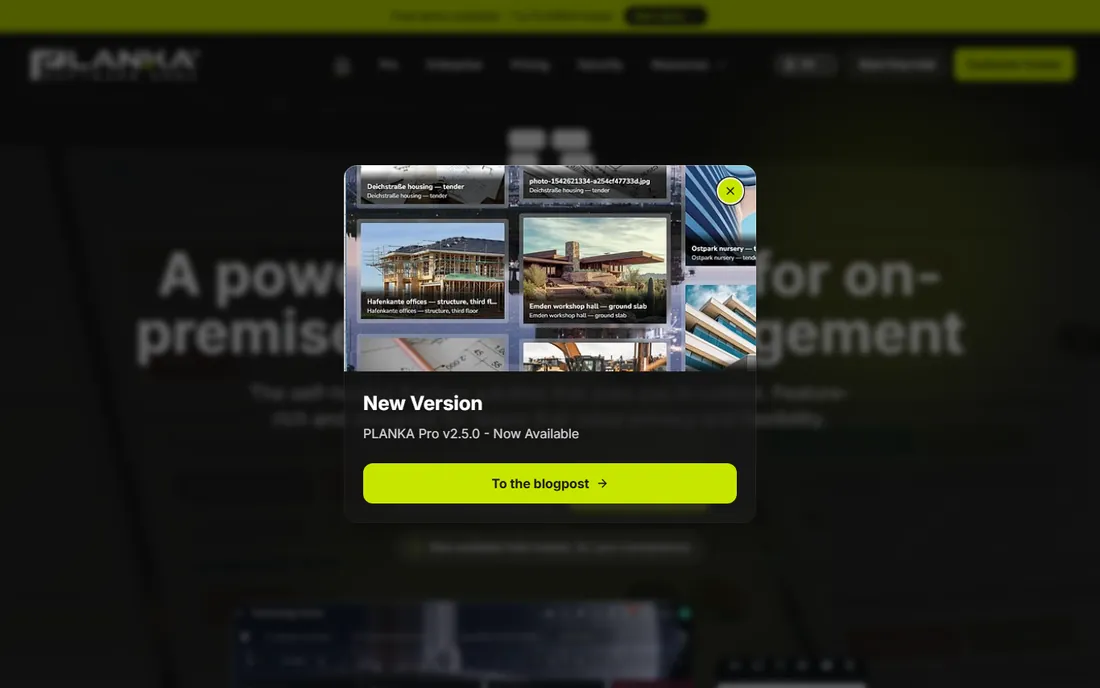
Planka is what you recommend when someone asks for "Trello, but ours." Projects hold boards, boards hold lists and cards, and everything syncs live across users without refreshes. It looks and feels like a commercial product, which helps adoption with non-technical teams.
The Community edition covers the kanban essentials well. The line appears when you need single sign-on, project templates or granular guest access: those are Pro features. For a team of any size that just needs shared boards with timers and notifications, the free edition is complete.
What we like- Real-time collaborative boards with a clean, modern interface
- Card timers, labels, attachments, markdown descriptions and user notifications
- Simple Docker deployment with Postgres
Watch out for- Kanban only, like Wekan
- SSO, templates, guest access and advanced reporting sit in paid Pro, so larger orgs hit the paywall
Self-hosted or cloud: where the money actually goes
Every tool here is free to download, and that sentence tricks buyers every year. The license costs nothing. The server, the backups, the TLS certificates, the updates and the person who applies them at 11pm when something breaks: those cost real money. Before choosing, price a small VPS with automated backups and estimate two to four hours a month of maintenance. For many five-person teams, that still beats per-seat SaaS pricing within a year.
When self-hosting wins
You keep every byte of project data on infrastructure you control, which matters for client contracts, regulated work and teams outside the US. There are no per-user fees, so adding contractors, clients or the whole company costs nothing extra. And you can customize: themes, plugins, workflow tweaks and integrations that a SaaS vendor would never allow.
When the paid cloud version wins
Several vendors here sell hosted versions: OpenProject's Enterprise Cloud, Plane Cloud, Planka's hosted Pro, Leantime's cloud offering. If nobody on your team wants to own a server, the hosted plan is usually cheaper than your time. The paid tiers also fund development, which is worth remembering: open-source projects survive on the companies that pay for the parts around the free core.
The maintenance checklist
Whatever you pick, set up automated off-site backups from day one, put the instance behind HTTPS, and subscribe to the project's release notes or security mailing list. Test upgrades on a copy before touching production. These four habits prevent nearly every self-hosting disaster.
What "open source" actually guarantees (and what it does not)
An open-source license guarantees you can inspect the code, modify it, and run it without paying the vendor or asking permission. It does not guarantee the project stays alive, ships security fixes quickly, or answers your support tickets. That is why this list weights maintenance activity: recent releases, responsive issue trackers and a real contributor base matter more than the license file.
It also does not mean "no vendor." Most tools here have a company behind them selling hosting, support or enterprise features. That is healthy: it funds the free edition. What you want to avoid are projects where the free edition is deliberately crippled to force upgrades. None of the nine above do that; each free edition is a complete, usable product.
How we chose
We started with the searches buyers run: open source project management software, self-hosted Jira alternative, open source kanban and open source agile tools. For each candidate we opened the vendor homepage and checked the license, the most recent release activity and whether the project is genuinely maintained in 2026. We excluded Phabricator (unmaintained upstream since June 2021, superseded here by its maintained fork Phorge) and Focalboard (development folded into Mattermost). We compared feature scope, deployment effort, hardware needs and fit for different team types using vendor documentation and public community discussion. Where a paid tier exists but the vendor publishes no price, we wrote "see website" rather than guessing.
Frequently asked questions
Is open source project management software really free?
The license is free, and every tool here can be self-hosted without paying per user. You still pay for a server, backups and the time to maintain it. For a small team that usually totals far less than per-seat SaaS pricing, but it is not zero.
Which open source tool is the best Jira replacement?
OpenProject matches Jira's breadth most closely: Gantt scheduling, agile boards, time tracking and cost management in one install. Plane is the more modern-feeling alternative for product and engineering teams. Taiga sits between them for pure agile workflows.
What happened to Phabricator?
Phabricator's company discontinued it in June 2021 and the upstream project is unmaintained. Phorge is the community-maintained fork that continues development, and that is the one listed here.
Can non-technical teams use these tools?
Leantime and Planka are the friendliest for non-technical users, with simple interfaces and quick setup. Taiga also works well across roles. Redmine, Tuleap and Phorge assume more technical comfort and suit engineering-led teams.
How hard is it to self-host one of these?
Wekan, Planka and Leantime deploy from Docker in under an hour on a small VPS. Taiga and Plane need a bit more setup with their databases. OpenProject, Redmine and especially Tuleap reward careful installation and a server with real resources. All of them need ongoing updates and backups.
Do any of these offer a hosted version so I skip the server?
Yes. OpenProject, Plane, Planka and Leantime all sell hosted cloud plans, and Wekan's maintainer offers commercial support. The hosted plans fund the free editions, and they are worth it if nobody on your team wants server duty.
Sources we checked (9)
- https://www.openproject.org/
- https://taiga.io/
- https://redmine.org/
- https://leantime.io/
- https://plane.so/
- https://wekan.fi/
- https://www.tuleap.org/
- https://phorge.it/
- https://planka.app/
Is your product missing or out of date?
We review this list regularly. Vendors can request a listing, send updated pricing or ask about featured placement.

Shihab Mia · Founder, Rankite
Shihab has spent more than a decade helping SaaS and e-commerce brands grow through search. He writes Rankite's software buying guides from pricing pages, documentation and public user reviews. More about Shihab.