How we make this list: we compare pricing pages, product documentation and public user reviews. Rankite is independent; if a vendor ever pays for a featured spot, that listing is clearly labeled Partner.
Key takeaways
- Bubble remains the default for complex web SaaS built entirely without code, with the deepest workflow logic and plugin ecosystem of any visual platform.
- WeWeb and Xano are the strongest split-stack pairing: WeWeb for the frontend with code export, Xano for the backend with a real Postgres database.
- FlutterFlow is the pick when your SaaS needs true native mobile apps, with Flutter code export that removes platform lock-in.
- Glide, Adalo and Softr are faster for simpler products, but each has a ceiling you should understand before you build on it.
- Backendless and Bildr are the underrated options for founders who want more control over data and logic without writing everything by hand.
Quick comparison
| Tool | Best for | Starting price | Free plan |
|---|
 Bubble Bubble | full-stack web SaaS without code | See website | Yes |
 WeWeb WeWeb | visual frontend with code export | $20/month (Essential plan) | Yes |
 FlutterFlow FlutterFlow | native mobile SaaS apps | See website | Yes |
 Xano Xano | no-code backend and APIs | $85/month (Essential plan, billed annually) | Yes |
 Backendless Backendless | visual backend with UI builder | See website | Yes |
 Glide Glide | data-driven apps from spreadsheets | See website | Yes |
 Adalo Adalo | simple mobile app MVPs | See website | Yes |
 Softr Softr | client portals on Airtable | See website | Yes |
 Bildr Bildr | complex business applications | See website | Yes |
Is your product missing or out of date?
We review this list regularly. Vendors can request a listing, send updated pricing or ask about featured placement.
Starting priceSee website
Free planYes
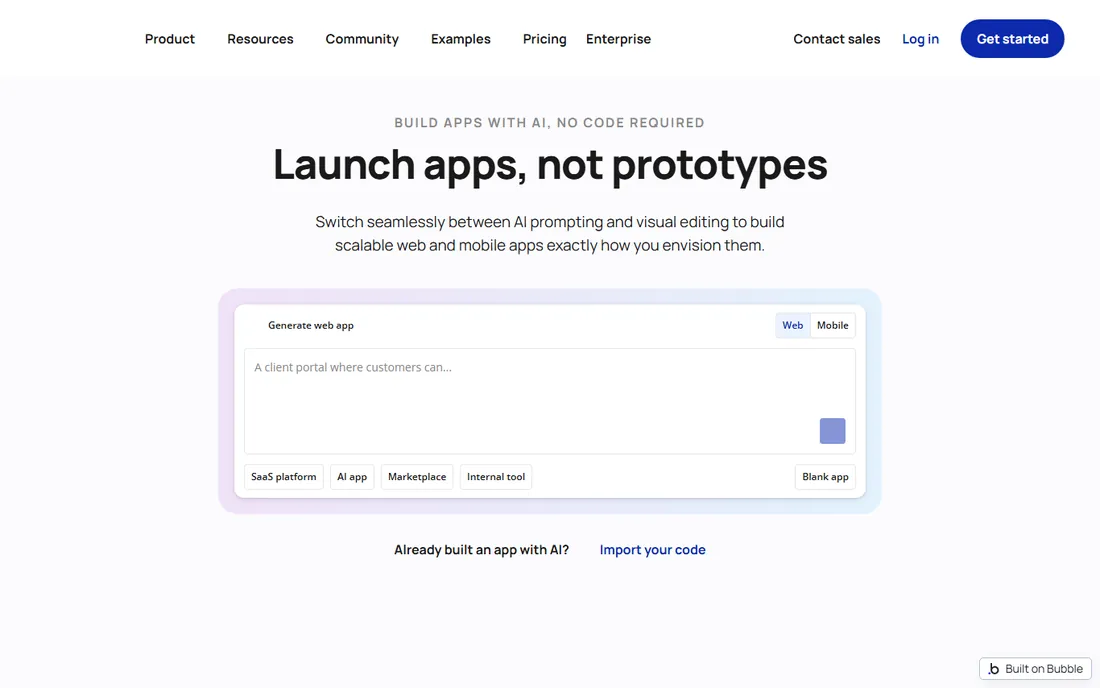
Bubble is the closest thing no-code has to a full programming language with the syntax removed. You get a visual database, a workflow editor that handles genuinely complex logic, user authentication, and API connections, all hosted on Bubble's infrastructure. For a web-based SaaS with real data relationships, it remains the default recommendation for a reason.
The honest limits are scale and mobile. Apps with heavy workloads need optimization, and Bubble's usage-based pricing means a successful app costs more than the sticker price suggests. Mobile apps are web wrappers, not native. If your SaaS is web-first and you want maximum building power without code, start here and budget for the workload costs.
What we like- Deepest visual workflow logic in no-code
- Huge plugin and template ecosystem
- Built-in database, auth and hosting in one place
Watch out for- Performance needs care at scale
- No true native mobile apps, only wrappers
- Workload-based pricing can surprise growing apps
Starting price$20/month (Essential plan)
Free planYes
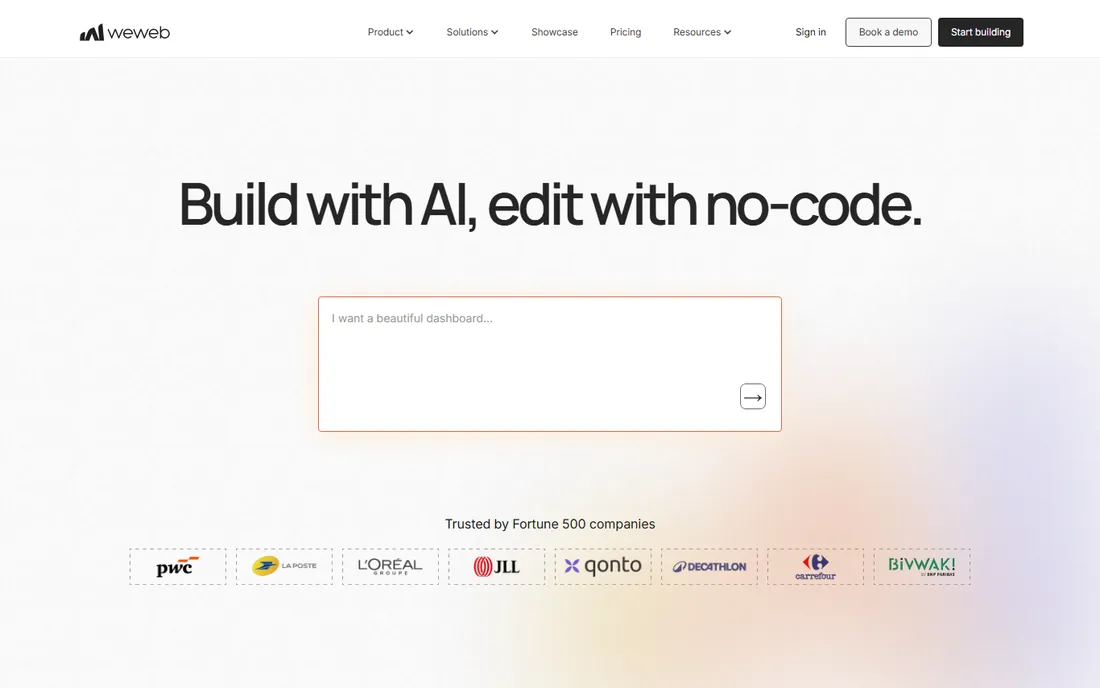
WeWeb builds the frontend of your SaaS and does it well. The drag-and-drop editor gives you unusual design control for a no-code tool, and it connects to any backend through REST APIs or native integrations. The standout feature is code export: you can export your frontend as Vue.js code and self-host it, which answers the lock-in question that hangs over every no-code platform.
The Essential plan starts at $20 per month, with cloud hosting tiers on top for production apps. The catch is the split: WeWeb does not include a backend, so you pair it with Xano, Supabase or your own API. That is more setup than Bubble, but the result is a cleaner architecture that scales better and that you can fully own.
What we like- Real code export removes lock-in
- Connects to any backend via API
- Strong design control for custom interfaces
Watch out for- Frontend only, you must bring a backend like Xano
- Paid plans needed for custom domains and production features
Starting priceSee website
Free planYes
FlutterFlow is the answer when your SaaS lives on phones. It generates real Flutter apps that you publish to the App Store and Google Play, with Firebase handling auth, database and hosting. The visual builder covers most app patterns, and the code export means you own the output if you ever outgrow the platform.
It is less compelling for pure web SaaS, where Bubble or WeWeb offer more. Pricing scales with features like code export and team collaboration. Choose FlutterFlow when mobile distribution is core to the product, not as an afterthought to a web app.
What we like- True native iOS and Android output
- Flutter code export for full ownership
- Firebase integration built in
Watch out for- Web app support is weaker than mobile
- Complex logic still benefits from custom code
Starting price$85/month (Essential plan, billed annually)
Free planYes
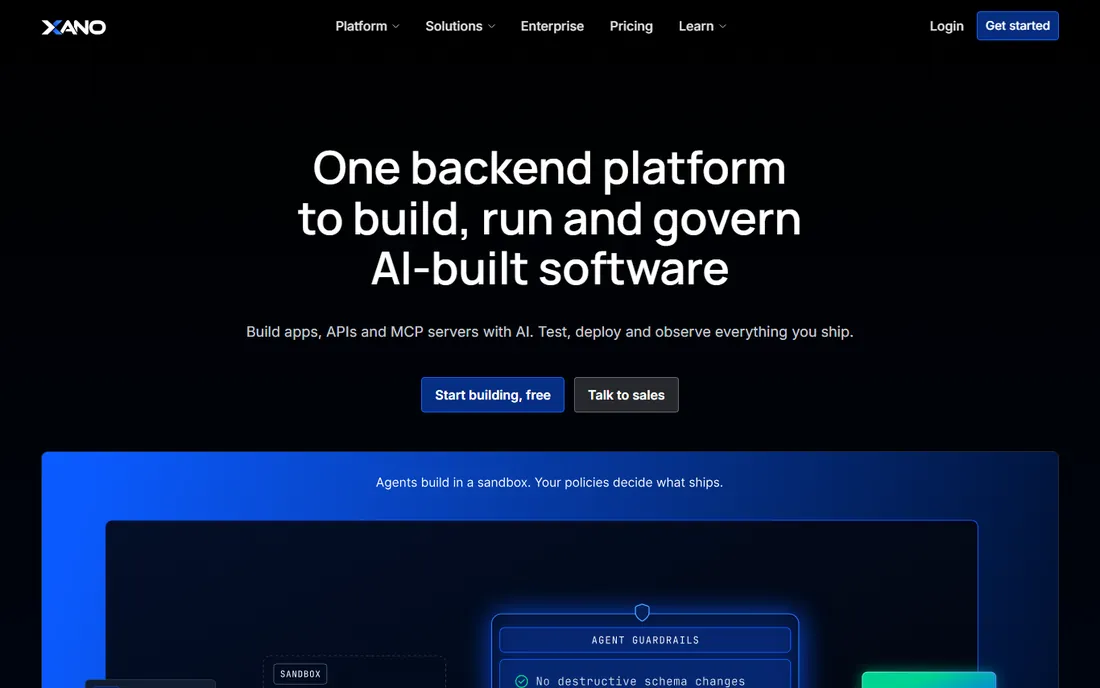
Xano is the backend half of the modern no-code stack. You get a managed Postgres database, a visual builder for APIs and business logic, background tasks, and authentication, all without writing server code. It connects to any frontend, from WeWeb to custom code to AI app builders, through standard REST APIs with auto-generated documentation.
The Essential plan costs $85 per month billed annually, which is real money for an MVP. The free tier works for development and testing with rate limits. Xano earns its price when your SaaS outgrows Bubble's built-in database or when you want a proper backend that a future development team can work with. It is infrastructure, not a shortcut, and it is priced like it.
What we like- Real Postgres database with no record limits on paid plans
- Visual API builder with server-side logic
- Scales to serious production workloads
Watch out for- Backend only, needs a separate frontend
- $85/month entry is high for hobby projects
Starting priceSee website
Free planYes
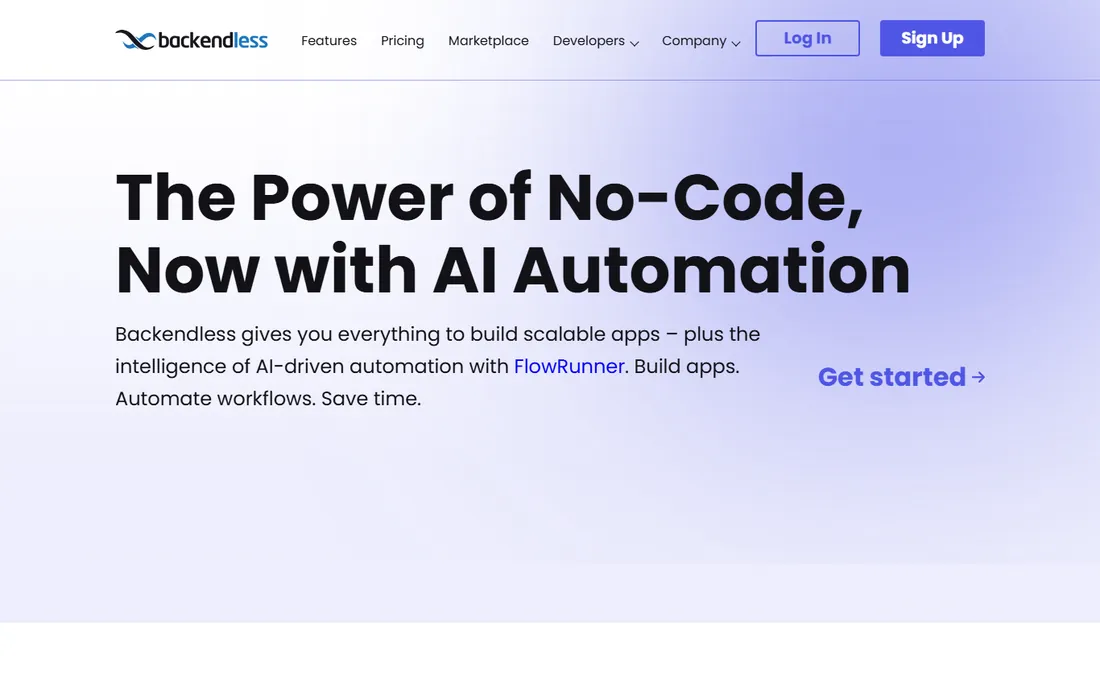
Backendless offers a visual backend (database, APIs, auth, push notifications) plus a UI builder, so you can build more of the product in one place than with Xano alone. Its free tier is genuinely useful for MVPs, and the platform has been around long enough to be stable and proven.
The trade-off is ecosystem. The community, templates and third-party content are a fraction of Bubble's, which means more figuring things out yourself. The UI builder is serviceable but not the reason to choose it. Pick Backendless when you want a capable backend with a low starting cost and do not need the biggest community.
What we like- Generous free tier for getting started
- Visual backend plus a UI builder in one platform
- Real-time database features included
Watch out for- Smaller community than Bubble
- Interface and docs feel less polished
Starting priceSee website
Free planYes
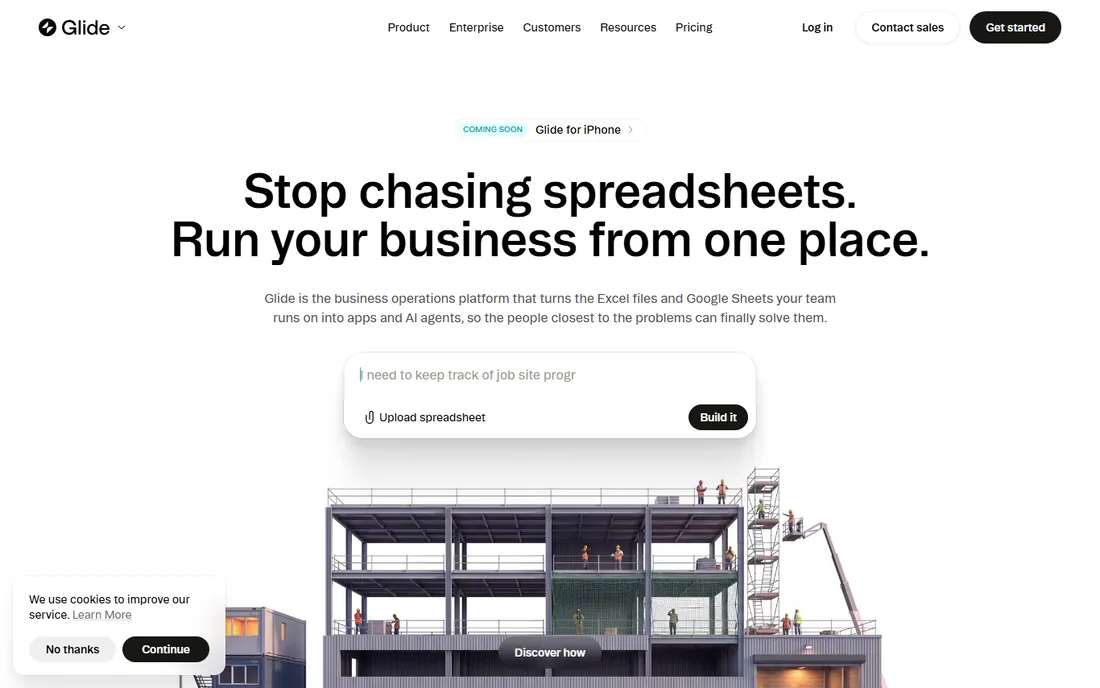
Glide turns a Google Sheet or Airtable base into a polished app in an afternoon. For internal tools, dashboards and simple customer-facing apps, nothing is faster. The building experience is the smoothest in no-code, and the results look professional without design effort.
The ceiling is real, though. Complex workflows, custom logic and intricate data relationships are outside Glide's comfort zone. It is the wrong tool for a SaaS with sophisticated business rules, and per-user pricing can add up for customer-facing products. Use Glide when your product is fundamentally a better interface on structured data.
What we like- Fastest path from a spreadsheet to a working app
- Clean mobile-friendly output
- Good for internal tools and simple customer apps
Watch out for- Limited custom logic for complex SaaS
- Pricing scales quickly with users
Starting priceSee website
Free planYes
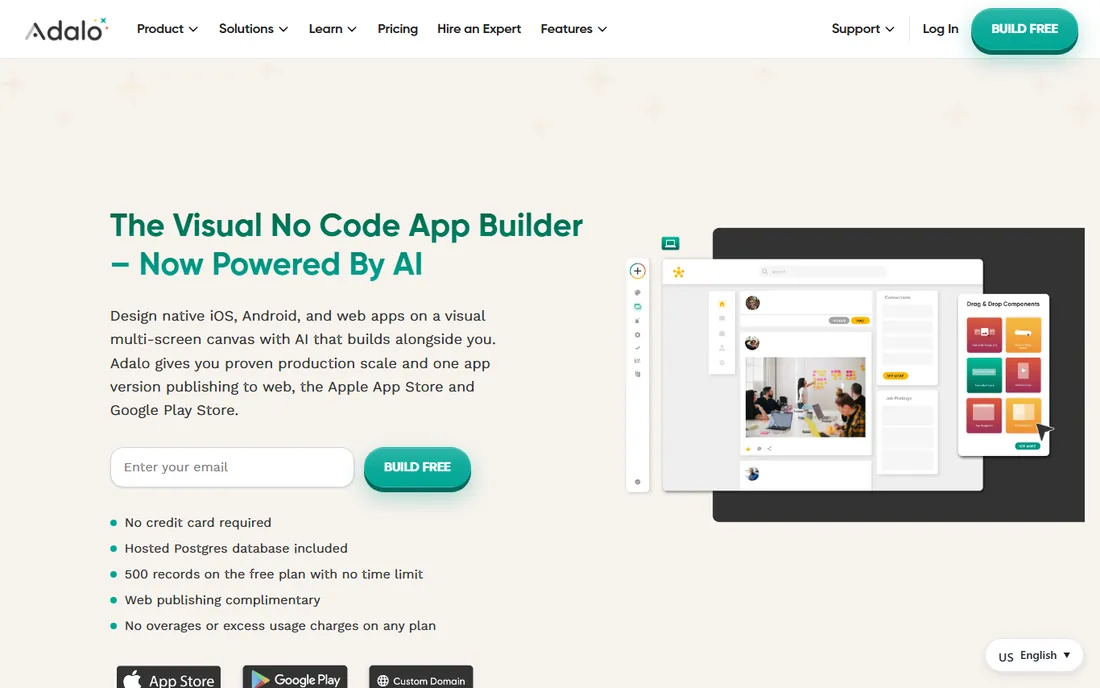
Adalo is built for founders who want a mobile app in the stores quickly. The visual builder is approachable, publishing to iOS and Android is straightforward, and the component marketplace covers common patterns like bookings, marketplaces and social features. For a simple mobile MVP, the time from idea to store listing is short.
It is not a complex-SaaS platform. Backend logic, data relationships and scale are all limited compared to Bubble or a Xano-backed stack. Adalo fits MVPs that test a concept with real users. If the concept works and the product needs to grow teeth, plan for a rebuild on a stronger foundation.
What we like- Beginner-friendly mobile app builder
- Publishes to app stores from low tiers
- Component marketplace speeds up building
Watch out for- Limited backend power for complex SaaS
- Performance and design constraints at scale
Starting priceSee website
Free planYes
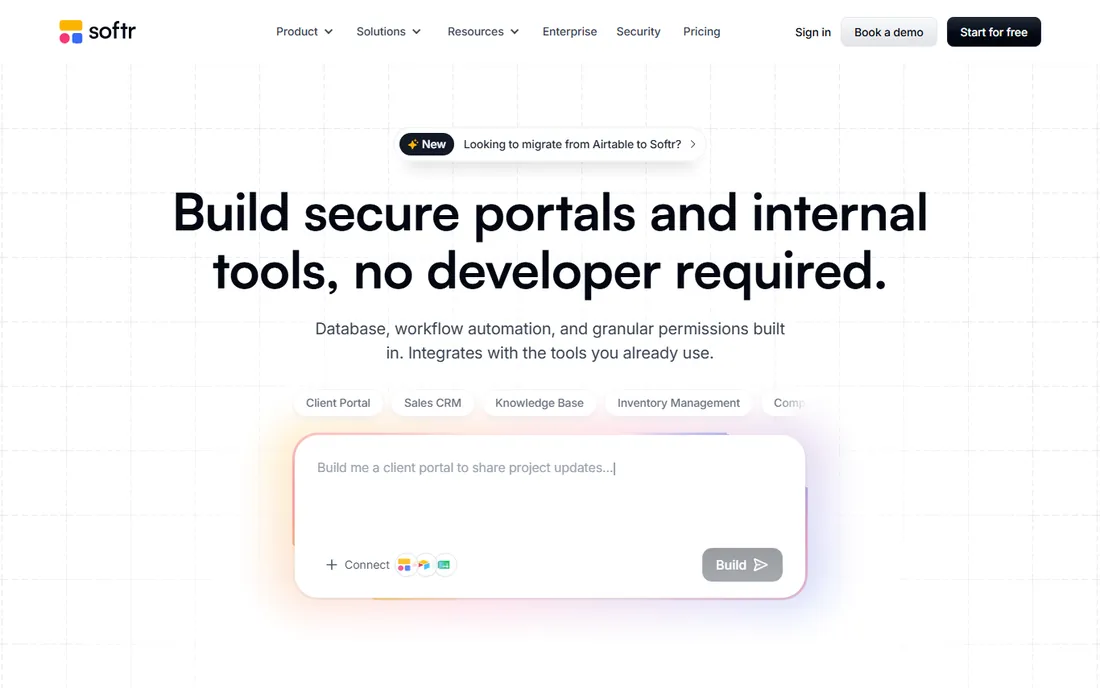
Softr turns your Airtable base (or its own database) into a client portal, directory or internal tool with logins and permissions. The block-based builder is fast, and features like per-record permissions and membership tiers map directly onto common SaaS patterns for agencies, marketplaces and content businesses.
Custom logic is the limit. If your SaaS needs complex workflows beyond forms, filters and permissions, Softr will frustrate you. It is the best tool in no-code for a specific shape of product: gated access to structured data. Build that shape and it shines; stretch beyond it and it strains.
What we like- Excellent for portals, directories and membership sites
- Native Airtable and database integrations
- Per-record permissions built in
Watch out for- Limited custom app logic
- Design flexibility trails WeWeb and Bubble
Starting priceSee website
Free planYes
Bildr sits between no-code and low-code, aimed at complex business applications. Its visual logic builder and state management go deeper than Glide or Softr, letting you build sophisticated internal tools and customer apps without writing code. Reusable components help as apps grow beyond MVP size.
The learning curve is steeper than the beginner-friendly tools here, and the community is small, so expect to solve problems on your own. Bildr suits technically minded founders and teams building serious business applications who find Bubble too opinionated and raw code too slow.
What we like- Advanced state management and visual logic builder
- Reusable components for larger apps
- More developer-grade control than most no-code tools
Watch out for- Steeper learning curve
- Smaller ecosystem and community
How we chose
We evaluated each platform on what it actually builds: full-stack web apps, frontends, backends or mobile apps, since mismatched categories cause the expensive rebuilds. We checked current pricing pages for plan costs and limits, read documentation for database, auth and scalability features, and weighed community size and ecosystem maturity. We also considered lock-in: whether you can export code or data if you outgrow the platform. Every tool here exists today and serves real production apps, not just prototypes.
What determines whether a no-code SaaS survives
The first question is data. Every SaaS is a database with a nice interface, so check record limits, query power and export options before you fall in love with a builder. A platform that caps records or makes export painful owns your business data, and migrating later is the rebuild nobody budgets for.
The second question is logic depth. Simple products need forms and filters; real SaaS products need conditional workflows, scheduled jobs, webhooks and integrations. Map your three most complex workflows onto the platform during the trial. If any of them needs an awkward workaround on day one, it will become a permanent pain.
The third question is cost at success. No-code pricing is cheap at zero users and can get expensive at scale, through workload units, per-user seats or record tiers. Model your pricing page math at 1,000 paying users, not ten. The platform that is cheapest for your MVP is not always cheapest for your business.
Pricing explained: what you actually pay for
No-code SaaS pricing comes in three flavors, and most platforms mix them. Platform subscriptions cover the builder and hosting, like WeWeb's $20 per month Essential plan or Xano's $85 per month backend. Usage metering covers workload: Bubble charges for workflow runs, Xano-adjacent platforms meter compute, and these costs grow with your user base. Per-user or per-record pricing covers seats and data, which hits customer-facing products hardest.
The practical move is to separate build cost from run cost. Almost every platform here has a free tier that covers building and testing. The run cost is what matters, and it only becomes clear when you map your expected users, workflows and data onto the pricing page. Do that math before you commit your product to a platform, not after launch.
Frequently asked questions
Can you really build a SaaS with no code?
Yes, for a wide range of products. Thousands of production SaaS apps run on Bubble, and the WeWeb plus Xano stack powers serious commercial products. The limits appear with very complex logic, extreme scale, or unusual technical requirements. Most B2B SaaS products fit comfortably within what these tools handle.
Which no-code tool is best for a SaaS startup?
Bubble is the safest default for a web SaaS built by non-developers. If you want cleaner architecture and less lock-in, pair WeWeb for the frontend with Xano for the backend. If mobile apps are core to the product, start with FlutterFlow.
How much does it cost to run a no-code SaaS?
MVPs can run on free tiers or $20 to $85 per month for paid plans. A growing SaaS with real users typically costs a few hundred dollars a month across platform subscriptions and usage. Model your user count and workflow volume on each pricing page, because usage-based costs are where surprises hide.
Do I own my data and code?
Data export is standard on all serious platforms here; verify the format before you commit. Code export varies: WeWeb and FlutterFlow export real code you can self-host, Bubble does not export application code, and Xano exposes your data and APIs but not its internals. If ownership matters to you, weight code export heavily.
When should I switch from no-code to custom code?
Consider it when the platform's limits cost more than developers would: runaway usage bills, performance problems you cannot fix, or features the platform cannot express. Many successful products run on no-code for years. The switch should be driven by measured pain, not by the idea that "real" companies write code.
Is Bubble or WeWeb better for SaaS?
Bubble is better for building fast with everything in one place: database, logic, auth and hosting. WeWeb is better for design control, code ownership and pairing with a proper backend like Xano. Choose Bubble for speed and simplicity, WeWeb plus Xano for architecture and scale.
Sources we checked (6)
- https://bubble.io/pricing
- https://www.weweb.io/pricing
- https://www.xano.com/pricing/
- https://www.cluboo.com/best-no-code-app-builders
- https://www.perfectcorp.com/business/blog/retail/no-code-app-builder-guide
- https://www.lowcode.agency/blog/no-code-web-app-builders
Is your product missing or out of date?
We review this list regularly. Vendors can request a listing, send updated pricing or ask about featured placement.

Shihab Mia · Founder, Rankite
Shihab has spent more than a decade helping SaaS and e-commerce brands grow through search. He writes Rankite's software buying guides from pricing pages, documentation and public user reviews. More about Shihab.