How we make this list: we compare pricing pages, product documentation and public user reviews. Rankite is independent; if a vendor ever pays for a featured spot, that listing is clearly labeled Partner.
Key takeaways
- Softr and Glide are the fastest free routes from a spreadsheet to a working web app.
- Bubble's free tier is the most capable for complex apps, but the learning curve is steep.
- Retool, Appsmith, Budibase, and ToolJet target internal tools, with generous free and open source options.
- Adalo and AppSheet extend the free-build idea to mobile and Google Workspace data.
- Free plans are real, but watch the limits: users, records, and app actions decide when you start paying.
Quick comparison
| Tool | Best for | Starting price | Free plan |
|---|
 Softr Softr | Apps from Airtable and Google Sheets | Free | Yes |
 Glide Glide | Spreadsheet-powered apps | Free | Yes |
 Bubble Bubble | Complex apps on a free tier | Free | Yes |
 Adalo Adalo | Free mobile app building | Free | Yes |
 AppSheet AppSheet | Apps on Google Workspace data | Free | Yes |
 Retool Retool | Internal tools for developers | Free | Yes |
 Appsmith Appsmith | Open source internal apps | Free (open source) | Yes |
 Budibase Budibase | Self-hosted business apps | Free (open source) | Yes |
 ToolJet ToolJet | Open source app builder | Free (open source) | Yes |
Is your product missing or out of date?
We review this list regularly. Vendors can request a listing, send updated pricing or ask about featured placement.
The best free web app builders
Starting priceFree
Free planYes
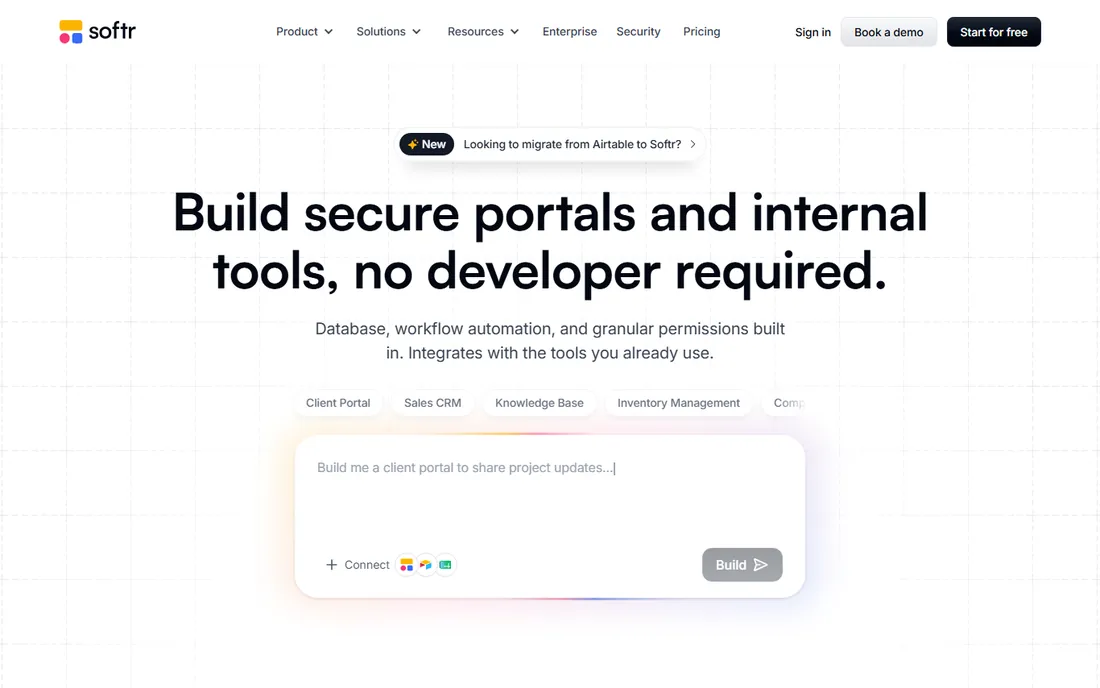
Softr turns Airtable bases and Google Sheets into polished web apps: client portals, directories, internal dashboards, and membership sites. The template library is genuinely attractive, and the building experience is closer to assembling blocks than to programming. For freelancers and small teams whose data already lives in Airtable, the path from spreadsheet to client-facing portal is remarkably short.
The free plan is real but bounded: limited records, limited app users, and Softr branding. Growing past those caps means a paid plan. Design customization goes far for a no-code tool but stops short of full creative control. If your data is in Airtable and you need a portal this month, Softr is the fastest serious option.
What we like- Beautiful templates
- Airtable and Sheets sync
- Client portals and memberships
Watch out for- Free plan caps records and users
- Design flexibility has limits
Starting priceFree
Free planYes
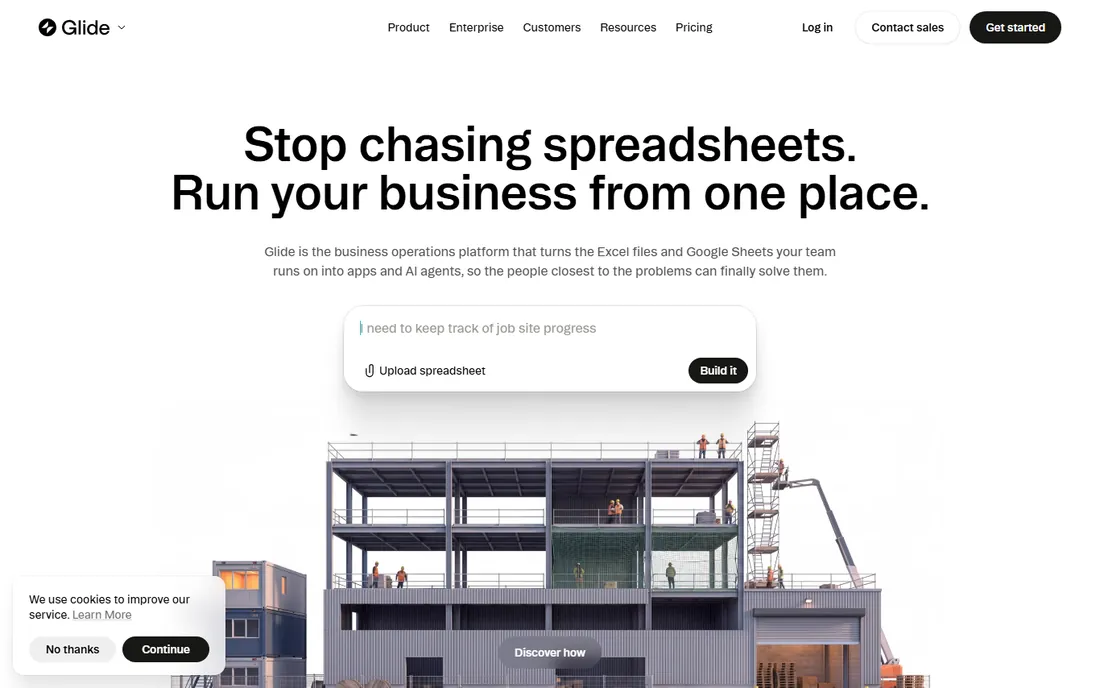
Glide's free tier lets you build working apps from Google Sheets with no credit card and no time limit. Lists, forms, maps, and user-specific views come together quickly, and the AI builder can draft the app from a description. For personal projects, MVPs, and small internal tools, the free plan covers a surprising amount.
Complexity is where the ceiling appears. Advanced logic, API integrations, and larger user counts sit on paid tiers. Glide apps also carry a distinctive look that is hard to fully escape. But as a free starting point, few tools get you from idea to a link you can share as fast as Glide does.
What we like- Builds from Sheets in minutes
- Generous free tier
- AI-assisted building
Watch out for- Best for simpler apps
- Advanced logic needs paid plans
Starting priceFree
Free planYes
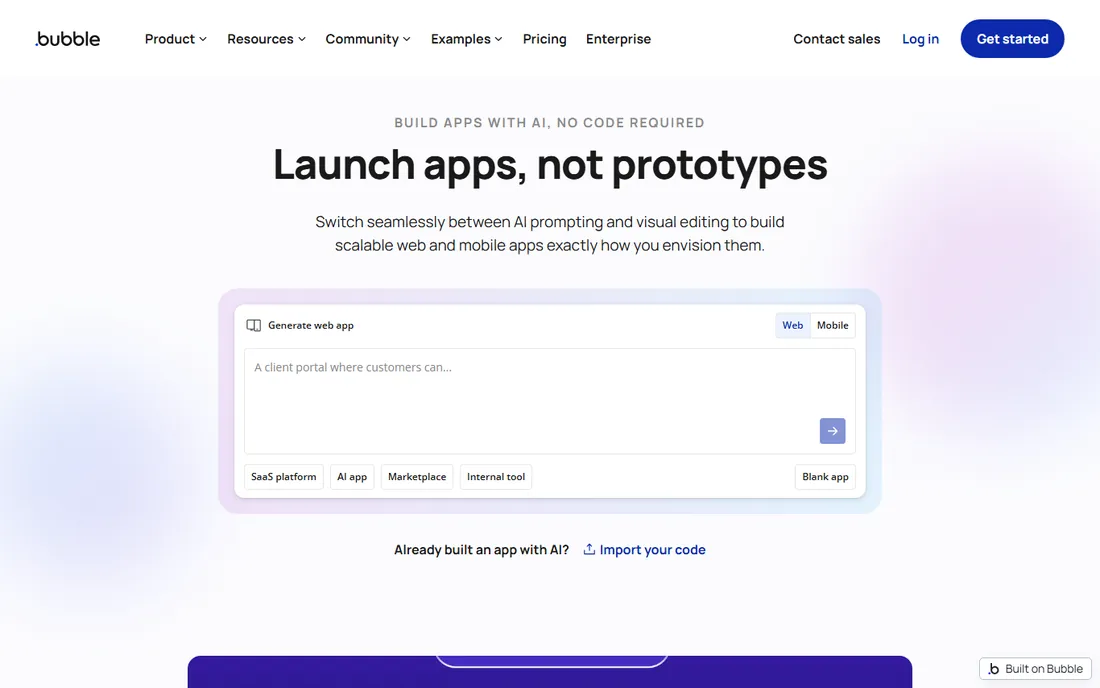
Bubble's free plan is unusual: it gives you the full visual programming environment, database, and workflow engine without paying. You can build genuinely complex applications, marketplaces, SaaS prototypes, and internal platforms, on the free tier. The community and template marketplace mean you rarely start from zero.
The limits are operational, not functional. Free apps go to sleep after inactivity, carry Bubble branding, and cannot use a custom domain. And Bubble demands real learning: weeks to get fluent. But if your app idea is ambitious and your budget is zero, no other free builder goes this deep.
What we like- Deepest free-tier capabilities
- Real database and logic
- Huge community
Watch out for- Steep learning curve
- Free apps sleep and carry branding
Starting priceFree
Free planYes
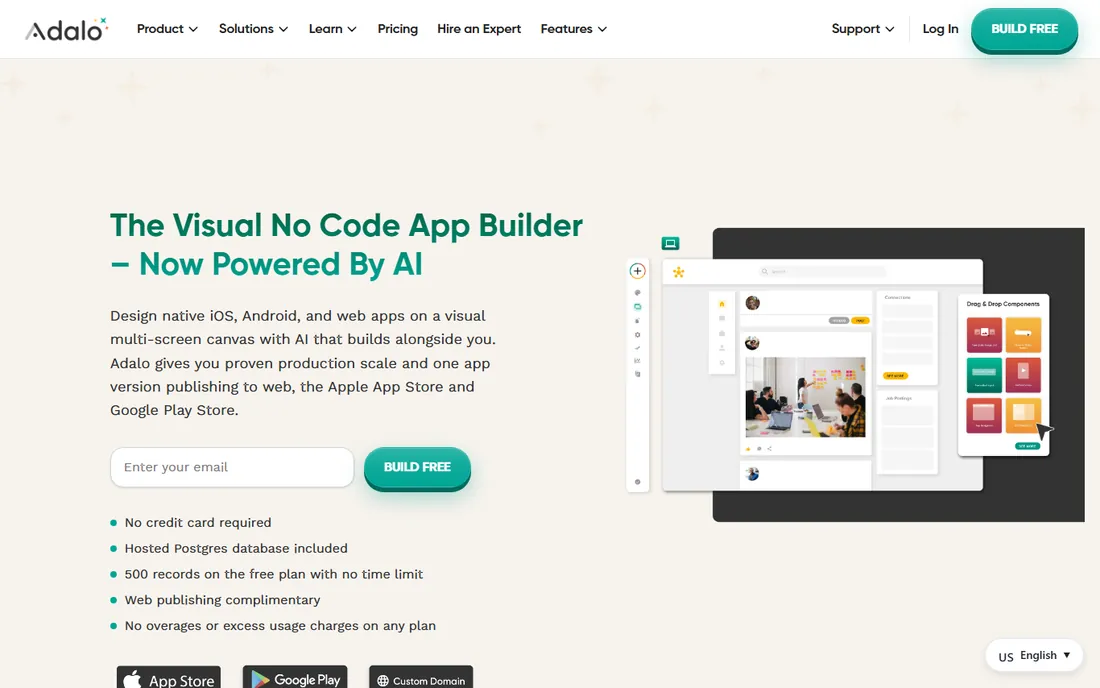
Adalo stands out by offering native iOS and Android app building on a free plan. You can design screens, connect a database, add user logins, and even test on your phone without paying. For validating a mobile app idea, that is a meaningful free offer in a category where most competitors charge from day one.
The free tier caps database records, app actions, and published apps, so anything beyond a prototype needs a subscription. Performance on data-heavy apps can also lag. Treat Adalo's free plan as a prototyping sandbox: prove the idea works, then pay when real users arrive.
What we like- Native mobile output on free tier
- Intuitive builder
- Push notifications
Watch out for- Free plan is limited
- Complex apps need paid plans
Starting priceFree
Free planYes
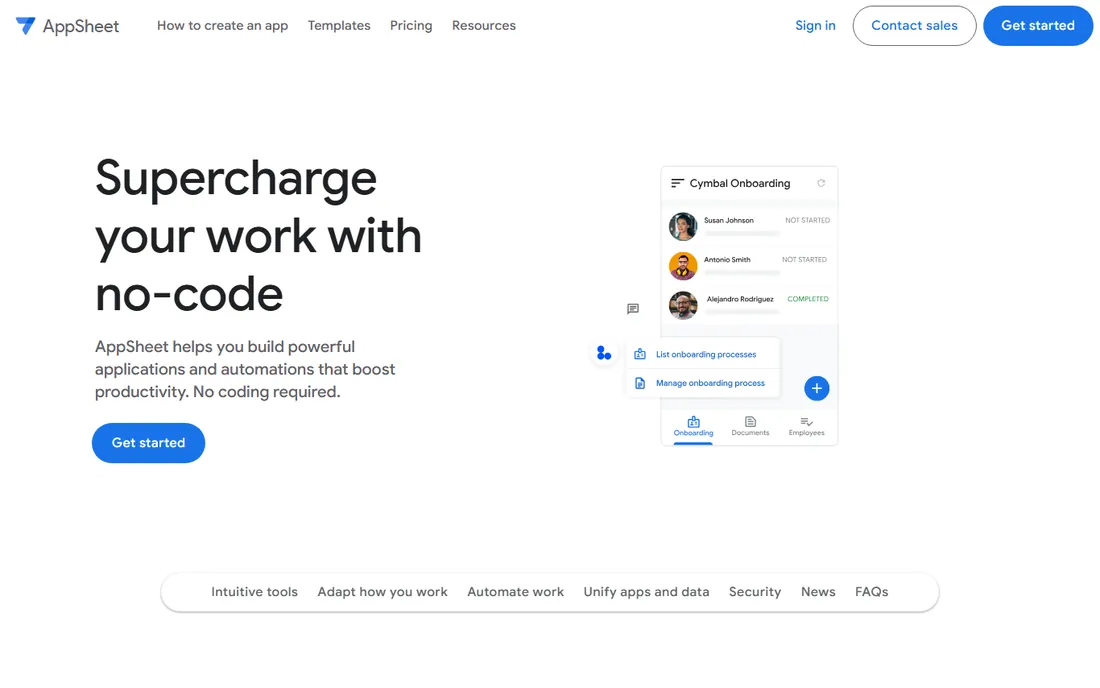
AppSheet, owned by Google, builds mobile and web apps from data in Google Sheets, Drive, and other sources. It is a favorite for field operations: inspections, inventory counts, and data collection apps that work offline and sync later. The free tier covers prototyping and small deployments, which suits teams already living in Google Workspace.
The builder prioritizes function over beauty, and the most capable automation and deployment features sit on paid plans. But for a business running on Google Sheets that needs a data-entry app for the team, AppSheet's free tier and Google integration make it the path of least resistance.
What we like- Google-backed
- Builds from Sheets and Drive
- Good for field teams
Watch out for- Interface is utilitarian
- Advanced features need paid plans
Starting priceFree
Free planYes
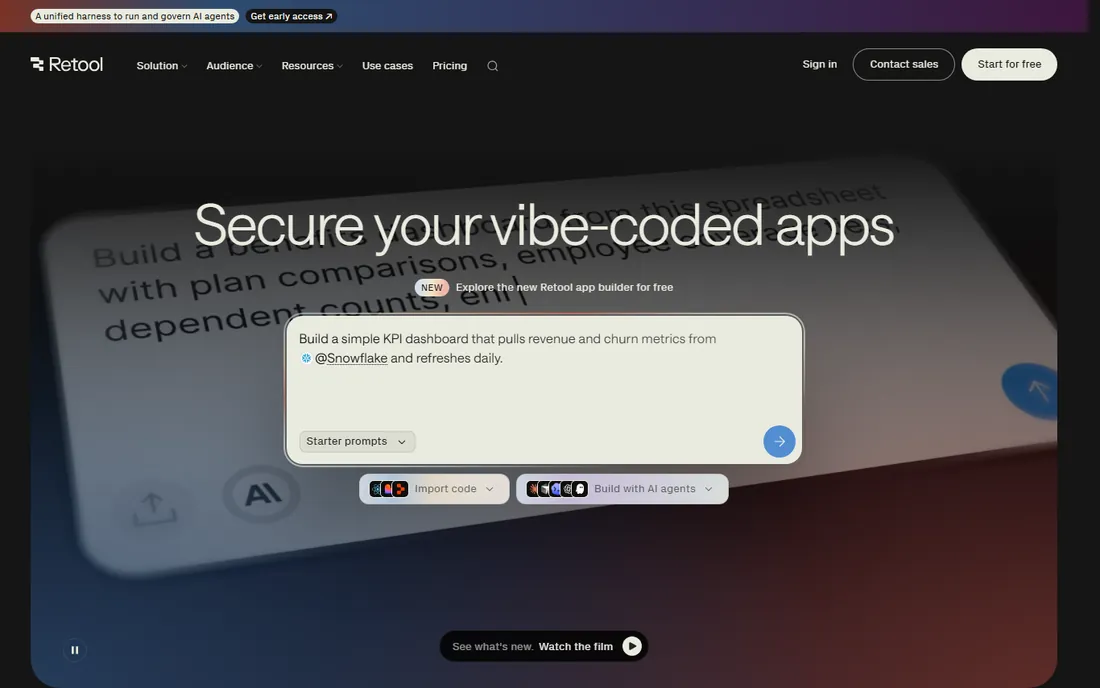
Retool is the internal-tools builder for teams with developers. Drag-and-drop components assemble admin panels, dashboards, and operational tools, while JavaScript handles custom logic and queries hit any database or API. The free tier covers small teams building internal apps, which is exactly the use case where Retool shines.
It assumes technical users. Non-developers will find Retool demanding, and it is not designed for customer-facing products. But for the eternal backlog of internal tools (admin panels, support dashboards, data-entry apps), Retool's free tier lets a small team clear that backlog without new infrastructure.
What we like- Powerful for technical teams
- Connects to any database or API
- Generous free tier
Watch out for- Needs some coding
- Not for customer-facing apps
Starting priceFree (open source)
Free planYes
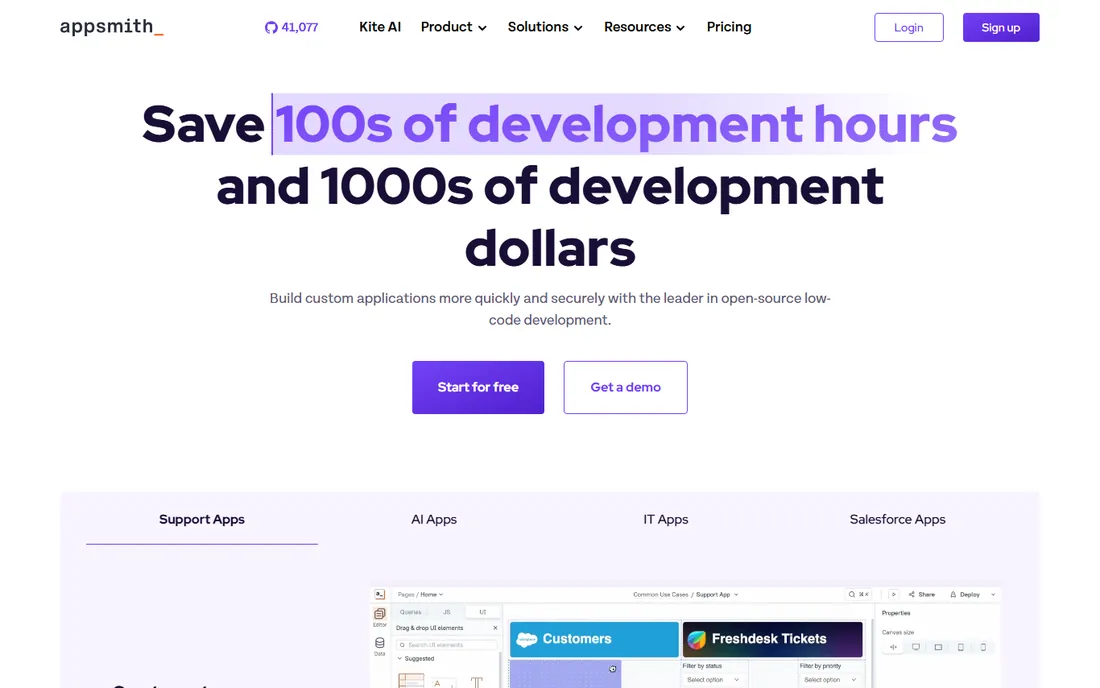
Appsmith is the open source answer to Retool: build internal apps and dashboards with drag-and-drop widgets connected to databases and APIs. The community edition is free and can be self-hosted, which appeals to teams that want full control of their data and infrastructure. Integrations cover the usual databases plus REST and GraphQL.
The interface is functional rather than beautiful, and self-hosting means you own updates and uptime. The hosted cloud version has its own free tier if you prefer not to manage servers. For technical teams that prefer open source on principle or for compliance reasons, Appsmith is the natural pick.
What we like- Open source and self-hostable
- Strong data integrations
- Active community
Watch out for- UI polish trails Retool
- Self-hosting needs maintenance
Starting priceFree (open source)
Free planYes
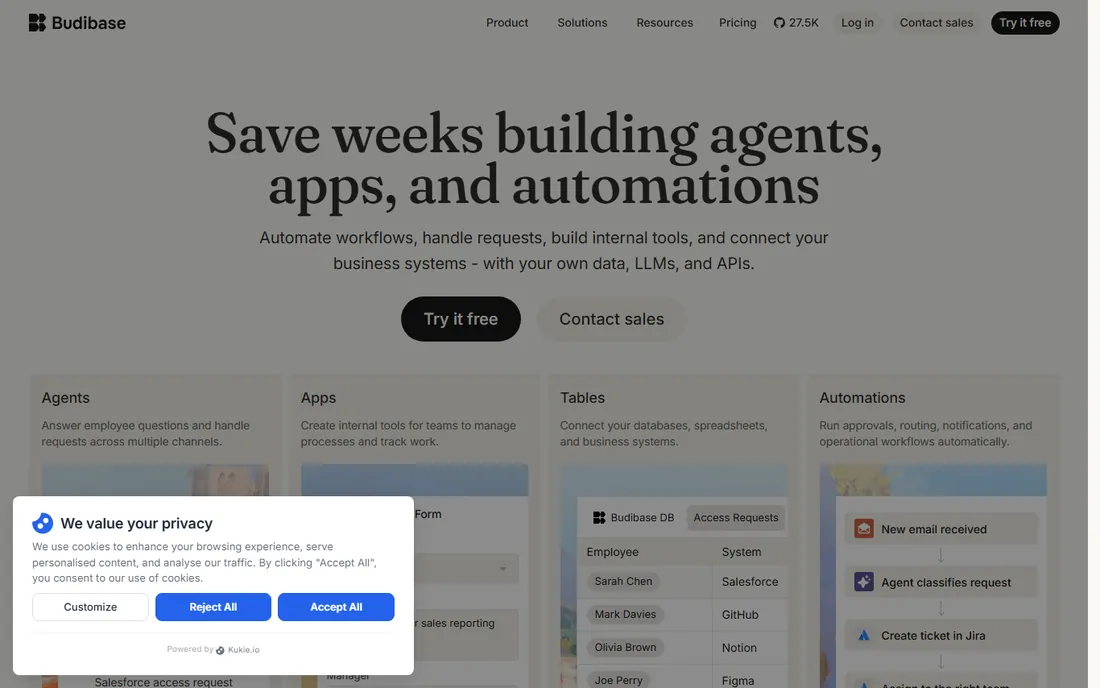
Budibase combines an app builder with its own built-in database and automation workflows, all available free and open source for self-hosting. That makes it a complete stack for internal business apps: data, interface, and automation in one system you control. The cloud-hosted version also offers a free tier.
The ecosystem is smaller than Retool's or Appsmith's, so niche integrations may need custom work. But for teams that want to self-host everything and avoid per-user SaaS pricing entirely, Budibase's all-in-one approach is compelling. It is particularly popular with European teams mindful of data residency.
What we like- Self-host for free
- Built-in database
- Automation workflows
Watch out for- Smaller ecosystem
- Fewer third-party integrations
Starting priceFree (open source)
Free planYes
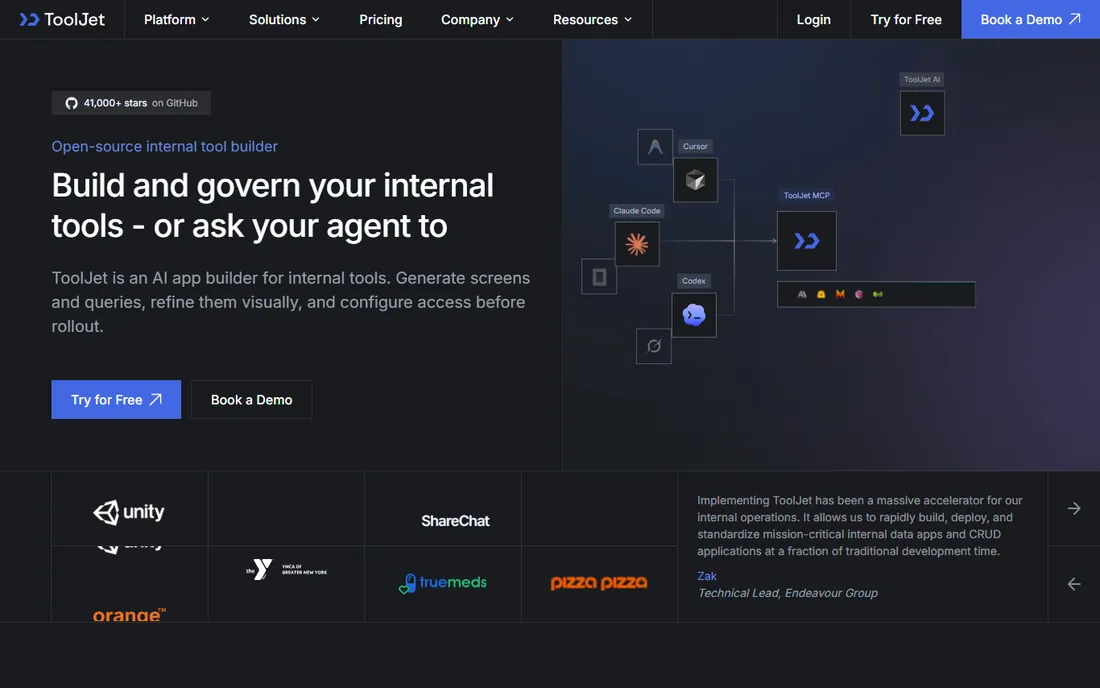
ToolJet is another open source contender for internal tools, with an emphasis on data connectivity: dozens of built-in integrations for databases, SaaS APIs, and cloud storage. The free cloud tier is generous for small teams, and self-hosting is available for those who want it. The builder covers the standard internal-app patterns: tables, forms, charts, and workflows.
As the youngest product on this list, ToolJet's documentation and community are still catching up to the leaders. But development is active and the integration list keeps growing. For teams evaluating open source internal-tool builders, it deserves a place in the trial alongside Appsmith and Budibase.
What we like- Open source
- 50+ data integrations
- Generous free cloud tier
Watch out for- Younger product
- Documentation still maturing
When free stops being free
Every free plan on this list has a tripwire, and knowing yours in advance prevents nasty surprises. The common ones: user or seat limits (the first extra team member triggers payment), database record caps (growth means upgrading), monthly app actions or workflow runs (success gets expensive), and branding removal plus custom domains (going public costs money). Before building, estimate your 12-month needs for each limit and check which plan covers them. A tool whose free tier fits your prototype but whose first paid tier jumps to hundreds per month is a trap. The honest math: free is for validating and for small internal use. Budget for paid tiers the moment real users or real revenue depend on the app.
What to check before you commit
Export your data and your work
Can you export the underlying data? Can you migrate the app logic elsewhere? Open source tools (Appsmith, Budibase, ToolJet) give you the most exit options. Proprietary builders vary. Never build a business-critical app on a platform you cannot leave.
Real limits of the free tier
"Free" with 100 monthly users is different from "free" with 10. Read the limits table carefully: records, users, app actions, storage, and API calls. Then double your estimates. The right free tier is the one that still fits after six months of growth.
Customer-facing versus internal
Internal tools forgive rough edges; customer portals do not. Softr and Bubble suit customer-facing apps. Retool, Appsmith, Budibase, and ToolJet are built for internal use. Picking an internal tool for a customer portal (or vice versa) is the most common category mistake.
Security and data residency
Free tiers sometimes skimp on SSO, audit logs, and data residency options. If your app touches customer data, check what security features each tier includes. Self-hosted open source options give you the most control here, at the cost of managing it yourself.
How we chose
We looked for web app builders with genuinely usable free tiers in 2026: no credit card required, no short trial masquerading as free. We evaluated vendor documentation, free-tier limits, template quality, and reputation among builders. We excluded free trials, freemium tools whose free tier cannot build a real app, and discontinued products. No vendor paid for placement, and we did not build test apps for this guide.
Frequently asked questions
Can I really build a web app for free?
Yes, for many use cases. Internal tools, MVPs, directories, portals, and prototypes all fit comfortably on the free tiers here. The limits appear with scale: many users, large databases, heavy automation, or custom domains. Start free, validate, and pay when growth demands it.
Which free app builder is best for beginners?
Softr and Glide are the easiest: connect a spreadsheet and get a working app quickly. Bubble is the most powerful but demands weeks of learning. Beginners should start with Softr or Glide to learn the concepts, then move to Bubble if the app idea outgrows them.
Do free plans include a custom domain?
Usually not. Custom domains are one of the most common paid features across these platforms. If your app needs to live at your own domain from day one, budget for the first paid tier. For prototypes and internal tools, the platform subdomain is fine.
What happens to my app if I never pay?
On most platforms, nothing bad: the app keeps running within the free limits indefinitely. Bubble puts inactive free apps to sleep (they wake when visited). The risk is not shutdown but stagnation: you cannot grow past the caps without paying. That is a reasonable trade, not a trap, as long as you know the caps.
Is open source better than proprietary free tiers?
It depends on your priorities. Open source (Appsmith, Budibase, ToolJet) means you can self-host, audit the code, and never face a pricing change. Proprietary free tiers (Softr, Glide, Bubble) are usually easier to start with and better designed. Technical teams often prefer open source; non-technical builders usually do better with proprietary.
Sources we checked (9)
- https://bubble.io
- https://www.glideapps.com
- https://www.softr.io
- https://www.adalo.com
- https://about.appsheet.com/home/
- https://retool.com
- https://www.appsmith.com
- https://budibase.com
- https://tooljet.com
Is your product missing or out of date?
We review this list regularly. Vendors can request a listing, send updated pricing or ask about featured placement.

Shihab Mia · Founder, Rankite
Shihab has spent more than a decade helping SaaS and e-commerce brands grow through search. He writes Rankite's software buying guides from pricing pages, documentation and public user reviews. More about Shihab.