How we make this list: we compare pricing pages, product documentation and public user reviews. Rankite is independent; if a vendor ever pays for a featured spot, that listing is clearly labeled Partner.
Key takeaways
- Arc XP, Naviga, Atex, and Eidosmedia are the enterprise tier, built for large publishers with complex print and digital workflows, and all price by custom quote.
- Newspack is the standout for small and nonprofit newsrooms, offering a WordPress-based platform backed by Automattic without enterprise complexity.
- Ghost and Superdesk give publishers full control, Ghost as an open-source publishing platform with managed hosting, Superdesk as a free open-source newsroom system for teams with developers.
- Pugpig fills a specific gap: native mobile apps for publishers whose readers live on phones.
- TownNews dominates local US news, purpose-built for community publishers and broadcast groups rather than national titles.
Quick comparison
| Tool | Best for | Starting price | Free plan |
|---|
 Arc XP Arc XP | Large publishers that need enterprise scale | See website | No |
 Naviga Naviga | News media companies wanting one vendor for everything | See website | No |
 Atex Atex | Editorial workflow and newsroom production systems | See website | No |
 Eidosmedia Eidosmedia | Large news organizations running print and digital together | See website | No |
 Newspack Newspack | Small and nonprofit newsrooms that want WordPress without the hassle | See website | No |
 Ghost Ghost | Independent publishers, magazines, and newsletter businesses | See website | Yes (self-hosted open source) |
 Quintype Quintype | Digital-first publishers that want managed SaaS | See website | No |
 Pugpig Pugpig | Publishers that need proper native mobile apps | See website | No |
 Superdesk Superdesk | Newsrooms with developers that want full control | Free | Yes (open source) |
 TownNews TownNews | Local US news groups, TV stations, and community publishers | See website | No |
Is your product missing or out of date?
We review this list regularly. Vendors can request a listing, send updated pricing or ask about featured placement.
#1
Arc XP
Best for: Large publishers that need enterprise scale
Visit arcxp.com
Starting priceSee website
Free planNo
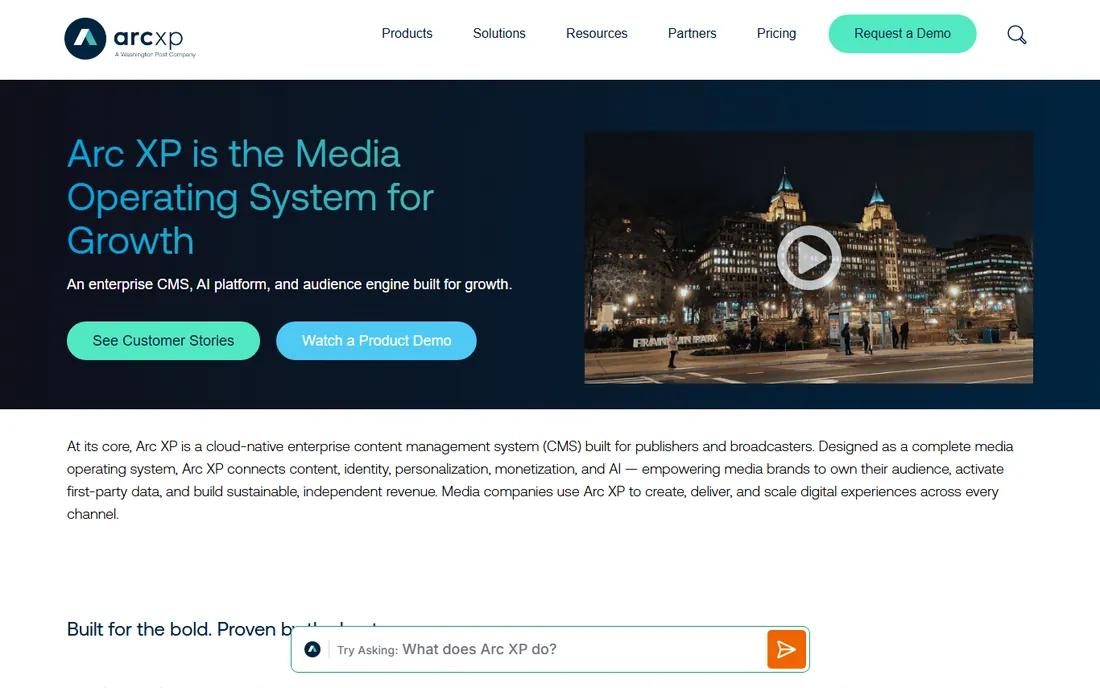
Arc XP started as the Washington Post's internal publishing system before becoming a commercial platform, and that origin shows. It is built for publishers operating at serious scale, with tools for content management, video, personalization, subscriptions, and commerce in one system. The company reports supporting more than 2,500 sites globally, which puts it among the most widely deployed news platforms in the world.
The tradeoff is that Arc XP is an enterprise purchase. Pricing is by custom quote, implementation takes months and real internal resources, and the platform assumes you have product and engineering staff. For a large publisher or media group, it is one of the safest choices available. For a fifty-person local paper, it is more platform than you need.
What we like- Built by The Washington Post for real newsroom scale
- Supports 2,500+ sites
- Strong video, personalization, and commerce tools
Watch out for- Enterprise pricing with custom quotes
- Implementation is a major project
- Overkill for small publishers
Starting priceSee website
Free planNo
Naviga, formerly Newscycle before its 2019 rebrand, sells news organizations something few vendors attempt: a full suite covering content management, advertising operations, and audience engagement from one company. For publishers tired of stitching together five vendors, that single-throat-to-choke model has real appeal, and Naviga's roots in the newspaper industry run deep.
Like most enterprise suites, it prices by quote and the breadth of the product can make evaluations long. Newsrooms should confirm which modules they actually need, since buying the whole suite when you only need the CMS wastes money. For mid-size and large media companies that want editorial, advertising, and circulation systems under one roof, Naviga deserves a shortlist spot.
What we like- Broad suite covering CMS, advertising, and audience
- Deep newspaper industry experience
- Cloud-based
Watch out for- Custom pricing
- Suite breadth can mean complexity
- Smaller profile than Arc XP
#3
Atex
Best for: Editorial workflow and newsroom production systems
Visit atex.com
Starting priceSee website
Free planNo
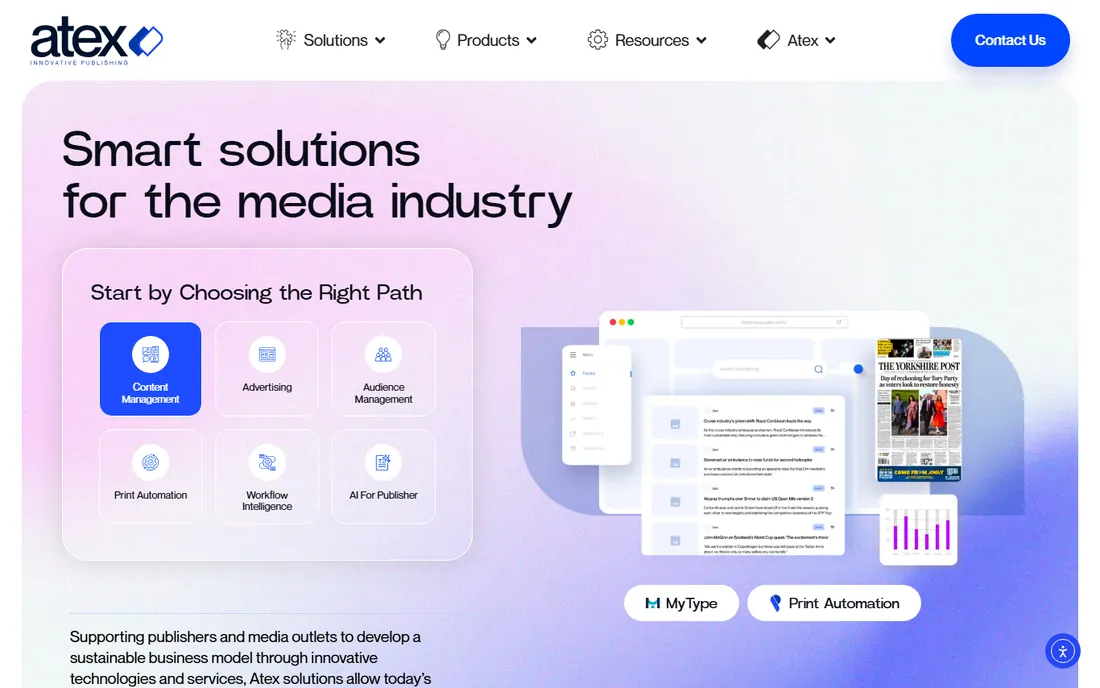
Atex has been selling to newsrooms for decades, and its strength is the editorial side: the systems reporters and editors use to write, edit, and route stories. Its MyType platform targets modern digital-first workflows, and the company has been adding AI-assisted capabilities to its lineup. For publishers whose pain is production chaos rather than the website, Atex speaks their language.
The challenge is visibility. Atex is better known in European markets than in the US, and pricing is entirely quote-based. American publishers should ask for domestic references and confirm support hours match their newsroom's schedule. If your problem is how stories get made rather than how they get displayed, Atex is worth the conversation.
What we like- Long history in newsroom editorial systems
- MyType platform for modern workflows
- Focus on the content creation side
Watch out for- Custom enterprise pricing
- Less visible in the US market
- Demos needed to judge the current product
#4
Eidosmedia
Best for: Large news organizations running print and digital together
Visit eidosmedia.com
Starting priceSee website
Free planNo
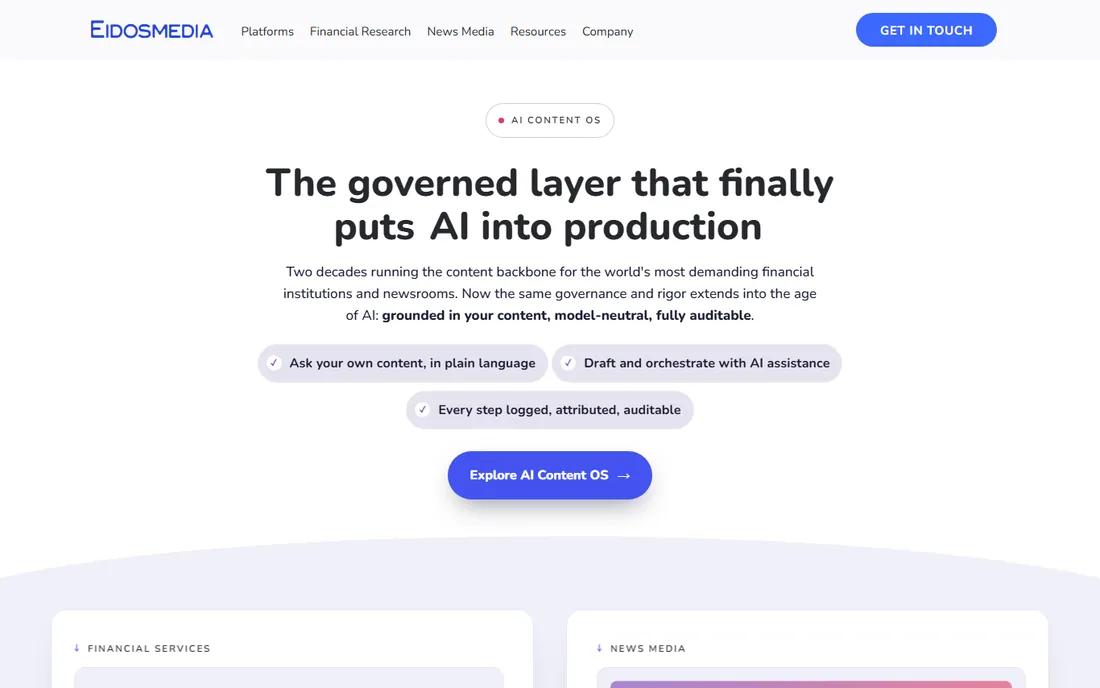
Eidosmedia's Méthode platform is built for the hardest version of the newspaper problem: producing print editions, websites, apps, and newsletters from one newsroom without chaos. Large publishers with complicated edition structures and multiple titles use it to manage that complexity, and its customer base skews toward major European news organizations.
This is unambiguously enterprise software. Expect a quoted price, a long implementation, and a product that assumes dedicated technical staff. Smaller publishers will find it overwhelming and overpriced. But for a large group still producing serious print alongside digital, few platforms handle the combined workflow as deeply.
What we like- Méthode platform handles complex multi-channel publishing
- Strong with large European publishers
- Print-to-digital workflow depth
Watch out for- Enterprise quotes only
- Implementation is heavy
- Best suited to big operations
#5
Newspack
Best for: Small and nonprofit newsrooms that want WordPress without the hassle
Visit newspack.com
Starting priceSee website
Free planNo

Newspack is the most practical answer for the small newsroom described in this article's opening. Built by Automattic, the company behind WordPress.com, it gives independent and nonprofit publishers a managed platform with newsroom-specific tools for subscriptions, newsletters, and donations. More than 300 news sites run on it.
Because it is WordPress under the hood, hiring help is easy and staff training is minimal. The limits are on the enterprise side: it will not manage a complex print production workflow, and publishers should read the pricing terms carefully since costs scale with the business. For digital-first local and nonprofit news, it hits the sweet spot of capability and simplicity.
What we like- Built on WordPress, which staff already know
- Backed by Automattic
- Used by 300+ news sites
Watch out for- Less suited to complex print workflows
- Revenue-based pricing needs checking
- Smaller feature set than enterprise suites
#6
Ghost
Best for: Independent publishers, magazines, and newsletter businesses
Visit ghost.org
Starting priceSee website
Free planYes (self-hosted open source)
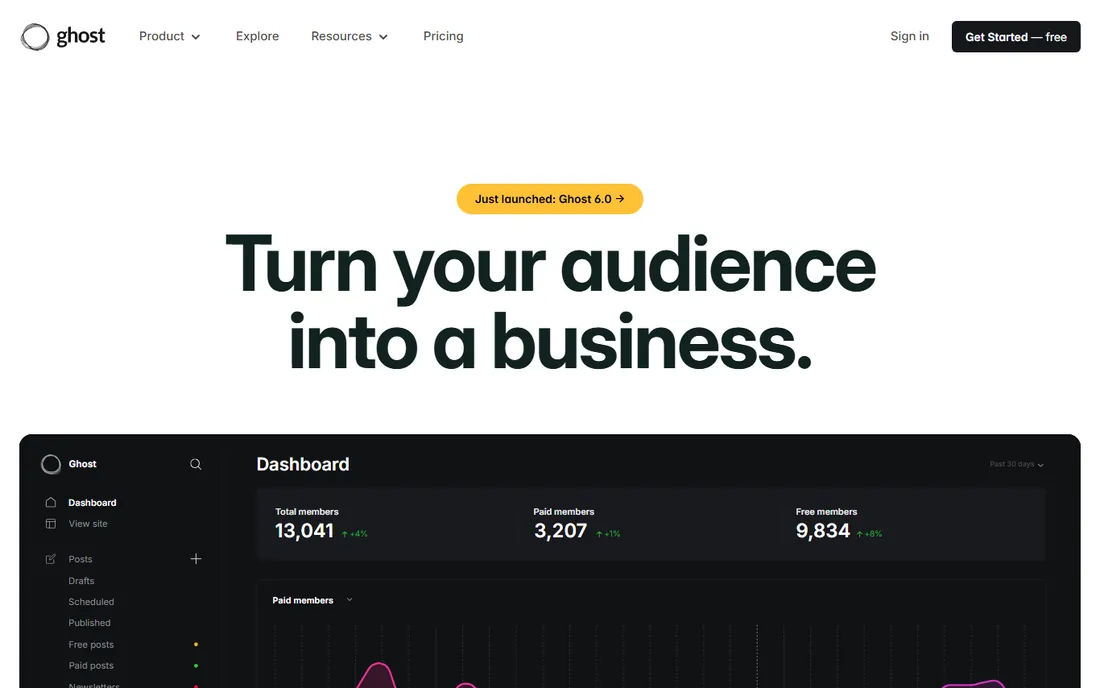
Ghost is the favorite of independent publishers for a reason. It is an open-source publishing platform with memberships, paid subscriptions, and newsletters built directly in, which covers the entire business model of a modern indie publication without plugins. The editor is clean, the sites are fast, and self-hosting is free.
It is not a newsroom system, though. There is no print edition workflow, no complex multi-desk editorial routing, and no advertising operations module. Ghost suits the independent magazine, the niche news site, or the journalist going solo with a paid newsletter. Publishers with print operations or large editorial teams need something from the enterprise tier instead.
What we like- Clean, fast publishing experience
- Memberships and newsletters built in
- Open source with no lock-in
Watch out for- Not a full newsroom CMS
- No print workflow
- Managed hosting pricing has changed over time
Starting priceSee website
Free planNo
Quintype sells digital publishing as a managed service, which appeals to publishers that would rather not run infrastructure. Its Bold CMS covers content creation, distribution, audience engagement, and monetization, with analytics baked in. For digital-native outlets and media startups, the SaaS model means launching without hiring DevOps.
The tradeoff is dependence on a smaller vendor with quote-based pricing and a lower profile in Western markets. Publishers should evaluate the company's stability and ask about data export terms before committing. Print operations get little love here. But for a digital-first publisher that wants someone else to handle the servers, Quintype is a credible option.
What we like- SaaS model removes infrastructure headaches
- Bold CMS built for digital publishing
- Good analytics and engagement tools
Watch out for- Quote-based pricing
- Less known outside its core markets
- Limited print capabilities
#8
Pugpig
Best for: Publishers that need proper native mobile apps
Visit pugpig.com
Starting priceSee website
Free planNo
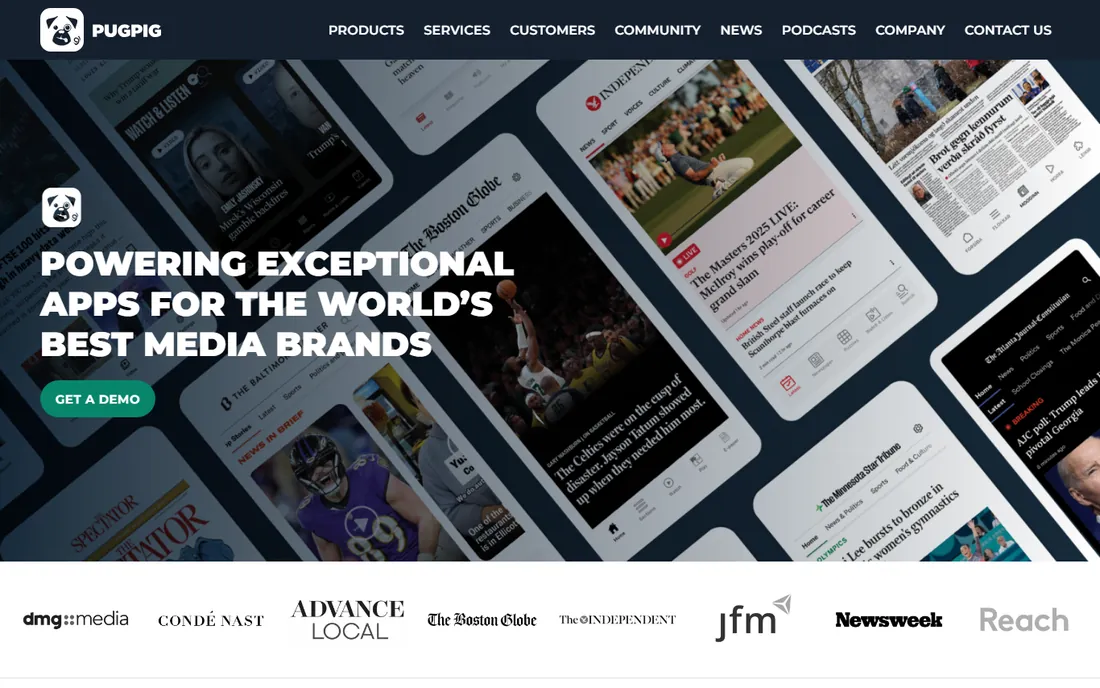
Pugpig does one thing and does it well: native mobile apps for publishers. If your readers live on phones and your current "app" is a wrapped mobile website, Pugpig builds proper iOS and Android editions with offline reading, push notifications, and magazine-style layouts. Major news and magazine brands use it for exactly this.
Understand what you are buying. Pugpig is a publishing and app platform that typically sits alongside a CMS rather than replacing it, so budget for both. Pricing is quoted per project. For publishers whose mobile experience is embarrassing, it is the fastest route to apps your readers will actually keep.
What we like- Specializes in native iOS and Android news apps
- Used by major magazine and news brands
- Handles offline reading well
Watch out for- It is an app platform, not a full CMS
- Quote-based pricing
- Needs a CMS alongside it
Starting priceFree
Free planYes (open source)
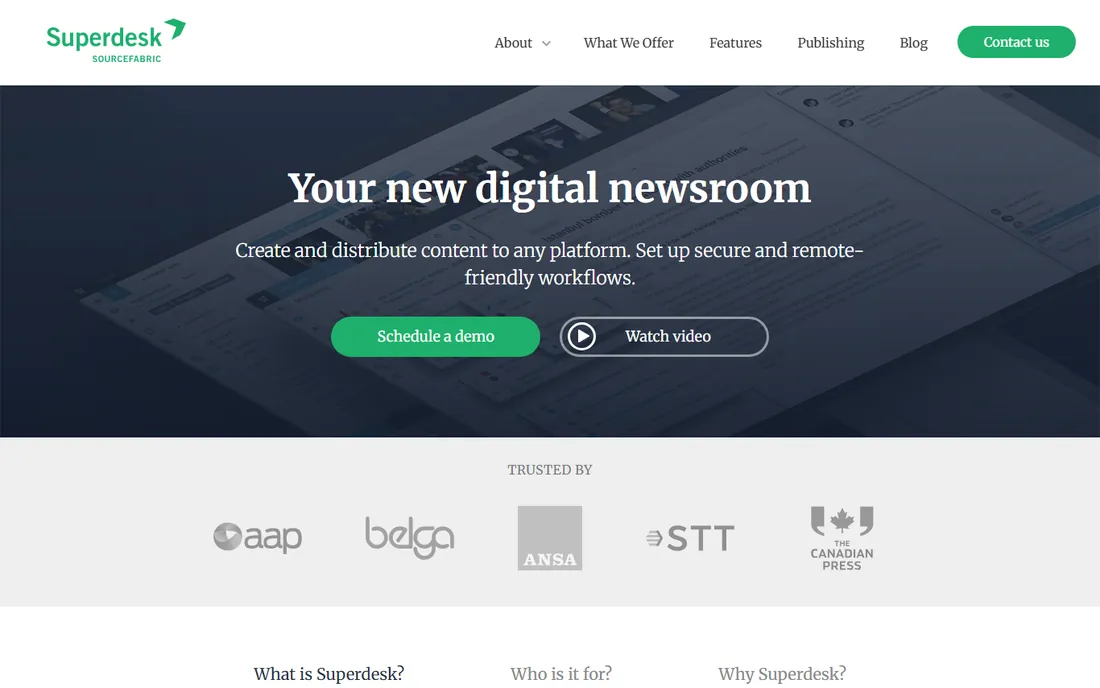
Superdesk is the open-source newsroom system from Sourcefabric, built for the actual work of journalism: ingesting wires, planning coverage, writing, editing, and publishing across channels. It costs nothing to download and run, and because it is open source, no vendor can sunset it or triple your renewal.
The price is paid in expertise. You need developers to install, customize, and maintain it, and the interface prioritizes function over beauty. Newsrooms with technical staff, journalism schools, and nonprofit media get enormous value. Newsrooms without developers should look at Newspack or Ghost instead, because free software you cannot run is not actually free.
What we like- Completely free and open source
- Built specifically for newsroom workflows
- No vendor lock-in
Watch out for- Requires in-house technical skill
- Community support only unless you pay
- Interface is utilitarian
#10
TownNews
Best for: Local US news groups, TV stations, and community publishers
Visit townnews.com
Starting priceSee website
Free planNo
TownNews owns the local news niche in the United States. Its platform serves more than 2,000 local news organizations, including newspapers, TV stations, and digital-only local outlets, with tools tuned for community publishing: local advertising, events, obituaries, and broadcast integration. Its relationship with Lee Enterprises gives it deep roots in American local media.
That specialization is also its boundary. International publishers and national magazine brands will find the product US-local in assumptions and references. Pricing is by quote. But if you run local news in America, TownNews understands your business better than any general-purpose CMS vendor will.
What we like- Purpose-built for local news
- Serves 2,000+ local news organizations
- Strong broadcast and digital media tools
Watch out for- US local focus limits international fit
- Quote-based pricing
- Less suited to national magazine publishers
How we chose
We researched each vendor's website, product documentation, and press materials, plus industry coverage and public discussion among news technologists. We only listed platforms that are actively sold and maintained today, using current brand names and noting old ones once, as with Naviga's former Newscycle identity. We weighed newsroom fit over feature counts: print and digital workflow depth, paywall and subscription support, implementation burden, and whether pricing is public or quoted. No vendor paid for placement, and we did not claim hands-on testing.
Frequently asked questions
How much does a newspaper platform cost?
Enterprise platforms like Arc XP, Naviga, Atex, and Eidosmedia price by custom quote, and total costs run into five or six figures annually once implementation and support are included. Mid-market and SaaS options cost far less. Open-source options like Superdesk and self-hosted Ghost cost nothing for the software itself, though you pay for hosting and technical staff.
Should a small newspaper use WordPress?
Often yes. Newspack gives small and nonprofit newsrooms a managed WordPress platform with news-specific tools, and the WordPress ecosystem makes hiring help easy. The main reason to look elsewhere is complex print production or very large multi-title operations.
What is the difference between a CMS and a newspaper platform?
A general CMS manages web content. A newspaper platform adds newsroom-specific workflows: multi-channel publishing to print, web, and apps, edition planning, paywalls, and often advertising and circulation tools. If your team only publishes to the web, a CMS like Ghost may be enough.
Can we migrate our archive of old articles?
Usually yes, but it is the hardest part of the project. Every platform on this list has import tooling or services, yet decades of articles with inconsistent formatting always need cleanup. Budget time for archive migration separately and test it with a sample before signing.
Do these platforms handle print editions?
Arc XP, Naviga, Atex, Eidosmedia, and TownNews all handle print workflows to varying degrees. Ghost, Quintype, and Pugpig are digital-first and do not. If print remains a real product for you, confirm the print workflow in a demo rather than assuming it.
What to check before you sign a contract
Start with your actual workflow, not the feature list. Map how a story moves from assignment to every published channel today, then make each vendor walk that exact path in a demo. Generic demos hide the gaps that matter, like how corrections propagate or how print deadlines interact with the web desk.
Then interrogate the commercial terms. Ask for the total cost over three years including implementation, training, support tiers, and any per-seat or traffic-based charges. Ask who owns your content and data, how exports work, and what happens to your archive if you leave. News platforms are decade-long relationships, so the exit terms matter as much as the features.
Finally, check references from publishers your size. An enterprise platform that delights a national publisher can crush a fifty-person newsroom with complexity, and a simple tool that a weekly loves may collapse under a daily's volume. Ask references what broke during implementation and what they would do differently.
Migration tips that save newsrooms real pain
Run the old and new systems in parallel for at least one full publishing cycle before cutover. Newsrooms that switch cold discover broken templates, missing metadata, and confused staff on deadline day. A parallel run costs effort but prevents the worst week of your year.
Migrate a representative archive sample early, not the whole archive at once. Old content always contains surprises: dead embeds, obsolete shortcodes, images with no rights information. Cleaning a sample teaches you what the full migration will cost and surfaces licensing problems before they become legal ones.
Train on real stories, not slide decks. Give reporters and editors test accounts and have them produce actual articles, including the awkward cases like corrections, photo galleries, and live blogs. And appoint one internal owner for the migration with real authority, because vendor project managers optimize for the vendor's timeline, not your newsroom's.
Sources we checked (10)
- https://www.arcxp.com/
- https://navigaglobal.com
- https://www.atex.com/
- https://www.eidosmedia.com
- https://newspack.com/
- https://ghost.org
- https://www.quintype.com/
- https://www.pugpig.com/
- https://www.superdesk.org/
- https://www.townnews.com/
Is your product missing or out of date?
We review this list regularly. Vendors can request a listing, send updated pricing or ask about featured placement.

Shihab Mia · Founder, Rankite
Shihab has spent more than a decade helping SaaS and e-commerce brands grow through search. He writes Rankite's software buying guides from pricing pages, documentation and public user reviews. More about Shihab.