How we make this list: we compare pricing pages, product documentation and public user reviews. Rankite is independent; if a vendor ever pays for a featured spot, that listing is clearly labeled Partner.
Key takeaways
- Of six MEP estimating vendors checked recently, exactly one publishes a dollar figure on its own site (Vision InfoSoft, under $1,000 a year); the rest route you to a demo (wirewoman.com, September 2026).
- STACK is the transparent exception among cloud tools, with takeoff and estimating from $299 per user per month and a free tier.
- What you are actually buying is a database of items and assemblies with labor attached, which is what turns a takeoff into a bid.
- Match the tool to your trade: electrical specialists differ from true multi-trade MEP platforms.
Quick comparison
| Tool | Best for | Starting price | Free plan |
|---|
 Trimble Accubid Trimble Accubid | Electrical and industrial mechanical estimating | See website | No |
 McCormick McCormick | Tiered estimating for electrical, plumbing, mechanical | See website | No |
 ConEst IntelliBid ConEst IntelliBid | Electrical and low-voltage contractors | See website | No |
 STACK STACK | Cloud takeoff and estimating with clear pricing | $299 per user/month | Yes |
 ProEst ProEst | Digital takeoff inside the Autodesk ecosystem | See website | No |
 Vision InfoSoft Vision InfoSoft | Budget-friendly electrical estimating | Under $1,000 per year (per vendor) | Free trial |
 QuoteSoft QuoteSoft | Piping and plumbing estimating | See website | No |
 Countfire Countfire | Automatic electrical symbol counting | See website | No |
 TurboBid TurboBid | Fast electrical estimating for small shops | See website | No |
Is your product missing or out of date?
We review this list regularly. Vendors can request a listing, send updated pricing or ask about featured placement.
The best MEP estimating software
#1
Trimble Accubid
Best for: Electrical and industrial mechanical estimating
Visit trimble.com
Starting priceSee website
Free planNo

Accubid is the original full-featured electrical estimating solution, now part of Trimble's MEP portfolio, and the database depth is the argument: over 42,000 items and 13,000 assemblies with labor built in. LiveCount handles the graphical PDF takeoff with automatic counts and revision comparison, and its bidirectional link to Accubid Anywhere keeps changed quantities tied to the estimating item when addenda arrive.
The honest catch is the buying experience. Trimble publishes no dollar price; the call to action is a demo and a pricing conversation. The product family also sprawls: TRA-SER for material pricing and LiveCount for takeoff are companions to evaluate, not inclusions to assume. For the electrical or industrial mechanical contractor doing complex work, Accubid's depth justifies the process.
What we like- Over 42,000 items and 13,000 assemblies in the database
- LiveCount graphical takeoff ties quantities to estimate items
- Covers the full workflow to billing
Watch out for- No published pricing, demo required
- The depth has a real learning curve
- The ecosystem (TRA-SER pricing, LiveCount) adds pieces to evaluate
Starting priceSee website
Free planNo
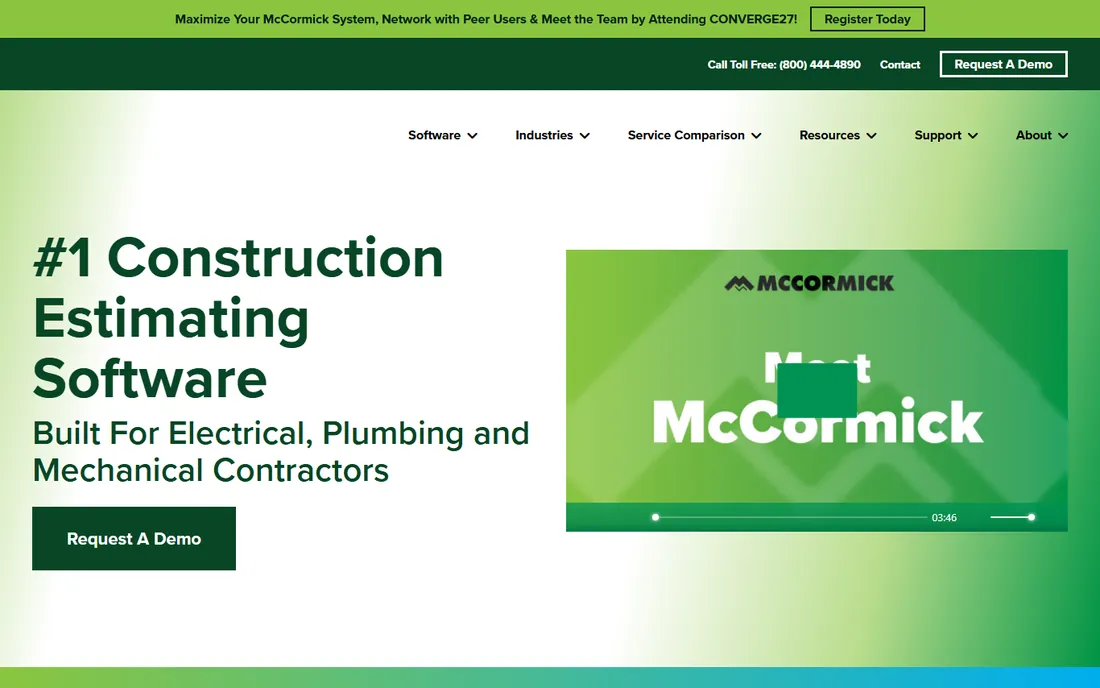
McCormick fits electrical, plumbing and mechanical contractors who want a tiered platform that scales from a one-person shop (Win 1000) to large outfits (Win 6000). Takeoff and estimating live in one program, with auto-counting tools and a deep library of prebuilt items and assemblies that turn PDFs into proposals. The five-step bid processing gives smaller shops a real workflow.
The pricing caveat matters here: directory sites quote starting figures, but McCormick publishes no price itself, so treat third-party numbers as unverified and get the quote. Module-based pricing can also accumulate for smaller contractors. For the MEP specialty contractor who wants takeoff and estimating unified, McCormick is the purpose-built choice.
What we like- Four product tiers from single-shop to large contractor
- Combines digital takeoff and estimating in one program
- Auto-counting and Auto Home Run tools
Watch out for- No vendor-published pricing, only directory estimates
- Module-based pricing can add up
- The learning curve is steep for new estimators
#3
ConEst IntelliBid
Best for: Electrical and low-voltage contractors
Visit conest.com
Starting priceSee website
Free planNo
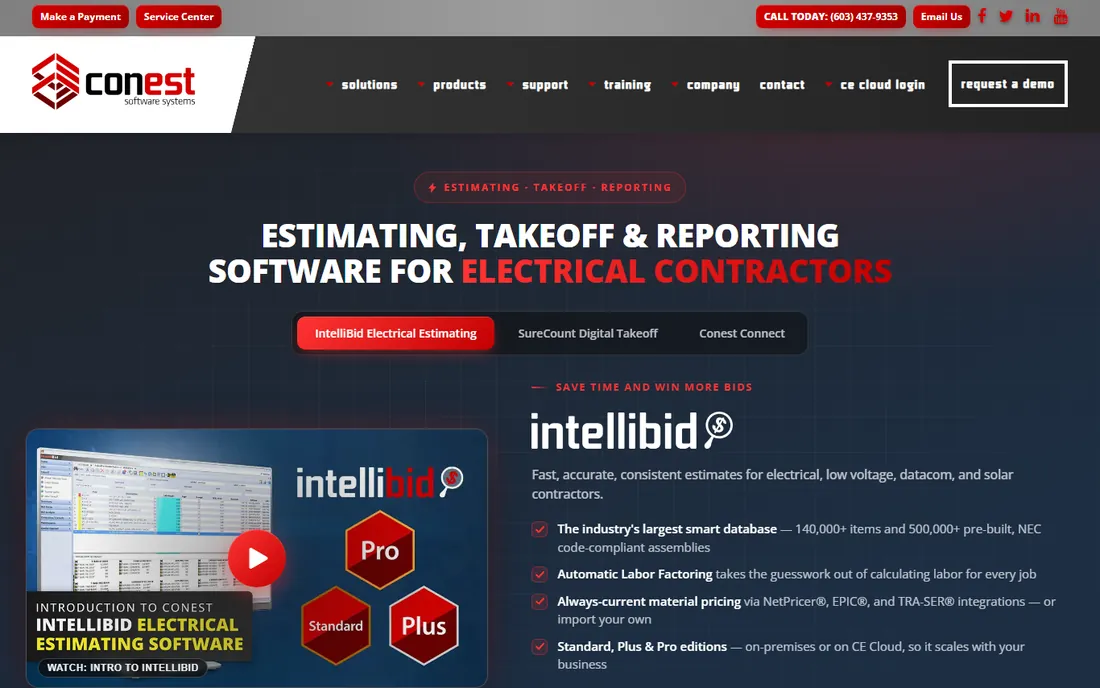
ConEst IntelliBid has served electrical contractors for decades, covering estimating, takeoff and reporting for electrical, low-voltage and datacom work. It is a specialist's tool: the database, the workflows and the reports all assume electrical work, which means less adaptation than a general construction estimator demands.
Like its direct rivals, ConEst publishes no pricing and routes buyers to a demo with an estimating specialist. The trade focus is also the limit: mechanical and plumbing contractors need a different tool. For the electrical contractor who wants software that speaks the trade natively, IntelliBid remains a standard shortlist name.
What we like- Purpose-built for electrical, low voltage and datacom
- Strong takeoff, estimating and reporting in one
- Long track record with electrical contractors
Watch out for- No published pricing, demo required
- Narrower trade focus than multi-trade platforms
- The interface reflects its long history
Starting price$299 per user/month
Free planYes

STACK is the cloud-native answer and the pricing transparency leader in this list. Takeoff, estimating and proposals run in the browser with published plans: takeoff-focused tiers from lower price points and the estimating package from $299 per user per month, plus a free tier for getting started. Unlimited plans and projects remove the per-job anxiety.
The honest trade is database depth. STACK is excellent at measuring drawings and building estimates, but the trade-specific item and assembly libraries of Accubid or McCormick run deeper for MEP specialists. For the contractor who values cloud collaboration, clear pricing and a modern interface, STACK is the easiest evaluation here.
What we like- Published pricing from $299 per user per month
- Free tier to start
- Cloud-based with takeoff, estimating and proposals in one
Watch out for- $299 a month per user is premium for small shops
- The full platform tiers climb higher
- Less trade-specific database depth than the specialists
Starting priceSee website
Free planNo
ProEst, now part of Autodesk, brings cloud-based estimating and digital takeoff to contractors already living in the Autodesk world. The integration with Autodesk Construction Cloud means estimates connect to project management workflows without middleware, which matters for general contractors coordinating trades.
For MEP specialty contractors, the fit is looser: ProEst is a general construction estimator rather than a trade-specific database tool, and pricing is not published. It earns its place for the GC or the Autodesk-centric contractor who wants estimating inside the ecosystem they already pay for.
What we like- Cloud takeoff and estimating backed by Autodesk
- Fits naturally with Autodesk Construction Cloud workflows
- Strong for general contractors
Watch out for- No published pricing
- The Autodesk ecosystem assumption does not suit everyone
- Less MEP trade-specific than the specialists
Starting priceUnder $1,000 per year (per vendor)
Free planFree trial

Vision InfoSoft deserves attention for one reason above all: it answers the pricing question in public. Its electrical estimating page states you can get started for less than $1,000 a year, with interest-free payment plans, while every direct competitor requires a demo call first. The product itself ships with over 10,000 items and assemblies carrying material pricing and labor, plus an EPIC material pricing service covering 2 million-plus electrical items.
The published figure is a ceiling, not a quote: your configuration still needs a call. And the product is a traditional Windows application, not a cloud platform. For the small electrical shop that wants real estimating software at a known, modest cost, Vision InfoSoft is the honest starting point.
What we like- The only electrical vendor publishing a price ceiling
- Over 10,000 items and assemblies with labor
- Material pricing service with 2M-plus items
Watch out for- You still call for your exact configuration price
- Windows-based with a traditional interface
- Smaller ecosystem than Trimble
Starting priceSee website
Free planNo
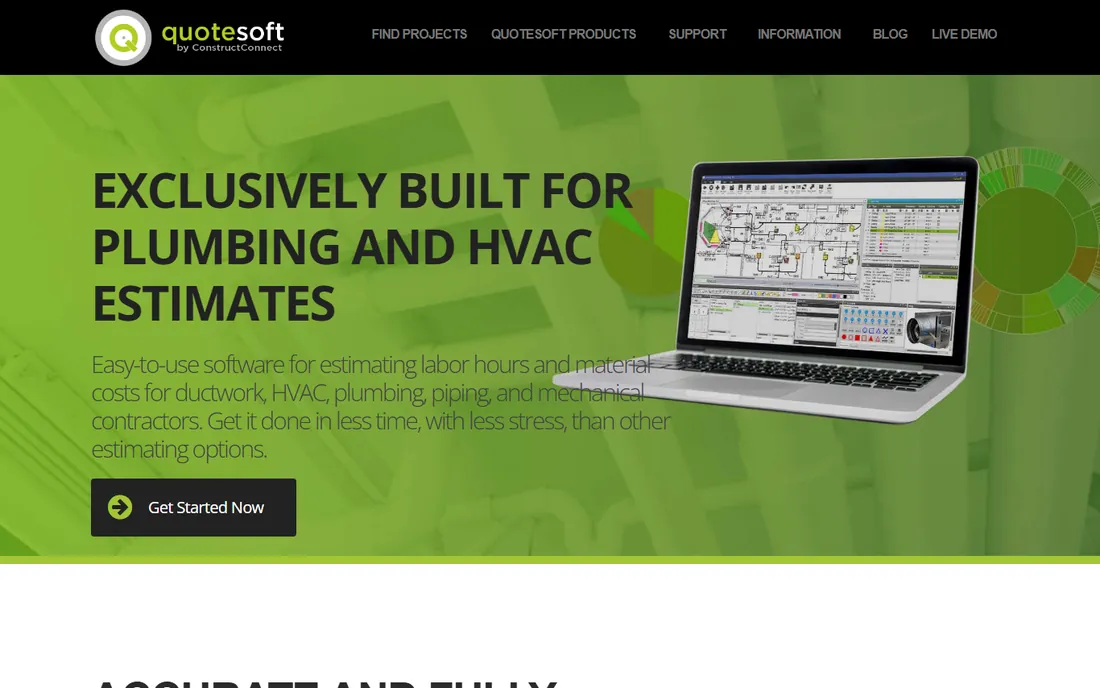
QuoteSoft serves the piping and plumbing side of MEP with trade-specific estimating tools. Where the electrical vendors count devices, QuoteSoft measures pipe runs, fittings and fixtures with databases built for mechanical contractors. That specialization is the whole pitch: the assemblies and labor assumptions match the trade.
Pricing is quote-based and the community is smaller than the electrical giants'. For the mechanical or plumbing contractor, though, a trade-specific tool beats adapting an electrical estimator, and QuoteSoft has served that niche for years.
What we like- Specialist in piping, plumbing and HVAC estimating
- Trade-specific databases and takeoff tools
- Long history with mechanical contractors
Watch out for- No published pricing
- Niche focus means a smaller user community
- The interface prioritizes function over modern polish
Starting priceSee website
Free planNo
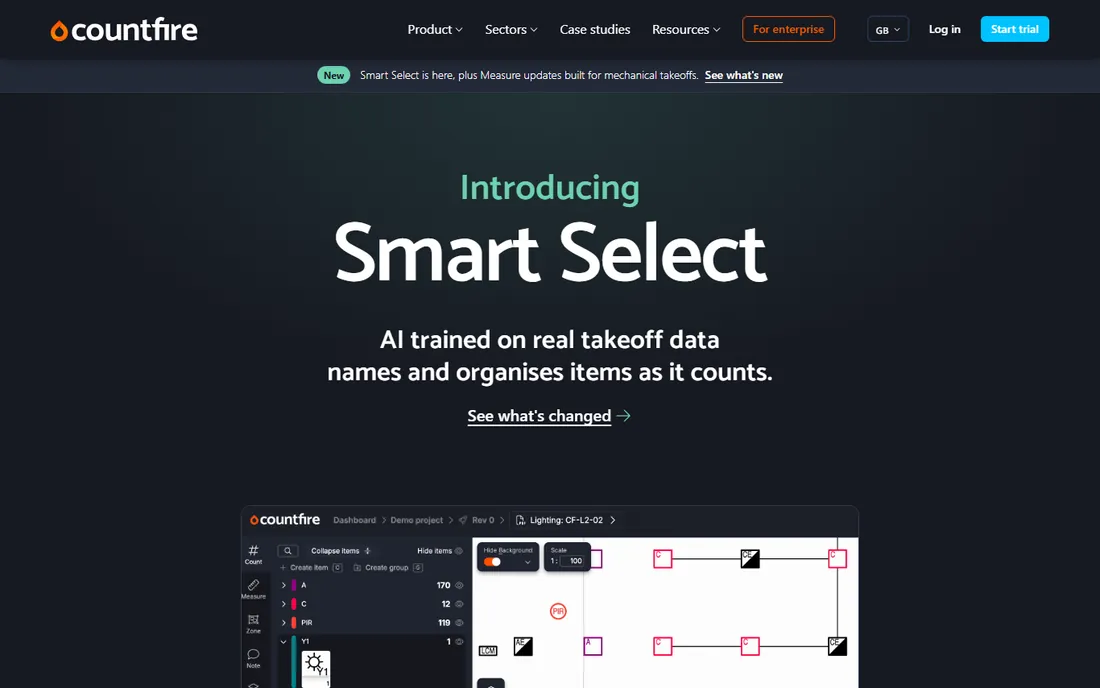
Countfire does one job remarkably well: it finds electrical symbols across a PDF drawing set automatically. For repetitive work like apartment or hotel floors, where the same devices repeat hundreds of times, that automation collapses hours of counting into minutes, with review tools to verify matches and re-check when revised sheets arrive.
The honest scope note is that counting is not estimating. After the devices are found, routing, circuiting and equipment connections still need work, and the platform's estimating depth is lighter than the full suites. Use Countfire for what it is brilliant at, paired with an estimating tool for the rest, and trial it on your most repetitive project type.
What we like- Automatic symbol detection across PDF drawing sets
- Purpose-built for repetitive floors in apartments and hotels
- Revision comparison tools
Watch out for- No published pricing
- Counting is the strength, full estimating is lighter
- The rest of the electrical package still needs handling
Starting priceSee website
Free planNo
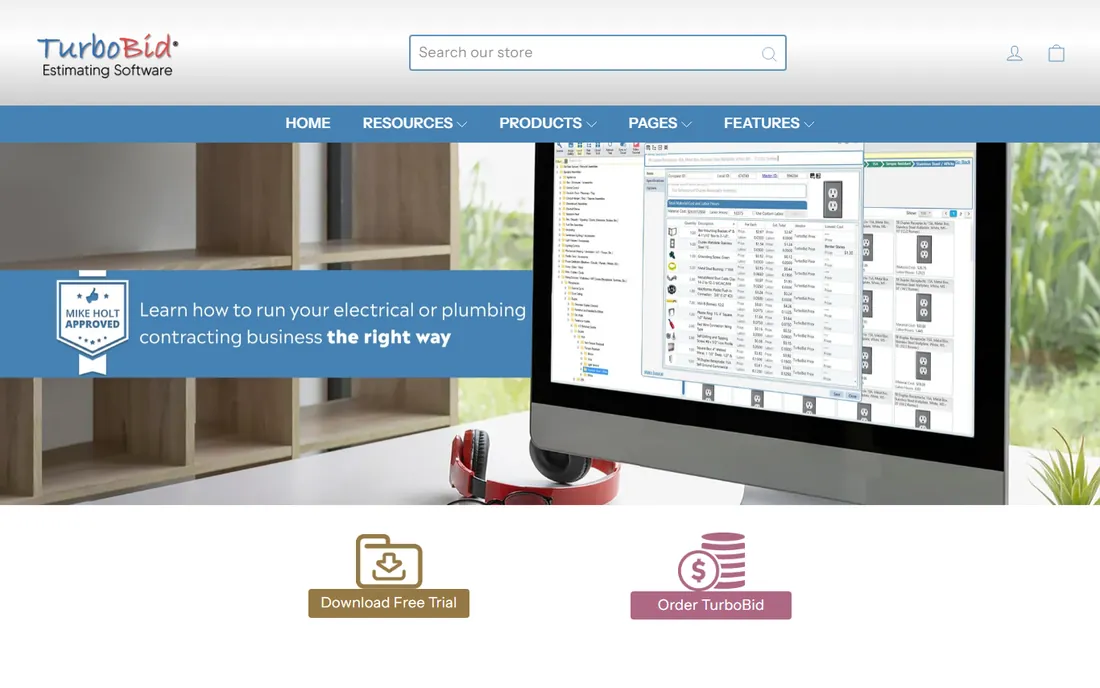
TurboBid has served small electrical contractors since 1991 with a simple proposition: fast, accurate electrical estimating without enterprise complexity. The workflow is straightforward, the learning curve is gentler than the big suites, and it produces professional bid packages for residential and commercial work.
It will not match Accubid's database depth or STACK's cloud collaboration, and pricing requires a conversation. For the small shop that finds the enterprise tools overwhelming and overpriced, TurboBid is the appropriately sized alternative.
What we like- Designed for speed in small electrical shops
- Straightforward estimating workflow
- Long track record since 1991
Watch out for- No published pricing
- Less depth than the enterprise suites
- Smaller vendor footprint
How we chose
We focused on tools MEP contractors actually evaluate in 2026 and verified each product exists today, including ProEst under its Autodesk home. Pricing comes only from the vendors' own sites, captured in October 2026, and this category is unusually opaque: most vendors publish no pricing at all, so those listings say so rather than repeating directory estimates that the vendors themselves do not confirm. We weighted trade-specific database depth over generic estimating features, because the item and assembly library is what you are actually buying.
What you are really buying: the database
Strip away the interfaces and every MEP estimating package sells the same thing: a database of items and assemblies with labor attached. That labor assumption is what turns a takeoff into a bid, and it is exactly what a spreadsheet cannot give you. Accubid's 42,000 items, McCormick's prebuilt assemblies, Vision InfoSoft's 10,000 items: these libraries represent decades of trade knowledge.
Evaluate the database, not the demo. Ask which assemblies cover your most common work, how labor units were derived and when they were last updated, and how material pricing stays current (daily, weekly, or "whenever"). A beautiful takeoff tool with a thin database will produce beautiful wrong numbers. The database is the product; everything else is the wrapper.
Takeoff vs estimating: buy both halves
Takeoff measures the drawing: counts, lengths, areas. Estimating prices the takeoff: labor, material, overhead, margin. Some tools do both (McCormick, STACK, Accubid with LiveCount), some specialize in takeoff (Countfire), and mismatches cause the most common buying regret.
If your estimator currently measures by hand, a takeoff tool alone transforms the week. If takeoff is fine but bids are inconsistent, the estimating database is the gap. And if addenda constantly change device counts after pricing, as they do, the revision-comparison workflow matters more than either: ask each vendor to demonstrate an addendum arriving mid-estimate, because that Tuesday-afternoon scenario is the real test.
Frequently asked questions
How much does MEP estimating software cost?
Most vendors do not publish pricing, which is itself the answer: expect a demo and a quote. The published exceptions are Vision InfoSoft (under $1,000 a year, per the vendor) and STACK (from $299 per user per month for estimating). Directory-site figures for the others are unverified and should not go in your budget.
What is the difference between takeoff and estimating software?
Takeoff software measures quantities from drawings: device counts, pipe lengths, duct areas. Estimating software prices those quantities using labor units and material costs to build a bid. Many products do both, but specialists like Countfire focus on takeoff while the value of suites like Accubid is the pricing database behind the quantities.
Do I need trade-specific software or will general construction estimating work?
For MEP trades, trade-specific is worth it. The item and assembly databases with built-in labor assumptions are the product, and general estimators lack that depth for electrical, piping and ductwork. A general contractor coordinating trades can use ProEst or STACK; the specialty contractor doing the work should use the trade tool.
How do material prices stay current?
Vendors offer material pricing services that update item costs from manufacturer catalogs and distributors: daily, weekly, monthly or quarterly depending on the service. Ask what the update service costs, how many items it covers, and what happens to old estimates when prices change. Stale material pricing is a silent margin killer.
Can this software handle plan revisions and addenda?
The good ones can, and you should make them prove it. Ask for a live demo of an addendum arriving after pricing: how changed quantities are flagged, how the estimate updates, and what audit trail remains. This workflow separates serious tools from pretty takeoff apps.
How long does it take to learn MEP estimating software?
Simple tools like TurboBid or STACK can be productive in days to weeks. The deep suites (Accubid, McCormick, ConEst) take weeks to months for full proficiency, because the estimator is learning the database as well as the interface. Budget training time and expect the first few bids to take longer, not shorter.
Sources we checked (10)
- https://www.trimble.com/en/industries/construction/mep
- https://www.mccormicksys.com/
- https://conest.com/
- https://www.stackct.com/pricing
- https://www.autodesk.com/products/proest/overview
- https://www.visioninfosoft.com/
- https://wirewoman.com/blog/best-electrical-estimating-software-small-contractor/
- https://www.quotesoft.com/
- https://www.countfire.com/
- https://www.turbobid.com/
Is your product missing or out of date?
We review this list regularly. Vendors can request a listing, send updated pricing or ask about featured placement.

Shihab Mia · Founder, Rankite
Shihab has spent more than a decade helping SaaS and e-commerce brands grow through search. He writes Rankite's software buying guides from pricing pages, documentation and public user reviews. More about Shihab.