How we make this list: we compare pricing pages, product documentation and public user reviews. Rankite is independent; if a vendor ever pays for a featured spot, that listing is clearly labeled Partner.
Key takeaways
- Procore is the default for mid-size and large general contractors that want bid management inside a full project platform, but pricing is quote-only.
- Buildertrend at $99 a month is the accessible pick for residential builders that need estimating, bids, and project management together.
- STACK at $249 per user per month is the strongest pure takeoff and estimating tool, with a free plan for small shops.
- SmartBid at $450 a month serves general contractors whose main job is sending bid invitations and managing subcontractors.
- PlanHub is free for subcontractors and works best as a project discovery network rather than a bidding system.
Quick comparison
| Tool | Best for | Starting price | Free plan |
|---|
 Procore Procore | GCs wanting bidding inside a full project platform | See website | No |
 Buildertrend Buildertrend | residential builders needing bids plus project management | $99/month | No |
 Contractor Foreman Contractor Foreman | small GCs wanting estimating and job tracking in one | See website | Free trial |
 SmartBid SmartBid | GC bid invitations and subcontractor management | $450/month | No |
 STACK STACK | digital takeoff and estimating for preconstruction teams | $249 per user/month (billed annually) | Yes |
 Buildxact Buildxact | residential estimating with takeoffs and bid comparison | See website | Free trial |
 Clear Estimates Clear Estimates | remodelers needing structured bid documents | See website | Free trial |
 PlanHub PlanHub | subcontractors finding projects and exchanging bids | See website | Yes |
 Followup CRM Followup CRM | commercial and specialty contractors tracking bid pipelines | See website | No |
Is your product missing or out of date?
We review this list regularly. Vendors can request a listing, send updated pricing or ask about featured placement.
The best contractor bidding software
Industry benchmarks put a good bid win rate for small contractors between 15% and 35%, depending on the type of work (OnPattison, 2026). That means most contractors lose most of the bids they submit. The difference between a profitable year and a thin one often comes down to how many quality bids the firm can produce, and how fast.
Bidding software attacks both sides of that problem. Takeoff tools turn blueprint measurement from days into hours. Bid management platforms organize invitations, track subcontractor responses, and keep every revision tied to the right document set. Bid tracking tools make sure no opportunity dies quietly in a spreadsheet.
The catch is that general contractors and subcontractors need different things. A GC sends bid invitations and compares sub bids. A subcontractor chases GC invitations and tracks deadlines. The nine tools below cover both sides, with pricing noted where vendors publish it.
#1
Procore
Best for: GCs wanting bidding inside a full project platform
Visit procore.com
Starting priceSee website
Free planNo

Procore is the best-known construction platform in the US, and its bidding tools benefit from sitting inside that larger system. GCs build bid packages from templates, share drawings and specifications through the planroom, invite subcontractors, and compare responses. When a bid is awarded, it converts into a subcontract or purchase order with line-item breakdowns, so nothing gets re-entered.
That integration is the reason to buy Procore for bidding rather than a standalone tool. The reason not to is scope and price. Pricing is quote-only and reflects the full platform, not just bidding, which prices out smaller firms. Companies that only need to send invitations and track responses will find SmartBid or PlanHub far cheaper. Procore fits mid-size and larger GCs already running or planning to run their projects on the platform.
What we like- Bid packages convert directly into subcontracts
- Planroom stores drawings with bid documents
- Strong search by trade, cost code, and location
Watch out for- Quote-only pricing
- Too much platform for firms that only need bidding
Starting price$99/month
Free planNo
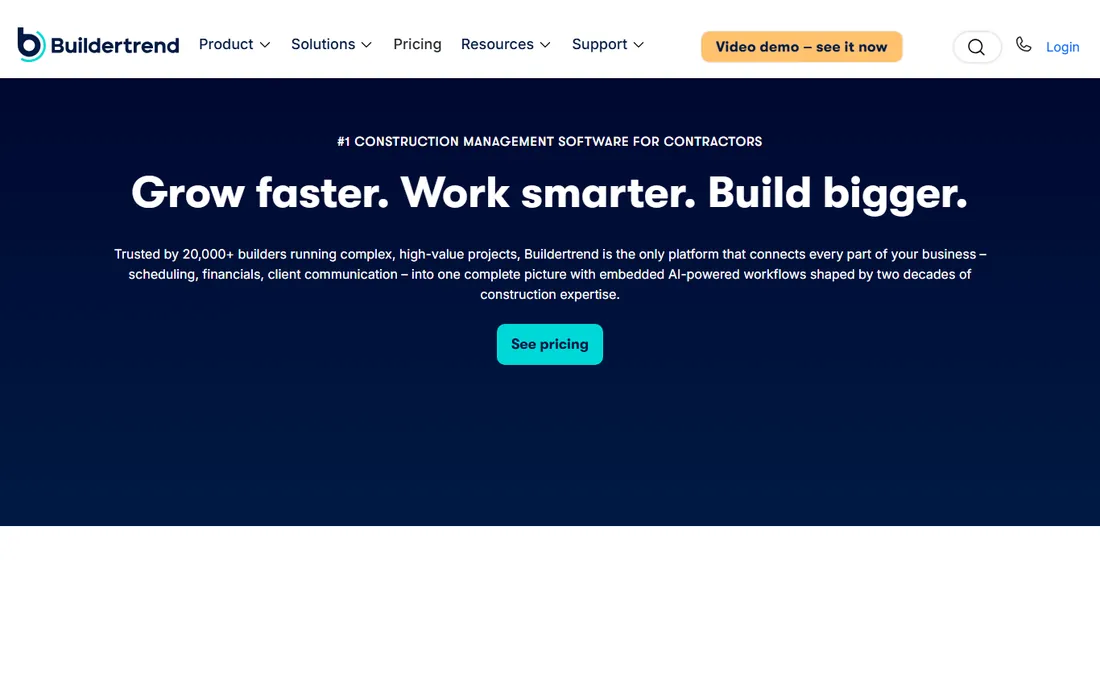
Buildertrend serves the residential world: custom home builders, remodelers, and specialty contractors who need to estimate, bid, and then actually run the job. Bids and proposals feed into budgets, schedules, and client communication without switching systems. The client portal, where homeowners approve selections and see progress, is a genuine differentiator for builders who sell on transparency.
At $99 a month to start, it is the most accessible full platform on this list. The tradeoff is focus. Commercial GCs running competitive bid processes with dozens of subcontractors will find the bidding tools thinner than Procore or SmartBid. For residential builders doing negotiated and repeat-client work, where the 25 to 35 percent win rates apply, Buildertrend covers the whole workflow at a fair price.
What we like- Estimating, bids, and project management in one subscription
- Client-facing portal
- Accessible entry price
Watch out for- Residential focus limits commercial fit
- Bidding depth lags Procore
Starting priceSee website
Free planFree trial
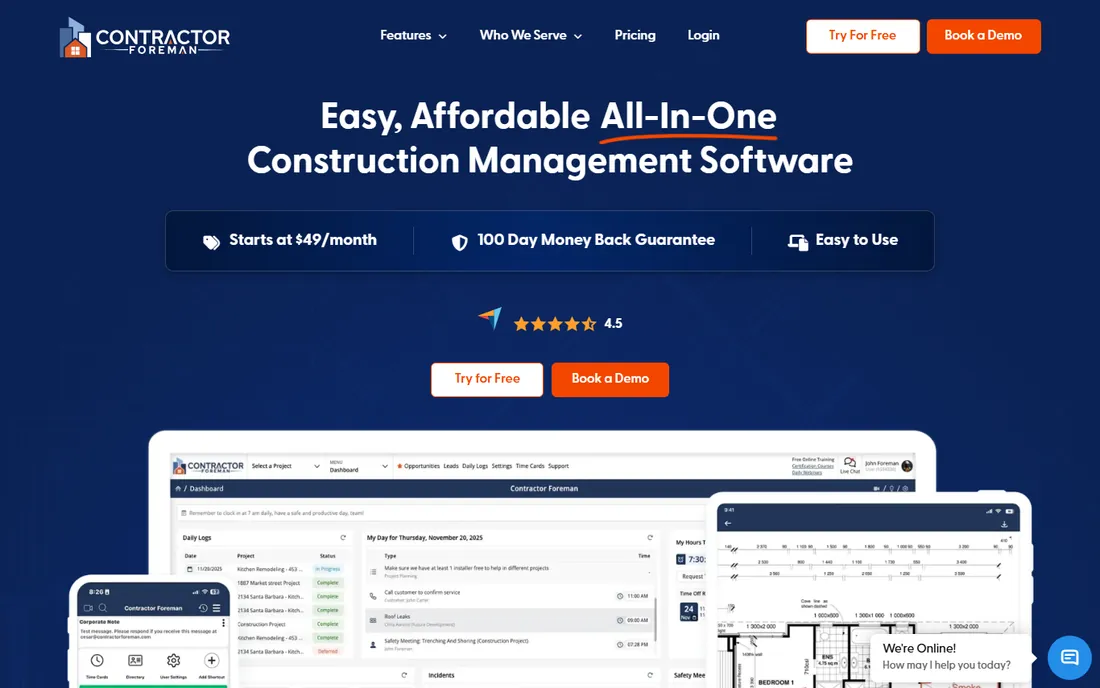
Contractor Foreman targets the small general contractor that outgrew spreadsheets but cannot justify Procore. Estimating, proposals, bid tracking, scheduling, and job costing live in one system, and bid package revisions stay tied to the correct document set so estimators stop chasing which version a sub priced.
The value proposition is breadth per dollar: firms get project management functionality alongside bidding without enterprise pricing. Reviews consistently praise the feature depth for the price, while noting the interface feels utilitarian next to Buildertrend. Pricing is not published, so expect a quote or trial signup to see real numbers. It fits small GCs and specialty contractors that want one system for the office and the field.
What we like- Estimates, proposals, and job costing in one system
- Document-controlled bid revisions
- Good value for small firms
Watch out for- Pricing not published
- Interface less polished than Buildertrend
Starting price$450/month
Free planNo
SmartBid does one job for general contractors: run the invitation-to-bid process. GCs send bid invitations to their subcontractor database, share plans through the planroom, track who has viewed and downloaded documents, and manage the closing process. It is the standard tool for commercial GCs whose preconstruction team lives in bid cycles.
At $450 a month to start, it is priced for firms where bidding is a full-time function. That cost is easy to justify for a GC running dozens of bid packages a year and impossible to justify for a subcontractor or small builder. SmartBid is now part of the ConstructConnect family, which extends its project data reach. Firms should evaluate it against Procore's bidding module if they are already considering the larger platform.
What we like- Purpose-built for bid invitations and ITB cycles
- Subcontractor database management
- Strong planroom
Watch out for- Highest published starting price here
- Overkill for subcontractors
#5
STACK
Best for: digital takeoff and estimating for preconstruction teams
Visit stackct.com
Starting price$249 per user/month (billed annually)
Free planYes
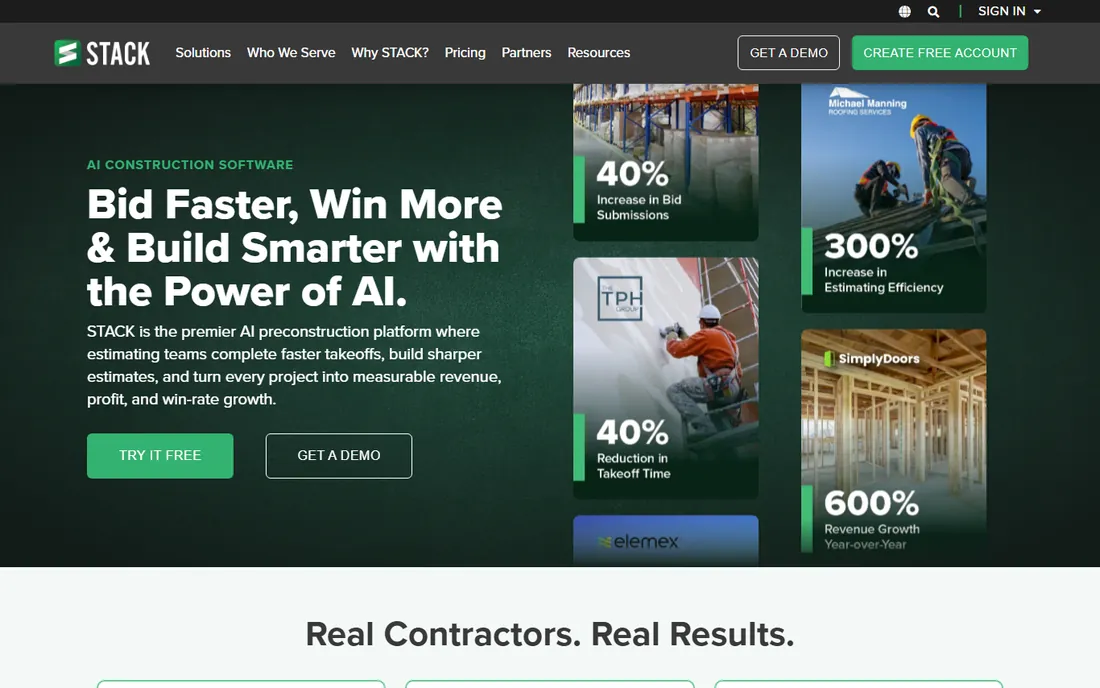
STACK is the takeoff-first pick. Estimators measure quantities directly from digital plans in the browser, collaborate on the same project in real time, and build estimates from the takeoff data. The cloud model means no desktop software to install and no files to email around, which matters for firms with estimators in different offices.
Pricing starts at $249 per user per month on the Premium tier with annual billing, and a free forever plan covers up to two concurrent projects for very small shops or trial use. The per-user model gets expensive for ten-person estimating departments, which is worth modeling before committing. STACK fits subcontractors and GCs whose bottleneck is takeoff speed and accuracy rather than bid administration.
What we like- Cloud takeoff with collaboration
- Free forever plan for small shops
- Planroom and bid management included
Watch out for- Per-user pricing adds up for large estimating teams
- Takeoff-focused rather than full bid management
#6
Buildxact
Best for: residential estimating with takeoffs and bid comparison
Visit buildxact.com
Starting priceSee website
Free planFree trial
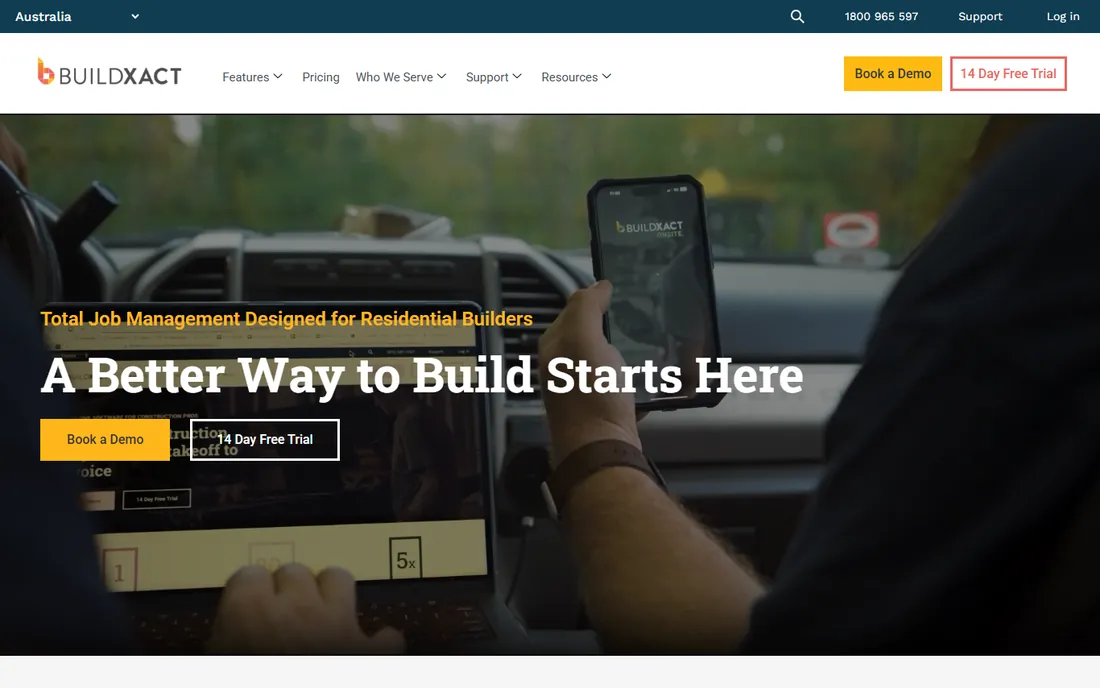
Buildxact serves residential builders and remodelers who need to turn plans into quotes fast. Takeoffs feed directly into estimates, estimates into professional quotes, and the bid comparison tools help builders evaluate subcontractor pricing side by side. The workflow is designed around the way small residential firms actually bid: quickly, repeatedly, and with thin margins for error.
The residential specialization is both the strength and the limit. Commercial contractors will miss the heavy bid management features of SmartBid or Procore. For its audience, though, the integrated takeoff-to-quote flow beats juggling separate tools. Pricing is not published, so use the free trial to evaluate fit and get a quote for your team size.
What we like- Takeoffs, estimating, and bid comparison in one workflow
- Built for residential builders
- Quick quote turnaround
Watch out for- Pricing not published
- Residential focus limits commercial use
Starting priceSee website
Free planFree trial
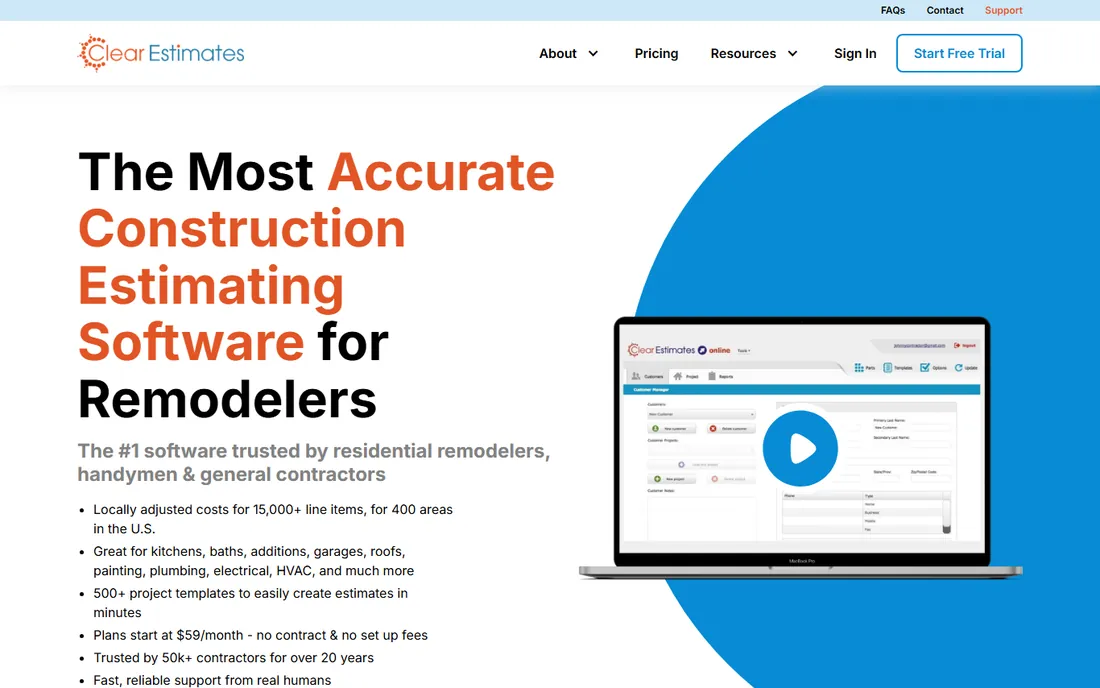
Clear Estimates is the most focused tool on this list: it helps remodelers produce consistent, professional bid documents from a structured line-item database. Instead of building every estimate from scratch, remodelers pick from pre-built assemblies with current pricing logic, which keeps bids consistent across estimators and jobs.
That narrowness is the point. A kitchen and bath remodeler does not need Procore's subcontractor prequalification or SmartBid's ITB cycles. They need to produce accurate, good-looking bids quickly and move on to the next one. The tradeoff is everything outside that job: project management, scheduling, and client communication live elsewhere. Pricing is not published; the free trial is the way to evaluate it.
What we like- Structured line-item database for remodeling
- Consistent professional bid documents
- Fast to learn
Watch out for- Narrow remodeling focus
- Limited project management beyond bidding
#8
PlanHub
Best for: subcontractors finding projects and exchanging bids
Visit planhub.com
Starting priceSee website
Free planYes
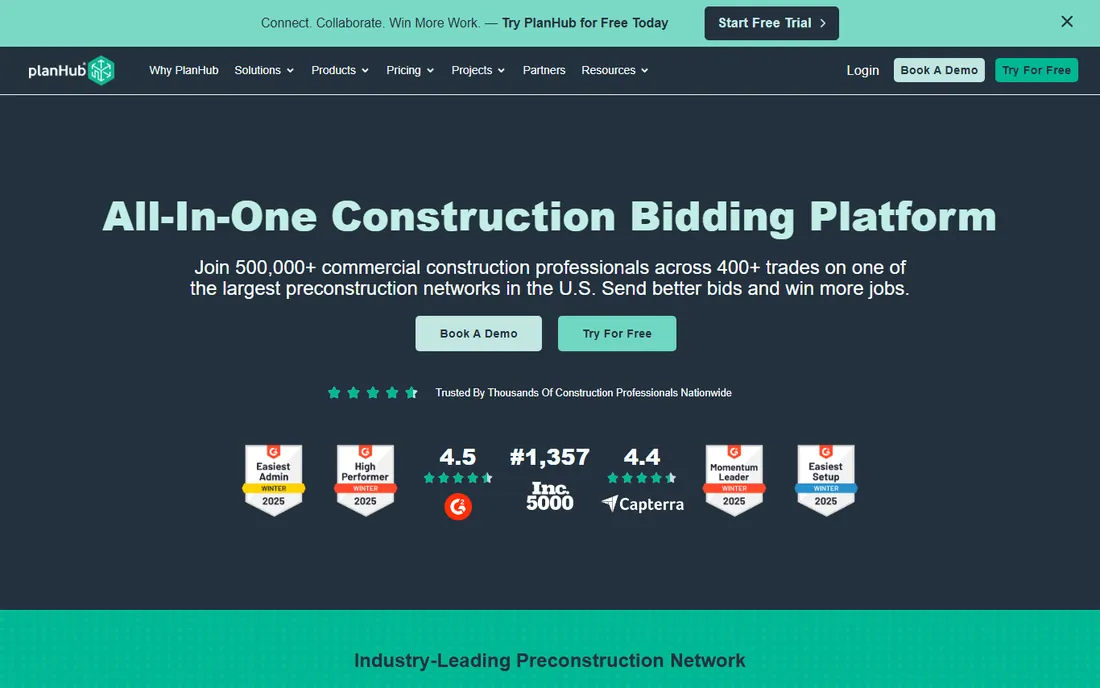
PlanHub is a marketplace more than a software tool, and that distinction matters. General contractors post projects and bid invitations; subcontractors discover them, download documents, and submit bids. For subcontractors, joining is free, which makes it the cheapest way onto this list and a practical source of bid opportunities.
It does not replace takeoff or estimating software. Subs still need STACK, Clear Estimates, or similar tools to price the work they find on PlanHub. Think of it as the top of the funnel: project discovery and bid exchange, with the actual bid math happening elsewhere. GCs pay for posting and management features. For a subcontractor looking to fill a pipeline, the free entry makes it an easy yes alongside a real estimating tool.
What we like- Free for subcontractors to join
- Project discovery plus bid exchange
- Large GC network posting projects
Watch out for- Not a full bidding system
- GC-side features cost more
#9
Followup CRM
Best for: commercial and specialty contractors tracking bid pipelines
Visit followupcrm.com
Starting priceSee website
Free planNo
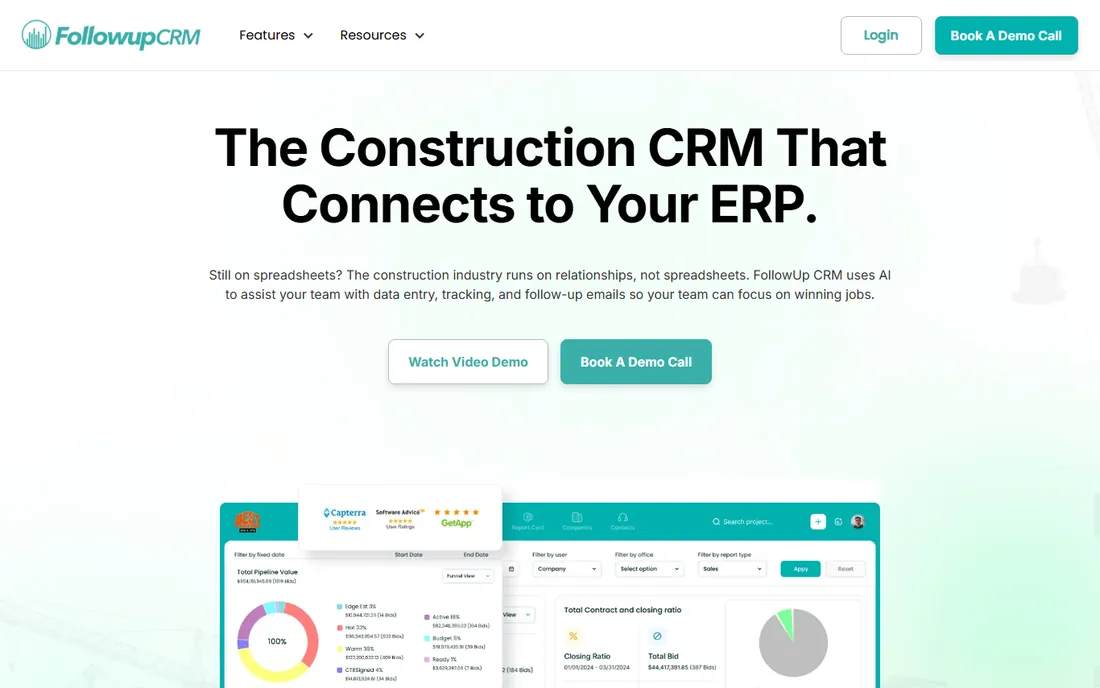
Followup CRM covers the pursuit side of bidding: tracking every opportunity from first lead through bid submission to won or lost. Commercial and specialty trade contractors use it to monitor deadlines, automate follow-ups with GCs, and give owners a live view of the pipeline. It replaces the spreadsheet-and-whiteboard system that lets bids slip through cracks.
It is not estimating software and does not try to be. The bid itself gets built in STACK or similar tools; Followup CRM makes sure the bid gets submitted on time and followed up afterward. That separation is honest and useful for firms whose problem is dropped balls rather than slow takeoffs. Pricing is not published, so expect a demo and quote.
What we like- Built specifically for bid tracking from lead to close
- Pipeline visibility for owners
- Follow-up automation
Watch out for- Not an estimating or takeoff tool
- Pricing not published
How we built this shortlist
We compared contractor bidding tools using vendor pricing pages, feature documentation, and review data from G2, Capterra, SelectHub, and construction industry publications. We weighted bid invitation workflows, takeoff and estimating depth, planroom quality, subcontractor management, and fit for company size and trade, from residential remodelers to commercial GCs. We did not run hands-on trials, so workflow details come from documentation and verified user reviews rather than our own use.
What to check before you buy
Match the tool to your side of the bid. General contractors need invitation management, planrooms, and bid comparison. Subcontractors need takeoff speed, deadline tracking, and project discovery. A tool built for one side will frustrate the other, so be honest about which side signs the checks at your firm.
Takeoff accuracy deserves a trial with your own plans. Upload a recent project and compare the software's quantities against your manual takeoff. The industry standard for bid-level takeoff is 2 to 5 percent variance from actual quantities. If the tool cannot hit that on your drawings, nothing else about it matters.
Count the real users before you look at per-user pricing. Estimators, project managers, and field staff all add up, and the difference between five and fifteen seats can double the annual cost. Ask whether read-only or field users need paid seats, and whether the vendor offers role-based pricing.
Check the planroom limits. Some platforms cap document storage or the number of active bid packages on lower tiers. A GC running twenty bid packages a month needs to know the overage terms before the first overage invoice arrives. Ask how bid documents are archived after award and how long they remain accessible.
For marketplace tools like PlanHub, evaluate project quality in your trade and region before paying for GC-side features. Browse the posted projects as a free user first. The value of a bidding network is entirely in the liquidity of its marketplace, and that varies enormously by market.
Takeoff speed versus bid administration
Contractors often buy one tool when their bottleneck needs the other. If estimators take two weeks to price a job, the problem is takeoff speed, and STACK or Buildxact will move the needle more than any bid management platform. If bids go out late because invitations, revisions, and sub responses are chaos, the problem is administration, and SmartBid or Procore is the fix.
The best-run preconstruction departments use both: a takeoff tool for quantities and a bid platform for process. That costs more than either alone, but the math usually works. At a 20 percent win rate, one additional quality bid per month is worth far more than either subscription. Diagnose the bottleneck honestly before you shop, or you will automate the wrong part of the process.
Frequently asked questions
What is the difference between bidding software and estimating software?
Estimating software calculates what a job should cost, usually starting with takeoff measurements from plans. Bidding software manages the process around the bid: invitations, document sharing, subcontractor responses, and bid comparison. Many tools do both, but they are different jobs.
How much does contractor bidding software cost?
Published starting prices in 2026 range from $99 a month for Buildertrend to $450 a month for SmartBid, with STACK at $249 per user per month. Procore, Contractor Foreman, and several others use quote-based pricing. Per-user tools get expensive as teams grow, so model your real headcount.
Do subcontractors need different software than general contractors?
Mostly yes. Subcontractors need takeoff and estimating speed plus a way to discover projects, which is why STACK plus PlanHub is a common combination. General contractors need invitation management and bid comparison, which points to SmartBid, Procore, or Buildertrend.
Can bidding software integrate with accounting tools?
Most platforms export bid data to accounting systems like QuickBooks or Sage, and some offer direct integrations. Ask specifically whether awarded bids flow into job costing automatically or require manual re-entry, because that handoff is where data usually breaks.
Is there free contractor bidding software?
PlanHub is free for subcontractors to join and find projects. STACK offers a free forever plan with project limits. Most full bidding platforms are paid only, though nearly all offer free trials or demos.
How long does implementation take?
Cloud takeoff tools like STACK can be productive within days. Bid management platforms take longer because they require setting up subcontractor databases, templates, and document workflows. Plan for two to six weeks for a full rollout, longer if you are migrating historical bid data.
Sources we checked (6)
- https://www.selecthub.com/c/construction-bidding-software/
- https://softwareconnect.com/roundups/best-construction-bidding-software/
- https://www.followupcrm.com/blog/construction-bid-tracking-software
- https://onpattison.com/news-from-our-partners/bid-win-rate-vs-bid-volume-how-small-contractors-can-bid-more-jobs-without-hiring-an-estimator/
- https://github.com/ishandutta2007/awesome-construction-takeoff
- https://wifitalents.com/best/residential-construction-bidding-software/
Is your product missing or out of date?
We review this list regularly. Vendors can request a listing, send updated pricing or ask about featured placement.

Shihab Mia · Founder, Rankite
Shihab has spent more than a decade helping SaaS and e-commerce brands grow through search. He writes Rankite's software buying guides from pricing pages, documentation and public user reviews. More about Shihab.