How we make this list: we compare pricing pages, product documentation and public user reviews. Rankite is independent; if a vendor ever pays for a featured spot, that listing is clearly labeled Partner.
Key takeaways
- MaintainX is the easiest win for mobile-first teams, with a free Basic plan and paid tiers from $20 per user per month.
- Fiix suits mid-market manufacturers that need deeper analytics and inventory control, starting at $45 per user per month with a free tier.
- UpKeep and Coast are the two most approachable options for small teams, from $24 and $25 per user per month respectively, both with free plans.
- Limble stands out for preventive maintenance scheduling and analytics at $28 per user per month, while Hippo CMMS is the simple budget pick at $35.
- eMaint is built for regulated industries with compliance demands, starting at $69 per user per month on the Team plan.
Quick comparison
| Tool | Best for | Starting price | Free plan |
|---|
 MaintainX MaintainX | mobile-first teams that need fast technician adoption | Free (Basic); Essential $20/user/month | Yes |
 Fiix Fiix | mid-market manufacturers that want analytics and structure | Free; paid from $45/user/month (Basic) | Yes |
 UpKeep UpKeep | SMB teams that prioritize fast mobile onboarding | $24/user/month (Essential) | No |
 Limble Limble | operations that want PM scheduling plus real analytics | $28/user/month | Yes |
 Coast Coast | small teams that want customizable maintenance workflows | Free; Starter $25/user/month | Yes |
 Hippo CMMS Hippo CMMS | small facilities that want a simple fixed price | $35/user/month | No |
 eMaint eMaint | regulated industries that need compliance and audit depth | $69/user/month (Team plan) | No |
 MPulse MPulse | shift-based operations that share logins | $49/concurrent user/month | No |
Is your product missing or out of date?
We review this list regularly. Vendors can request a listing, send updated pricing or ask about featured placement.
The best maintenance software
Two kinds of buyers shop for maintenance software, and they fail in opposite ways. The first runs a small crew of technicians and needs the software to be so easy that people actually open it on the shop floor. Their biggest risk is buying a powerful system nobody uses. The second manages multiple sites or regulated assets and needs preventive maintenance compliance, audit trails and real analytics. Their biggest risk is buying a simple app that cannot prove PM completion to an auditor.
The first buyer should start with MaintainX, UpKeep or Coast, all of which lead with mobile apps and free or cheap entry tiers. The second buyer belongs with Fiix, Limble or eMaint, where scheduling depth, inventory management and compliance reporting are the core strengths. Hippo CMMS and MPulse fill the gaps: a straightforward budget option and a concurrent-user model for shift operations.
This list covers both with current per-user pricing, because the cheapest way to compare CMMS tools is to price your actual technician headcount on each one.
#1
MaintainX
Best for: mobile-first teams that need fast technician adoption
Visit maintainx.com
Starting priceFree (Basic); Essential $20/user/month
Free planYes
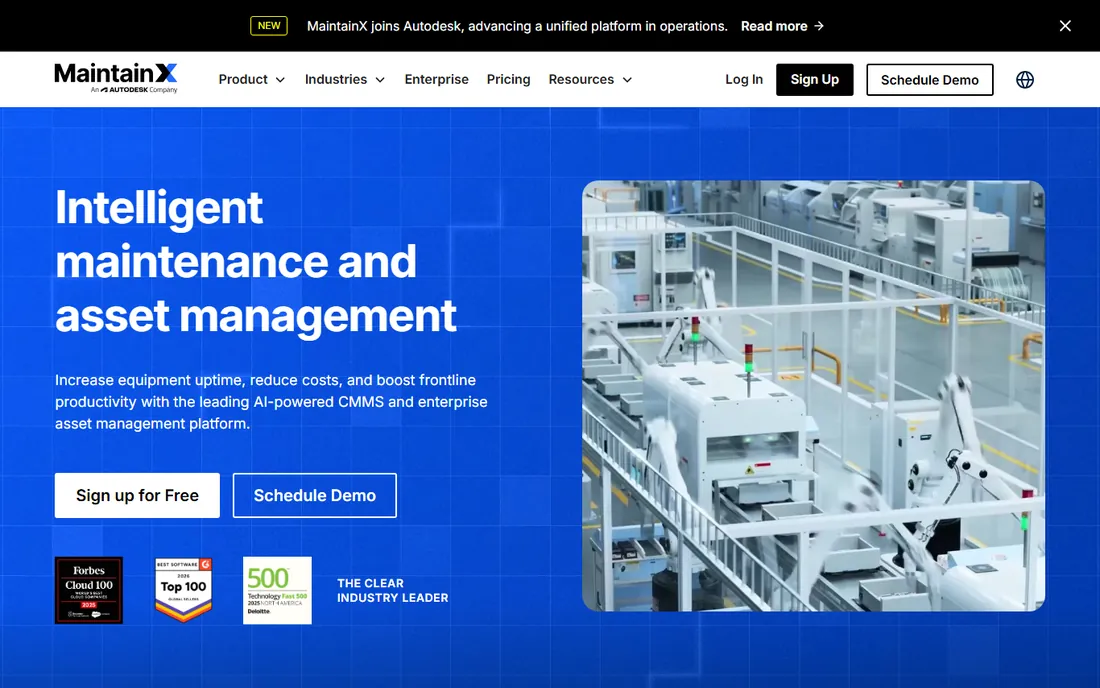
MaintainX wins the adoption battle, which is the battle that decides whether a CMMS produces any data at all. The free Basic plan covers unlimited work orders and requests, so a small team can digitize maintenance without a budget line. Essential at $20 per user per month adds preventive maintenance scheduling, parts inventory and deeper reporting, while Premium at $65 brings meter-based triggers and sensor integrations. Technicians like the app because work orders carry real-time messaging, checklists and photos, which makes shift handoffs painless.
The honest limitation is analytics depth. If you need custom dashboards, advanced failure analysis or MTBF reporting across a plant network, Limble or Fiix go further. MaintainX is also weaker on the compliance side for regulated industries. It is the best preventive maintenance software for teams that are moving off paper and need everyone using the system within weeks, not quarters.
What we like- Free Basic tier with unlimited work orders
- Excellent mobile app with work-order chat and photo attachments
- Average single-site rollout measured in weeks
Watch out for- Reporting and analytics lag deeper platforms
- Meter-based PM triggers sit on higher tiers
#2
Fiix
Best for: mid-market manufacturers that want analytics and structure
Visit fiix.com
Starting priceFree; paid from $45/user/month (Basic)
Free planYes
Fiix, now part of Rockwell Automation, is the step up when maintenance becomes a managed function rather than a reactive one. The free tier handles basic work orders, and the paid plans starting at $45 per user per month add preventive maintenance with meter-based triggers, parts inventory with costing, and the kind of reporting that maintenance managers present to plant leadership. The integration catalog is broad, covering ERPs and industrial platforms that smaller tools cannot reach.
The price jump from free to paid is real, and the product expects more configuration than MaintainX or UpKeep. That structure is exactly what larger operations need, though: asset hierarchies, approval workflows and audit-ready records. Choose Fiix when you have a maintenance manager who will own the system and a spare-parts process worth tracking properly.
What we like- Strong reporting with custom reports and dashboards
- Solid parts inventory and multi-site support
- Free tier for basic work order management
Watch out for- First paid tier costs more than double MaintainX's
- Setup is heavier and benefits from guided onboarding
#3
UpKeep
Best for: SMB teams that prioritize fast mobile onboarding
Visit upkeep.com
Starting price$24/user/month (Essential)
Free planNo
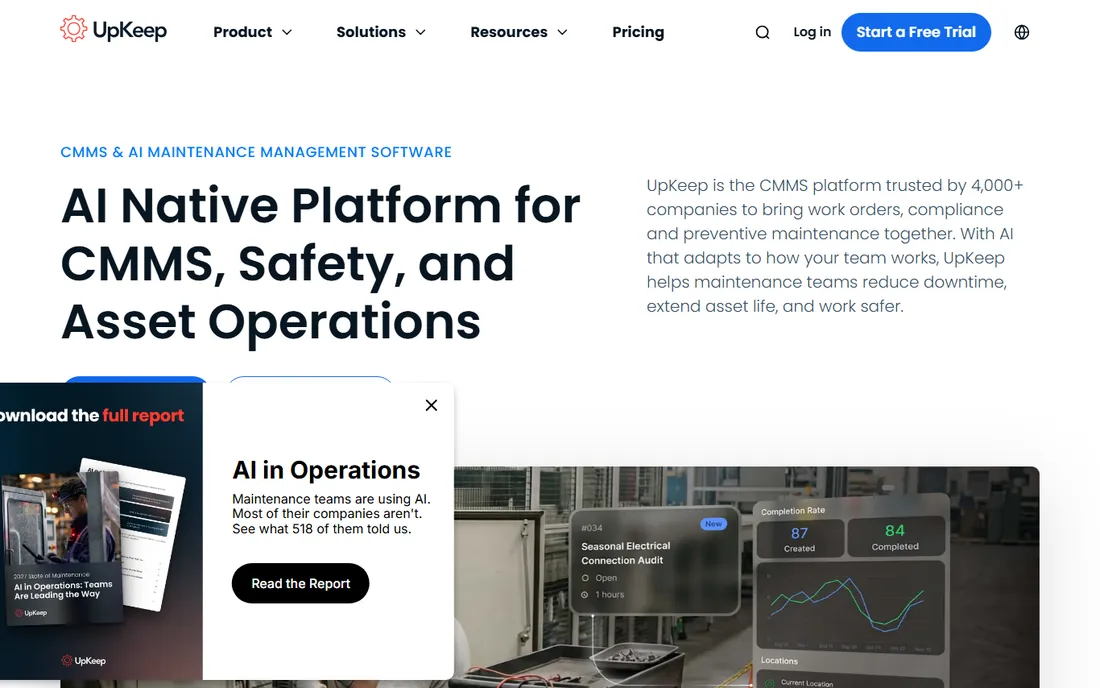
UpKeep's whole design centers on getting technicians into the app quickly. Essential at $24 per user per month includes unlimited work orders, locations and an AI assistant with monthly credits, while Premium at $55 adds preventive maintenance scheduling, parts inventory with costing and time tracking. The request portal lets anyone in the building submit a maintenance request without a license, and only admin, technician and limited-technician roles consume paid seats.
The trade-off is ceiling height. Reviewers consistently say teams outgrow UpKeep when they need deeper reporting, multi-site portfolio views or vendor portals, at which point Fiix or Limble enter the conversation. Implementation is also sold separately, from $500 training packages upward. For a single site or a small multi-site operation that needs to move fast, it remains one of the easiest CMMS products to roll out.
What we like- Clean mobile UI that technicians learn in days
- Request portal for non-technical staff
- Requester and view-only users are free and unlimited
Watch out for- Reporting depth and multi-site views are the common reasons teams outgrow it
- Implementation packages cost extra
#4
Limble
Best for: operations that want PM scheduling plus real analytics
Visit limble.com
Starting price$28/user/month
Free planYes
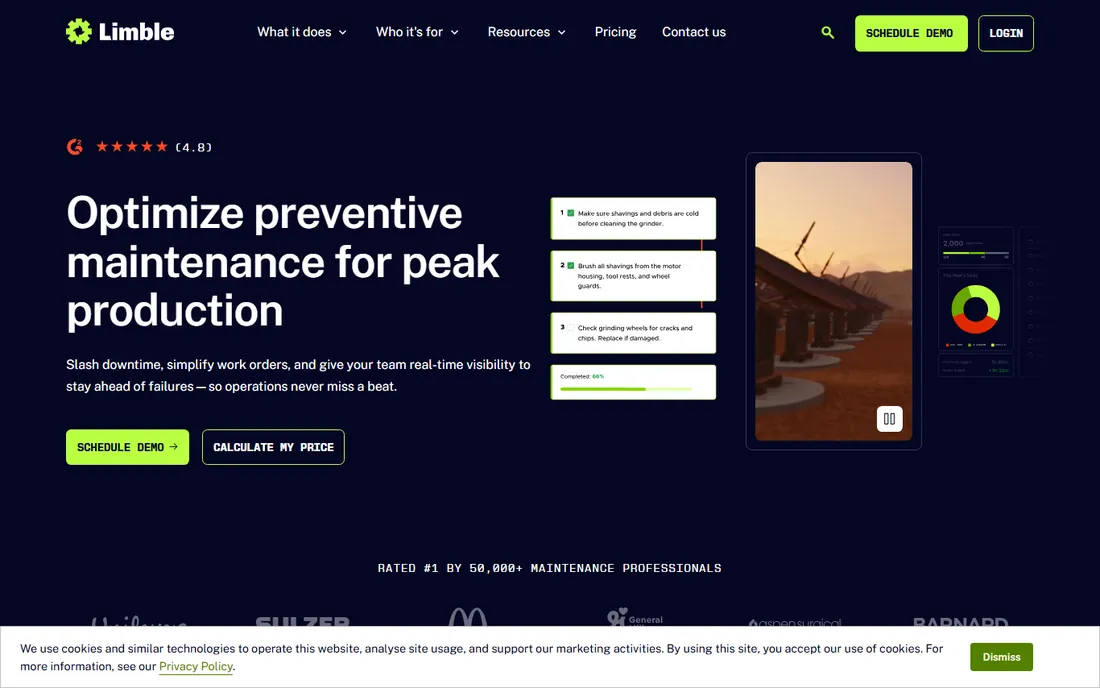
Limble sits in the sweet spot between approachable and analytical. Preventive maintenance scheduling supports time-based and meter-based triggers, and the KPI dashboards cover the metrics maintenance managers actually track: PM compliance, downtime, response times and asset costs. Starting at $28 per user per month with a free plan available, it undercuts Fiix on entry price while going further than MaintainX on reporting.
The catch is that the best analytics sit on higher tiers, so price the plan that includes the dashboards you need rather than the entry tier. Some ERP integrations also carry extra cost. Limble fits maintenance-heavy operations, from manufacturing plants to facility portfolios, that want to prove the value of preventive maintenance with numbers rather than anecdotes.
What we like- Strong preventive maintenance scheduling with meter-based triggers
- KPI dashboards and downtime tracking
- Good balance of ease and depth
Watch out for- Analytics depth is tiered, with advanced reporting on higher plans
- ERP integrations can cost extra
#5
Coast
Best for: small teams that want customizable maintenance workflows
Visit coastapp.com
Starting priceFree; Starter $25/user/month
Free planYes
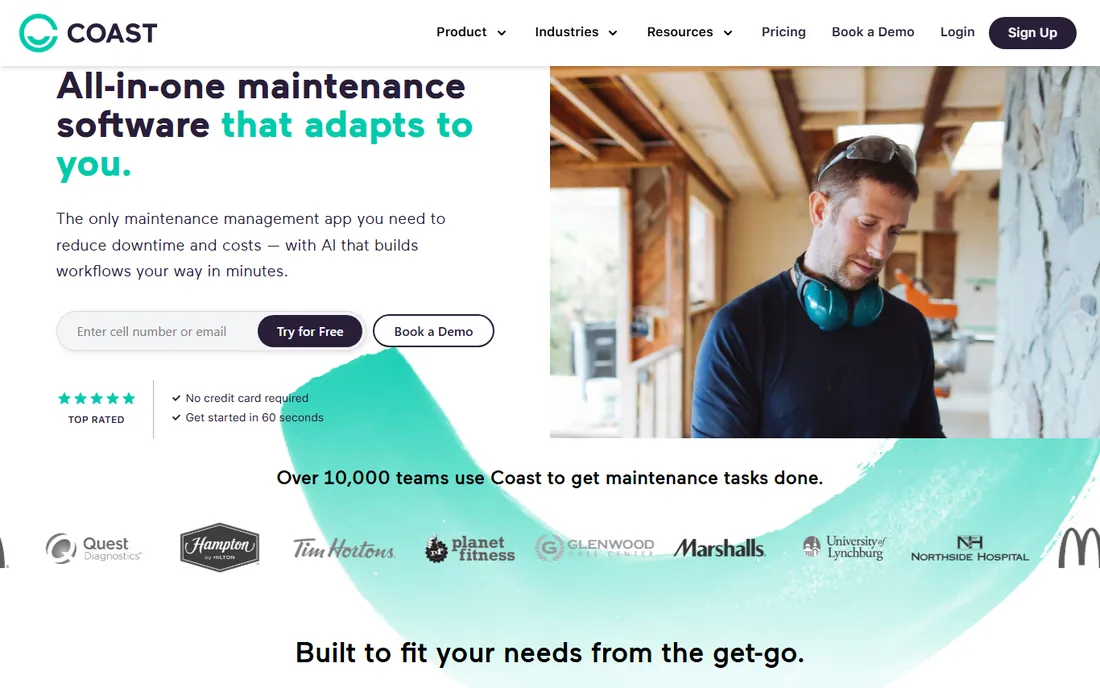
Coast combines a chat-like interface with real CMMS capability, which makes it unusually approachable for small teams. The free plan includes unlimited messages, work orders, scheduling and recurring tasks, and Starter at $25 per user per month removes history limits and adds storage. Teams can build custom workflows for anything from lockout tagout procedures to warranty tracking, and QR codes on equipment open the right work order or checklist instantly.
Where Coast loses ground is scale and ecosystem. The Pro tier at $65 per user is a steep step, and the integration catalog and third-party content are thinner than MaintainX or Fiix. But for a small operation that wants its maintenance software to match its actual processes rather than forcing generic ones, the customization is a genuine differentiator.
What we like- Free plan with unlimited work orders and messaging
- Highly customizable workflows and checklists
- QR codes for instant asset and work-order access
Watch out for- Pro tier at $65 per user jumps quickly
- Smaller user community than the big names
Starting price$35/user/month
Free planNo
Hippo CMMS is the uncomplicated pick. At $35 per user per month with a two-user minimum, it covers work orders, preventive maintenance scheduling, asset records and basic reporting without the plan-tier maze that bigger platforms build. Facilities teams, schools, churches and small hospitality properties use it because the learning curve is short and the price is predictable.
It does not try to compete with Fiix or Limble on analytics, and there is no free tier, only demos. If your operation needs multi-site rollups, advanced inventory or compliance frameworks, look elsewhere. But for a small facility that needs maintenance organized this month at a known price, Hippo gets the job done without ceremony.
What we like- Straightforward per-user pricing with no tier games
- Simple enough for non-technical staff
- Decent work order and PM scheduling basics
Watch out for- No free tier to trial the product
- Limited depth for multi-site or enterprise needs
#7
eMaint
Best for: regulated industries that need compliance and audit depth
Visit emaint.com
Starting price$69/user/month (Team plan)
Free planNo
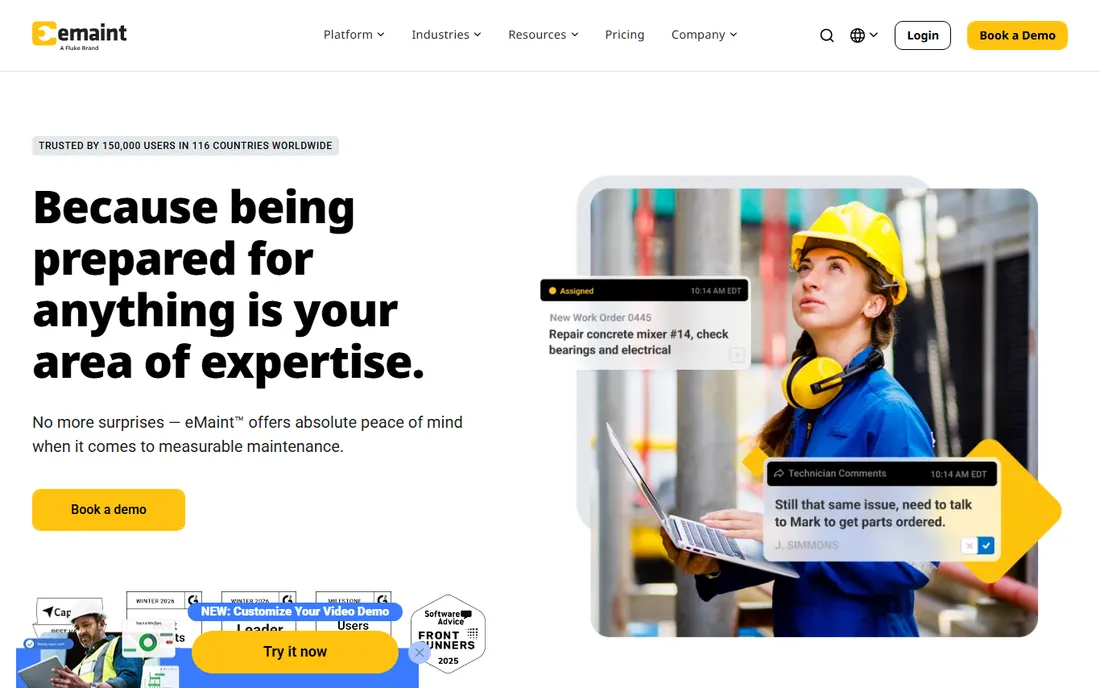
eMaint, part of Fluke, is built for maintenance organizations where an auditor can show up any day. The Team plan at $69 per user per month includes the compliance tooling, condition monitoring integrations and reporting depth that pharmaceutical, food processing and energy operations require. Asset hierarchies, calibration tracking and detailed work histories are first-class features rather than add-ons.
That depth costs money and setup time. The three-user minimum means the entry commitment is over $200 a month, and the product expects a more deliberate implementation than MaintainX or Coast. It is the wrong tool for a five-person shop doing basic PMs. For regulated plants where maintenance records are legal documents, it is one of the safest choices in the category.
What we like- Strong compliance, audit trail and inspection workflows
- Deep asset hierarchy and reporting
- Backed by Fluke's industrial ecosystem
Watch out for- Highest entry price on this list with a three-user minimum
- More setup than mobile-first rivals
Starting price$49/concurrent user/month
Free planNo
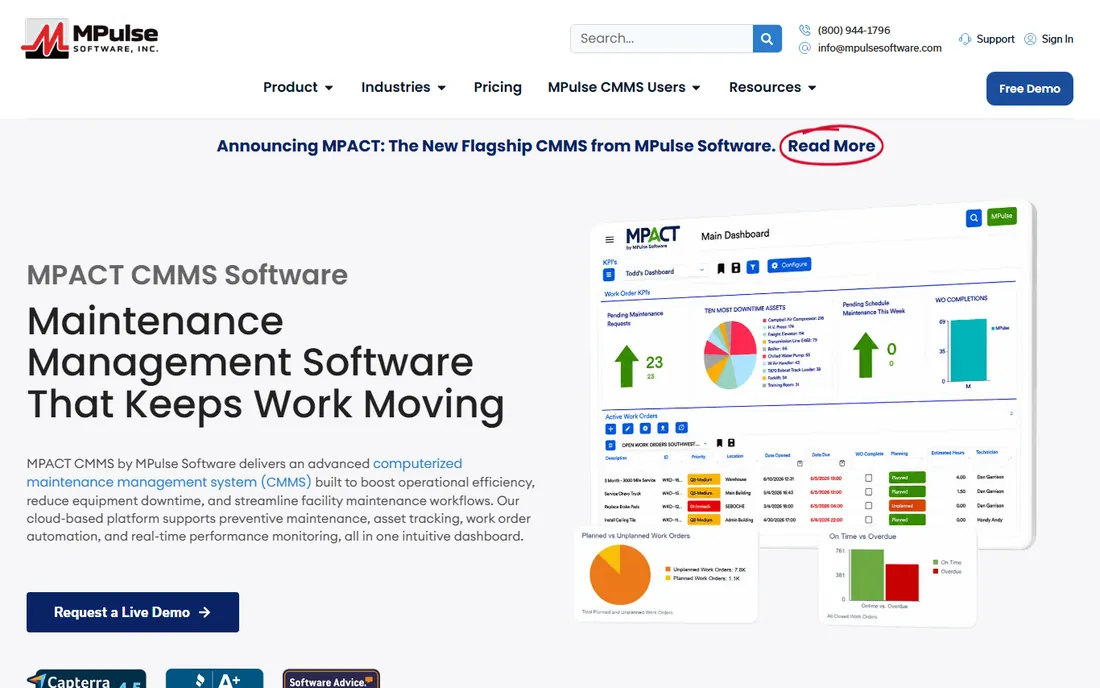
MPulse's standout feature is its licensing model. Charging per concurrent user instead of per named user means a three-shift operation with 30 technicians can run far fewer licenses than a per-seat tool would require, which can cut the bill substantially. Plans start around $49 per concurrent user per month, with advanced tiers reaching $100 to $130 for deeper inventory, purchasing and multi-site features. Both cloud and on-premise deployments are available, which matters for facilities with IT policies against cloud-only tools.
The product feels more traditional than the mobile-first apps above, and there is no free tier for evaluation. But for plants, campuses and municipalities running shifts around the clock, the concurrent model is often the cheapest honest price in the category. Model your real shift overlap before comparing it against per-seat competitors.
What we like- Concurrent-user licensing suits round-the-clock shift teams
- Cloud or on-premise deployment
- Advanced tiers with deep inventory and purchasing
Watch out for- No free tier
- Interface feels more traditional than mobile-first rivals
How we assembled this ranking
We pulled pricing and plan details from each vendor's own published pages, then verified the numbers against an independent pricing guide that re-checked vendor sites in mid-2026, plus reviewer feedback on G2, Capterra and Software Advice. We weighted mobile usability and technician adoption heavily, since a CMMS only works if the crew uses it, and we made sure both ends of the market were represented: simple tools for small teams and compliance-grade platforms for regulated operations. No hands-on testing is claimed; the ranking rests on published plans, documented features and aggregated buyer reviews.
What to check before you commit
Start with your preventive maintenance reality. If PMs are currently tracked on paper or in someone's head, a simple tool like MaintainX or Coast will change your operation faster than a complex one nobody adopts. If you already run PMs and need to prove compliance, prioritize audit trails, meter-based scheduling and reporting depth, and ask each vendor to demonstrate a full PM cycle from trigger to completed work order with history.
Price your real headcount, not the demo. Per-user fees dominate CMMS costs, so count every technician, supervisor and requester, and check which roles need paid licenses. MPulse's concurrent model can beat per-seat pricing for shift teams. Ask about implementation: what it costs, who does data migration and how asset records get built, because a CMMS with bad asset data is worse than none. Confirm mobile offline capability if technicians work in basements, plants or remote sites, and check the integration list for your ERP, accounting and any sensor or IIoT platforms you plan to connect.
The pricing models explained
Most CMMS tools charge per user per month, ranging from $20 to $69 on this list, with free tiers from MaintainX, Fiix, Limble and Coast lowering the cost of getting started. MPulse breaks the pattern with concurrent-user licensing, which favors shift operations. Watch for the costs beyond the subscription: implementation packages, data migration, training and paid integrations can add thousands to the first year. Annual billing typically saves 15 to 20 percent over monthly, so ask for both quotes once you have shortlisted two finalists.
Frequently asked questions
What is the difference between CMMS and EAM software?
CMMS focuses on maintenance execution: work orders, preventive maintenance scheduling, asset records and parts. EAM, enterprise asset management, covers the full asset lifecycle including procurement, depreciation and capital planning. Small and mid-size operations almost always need CMMS; EAM enters the picture for large enterprises managing asset portfolios worth tracking financially.
How much does maintenance software cost for a small team?
A five-technician team pays roughly $100 to $350 a month on the tools here, depending on the platform and plan. Free tiers from MaintainX, Fiix, Limble and Coast can bring that to zero for basic work order management. Regulated operations on eMaint or advanced Fiix tiers pay more, typically $300 to $700 a month for a small team.
What is preventive maintenance scheduling, and why does it matter?
Preventive maintenance scheduling automatically generates work orders when a time interval, meter reading or condition threshold is reached, instead of waiting for equipment to fail. It cuts unplanned downtime and extends asset life, and in regulated industries the completion records serve as compliance evidence. Every tool on this list offers it; the difference is in trigger types and reporting depth.
Can technicians use these tools without internet access?
Some can. MaintainX and UpKeep's higher tiers offer offline mobile modes that sync when connectivity returns, which matters for basements, remote plants and field sites. Others require a constant connection. If your team works where signal is unreliable, test offline mode during the trial before committing.
How long does it take to implement a CMMS?
Simple cloud tools can go live in one to three weeks for a single site with clean asset data. Mid-market platforms with inventory, integrations and multi-site rollouts typically take one to three months. The biggest variable is your asset list: building accurate asset records and PM schedules takes longer than configuring the software itself.
Sources we checked (7)
- https://facilio.com/blog/cmms-pricing/
- https://reliamag.com/cmms/best-cmms-manufacturing-plants/
- https://fieldservicesoftware.io/comparisons/fiix-vs-maintainx/
- https://softwareconnect.com/reviews/upkeep-cmms/
- https://coastapp.com/blog/coast-vs-maintainx/
- https://coastapp.com/blog/coast-vs-emaint/
- https://www.getclue.com/blog/best-cmms-software-for-construction-and-heavy-equipment
Is your product missing or out of date?
We review this list regularly. Vendors can request a listing, send updated pricing or ask about featured placement.

Shihab Mia · Founder, Rankite
Shihab has spent more than a decade helping SaaS and e-commerce brands grow through search. He writes Rankite's software buying guides from pricing pages, documentation and public user reviews. More about Shihab.