How we make this list: we compare pricing pages, product documentation and public user reviews. Rankite is independent; if a vendor ever pays for a featured spot, that listing is clearly labeled Partner.
Key takeaways
- Almost nobody in data labeling publishes prices: six of these eight tools quote custom, so budget for a sales conversation, not a checkout page.
- Roboflow is the only one with public pricing ($39 per month and up) and a real free tier, which makes it the default starting point for small teams.
- Label Studio is free and open source, the pick when your engineers would rather self-host than sign an enterprise contract.
- Encord's free Starter tier covers individuals and small teams prototyping, while Labelbox, V7, Snorkel AI and Dataloop aim at funded teams shipping production models.
Quick comparison
| Tool | Best for | Starting price | Free plan |
|---|
 Labelbox Labelbox | Teams labeling image, video and text data at production scale | See website (custom quote) | No |
 Encord Encord | Teams working with video, DICOM and other complex data types | See website (Starter, Team and Enterprise plans; no public prices) | Yes (Starter tier for individuals and small teams) |
 Label Studio Label Studio | Engineering teams that want to self-host labeling infrastructure | See website (open source; enterprise plans quoted) | Yes (open source) |
 SuperAnnotate SuperAnnotate | Operations labeling high volumes with tight quality control | See website (custom quote) | No |
 V7 V7 | Teams that want AI-assisted labeling with human review built in | See website (custom quote) | No |
 Snorkel AI Snorkel AI | Teams that prefer programmatic, code-driven labeling over manual annotation | See website (custom quote) | No |
 Dataloop Dataloop | Teams that want labeling inside a full AI development platform | See website (custom quote) | Free trial |
 Roboflow Roboflow | Computer vision teams that want transparent pricing and a free tier | $39/month (paid plans from $39 per month) | Yes (free tier) |
Is your product missing or out of date?
We review this list regularly. Vendors can request a listing, send updated pricing or ask about featured placement.
The best labeling software
Data labeling software has a pricing problem, and buyers should know it upfront. The vendors on this list sell to AI teams with funding, and most of them treat pricing as the start of a sales conversation. That is normal for the category, not a red flag, but it changes how you shop: shortlist on features and data-type fit, then get quotes from three vendors and compare the actual numbers side by side.
#1
Labelbox
Best for: Teams labeling image, video and text data at production scale
Visit labelbox.com
Starting priceSee website (custom quote)
Free planNo
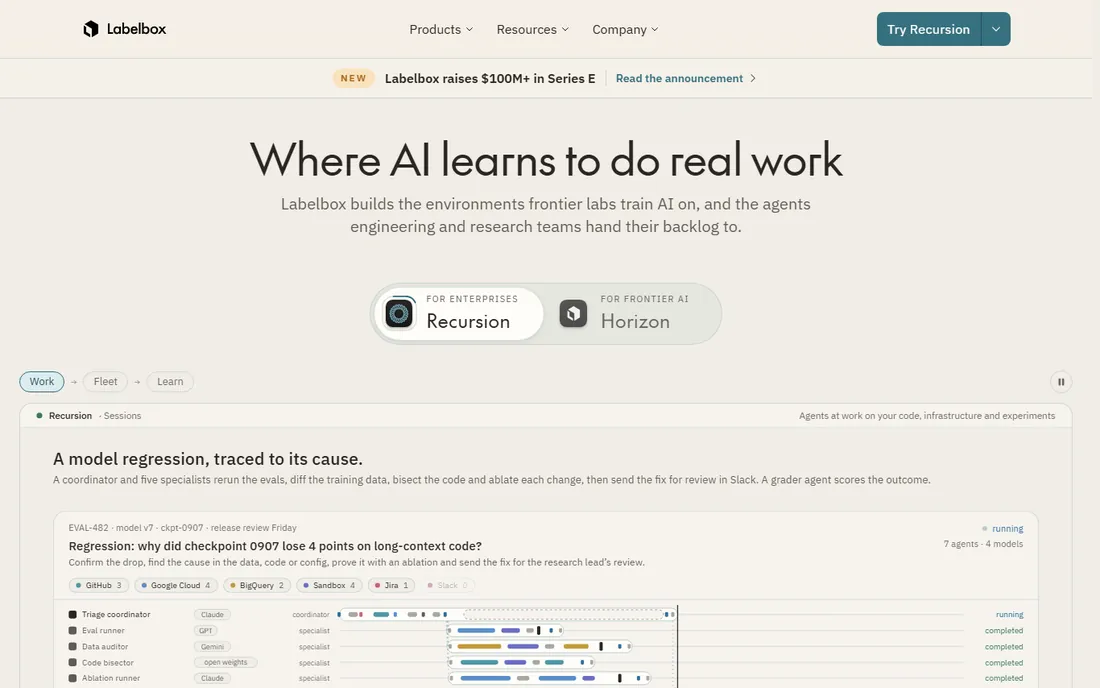
Labelbox is the incumbent enterprise pick. When a company has dozens of annotators and a model in production, Labelbox provides the workflow machinery: task routing, reviewer hierarchies, agreement metrics that catch sloppy labels, and exports that feed training pipelines directly. It is built for the moment labeling becomes an operation rather than a task.
The cost of that maturity is opacity. There is no pricing page, only a contact form, which means small teams cannot even estimate the bill. If you are labeling a few thousand images to test an idea, start elsewhere. If labeling quality is already a line item in your ML budget, Labelbox belongs on the shortlist.
What we like- Purpose-built for large labeling operations with review workflows, consensus scoring and workforce management
- Strong integrations with model training pipelines and experiment tracking
- Handles images, video, text and geospatial data in one platform
Watch out for- No public pricing, so even rough budgeting requires a sales call
- The platform's depth is overkill for a team labeling its first dataset
#2
Encord
Best for: Teams working with video, DICOM and other complex data types
Visit encord.com
Starting priceSee website (Starter, Team and Enterprise plans; no public prices)
Free planYes (Starter tier for individuals and small teams)
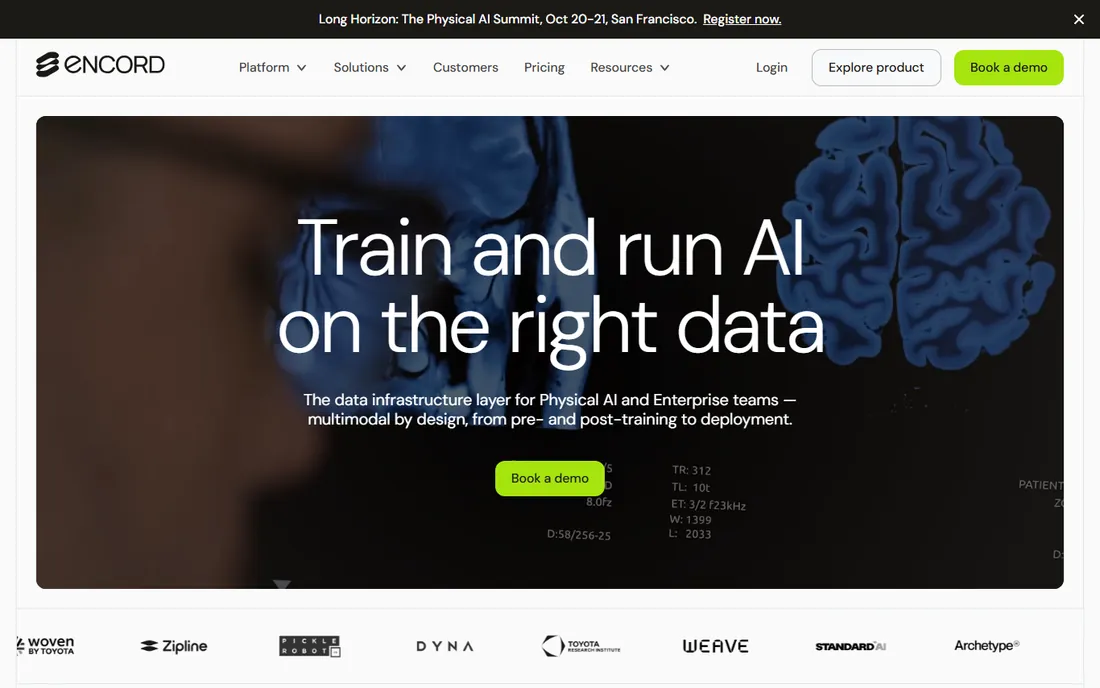
Encord earns its place by being the most approachable enterprise-grade option. The Starter tier lets an individual or small team label images and video, build ontologies and run customizable workflows without talking to sales, which is how most teams should evaluate any labeling tool. The platform's real strength shows on hard data: video object tracking, DICOM and NIfTI medical formats, and point-cloud support.
The pricing page lists what each tier includes but no dollar amounts, so treat the free tier as your evaluation and get the Team quote early. Teams that outgrow the Starter limits usually know exactly which features they need by then, which makes the sales conversation shorter.
What we like- A genuine free Starter tier for prototyping, rare in this category
- Strong on video-native annotation, medical imaging formats and 3D data
- Built-in model evaluation and data curation alongside labeling
Watch out for- No public prices on any plan, so the jump from free Starter to paid Team is a black box
- Advanced features like active learning sit behind higher tiers
#3
Label Studio
Best for: Engineering teams that want to self-host labeling infrastructure
Visit labelstud.io
Starting priceSee website (open source; enterprise plans quoted)
Free planYes (open source)
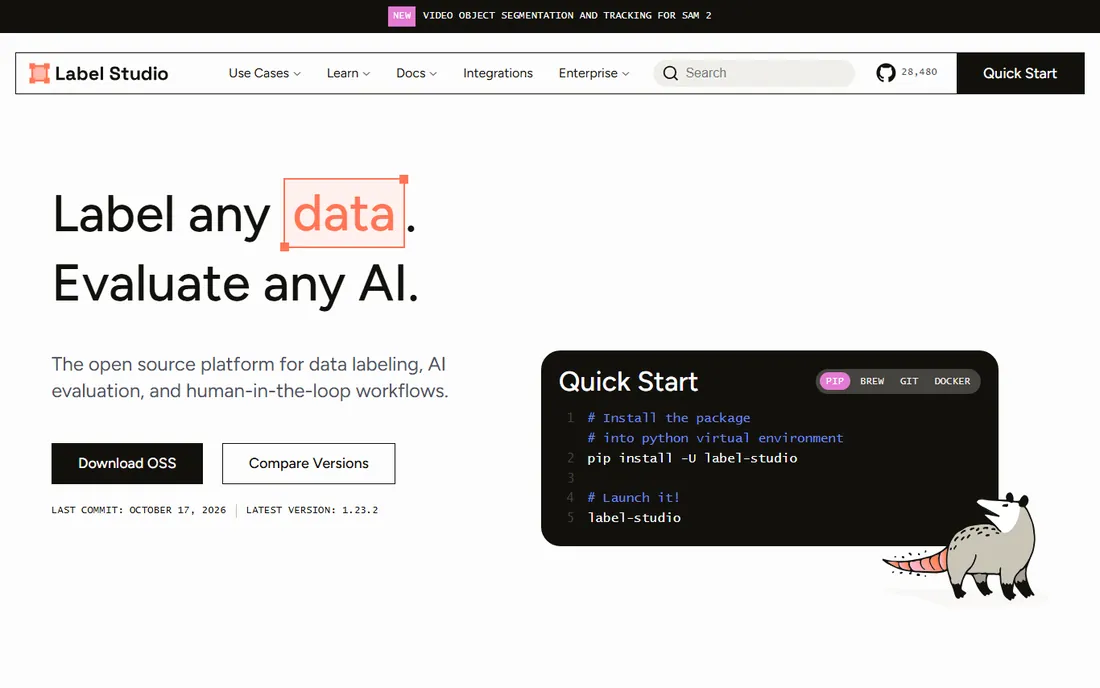
Label Studio is the answer when the budget is zero or the data cannot leave the building. It is a genuinely capable labeling interface that covers most data types, and because it is open source, there are no seat limits, no label quotas and no renewal negotiations. Regulated industries and research labs use it precisely because self-hosting keeps data in-house.
The trade is operational. Somebody on your team installs it, backs it up and keeps it running, and the review workflows are simpler than Labelbox or Encord. For a team with engineering capacity, that is a fine deal. For a team that wants labeling as a managed service, the commercial options justify their quotes.
What we like- Free and open source with no per-seat or per-label fees, ever
- Runs on your own servers, so sensitive data never leaves your network
- Flexible enough for images, audio, text, video and custom interfaces
Watch out for- You operate it: setup, upgrades and scaling are your team's job
- Workforce management and advanced QA are thinner than the commercial platforms
Starting priceSee website (custom quote)
Free planNo
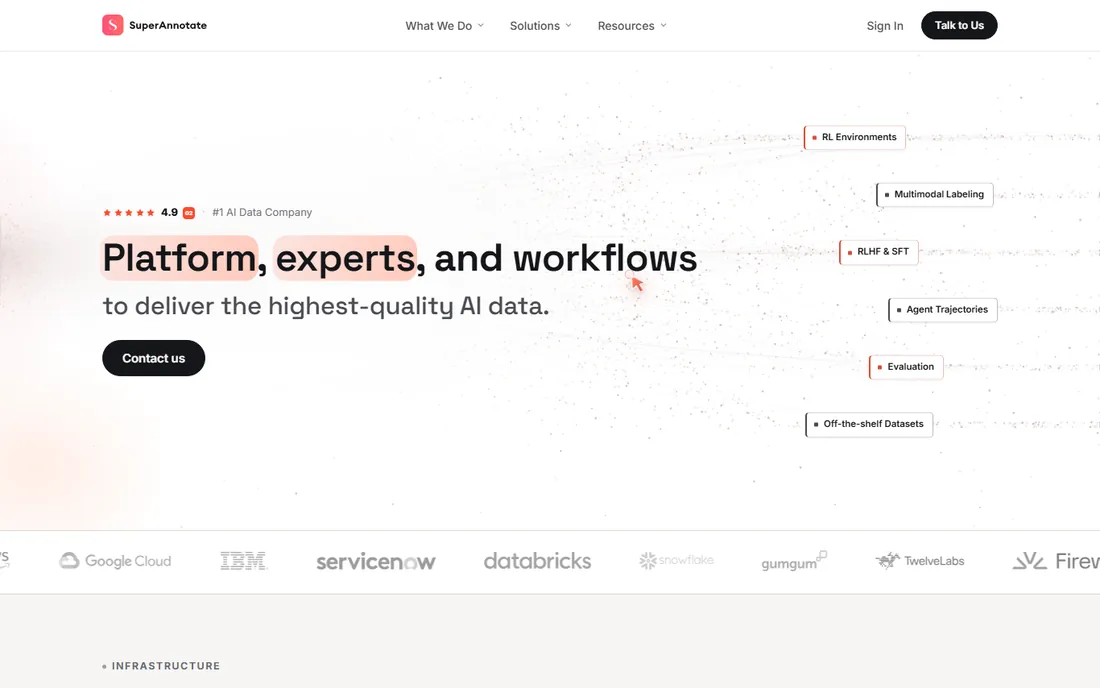
SuperAnnotate pitches itself to teams where labeling is a production line. The workflow pairs AI pre-labeling with human correction, so annotators fix predictions instead of drawing every box from scratch, which is where the throughput gains come from. Quality dashboards and reviewer tooling address the real failure mode of large labeling efforts: inconsistent labels that poison the model.
Like most of this list, pricing means a conversation. SuperAnnotate fits organizations that already know their monthly label volume and can describe it to sales. Smaller teams will find the onboarding heavier than the problem warrants; Roboflow or Label Studio serve them better.
What we like- Built for throughput: automation-assisted labeling with human review keeps large workforces productive
- Strong quality management and analytics for spotting bad labels early
- Covers images, video, text and document data
Watch out for- Custom-quote pricing with no public starting point
- The platform assumes you have an annotation operation, not a side project
#5
V7
Best for: Teams that want AI-assisted labeling with human review built in
Visit v7labs.com
Starting priceSee website (custom quote)
Free planNo
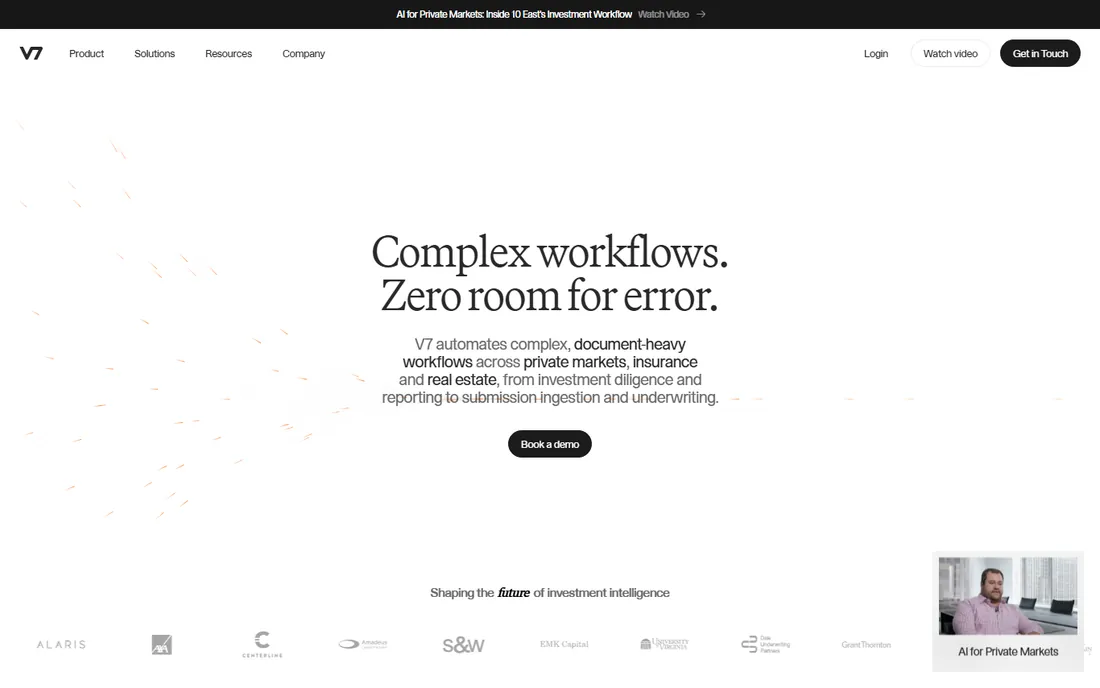
V7's thesis is that humans should correct, not create. Its models pre-label images and video, annotators fix the mistakes, and the corrections feed back into better pre-labeling. For teams with large, repetitive datasets, that loop compounds into real savings. The platform also handles the surrounding workflow: dataset versioning, review stages and exports.
The pricing page asks for a custom quote, and the product is tuned for teams with serious volume. A startup labeling its first ten thousand images will get more value from a free or fixed-price tool. A team labeling millions of frames with a quality bar to defend should take the demo.
What we like- Auto-labeling models draft the annotations and humans correct them, cutting per-label effort
- Strong on video and medical imaging alongside standard image work
- Workflow automation connects labeling to training loops
Watch out for- Custom-quote pricing only
- The automation-first approach needs enough data volume to pay off
#6
Snorkel AI
Best for: Teams that prefer programmatic, code-driven labeling over manual annotation
Visit snorkel.ai
Starting priceSee website (custom quote)
Free planNo
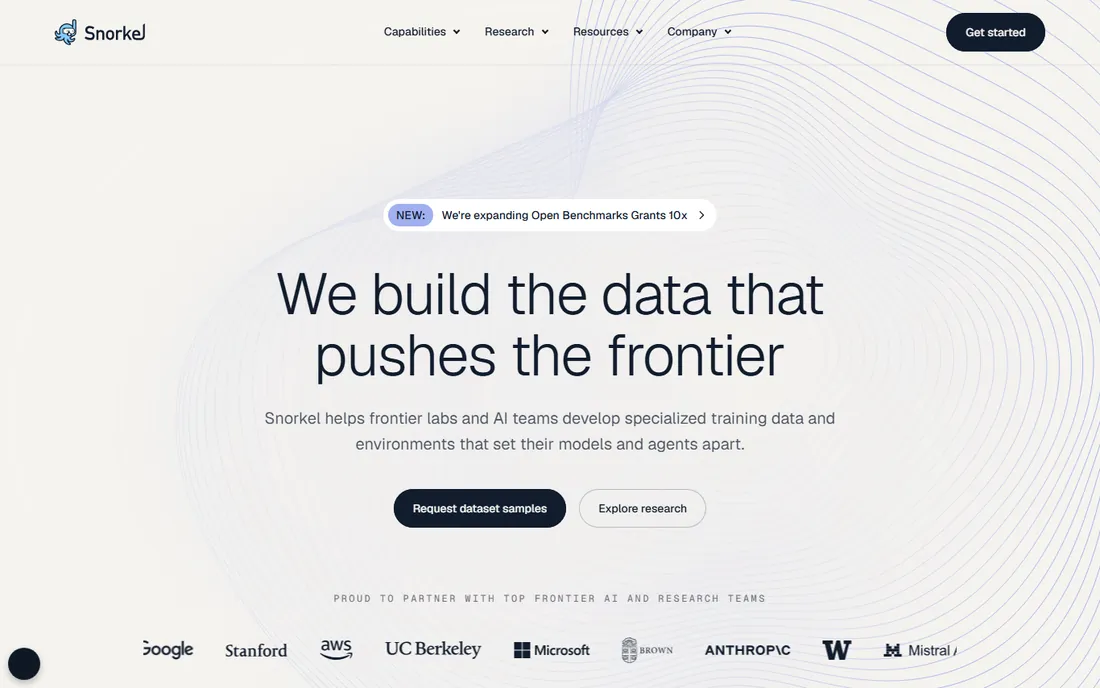
Snorkel AI comes from a different tradition than the rest of this list. Instead of paying annotators to click through images, your engineers write labeling functions, rules and heuristics that generate training labels programmatically, then refine them. For text classification, document understanding and other problems where domain rules capture the pattern, this beats manual labeling on both speed and consistency.
It is unapologetically enterprise: custom quotes, sales-led evaluation, and an assumption that your team writes code. Non-technical teams should look elsewhere. But for an ML team drowning in labeling backlog, the programmatic approach can replace months of annotation work with weeks of engineering.
What we like- Programmatic labeling lets engineers write labeling functions instead of hand-labeling everything
- Designed for teams that treat training data as code
- Strong fit for text and document-heavy AI applications
Watch out for- Enterprise pricing with no public numbers
- The code-first approach needs ML engineering skills on the team
#7
Dataloop
Best for: Teams that want labeling inside a full AI development platform
Visit dataloop.ai
Starting priceSee website (custom quote)
Free planFree trial
Dataloop does not sell a labeling tool so much as an AI factory that includes labeling. The annotation studios are genuinely good, with automation and review workflows, but they sit next to data pipelines, model deployment, RAG builders and a marketplace. For a team building its whole AI operation on one platform, that consolidation has real value: data, labels, models and feedback loops in one place.
The flip side is fit. If you only need labeling, you are buying a platform to use a feature, and the quote will reflect the platform. Dataloop offers a trial, so test the annotation experience specifically before deciding whether the surrounding machinery earns its place in your stack.
What we like- Labeling sits inside a complete platform with pipelines, model management and a marketplace of pre-built components
- Strong on automation, active learning and human-in-the-loop workflows
- Python SDK gives engineers full programmatic control
Watch out for- The platform scope is far bigger than labeling, which complicates a simple buy
- Pricing is quote-based despite the broad feature list
#8
Roboflow
Best for: Computer vision teams that want transparent pricing and a free tier
Visit roboflow.com
Starting price$39/month (paid plans from $39 per month)
Free planYes (free tier)
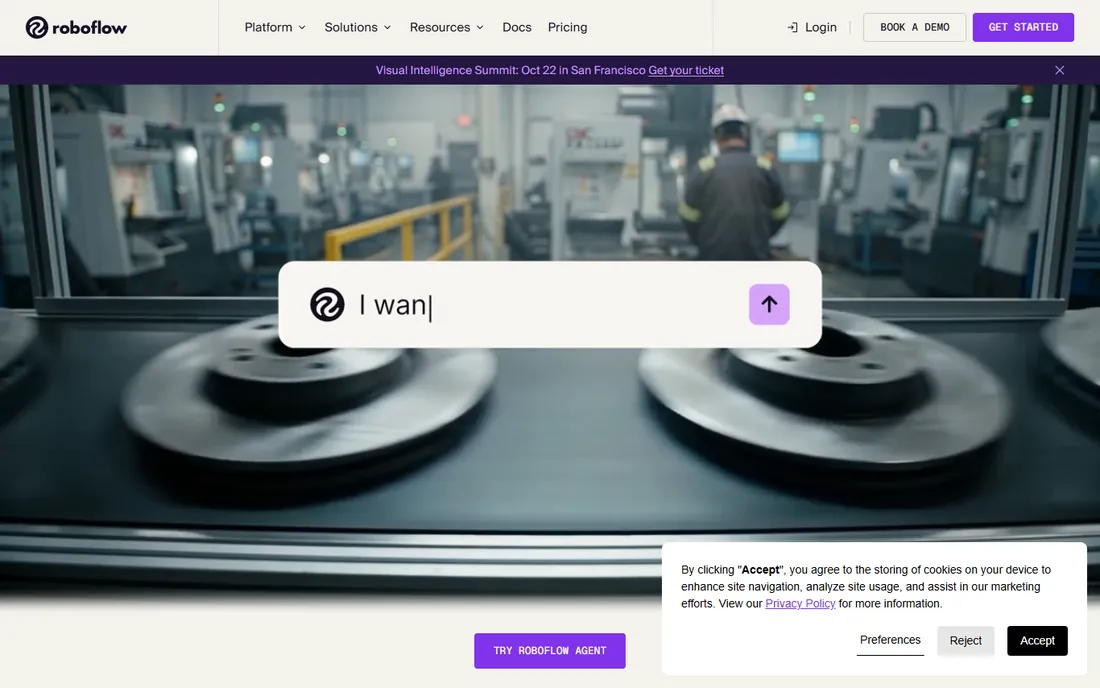
Roboflow is the breath of fresh air on this list. Pricing is public, the free tier is real, and a small team can sign up, label a dataset, train a model and deploy it without a single sales call. The platform handles the unglamorous parts of vision work: dataset versioning, augmentation, format conversion and export to every major training framework.
The scope is the limit. If your data is images and video for detection, classification or segmentation, Roboflow is the obvious starting point and often the ending point. If you need text annotation, medical DICOM or programmatic labeling, the enterprise tools above fit better. For most small vision teams, start here and only graduate when you hit a wall.
What we like- The only tool here with public pricing: a free tier plus paid plans from $39 per month
- Covers the full vision workflow from dataset management to model training and deployment
- Strong documentation and community for smaller teams
Watch out for- Computer-vision focused, so text and audio labeling are not its world
- Usage-based credits on paid plans need watching as volume grows
How we chose
We started with the searches AI teams actually run: data labeling software, image annotation platform, labeling tool for machine learning. For each candidate we opened the vendor's homepage and pricing page, and recorded what the vendor itself publishes: plan names, prices where shown, and free tier terms. We checked feature lists against public reviews on G2, Capterra and practitioner discussion, and favored tools with distinct, verifiable strengths. Where a vendor publishes no prices, we wrote "See website" rather than repeating third-party estimates.
What actually drives the cost
The sticker price, when you can find one, is the smallest part of labeling economics. The real cost is per-label: annotator wages (yours or a vendor's workforce), reviewer time, and the rework when labels are inconsistent. A platform with good QA tooling, consensus workflows and automation assistance earns its quote by cutting rework, not by being cheap per seat.
That is why the quote conversation matters more than the pricing page. Before talking to sales, know three numbers: your monthly label volume, your data types (images are cheap to tool for; video, DICOM and point clouds are not), and whether annotators are in-house or outsourced. Vendors price on exactly those axes, and walking in with the numbers gets you a faster, more honest quote. Teams under a few thousand labels a month should stay on free tiers until the volume justifies the sales cycle.
The build-vs-buy decision nobody makes explicitly
Every team in this market implicitly chooses between labeling as a tool and labeling as a service. The tools above are the tool choice: your team, your annotators, your workflows. The alternative is handing data to a labeling service vendor and receiving labels back, which removes the platform decision entirely but surrenders control over quality and turnaround.
The rule of thumb: buy the service when labeling is a one-time push to get a model trained, and buy the platform when labeling is ongoing operations. Ongoing labeling with a service vendor gets expensive fast and leaves you with no process when requirements change. One-time pushes on a platform leave you paying for seats nobody uses. Match the purchase to the duration of the need, and re-evaluate every six months.
Frequently asked questions
How much does data labeling software cost?
Most vendors quote custom prices, so there is no typical number. Roboflow publishes paid plans from $39 per month, which is the only public price on this list. Enterprise platforms generally price on label volume, data types and seat count. Expect the sales conversation, not a checkout page.
Is there free data labeling software?
Yes. Label Studio is free and open source with no limits, Encord offers a free Starter tier for individuals and small teams, and Roboflow has a free tier. These cover most evaluation and small-project needs without spending anything.
What is the difference between data labeling and data annotation?
The terms are used interchangeably. Both mean adding tags, boxes, masks or classifications to raw data so machine learning models can learn from it. Vendors tend to say "labeling" for the overall workflow and "annotation" for the specific act of marking up an image or document.
Should we label data in-house or outsource it?
Label in-house when data is sensitive, quality requirements are high, or labeling is ongoing operations. Outsource when you need a large one-time dataset fast and quality review can catch errors. Many teams do both: outsourced annotators for volume, in-house reviewers for quality control.
Do we need labeling software if we use synthetic data?
Sometimes not, but usually still yes. Synthetic data still needs validation, and most teams mix synthetic with real labeled data. Labeling platforms also provide the QA, versioning and review workflows that raw synthetic generation lacks.
Sources we checked (10)
- https://labelbox.com
- https://encord.com/pricing/
- https://labelstud.io
- https://www.superannotate.com/pricing
- https://www.v7labs.com/pricing
- https://snorkel.ai
- https://dataloop.ai/pricing/
- https://roboflow.com/pricing
- https://www.g2.com/categories/data-labeling
- https://www.capterra.com/data-preparation-software/
Is your product missing or out of date?
We review this list regularly. Vendors can request a listing, send updated pricing or ask about featured placement.

Shihab Mia · Founder, Rankite
Shihab has spent more than a decade helping SaaS and e-commerce brands grow through search. He writes Rankite's software buying guides from pricing pages, documentation and public user reviews. More about Shihab.