How we make this list: we compare pricing pages, product documentation and public user reviews. Rankite is independent; if a vendor ever pays for a featured spot, that listing is clearly labeled Partner.
Key takeaways
- AWS SageMaker, Google Vertex AI, and Azure Machine Learning are the three cloud platforms that cover the full ML lifecycle; pick the one that matches your existing cloud.
- Databricks is the strongest choice when your AI work starts from data engineering and you want data and models in one place.
- Hugging Face is the default home for open models, and its free tier is generous enough for serious experimentation.
- OpenAI Platform and Anthropic's Claude API are the fastest path to production AI features, with usage-based pricing and no infrastructure to manage.
- DataRobot, Dataiku, and IBM watsonx.ai target enterprises that need governance, AutoML, or regulated-industry controls.
Quick comparison
| Tool | Best for | Starting price | Free plan |
|---|
 Amazon SageMaker Amazon SageMaker | End-to-end machine learning on AWS infrastructure | See website | No |
 Google Cloud Vertex AI Google Cloud Vertex AI | Unified ML and generative AI on Google Cloud | See website | Free trial |
 Azure Machine Learning Azure Machine Learning | Enterprise machine learning in Microsoft-centric organizations | See website | Free trial |
 Databricks Databricks | Lakehouse-based data and AI engineering | See website | Free trial |
 Hugging Face Hugging Face | Open models, datasets, and community tooling | See website | Yes |
 OpenAI Platform OpenAI Platform | Production APIs for frontier AI models | See website | No |
 Anthropic Anthropic | Claude API for long-context and coding workloads | See website | No |
 DataRobot DataRobot | Automated machine learning for business teams | See website | Free trial |
 Dataiku Dataiku | Collaborative data science across technical and business users | See website | Free trial |
 IBM watsonx.ai IBM watsonx.ai | Governed AI in regulated industries | See website | Free tier |
Is your product missing or out of date?
We review this list regularly. Vendors can request a listing, send updated pricing or ask about featured placement.
Starting priceSee website
Free planNo
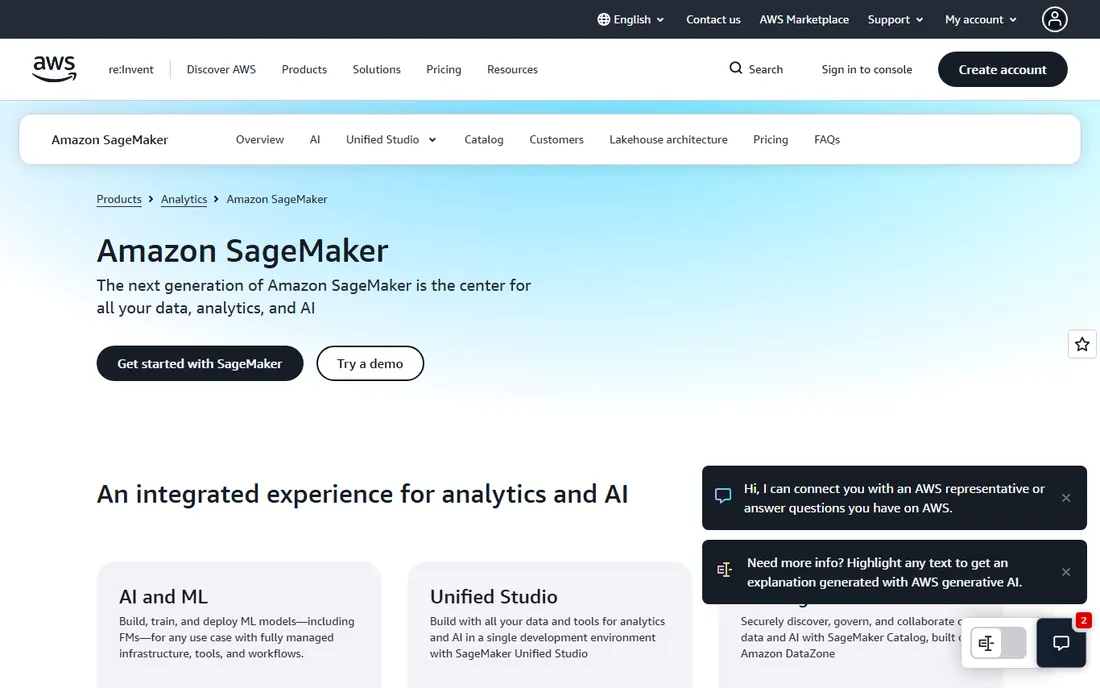
SageMaker, now branded Amazon SageMaker AI, is the full-lifecycle ML platform for teams already on AWS. It covers data preparation, training, tuning, deployment, and monitoring in one managed service, and it plugs into S3, Redshift, and the rest of the AWS data stack without friction. Billing is usage-based across instance types, training hours, and endpoints, so check the AWS pricing page carefully before committing.
The price of that completeness is complexity. SageMaker pricing spans so many dimensions that budgeting takes real effort, and the console assumes you already think in AWS terms. There is no permanent free tier for the core service, so experimentation costs money from day one. If your data lives on AWS and your team knows it, this is the natural choice. Otherwise, the simpler options below deserve a look.
What we like- Deep integration with the AWS data stack
- Managed notebooks, training, and deployment
- Large library of built-in algorithms
Watch out for- Pricing is notoriously hard to predict
- The learning curve is steep for teams new to AWS
Starting priceSee website
Free planFree trial
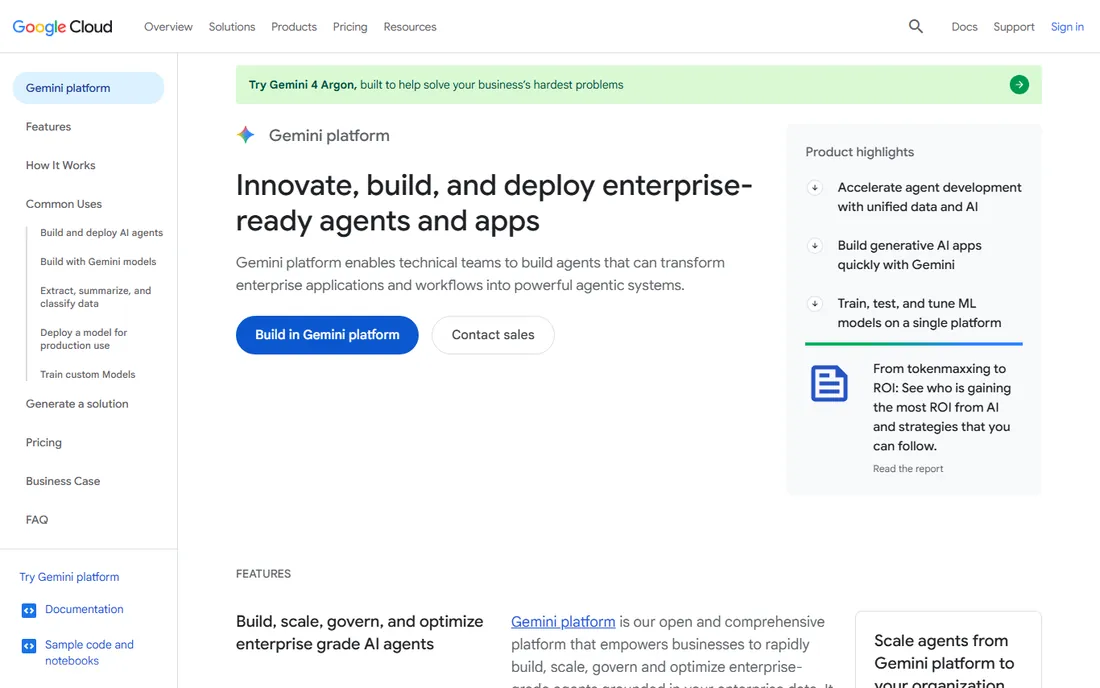
Vertex AI is Google's answer to SageMaker: one platform for training, deploying, and managing models, now extended deep into generative AI with Vertex AI Studio, the Model Garden, and agent-building tools. For teams on GCP, it is the path of least resistance from prototype to production. New accounts get trial credits, which softens the cost of initial experiments.
Its generative AI story is arguably the strongest of the three clouds, thanks to Gemini and the breadth of open models in the Garden. The usual cloud caveat applies: the meter runs on everything, and generative workloads can burn through budget fast without quotas and billing alerts in place. Pricing is usage-based, so review the Cloud pricing page for your expected workload.
What we like- Model Garden with a wide model catalog
- Strong MLOps tooling
- Tight integration with Gemini models
Watch out for- Ties you to Google Cloud pricing
- Costs can surprise teams that do not set budgets
Starting priceSee website
Free planFree trial
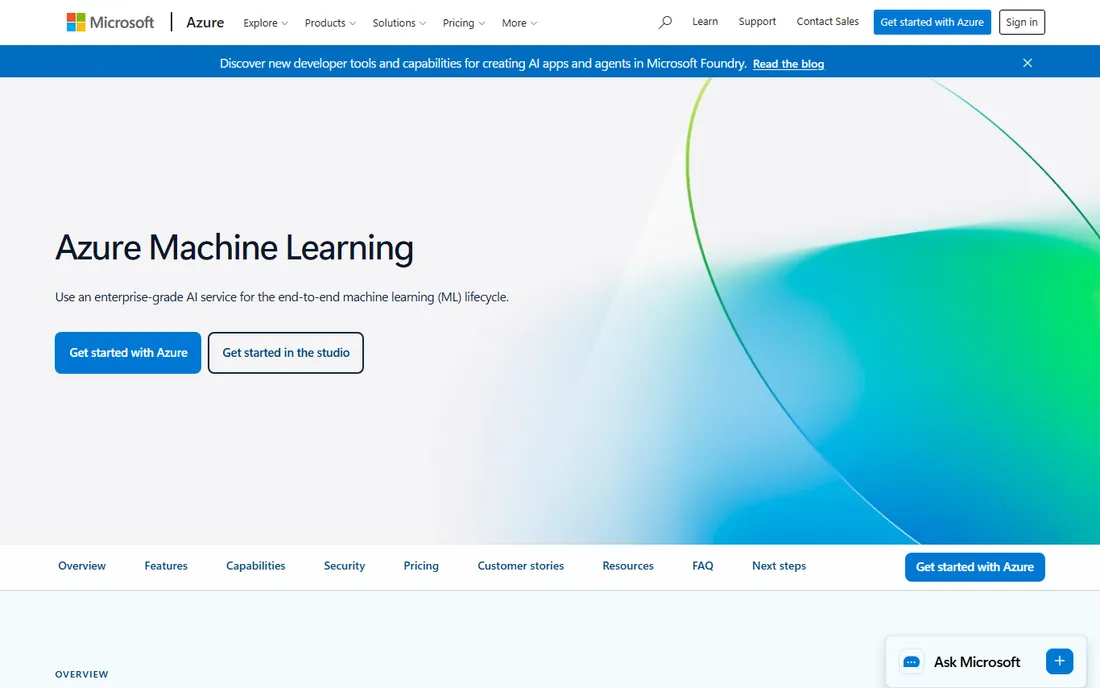
Azure Machine Learning is the enterprise pick for organizations standardized on Microsoft. It offers the full lifecycle, from designer-based no-code modeling to code-first pipelines, with the governance, role-based access, and compliance tooling that regulated industries require. An Azure free account provides credits to try it, and billing is consumption-based after that.
It is less beloved by researchers than SageMaker or Vertex, and the portal carries the weight of years of accumulated features. But for IT departments that need auditability and Azure Active Directory integration out of the box, it is the pragmatic choice. Contract terms are typically enterprise agreements, so expect a sales conversation rather than self-serve signup at scale.
What we like- Strong security, compliance, and governance controls
- Automated ML for non-specialists
- Integrates with Azure data services
Watch out for- The studio portal can feel bloated
- Documentation sometimes lags new features
Starting priceSee website
Free planFree trial
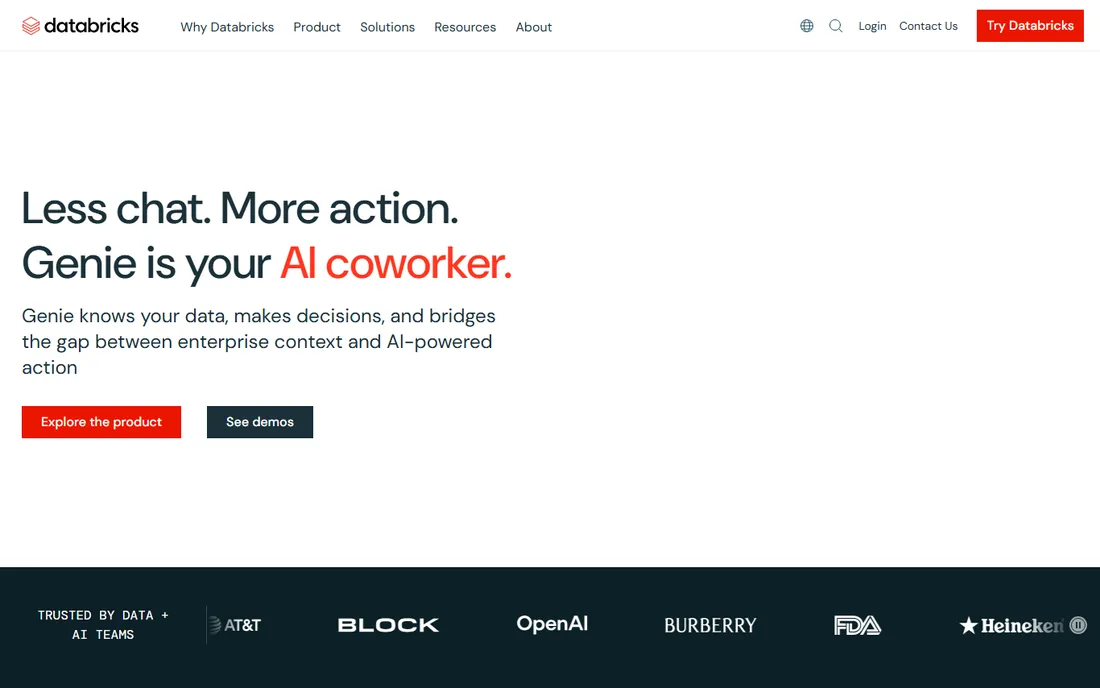
Databricks grew out of Apache Spark and the data lakehouse architecture, and it has spent the last few years turning that data platform into an AI platform. If your AI work starts with messy data pipelines, doing the engineering and the modeling in one governed place is a genuine advantage. A free trial lets teams evaluate it before talking contracts.
The acquisition of MosaicML gave it credible large-model training, and its agent and serving products keep expanding. The downside is pricing opacity: Databricks bills on compute consumption, and teams routinely report sticker shock without careful cost monitoring. It shines for data-heavy organizations and is unnecessary for anyone who just wants to call a model.
What we like- Unifies data engineering and AI in one platform
- Strong Apache Spark foundation
- MosaicML added serious model-training capability
Watch out for- Usage-based pricing is hard to forecast
- Overkill if you just need an API
Starting priceSee website
Free planYes
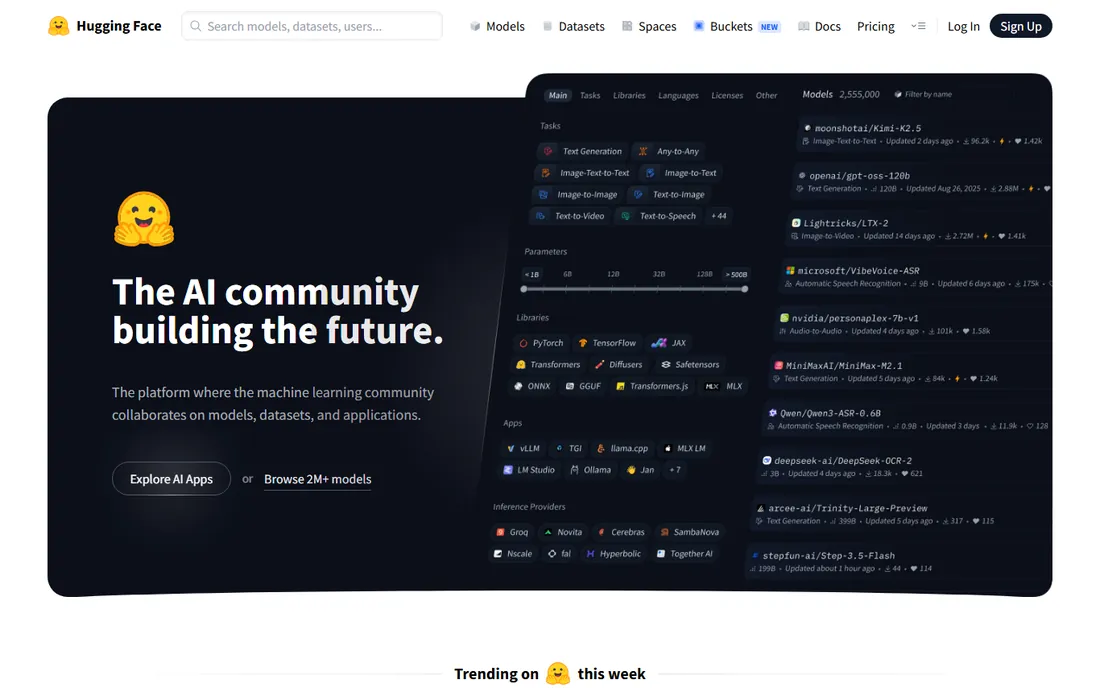
Hugging Face is where the open AI world lives. The Hub hosts hundreds of thousands of models and datasets, the Transformers library is the default way to use them, and Spaces lets you demo models with a free hosted app. For experimentation, fine-tuning open models, and research, nothing else is close. Signup is free and the free tier covers a remarkable amount.
It is not a managed ML platform in the SageMaker sense. You bring your own training infrastructure or pay for Hugging Face's inference and endpoint products, with paid Pro, Team, and Enterprise plans for heavier use. Check their pricing page for current numbers. Think of it as the foundation layer the rest of the ecosystem builds on, which is exactly why it belongs on this list.
What we like- The largest public catalog of open models and datasets
- Free hosting for public models and Spaces
- Strong developer community
Watch out for- Enterprise features like Inference Endpoints cost real money
- Support is community-first on the free tier
Starting priceSee website
Free planNo
For most product teams, "AI platform" means the OpenAI API. You get frontier models behind a well-documented REST API, with fine-tuning, assistants, batch processing, and image and audio models in the same account. Time from signup to a working prototype is measured in hours, and billing is pure usage-based with no contracts.
The trade-offs are well known: every call costs money, there is no free tier for the API, and building your product on one vendor's models creates dependency. Token pricing varies by model, so check the pricing page for the models you plan to use. Still, for shipping AI features fast, it remains the default choice that everything else is measured against.
What we like- The strongest general-purpose models available via API
- Excellent documentation and SDKs
- The largest third-party ecosystem
Watch out for- Pay-as-you-go with no free tier
- Pricing changes with new model releases
- Switching costs grow over time
Starting priceSee website
Free planNo
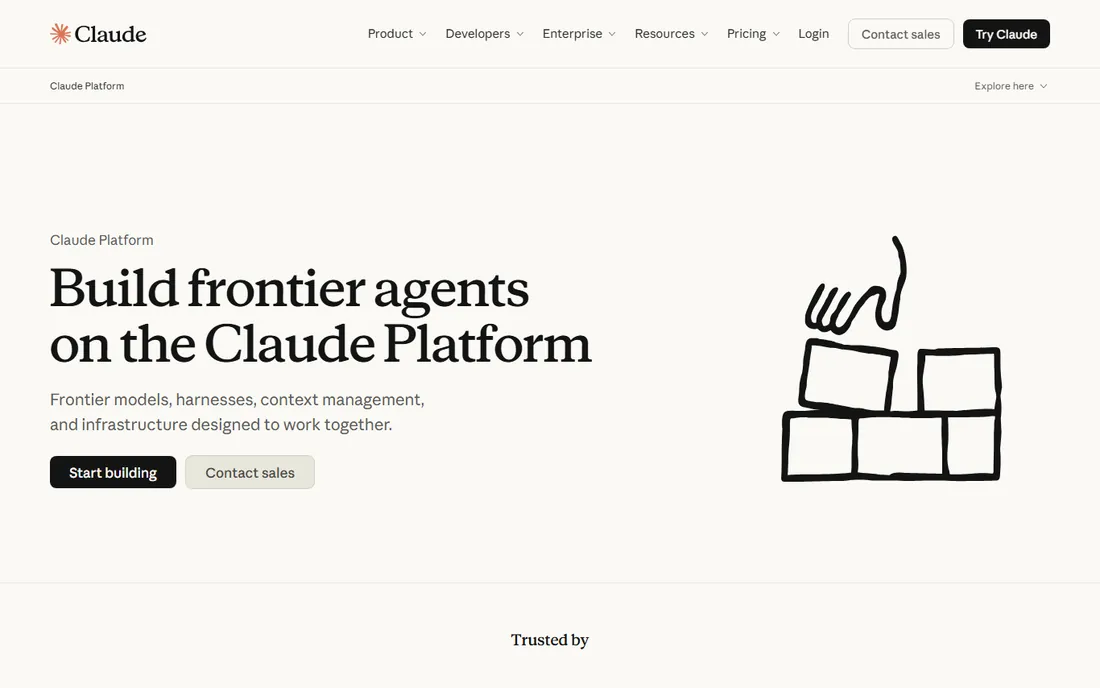
Anthropic's Claude API is the leading alternative to OpenAI, and for some workloads it is the better one. Claude models handle very long contexts well, perform strongly on coding and agentic tasks, and the API, docs, and prompt tooling are clean and developer-friendly. Like OpenAI, billing is usage-based per token with no free tier.
Teams often run both APIs and route by task. If your product leans on document analysis, code generation, or careful instruction-following, Claude deserves the evaluation. The ecosystem of third-party tools is smaller than OpenAI's but growing quickly, and the Workbench makes prompt iteration noticeably smoother.
What we like- Strong performance on reasoning, coding, and long documents
- Clear documentation
- Workbench for prompt development
Watch out for- Pay-as-you-go only
- Smaller model catalog than OpenAI
- Newer ecosystem
Starting priceSee website
Free planFree trial
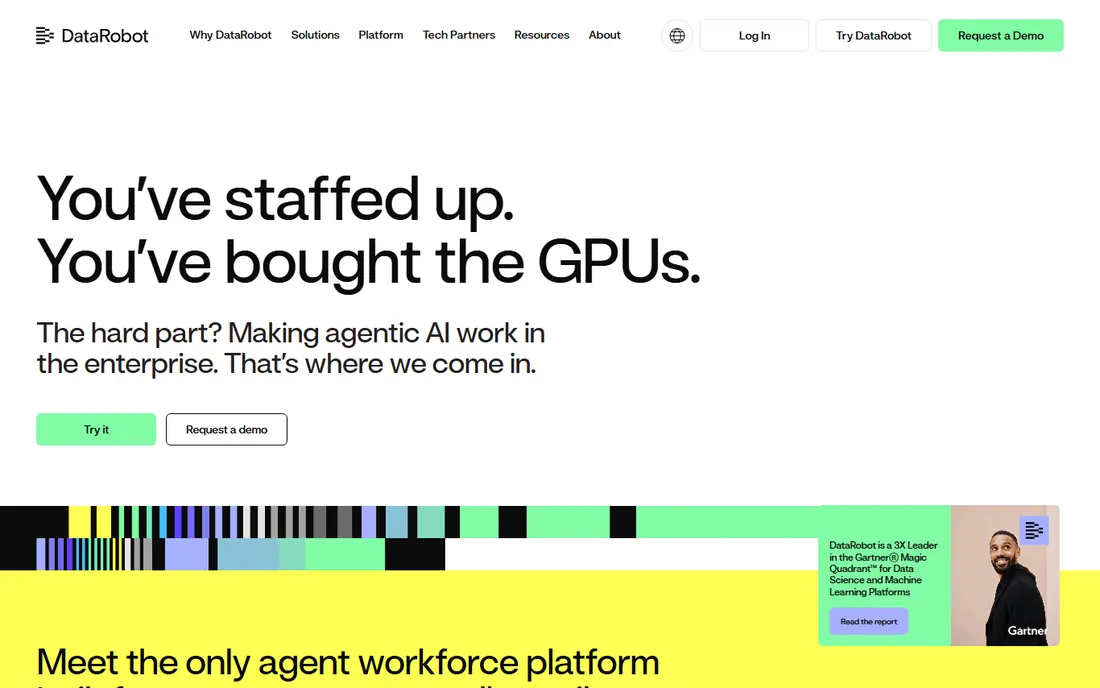
DataRobot pioneered automated machine learning, and it remains the pick for organizations that want predictive models without hiring a data science team. Upload data, and it builds, tunes, and compares hundreds of models, with leaderboards and explanations a business user can actually read. A free trial is available for evaluation.
It has expanded into generative AI with an enterprise lens, but its heart is still tabular prediction at scale. Pricing is quote-only and enterprise-grade, typically annual contracts, and researchers who want to hand-tune architectures will feel constrained. For business-led AI with governance, it is purpose-built rather than adapted.
What we like- Mature AutoML across tabular, time-series, and vision
- Strong model governance
- Works for non-specialist teams
Watch out for- Enterprise pricing with no public numbers
- Less flexibility for researchers who want full control
#9
Dataiku
Best for: Collaborative data science across technical and business users
Visit dataiku.com
Starting priceSee website
Free planFree trial
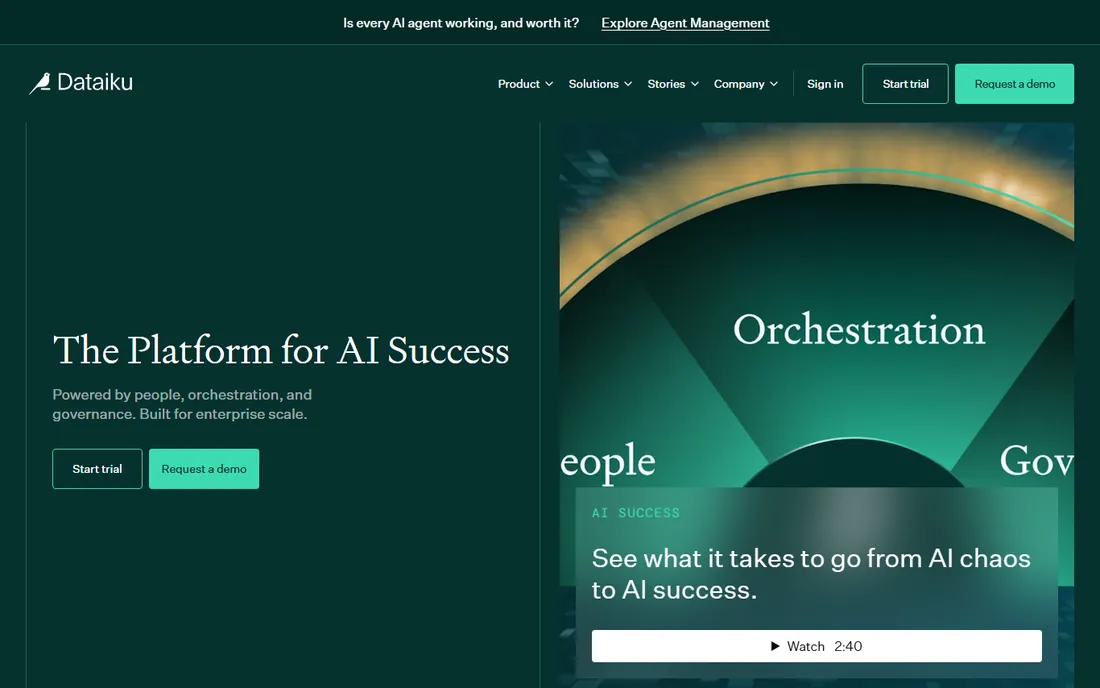
Dataiku brings data engineers, data scientists, and business analysts into one governed workspace. Visual recipes let non-coders build pipelines, while coders can drop into Python or R at any step, which makes it unusually good for mixed-skill teams. A free trial and a managed online edition make evaluation easier than the old enterprise-only days.
It is still not cheap at production scale, with pricing typically quoted per deployment, and if your project is "call an LLM API," it is the wrong tool entirely. For organizations building real data products with governance and collaboration requirements, it is a strong fit that scales from pilot to company-wide rollout.
What we like- Visual workflows plus code for experts
- Strong governance and collaboration
- Managed online option lowers the entry bar
Watch out for- Enterprise pricing
- Heavier than needed for simple API-style projects
#10
IBM watsonx.ai
Best for: Governed AI in regulated industries
Visit ibm.com
Starting priceSee website
Free planFree tier
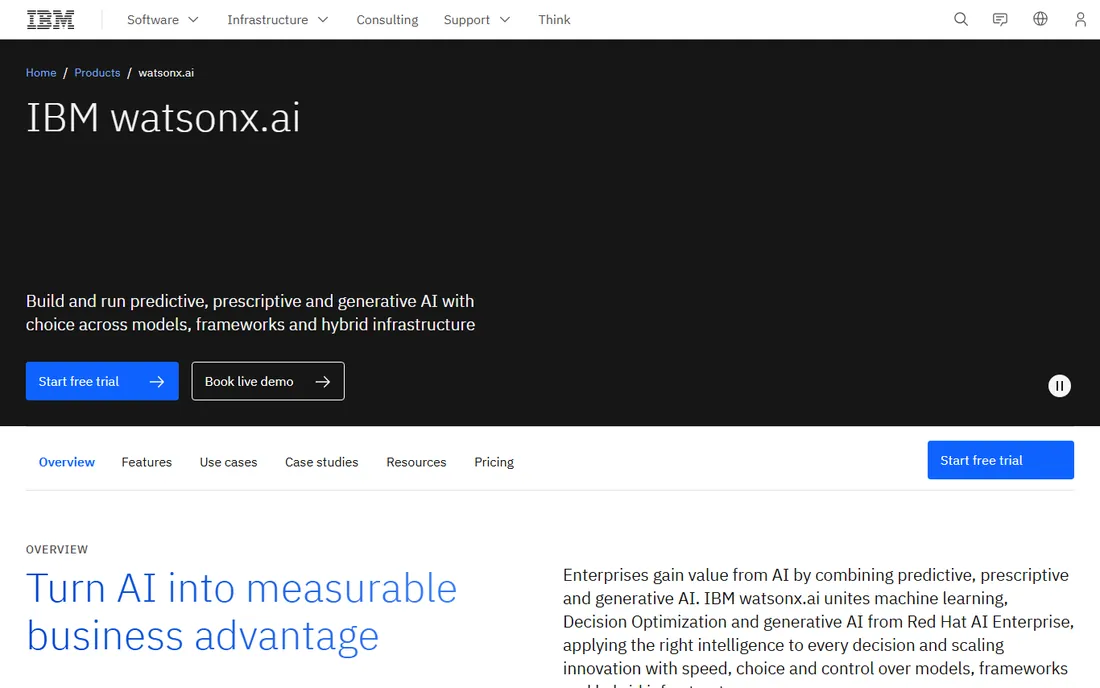
IBM's watsonx.ai is the enterprise AI studio for organizations where compliance is not optional. It combines foundation models, including IBM's own Granite family, with tooling for the full model lifecycle, and the broader watsonx platform adds data and governance products alongside. A Lite plan offers a genuinely free tier for experimentation, which is rare at this end of the market.
The ecosystem is smaller than AWS's or Google's, and pricing requires a conversation with IBM, usually as part of a larger enterprise agreement. Deployment flexibility is the standout: hybrid and on-premises options suit organizations that cannot send data to public clouds. For banks, insurers, and government-adjacent work, the governance story is the reason it makes shortlists.
What we like- Granite foundation models tuned for business
- Serious governance and risk tooling
- Hybrid and on-premises deployment options
Watch out for- Smaller developer ecosystem than the hyperscalers
- Pricing is opaque
These are three different products that happen to share a category name. Cloud ML platforms like SageMaker, Vertex AI, and Azure ML give you infrastructure to train and deploy your own models; they fit teams with data science staff and serious data. Model APIs like OpenAI and Anthropic let you use someone else's models; they fit product teams that want AI features without ML expertise. AutoML and governed platforms like DataRobot, Dataiku, and watsonx.ai sit between, packaging modeling for business users with guardrails.
The most expensive mistake is buying infrastructure when you needed an API, or expecting an API to solve a problem that needs your own trained model. Decide which of the three you are before comparing vendors inside it. Hugging Face and Databricks straddle the lines, which is why they appear in so many architectures alongside a hyperscaler.
A two-person startup shipping an AI feature should start with an API: OpenAI Platform or Anthropic, plus Hugging Face for open-model experiments. You will ship in days, and usage pricing means you pay nothing until you have traffic. There are no contracts to negotiate and no infrastructure to babysit.
A mid-size company with data engineers and a data warehouse should look at Databricks or Dataiku, where the data work and the AI work share one governed environment. Add a model API for the generative features. Expect a sales process and annual-style terms once you move past the trial.
An enterprise with compliance requirements, existing cloud commitments, or regulated data should evaluate the matching hyperscaler platform plus the governance specialists: watsonx.ai, DataRobot, or Dataiku. Run a real pilot on your own data before signing, because demos never show the integration work, and budget for the MLOps headcount these platforms assume.
How we put this list together
We based this ranking on vendor pricing pages and documentation, analyst coverage, and public discussion on forums like Reddit and review sites like G2 and Capterra. We weighted breadth of capability, maturity of MLOps tooling, pricing transparency, ecosystem size, and fit for different team types. We did not claim hands-on testing of these platforms.
Frequently asked questions
What is the best artificial intelligence platform for beginners?
Start with an API, not a platform. OpenAI Platform or Anthropic let you build working AI features with basic programming skills and no infrastructure. Hugging Face is the best free place to learn how models actually work, with tutorials and free compute for small experiments.
How much does an AI platform cost?
Model APIs are usage-based, so a prototype can cost a few dollars while production workloads run into thousands per month. Cloud ML platforms bill for compute, storage, and endpoints, which makes budgeting harder; always set billing alerts. Enterprise AutoML platforms are typically annual contracts priced by quote.
Do I need my own data to use these platforms?
For model APIs, no: you send prompts and get results. For training custom models on SageMaker, Vertex AI, or Databricks, yes: the value comes from your proprietary data. AutoML tools sit in between and work with the tabular data most businesses already have.
What is the difference between SageMaker, Vertex AI, and Azure ML?
They are the same idea on three clouds: managed platforms for training, deploying, and monitoring machine learning models. The practical difference is which cloud your data and team already use, since all three integrate most deeply with their own ecosystems. Switching clouds for the ML platform alone is rarely worth it.
Is Hugging Face free?
The Hub, public models, datasets, and Spaces hosting for public projects are free. Paid products include the Pro subscription, Team and Enterprise plans, and Inference Endpoints for production deployment. Check their pricing page for current numbers before planning a production budget.
Which platform is best for a regulated industry?
IBM watsonx.ai, Azure Machine Learning, and Dataiku lead on governance, auditability, and compliance tooling. DataRobot is strong for governed predictive modeling. Any choice in a regulated setting should go through your legal and security review with a real pilot on representative data.
Sources we checked (10)
- https://aws.amazon.com/sagemaker
- https://cloud.google.com/vertex-ai
- https://azure.microsoft.com/en-us/products/machine-learning
- https://www.databricks.com/
- https://huggingface.co
- https://platform.openai.com
- https://www.anthropic.com/api
- https://www.datarobot.com
- https://www.dataiku.com
- https://www.ibm.com/products/watsonx-ai
Is your product missing or out of date?
We review this list regularly. Vendors can request a listing, send updated pricing or ask about featured placement.

Shihab Mia · Founder, Rankite
Shihab has spent more than a decade helping SaaS and e-commerce brands grow through search. He writes Rankite's software buying guides from pricing pages, documentation and public user reviews. More about Shihab.