How we make this list: we compare pricing pages, product documentation and public user reviews. Rankite is independent; if a vendor ever pays for a featured spot, that listing is clearly labeled Partner.
Key takeaways
- AmpliTube 5 is our top pick for most players because of its huge library of officially licensed amps and a free version that lets you try before you buy.
- BIAS X is the new standard for Positive Grid fans after BIAS FX 2 was discontinued, with deep tweaking and a community for sharing tones.
- Helix Native and Guitar Rig 7 Pro are the best choices if your amp sim lives inside a DAW and needs to cover effects and routing too.
- STL ToneHub and ReValver serve opposite ends of the market: artist presets on a subscription versus deep component-level editing and amp cloning.
- Ignite Amps Emissary proves you can get a genuinely good metal tone for nothing.
Quick comparison
| Tool | Best for | Starting price | Free plan |
|---|
 AmpliTube 5 AmpliTube 5 | Players who want the biggest library of officially licensed amps and gear | $199.99 (currently discounted to $29.99 on the official site) | Yes (AmpliTube 5 Custom Shop) |
 BIAS X BIAS X | Players who love tweaking amps and sharing tones with a community | See website | Free trial |
 Guitar Rig 7 Pro Guitar Rig 7 Pro | Producers and guitarists who want an effects playground inside the DAW | $99 | Yes (Guitar Rig 7 Player) |
 TH-U TH-U | Players who want realistic, mix-ready miked amp tones with minimal fuss | €299 | Free trial |
 Helix Native Helix Native | Gigging guitarists who own or plan to own Helix hardware | $399 | Free trial |
 S-Gear S-Gear | Players who value realistic amp feel and a simple, focused workflow | See website | Free trial |
 STL ToneHub STL ToneHub | Session players and cover musicians who need pro tones in seconds | $14.99/month or $119.99/year (All Access) | Free trial |
 ReValver ReValver | Tinkerers who want to edit amps at the component level or clone their own gear | $295 (ReValver 5.1 and Amp Cloner bundle) | Yes (demo with core modules) |
 Ignite Amps Emissary Ignite Amps Emissary | Metal players who want a great high-gain tone for free | Free | Yes |
Is your product missing or out of date?
We review this list regularly. Vendors can request a listing, send updated pricing or ask about featured placement.
The best guitar amp software
#1
AmpliTube 5
Best for: Players who want the biggest library of officially licensed amps and gear
Visit ikmultimedia.com
Starting price$199.99 (currently discounted to $29.99 on the official site)
Free planYes (AmpliTube 5 Custom Shop)
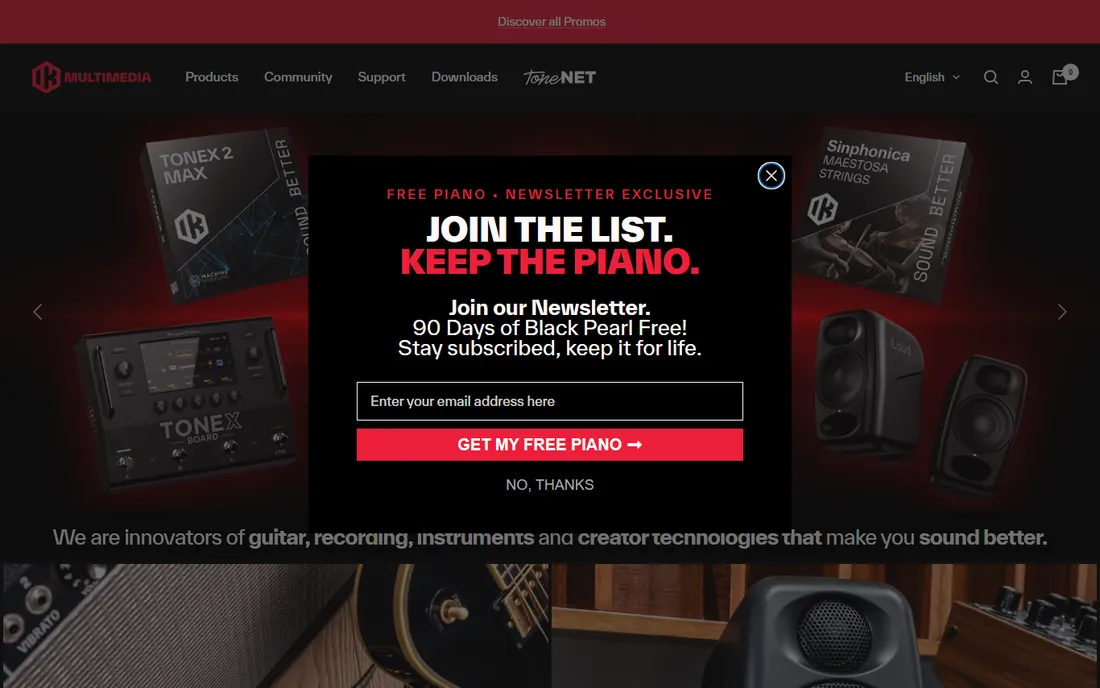
AmpliTube 5 earns the top spot because it covers more ground than anything else on this list. IK Multimedia licenses real brands, so the amps on screen are models of gear you would recognize from studios and stages, not generic approximations. The interface lays out your signal chain like a real rig: pedals, amp head, cabinet, microphones, and room, all adjustable. For a player who wants to browse from a clean American combo to a high-gain stack in one session, nothing else moves as fast.
The free Custom Shop version is a smart entry point. You get a working core of amps and effects, then buy individual models a la carte when you outgrow the starter set. Our advice: start free, buy only the models you actually record with, and watch for the deep seasonal sales that IK runs several times a year.
What we like- Huge catalog of licensed amps, cabs, and effects
- Free Custom Shop version lets you test the waters
- Flexible signal chain with dual rigs
Watch out for- Full expansions add up in cost
- Large install size
- Browsing thousands of presets can feel like work
Starting priceSee website
Free planFree trial
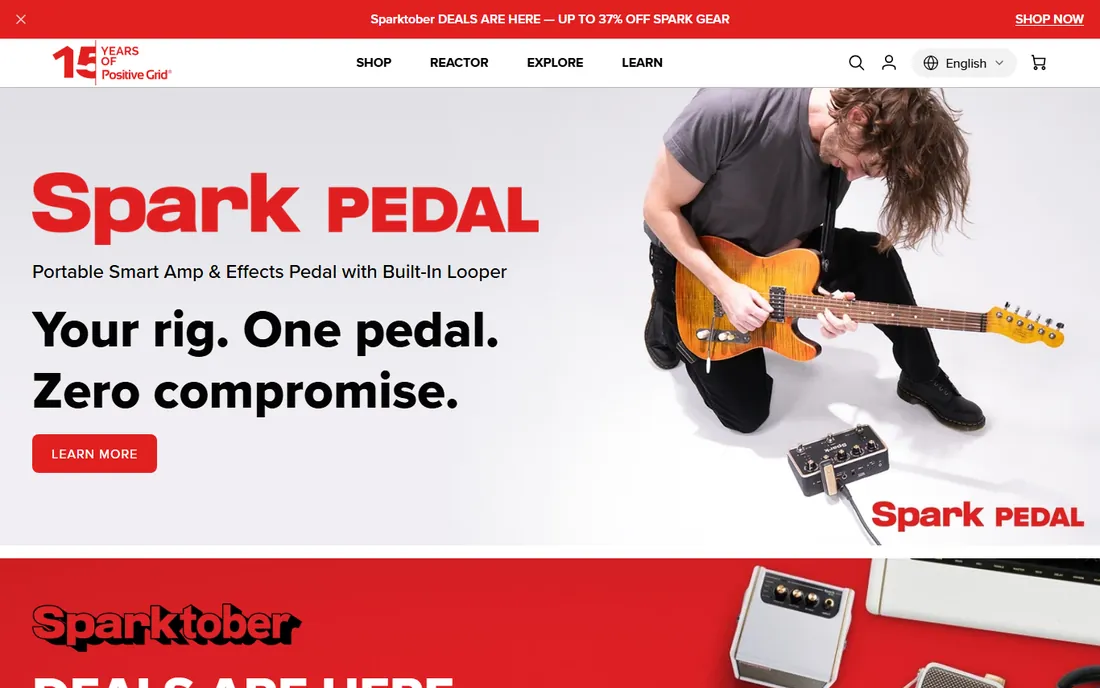
BIAS X is Positive Grid's current-generation amp software, and it replaces the discontinued BIAS FX 2 in this roundup. The headline feature is the amp designer, which lets you swap tubes, transformers, and tone stacks to build an amp that does not exist in the real world. If you are the kind of player who opens the back panel of everything, this is your playground.
The community side matters just as much. Positive Grid's ToneCloud library lets you download rigs shared by other players, which turns tone hunting into something social instead of solitary. BIAS X sounds best when you treat it as an instrument to explore rather than a preset machine. A 14-day trial gives you enough time to decide whether the workflow clicks.
What we like- Deep amp designer for building custom amps
- Large community library of shared tones
- Polished, modern interface
Watch out for- BIAS FX 2 was discontinued, so older owners need to migrate
- Pricing is not published on the main site
Starting price$99
Free planYes (Guitar Rig 7 Player)
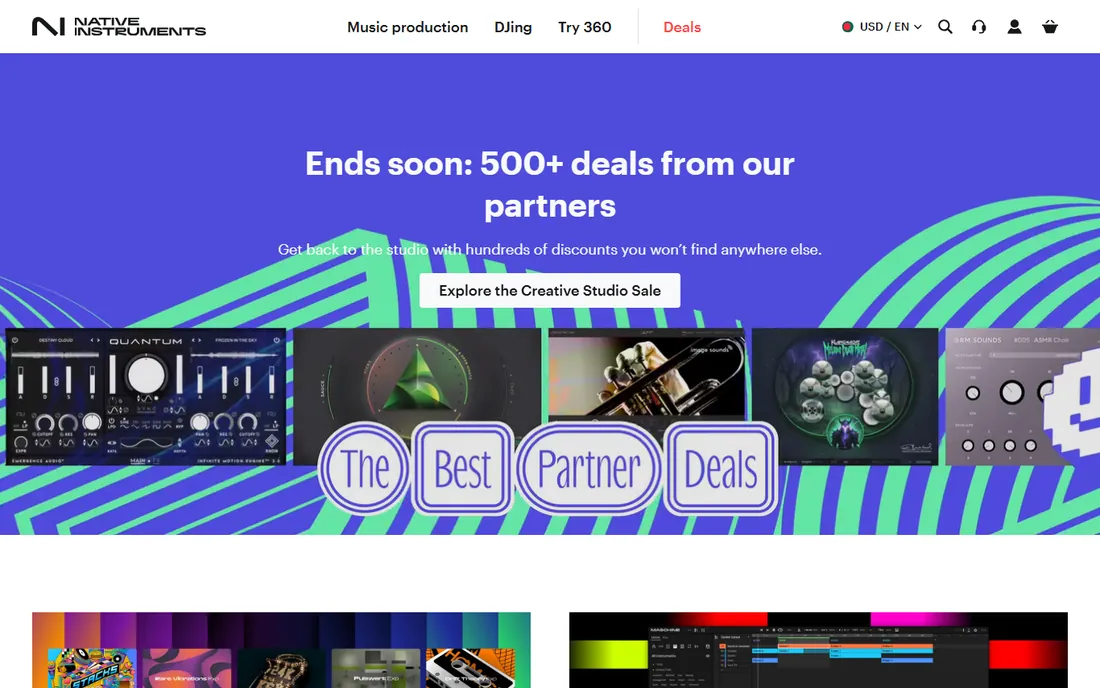
Guitar Rig 7 Pro takes a different angle from the amp-first crowd. Yes, it has amps and cabinets, but the real draw is the effects: delays, reverbs, modulation, and creative tools that feel more like a producer's rack than a guitarist's pedalboard. Native Instruments built it for people who write parts inside a DAW and want the guitar to sit inside a full production, not just a rehearsal room.
At $99 on the official pricing page, it is one of the more affordable paid options here, and the free Player version ships with a solid starter set of amps and effects. If your main question is "how do I make this riff sound like a record," rather than "how do I copy my favorite amp," Guitar Rig 7 Pro deserves a long look.
What we like- Enormous effects collection beyond amps
- Intuitive drag-and-drop routing
- Free Player version is genuinely useful
Watch out for- Fewer officially licensed real-world amps than rivals
- Preset library skews toward experimental sounds
#4
TH-U
Best for: Players who want realistic, mix-ready miked amp tones with minimal fuss
Visit overloud.com
Starting price€299
Free planFree trial
TH-U, now in its v2 generation, is the pick for players who judge amp software by one test: does it sound like a finished guitar track. Overloud's cabinet modeling is the standout, with an IR-based section that lets you move virtual microphones around the speaker and blend them like a real engineer. The result tends to need less post-processing than other sims, which recording guitarists notice immediately.
The library includes officially licensed signature models alongside original designs, and the demo is generous enough to run through a full tracking session. The €299 list price puts it at the premium end, but the regular sales (the official page showed a €269 sale price at the time of writing) bring it down often. Try the demo with your own cabinet IRs before deciding.
What we like- Excellent cabinet and microphone modeling with fluid IR technology
- Licensed signature amp models
- Sounds great with little tweaking
Watch out for- Interface feels dated next to newer rivals
- Pricing is listed in euros, so dollar cost shifts with the exchange rate
#5
Helix Native
Best for: Gigging guitarists who own or plan to own Helix hardware
Visit line6.com
Starting price$399
Free planFree trial
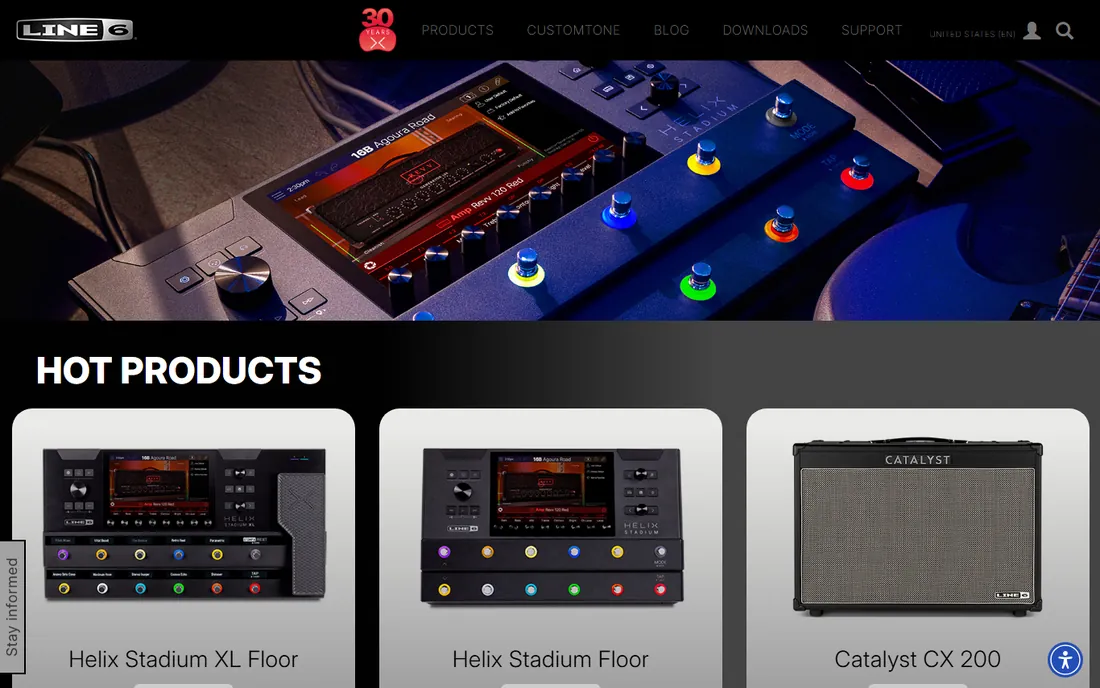
Helix Native is the plugin version of the processing engine inside Line 6's Helix hardware, and that shared DNA is the whole pitch. Build a tone in the plugin, load it onto a Helix floor unit, and take it to the gig with no translation step. For players who record at home and play out on weekends, that round trip is worth more than any single amp model.
Helix hardware owners pay $99 instead of $399, which makes the decision easy if you already own a unit. Even without hardware, the 15-day trial shows why the platform has such a loyal following: the routing is deep, the effects are excellent, and the workflow rewards players who think in signal chains. Just make sure your computer can handle it before you commit.
What we like- Same models and workflow as the Helix hardware line
- Deep routing with snapshots
- Huge model library of amps, cabs, and effects
Watch out for- Full price is steep if you will never touch the hardware
- Demands a reasonably fast computer
Starting priceSee website
Free planFree trial
S-Gear has a smaller following than the giants on this list, but its fans are unusually loyal, and the reason is feel. The amp models respond to picking dynamics and volume-knob changes in a way that players describe as closer to a real tube amp than most competitors. It is the software equivalent of a great two-channel amp: not many options, but the ones you get are excellent.
It also runs as a standalone application, which makes it a strong practice tool. Plug in, pick an amp, and play, with no DAW required. The 15-day demo is the right way to judge it, because S-Gear's strengths only show up under your fingers. If you prefer five great amps to five hundred decent ones, start here.
What we like- Highly regarded dynamic response and touch sensitivity
- Works as a standalone app for practice
- Refreshingly small and focused
Watch out for- Small amp roster compared to big-library rivals
- Major updates arrive slowly
#7
STL ToneHub
Best for: Session players and cover musicians who need pro tones in seconds
Visit stltones.com
Starting price$14.99/month or $119.99/year (All Access)
Free planFree trial
STL ToneHub is built on captures rather than circuit models: real amps, recorded by real producers, turned into digital rigs you can load instantly. The All Access subscription opens the full library plus every expansion pack, and the artist roster leans toward working metal and rock producers whose tones you have heard on records. For a cover musician who needs five different rigs on Friday night, that library is the product.
The newer Cloud Capture feature lets you capture your own amps through a browser and publish them to the community, with a scoring system that shows how close the capture got. A 10-day free trial is enough to test whether the capture-based approach beats traditional modeling for your ears. If you hate tweaking, ToneHub's "load a pro's rig and play" philosophy will feel like a relief.
What we like- Artist signature packs from working producers
- Huge community library of captured rigs
- Cloud capture lets you digitize your own gear
Watch out for- Built around a subscription rather than a one-time purchase
- Community features need an internet connection
Starting price$295 (ReValver 5.1 and Amp Cloner bundle)
Free planYes (demo with core modules)
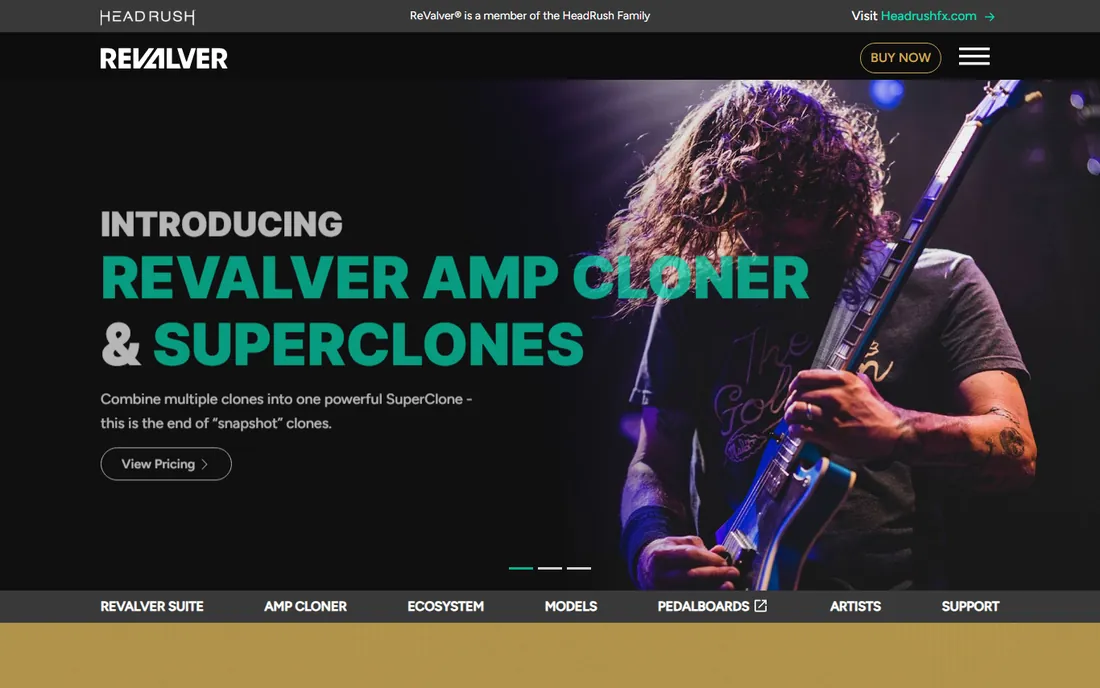
ReValver, now under the HeadRush umbrella, is the deepest rabbit hole on this list. Most amp sims let you turn knobs; ReValver lets you open the schematic and change component values, which is either thrilling or terrifying depending on your personality. The newer Amp Cloner module captures your physical amp the way profiling hardware does, and clones move between ReValver and HeadRush hardware.
It is also the only amp software with officially branded Peavey and Budda models, developed with the original manufacturers. The free demo ships with usable core modules, so you can test the modeling engine before paying $295 for the full bundle. ReValver suits the engineer-minded player who treats tone as a science project.
What we like- Edit amps down to the schematic level
- Amp cloning captures your real gear
- Officially branded Peavey and Budda models
Watch out for- Bundle price is high
- Interface and workflow feel less refined than newer competitors
#9
Ignite Amps Emissary
Best for: Metal players who want a great high-gain tone for free
Visit igniteamps.com
Starting priceFree
Free planYes
The Emissary is a free emulation of a custom dual-channel tube amp built for modern metal, and it embarrasses plenty of paid software. The clean channel is genuinely usable, but the lead channel is the reason to download it: tight, aggressive, and responsive in exactly the way metal rhythm playing demands. Ignite Amps built it with serious analog modeling math, and it shows.
Because it is free and donation-supported, there is no trial clock and no upsell screen. Pair it with Ignite's free NadIR impulse response loader and a good cabinet IR, and you have a complete metal recording chain for zero dollars. It will not replace a full suite if you need cleans, crunch, and effects, but as a free high-gain amp, it has no equal.
What we like- Completely free with no feature limits
- Excellent modern metal tones
- Pairs well with the free NadIR cabinet loader
Watch out for- Narrow focus on high-gain sounds
- No built-in effects
- Setup takes more manual work than commercial suites
How to match amp software to your playing style
Start with an honest answer about how you play. A bedroom hobbyist who practices with headphones has different needs from a session guitarist delivering stems to a producer, and the software market reflects that split.
If you record finished songs, prioritize cabinet and microphone modeling, because that is what determines whether your guitar sits in a mix. TH-U and AmpliTube 5 shine here. If you play live or rehearse with a band, look for standalone operation and low latency; S-Gear and Helix Native both run outside a DAW. Metal players on a budget should try the Emissary before spending anything, while tone tweakers will be happiest with BIAS X or ReValver, where the fun is in the building.
Finally, check your computer. Amp software is real-time audio processing, and the best-sounding models use the most CPU. Every product on this list offers a free version or trial, so run your shortlist through an actual session before you pay. Your ears and your processor will tell you which one to keep.
How we chose
We started with every major amp sim on the market and filtered for products that are actively sold and supported in 2026. That filter removed BIAS FX 2, which Positive Grid discontinued, and it is why BIAS X appears here instead. For each remaining product, we checked the vendor's own site for current pricing and free options, and we replaced any listing whose numbers we could not verify with "See website."
We weighted real-world fit over feature counts: licensed amp quality, cabinet realism, CPU efficiency, trial availability, and whether the workflow suits recording, practice, or live use. Free and donationware products earned spots only where they genuinely compete with paid software, which is why the Emissary made the cut. We did not accept paid placements, and no vendor reviewed this list before publication.
Free vs paid: what you actually get for your money
The free tier of guitar amp software is unusually strong, which makes this category different from most music software. The Emissary gives you a pro-quality metal amp for nothing. Guitar Rig 7 Player and AmpliTube 5 Custom Shop both ship usable free versions. ReValver's demo covers the core experience. In strict terms of "can I record a good guitar track without paying," the answer is yes.
Paid software earns its price in three ways: breadth, depth, and convenience. Breadth means hundreds of amps instead of a handful. Depth means tools like amp cloning, component editing, and serious cabinet control. Convenience means preset libraries, artist packs, and workflows that save you an hour per session. If you record guitar weekly, one saved hour per session pays for a $99 plugin quickly. If you play for fun on weekends, the free options on this list may be all you ever need.
Frequently asked questions
What is the best free guitar amp software?
Ignite Amps Emissary is the best fully free option, especially for metal and hard rock. If you want a broader free starter set, AmpliTube 5 Custom Shop and Guitar Rig 7 Player both give you usable amps and effects at no cost, with paid upgrades available when you outgrow them.
Do I need an audio interface to use amp software?
Technically no, but you will want one. You can plug a guitar into your computer with an adapter, but a dedicated audio interface gives you lower latency, better sound quality, and proper input levels. Latency is the critical factor: even a budget interface keeps the delay between picking a note and hearing it low enough to play comfortably.
Will amp software sound as good as a real tube amp?
For recording, modern amp sims get close enough that most listeners cannot tell in a finished mix. The gap is mostly in feel: the physical interaction of a loud speaker pushing air, and the way a real amp responds at stage volume. Many players now use a hybrid setup, recording with software and keeping a small tube amp for the room.
Which amp sim is best for metal?
For high-gain metal tones, the free Ignite Amps Emissary is shockingly good and the natural starting point. Among paid options, STL ToneHub's artist packs lean heavily toward modern metal producers, and ReValver's officially branded Peavey models cover classic high-gain territory.
Can I use amp software live on stage?
Yes, several products on this list support it. Helix Native pairs directly with Line 6 Helix hardware for a studio-to-stage workflow, S-Gear runs as a standalone app, and ReValver includes a gig mode with MIDI control. For live use, prioritize low latency and test your full setup, including the computer, at rehearsal volume before the show.
Why was BIAS FX 2 discontinued?
Positive Grid retired BIAS FX 2 and replaced it with BIAS X, its current-generation amp software. If you owned BIAS FX 2, check Positive Grid's site for migration options. New buyers should choose BIAS X, which is the product the company now sells and supports.
Sources we checked (0)
Is your product missing or out of date?
We review this list regularly. Vendors can request a listing, send updated pricing or ask about featured placement.

Shihab Mia · Founder, Rankite
Shihab has spent more than a decade helping SaaS and e-commerce brands grow through search. He writes Rankite's software buying guides from pricing pages, documentation and public user reviews. More about Shihab.