How we make this list: we compare pricing pages, product documentation and public user reviews. Rankite is independent; if a vendor ever pays for a featured spot, that listing is clearly labeled Partner.
Quick comparison
| Tool | Best for | Starting price | Free plan |
|---|
 Postman Postman | API teams that want testing, documentation, and monitoring in one platform | $0 (Free plan); Solo $9/month billed annually; Team $19/user/month billed annually | Yes |
 Datadog Datadog | Enterprises that need API monitoring inside a full-stack observability platform | $5 per 10,000 API test runs (Synthetics, annual billing) | No (14-day free trial) |
 Checkly Checkly | Developer-led teams that want monitoring defined as code | $0 (Hobby plan); Starter $24/month; Team $64/month | Yes |
 UptimeRobot UptimeRobot | Budget-conscious teams that need simple uptime and API checks | $0 (free plan with 50 monitors); Solo $7/month billed annually; Team $29; Enterprise $54 | Yes |
 Pingdom Pingdom | Teams that want straightforward website and API uptime monitoring with a long track record | $10/month billed annually (10 uptime checks) | No (30-day free trial) |
 StatusCake StatusCake | Teams that want affordable monitoring with a genuinely useful free tier | $0 (free plan with 10 monitors); Superior $24.49/month ($20.41 billed annually) | Yes |
 Site24x7 Site24x7 | IT teams that want API monitoring inside an all-in-one infrastructure monitoring suite | $10/month billed annually (Web Uptime plan); Pro $39/month | Yes (limited freemium) |
 Better Stack Better Stack | Modern development teams that want monitoring, incident management, and status pages together | $0 (free plan); paid monitoring from $29/month billed annually ($34 month-to-month) | Yes |
 New Relic New Relic | Teams already using New Relic observability that want API checks in the same platform | $0 (Free plan with 100GB ingest and 1 full user); Standard from $10/month for the first user plus $99 per additional user | Yes |
Is your product missing or out of date?
We review this list regularly. Vendors can request a listing, send updated pricing or ask about featured placement.
Key takeaways
- Postman, Checkly, UptimeRobot, StatusCake, Better Stack, and New Relic all offer real free plans, so you can start monitoring today without spending anything.
- If your API checks live inside a bigger observability stack, Datadog and New Relic make more sense than a standalone monitor.
- Developer-led teams tend to prefer Checkly and Postman, where checks are written like code and live next to the rest of the codebase.
- Simple uptime checkers like UptimeRobot, Pingdom, and StatusCake are enough when you need to know "is it up and responding," without deep performance analytics.
- Watch how vendors price: some charge per user, others per check run, which changes the math completely as your check frequency grows.
#1
Postman
Best for: API teams that want testing, documentation, and monitoring in one platform
Visit postman.com
Starting price$0 (Free plan); Solo $9/month billed annually; Team $19/user/month billed annually
Free planYes
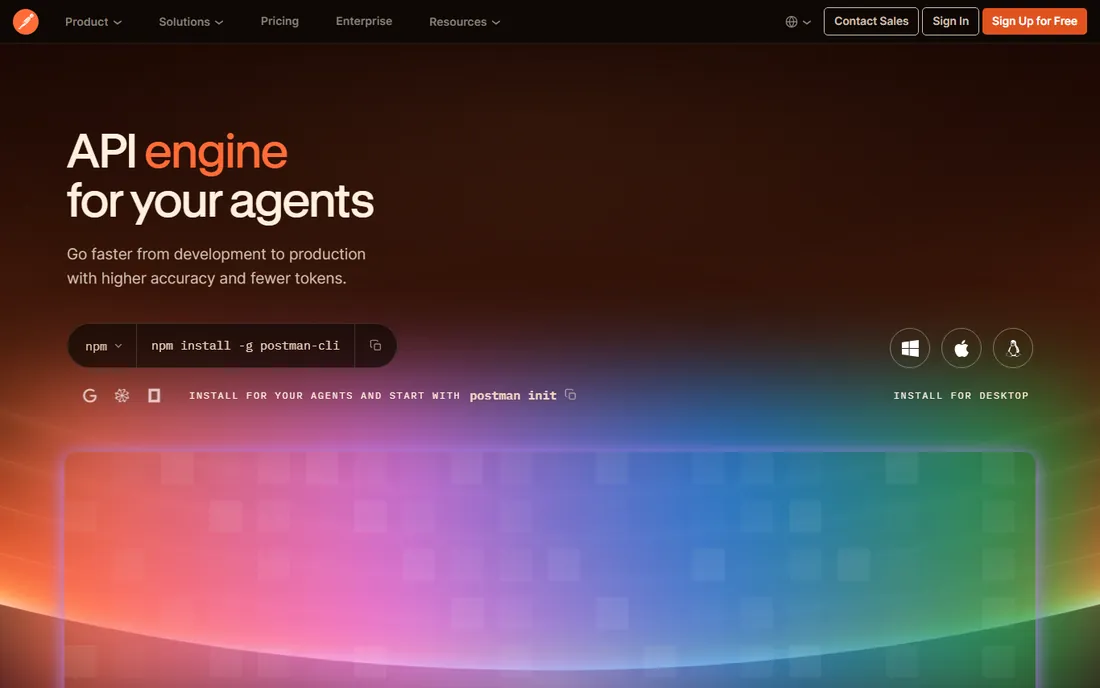
Postman is where most API work already happens, which makes its monitoring feature an easy adoption story. You build your requests, write tests, and then schedule those same collections to run as monitors from Postman's cloud. The Free plan costs nothing and covers individual use, while Solo at $9 per month billed annually and Team at $19 per user per month billed annually add collaboration, more monitor runs, and integrations. Because monitors reuse your existing collections, there is no separate scripting language to learn.
The honest framing is that monitoring is a satellite feature here, not the mission. Teams that need sophisticated alerting rules, status pages, or large-scale synthetic checks may outgrow it. But if your developers already design and test APIs in Postman, turning those collections into scheduled monitors is the shortest path from zero monitoring to useful monitoring, and the free tier means there is no budget meeting required.
What we like- Monitoring lives alongside your API collections and tests
- Generous free tier
- Huge community and integration library
Watch out for- Monitoring is an add-on to a testing tool, not the core
- Advanced monitoring features sit on paid plans
- Can feel heavy for simple uptime checks
#2
Datadog
Best for: Enterprises that need API monitoring inside a full-stack observability platform
Visit datadoghq.com
Starting price$5 per 10,000 API test runs (Synthetics, annual billing)
Free planNo (14-day free trial)
Datadog Synthetics lets you run API tests from managed locations around the world and tie every failure directly to the logs, traces, and infrastructure metrics that explain it. Published pricing starts at $5 per 10,000 API test runs on annual billing. That usage model is worth understanding: you pay for check volume, not seats, so a handful of endpoints checked every minute stays cheap while thousands of checks every 30 seconds adds up fast.
There is no free plan, only a 14-day trial, which tells you who this is for. Datadog makes sense when API monitoring is one panel in a larger observability practice and your team already lives in the platform. If that describes you, the ability to jump from a failed API test straight into the distributed trace that caused it is genuinely valuable. If you just need to know whether your endpoints respond, a dedicated monitoring tool will cost less and ask less of you.
What we like- API tests correlate with logs, traces, and infrastructure metrics
- Powerful multi-step browser and API tests
- Mature alerting
Watch out for- No free plan
- Usage-based pricing can surprise
- Overkill if you only need endpoint checks
#3
Checkly
Best for: Developer-led teams that want monitoring defined as code
Visit checklyhq.com
Starting price$0 (Hobby plan); Starter $24/month; Team $64/month
Free planYes
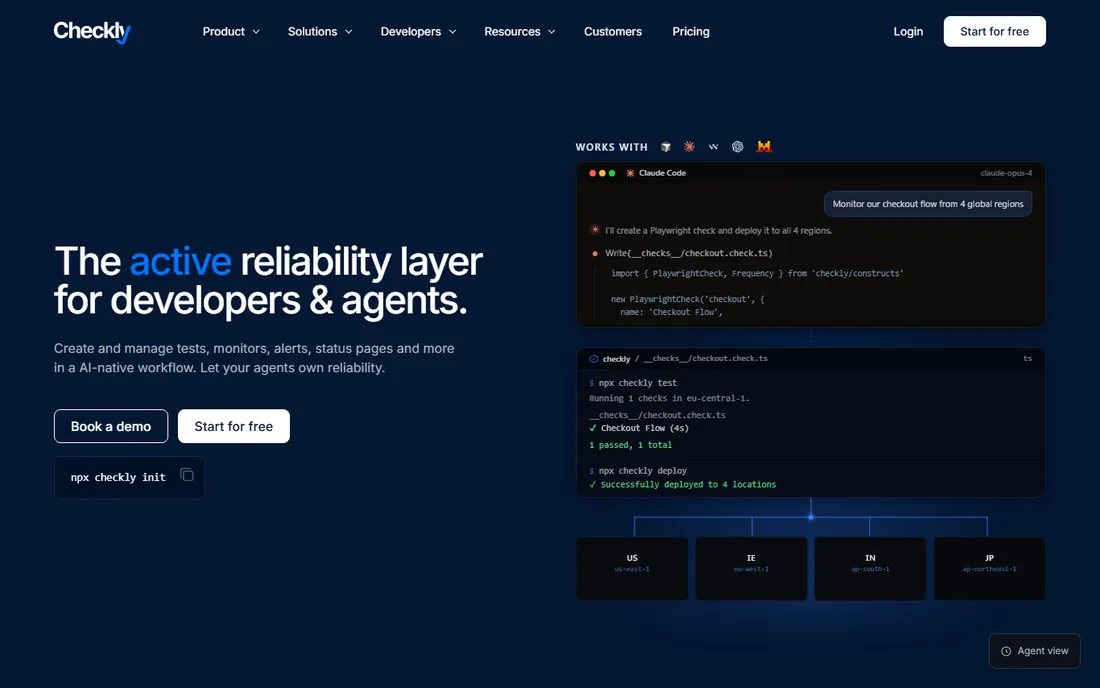
Checkly treats monitoring the way developers treat infrastructure: as code. You write API checks in JavaScript or TypeScript, store them in Git, and deploy them through your normal pipeline. The Hobby plan is free, Starter costs $24 per month, and Team costs $64 per month, with higher check volumes and collaboration features as you move up. Playwright-powered browser checks sit alongside the API checks, so one tool covers both your endpoints and your critical user flows.
This is a tool with a clear audience. If your team is comfortable in code, Checkly feels natural and removes the usual split between "the tests developers write" and "the monitors ops configures." If your team is not developer-led, the code-first approach can feel like friction rather than freedom. For engineering teams that already review everything in pull requests, though, monitoring that ships the same way is a quiet productivity win.
What we like- Checks written in code and versioned in Git
- Playwright-based browser checks plus API checks
- Clean developer experience
Watch out for- Hobby plan limits are tight for production use
- Pricing jumps between tiers
- Less hand-holding for non-developers
#4
UptimeRobot
Best for: Budget-conscious teams that need simple uptime and API checks
Visit uptimerobot.com
Starting price$0 (free plan with 50 monitors); Solo $7/month billed annually; Team $29; Enterprise $54
Free planYes
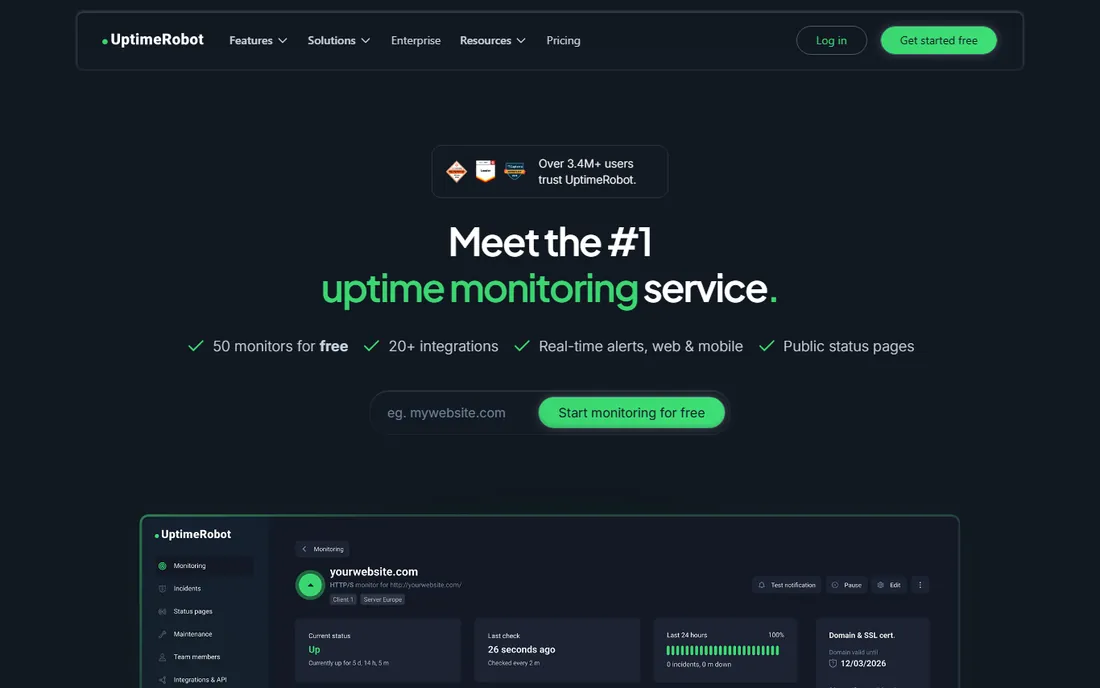
UptimeRobot has been the default answer to "what is the cheapest way to know when my site is down" for years, and it still earns that spot. The free plan includes 50 monitors, which covers the entire public surface of most small businesses. Paid plans start at just $7 per month billed annually for Solo, rising to $29 for Team and $54 for Enterprise. Setup takes minutes: add a URL or API endpoint, pick a check interval, and add your alert contacts.
Nobody would call it a deep synthetic monitoring platform. You get uptime checks, keyword monitoring, and response-time tracking, not multi-step transactions or scripted browser flows. But most API outages are simple: the endpoint is down, slow, or returning errors, and UptimeRobot catches all three. For freelancers, small agencies, and side projects, the free tier alone often covers everything, which makes it the easiest recommendation on this list for teams watching their budget.
What we like- Free plan covers 50 monitors, which is generous
- Dead simple setup
- Affordable paid tiers
Watch out for- Basic feature set compared to synthetic monitoring platforms
- Limited advanced alerting logic
- Status pages are simple
#5
Pingdom
Best for: Teams that want straightforward website and API uptime monitoring with a long track record
Visit pingdom.com
Starting price$10/month billed annually (10 uptime checks)
Free planNo (30-day free trial)
Pingdom is one of the oldest names in uptime monitoring, and its pitch has barely changed: tell it what to watch, and it tells you when something breaks. Plans start at $10 per month billed annually for 10 uptime checks, with a 30-day free trial instead of a free tier. Alongside uptime, you get page speed monitoring and transaction checks that walk through multi-step flows like logins and checkouts.
The pricing model is the main thing to watch. Because plans are structured around check counts, growing from a handful of endpoints to dozens means stepping up tiers. Newer competitors offer more generous free plans and deeper synthetic testing at similar prices. Pingdom's advantage is simplicity and reliability: it does a small set of things well, with reporting that non-technical stakeholders can read. Teams that want monitoring without a learning curve will feel at home here.
What we like- Simple and reliable
- Page speed monitoring included
- Trusted brand with years of history
Watch out for- No free plan
- Per-check pricing limits scale
- Feature set narrower than newer competitors
#6
StatusCake
Best for: Teams that want affordable monitoring with a genuinely useful free tier
Visit statuscake.com
Starting price$0 (free plan with 10 monitors); Superior $24.49/month ($20.41 billed annually)
Free planYes
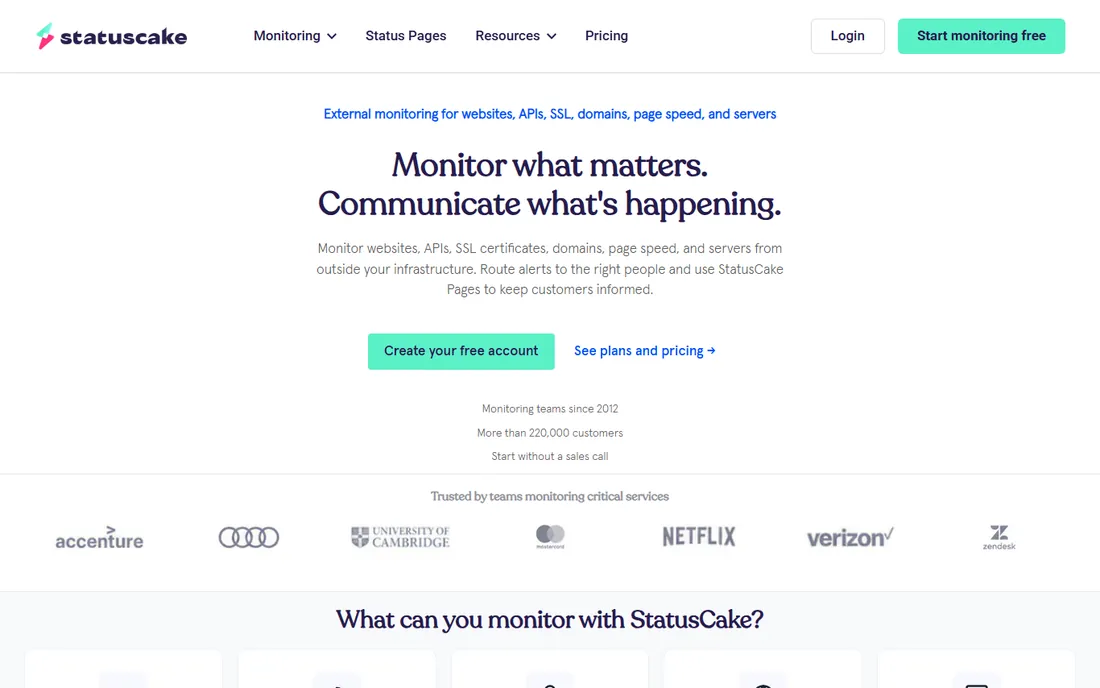
StatusCake competes directly with UptimeRobot and Pingdom on simplicity, with pricing that undercuts most of the field. The free plan covers 10 monitors, and the Superior plan costs $24.49 per month, or $20.41 per month billed annually. That buys uptime monitoring, page speed tracking, SSL certificate checks, and server monitoring in a single dashboard. For a small team, one paid seat covers the essentials.
It does not try to be Datadog, and that is fine. The alerting and reporting are solid rather than spectacular, and teams running complex microservice architectures will want deeper tooling. But as a value play, StatusCake is hard to beat: the free tier handles basic needs, and the first paid tier stays affordable while adding meaningful capacity. If Pingdom's pricing feels steep for what you need, StatusCake deserves a look.
What we like- Free plan includes 10 monitors
- Competitive paid pricing
- Uptime, page speed, and SSL monitoring in one place
Watch out for- Interface less polished than premium rivals
- Advanced features trail Datadog-class platforms
- Smaller ecosystem
#7
Site24x7
Best for: IT teams that want API monitoring inside an all-in-one infrastructure monitoring suite
Visit site24x7.com
Starting price$10/month billed annually (Web Uptime plan); Pro $39/month
Free planYes (limited freemium)
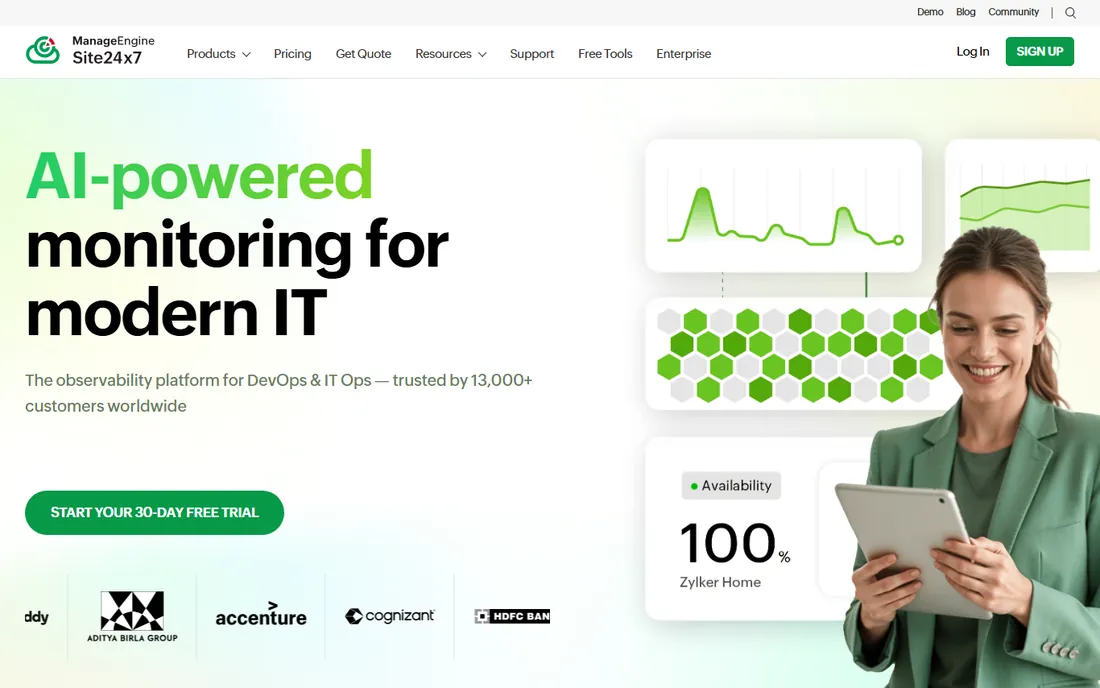
Site24x7 comes from the ManageEngine family, and it shows in the breadth: website monitoring, server monitoring, network monitoring, cloud monitoring, and APM all live under one roof. The Web Uptime plan starts at $10 per month billed annually, with Pro at $39 per month adding deeper capabilities. API monitoring here means REST and SOAP endpoint checks with response validation, scheduled from global locations.
The strength and the weakness are the same thing: scope. If your team already monitors infrastructure and just needs API checks added to the same dashboard and alerting rules, Site24x7 is efficient and affordable. If you only care about APIs, you are buying into a much bigger platform than you need, and the interface reflects that breadth. It is the right pick for IT generalists, less so for API-first product teams.
What we like- One platform for websites, servers, networks, and APIs
- Affordable entry pricing
- Broad monitoring coverage
Watch out for- Interface can feel dense
- API monitoring is one module among many
- Freemium limits are restrictive
#8
Better Stack
Best for: Modern development teams that want monitoring, incident management, and status pages together
Visit betterstack.com
Starting price$0 (free plan); paid monitoring from $29/month billed annually ($34 month-to-month)
Free planYes
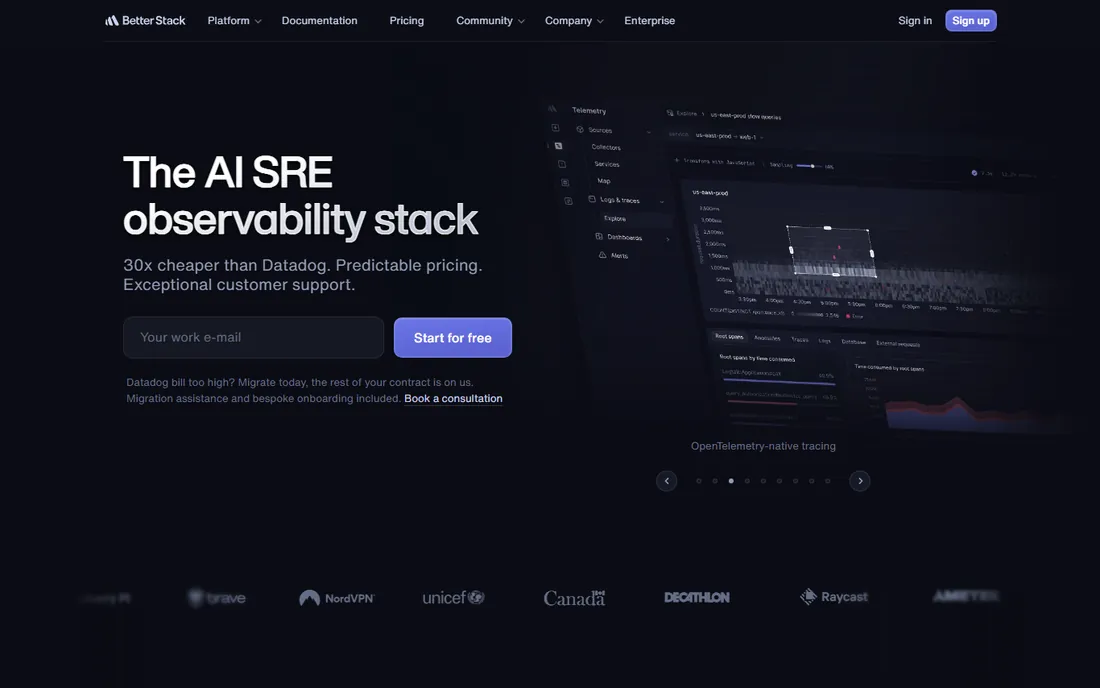
Better Stack bundles three jobs that usually require three tools: uptime and API monitoring, incident management with on-call schedules, and hosted status pages. The free plan covers 10 monitors plus heartbeats and a status page, which is enough for many small products. Paid monitoring starts at $29 per month billed annually ($34 month-to-month) and scales with check volume and features. The interface is modern and fast, a noticeable contrast with some legacy monitoring tools.
The trade-off is depth versus breadth. You get a coherent incident workflow, from detection to alert to public status page, without stitching tools together. You do not get Datadog-level APM or log analytics. For startups and small engineering teams, that bundle is exactly right: one vendor, one bill, and a professional incident process from day one. Larger enterprises with established observability stacks will likely keep Better Stack out of the shortlist.
What we like- Monitoring, on-call scheduling, and status pages in one product
- Clean modern interface
- Generous free tier
Watch out for- Newer vendor with a smaller track record
- Paid plans start higher than basic uptime checkers
- Advanced observability is lighter than Datadog
#9
New Relic
Best for: Teams already using New Relic observability that want API checks in the same platform
Visit newrelic.com
Starting price$0 (Free plan with 100GB ingest and 1 full user); Standard from $10/month for the first user plus $99 per additional user
Free planYes
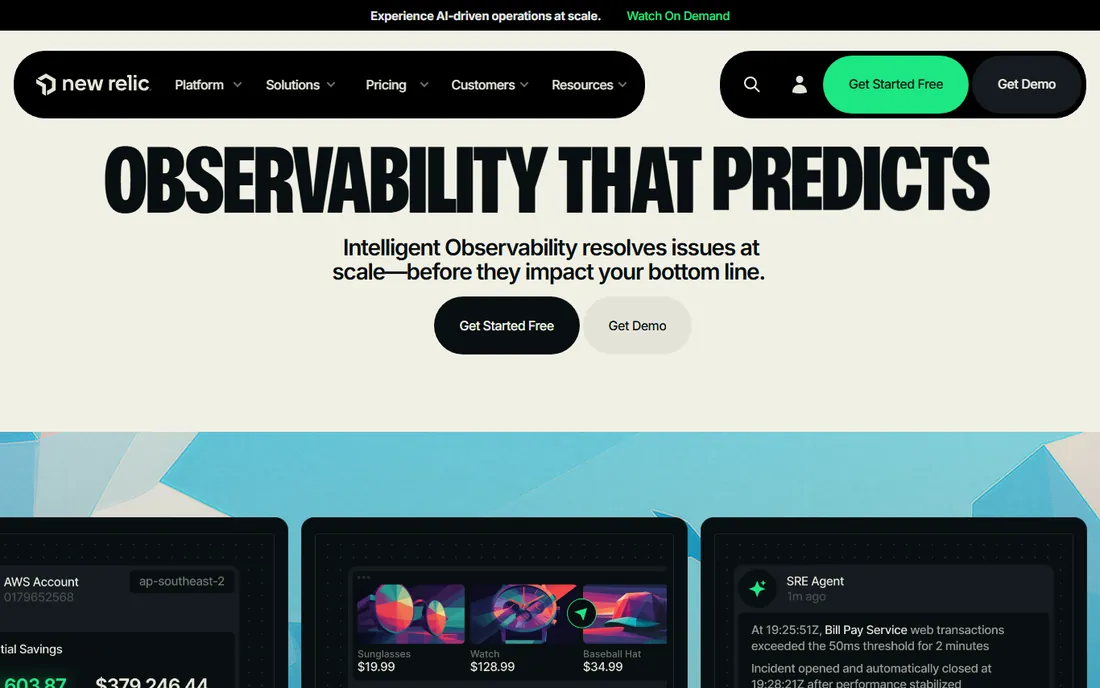
New Relic rebuilt its pricing around a genuinely free tier: $0 with 100GB of monthly data ingest and one full user, no credit card required. Standard starts at $10 per month for the first user with additional users at $99 each. Synthetic monitoring, including API checks, runs inside the platform, so a failed check can be investigated alongside application traces, logs, and infrastructure data without switching tools.
Like Datadog, this is a platform decision more than a monitoring decision. The free tier is generous enough for small teams to run real workloads, which makes New Relic worth evaluating even without an existing footprint. But the pricing model rewards commitment: costs rise with users and data, and the deepest value appears when the whole stack reports into one place. If your team already runs New Relic, adding API monitoring is close to free. If not, compare the total platform cost against a dedicated monitoring tool before deciding.
What we like- Generous free tier for getting started
- Synthetic monitoring correlates with APM data
- No credit card to start
Watch out for- Pricing gets complex as you scale
- Full value requires buying into the platform
- Simpler needs are served cheaper elsewhere
How we chose
We started with the API monitoring tools that development teams and SMBs actually evaluate, then verified each one against the vendor's own website and published pricing. Every price in this guide comes from the vendor's pricing page, not from third-party roundups. Tools that had been shut down, acquired into unrelated products, or lacked a current product page were excluded.
We weighted practical fit for small and mid-size teams: how quickly you can set up your first check, whether a free tier or trial lets you evaluate honestly, how alerting and integrations work in practice, and whether pricing stays sane as check volume grows. We did not invent ratings, user counts, or customer stories, and we did not claim hands-on testing we did not do. The result is a shortlist you can take into a trial with confidence.
Start with check types. At minimum, you want HTTP checks that validate status codes, response bodies, and latency thresholds from multiple geographic locations. If your API has authenticated flows or multi-step transactions, look for tools that support scripted or multi-step checks. SSL certificate monitoring is a cheap add-on that prevents an embarrassing and completely avoidable outage.
Next, examine alerting and escalation. A monitor that emails one person is fine for a side project; a production API needs escalation policies, on-call rotations, and integrations with Slack, PagerDuty, or your existing incident tooling. Check whether alerts include enough context to act on, and whether the tool distinguishes a single failed check from a real outage before paging anyone.
Finally, do the pricing math for your scale. Per-user pricing favors teams with many endpoints and few people; per-check pricing favors the opposite. Estimate your monthly check volume (endpoints multiplied by check frequency) and project it across two or three vendors before committing. And take the free tier seriously: several tools on this list cover real production needs at $0, so there is no reason to pay before you have proven the value.
API monitoring vs. APM vs. uptime monitoring: which do you need?
These three get confused constantly, and buying the wrong category wastes money. Uptime monitoring is the simplest: it asks "is the endpoint responding?" on a schedule and alerts when it is not. Tools like UptimeRobot, Pingdom, and StatusCake live here, and for many small APIs this is entirely sufficient.
API monitoring goes one level deeper. It validates that responses are correct, not just present: the right status code, the expected fields, latency under your threshold. Postman monitors, Checkly, and Datadog Synthetics operate at this level. When your API can return HTTP 200 with the wrong data, uptime checks will miss the failure and API monitoring will catch it.
APM, or application performance monitoring, is the deepest layer. It instruments your running code to show where time goes inside each request: slow database queries, congested queues, failing downstream calls. Datadog and New Relic are APM platforms first. Most teams need uptime checks on day one, add API monitoring as their API becomes business-critical, and adopt APM when debugging production performance without it becomes painful. Match the tool to the problem you have now, not the one you might have in two years.
Frequently asked questions
What is the best free API monitoring tool?
Several strong options cost nothing. UptimeRobot's free plan covers 50 monitors, Postman offers a free tier for individuals, Checkly has a free Hobby plan, Better Stack includes 10 monitors plus a status page, and New Relic's free tier covers real workloads. Start with the free plan that matches your check types, and only pay when you outgrow it.
How much does API monitoring cost?
It varies widely by pricing model. Simple uptime monitoring runs $7 to $29 per month (UptimeRobot, StatusCake, Pingdom). Developer-focused synthetic monitoring costs $24 to $64 per month (Checkly) or $9 to $19 per user per month (Postman). Usage-based platforms like Datadog charge per check run, starting at $5 per 10,000 API test runs. Estimate your check volume before comparing.
What is the difference between API monitoring and uptime monitoring?
Uptime monitoring checks whether an endpoint responds. API monitoring validates that the response is correct: status codes, response bodies, data fields, and latency thresholds. An API can be "up" while returning wrong data, which is why business-critical APIs need true API monitoring rather than simple ping checks.
Do I need API monitoring if I already use APM?
They solve different problems. APM instruments your code to explain why requests are slow or failing. API monitoring watches your endpoints from the outside like a customer would, catching outages, DNS issues, and certificate expirations that APM cannot see. Most mature teams run both.
How often should API checks run?
Match frequency to criticality. Payment and authentication endpoints often warrant one-minute intervals; internal or low-traffic APIs may be fine at five or fifteen minutes. Shorter intervals catch outages faster but multiply check volume, which matters on usage-based pricing. Start with five minutes for most endpoints and tighten the interval on the ones that directly affect revenue.
Sources we checked (9)
- https://postman.com/
- https://datadoghq.com/
- https://checklyhq.com/
- https://uptimerobot.com
- https://pingdom.com/
- https://www.statuscake.com
- https://site24x7.com/
- https://betterstack.com
- https://newrelic.com
Is your product missing or out of date?
We review this list regularly. Vendors can request a listing, send updated pricing or ask about featured placement.

Shihab Mia · Founder, Rankite
Shihab has spent more than a decade helping SaaS and e-commerce brands grow through search. He writes Rankite's software buying guides from pricing pages, documentation and public user reviews. More about Shihab.