How we make this list: we compare pricing pages, product documentation and public user reviews. Rankite is independent; if a vendor ever pays for a featured spot, that listing is clearly labeled Partner.
Key takeaways
- Vercel is the natural home for Next.js apps, with preview deployments on every branch and a free Hobby tier for personal projects.
- Cloudflare Pages offers unlimited bandwidth and 500 free builds a month, which makes traffic spikes dramatically cheaper than metered competitors.
- Netlify's Pro plan costs a flat $20 a month for unlimited team members, a big edge over per-seat pricing as your team grows.
- Railway, Render, and DigitalOcean App Platform suit React apps that need a real backend, while Firebase covers auth, database, and hosting in one place.
Quick comparison
| Tool | Best for | Starting price | Free plan |
|---|
 Vercel Vercel | Next.js and frontend teams | $20 per seat/month (Hobby free) | Yes (Hobby) |
 Netlify Netlify | Teams on a flat budget | $20 per team/month (Pro) | Yes |
 Cloudflare Pages Cloudflare Pages | High-traffic apps, unlimited bandwidth | $0 (Workers Paid $5/mo for compute) | Yes |
 AWS Amplify AWS Amplify | Full-stack apps on AWS | Pay-as-you-go, no base fee | 12-month free tier |
 Render Render | Predictable full-stack hosting | $7 per month (Starter) | Yes (static sites free) |
 Railway Railway | Full-stack projects with databases | $5 per month (Hobby) | Yes |
 DigitalOcean App Platform DigitalOcean App Platform | Simple apps with managed databases | $5 per month (Basic) | Yes (static sites free) |
 Firebase Firebase | Auth, database, and hosting together | $0 (Blaze is pay-as-you-go) | Yes (Spark) |
Is your product missing or out of date?
We review this list regularly. Vendors can request a listing, send updated pricing or ask about featured placement.
The best hosting for React app deployment
Starting price$20 per seat/month (Hobby free)
Free planYes (Hobby)
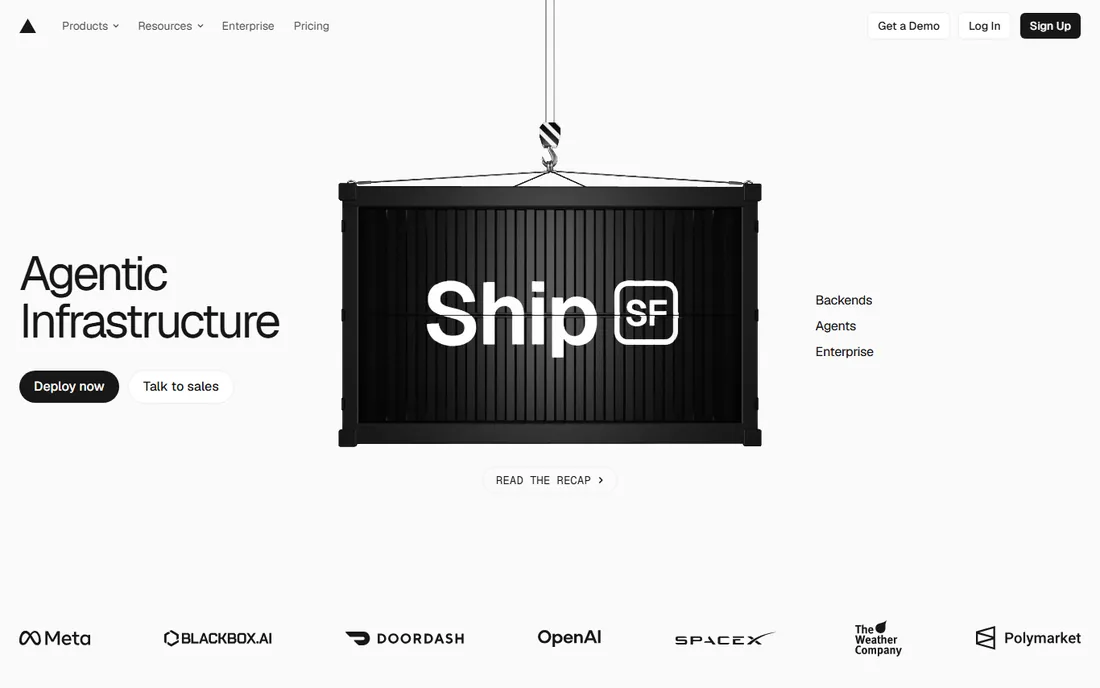
Vercel is made by the team behind Next.js, and it shows in every detail. Push to Git and your app builds and deploys automatically, with a unique preview URL for every pull request so reviewers see changes before they merge. Features like incremental static regeneration, middleware, and server actions work with zero configuration. For a React team already on Next.js, nothing else feels this integrated.
The Hobby plan is free but limited to personal, non-commercial projects, so any revenue-generating product needs Pro at $20 per seat per month with $20 of included usage credit. The honest catch is that per-seat price: a five-person team pays $100 a month before serving a single request, while some competitors charge one flat team fee.
What we like- Zero-config Next.js with ISR and server actions
- Preview deployments on every branch
- Global edge network
Watch out for- Hobby plan excludes commercial use
- Per-seat pricing gets expensive for teams
Starting price$20 per team/month (Pro)
Free planYes
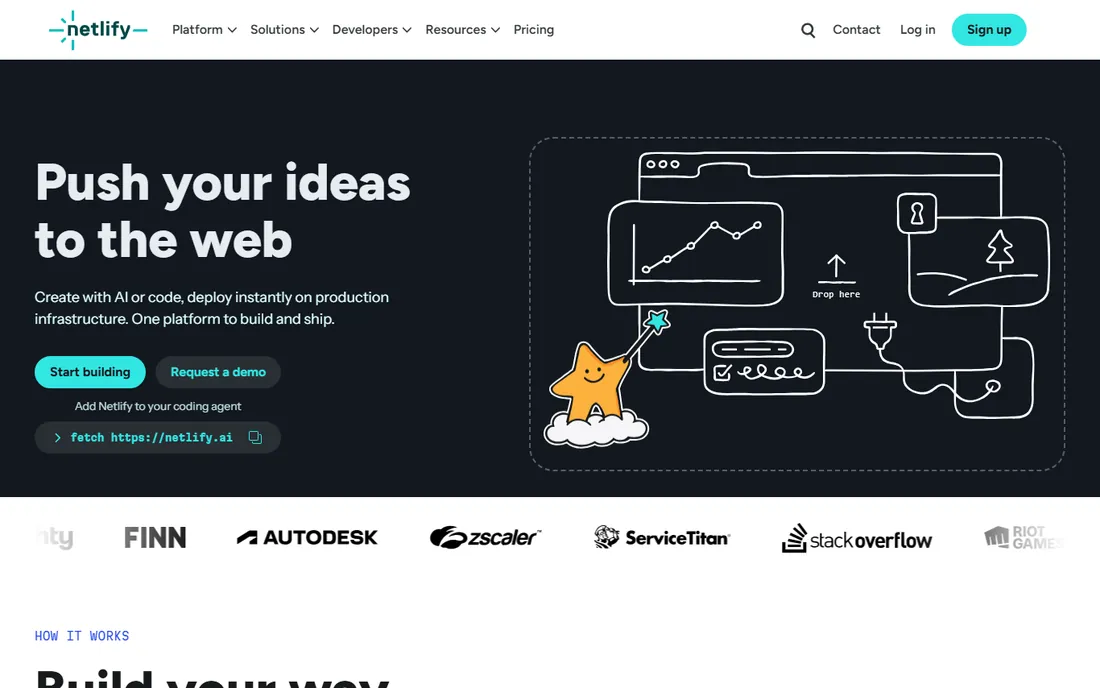
Netlify invented the modern Jamstack workflow and still serves it well: connect Git, deploy automatically, preview every pull request, and ship forms, serverless functions, and edge logic from one dashboard. In 2026 Netlify bills everything from a single credit pool covering bandwidth, builds, compute, and requests, and Pro costs a flat $20 a month with unlimited team members included.
That flat team price is the headline for growing teams, since it removes the per-seat tax entirely. The honest catch is the credit model itself: your 3,000 included credits are shared across bandwidth (20 credits per GB), deploys, and requests, so a traffic spike and a heavy deploy week can drain the pool from two directions at once. For low-traffic apps it is close to free; at scale, model your usage before committing.
What we like- Flat $20 Pro for unlimited team members
- Widest framework adapter ecosystem
- Drag-and-drop deploys
Watch out for- Credit-based billing makes overages hard to predict
- Free tier is a hard 300-credit cap
Starting price$0 (Workers Paid $5/mo for compute)
Free planYes
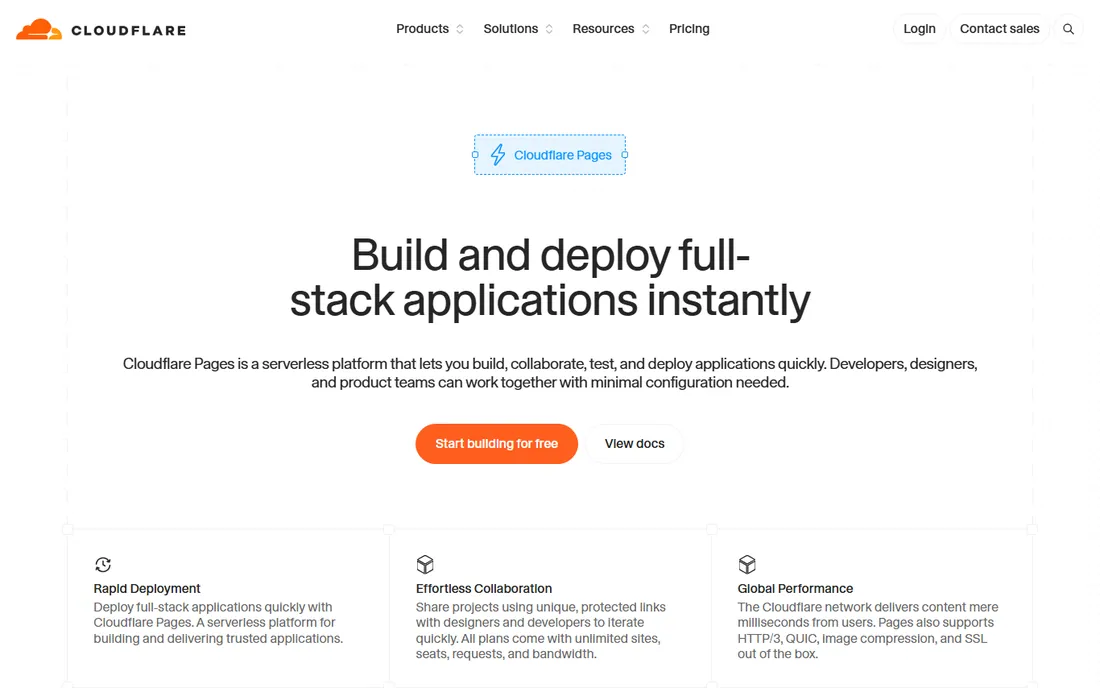
Cloudflare Pages is the bandwidth bargain of the hosting world. Static asset requests are free and unlimited on every plan, so a viral traffic spike costs you nothing to serve, and the free tier includes 500 builds a month with preview URLs on every branch. Add Workers Paid at $5 a month and you get server-side compute plus an edge database (D1), key-value storage (KV), object storage (R2), and real-time state (Durable Objects) in one account.
The honest catch is framework compatibility: plain React and Vite apps deploy perfectly, but Next.js runs through the OpenNext adapter with edge runtime constraints, meaning some Node.js modules do not work and ISR is limited. If your app is a Vite-built SPA, Pages is almost certainly the cheapest fast option; if it is a deep Next.js app, weigh the constraints first.
What we like- Unlimited bandwidth on all plans
- 500 free builds a month
- D1, KV, R2, and Durable Objects in one ecosystem
Watch out for- Next.js runs through OpenNext with edge constraints
- Some Node.js modules unavailable
Starting pricePay-as-you-go, no base fee
Free plan12-month free tier
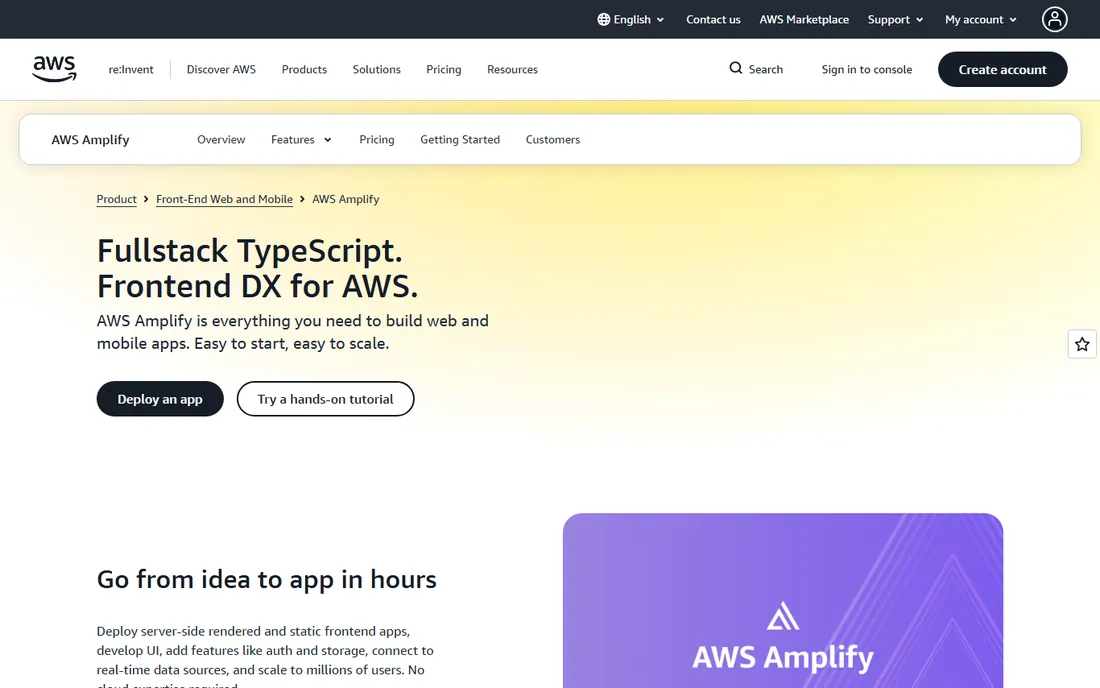
Amplify gives React apps the full weight of AWS without requiring cloud expertise. Host your frontend on CloudFront's global CDN with Git-based CI/CD, then add authentication, a GraphQL or REST API, storage, and push notifications from the same console, all in full-stack TypeScript. There is no base fee and no per-seat charge: you pay for builds ($0.01 per minute), storage ($0.023 per GB), and data served ($0.15 per GB), with a generous free tier for the first 12 months.
A typical small production app costs a few dollars a month after the free tier, which is dramatically cheaper than fixed platform seats for solo developers. The honest catch is the AWS way of doing things: the console, IAM roles, and billing model reward teams comfortable with cloud concepts and punish those who are not. If your company already runs on AWS, Amplify is the path of least resistance.
What we like- No per-seat pricing ever
- Full AWS backend (auth, data, storage) in one console
- Generous 12-month free tier
Watch out for- Pay-as-you-go means no fixed bill
- AWS console complexity can overwhelm frontend teams
Starting price$7 per month (Starter)
Free planYes (static sites free)
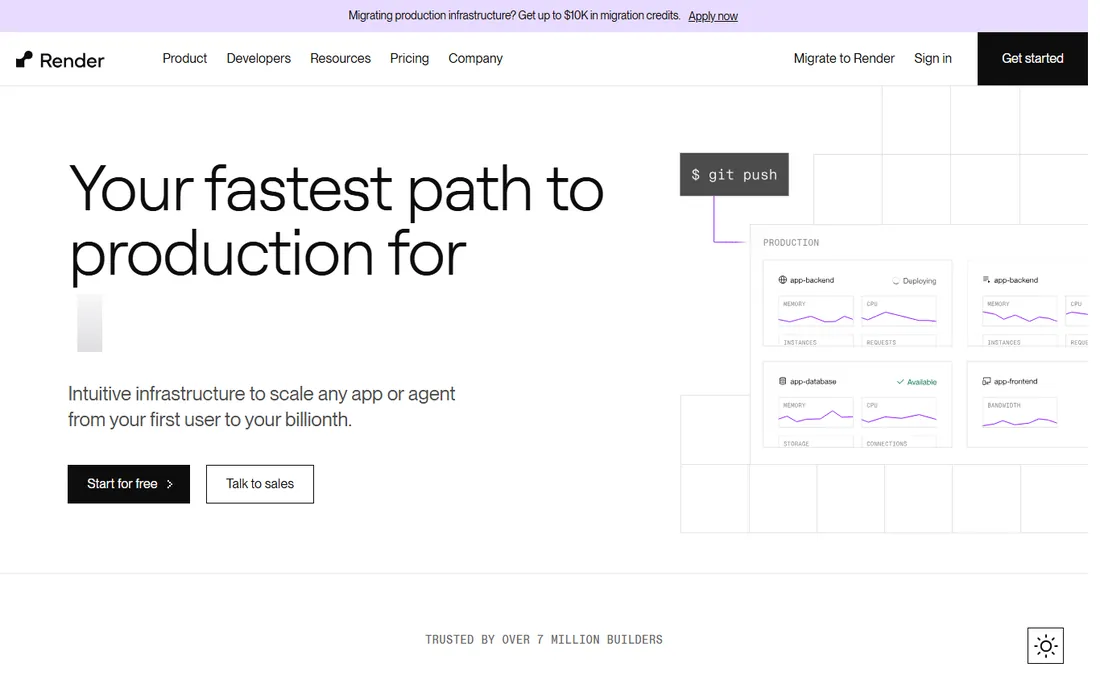
Render takes the opposite approach from usage-metered competitors: you pick an instance size and pay a fixed price. A React static site is free with 100 GB of bandwidth; a Starter web service with 512 MB RAM costs $7 a month; managed Postgres starts at $7 and managed Redis at $10. Everything, web services, background workers, cron jobs, databases, lives in one dashboard with preview environments for pull requests.
That fixed pricing makes budgeting trivial, which finance people love. The honest catch is that you pay for the instance whether it is busy or idle, since paid services do not scale to zero, and the free tier spins down after about 15 minutes of inactivity. For a React app with a Node API and a database, Render is the simplest way to know exactly what next month's bill will be.
What we like- Fixed per-instance pricing, no usage surprises
- Static sites free forever
- Managed Postgres and Redis
Watch out for- No scale-to-zero on paid services
- Free web services sleep after inactivity
Starting price$5 per month (Hobby)
Free planYes
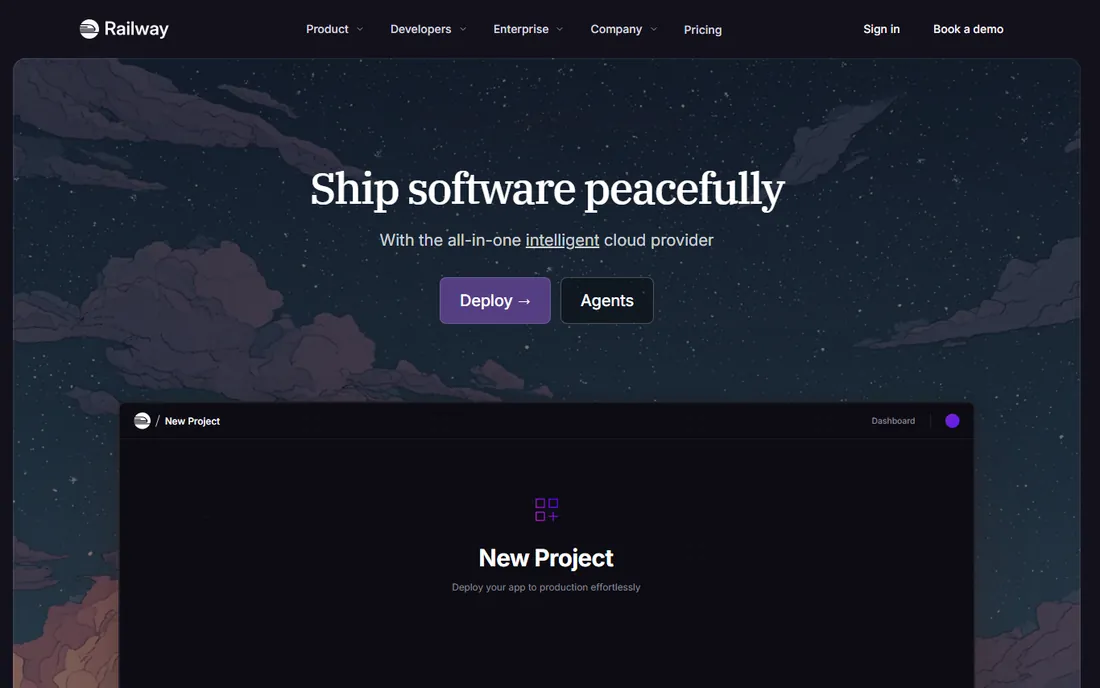
Railway is the platform developers recommend when someone asks where to deploy a full-stack React app with a backend. Connect your repo and Railway auto-detects the framework, builds it, and deploys it, with a visual canvas showing your web service, database, and workers as connected nodes. One-click templates spin up Postgres, MySQL, Redis, or MongoDB with private networking between services, and every pull request gets a preview environment.
Hobby costs $5 a month and includes $5 of usage credit, with metered billing beyond that; Pro at $20 a month is priced per workspace, not per seat. The honest catch is usage-based pricing without a built-in CDN, so a traffic spike raises your bill in a way fixed-price platforms do not. Set the optional hard usage limit to protect yourself, and for pure static frontends, pair Railway with Cloudflare Pages rather than serving everything from Railway.
What we like- Best-in-class developer experience
- One-click Postgres, Redis, and MongoDB
- Visual canvas for your whole stack
Watch out for- Usage billing can surprise you
- No built-in CDN for static assets
Starting price$5 per month (Basic)
Free planYes (static sites free)
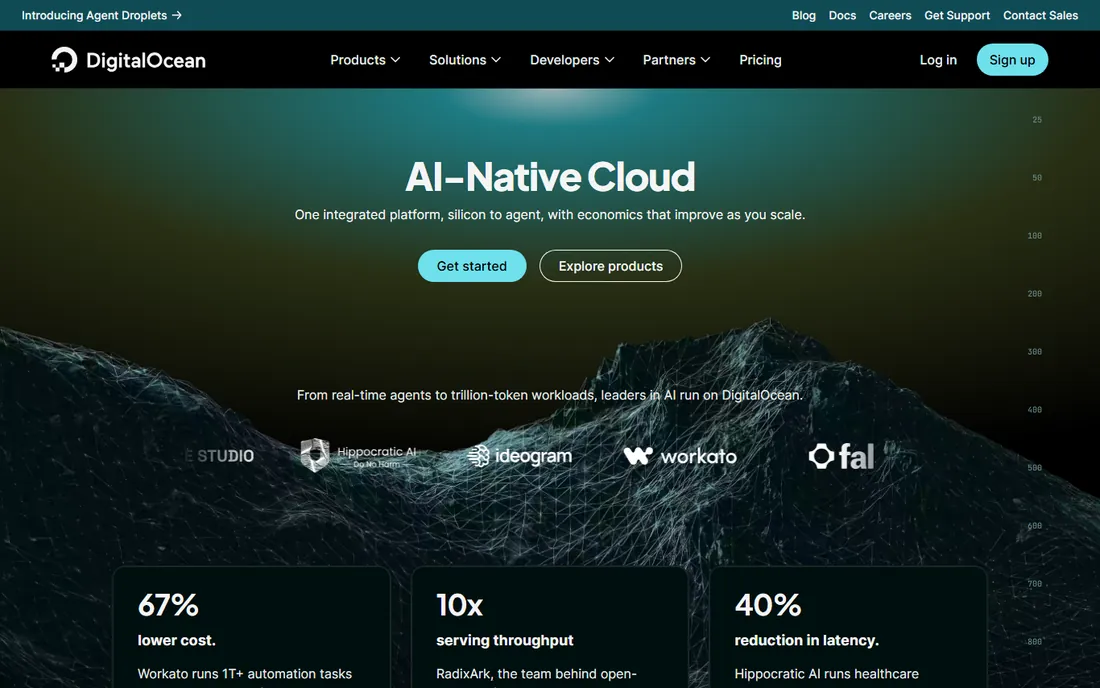
DigitalOcean's App Platform is the calm, predictable option for teams that already trust DigitalOcean. Static React sites deploy free; a Basic web service with 512 MB RAM costs $5 a month; Professional tiers start at $12. Deployments come from Git with automatic builds, and managed Postgres, Redis, and Spaces object storage live in the same account with one bill and one support team.
The honest catch is that App Platform is less feature-rich than Vercel or Netlify for pure frontend workflows: no edge middleware story, fewer preview-environment tricks, and a smaller global footprint. But for a React app that is really a frontend plus an API plus a database, it is simple, cheap, and backed by a provider with a long track record. Teams allergic to billing surprises tend to stay here.
What we like- Static sites free
- Dead-simple pricing
- Managed databases and Spaces in the same ecosystem
Watch out for- Smaller feature set than dedicated PaaS platforms
- Fewer regions than hyperscalers
Starting price$0 (Blaze is pay-as-you-go)
Free planYes (Spark)
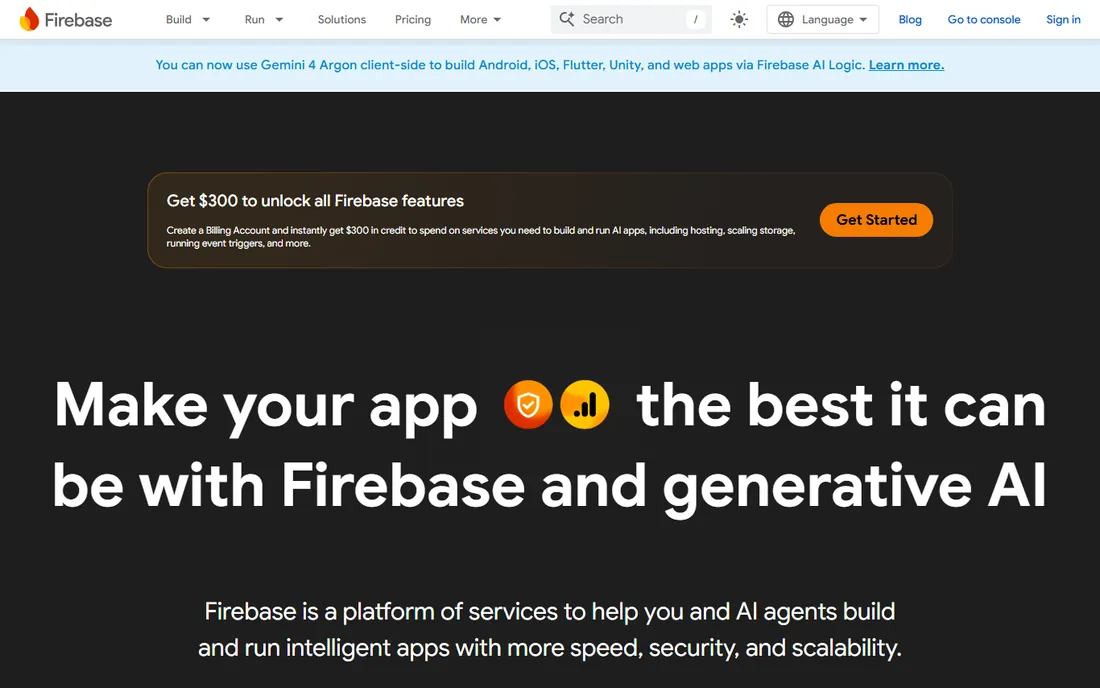
Firebase is less a host and more a complete backend that happens to include hosting. Deploy your React app to Firebase Hosting's global CDN, then add Google-backed authentication, Firestore's real-time database, Cloud Storage, and push notifications through one set of SDKs. The free Spark plan covers 10 GB of hosting storage and 360 MB of daily transfer with no credit card required, and Blaze is pure pay-as-you-go with the same quotas included before billing starts.
The honest catch is architectural: Firestore's document model and Firebase's idioms shape your whole app, and migrating away later is real work. But for small teams shipping an MVP that needs user accounts, a database, and hosting yesterday, nothing else gets you from zero to production this fast. Set budget alerts on Blaze before you scale, and you will never get a surprise.
What we like- Auth, Firestore, and hosting in one SDK
- Generous free Spark tier
- Server-side rendering via App Hosting
Watch out for- Vendor lock-in to Google's data model
- Blaze pay-as-you-go needs billing alerts
How we chose
We compared these platforms using their official pricing pages and documentation as of October 2026, alongside developer reviews on Reddit, Dev.to, and Hacker News, plus published pricing analyses. We focused on what matters for React apps specifically: framework support and SSR capability, preview deployments, free-tier generosity, pricing predictability, and how each handles the backend your app will eventually need. We did not run hands-on benchmarks; performance claims reflect published specifications and community reports.
The right host depends less on your framework and more on what your app does. A marketing site or portfolio built with Vite is static: Cloudflare Pages or Netlify will host it fast and nearly free. A Next.js app using server components, middleware, or server actions needs SSR support, which points to Vercel first or AWS Amplify for an AWS-native stack.
Once your app needs an API and a database, the calculus changes. Railway and Render bundle the frontend, backend, and database in one place with one deployment flow, which beats wiring Vercel to a separate database provider for small teams. Firebase collapses the decision even further by making Google's backend your backend. Start from your app's shape, pick the platform built for that shape, and ignore the rest.
What free tiers actually cover
Free tiers are generous enough for side projects and MVPs, but they are not production plans, and each one limits you differently. Vercel's Hobby plan forbids commercial use, so do not run a revenue app on it. Netlify's free tier is a hard 300-credit monthly cap that pauses your sites when exhausted. Cloudflare Pages gives you unlimited bandwidth but limits free compute to 100,000 Worker requests a day.
The practical move is to start free and upgrade the moment real users arrive. That upgrade usually costs between $5 and $20 a month, which is negligible next to what even a day of engineering time costs. The expensive mistake is not paying for hosting; it is building on a free tier whose limits or terms do not match how your app will actually be used.
Frequently asked questions
What is the best hosting for a React app for beginners?
Cloudflare Pages or Netlify are the easiest starts: push your Vite-built app to Git, connect the repo, and you are live in minutes on a free tier. If you are learning Next.js specifically, start on Vercel's Hobby plan, since its tooling is built around the framework.
Can I host a React app for free?
Yes. Vercel Hobby, Netlify Free, Cloudflare Pages, Render static sites, DigitalOcean static sites, and Firebase Spark all host React apps free. Commercial projects should avoid Vercel Hobby, which excludes commercial use, and check each platform's bandwidth and build limits.
Which is cheaper for a small team, Vercel or Netlify?
Netlify Pro at a flat $20 a month for unlimited team members is cheaper than Vercel Pro at $20 per seat once you have more than one developer. For a solo developer, both cost $20 or less, so the decision should rest on features and developer experience instead.
Does my React app need SSR, and which hosts support it?
Only server-rendered frameworks like Next.js or Remix need SSR. Vercel and AWS Amplify support it natively, Cloudflare Pages supports it through the OpenNext adapter with constraints, and Railway, Render, and DigitalOcean run it in a standard Node service. Pure Vite SPAs need no SSR support at all.
How do I host a React app with a backend and database?
Railway, Render, and DigitalOcean App Platform bundle web services, managed databases, and Redis in one platform. Firebase replaces the backend entirely with auth, Firestore, and Cloud Functions. AWS Amplify connects your frontend to full AWS services like Cognito and DynamoDB.
What happens if my app goes viral on the free tier?
It depends on the platform. Cloudflare Pages serves unlimited bandwidth, so you stay up for free. Vercel Hobby pauses when limits are hit. Netlify pauses all sites when credits run out. Railway and Amplify bill you for usage, so set spending alerts. If virality is plausible, pick a platform whose failure mode you can live with.
Sources we checked (8)
- https://vercel.com/
- https://netlify.com/
- https://pages.cloudflare.com/
- https://aws.amazon.com/amplify/
- https://render.com/
- https://railway.com/
- https://www.digitalocean.com/
- https://firebase.google.com/
Is your product missing or out of date?
We review this list regularly. Vendors can request a listing, send updated pricing or ask about featured placement.

Shihab Mia · Founder, Rankite
Shihab has spent more than a decade helping SaaS and e-commerce brands grow through search. He writes Rankite's software buying guides from pricing pages, documentation and public user reviews. More about Shihab.