How we make this list: we compare pricing pages, product documentation and public user reviews. Rankite is independent; if a vendor ever pays for a featured spot, that listing is clearly labeled Partner.
Key takeaways
- Home Assistant remains the most capable platform for anyone willing to invest setup time, with full local processing and over 1,000 integrations at no software cost.
- Samsung SmartThings is the easiest path for mixed-brand households, with more than 430 partner brands and a hub built into recent Samsung TVs.
- Matter and Thread have changed the buying math: most platforms now interoperate, so the decision comes down to privacy, automation depth, and how much tinkering you enjoy.
- If you want professional installation and 24/7 monitoring, Vivint is the only option on this list that bundles security hardware, installers, and monitoring in one contract.
- Free platforms are genuinely free, but the hardware tells the real cost story: hubs range from $20 Aqara units to the $399 Homey Pro.
Quick comparison
| Tool | Best for | Starting price | Free plan |
|---|
 Home Assistant Home Assistant | Privacy-first DIY automation | Free (optional $6.50/month cloud) | Yes |
 Samsung SmartThings Samsung SmartThings | Mixed-brand households | Free | Yes |
 Apple Home Apple Home | Apple households | Free | Yes |
 Amazon Alexa Amazon Alexa | Voice-first control on a budget | Free | Yes |
 Google Home Google Home | Android households | Free | Yes |
 Hubitat Elevation Hubitat Elevation | Local-first power users | See website | No |
 Homey Homey | Multi-protocol homes without tinkering | $399 one-time (Homey Pro) | No |
 Aqara Aqara | Affordable Zigbee and Matter devices | Free (app); hubs from $20 | Yes |
 Vivint Vivint | Professionally installed security-first homes | $29.99/month monitoring | No |
Is your product missing or out of date?
We review this list regularly. Vendors can request a listing, send updated pricing or ask about featured placement.
Starting priceFree (optional $6.50/month cloud)
Free planYes
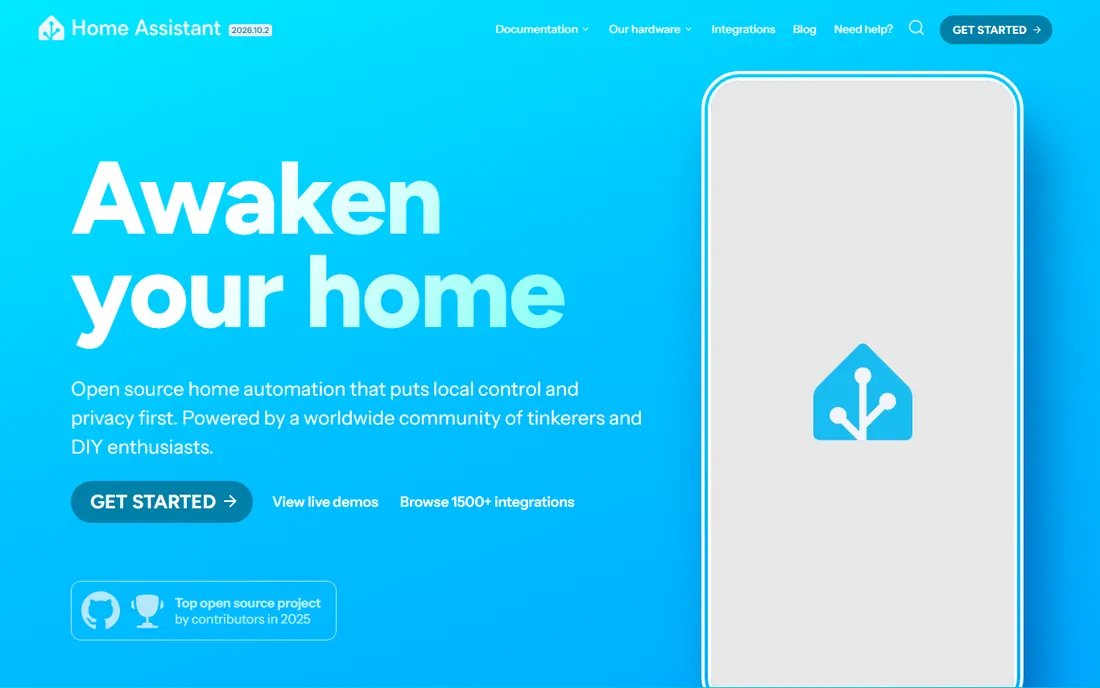
The platform for people who refuse to let a cloud outage turn off their lights. Home Assistant is open-source software you run on your own hardware, a Raspberry Pi, a mini PC, a NAS, or the purpose-built Home Assistant Green, and it talks to more than a thousand device brands. Everything processes locally, so automations keep working when your internet drops and no company mines your routines for ad data.
That independence comes with homework. Expect to spend a weekend on initial setup, learning the automation editor, and pairing devices through Zigbee or Z-Wave dongles. The optional Nabu Casa cloud subscription at $6.50 a month adds remote access and voice assistant integration without port-forwarding, and it funds the full-time team behind the project. For a small business running a smart office or rental properties, the appeal is total ownership: no per-device fees, no vendor lock-in, and dashboards you can customize down to the pixel.
What we like- Fully local processing
- 1,000+ integrations
- No subscription required
Watch out for- Steep learning curve
- You supply the hardware
Starting priceFree
Free planYes
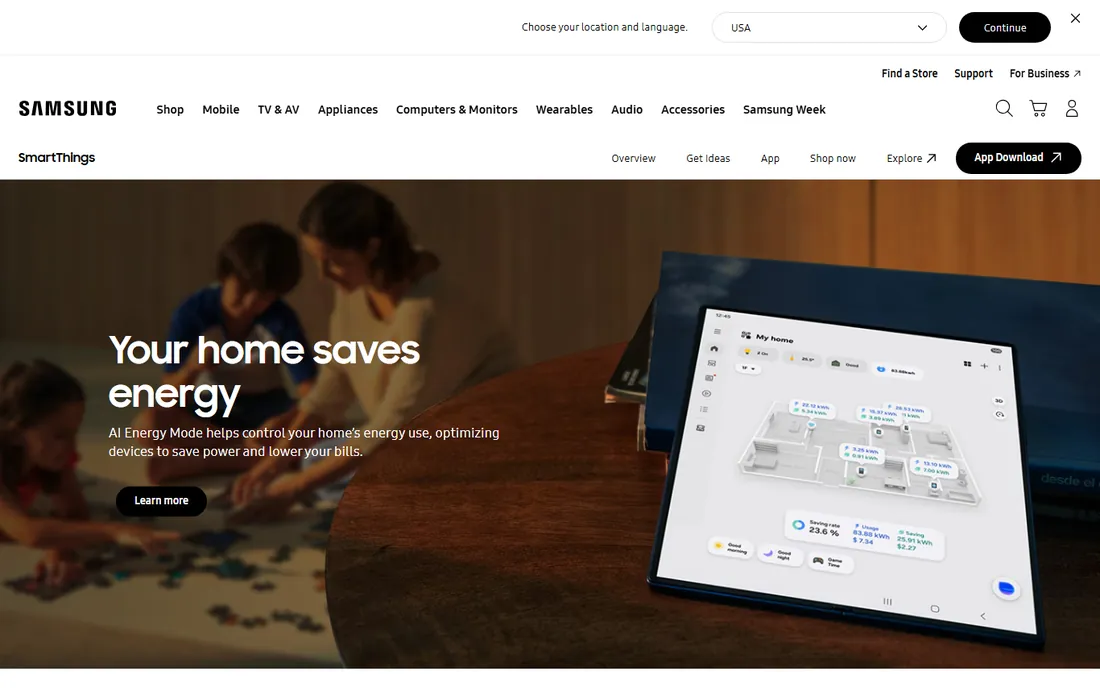
Samsung quietly built the largest smart home platform in the world, and most owners never think about it until their TV asks to be a hub. SmartThings now counts over 470 million registered users and supports more than 430 Works With SmartThings brands, covering Zigbee, Z-Wave, Wi-Fi, Matter, and Thread. Recent Samsung TVs include a built-in SmartThings hub, which means many households already own the hardware.
The 2026 app redesign added Matter 1.6 support, a refreshed interface with resizable device cards, and SmartThings Now, a section that surfaces energy insights and automation suggestions. Routines cover everyday needs like arrival lighting and energy-saving modes, though complex conditional logic still trails Home Assistant or Hubitat. The honest trade-off is cloud dependence: device pairing, many routines, and third-party access route through Samsung servers, and developers recently saw API access move to paid tiers. For a family or small office with Samsung appliances, it is the path of least resistance.
What we like- 470M registered users and 430+ partner brands
- Built-in hub in newer Samsung TVs
- Matter 1.6 support
Watch out for- Cloud-dependent for many features
- Samsung account required
Starting priceFree
Free planYes
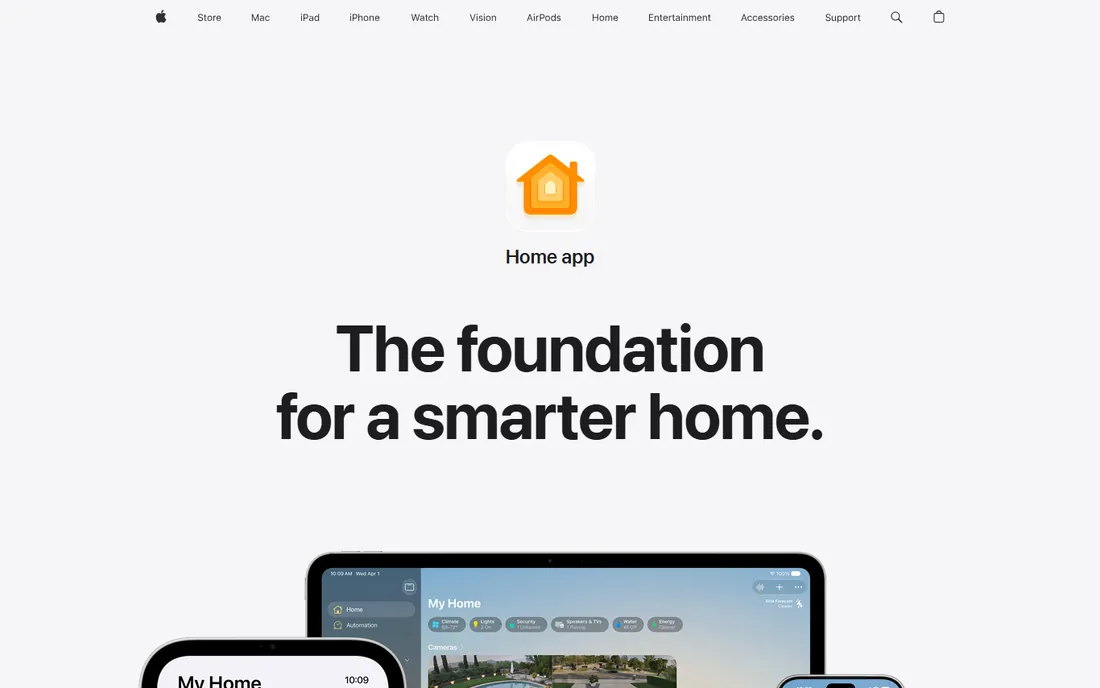
Privacy is the headline here, and Apple can say it with a straight face. Home app data is stored so that Apple itself cannot read it, communication with accessories is encrypted end to end, and HomeKit Secure Video processes camera footage on your home hub rather than in the cloud. Automations trigger on time of day, location, or sensor data, and scenes control multiple accessories at once.
The catch is the admission ticket. Remote access, automations, and camera recording require a home hub, meaning a HomePod, HomePod mini, or Apple TV 4K left at home. The device catalog is smaller than Alexa or SmartThings, though Matter support keeps widening it, and Apple has teased its own Apple Home Collection accessories. If everyone in the house carries an iPhone, the experience is the smoothest of any platform on this list. If they do not, look elsewhere.
What we like- End-to-end encryption and strong privacy
- Siri voice control
- Matter support
Watch out for- Needs an Apple home hub for remote access and automations
- Smaller device selection
Starting priceFree
Free planYes
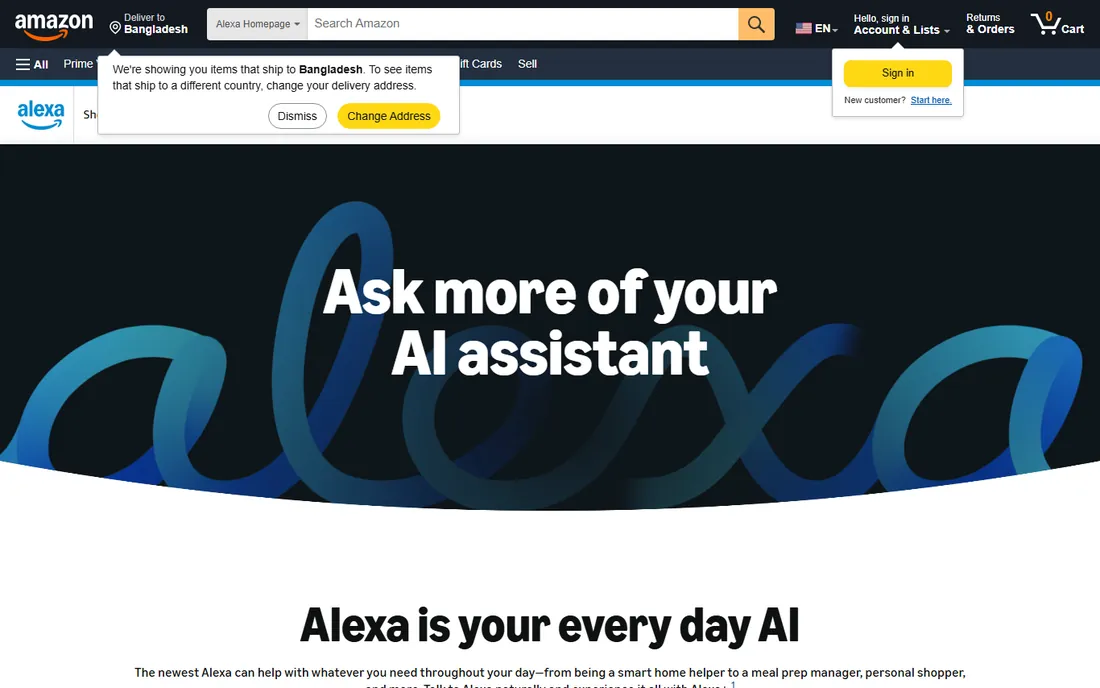
Nobody matches Alexa for sheer device compatibility. Thousands of products carry Alexa support, Echo speakers start cheap and go on sale constantly, and routines let you chain triggers and actions without touching code. For a small business that wants voice control in a waiting room or a landlord outfitting rentals, the hardware economics are unbeatable.
The compromises are real and worth naming. Alexa is a cloud platform, so an internet outage leaves you talking to a hockey puck. Amazon's business model means your voice data feeds its advertising machine, and the platform has grown pushier about shopping suggestions and subscription upsells. The 2026 Echo Hub gives the platform a proper wall-mounted dashboard, which helps for households that want a visible control panel. Buy it for breadth and price, not for privacy.
What we like- Widest third-party device support
- Routines are easy to build
- Cheap Echo hardware
Watch out for- Cloud-dependent
- Privacy trade-offs
- Shopping features can feel pushy
Starting priceFree
Free planYes
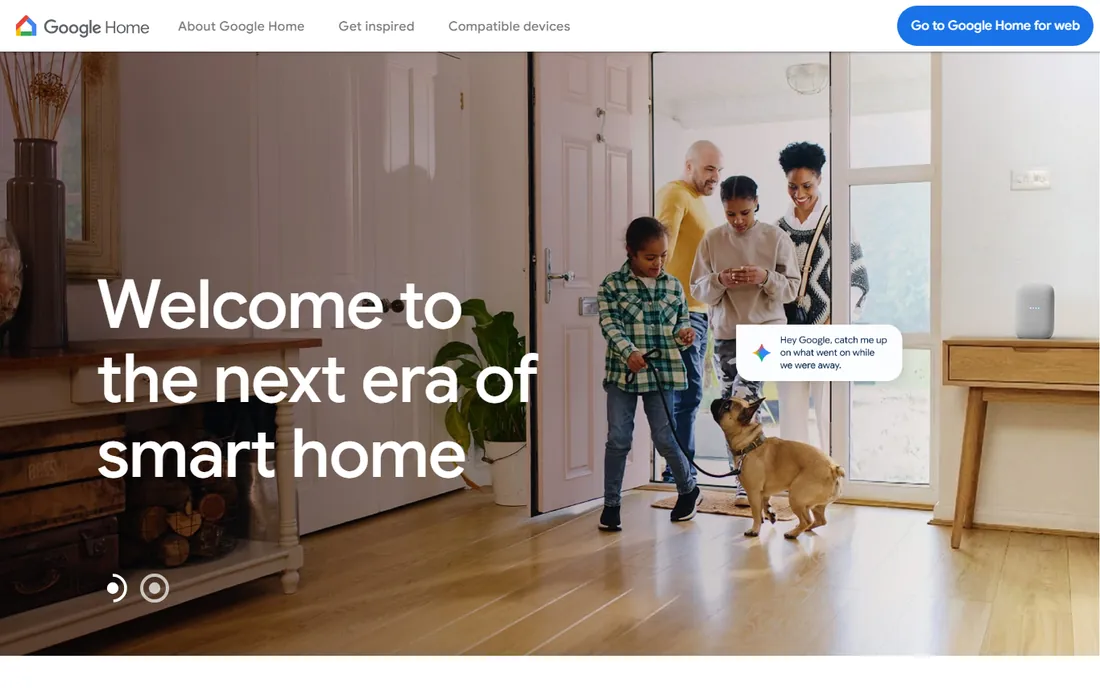
Google rebuilt its smart home pitch around Gemini in 2026, and the difference shows in conversation. Asking for things in natural language works better than on any rival, and routines handle the basics well across thousands of Matter-compatible devices. For Android-first households, the integration with phones, Nest cameras, and Chromecast devices feels native in a way third-party apps cannot match.
The platform's weakness is automation depth. Multi-condition routines and advanced scripting remain thinner than what SmartThings or Home Assistant offer. Google also introduced Google Home Premium, a paid tier that gates the most advanced Gemini features, which means the free platform is slowly becoming a funnel. It remains the best pick for voice-first Android homes that value simplicity over elaborate automation.
What we like- Natural voice control
- Gemini-powered assistance
- Broad Matter support
Watch out for- Automation depth lags rivals
- Advanced features moving to paid tier
Starting priceSee website
Free planNo
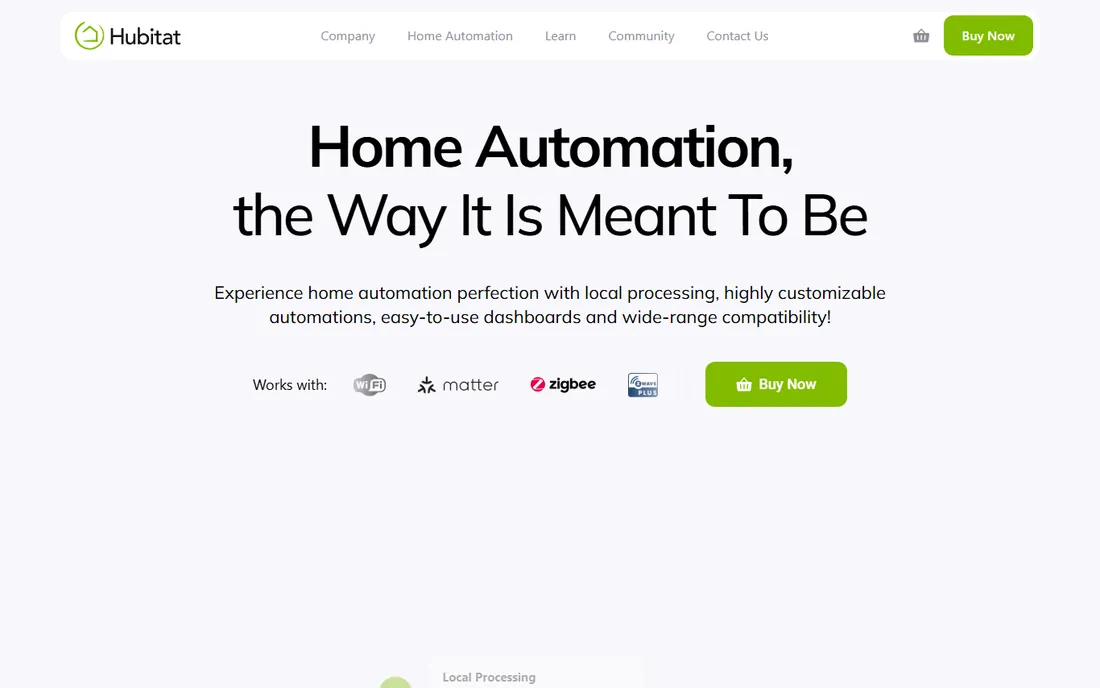
Hubitat occupies the middle ground between Home Assistant's open-source sprawl and SmartThings' cloud convenience. The Elevation hub, currently the C-8 Pro, processes every automation on the device itself, which means lights respond instantly and keep working during internet outages. There are no subscriptions: every feature is available from setup, and the company has shipped continuous free updates since 2018.
Protocol support is current, with Matter 1.5, Z-Wave 800 Series with Long Range, Zigbee 3.0, and Bluetooth, plus compatibility with more than a thousand devices from over a hundred brands. The Rule Machine automation engine handles genuinely complex logic, but expect to spend evenings learning it, and the community, while helpful, is a fraction of Home Assistant's. For buyers who want local control in a polished box without building a server, Hubitat is the sweet spot.
What we like- Everything runs locally, no cloud delays
- No subscription fees
- Matter 1.5, Z-Wave 800 LR, Zigbee 3.0
Watch out for- Rule Machine has a learning curve
- Smaller community than Home Assistant
Starting price$399 one-time (Homey Pro)
Free planNo
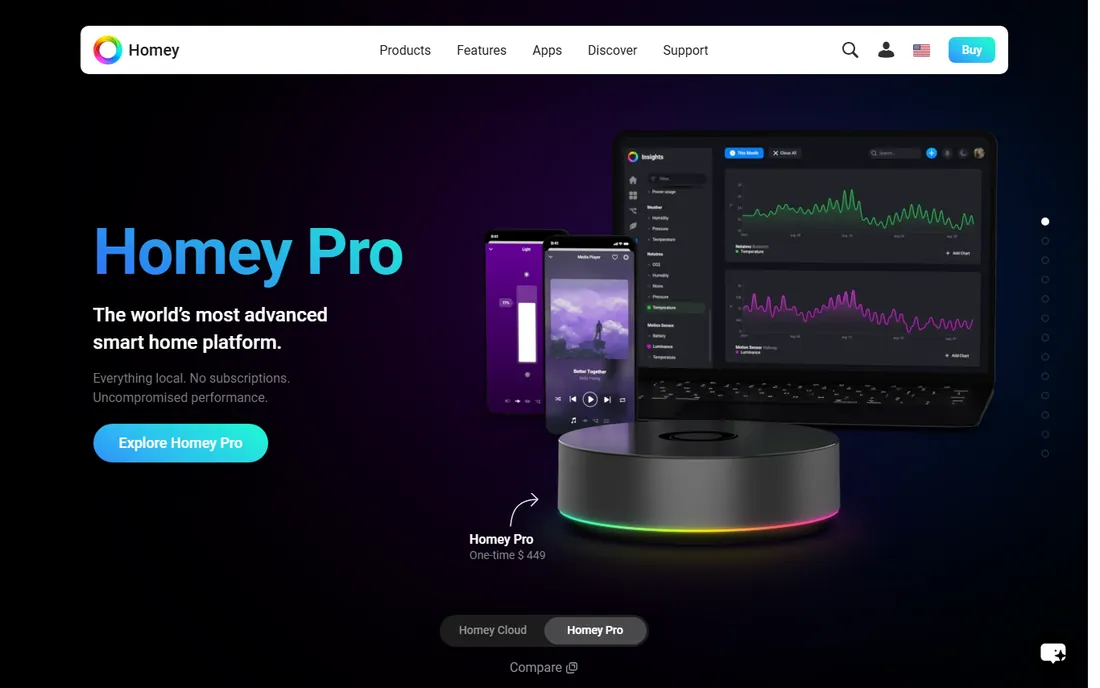
The Dutch-made Homey Pro is the most elegant hub on this list. One spherical device speaks Wi-Fi, Zigbee, Z-Wave, Matter, Thread, Bluetooth, infrared, and 433 MHz, so it can absorb gadgets bought years apart from different brands, including old IR remotes and 433 MHz sockets that other platforms ignore. The Flow editor makes automation visual and approachable, with Advanced Flow and HomeyScript available when simple triggers are not enough.
The 2026 model doubled RAM to 4 GB while holding the $399 price, and Athom promises software updates through at least 2031, a meaningful commitment in a category where platforms get abandoned. That longevity is part of the value proposition: SmartThings already discontinued one hub generation and started charging developers for API access. Homey costs real money up front and charges no subscription after. For design-conscious buyers who want one hub to rule a mixed collection of devices, it is worth the premium.
What we like- Eight wireless technologies in one hub
- Polished Flow editor
- Software updates promised through 2031
Watch out for- Premium price
- Advanced users may outgrow it
Starting priceFree (app); hubs from $20
Free planYes
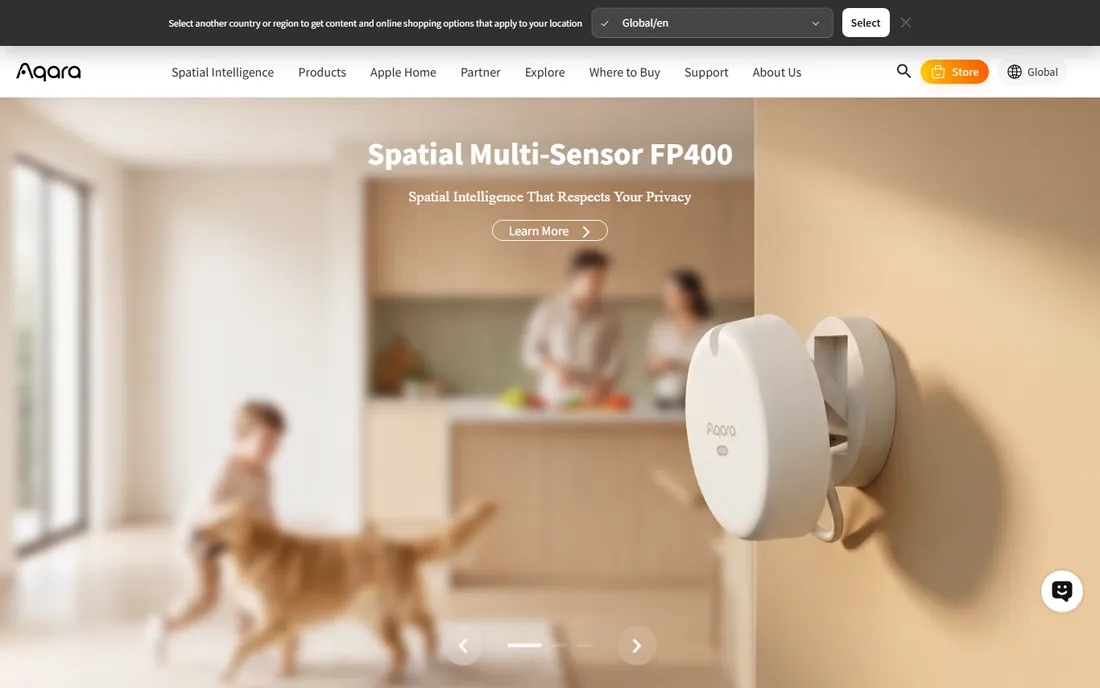
Aqara wins on the math. Its sensors, switches, and cameras cost a fraction of big-brand equivalents, and the entry-level Smart Hub M100 sells for around $20, with the flagship Hub M3 and newer Thermostat Hub W200 covering larger setups. Everything speaks Matter, so Aqara devices drop into Apple Home, Alexa, Google Home, SmartThings, Home Assistant, and Homey without drama.
The Aqara Home app itself is free and handles scenes and automations well, though the deepest features open up with an Aqara hub in the mix. Build quality punches above the price, and the mmWave presence sensors in newer hubs enable genuinely useful automations like lights that follow people between rooms. The honest limitation: Aqara is a device company first, so its platform exists to serve its hardware. Use it as the affordable device layer inside a bigger platform, or go all-in if the catalog covers your needs.
What we like- Low-cost sensors and hubs
- Works with Apple Home, Alexa, Google, SmartThings
- Strong Matter support
Watch out for- Best experience stays inside the Aqara ecosystem
- Advanced automations need a hub
#9
Vivint
Best for: Professionally installed security-first homes
Visit vivint.com
Starting price$29.99/month monitoring
Free planNo
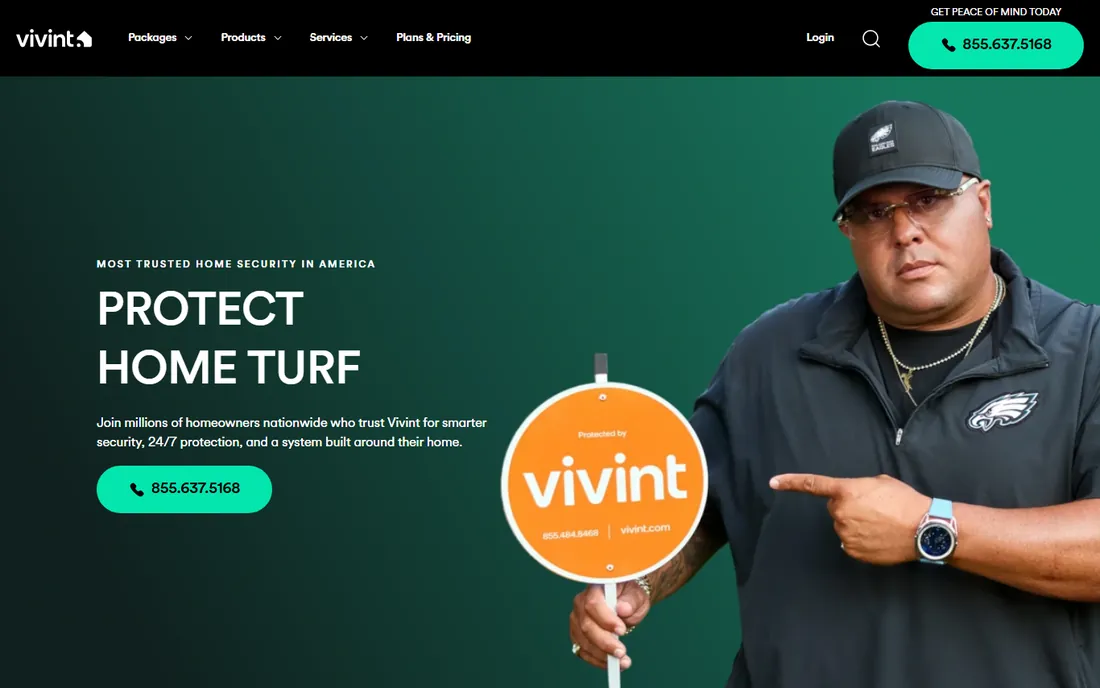
Vivint plays a different game from everyone else on this list. Instead of selling you a hub and wishing you luck, it sends Smart Home Pros to install cameras, locks, thermostats, and sensors, then monitors the system around the clock with emergency dispatch. The current HomeProtect package runs $349.99 for equipment plus $199 installation, with monitoring from $29.99 a month, and equipment financing stretches up to 60 months at 0% APR for qualified buyers.
The automation layer is genuinely capable: custom routines tie lighting, climate, locks, and garage control together, and the Smart Deter system uses light and sound to discourage intruders before they become burglars. The trade-offs are cost and commitment. Contracts run long, equipment is Vivint-specific, and you cannot tinker the way Home Assistant users do. For homeowners and small businesses that want security handled by professionals rather than weekend projects, that is exactly the point.
What we like- Professional installation and 24/7 monitoring
- Integrated security plus automation
- Smart Deter technology
Watch out for- Long contracts and equipment costs
- Limited DIY flexibility
- Pricing requires a quote
How we chose
We did not install nine smart home systems in a test lab. Our shortlist came from 2026 platform comparisons, community discussions on Reddit, and review coverage from outlets like Android Authority, SamMobile, and TechRadar, cross-checked against each vendor's own documentation and pricing pages. We prioritized platforms with active development, real Matter or Thread support, and a clear answer to the local-versus-cloud question, because that is the decision that shapes everything else. Every price and plan detail above comes from the vendor's own site or current 2026 reporting; where pricing is quote-based or region-dependent, we say so instead of guessing.
What to check before you commit
Start with the protocols in your walls, not the app on your phone. If your devices are mostly Wi-Fi and Matter, any platform here will do. If you own Z-Wave locks or Zigbee sensors, you need a hub that speaks those radios, which narrows the field to Home Assistant, Hubitat, Homey, SmartThings, or Aqara. Buyers with a house full of one brand's gear should check whether that brand's app already covers their routines before adding another platform.
Then decide how much cloud you can tolerate. Local platforms like Home Assistant and Hubitat keep working when the internet dies and keep your data at home. Cloud platforms like Alexa, Google Home, and SmartThings offer smoother setup and better voice control at the cost of dependence on someone else's servers. There is no wrong answer, but there is a wrong surprise, so make the choice deliberately.
Finally, count the real cost over three years. Free apps are free, but hubs, sensors, and subscriptions add up. A $399 Homey Pro with no subscription can cost less than a "free" platform once you add a $30 monthly monitoring or premium tier. Write down every device you plan to buy, add any subscription, and compare the totals before you fall in love with an interface.
Do you even need a hub?
Maybe not. If you own fewer than five smart devices, they are all Matter-certified, and you only use one voice assistant, your Echo, Nest speaker, or Apple TV already handles the job. A dedicated hub earns its keep when you mix brands, want automations that run without the internet, or start adding sensors to every room. The platforms above split neatly: Alexa, Google Home, and Apple Home work fine hubless for simple setups, while Home Assistant, Hubitat, and Homey exist for homes that have outgrown simple. Start small, and only buy the hub when your automations start asking for it.
Frequently asked questions
Which home automation platform is best for beginners?
Samsung SmartThings or Amazon Alexa. Both are free, both work with hundreds of brands, and both let you build useful routines in an afternoon. SmartThings edges ahead if you own Samsung appliances or a recent Samsung TV with a built-in hub. Alexa wins if voice control matters most and you want the cheapest compatible hardware.
Do I need a hub for home automation in 2026?
Not necessarily. Matter lets many devices connect directly through your voice assistant's speaker or streaming box. You need a dedicated hub when you mix Zigbee or Z-Wave devices, want automations that survive internet outages, or run dozens of devices that benefit from local processing.
What is the difference between local and cloud home automation?
Local platforms process automations on hardware inside your home, so they respond faster, work offline, and keep your data private. Cloud platforms process automations on company servers, which enables better voice assistants and easier remote access but creates dependence on your internet connection and the vendor's business decisions.
Is Home Assistant really free?
The software is free and open source, with no subscription required for full functionality. You supply the hardware, such as a Raspberry Pi or a Home Assistant Green, and there is an optional $6.50 per month cloud subscription for easy remote access and voice integration. Many users never pay a cent beyond the hardware.
Which platform works with the most devices?
Amazon Alexa supports the widest range of third-party devices, followed by Samsung SmartThings with its 430-plus partner brands. Home Assistant arguably goes further through its 1,000-plus community integrations, but many require manual configuration. For out-of-the-box compatibility with mainstream products, Alexa and SmartThings lead.
Sources we checked (12)
- https://www.home-assistant.io/
- https://smartthings.com/
- https://www.apple.com/home-app/
- https://home.google.com/
- https://hubitat.com/
- https://homey.app/
- https://aqara.com/
- https://www.vivint.com/
- https://www.sammobile.com/news/new-smartthings-app-announced-matter-1-6-support/
- https://www.smarthomeexplorer.com/guides/best-smart-home-automation-hubs-2026
- https://dev.to/techpulselab/home-assistant-vs-smartthings-vs-hubitat-which-smart-home-hub-in-2026-5ajo
- https://www.androidauthority.com/homey-pro-2026-upgrade-3623984/
Is your product missing or out of date?
We review this list regularly. Vendors can request a listing, send updated pricing or ask about featured placement.

Shihab Mia · Founder, Rankite
Shihab has spent more than a decade helping SaaS and e-commerce brands grow through search. He writes Rankite's software buying guides from pricing pages, documentation and public user reviews. More about Shihab.