How we make this list: we compare pricing pages, product documentation and public user reviews. Ratings come from G2, Capterra or Trustpilot, with the date we checked them.
Direct answer
Salesforce Health Cloud is the top pick for large health systems that need care management, referral tracking, and EHR links in one CRM, starting at $350 per user per month. Small clinics that need a lower starting cost should look at Zoho CRM Standard at $14 per user per month instead.
Key takeaways
- Large health systems should start with Salesforce Health Cloud, listed at $350 per user per month for Sales and Service Core, billed annually.
- Small clinics on a tight budget should check Zoho CRM Standard at $14 per user per month, billed annually, with a free plan for 3 users.
- Healthcare marketing teams should check HubSpot Smart CRM, with a $0 per month free plan and Starter from $10 per month per seat.
- Independent practices that need booking, reminders, and payments tied to their record system should check NexHealth, priced See website.
- Practices that need phones, texting, and recall in one front desk tool should check Weave, from $199 per month for the base bundle.
Quick comparison
| Tool | Best for | Starting price | Free plan |
|---|
 Salesforce Health Cloud | Large health systems and payers | $350 USD/User/Month (Billed annually) for Health Cloud Sales & Service Core | None found on vendor page |
 Zoho CRM | Small clinics on a budget | $14 per user per month, billed annually, for Standard | Free forever for 3 users |
 HubSpot Smart CRM | Healthcare marketing and sales teams | Starts at $10/month per seat for Starter | Free plan at $0/month |
 Microsoft Dynamics 365 Customer Service | Teams already using Microsoft tools | USD$50.00 user/month, paid yearly, for Professional | Free trial stated on vendor page |
 LeadSquared | High volume patient intake teams | $60 user/mo Billed Annually for Sales Pro | None found on vendor page |
 NexHealth | Dental and medical practices | See website | None found on vendor page |
 Luma Health | Health systems that need access automation | See website | None found on vendor page |
 Solutionreach | Practices that need reminders and recall | Pricing starts at $199 | None found on vendor page |
 Tebra | Independent practices that want growth tools | Starting at $49 per provider per month for Patient Experience + Marketing, Non-physician | None found on vendor page |
 Weave | Front desk phones and patient texting | Starting at $199/mo for the base bundle | No free trial for the full platform |
Is your product missing or out of date?
We review this list regularly. Vendors can request a listing, send updated pricing or ask about featured placement.
The best healthcare CRM software
Healthcare CRM software helps teams track patient inquiries, referrals, appointments, follow up messages, and service requests without losing work in spreadsheets or inboxes. The right choice depends on where patient data will live, which record system must connect, and how much setup work the team can handle. This list mixes enterprise platforms, lower cost CRM tools with healthcare pages, and patient engagement tools built for practices. Prices come from vendor pages checked on 2026-11-29, and hidden prices are marked See website.
Starting price$350 USD/User/Month (Billed annually) for Health Cloud Sales & Service Core
Free planNone found on vendor page
Salesforce Health Cloud is a healthcare CRM for providers, payers, and care teams that need one view of patients, members, referrals, and care plans. The vendor pricing page lists Clinical and Insurance Data Models, Health Timeline, Patient and Member Card, Care Gaps, Referral Management, and Care Plan Customization and Management. It also lists EHR Integration and an HL7-Compliant Interface. That makes it a fit for organizations that run patient access, care management, and provider network work at scale. Teams can track referrals, care gaps, and service cases in shared records instead of separate tools.
The catch is cost and setup scope. Core is $350 per user per month billed annually, Advanced is $525, and the Max editions reach $700 and $725. Core lists 20MB per user for data storage, while higher editions list 1GB. Pick Health Cloud if you have budget and staff for a large rollout. Look elsewhere if you run a small practice.
What we like- Clinical and insurance data models listed
- Referral Management and Care Gaps listed
- EHR Integration listed
Watch out for- Core lists 20MB per user storage
- Several items are Available for purchase
Starting price$14 per user per month, billed annually, for Standard
Free planFree forever for 3 users
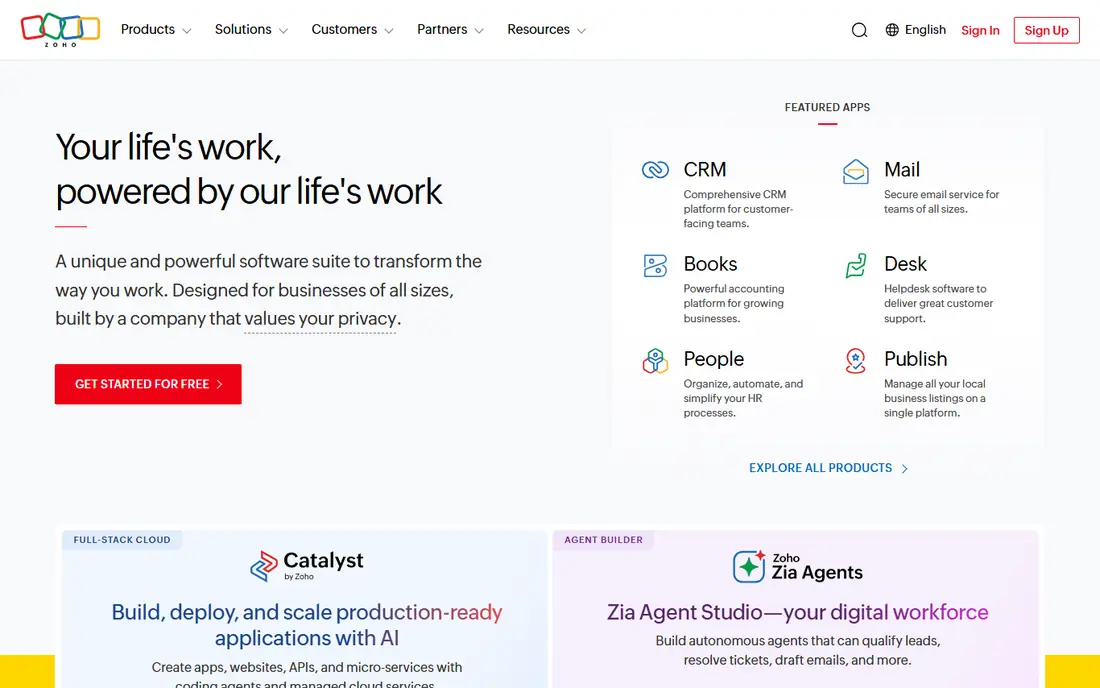
Zoho CRM is a general CRM that Zoho also presents for healthcare use, with pages that describe patient relationship management, referral pipelines, and health campaigns for clinics and hospitals. The vendor page states that Standard includes forecasting, multiple pipelines, custom modules, and email integration. For a clinic, those tools can support inquiry capture, referral stages, follow up tasks, and treatment interest tracking. The free plan for 3 users lets a small team test contact records before paying. Teams can also build custom modules for service lines, locations, and referral partners as volume grows.
The catch is that Zoho CRM is not a patient engagement system on its own. Scheduling reminders, intake forms, and record write back depend on setup and other tools. The free plan also stops at 3 users, so a larger front desk needs a paid plan. Pick Zoho CRM if you need a low cost CRM for inquiries and referrals. Look elsewhere if you need built in patient texting and booking.
What we like- Free plan for 3 users stated
- Standard includes forecasting and multiple pipelines
- Healthcare pages describe referral pipeline use
Watch out for- Healthcare setup needs configuration
- Free plan limited to 3 users
Starting priceStarts at $10/month per seat for Starter
Free planFree plan at $0/month

HubSpot Smart CRM is a customer platform for marketing, sales, and service teams, and HubSpot publishes healthcare pages that describe CRM use for providers, patient lead capture, and campaign work. The vendor page lists contact, company, and deal management on the free plan, plus pipeline tools and data sync. Starter adds removal of HubSpot branding, user permissions, and automatic data enrichment. For healthcare marketing teams, that supports referral source tracking, service line campaigns, and sales work with provider partners. Teams can also track forms, meetings, and follow up tasks in one shared pipeline view.
The catch is plan fit for patient data. Starter is $10 per month per seat, and the page marks it as a discount for new customers for a limited time, with $20 shown as the crossed out price. Buyers who plan to store sensitive patient information must confirm plan and agreement terms first. Pick HubSpot if marketing work is the main job. Look elsewhere if you need a healthcare data model built in.
What we like- Free plan at $0 per month listed
- Healthcare pages describe patient lead work
- Starter lists user permissions
Watch out for- Starter price is a limited time discount
- Sensitive data needs plan confirmation
#4
Microsoft Dynamics 365 Customer Service
Best for: Teams already using Microsoft tools
Visit microsoft.com
Starting priceUSD$50.00 user/month, paid yearly, for Professional
Free planFree trial stated on vendor page
Microsoft Dynamics 365 Customer Service is a service CRM for teams that handle patient service requests, access questions, billing questions, and follow up cases. The vendor pricing page lists case management, knowledge management, Microsoft 365 interoperation, Power BI, and lead creation on Professional. Enterprise adds Teams integration, Copilot, unified routing, analytics, portals, Power Apps, and Power Automate. For health systems that already use Microsoft 365 and Teams, that can help contact center teams share case history and route work. It fits service teams that need case queues, knowledge articles, and reporting in Microsoft tools.
The catch is that Professional is a narrow starting point. The table does not list Teams integration, Copilot, unified routing, portals, or workflow automation for Professional, so many teams will need Enterprise at USD$105.00 per user per month paid yearly. Microsoft also states prices are for information only. Pick Dynamics 365 if Microsoft tools are already standard. Look elsewhere if you need scheduling and intake tools built for practices.
What we like- Case and knowledge management included
- Microsoft 365 interoperation included
- Enterprise adds Teams and unified routing
Watch out for- Professional lacks Teams and unified routing
- Prices are informational only
Starting price$60 user/mo Billed Annually for Sales Pro
Free planNone found on vendor page
LeadSquared is a sales CRM that lists healthtech among its vertical solutions and publishes healthcare pages for patient acquisition and engagement. The pricing page lists lead scoring, duplication blocking, lead distribution, bulk lead import, lead merge, account management, and opportunity management. For clinics and hospital groups, those tools can support inquiry capture from ads, web forms, call centers, and referral partners, then route each inquiry to a counselor or location. Sales Pro lists unlimited contacts and 50,000 email inclusions. Mobile CRM tools also help field teams and counselors update leads, activities, and tasks away from a desk.
The catch is that LeadSquared is built for lead and sales work first. It is not an EHR, and it does not replace scheduling, clinical intake, or patient messaging tied to the record. Sales Pro lists 3 webhooks, while Sales Super lists 30, and several items are optional add ons. Pick LeadSquared if inquiry volume and routing are your main problems. Look elsewhere if you need care management or patient portals.
What we like- Lead scoring and distribution listed
- Healthtech listed as vertical
- Sales Pro lists unlimited contacts
Watch out for- Sales Pro lists 3 webhooks
- Several items are optional add ons
Starting priceSee website
Free planNone found on vendor page
NexHealth is patient experience and front office software for dental and medical practices. The vendor homepage describes online scheduling, digital forms, patient communications, payments, insurance verification, and practice analytics synced to the practice management system or EHR. It also describes booking through Google Maps, practice websites, and social channels, plus recalls and an ASAP list to refill the calendar. Forms, appointments, and balances write back to the practice system, which helps front desk teams cut retyping and phone work. Practices can start with one product and add more tools as locations and services grow.
The catch is that NexHealth does not publish a starting price on the homepage checked for this guide, so the listed price is See website. Buyers must request pricing and confirm which products, locations, and record systems are included. It fits practice front office work, not hospital care management. Pick NexHealth if booking, forms, reminders, and payments are the main need. Look elsewhere if you need a full sales CRM.
What we like- Scheduling, forms, and payments described
- Write back to practice system stated
- Google Maps booking described
Watch out for- No public starting price found
- Built for practices, not payers
Starting priceSee website
Free planNone found on vendor page
Luma Health is a healthcare operations and patient engagement platform for organizations that need to improve access, scheduling, referrals, intake, and follow up work. The vendor platform page describes patient acquisition, scheduling, communications, referrals, intake, payments, and care coordination in one system. It states that Luma integrates two ways with Epic, Oracle Health, eClinicalWorks, MEDITECH, and athenahealth. Luma also describes patient memory across calls, texts, and chats, plus rules for appointment types, workflows, and exceptions. That helps access teams fill open slots, follow up referrals, and reduce manual phone work across sites.
The catch is that Luma does not publish a starting price on the platform page checked for this guide, so the listed price is See website. Buyers need a demo and a quote tied to EHR, locations, and workflow scope. The platform is built for organizations with EHR based access work, so a solo practice may find it larger than needed. Pick Luma if referrals and waitlists are the main problem. Look elsewhere for a simple low cost CRM.
What we like- Scheduling, referrals, and intake described
- Two way EHR integration listed
- Waitlist tools described
Watch out for- No public starting price found
- Built for EHR based organizations
Starting pricePricing starts at $199
Free planNone found on vendor page
Solutionreach is patient engagement software for practices that need reminders, texting, recall, check in, payments, and review invitations. The vendor pricing page lists two way texting, appointment reminders, patient check in, payment technology, review invitations, team chat, and a mobile app. The package chart also lists newsletters, patient surveys, recall, digital intake, online scheduling, batch messaging, secure documents, location management, and a data hub. For practices, Solutionreach works as a patient relationship tool that keeps schedules full. It fits dental, eye care, and medical practices that send high volumes of reminders and recall messages each month.
The catch is that the main pricing page states Pricing starts at $199, then sends Patient Connect, Practice Efficiency, and Practice Growth to Request a Quote. Buyers must confirm the exact monthly price, message limits, add ons, and contract terms in writing. The page also states yearly contract options. Pick Solutionreach if reminders, recall, and texting are the core need. Look elsewhere if you need a full CRM for sales teams.
What we like- Texting, reminders, and check in listed
- Digital intake and recall listed
- Yearly contracts stated
Watch out for- Packages are Request a Quote
- Enterprise targets 6 or more locations
#9
Tebra
Best for: Independent practices that want growth tools
Visit tebra.com
Starting priceStarting at $49 per provider per month for Patient Experience + Marketing, Non-physician
Free planNone found on vendor page
Tebra is practice software for independent practices, formed from Kareo and PatientPop, with EHR, billing, telehealth, patient experience, and marketing tools. For healthcare CRM use, the patient experience side supports patient acquisition and retention through online scheduling, reminders, digital intake forms, secure messaging, patient portal access, reviews, websites, and directory listings. The vendor pricing overview lists Patient Experience and Marketing from $49 per provider per month for Non-physician practices and from $99 for Physician practices. Bundles add EHR, billing, and telehealth for practices that want one system for daily work.
The catch is that the low starting price has narrow terms. Starter pricing applies to practices submitting fewer than 100 claims per month, and EHR Starter requires Billing Starter. Practice Essentials for Physician standard volume is $599 per month, and Practice Automation is $799 per month, per provider. Pick Tebra if you want patient growth tools with an EHR path. Look elsewhere if you need an enterprise CRM.
What we like- Scheduling, reminders, and intake listed
- Per provider pricing stated
- Kareo and PatientPop formed Tebra
Watch out for- $49 price is Non-physician only
- Starter needs fewer than 100 claims
Starting priceStarting at $199/mo for the base bundle
Free planNo free trial for the full platform
Weave is a patient engagement platform built around practice phones, texting, payments, scheduling, reminders, forms, and reviews. The vendor plans page states pricing starts at $199 per month for the base bundle, with pre built bundles starting at $149. It describes the Coordinate bundle for bringing patients in on time and the Attract bundle for growing the practice and bringing in new patients. For front desk teams, Weave can support missed call follow up, two way texting, reminders, forms, recall, and review requests. It fits practices that want phones and patient messages in one inbox for daily work.
The catch is that the base price is only the starting point. A practice that needs scheduling, forms, reminders, reviews, and email marketing will likely add bundles at $149 each, so the monthly total rises above $199. Weave also states it does not offer a free trial for the full platform. Pick Weave if phones and texting are the center of front desk work. Look elsewhere if you need complex referral and care management.
What we like- Base from $199, bundles from $149
- Coordinate and Attract bundles described
- No long term contract required
Watch out for- No free trial for full platform
- Key tools sit in add on bundles
Buy a healthcare CRM if your main work is tracking inquiries, referrals, care gaps, and service cases across teams. Buy a patient engagement tool if your main work is booking, reminders, forms, payments, and recall. The price units show the split. Zoho Standard is $14 per user per month, HubSpot Starter starts at $10 per month per seat, LeadSquared Sales Pro is $60 per user per month, and Salesforce Core is $350 per user per month. For a 10 user team, that range runs from $100 to $3,500 per month before add ons. Practice tools price in other ways. Weave starts at $199 per month, Solutionreach states pricing starts at $199, and Tebra starts at $49 per provider per month for one solution. List your users, providers, locations, and message volume first, then compare totals on the same unit. Many buyers need both types of tool, with the CRM for pipelines and the engagement tool for patient contact.
Which healthcare CRM is best for a small clinic?
Zoho CRM is the lowest cost paid CRM here at $14 per user per month, with a free plan for 3 users. A small clinic can track inquiries, referral sources, and follow up tasks. HubSpot offers a free plan at $0 per month and Starter from $10 per month per seat. If reminders, booking, and forms matter most, check NexHealth, Solutionreach, or Weave.
Which healthcare CRM works best for referral management?
Salesforce Health Cloud and Luma Health fit referral work best here. Salesforce lists Referral Management, Care Gaps, and EHR Integration. Luma describes referral outreach and EHR write back across Epic, Oracle Health, eClinicalWorks, MEDITECH, and athenahealth. LeadSquared helps when referrals arrive as high volume inquiries that need scoring and routing.
How much should a practice budget for healthcare CRM software?
Budget by unit, not headline price. Ten users on Zoho Standard at $14 cost $140 per month. Ten users on Salesforce Core at $350 cost $3,500 per month. Weave starts at $199 per month, Solutionreach starts at $199, and Tebra starts at $49 per provider per month. Add setup, integrations, and bundles before you set a budget.
What should you check about HIPAA and patient data before you buy?
Check the agreement, plan, and data fields before you store patient information in any CRM. Ask which plan supports the agreement you need and which data must stay in the EHR. Plan terms differ by product and edition. For patient engagement tools, confirm record sync, message storage, and user access rules in writing.
Frequently asked questions
What is the best healthcare CRM software for a large health system?
Salesforce Health Cloud is the best fit for a large health system in this list because it lists clinical and insurance data models, referral management, care gaps, and EHR integration. Core starts at $350 per user per month billed annually. Luma Health is a strong access and referral option when scheduling and intake automation across EHR sites is the main need.
What is the cheapest healthcare CRM software with a free plan?
Zoho CRM and HubSpot Smart CRM are the cheapest starting points in this list. Zoho states a free plan for 3 users and Standard at $14 per user per month billed annually. HubSpot lists a free plan at $0 per month and Starter from $10 per month per seat, marked as a limited time discount for new customers.
Is NexHealth a CRM or a patient engagement tool?
NexHealth is a patient engagement and front office tool, not a full sales CRM. The vendor homepage describes online scheduling, digital forms, patient communications, payments, and insurance verification synced to the practice management system or EHR. Practices use it to manage booking, reminders, forms, payments, and recall. Teams that need referral partner pipelines should also look at Salesforce, Zoho, HubSpot, or LeadSquared.
How much does Salesforce Health Cloud cost per user?
Salesforce lists Health Cloud Sales and Service Core at $350 per user per month billed annually. Advanced is $525 per user per month, Service Max and Sales Max are $700 per user per month, and Sales and Service Max is $725 per user per month. Salesforce states the pricing page is for information only and subject to change, so buyers should confirm final terms.
Can a small practice use HubSpot for patient leads?
Yes, a small practice can use HubSpot to track patient leads, referral sources, campaigns, and follow up tasks. HubSpot lists a free plan at $0 per month and Starter from $10 per month per seat. Before storing sensitive patient information, the practice must confirm the right plan, sensitive data settings, and agreement terms with HubSpot. Many practices keep clinical details in the EHR.
What to look for before you buy
First, decide where patient data will live and which system stays as the record. Second, confirm the price unit in writing and add bundles and message limits to the total. Third, check EHR and practice system links by name, including what data writes back. Fourth, confirm agreement terms, user permissions, and which fields staff may store. Fifth, run a short pilot with one location, measure response time and referral completion, then expand only if the numbers support the cost.
How we chose
We built a candidate list of real CRM and patient engagement products used by healthcare organizations, then checked vendor homepages and pricing pages on 2026-11-29. We kept 10 tools with a stated healthcare use case for patient relationships, referrals, patient acquisition, service work, or practice growth. Prices come only from vendor pages, and hidden prices are marked See website. We did not claim hands on testing. Strengths and limits point to vendor page facts and stated terms.
Sources we checked (12)
- https://www.salesforce.com/healthcare/cloud/pricing/?bc=OTH
- https://www.zoho.com/crm/og-small-business-crm.html
- https://www.zoho.com/healthcare/resource/guides/best-healthcare-crm-software-2026.html?src=dd
- https://www.hubspot.com/crm/pricing-cr160
- https://www.hubspot.com/crm-for-healthcare
- https://www.microsoft.com/en-za/dynamics-365/products/customer-service/pricing
- https://www.leadsquared.com/sales-crm-pricing/?utm_source=tolkaro&utm_medium=referral&utm_campaign=business-directory&utm_content=crm-software-card&ref=tolkaro
- https://www.nexhealth.com/
- https://www.lumahealth.io/platform
- https://www.solutionreach.com/pricing
- https://www.tebra.com/pricing/overview
- https://www.getweave.com/plans/
Is your product missing or out of date?
We review this list regularly. Vendors can request a listing, send updated pricing or ask about featured placement.

Shihab Mia · Founder, Rankite
Shihab has 5+ years in B2B and SaaS SEO. He writes Rankite's software buying guides from pricing pages, documentation and public user reviews. More about Shihab.