How we make this list: we compare pricing pages, product documentation and public user reviews. Rankite is independent; if a vendor ever pays for a featured spot, that listing is clearly labeled Partner.
Key takeaways
- The best-known CRM in the world starts at $25 per user per month (Salesforce Starter Suite, per Salesforce's own pricing page). Every other tool below costs less, and several cost nothing.
- HubSpot, Zoho CRM, Freshsales, Bigin and Streak all offer genuinely free tiers; Salesforce, Pipedrive, Insightly, Copper and Keap do not.
- Bigin's Express plan at $7 per user per month is the cheapest paid entry for a small sales team.
- Keap at $129 per month is the priciest here, but it bundles marketing automation that the others sell separately.
Quick comparison
| Tool | Best for | Starting price | Free plan |
|---|
 Salesforce Salesforce | Growing businesses that want the deepest CRM ecosystem and plan to scale | $25 per user per month (Starter Suite) | No (free trial available) |
 HubSpot HubSpot | Teams that want a genuinely free CRM with a clear upgrade path | $15 per seat per month (Starter, billed annually) | Yes (free CRM with contacts, deals and tickets) |
 Zoho CRM Zoho CRM | Budget-conscious teams that want full CRM depth without enterprise prices | $14 per user per month (Standard, billed annually) | Yes (up to 3 users) |
 Pipedrive Pipedrive | Sales teams that live in their pipeline and want zero clutter | $14 per seat per month (Lite, billed annually) | No (14-day free trial) |
 Freshsales Freshsales | Small teams that want sales CRM with built-in phone, email and chat | $9 per user per month (Growth, billed annually; $11 month-to-month) | Yes (up to 3 users) |
 Insightly Insightly | Teams that sell projects and want CRM plus delivery management together | $29 per user per month (Plus, billed annually) | No (14-day free trial) |
 Copper Copper | Businesses that run entirely on Google Workspace | $29 per month Basic ($23 billed annually); Professional $69 ($59); Business $134 ($99) | No (14-day free trial) |
 Keap Keap | Small businesses that want CRM plus marketing automation in one subscription | $129 per month (Pro, billed annually; 2 users and 1,500 contacts included) | No (14-day free trial) |
 Bigin Bigin | Very small teams and solo operators wanting a simple pipeline CRM | $7 per user per month (Express, billed annually) | Yes (Free Forever: 1 user, 500 records) |
 Streak Streak | Teams that refuse to leave Gmail and want CRM inside the inbox | $49 per user per month (Pro, billed annually; $59 month-to-month) | Yes (limited free plan) |
Is your product missing or out of date?
We review this list regularly. Vendors can request a listing, send updated pricing or ask about featured placement.
The best cloud CRM software
A cloud CRM is the shared memory of your sales operation: every lead, every conversation, every follow-up in one place your whole team can see. The ten below span the full market, from free tools a freelancer can run to the platform that anchors enterprise sales orgs. Prices are per user per month unless noted, taken from each vendor's current pricing page.
#1
Salesforce
Best for: Growing businesses that want the deepest CRM ecosystem and plan to scale
Visit salesforce.com
Starting price$25 per user per month (Starter Suite)
Free planNo (free trial available)
Salesforce is the category definer, and the Starter Suite at $25 per user per month is its answer to small businesses that assumed Salesforce was out of reach. You get contact and pipeline management plus basic service and marketing tools in one bundle, with the full AppExchange marketplace behind it. For a team that expects to grow into advanced automation, forecasting and custom objects, starting here avoids a painful migration later.
The honest catch is that Salesforce rewards commitment and punishes dabbling. Configuration takes real effort, and the ecosystem that makes it powerful also makes it easy to overspend on editions and add-ons. If your needs are simple pipeline tracking, the cheaper tools below will make your team happier. If you plan to build a real revenue operation, this is the foundation most of the industry builds on.
What we like- The largest app ecosystem and integration library in CRM
- Starter Suite bundles sales, service and marketing basics for small teams
- Scales from startup to enterprise without migrating
Watch out for- No free plan and the entry price is the highest here
- Complexity grows fast once you customize
- Add-ons and higher editions multiply the bill
#2
HubSpot
Best for: Teams that want a genuinely free CRM with a clear upgrade path
Visit hubspot.com
Starting price$15 per seat per month (Starter, billed annually)
Free planYes (free CRM with contacts, deals and tickets)
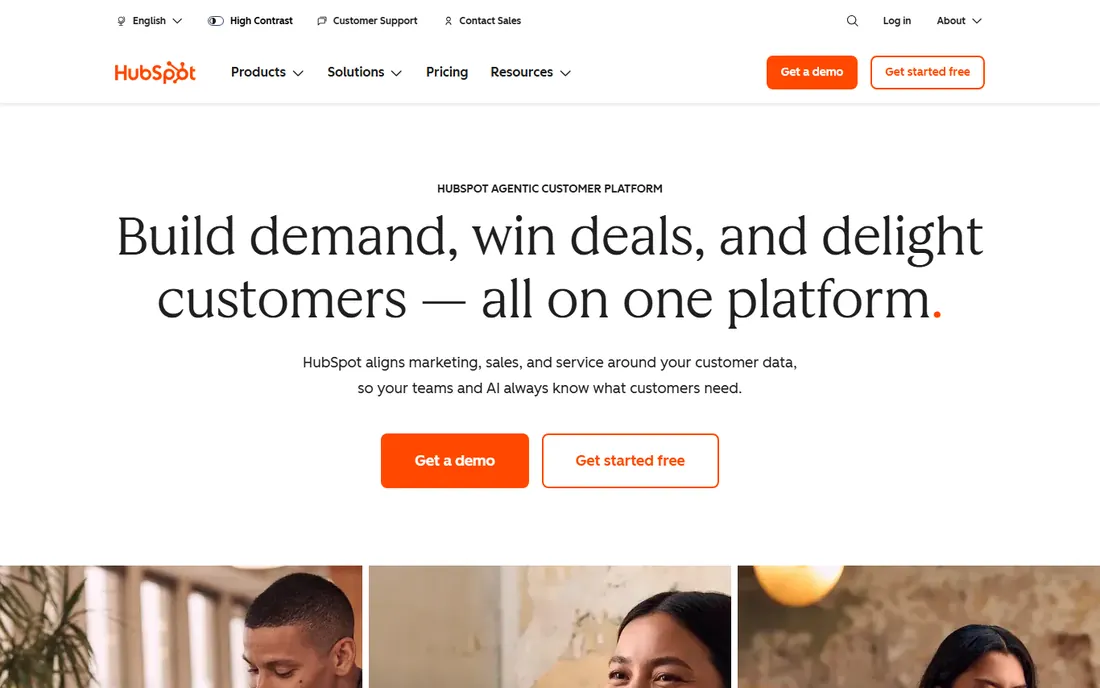
HubSpot's free CRM is the reason many small businesses never pay for a CRM at all. It includes contact management, deal pipelines, ticket tracking and basic email integration with no expiration date. When you outgrow it, the Starter plan from $15 per seat per month on annual billing adds the automation and reporting most teams need next, and everything lives on the same contact record as the marketing and service tools.
Watch the hub math. HubSpot prices each hub separately, so a team using Marketing, Sales and Service seats can see the bill climb faster than expected. Used discipline, though, it is the easiest CRM to adopt on this list: your team can be running on the free tier this afternoon.
What we like- The most generous free CRM on this list, with no time limit
- Marketing, sales and service hubs share one contact record
- The upgrade path from free to paid is smooth
Watch out for- Paid tiers escalate quickly once you need automation and reporting
- Per-seat pricing across multiple hubs adds up
- Some features that competitors include are paid add-ons
#3
Zoho CRM
Best for: Budget-conscious teams that want full CRM depth without enterprise prices
Visit zoho.com
Starting price$14 per user per month (Standard, billed annually)
Free planYes (up to 3 users)
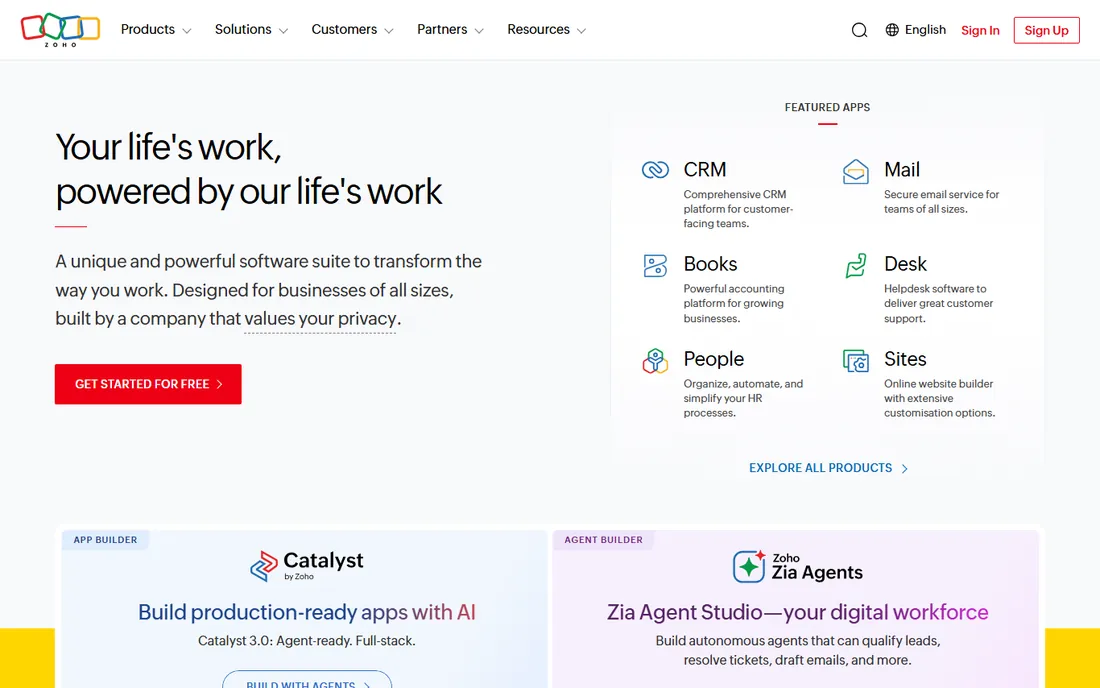
Zoho CRM is the value heavyweight: workflow automation, sales blueprints and forecasting that competitors reserve for premium tiers, starting at $14 per user per month on the Standard annual plan. The free plan for up to 3 users is genuinely usable, not a teaser. And if your business already uses Zoho Books, Zoho Mail or Zoho Desk, the native integrations are a real advantage.
The trade-off is polish. The interface packs in a lot and shows it, and figuring out which tier holds the feature you need takes a careful read of the pricing page. Teams that push past the learning curve get enterprise-grade CRM mechanics at a small-business price.
What we like- Deep feature set (automation, blueprints, forecasting) at mid-market prices
- The free plan covers up to 3 users
- Integrates with the huge Zoho suite of business apps
Watch out for- The interface feels dense and dated in places
- Advanced features are spread across four paid tiers
- Support quality varies by plan
#4
Pipedrive
Best for: Sales teams that live in their pipeline and want zero clutter
Visit pipedrive.com
Starting price$14 per seat per month (Lite, billed annually)
Free planNo (14-day free trial)
Pipedrive does one thing extremely well: visual pipeline management for people who sell. The Lite plan at $14 per seat per month on annual billing gives small teams the kanban pipeline, contact history and activity reminders that keep deals moving. Reps adopt it fast because there is almost nothing to learn.
It is deliberately narrow. If you need marketing automation, deep reporting or service ticketing, you will outgrow Pipedrive or bolt on other tools. But for a sales team of two to twenty that wants to see every deal's stage at a glance and never miss a follow-up, focus beats breadth.
What we like- The cleanest pipeline view in the category
- Activity-based selling keeps reps focused on next actions
- Quick to set up with minimal training
Watch out for- No free plan, only a 14-day trial
- The Lite plan is basic, with automation on higher tiers
- Marketing features are thinner than HubSpot or Keap
#5
Freshsales
Best for: Small teams that want sales CRM with built-in phone, email and chat
Visit freshworks.com
Starting price$9 per user per month (Growth, billed annually; $11 month-to-month)
Free planYes (up to 3 users)
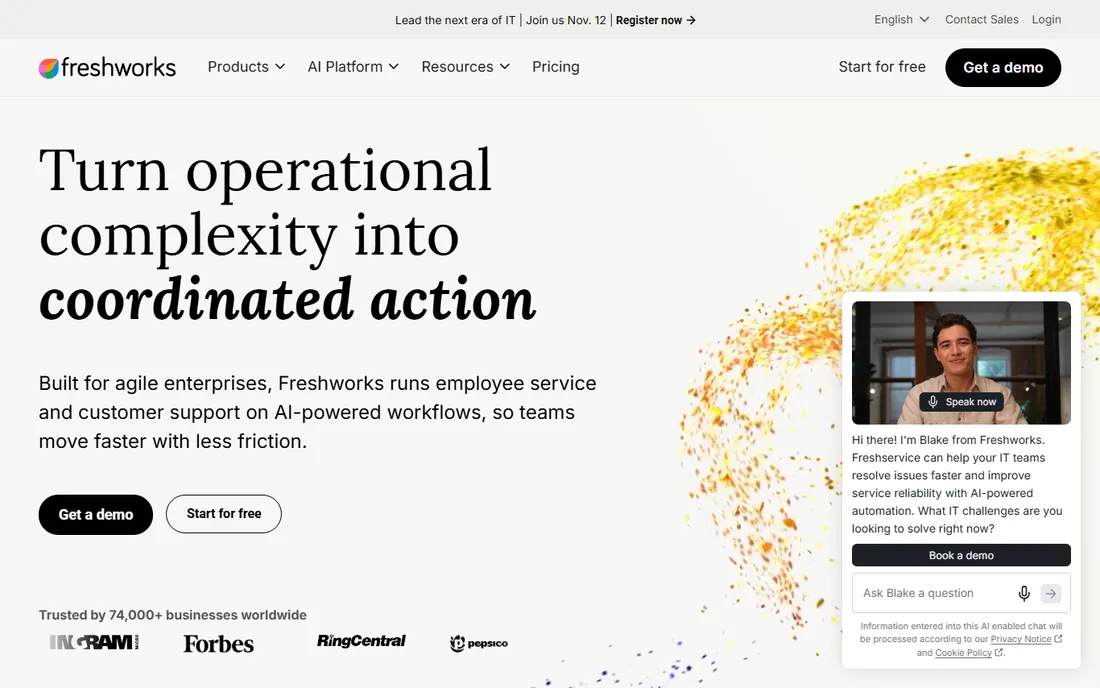
Freshsales, part of the Freshworks suite, bundles the communication tools most CRMs make you integrate: phone, email and chat work inside the CRM from the start. The Growth plan at $9 per user per month on annual billing is one of the cheapest paid entries here, and the free plan for up to 3 users includes the core sales features. AI-powered lead scoring helps small teams prioritize without a data analyst.
The ceiling is lower than Salesforce or HubSpot. Deep customization, advanced territory management and the biggest integration library live elsewhere. For a small sales team that wants to call, email and track from one screen without assembling a stack, Freshsales is the practical pick.
What we like- Built-in telephony, email and chat, no separate tools needed
- AI lead scoring and deal insights on paid plans
- The free plan covers up to 3 users with real features
Watch out for- The ecosystem is smaller than Salesforce or HubSpot
- Advanced customization sits on Pro and Enterprise tiers
- Reporting depth trails the category leaders
#6
Insightly
Best for: Teams that sell projects and want CRM plus delivery management together
Visit insightly.com
Starting price$29 per user per month (Plus, billed annually)
Free planNo (14-day free trial)
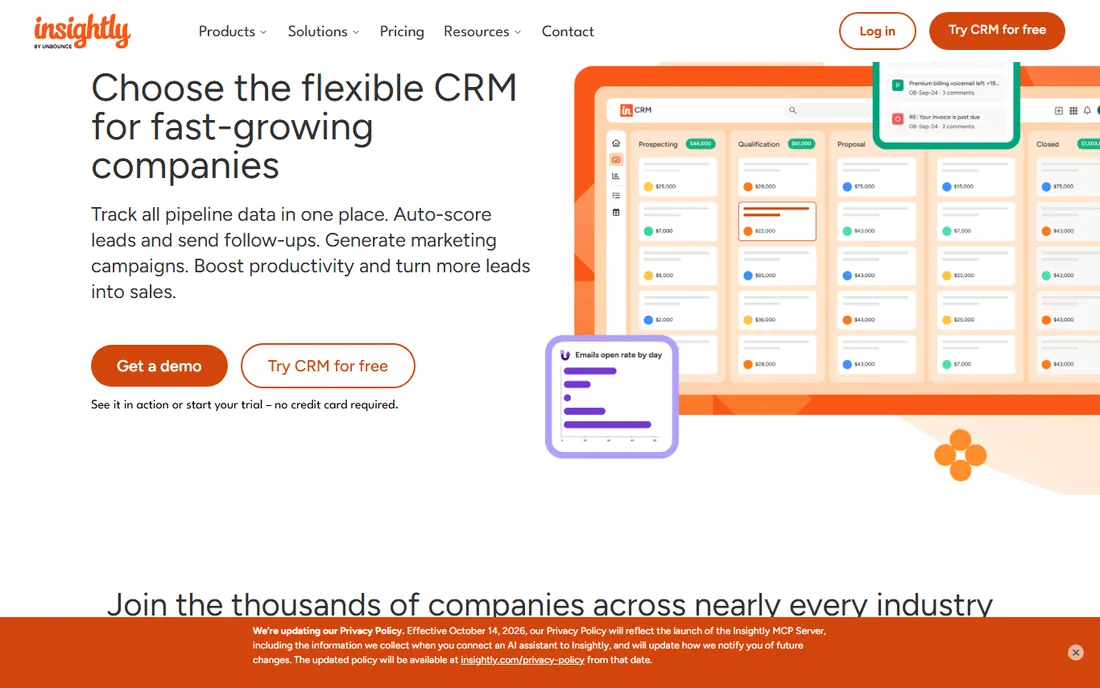
Insightly's differentiator is what happens after the deal closes. Where most CRMs end at "won," Insightly carries the same record into project delivery with tasks, milestones and pipelines for fulfillment. The Plus plan at $29 per user per month on annual billing covers the core, with Professional at $49 and Enterprise at $99 adding depth.
It is a niche strength. Pure sales teams will find better pipeline tools cheaper, and the lack of a free plan means every evaluation runs on the 14-day trial clock. But for service businesses, agencies and anyone whose sale turns into a project, keeping both in one system removes a whole category of handoff mistakes.
What we like- CRM plus project management in one record, rare in this category
- Solid workflow automation and custom objects
- Good fit for businesses where sales hands off to delivery
Watch out for- No free plan and the entry price is mid-pack
- The interface is less modern than competitors
- The app ecosystem is smaller than Salesforce or HubSpot
#7
Copper
Best for: Businesses that run entirely on Google Workspace
Visit copper.com
Starting price$29 per month Basic ($23 billed annually); Professional $69 ($59); Business $134 ($99)
Free planNo (14-day free trial)
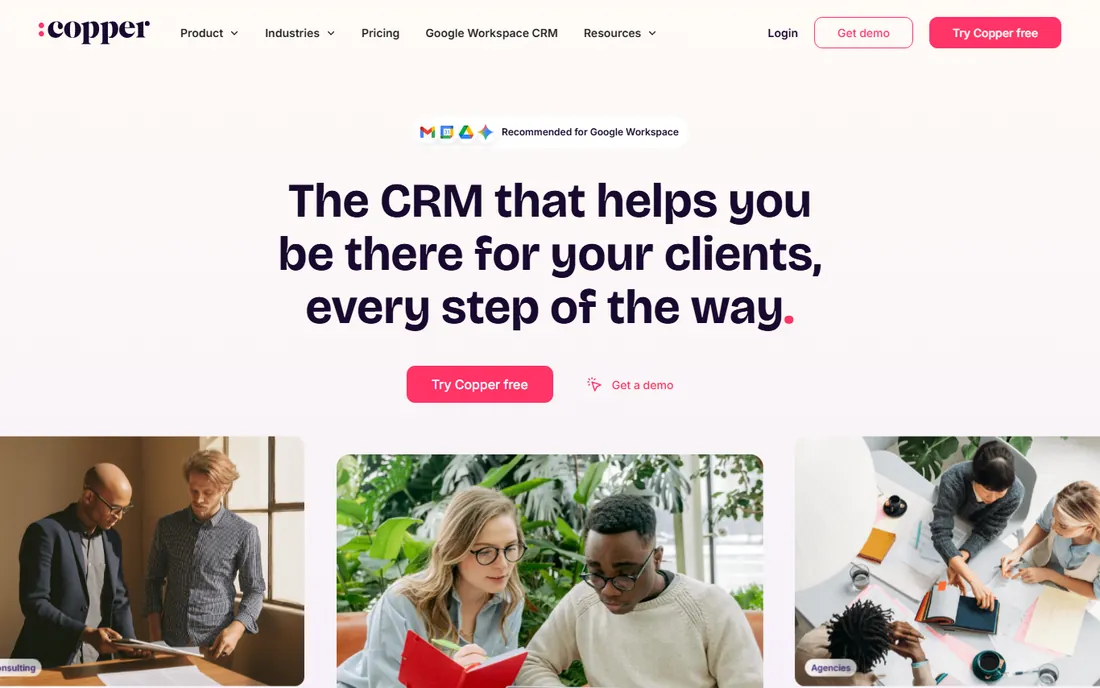
Copper is built for one audience: companies that live in Gmail. Contacts, emails, meetings and files flow into the CRM automatically from Google Workspace, which removes the data entry tax that kills CRM adoption. The Basic plan at $29 per month, or $23 per user per month on annual billing, covers pipeline management for small teams, with Professional and Business tiers adding automation and reporting.
The specialization cuts both ways. If your team uses Outlook and Microsoft 365, most of Copper's magic disappears. And with no free plan, you evaluate on the 14-day trial. For Google Workspace shops that have failed to get reps to update a CRM before, Copper's invisible data capture is the feature that matters.
What we like- Deep, native Gmail and Google Calendar integration
- No double data entry between inbox and CRM
- Simple enough for non-sales users to adopt
Watch out for- Google-centric design penalizes Microsoft 365 shops
- No free plan
- Per-user pricing with tiers that climb quickly
#8
Keap
Best for: Small businesses that want CRM plus marketing automation in one subscription
Visit keap.com
Starting price$129 per month (Pro, billed annually; 2 users and 1,500 contacts included)
Free planNo (14-day free trial)
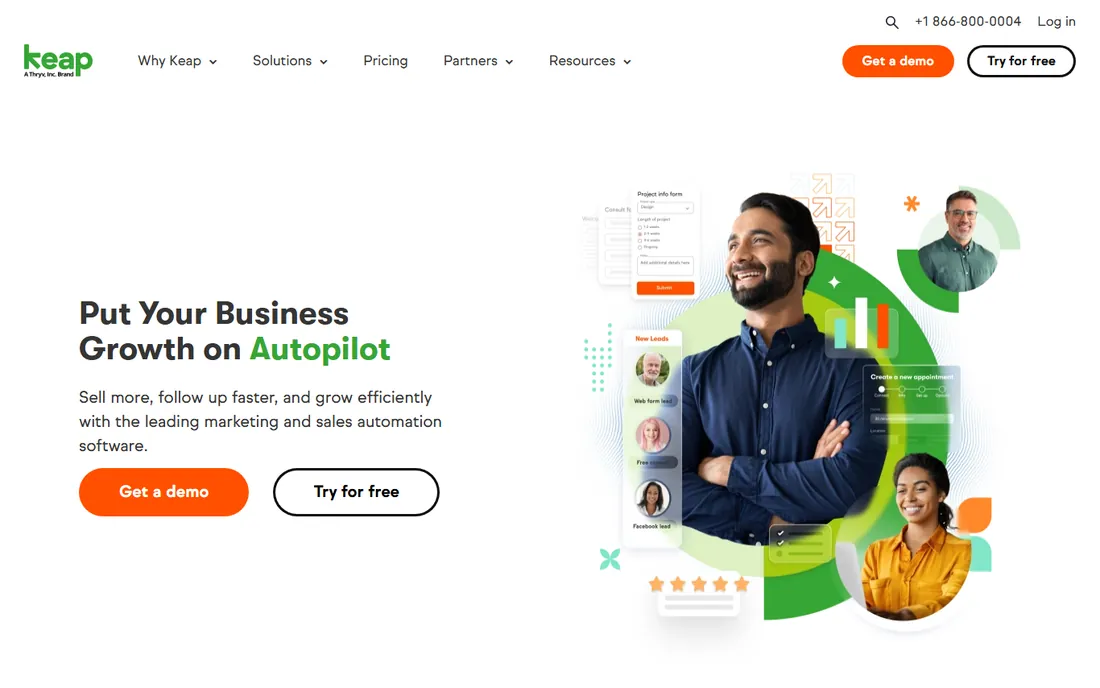
Keap, now a Thryv brand, targets the small business that needs to market and sell from one place. The Pro plan at $129 per month on annual billing includes 2 users and 1,500 contacts, with email automation, appointment scheduling and pipeline management built in. For a business doing follow-up sequences, reminders and repeat bookings, it replaces a CRM plus a separate email tool.
The price demands that you use the automation. A team that only needs deal tracking will find better value in Pipedrive or Bigin at a fraction of the cost. But if your revenue depends on systematic follow-up, Keap's automation pays for itself in recovered deals.
What we like- CRM, email marketing and sales automation genuinely unified
- Strong for appointment-based and follow-up-heavy businesses
- Onboarding and migration support included
Watch out for- The highest starting price on this list
- The 2-user base means teams pay $29 per extra user per month
- Overkill for businesses that only need contact tracking
#9
Bigin
Best for: Very small teams and solo operators wanting a simple pipeline CRM
Visit bigin.com
Starting price$7 per user per month (Express, billed annually)
Free planYes (Free Forever: 1 user, 500 records)
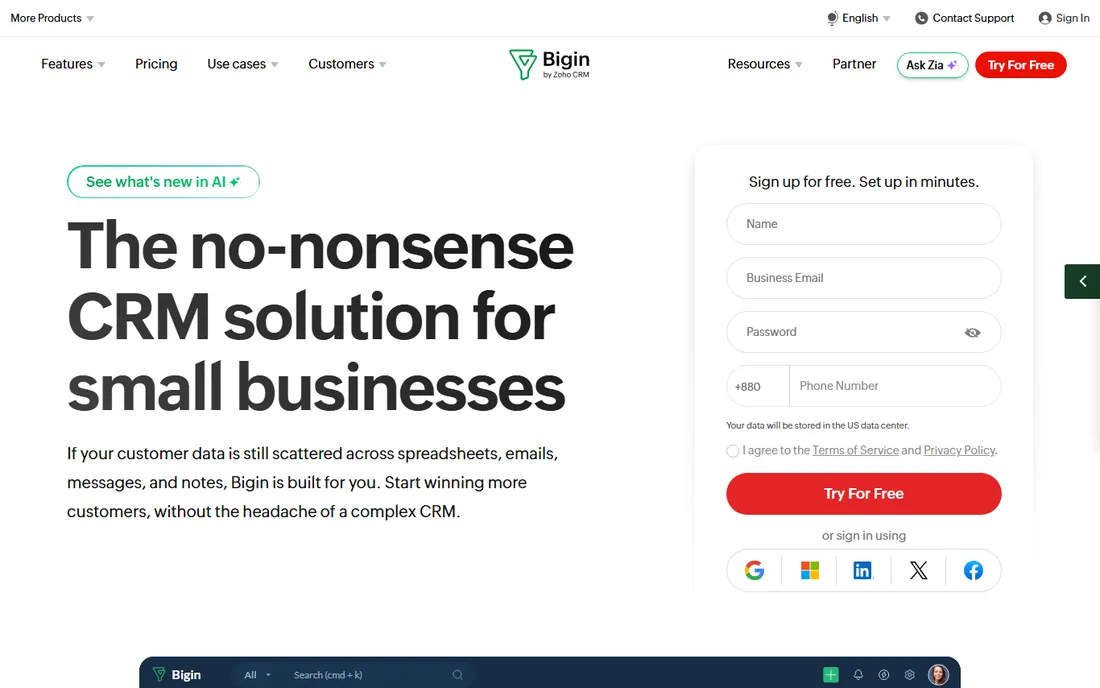
Bigin is Zoho's answer to teams that find Zoho CRM intimidating. The Express plan at $7 per user per month on annual billing, with Premier at $12 and Bigin 360 at $18, covers pipelines, activities and basic automation in an interface a new user learns in an hour. The Free Forever plan for 1 user and 500 records suits freelancers and micro-businesses.
It is a starter CRM by design. There is no deep workflow automation, no forecasting module and no path to enterprise complexity inside Bigin itself. That is the point: it gets a small team off spreadsheets fast, and the migration path to full Zoho CRM exists when the business outgrows it.
What we like- The cheapest paid plan on this list
- Genuinely simple, built for teams new to CRM
- A free tier that a solo operator can run on indefinitely
Watch out for- Limited depth: no advanced automation or forecasting
- The free plan covers a single user
- Scaling past a small team means migrating to Zoho CRM
#10
Streak
Best for: Teams that refuse to leave Gmail and want CRM inside the inbox
Visit streak.com
Starting price$49 per user per month (Pro, billed annually; $59 month-to-month)
Free planYes (limited free plan)
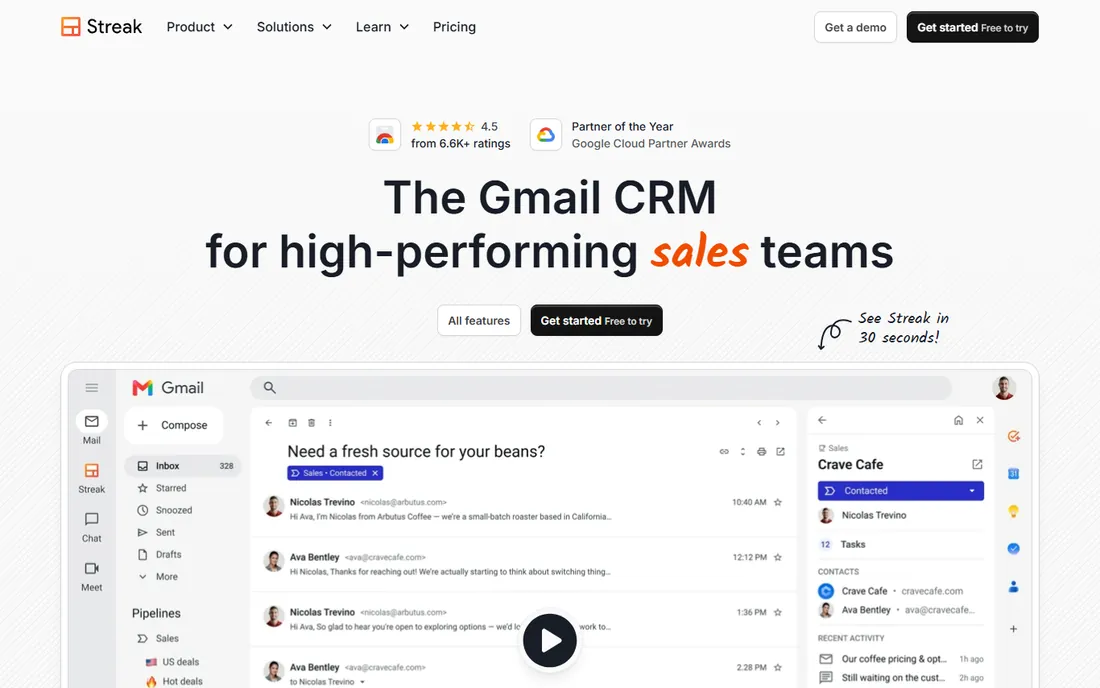
Streak turns Gmail into a CRM. Pipelines sit in the inbox sidebar, emails link to deals automatically, and mail merge runs from the compose window. The Pro plan at $49 per user per month on annual billing is expensive per seat, but the pitch is adoption: the team never leaves the tool they already use, so the CRM actually gets updated.
The Gmail dependency is absolute. If your company ever moves to Outlook, Streak goes with it. And power users eventually hit the reporting ceiling. For small teams that run on Google and want the lightest possible CRM, though, nothing else here meets users where they already work.
What we like- Lives entirely inside Gmail, so adoption friction is near zero
- Flexible pipelines for sales, hiring, support and more
- No context-switching between inbox and CRM
Watch out for- Gmail-only, which excludes Outlook shops entirely
- The paid plans are pricey for what is essentially an inbox layer
- Reporting is lighter than dedicated CRMs
Frequently asked questions
What is cloud CRM software?
Cloud CRM software stores your customer data, sales pipeline and communication history on the vendor's servers, accessed through a browser or app. There is nothing to install or maintain, updates happen automatically, and your team can work from anywhere. Every tool on this list is cloud-based.
How much does CRM software cost for a small business?
Anywhere from free to $129 per user per month. Free tiers from HubSpot, Zoho, Freshsales, Bigin and Streak cover tiny teams. Paid plans start at $7 per user per month (Bigin) and cluster around $14 to $29 for mainstream tools. Salesforce starts at $25 and Keap at $129 per month for bundled automation.
Is HubSpot CRM really free?
Yes. HubSpot's free CRM includes contact management, deal pipelines and ticketing with no time limit. The catch is that advanced automation, reporting and marketing features require paid hubs starting from $15 per seat per month, and costs rise as you add hubs and seats.
Which CRM is best for a small business with no sales team?
Bigin at $7 per user per month or HubSpot's free tier, depending on whether you want to pay at all. Both are simple enough for an owner-operator. If you need marketing automation too, Keap bundles it from $129 per month.
Do I need marketing automation in my CRM?
Only if you run email campaigns, follow-up sequences or lead nurturing. Keap and HubSpot bundle it; Pipedrive, Copper and Streak largely do not. Buying a CRM with automation you never use is the most common way small businesses overpay.
How to choose a cloud CRM
Start with the job, not the brand. List the three things the CRM must do: track deals, automate follow-up, manage support tickets, run email campaigns. If the list is short, a focused tool like Pipedrive or Bigin beats a platform like Salesforce. Complexity you do not use still costs money and training time.
Count seats honestly, including part-time users. Most CRMs charge per user per month, so five occasional users on Salesforce Starter cost $125 per month before you close a single deal. Check whether the vendor offers cheaper view-only or limited seats for people who just need to look things up.
Test the free tier or trial with real data. Import fifty actual contacts, run a real deal through the pipeline and send a real follow-up email. The trial is where you discover whether the interface fits your team's habits or fights them.
Finally, check the exit. Export a sample of your data during the trial and confirm it comes out clean. Ask about contract terms on annual plans and what happens to your data if you cancel. The best time to evaluate leaving a CRM is before you sign up.
A full CRM earns its keep when you have volume: dozens of leads a week, multiple reps, handoffs between marketing and sales. Below that volume, the automation, forecasting and customization sit idle while you pay for them every month.
Simple pipeline tools like Pipedrive, Bigin and Streak cover the core job, which is knowing what to do next with every deal. They set up in an afternoon, cost a fraction of the platforms, and get updated because using them is not a chore. Many five-person companies run happily on these for years.
The upgrade signal is specific pain, not ambition. When you lose deals because follow-ups slip through, when marketing needs lead scoring, or when reporting takes a day of spreadsheet work each week, that is when Salesforce, HubSpot or Zoho CRM pay off. Buy the tool for the business you have, with room to grow into the next one.
How we chose
We ranked tools on published pricing, free plan availability, sales pipeline quality, automation depth and fit for small and mid-sized businesses. Every starting price comes from the vendor's own pricing page as of October 2026. We excluded enterprise-only platforms, discontinued products and tools that were acquired and folded into larger suites.
Sources we checked (10)
- https://www.salesforce.com/editions-pricing/sales-cloud/
- https://www.hubspot.com/pricing/crm
- https://www.zoho.com/crm/zohocrm-pricing.html
- https://www.pipedrive.com/en/pricing
- https://www.freshworks.com/crm/pricing/
- https://www.g2.com/products/insightly-crm/pricing
- https://www.copper.com/pricing
- https://keap.com/pricing
- https://www.bigin.com/pricing.html
- https://www.streak.com/pricing
Is your product missing or out of date?
We review this list regularly. Vendors can request a listing, send updated pricing or ask about featured placement.

Shihab Mia · Founder, Rankite
Shihab has spent more than a decade helping SaaS and e-commerce brands grow through search. He writes Rankite's software buying guides from pricing pages, documentation and public user reviews. More about Shihab.