How we make this list: we compare pricing pages, product documentation and public user reviews. Rankite is independent; if a vendor ever pays for a featured spot, that listing is clearly labeled Partner.
Key takeaways
- HubSpot CRM is the easiest starting point for small manufacturers, with a free tier and Sales Hub Starter at $15 per seat per month on annual billing.
- Salesforce Manufacturing Cloud fits larger operations that need account-based forecasting and partner portals, but expect real implementation cost.
- Pipedrive at $14 per user per month and Zoho CRM at $14 per user per month give smaller shops pipeline discipline without enterprise overhead.
- NetSuite CRM and Microsoft Dynamics 365 suit manufacturers that want CRM and ERP in one system instead of stitching tools together.
- Copper is the natural pick for shops that live in Google Workspace, while Insightly adds project management for build-to-order work.
Quick comparison
| Tool | Best for | Starting price | Free plan |
|---|
 HubSpot CRM HubSpot CRM | small manufacturers getting organized | $15 per seat per month (Sales Hub Starter, annual billing) | Yes |
 Salesforce Salesforce | large manufacturers with dealer networks | $25 per user per month (Starter Suite) | No |
 Pipedrive Pipedrive | visual pipeline management for sales teams | $14 per user per month (Lite, annual billing) | Free trial |
 Zoho CRM Zoho CRM | budget-conscious manufacturers | $14 per user per month (Standard, annual billing) | Yes |
 Microsoft Dynamics 365 Microsoft Dynamics 365 | manufacturers standardized on Microsoft | See website | Free trial |
 SugarCRM SugarCRM | mid-market manufacturers wanting flexibility | See website | Free trial |
 Insightly Insightly | manufacturers that sell projects, not just products | $29 per user per month (Plus) | Free trial |
 Freshsales Freshsales | inside sales teams that call and email heavily | See website | Free trial |
 NetSuite CRM NetSuite CRM | manufacturers already running NetSuite ERP | See website | No |
 Copper Copper | manufacturers that live in Google Workspace | $23 per user per month (Basic) | Free trial |
Is your product missing or out of date?
We review this list regularly. Vendors can request a listing, send updated pricing or ask about featured placement.
The best CRM software for manufacturing
Starting price$15 per seat per month (Sales Hub Starter, annual billing)
Free planYes
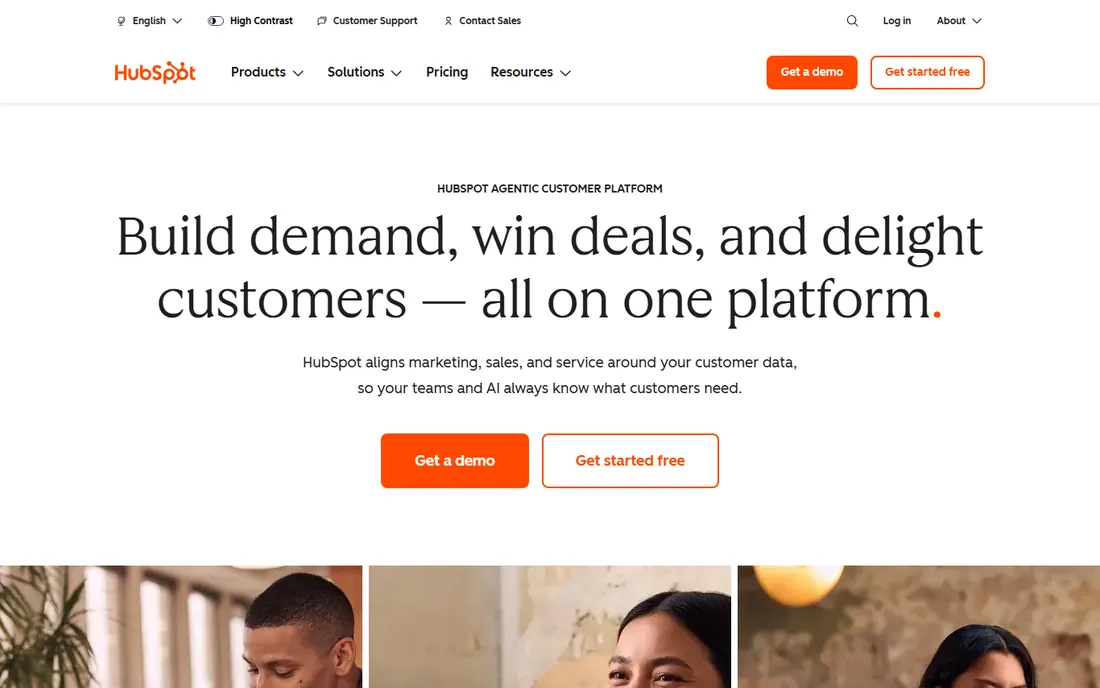
Picture a 30-person machine shop where quotes live in three different spreadsheets and nobody knows which distributor got the last price list. HubSpot fixes that baseline mess faster than anything else on this list. The free CRM handles contacts, companies, deals, and tickets, which covers the first year for many small manufacturers.
The manufacturing fit comes from customization rather than built-in industry features. You can build pipelines for quoting, sample requests, and dealer onboarding, and the quoting tool turns deals into presentable quotes. Watch the price curve: Starter at $15 per seat per month is reasonable, but Professional jumps to $90 per seat per month with a $1,500 onboarding fee. Budget the real number, not the entry number.
What we like- Genuinely useful free tier for contact and deal management
- Easy for non-technical staff to learn
- Strong email and quoting tools
Watch out for- Costs climb fast at Professional tier ($90 per seat per month)
- Mandatory onboarding fees on higher tiers
- Manufacturing-specific features need customization
Starting price$25 per user per month (Starter Suite)
Free planNo
Salesforce is the heavyweight option, and for large manufacturers it earns the title. Manufacturing Cloud was designed for this industry: run-rate versus new business forecasting, account-based planning, and partner portals for dealers and distributors. If you sell through a channel and need visibility into partner pipelines, nothing else here matches it.
The honest catch is cost and complexity. Starter Suite begins at $25 per user per month, but Manufacturing Cloud is quote-based and implementations routinely need consultants. A small job shop will drown in configuration. This is a pick for companies with a real sales operations function, not for the owner who also runs the shop floor.
What we like- Manufacturing Cloud built for account-based forecasting and partner management
- Deepest integration ecosystem
- Handles complex pricing and territories
Watch out for- Implementation takes months and needs consultants
- Total cost runs far above the sticker price
- Overkill for shops under 20 people
Starting price$14 per user per month (Lite, annual billing)
Free planFree trial
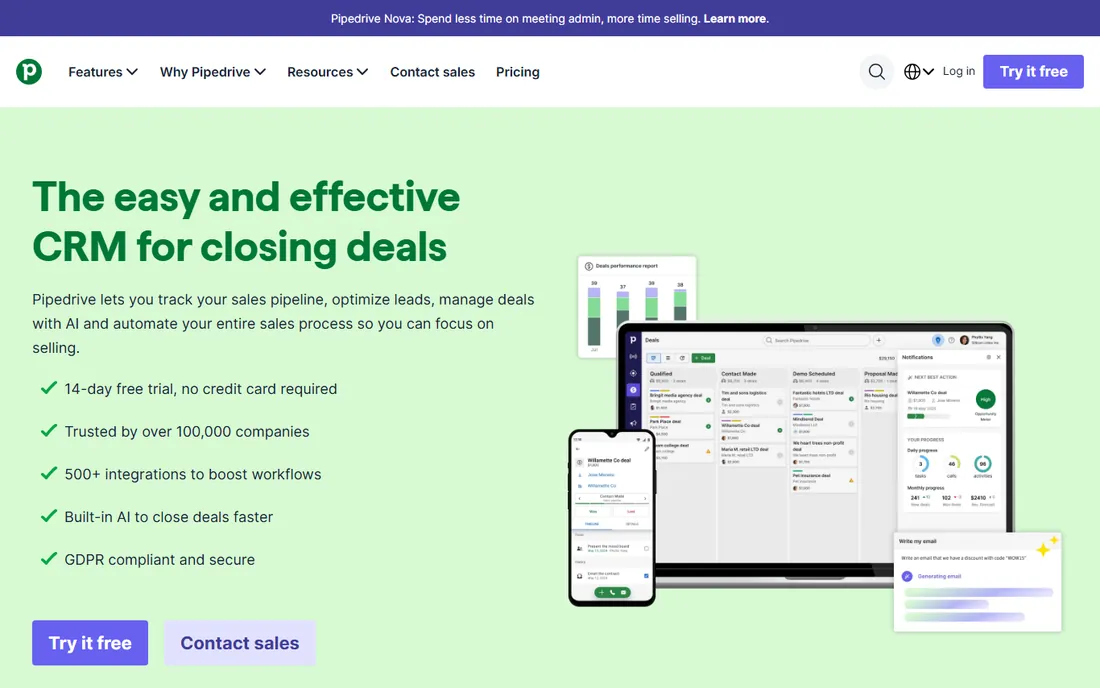
Pipedrive wins on clarity. The kanban pipeline shows every quote, sample, and order exactly where it stands, which is all many small manufacturers need. Reps update deals by dragging cards, and the automation builder on the Growth plan ($39 per user per month) handles follow-up reminders and task creation without admin help.
For manufacturing, the gaps are quoting and product configuration. LeadBooster and Campaigns are paid add-ons, and there is no native CPQ, so complex configured products need a third-party tool. If your sales process is "quote, follow up, close," Pipedrive is enough. If quotes need engineering input and multi-level approval, look higher up this list.
What we like- Clearest pipeline view in the category
- Quick to set up with minimal training
- 500+ integrations on the marketplace
Watch out for- No free plan, only a 14-day trial
- Quoting and CPQ features cost extra
- Manufacturing workflows need custom fields
Starting price$14 per user per month (Standard, annual billing)
Free planYes
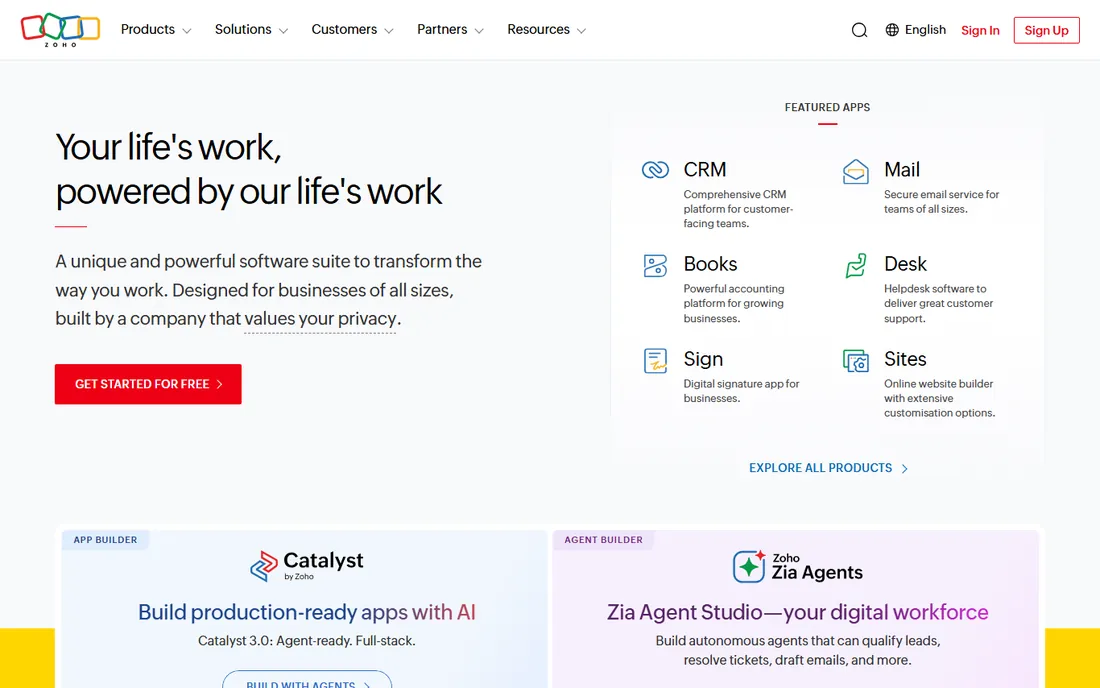
Zoho CRM is the value play. At $14 per user per month for Standard, a ten-person team pays less than a single Salesforce seat at higher tiers. The customization depth is real: custom modules can model machines, parts, or service contracts, and Blueprint enforces your quote approval process step by step.
The free tier covers up to three users, which lets a tiny shop start at zero cost. The downside is polish. The interface has rough edges, and getting the system shaped for manufacturing takes more admin time than the friendlier tools here. If you have someone technical on staff and a tight budget, Zoho stretches further than anything else.
What we like- Lowest cost per seat among serious options
- Deep customization with custom modules
- Integrates with the full Zoho suite
Watch out for- Interface feels dated in places
- Setup takes longer than HubSpot or Pipedrive
- Support quality varies by plan
Starting priceSee website
Free planFree trial
When the factory already runs on Microsoft, Dynamics 365 is the path of least resistance. Sales, customer service, and field service modules connect to supply chain and finance data in the same system, so a quote can reflect real inventory and production capacity. Reps work inside Outlook and Teams instead of learning another app.
Microsoft licensing deserves its own spreadsheet. Sales Professional, Sales Enterprise, and the various add-ons price differently, and most manufacturers need a partner to implement. This is a strong choice for mid-size manufacturers with IT support, and a poor one for a shop that wants to self-implement over a weekend.
What we like- CRM and ERP in one Microsoft stack
- Strong for supply chain and operations data
- Familiar interface for Outlook and Teams users
Watch out for- Licensing is complex with many SKUs
- Implementation needs partners
- Smaller shops find it heavy
Starting priceSee website
Free planFree trial
SugarCRM occupies the middle ground between Pipedrive simplicity and Salesforce depth. The platform is built for customization: rename modules, redesign layouts, and automate quote approvals without developers. For manufacturers with unusual sales processes, like engineer-to-order or long trial periods, that flexibility matters.
The ecosystem is smaller than the big two, so check that your ERP and accounting integrations exist before committing. Pricing is quote-based, which means budgeting takes a sales call. SugarCRM suits mid-size manufacturers that outgrew simple pipelines but refuse Salesforce-level complexity and cost.
What we like- Highly customizable without heavy code
- No-code process automation
- Good fit for complex B2B sales cycles
Watch out for- Smaller integration marketplace than Salesforce or HubSpot
- Pricing is quote-based
- Brand recognition is lower with new hires
Starting price$29 per user per month (Plus)
Free planFree trial
Many manufacturers do not just ship products; they install them, service them, and manage custom builds. Insightly pairs CRM with real project management, so a deal can convert into a project with tasks, milestones, and deliverables. For equipment makers and custom fabricators, that handoff is where other CRMs leave a gap.
The Plus plan at $29 per user per month is the practical starting point. Reporting and automation are solid but not best in class, and marketing automation is limited. If your business is project-shaped, Insightly's combined model beats buying a CRM and a project tool separately.
What we like- CRM plus project management in one tool
- Good for build-to-order and installation work
- Straightforward pricing
Watch out for- Marketing features are thin
- Reporting is weaker than HubSpot or Salesforce
- Smaller user community
Starting priceSee website
Free planFree trial
Freshsales, part of the Freshworks family, is built for teams that sell by phone and email. The built-in dialer, call recording, and email tracking mean reps never leave the CRM to do their job. Freddy AI adds lead scoring and deal insights on the Pro tier, which helps small teams prioritize without a sales analyst.
For manufacturing, the fit is generalist rather than industry-specific. There is no manufacturing module, so dealer management and quoting workflows need custom fields and pipelines. The interface is one of the cleanest here, and onboarding is quick. Pick it when your sales motion is high-volume outreach rather than complex configured quoting.
What we like- Built-in phone, email, and chat without add-ons
- Freddy AI scores leads and suggests actions
- Clean modern interface
Watch out for- Less customizable than Zoho or SugarCRM
- Manufacturing-specific workflows need workarounds
- Advanced features sit on higher tiers
Starting priceSee website
Free planNo
NetSuite CRM makes this list for one reason: if the factory runs NetSuite ERP, the CRM is already there. Sharing one database means quotes pull live inventory, pricing reflects actual costs, and orders flow to fulfillment without re-entry. For manufacturers doing wholesale and distribution, that single-system truth is worth a lot.
Outside the NetSuite ecosystem, there is little reason to buy it standalone. Pricing is quote-based and sits at enterprise levels, and implementation is measured in months. This is a consolidation play for existing NetSuite customers, not a first CRM.
What we like- CRM shares one database with ERP, inventory, and finance
- Quotes reflect real stock and costs
- Strong for wholesale and distribution
Watch out for- Expensive and quote-based
- Implementation is a major project
- Poor fit unless you already use NetSuite
#10
Copper
Best for: manufacturers that live in Google Workspace
Visit copper.com
Starting price$23 per user per month (Basic)
Free planFree trial
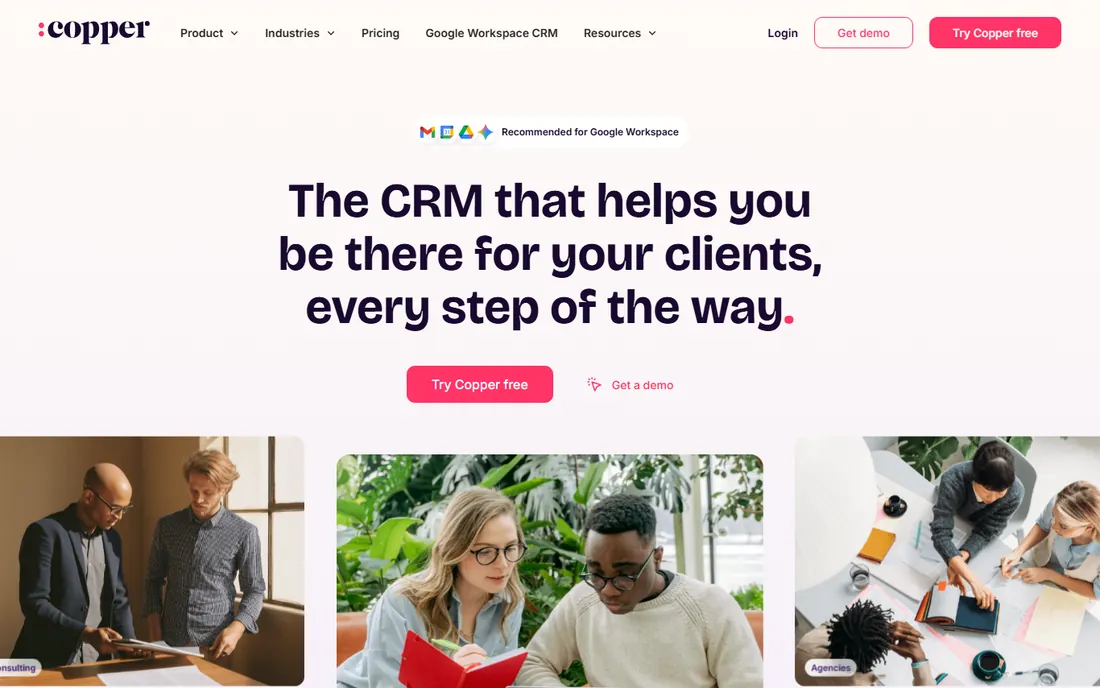
Some small manufacturers run the entire office on Gmail, Drive, and Calendar. Copper was built for them. The CRM lives inside Gmail, so emails, contacts, and deals connect automatically without data entry. A rep can update a quote pipeline from the inbox in seconds.
The limits show up fast for complex operations. Workflow automation waits until the $59 per user per month Professional tier, and reporting stays basic. Copper is a productivity tool for Google shops, not a manufacturing platform. If your team lives in Gmail and your sales process is simple, it is the fastest CRM to adopt on this list.
What we like- Works inside Gmail with no tab switching
- Fast setup for Google-centric teams
- Simple pipeline and contact management
Watch out for- Automation only starts on Professional ($59 per user per month)
- Weaker for complex manufacturing workflows
- Limited reporting depth
What manufacturing teams should check before signing
Start with quoting. Manufacturing sales live and die on quotes, so test how the CRM builds one. Can it handle line items, volume discounts, and custom pricing? Does an approved quote convert to an order or project without retyping? A CRM with weak quoting becomes a contact database, which is not what you are paying for.
Next, check the ERP and accounting connection. The CRM should sync with whatever runs the plant, whether that is NetSuite, QuickBooks, Sage, or a custom system. Ask specifically about bidirectional sync for inventory, pricing, and order status. A one-way export that someone runs on Fridays is not an integration.
Then look at dealer and distributor management. If you sell through a channel, you need partner pipelines, shared forecasting, and ideally a portal. Salesforce Manufacturing Cloud and HubSpot handle this best; simpler tools need workarounds. Map your actual channel process before the demo, and make the vendor walk through it live.
Finally, count the real users. Shop floor staff, engineers, and customer service may need access, and per-seat pricing multiplies fast. HubSpot's free view-only seats and Pipedrive's flat per-user pricing are kinder here than Salesforce's seat model. Budget for year two, when the team is bigger and the discounts have expired.
How we chose
We reviewed each vendor's pricing pages and product documentation, focusing on features manufacturers actually use: quoting, pipeline management, ERP integration, and dealer or distributor support. We cross-checked against public reviews on G2, Capterra, and Reddit for implementation effort and support quality. Every tool here fits small and mid-size manufacturers, and we favored CRMs that a lean team can run without a full-time administrator.
Common mistakes manufacturers make with CRM
The most expensive mistake is buying for the demo, not the workflow. A CRM that looks impressive in a sales presentation can still fail at your specific quoting process. Bring three real quotes to every demo and make the vendor build them live.
The second mistake is skipping data cleanup. Migrating ten years of messy spreadsheets into a new CRM just moves the mess. Dedicate time to deduplicating contacts and standardizing part numbers before import, or the new system inherits the old chaos.
The third is underestimating adoption. Reps who have tracked deals in notebooks for a decade will not switch because management bought software. Pick the tool they will actually open, keep the required fields minimal at launch, and add process only after the habit forms.
Frequently asked questions
What is the best CRM for a small manufacturing company?
HubSpot CRM is the best starting point for most small manufacturers because the free tier covers contacts, deals, and tickets, and Sales Hub Starter costs $15 per seat per month on annual billing. Pipedrive at $14 per user per month and Zoho CRM at $14 per user per month are strong alternatives if you want a pure sales pipeline without marketing tools. All three can be running in days, not months.
Does Salesforce have a manufacturing-specific CRM?
Yes. Salesforce Manufacturing Cloud is built for manufacturers, with account-based forecasting, run-rate business tracking, and partner portals for dealers and distributors. Starter Suite begins at $25 per user per month, but Manufacturing Cloud itself is quote-based and implementations typically need consultants. It fits mid-size and large manufacturers with channel sales, not small job shops.
Can a CRM integrate with manufacturing ERP systems?
Most can, but the depth varies. NetSuite CRM and Microsoft Dynamics 365 share data natively with their ERP counterparts, which is the cleanest setup. HubSpot, Salesforce, and Pipedrive connect to common ERPs through native integrations or middleware like Zapier, with sync quality depending on the specific ERP. Always test the exact integration with your ERP version before signing.
How much does CRM software cost for manufacturing?
For small manufacturers, expect $14 to $30 per user per month for tools like Pipedrive, Zoho CRM, Insightly, or HubSpot Starter. Mid-market options like SugarCRM and Salesforce run higher, with Salesforce Professional at $90 per seat per month plus a $1,500 onboarding fee. Enterprise manufacturing deployments with Manufacturing Cloud or Dynamics 365 are quote-based and typically run into five or six figures annually including implementation.
Should manufacturers choose an industry-specific CRM or a general one?
General CRMs like HubSpot, Pipedrive, and Salesforce win for most manufacturers because they have larger ecosystems, better integrations, and more available talent. Industry-specific tools can fit niche workflows out of the box but often lag on integrations and support. The exception is manufacturers already on NetSuite or Dynamics 365 ERP, where the built-in CRM is usually the right call.
How long does CRM implementation take for a manufacturer?
Simple CRMs like Pipedrive, HubSpot, or Copper can be live in one to four weeks for a small team. Mid-market tools like SugarCRM or Zoho typically take one to three months with customization. Salesforce Manufacturing Cloud and Dynamics 365 implementations run three to nine months with partner help. Data cleanup and ERP integration, not the software itself, usually set the timeline.
Sources we checked (11)
- https://www.hubspot.com
- https://www.salesforce.com
- https://www.pipedrive.com
- https://www.zoho.com
- https://www.microsoft.com
- https://www.sugarcrm.com
- https://www.insightly.com
- https://www.freshworks.com
- https://www.netsuite.com
- https://www.copper.com
- https://nethunt.com/blog/top-pipedrive-crm-alternatives/
Is your product missing or out of date?
We review this list regularly. Vendors can request a listing, send updated pricing or ask about featured placement.

Shihab Mia · Founder, Rankite
Shihab has spent more than a decade helping SaaS and e-commerce brands grow through search. He writes Rankite's software buying guides from pricing pages, documentation and public user reviews. More about Shihab.