How we make this list: we compare pricing pages, product documentation and public user reviews. Rankite is independent; if a vendor ever pays for a featured spot, that listing is clearly labeled Partner.
Key takeaways
- All major platforms bill per token or per character, so costs scale with usage, not seats.
- Your existing cloud provider is usually the cheapest path: Bedrock for AWS shops, Azure AI Foundry for Microsoft, Gemini platform for Google Cloud.
- OpenAI's platform remains the reference point for frontier model access, with Azure holding the enterprise twin.
- Hugging Face and Replicate are the open-model playgrounds: thousands of models with simple APIs and no cloud lock-in.
- Google offers $300 in free credits and AWS up to $200, so testing costs nothing.
Quick comparison
| Tool | Best for | Starting price | Free plan |
|---|
 OpenAI Platform OpenAI Platform | frontier model API access | Pay per use | No |
 Gemini Platform Gemini Platform | Google Cloud AI at scale | Pay per use | $300 in free credits for new customers |
 Amazon Bedrock Amazon Bedrock | AWS-native multi-model AI | Pay per use | Up to $200 in AWS credits for new customers |
 Azure AI Foundry Azure AI Foundry | Microsoft ecosystem AI | Pay per use | Free trial |
 Anthropic Anthropic | Claude API for developers | Pay per use | Free tier |
 Cohere Cohere | private, secure enterprise AI | See website | No |
 Hugging Face Hugging Face | open models and community | Free | Yes (free, with paid compute and enterprise tiers) |
 Replicate Replicate | one-line API for any model | Pay per use | Free tier |
Is your product missing or out of date?
We review this list regularly. Vendors can request a listing, send updated pricing or ask about featured placement.
Picking the wrong generative AI platform is a quiet tax on every product you build. A model that costs 45 times more per token than the alternative for your workload, a vendor lock-in that adds months when you need to switch, or a compliance gap that disqualifies you from enterprise deals. The model gaps in 2026 are small, often 5 to 15 percent; the real differences are price per token, data residency, compliance, and how easily you can swap models later. That is what this comparison is actually about.
Starting pricePay per use
Free planNo
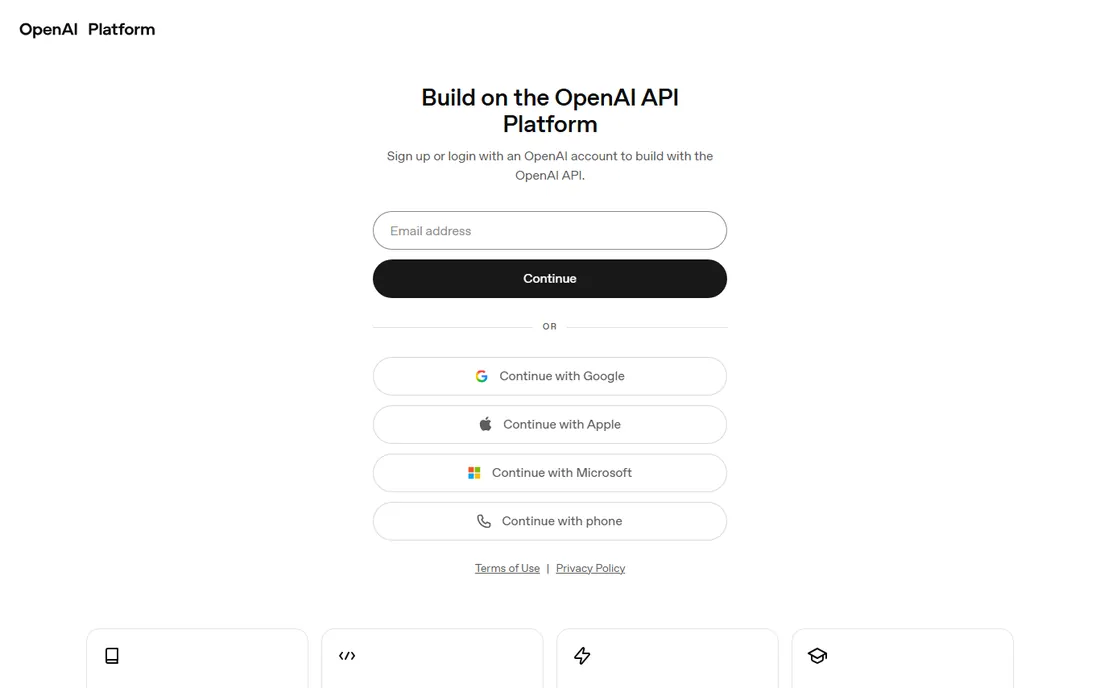
The OpenAI API is the reference point the whole industry builds against. If you want the newest GPT models the moment they ship, the richest documentation, and the largest ecosystem of tutorials, libraries, and integrations, this is where you start. The platform covers chat, embeddings, image generation, fine-tuning, and assistants in one API.
The honest catch is the enterprise wrapper. Compliance, data residency, and private networking are stronger on Azure AI Foundry, which offers the same OpenAI models. For startups and product teams that move fast, the direct platform wins; for regulated enterprises, look at Azure below.
What we like- First access to the newest GPT models and features
- The most documented API with the largest developer community
- Broad tooling from embeddings to image generation
Watch out for- No free tier for the API
- Enterprise compliance story is thinner than the cloud giants'
Starting pricePay per use
Free plan$300 in free credits for new customers
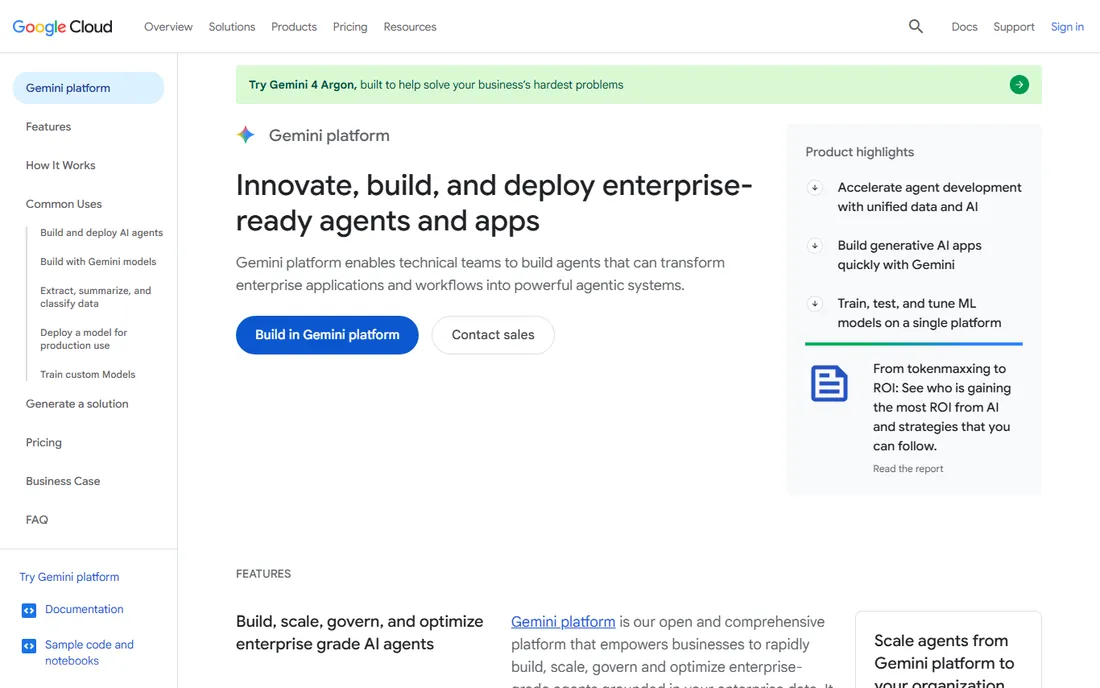
Google's platform, now branded the Gemini platform with Vertex AI underneath, is the value play at scale. Gemini Flash pricing makes high-volume workloads dramatically cheaper than the alternatives, and the Model Garden offers 200+ Google, third-party, and open models including Anthropic's Claude family. New customers get $300 in free credits, and agent runtime has a continuous free tier.
The honest catch is compliance. FedRAMP High coverage has lagged AWS and Azure, which matters for US federal work. For teams already on Google Cloud with data in BigQuery, it is the natural and often cheapest choice.
What we like- Long-context Gemini models with strong multimodal ability
- Tight BigQuery and Google Cloud integration
- $300 in free credits plus a free tier
Watch out for- Compliance certifications trail AWS and Azure for some workloads
- The Vertex AI to Gemini platform rebrand can confuse
Starting pricePay per use
Free planUp to $200 in AWS credits for new customers
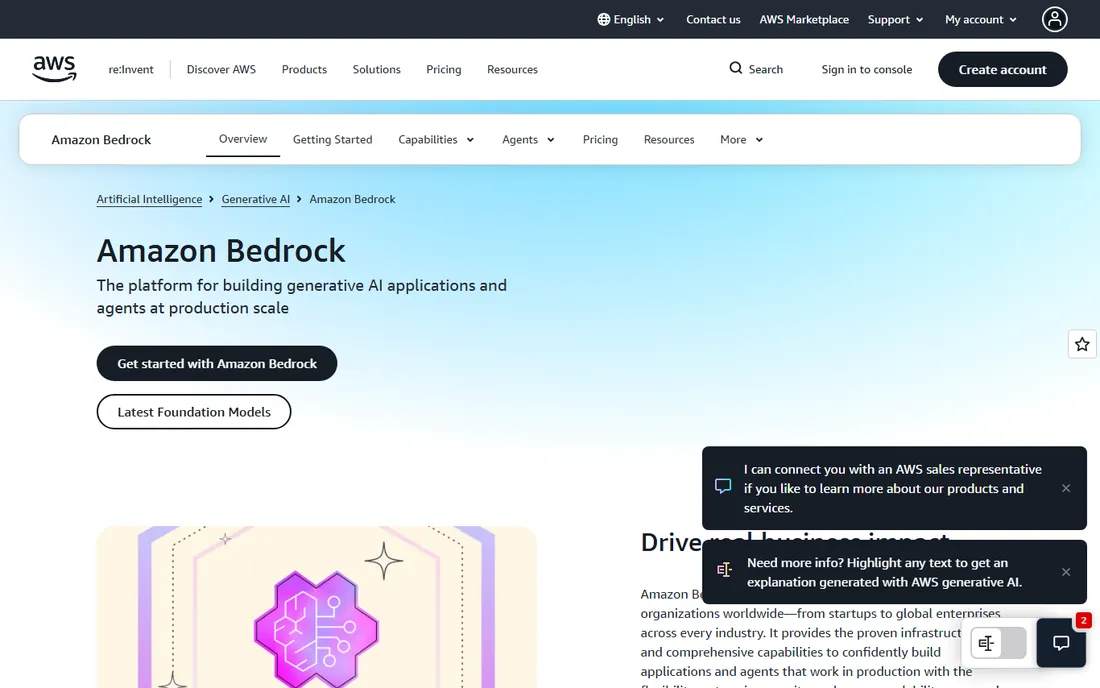
Bedrock is the multi-model platform: one serverless API serving hundreds of foundation models from Anthropic, Meta, Mistral, Cohere, and Amazon's own Nova family, with evaluation tools to pick the best model for each use case. It powers generative AI for more than 100,000 organizations, with Guardrails, Knowledge Bases, and the AgentCore runtime for agents. New AWS customers get up to $200 in credits.
The honest catch is that the newest models sometimes land here after the vendors' own platforms, and per-token costs at high volume need active optimization with distillation and prompt routing. For AWS shops that want model choice with enterprise controls, it is the default.
What we like- One API for Claude, Nova, Llama, Mistral, and more
- Strongest enterprise security and compliance story
- Serverless pricing with no infrastructure to manage
Watch out for- Model releases can lag the vendors' own platforms
- Costs need active management at scale
Starting pricePay per use
Free planFree trial
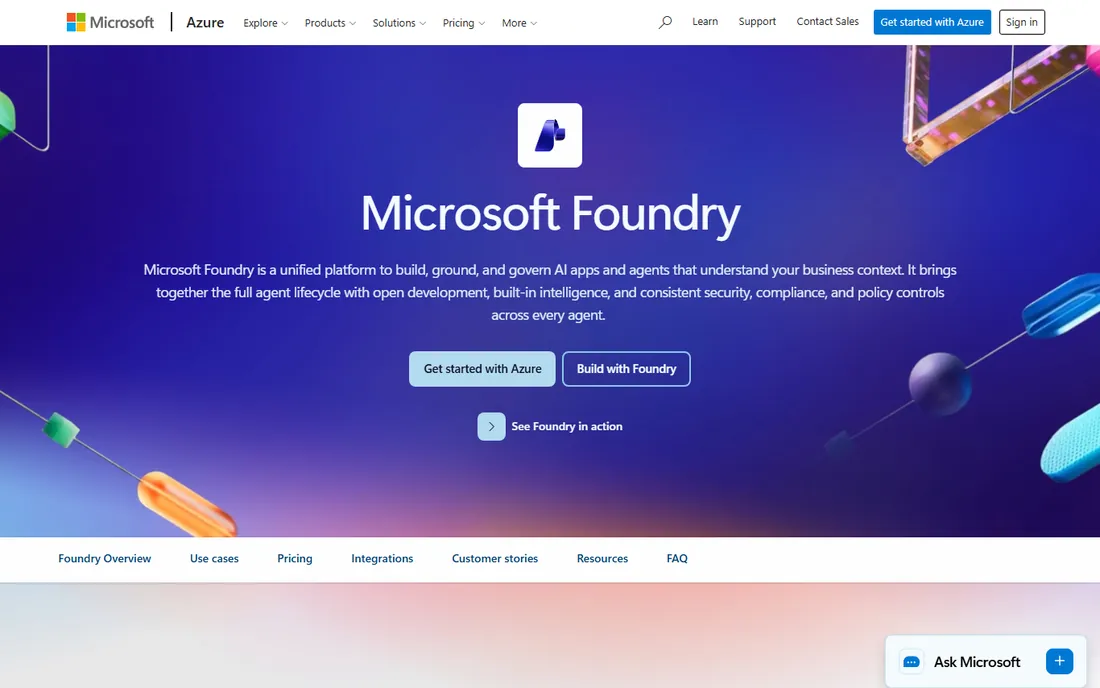
Azure AI Foundry, formerly Azure AI Studio, is Microsoft's unified platform for building AI apps and agents, with Foundry Models, the Agent Service, and Foundry IQ search. Its defining advantage is exclusive first-party access to OpenAI's GPT family with enterprise SLAs, Entra ID identity, and private networking. For Microsoft-first organizations, it is close to mandatory.
The honest catch is commitment. You need an Azure subscription, and the pricing spans tokens, provisioned throughput units, and fine-tuning. For teams outside the Microsoft ecosystem, it offers less reason to switch.
What we like- Exclusive first-party access to OpenAI's GPT models
- Deepest Microsoft 365 and Copilot integration
- Strongest compliance story including FedRAMP High
Watch out for- Requires an Azure subscription to build
- Pricing has many moving parts
Starting pricePay per use
Free planFree tier
Anthropic's own platform gives developers direct access to the Claude model family through a simple API, and many consider Claude the best model for complex reasoning, coding, and document work. The company's safety-first reputation and constitutional AI approach appeal to teams that care about alignment. A free tier lets developers experiment before paying per token.
The honest catch is scope. It is one model family, not a platform: no multi-model choice, no vector search, no agent runtime. AWS and Google resell Claude inside their platforms with more surrounding services. Use Anthropic direct when you want Claude with minimal overhead.
What we like- Claude models lead on reasoning and long-context tasks
- Strong safety and alignment reputation
- Clean, well-designed API
Watch out for- Smaller model catalog than the cloud platforms
- Enterprise tooling is thinner than Bedrock or Foundry
Starting priceSee website
Free planNo
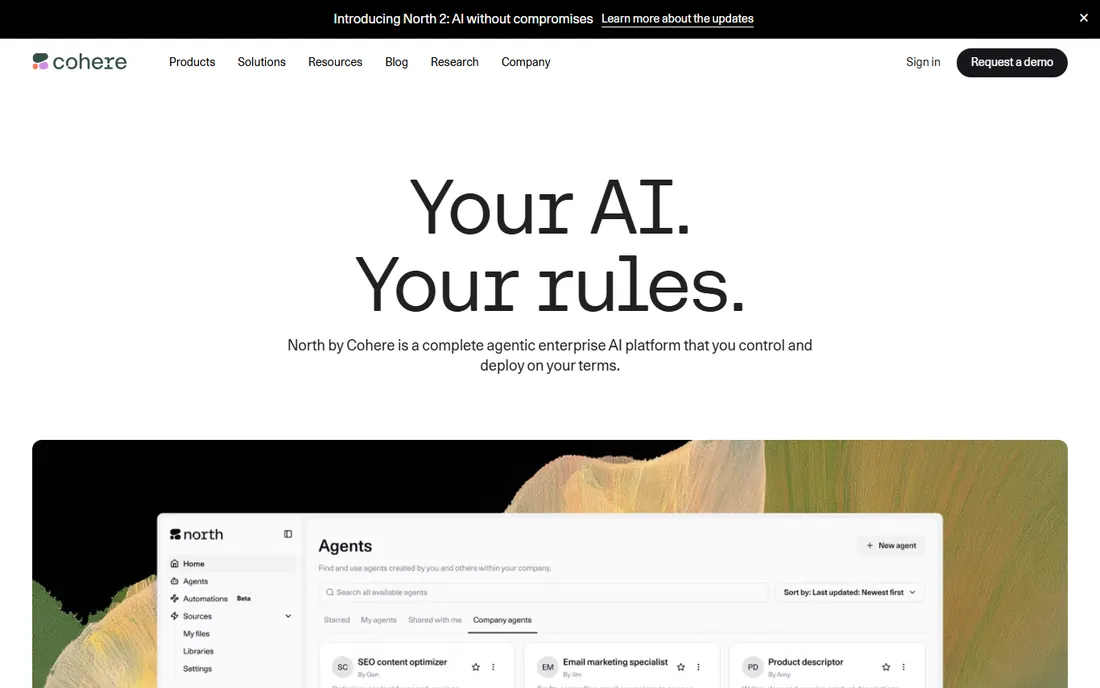
Cohere takes the private route: enterprise AI that you control and deploy on your terms, with the North agentic platform, strong retrieval models, and multilingual coverage. It is trusted by banks, governments, and large enterprises that need data to stay inside their walls. Industry backing from Oracle, Salesforce, and NVIDIA signals its enterprise credibility.
The honest catch is accessibility. Pricing is quote-based and the developer community is smaller, so experimentation is harder than on the open platforms. For regulated enterprises that need private deployment, it is built exactly for that.
What we like- Enterprise AI you can deploy on your own terms, including private cloud
- Strong in retrieval-augmented generation and multilingual models
- North platform for agentic enterprise AI
Watch out for- No public pricing
- Smaller developer community than the giants
Starting priceFree
Free planYes (free, with paid compute and enterprise tiers)
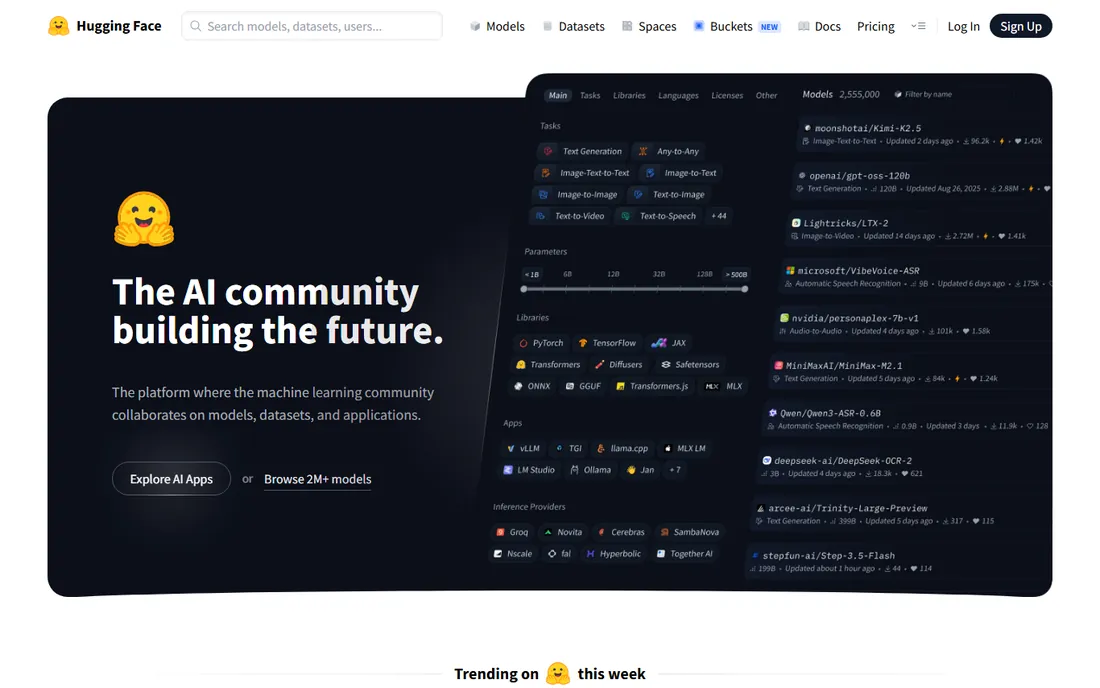
Hugging Face is the GitHub of AI: host unlimited public models, datasets, and apps, tap into 45,000+ models through a single inference API with no service fees, and build on open-source libraries like Transformers and Diffusers. For teams that want open models without cloud lock-in, there is no substitute.
The honest catch is the last mile. Community models vary in quality, and production-grade serving, monitoring, and compliance are your job unless you pay for enterprise tiers. For research, prototyping, and open-model production, it is the foundation of the ecosystem.
What we like- The largest open-model hub with unlimited public hosting
- 45,000+ models accessible through one inference API
- Strong open-source libraries
Watch out for- Production serving takes more work than managed platforms
- Quality varies across community models
Starting pricePay per use
Free planFree tier
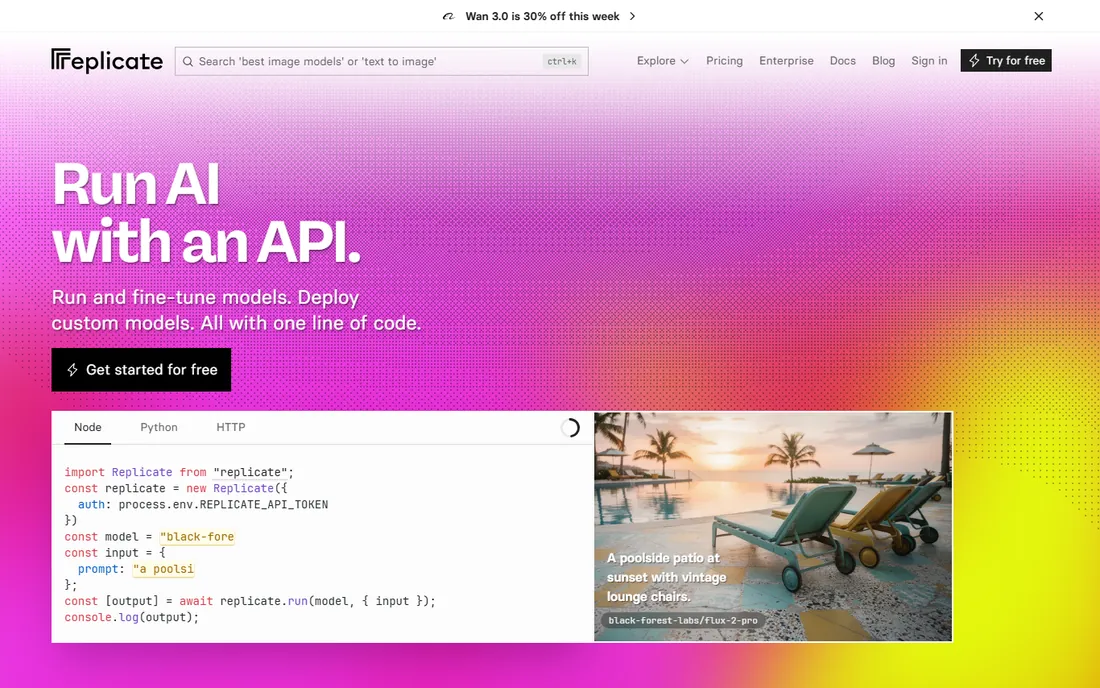
Replicate makes running AI models as easy as an API call: thousands of community-published models for text, image, video, and audio, all runnable in production with one line of code. You can fine-tune models on your own data and deploy custom models with Cog, paying only for the compute you use. It is the fastest path from a cool model to a working product.
The honest catch is governance. Like Hugging Face, model quality varies and enterprise controls are lighter than the cloud giants. For developers shipping AI features fast, especially in image, video, and audio, it is unmatched for speed.
What we like- Run thousands of community models with one line of code
- Fine-tune and deploy custom models with the Cog tool
- Pay only for the compute you use
Watch out for- Community model quality varies
- Less enterprise governance than cloud platforms
How we chose
We compared eight generative AI platforms in October 2026 using vendor homepages and documentation, plus 2026 platform comparisons from cloud engineering publications and developer forums. We prioritized model access and choice, pricing transparency, free-tier generosity, compliance and data residency, ecosystem fit, and the path from prototype to production. No vendor paid for placement, and nothing here is based on hands-on product testing.
Build the abstraction layer
The single best piece of advice for 2026: do not hard-code your application to one vendor's SDK. Model catalogs, pricing units, and agent frameworks are all still moving fast, and the team that can swap models without re-architecting will have a much easier 2027. Use a provider-neutral API layer like LiteLLM or the Converse API pattern.
Then route workloads by economics. Run high-volume, cost-sensitive work on the cheapest capable model, often Gemini Flash on Google's platform. Use frontier models like GPT or Claude where quality differences matter. Many enterprises run all three clouds behind one gateway, and the comparisons suggest you probably should too.
The compliance filter comes first
Before comparing models, check the compliance box. If you sell to US federal agencies or regulated industries, FedRAMP High and data residency requirements may eliminate options before the evaluation starts. AWS Bedrock and Azure AI Foundry lead here; Google's coverage has been catching up.
Then check data terms: where does your data go, is it used for training, and can you keep it in your region or your own cloud? Private deployment options from Cohere and the cloud giants exist for a reason. The cheapest platform is not cheap if it disqualifies you from the deal.
Frequently asked questions
What is the best generative AI platform?
There is no single best. AWS Bedrock wins for multi-model flexibility, Azure AI Foundry for Microsoft shops needing GPT models, Google's Gemini platform for cost at scale and long context, and OpenAI's platform for the newest models fastest. Most enterprises use more than one.
How much does it cost to use generative AI platforms?
All major platforms bill per token or per character, so costs scale with usage. Google offers $300 in free credits and AWS up to $200 for new customers. At high volume, costs vary enormously: one analysis found a 45x spread between the cheapest and priciest options for the same workload.
What is the difference between OpenAI's platform and Azure OpenAI?
Both offer OpenAI's models. OpenAI's platform is direct, fastest to new features, and simplest for startups. Azure AI Foundry offers the same models with enterprise SLAs, Entra ID, private networking, and compliance certifications, which regulated enterprises need.
Can I use these platforms for free?
Yes, to start. Google gives new customers $300 in credits, AWS gives up to $200, Anthropic and Replicate have free tiers, and Hugging Face is free for public models and hosting. Production workloads are all pay-per-use.
Which platform is best for open-source models?
Hugging Face is the largest open-model hub with 45,000+ models through one API. Replicate is the fastest way to run them in production. Amazon Bedrock and Google's Model Garden also host open models like Llama and Mistral with enterprise controls.
Should I build on one platform or several?
Several. The winning 2026 strategy is multi-platform: route each workload to the most cost-effective and capable platform behind an abstraction layer, so you can swap models as pricing and capabilities change.
Sources we checked (10)
- https://platform.openai.com/
- https://cloud.google.com/vertex-ai
- https://aws.amazon.com/bedrock
- https://azure.microsoft.com/en-us/products/ai-foundry
- https://www.anthropic.com/
- https://cohere.com/
- https://huggingface.co/
- https://replicate.com/
- https://www.agilesoftlabs.com/blog/2026/05/aws-bedrock-vs-azure-openai-vs-google
- https://tech-insider.org/bedrock-vs-azure-ai-foundry-vs-vertex-ai-2026/
Is your product missing or out of date?
We review this list regularly. Vendors can request a listing, send updated pricing or ask about featured placement.

Shihab Mia · Founder, Rankite
Shihab has spent more than a decade helping SaaS and e-commerce brands grow through search. He writes Rankite's software buying guides from pricing pages, documentation and public user reviews. More about Shihab.