How we make this list: we compare pricing pages, product documentation and public user reviews. Rankite is independent; if a vendor ever pays for a featured spot, that listing is clearly labeled Partner.
Key takeaways
- Vantage is the most accessible entry point, with a free Starter tier and a $30/month Pro plan, plus AI spend tracking for LLM costs.
- CloudZero leads on unit economics, tying cloud and AI spend to cost per customer and per feature, but pricing is quote-based and aimed at larger teams.
- IBM Kubecost is free to install and remains the default for Kubernetes cost visibility, now under IBM's Apptio umbrella.
- nOps and ProsperOps both automate commitment management, but their share-of-savings pricing means cost scales with the savings they generate.
- Enterprise buyers choosing between Apptio Cloudability and Flexera One are really choosing between finance-led chargeback workflows and broader IT asset governance.
Quick comparison
| Tool | Best for | Starting price | Free plan |
|---|
 CloudZero CloudZero | engineering-led teams that need unit economics | See website | No |
 Vantage Vantage | startups and mid-market teams that want self-serve FinOps | $30/month | Yes |
 IBM Kubecost IBM Kubecost | Kubernetes teams that need cost visibility fast | Free | Yes |
 nOps nOps | AWS-heavy teams that want automated commitment management | See website | No |
 Finout Finout | teams unifying cloud, SaaS and AI spend in one bill | See website | No |
 ProsperOps ProsperOps | teams that want commitment optimization on autopilot | See website | No |
 Harness Harness | engineering teams already running Harness pipelines | See website | Free trial |
 Apptio Cloudability Apptio Cloudability | large enterprises running formal FinOps with chargeback | See website | No |
 Flexera One Flexera One | enterprises that want FinOps inside full technology governance | See website | No |
Is your product missing or out of date?
We review this list regularly. Vendors can request a listing, send updated pricing or ask about featured placement.
The best FinOps software
Starting priceSee website
Free planNo
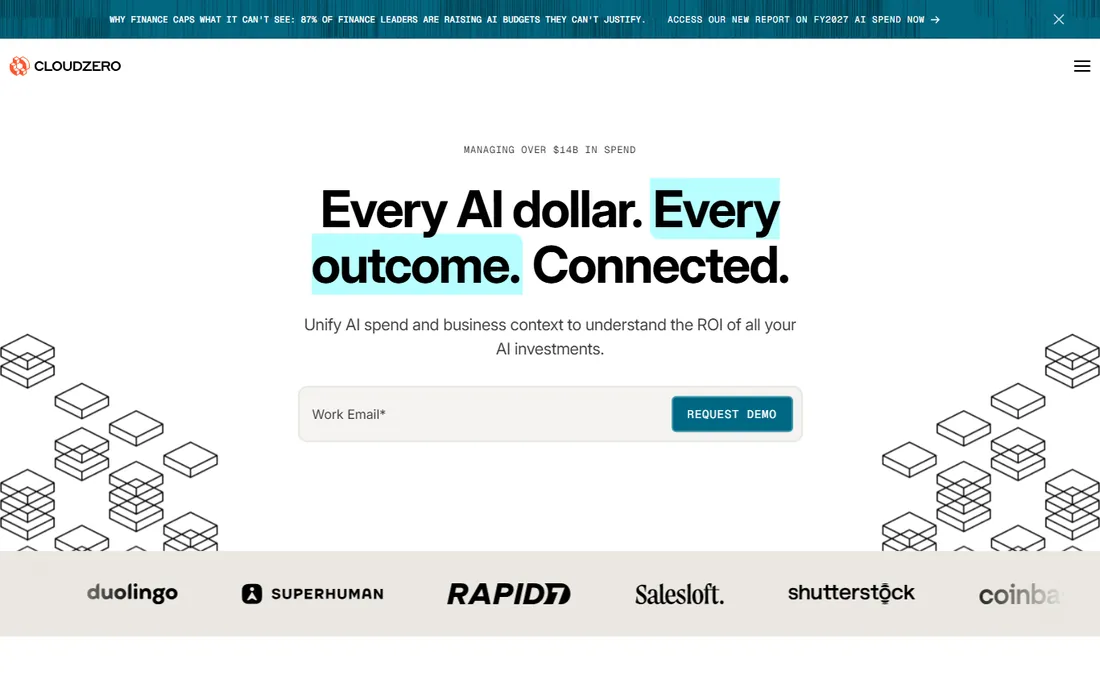
Flexera's 2025 State of ITAM Report puts wasted technology spend at 20 to 30 percent of enterprise IT budgets, and cloud is where most of that waste hides. CloudZero attacks the problem from the engineering side: instead of allocating costs by tag and hoping the tags are right, its CostFormation engine maps spend to customers, features and products directly. For a SaaS company that needs to know what each customer costs to serve, that is the headline feature.
The company now tracks token-level AI spend alongside cloud and Kubernetes costs. Pricing is tiered but quote-based, with no monthly overages. There is no free tier or self-serve signup, so small teams should start with Vantage or the native cloud tools instead.
What we like- Cost-per-customer and cost-per-feature allocation without heavy tagging
- Native AI spend tracking across model providers
- No monthly overages, pricing stays flat when spend spikes
Watch out for- Quote-based pricing with no public tiers
- Aimed at mid-market and enterprise, not small teams
- Onboarding depth means more setup than self-serve tools
#2
Vantage
Best for: startups and mid-market teams that want self-serve FinOps
Visit vantage.sh
Starting price$30/month
Free planYes
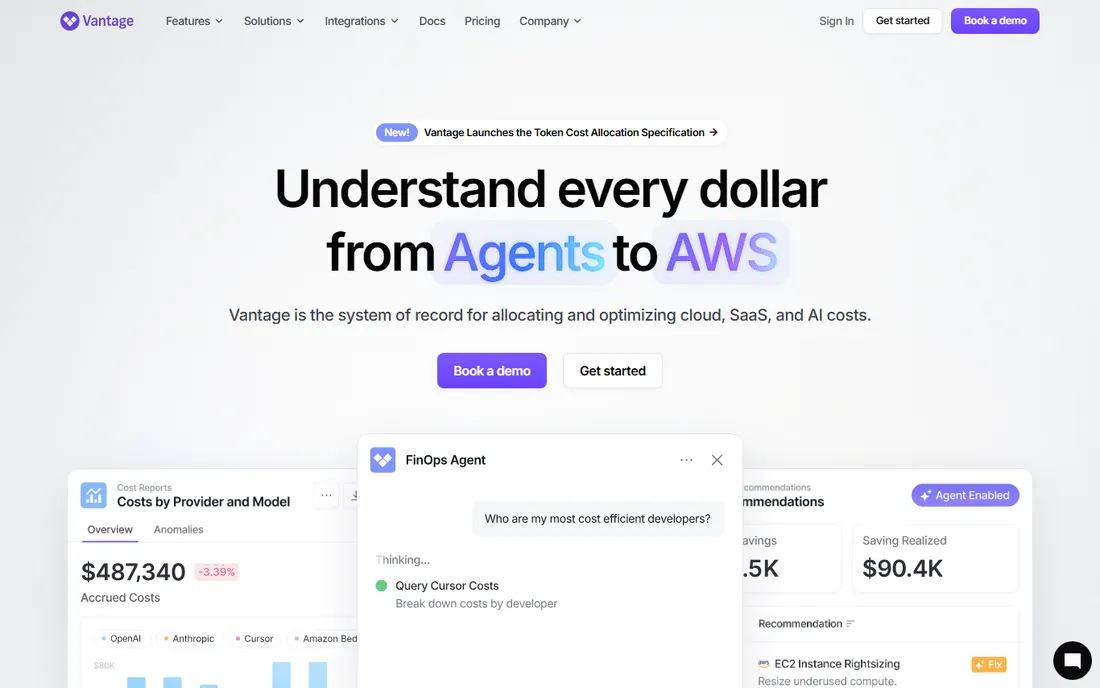
Vantage is the rare FinOps platform you can start using without talking to sales. The pricing page is public and simple: a free Starter tier, Pro at $30/month, Business at $200/month and custom Enterprise, each tied to a tracked-spend ceiling. For a startup watching its first AWS bill climb, that transparency is a genuine differentiator in a category full of quote-only vendors.
It now includes LLM token allocation, Kubernetes cost reporting and a Terraform provider. The catch is the ceiling model: once tracked spend outgrows the Business tier, you are back in enterprise-sales territory. For teams under six figures a month in cloud spend, Vantage is the easiest credible starting point.
What we like- Free Starter tier covering $2,500 of cloud spend
- Pro plan at $30/month with transparent fixed pricing
- LLM token allocation and AI provider integrations included
Watch out for- Spend-based plan caps mean growing companies graduate to custom Enterprise pricing
- AWS-centric autopilot features are thinner on other clouds
- Smaller vendor than the enterprise incumbents
#3
IBM Kubecost
Best for: Kubernetes teams that need cost visibility fast
Visit kubecost.com
Starting priceFree
Free planYes
Kubecost solved one problem extremely well: showing Kubernetes teams where their cluster money goes. It breaks costs down by namespace, label, deployment and team, reconciles against the actual cloud bill and surfaces overprovisioned workloads with rightsizing recommendations. Installation takes minutes, and the core product is free, which explains the wide adoption.
The product is now IBM Kubecost, part of the Apptio portfolio after IBM's acquisition, which gives it enterprise backing and a roadmap inside a larger FinOps suite. The tradeoff has not changed: this is a Kubernetes tool, not a cloud cost platform. If your spend lives mostly in EKS, GKE or AKS, start here. If you need SaaS, AI and multi-cloud allocation in one place, pair it with a broader platform like CloudZero or Finout.
What we like- Free to install with value in under five minutes
- Per-namespace and per-workload cost allocation
- Open-source roots with 10M+ installs claimed
Watch out for- Kubernetes-only, so multi-cloud non-K8s spend needs another tool
- Enterprise features sit behind IBM sales
- Narrower scope than full FinOps platforms
#4
nOps
Best for: AWS-heavy teams that want automated commitment management
Visit nops.io
Starting priceSee website
Free planNo
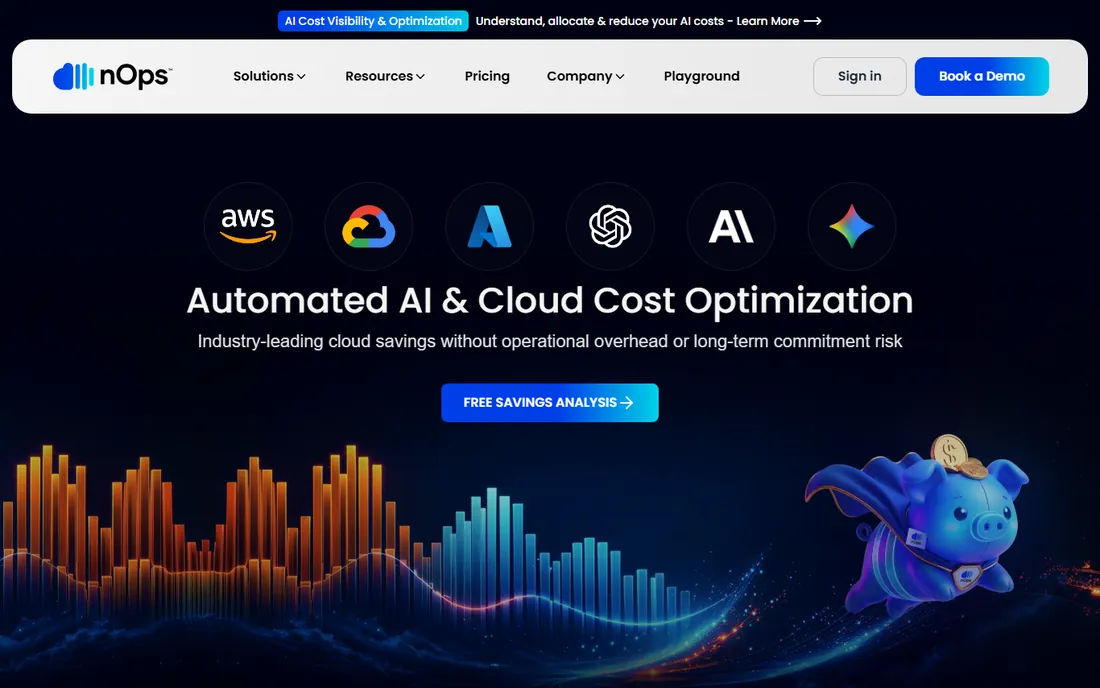
nOps sells outcomes, not dashboards. You connect your cloud accounts with read-only access, and its engine continuously buys, sells and rebalances Reserved Instances, Savings Plans and committed use discounts to match your real usage. The pitch is that most teams capture only about a quarter of available compute savings manually, and automation closes the gap without the lock-in anxiety of three-year commitments.
nOps charges a percentage of the savings it generates, so you cannot budget it from a price list. For AWS-centric SaaS and AI/ML teams with meaningful compute spend, its automated commitment management is best in class. Multi-cloud shops should compare ProsperOps or Finout first.
What we like- AI engine buys and manages RIs, Savings Plans and CUDs automatically
- Read-only access with no agents or infrastructure changes
- Claims 50%+ savings for customers
Watch out for- Pricing is a share of savings with no public rate
- AWS-first with thinner Azure and GCP depth
- No free tier, evaluation runs through demos and savings analyses
#5
Finout
Best for: teams unifying cloud, SaaS and AI spend in one bill
Visit finout.io
Starting priceSee website
Free planNo
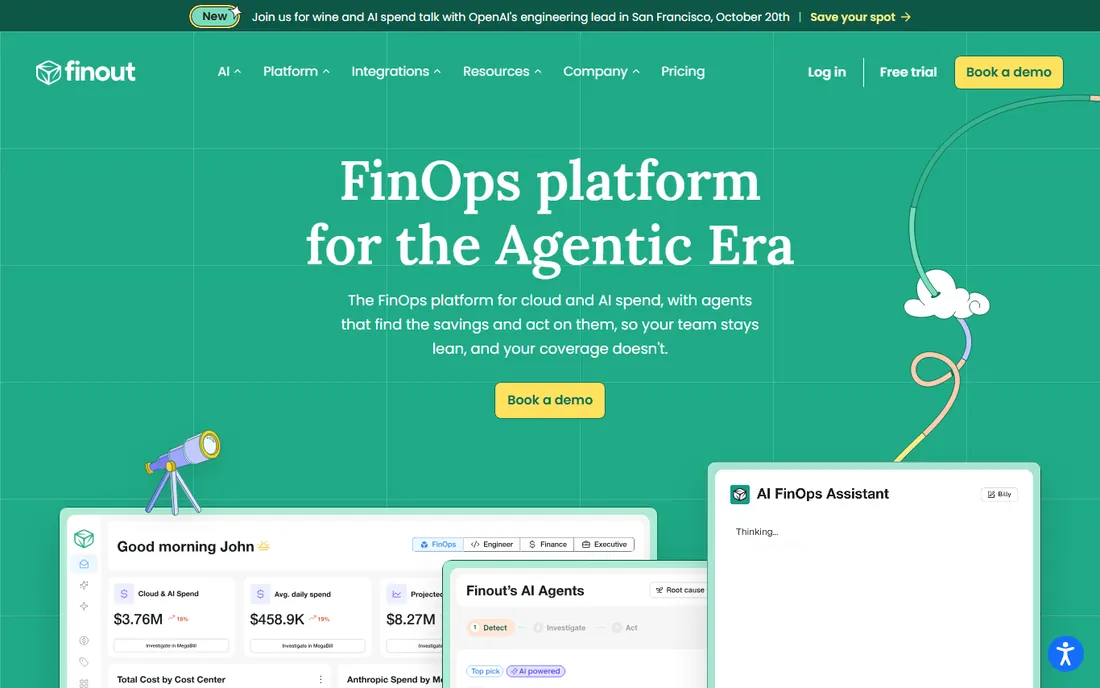
Finout's argument is that cloud cost tools stop at the cloud boundary while real spend does not. Its MegaBill engine ingests AWS, Azure, GCP, Kubernetes, Snowflake, Datadog, OpenAI, Anthropic and dozens of other vendors into one allocation model, so a single cost-per-request metric can span infrastructure, data and AI. For companies whose AI bill now rivals their cloud bill, that unified view is increasingly the point.
Pricing is a flat platform fee based on spend under management, with no public numbers, so expect a scoped quote. Finout fits organizations that have outgrown single-cloud dashboards. Smaller teams will find Vantage simpler and cheaper.
What we like- MegaBill engine unifies cloud, Kubernetes, SaaS and AI spend with shared allocation rules
- Flat platform fee based on spend under management, not per seat
- AI agents for detection, investigation and orchestration
Watch out for- Quote-based pricing with no public tiers
- Newer vendor with a smaller customer base than incumbents
- Flat-fee-on-spend model can look expensive at very large scale
Starting priceSee website
Free planNo
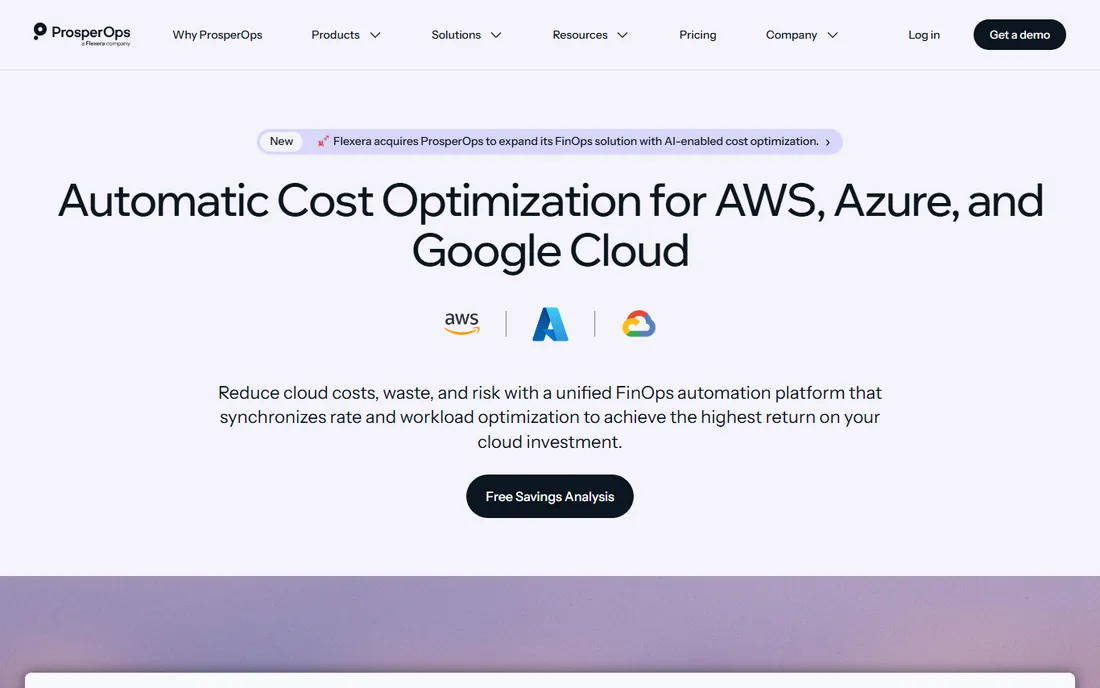
ProsperOps takes the opposite approach from visibility-first tools: it skips the dashboards and directly manages your commitment portfolio. Its algorithms continuously adjust Reserved Instances and Savings Plans across AWS, Azure and Google Cloud, optimizing for effective savings rate while limiting lock-in risk. Customers report the classic outcome: savings go up while the hours spent managing commitments go to near zero.
Like nOps, ProsperOps charges based on the savings it creates, which makes the ROI conversation simple but the budgeting conversation vague. The product is narrower than a full FinOps platform: it will not do chargeback, budgeting or AI cost allocation. But for the specific job of maximizing commitment discounts without manual effort, it is the most hands-off option available, and the multi-cloud coverage beats most single-cloud optimizers.
What we like- Autonomous discount management across AWS, Azure and GCP
- Effective savings rate metrics with low commitment lock-in risk
- Pays-for-itself model tied to generated savings
Watch out for- Pricing is a share of savings with no published percentage
- Focused on rate optimization, not full cost visibility
- No free tier for evaluation
#7
Harness
Best for: engineering teams already running Harness pipelines
Visit harness.io
Starting priceSee website
Free planFree trial
Harness approaches FinOps from the delivery pipeline rather than the finance office. Its Cost Management module, now framed as a Cost Management Agent, attributes cloud spend, detects anomalies, enforces budgets and autostops idle resources, all visible where engineers deploy code. For a team already running Harness CD, adding cost visibility to the same platform removes the context switch that kills FinOps adoption.
The catch is the obvious one: this is a module, not a platform. If your company does not use Harness for delivery, buying the whole suite for cost management alone rarely makes sense. Pricing is per-module and quote-based, though the free trial covers the full platform without a credit card. For Harness shops, it is the path of least resistance to cost-aware engineering. Everyone else should evaluate the dedicated FinOps vendors first.
What we like- Cost management lives inside the CI/CD platform engineers already use
- Autostopping kills idle resources automatically
- Free trial of the full platform with no credit card
Watch out for- FinOps is one module in a large platform, not a standalone best-of-breed
- Pricing is per-module and quote-based
- Weakest fit for teams not already on Harness
#8
Apptio Cloudability
Best for: large enterprises running formal FinOps with chargeback
Visit apptio.com
Starting priceSee website
Free planNo
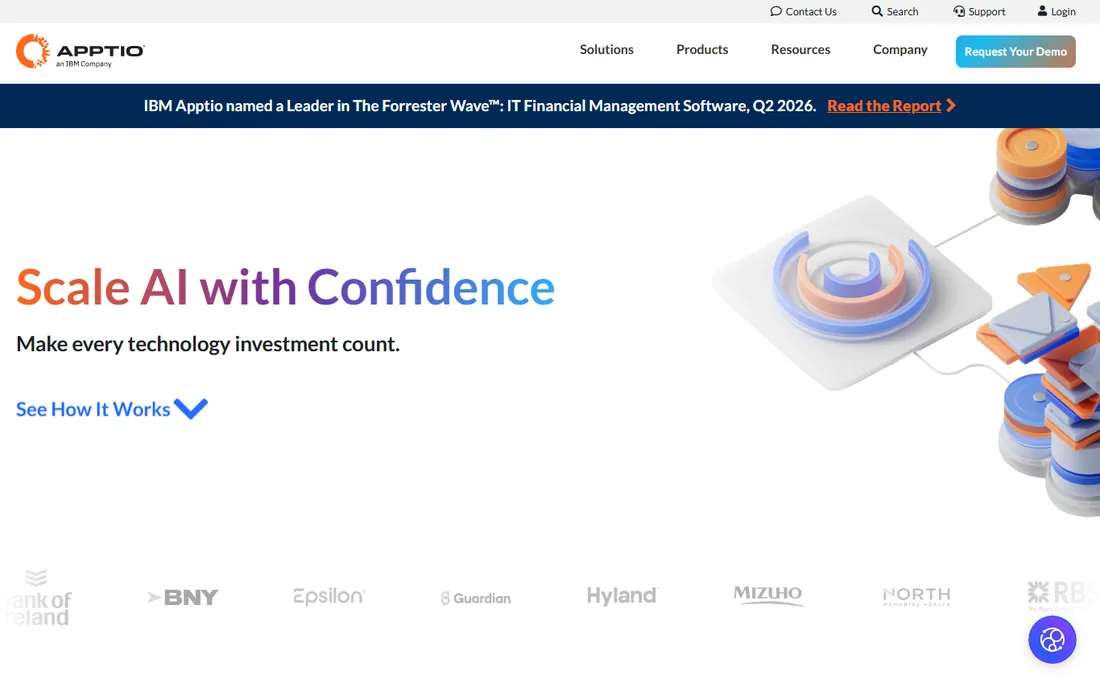
Cloudability is the incumbent enterprise FinOps platform, now IBM Cloudability inside the Apptio portfolio. Its strength is the finance workflow: multi-dimensional cost allocation, showback and chargeback, budgeting with variance analysis and forecasting that FP&A teams can actually use. The Savings Automation module adds commitment management so the platform covers both visibility and optimization.
This is unambiguously enterprise software. There is no trial, no public pricing and no self-serve path; you buy through IBM sales and implement with professional help. For a large organization with a cloud center of excellence and formal FinOps processes, that depth is the point. For everyone else, the same outcomes arrive faster and cheaper through Vantage or CloudZero. Choose Cloudability when finance owns the FinOps conversation.
What we like- Deep allocation, budgeting and forecasting built for finance teams
- Savings automation runs commitment programs on autopilot
- IBM backing with a broad TBM portfolio around it
Watch out for- Enterprise sales cycle with no public pricing or trial
- Implementation is heavier than self-serve alternatives
- Overkill for companies without a formal FinOps practice
#9
Flexera One
Best for: enterprises that want FinOps inside full technology governance
Visit flexera.com
Starting priceSee website
Free planNo
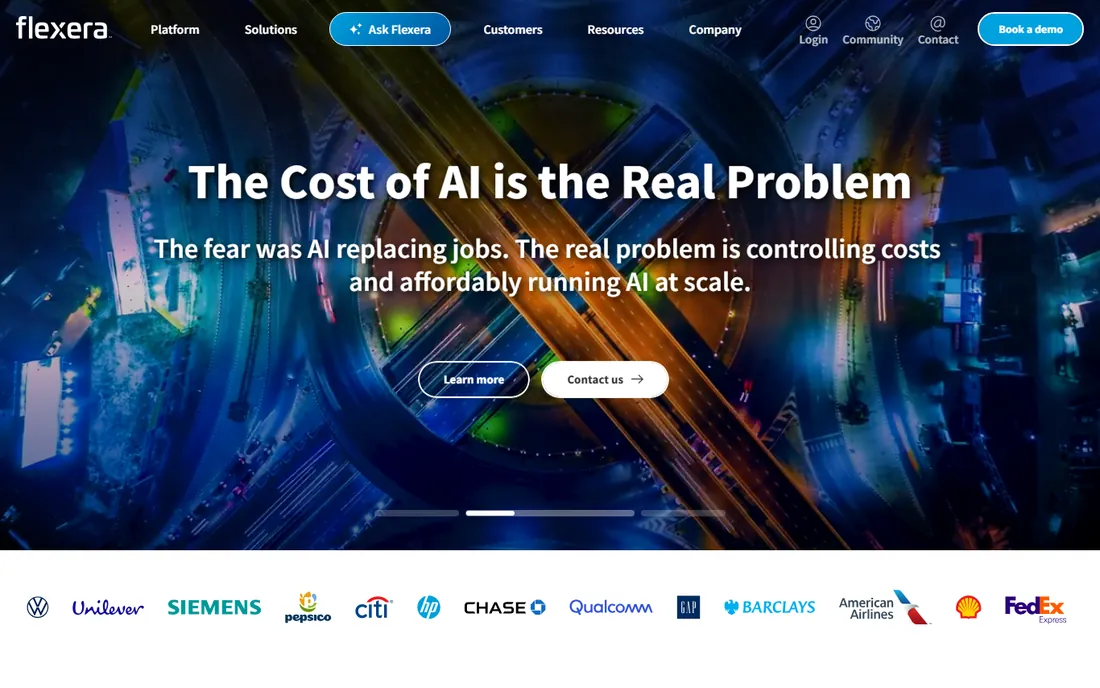
Flexera One treats cloud cost as one discipline inside total technology spend. Alongside FinOps, the platform covers SaaS management, software asset management and IT asset management, all grounded in the Technopedia catalog of technology data. For an enterprise already managing licenses, renewals and audits in Flexera, adding cloud cost to the same governance model is a natural consolidation.
The tradeoff is focus. A platform that does everything rarely does one thing as deeply as a specialist, and Flexera's FinOps module competes with vendors that think about nothing else. Pricing is enterprise and quote-based, and implementations are scoped accordingly. Flexera One fits organizations standardizing all technology financial management on one platform. Teams that want the sharpest cloud cost tool should look at the dedicated names above.
What we like- Combines FinOps with SaaS management and IT asset management in one platform
- Technopedia data catalog enriches asset and spend data
- Trusted by a large share of the Fortune 500
Watch out for- Quote-only enterprise pricing
- Breadth means FinOps depth can trail dedicated vendors
- Implementation scope is large
How we chose
We screened the FinOps category against the FinOps Foundation's core capabilities: visibility, allocation, forecasting, anomaly detection and optimization. We kept only products that exist today and perform real FinOps work across cloud, Kubernetes, SaaS or AI spend. We read vendor homepages, pricing pages, documentation and public reviews, and every price on this page comes from the vendor's own website as of October 2026. Where vendors publish no prices, we say so instead of repeating third-party estimates. Native cloud tools like AWS Cost Explorer are free starting points, but this list focuses on third-party platforms that add allocation depth, automation and multi-cloud coverage.
Start with where your spend actually lives. A Kubernetes-heavy shop gets the fastest win from IBM Kubecost, which is free to install and answers the namespace-level questions in an afternoon. An AWS-centric SaaS company with big compute bills should look at nOps or ProsperOps for automated commitment management. A multi-cloud organization with SaaS and AI spend needs a unifier like Finout, CloudZero or Vantage. Matching the tool to the footprint matters more than feature count.
Then decide who owns the outcome. Engineering-led FinOps favors tools engineers will open: Vantage, CloudZero and Harness all meet developers where they work. Finance-led FinOps favors Apptio Cloudability, with its chargeback, budgeting and forecasting workflows. When ownership is unclear, that is usually the real problem, and no tool fixes it. Assign the owner before you buy.
Pricing models shape incentives. Flat fees like Finout's or Vantage's fixed tiers are predictable and easy to budget. Share-of-savings models like nOps and ProsperOps align the vendor with your results but make the line item variable. Quote-only enterprise pricing means budgeting starts with a sales conversation.
Finally, run a real trial on your own data before committing. Connect the tool to one cloud account, check whether cost attribution matches your mental model of the business, and see if engineers actually open it. A FinOps platform nobody looks at is just another bill. The tools with free tiers and trials, Vantage, Kubecost and Harness, make this evaluation cheap. The enterprise vendors make you do it through a proof of concept, which is slower but still worth insisting on.
Why AI spend changed the FinOps conversation
Two years ago, FinOps meant cloud bills. Now a growing share of technology spend arrives as API calls to model providers, GPU clusters for training and inference, and per-seat AI coding tools, and most of it bypasses the billing exports that traditional FinOps platforms ingest. That is why nearly every vendor on this list now markets AI cost features: CloudZero tracks token-level spend by model and provider, Vantage allocates LLM tokens alongside cloud costs, Finout breaks AI usage down by model and endpoint, and Flexera maps the full AI stack.
The practical question is whether the tool attributes AI spend like cloud spend. Token counts should land on the team, product and customer that generated them, not sit as one invoice line. If AI is already a real cost center, weight AI attribution as heavily as cloud allocation, because vendors are not equal here yet.
Frequently asked questions
What is FinOps software?
FinOps software helps organizations track, allocate and optimize cloud spending. It connects engineering usage data with financial data so teams can see what drives costs, attribute spend to teams and products, set budgets, detect anomalies and automate savings. The practice follows the FinOps Foundation framework, which brings financial accountability to cloud through collaboration between engineering, finance and product teams.
How much does FinOps software cost?
It ranges from free to enterprise contracts. Vantage starts at $30/month with a free tier, IBM Kubecost is free to install, and Finout, CloudZero, nOps and ProsperOps use custom pricing based on spend under management or a share of savings. Enterprise platforms like Apptio Cloudability and Flexera One are quote-based and typically run into five or six figures annually. Native cloud tools from AWS, Azure and Google are free.
What is the difference between FinOps tools and cloud cost management tools?
The terms overlap heavily. Cloud cost management describes the general practice of monitoring and reducing cloud spend. FinOps tools specifically align with the FinOps Foundation framework, emphasizing collaboration between engineering and finance, cost allocation to business units, and continuous optimization. In practice, most products marketed as either do the same core jobs.
Which FinOps tool is best for Kubernetes?
IBM Kubecost is the standard answer: minutes to install, costs broken down by namespace and workload, reconciled with the cloud bill, with a free tier. Vantage and CloudZero cover Kubernetes inside broader platforms. For pure Kubernetes visibility, Kubecost is hard to beat.
Do FinOps tools track AI and LLM costs?
Increasingly, yes. CloudZero, Vantage, Finout and Flexera One all offer AI spend tracking, allocating token and API costs by provider, model, team or product. nOps covers AI-adjacent GPU and compute optimization. Native cloud tools generally do not break out AI provider spend, which is one reason teams adopt third-party FinOps platforms as AI bills grow.
Should I start with native cloud cost tools or buy a FinOps platform?
Start with the native tools: AWS Cost Explorer, Azure Cost Management and Google Cloud Billing are free and answer where money goes. Buy a third-party platform when you need multi-cloud visibility, allocation to teams, anomaly detection, chargeback or automated commitments. Most companies outgrow native tools between $20,000 and $50,000 in monthly spend.
Sources we checked (11)
- https://www.cloudzero.com/
- https://www.vantage.sh/
- https://vantage.sh/pricing
- https://www.kubecost.com/
- https://www.kubecost.com/pricing/
- https://www.nops.io/
- https://www.finout.io/
- https://www.prosperops.com/
- https://www.harness.io/
- https://www.apptio.com/
- https://www.flexera.com/
Is your product missing or out of date?
We review this list regularly. Vendors can request a listing, send updated pricing or ask about featured placement.

Shihab Mia · Founder, Rankite
Shihab has spent more than a decade helping SaaS and e-commerce brands grow through search. He writes Rankite's software buying guides from pricing pages, documentation and public user reviews. More about Shihab.