How we make this list: we compare pricing pages, product documentation and public user reviews. Rankite is independent; if a vendor ever pays for a featured spot, that listing is clearly labeled Partner.
Key takeaways
- Petrel is the default subsurface platform for integrated oil and gas teams; Kingdom, now an SLB product after the September 2026 divestiture, is the leaner interpretation seat many US independents prefer.
- For mining and minerals, Leapfrog wins on fast implicit modeling while Micromine covers the full journey from exploration data to mine operations.
- OpendTect is the only serious open-source seismic interpretation system, and RockWorks remains the budget pick for consultants working from borehole data.
- AI-assisted interpretation, led by Geoteric, has matured into a real workflow; treat it as a way to speed interpreters up, not replace them.
Quick comparison
Is your product missing or out of date?
We review this list regularly. Vendors can request a listing, send updated pricing or ask about featured placement.
The best exploration software
#1
Petrel (SLB)
Best for: integrated oil and gas subsurface teams
Visit slb.com
Starting priceSee website
Free planNo
Petrel is the reference subsurface platform in oil and gas, and SLB keeps investing in it. The September 2026 release added guided well-placement workflows and probabilistic opportunity mapping, which tells you where the product is headed: less manual picking, more machine-assisted ranking of prospects. It runs on-premise or in SLB's Delfi digital platform, so teams can keep sensitive data local while still using cloud compute for heavy jobs.
The honest catch is cost and complexity. SLB does not publish prices, and a serious deployment involves licenses, services and training that put it out of reach for very small shops. If you are a two-person consultancy, Petrel is more platform than you need.
Where it earns its place is on multi-disciplinary teams that need everyone looking at the same earth model. Interpretations, well plans and simulation cases share one data backbone, which cuts down the version chaos that plagues big projects.
What we like- Seismic-to-simulation in one platform
- Strong AI-assisted interpretation features
- OSDU-compliant data foundation
Watch out for- Enterprise pricing with no public numbers
- Heavy hardware requirements
- Long onboarding for new teams
#2
Kingdom (SLB)
Best for: seismic and geological interpretation for independents
Visit slb.com
Starting priceSee website
Free planNo
Kingdom changed addresses in 2026. S&P Global completed the sale of its geoscience software portfolio to SLB on September 1, 2026, and Kingdom is now listed as an SLB mark alongside Petrel and Harmony Enterprise. The product itself is unchanged: a 2D and 3D seismic interpretation package with geological tools, seismic attributes, velocity modeling and prospect generation, long favored by US land and unconventional operators.
For independent operators, Kingdom's appeal has always been focus. It does interpretation well without asking you to buy into a full subsurface platform. The Kingdom Gateway plugin lets Kingdom users push interpretations into Petrel and pull modeled grids back, which matters now that both products sit under SLB.
The watch item is the transition. SLB says it will integrate the acquired portfolio with its digital platforms and AI, and S&P Global data will keep flowing through the tools. Buyers signing multi-year deals should still ask about the 2027 roadmap.
What we like- Widely used by US onshore operators
- Strong 2D/3D interpretation and prospect generation
- Pairs with Petrel through Kingdom Gateway
Watch out for- Ownership changed hands in 2026, watch the roadmap
- Module pricing adds up
- Windows-centric
Starting priceSee website
Free planFree trial (14 days)
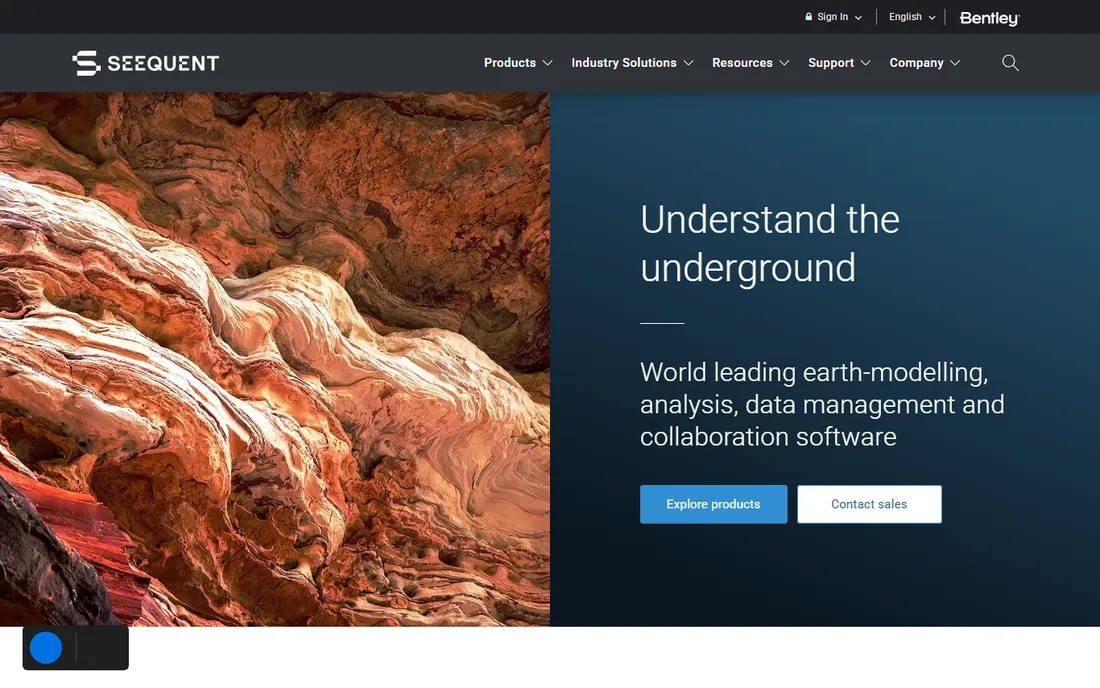
Leapfrog made its name by replacing manual wireframing with implicit modeling: feed it drillholes and structural data, and it builds 3D geological models that update automatically when new data arrives. For mineral exploration teams, that speed changes how targets get tested. The 2026.1 release deepened the structural workflows and tightened the connection between drilling design and resource estimation.
Seequent, now the Bentley Subsurface Company, has been pushing Leapfrog toward its cloud platform Evo, which helps distributed teams share models and data. Nine of the ten largest mining companies use Seequent software, so files and workflows you build in Leapfrog travel well across the industry.
The limitation is scope. Leapfrog is a geology tool, not a mine planning or scheduling suite, so production-stage teams usually pair it with something like Surpac or Micromine.
What we like- Implicit modeling builds models in hours not weeks
- Strong drillhole-to-resource workflow
- 14-day trial and free training options
Watch out for- Mining-focused, less useful for petroleum
- Advanced geostatistics live in Leapfrog Edge at extra cost
- Subscription pricing is opaque

#4
Oasis montaj (Seequent)
Best for: geophysical data processing and mapping
Visit seequent.com
Starting priceSee website
Free planFree trial
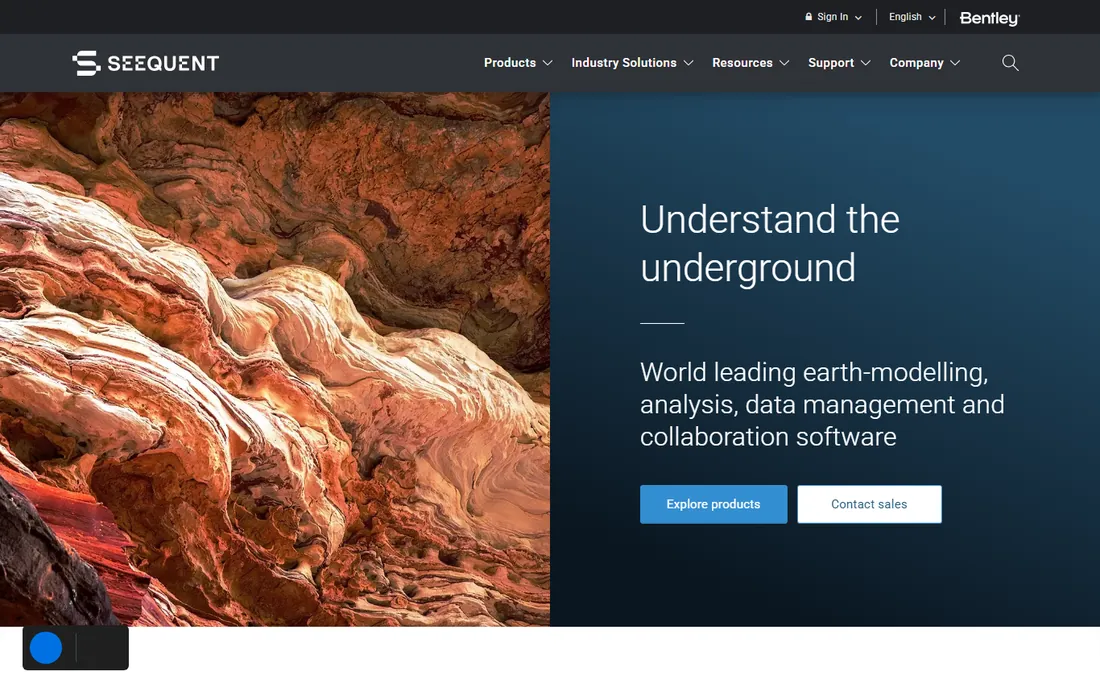
Before anyone drills, someone has to process the geophysics, and Oasis montaj has been the standard workbench for that job for decades. It takes raw survey data through quality control, processing, gridding and interpretation in a single project environment, with extensions for specialist methods like UXO detection and basin modeling for energy exploration.
The 2026.1 release added tighter Seequent Evo cloud integration and faster inversion for time-domain electromagnetic data. For exploration teams, the practical value is traceability: every grid and map can be traced back to the raw data, which matters when results go in front of investors or regulators.
Licensing is flexible in a way consultants like, with daily, weekly and 12-month named or shared options.
What we like- Handles magnetic, gravity, EM and radiometric data in one project
- 50+ data format support
- Daily and weekly licenses suit project work
Watch out for- Desktop-first with a dated feel in places
- Extensions add cost
- Serious learning curve for non-geophysicists
#5
Move (Petex)
Best for: structural modeling and restoration
Visit petex.com
Starting priceSee website
Free planNo
Move is the specialist's tool. Where Petrel and Kingdom interpret the data, Move tests whether the structural story holds together: kinematic restoration, fault and fracture analysis, geomechanical modeling, and building balanced cross-sections. Structural geologists at operators and consultancies treat it as the reference for this work, and Petex's academic donation program means most new structural geologists learn on it.
The suite connects to Petrel, so teams can validate interpretations built elsewhere without rebuilding them. Petex also ships free field mapping apps, FieldMOVE and FieldMOVE Clino, which field teams genuinely use.
As a buying decision, Move is a complement rather than a platform.
What we like- The industry standard for structural restoration and validation
- Links to Petrel and other platforms
- Strong academic program
Watch out for- Niche tool, not a full interpretation suite
- Pricing is entirely quote-based
- Smaller vendor with a narrower ecosystem
Starting priceSee website
Free planNo
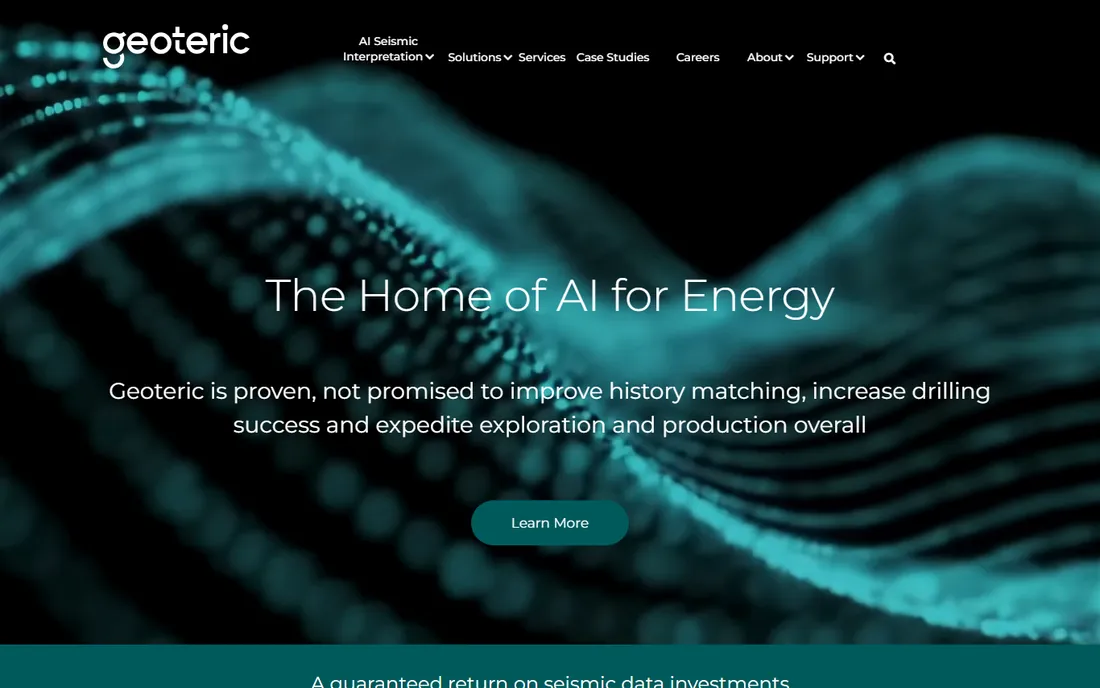
Geoteric bet on AI seismic interpretation before it was fashionable, shipping commercial AI interpretation tools in 2019, and the bet is paying off. The Newcastle-based company, acquired by a Nordic investment group in 2024, now counts over 500 completed AI projects and signed a multi-year agreement with PETRONAS Carigali in 2025 to deploy its AI across global operations. In 2026 it added an AI Fault Interpretation workflow to its AI Hub platform.
The pitch is cycle time: the company reports project timelines cut by up to 90% when AI handles the repetitive picking and interpreters focus on judgment calls. That matches how most teams actually use it, as an accelerator inside existing workflows rather than a standalone interpretation environment.
The honest caveat applies to all AI interpretation: the networks are only as good as their training data, and every AI-generated horizon still needs a geoscientist's review.
What we like- First to market with commercial AI interpretation
- 500+ AI projects delivered
- Strong recent momentum with majors like PETRONAS
Watch out for- AI output still needs interpreter QC
- Enterprise sales process
- Smaller company than the platform vendors

#7
OpendTect (dGB Earth Sciences)
Best for: open-source seismic interpretation
Visit dgbes.com
Starting priceFree (open source)
Free planYes (open source)
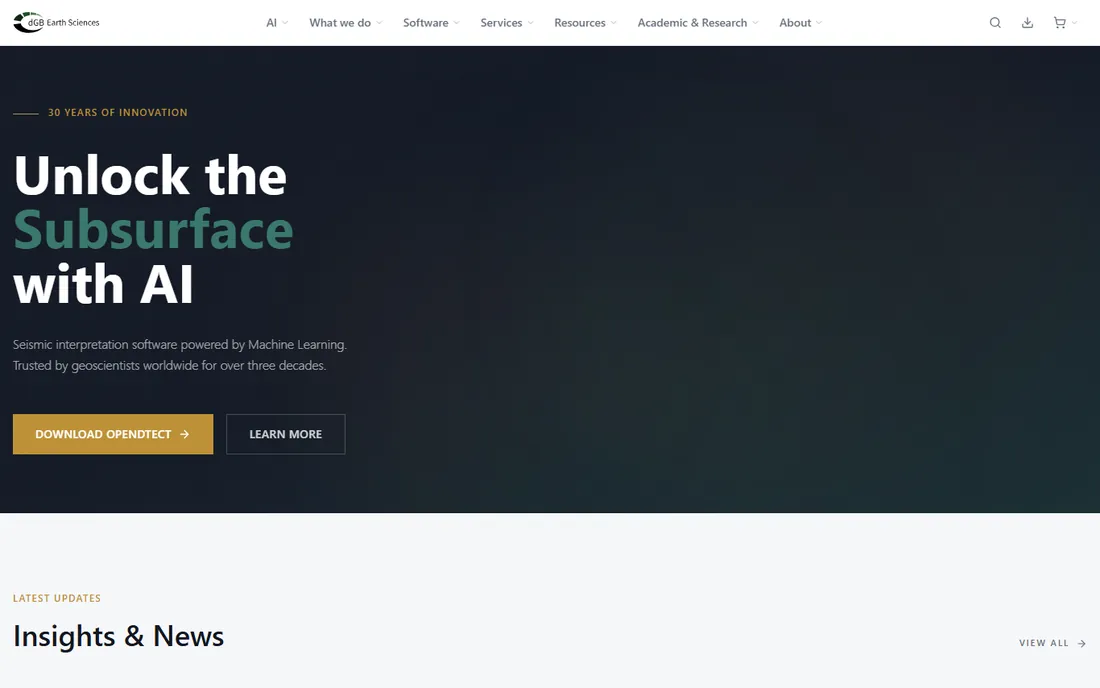
OpendTect occupies a unique position: it is the world's only open-source seismic interpretation system, released under GPLv3 and maintained by dGB Earth Sciences. It handles 2D, 3D and 4D seismic visualization and basic interpretation, plus ground-penetrating radar, on Windows, macOS and Linux. Thousands of academic and open-source users run it worldwide.
For small teams, the value proposition is simple: real seismic interpretation capability at zero license cost, with a plugin architecture that lets developers extend it in C++ or Python. When projects grow, OpendTect Pro adds commercial functionality and access to paid plugins for advanced and AI-driven workflows.
The trade-off is polish and depth. The free tier covers visualization and basic interpretation well, but the advanced attributes and machine-learning workflows that define modern interpretation sit in the paid tiers.
What we like- The only full open-source seismic interpretation system
- Python integration for custom workflows
- Commercial Pro tier when you outgrow the free version
Watch out for- Free version lacks advanced commercial workflows
- Smaller support organization
- Interface shows its research-tool roots
Starting priceFrom $860/year
Free planFree trial
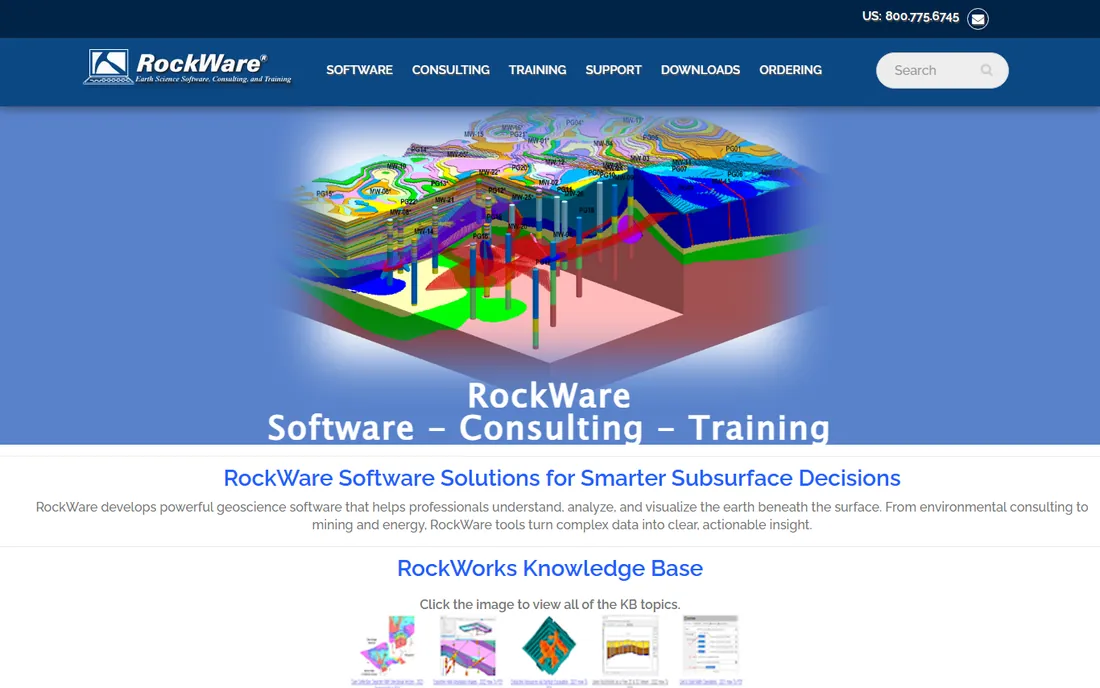
RockWorks is the workhorse of environmental, geotechnical and small mining consultancies. Built around a borehole database, it turns drilling data into maps, cross-sections, fence diagrams, strip logs and 3D solid models, with volumetrics for ore, soil or contaminant calculations. RockWare has been selling geoscience software since 1983, and it shows in the depth of the toolset.
What sets RockWorks apart commercially is transparency. The vendor publishes prices: $2,000 to $6,000 for perpetual single licenses across the Basic, Standard and Advanced tiers, or $860 to $2,580 per year for annual rentals. In a market where almost everything is quote-only, that alone makes budgeting easy.
The compromises are real but manageable. It is Windows-only, the interface carries its history, and the fancier automation (scripting, SQL Server support) requires the Advanced tier.
What we like- Published pricing, rare in this market
- Strong borehole database and 2D/3D output
- Academic and classroom licenses available
Watch out for- Windows-only
- Interface feels dated
- Advanced automation needs the top tier
Starting priceSee website
Free planFree trial (14 days)
Micromine takes the opposite approach to Leapfrog's focused modeling: one ecosystem spanning the whole mining lifecycle. Micromine Origin handles exploration, geological modeling and resource estimation, while companion products cover mine design, scheduling, fleet management and data management through the Nexus cloud platform. For companies that want to grow without switching vendors, that continuity matters.
The company changed hands in 2025 when Weir Group acquired it for 624 million pounds, which has only raised its profile among majors and mid-tiers. A 14-day guided trial is available, and the vendor's global office network means support is genuinely local in most mining regions.
For pure exploration teams, the breadth can be overkill, and you will go through a sales process to get pricing. But if your project has a credible path to production, starting in Micromine avoids a painful migration later.
What we like- Covers exploration through operations in one ecosystem
- Strong in 3,200+ active projects
- Local support in 120+ countries
Watch out for- Enterprise sales process
- Can be more than early-stage explorers need
- Pricing not published

#10
Surpac (GEOVIA)
Best for: mine planning and geology at scale
Visit 3ds.com
Starting priceSee website
Free planFree trial
GEOVIA Surpac, from Dassault Systemes, is the incumbent of mine geology and planning software, used in over 120 countries for open-pit and underground operations. It covers drillhole data management, geological and block modeling, geostatistics, mine design and production, with a modular structure so teams buy only the roles they need, from Block Modeler to Stope Optimizer.
Its strength is ubiquity. Staff who know Surpac are easy to hire, files move between contractors without friction, and the 3DEXPERIENCE platform connection adds collaboration for distributed teams. Recent releases have focused on block model performance, with multi-core processing cutting estimation times sharply.
The criticism, voiced consistently in user reviews, is that the interface and innovation pace lag newer rivals. For cost-conscious operations that need proven, capable software with global support, Surpac remains the default shortlist candidate.
What we like- The most widely deployed geology and mine planning software
- Role-based modules let you buy only what you need
- Multilingual and global
Watch out for- Interface age draws criticism
- Innovation pace questioned in reviews
- Dassault enterprise sales motion
How we chose
We started from vendor documentation and product pages, checking that every tool listed is actively sold and maintained in 2026. Pricing and plan details come from the vendors' own pricing pages where published; where vendors keep pricing behind a sales process, which is most of this market, we say so instead of guessing. We cross-checked product status against 2026 industry news and weighed public reviews on G2, Capterra and industry forums for the honest weaknesses. No hands-on testing is claimed; this is a research-based comparison.
What to look for before you buy exploration software
Match the tool to your data
Seismic teams need interpretation platforms like Petrel, Kingdom or OpendTect. Drillhole-driven teams need modeling tools like Leapfrog, Micromine or RockWorks. Buying a seismic platform when your data is drillholes, or vice versa, is the most expensive mistake in this market.
Check format compatibility early
Ask vendors exactly which formats they import and export: SEG-Y for seismic, LAS for well logs, CSV and acQuire or Datashed for drilling data. If your contractors deliver in formats the software chokes on, budget for conversion time or a different tool.
Price the configuration, not the brochure
Most exploration software is modular. The base license rarely includes the attributes, geostatistics or inversion packages you actually need. Get a written quote for your specific module set, and ask what training and first-year support cost, since both are often separate line items.
Plan for the people, not just the licenses
These are expert tools with real learning curves. Vendors with strong training programs and local support, like Seequent's free training options and Micromine's regional offices, shorten the path to productive use.
How exploration software is priced
Expect quote-based enterprise pricing across most of this list. Vendors sell by named-user or concurrent license, often in tiers or modules, with annual maintenance or subscription renewals running 15 to 25 percent of the license value. Perpetual licenses still exist at vendors like RockWare, which publishes $2,000 to $6,000 perpetual prices alongside $860 to $2,580 annual rentals, but the industry trend is subscription.
Services are the hidden line item. Implementation, data migration and training are frequently quoted separately, and for enterprise platforms they can rival the license cost in year one. Academic licenses are widely available at steep discounts, which is worth knowing if you collaborate with universities.
Frequently asked questions
What is exploration software?
Exploration software helps geoscientists find oil, gas and mineral deposits before drilling. It covers seismic data interpretation, 3D geological modeling, geophysical data processing, resource estimation and mine planning, turning raw survey and drillhole data into maps and models that guide where to explore next.
How much does exploration software cost?
Most professional tools are quote-based and priced per user per year, typically from a few thousand dollars for focused tools to tens of thousands for enterprise platforms. RockWorks publishes prices starting at $860 per year, OpendTect is free and open source, and vendors like SLB, Seequent and Dassault Systemes quote based on modules and team size.
Do I need seismic data to use exploration software?
Not necessarily. Seismic interpretation tools like Petrel and Kingdom assume seismic data, but mining-focused tools like Leapfrog, Micromine and RockWorks work from drillhole, mapping and geophysical survey data. Match the software to the data you actually have.
Is there free exploration software?
Yes. OpendTect is a full open-source seismic interpretation system released under GPLv3, free to download and use. Several vendors also offer free trials, including Leapfrog at 14 days and RockWorks with a trial version, and most provide discounted academic licenses.
Can AI interpretation replace my geologists?
No. Tools like Geoteric speed up interpretation dramatically by handling repetitive picking across large volumes, but the results still need review by experienced geoscientists. Think of AI as an assistant that lets one interpreter cover far more ground, not as a substitute for geological judgment.
Sources we checked (16)
- https://slb.com/
- https://www.slb.com/products-and-services/delivering-digital-at-scale/software
- https://www.slb.com/products-and-services/delivering-digital-at-scale/software/petrel-subsurface-software
- https://seequent.com/
- https://www.seequent.com/products-solutions/oasis-montaj/
- https://petex.com/
- https://geoteric.com/
- https://dgbes.com/
- https://www.dgbes.com/software/opendtect/
- https://rockware.com/
- https://www.rockware.com/product/rockworks/
- https://micromine.com/
- https://3ds.com/
- https://www.3ds.com/products/geovia/surpac?id=minex
- https://uk.advfn.com/stock-market/NYSE/SPGI/share-news/S-P-Global-Completes-Divestiture-of-Upstream-Energy-Software-Portfolio-to-SLB/99229651
- https://www.canadianminingjournal.com/news/seequent-unveils-enhanced-mining-software-to-boost-exploration-efficiency/
Is your product missing or out of date?
We review this list regularly. Vendors can request a listing, send updated pricing or ask about featured placement.

Shihab Mia · Founder, Rankite
Shihab has spent more than a decade helping SaaS and e-commerce brands grow through search. He writes Rankite's software buying guides from pricing pages, documentation and public user reviews. More about Shihab.
 Leapfrog (Seequent)
 Geoteric
 RockWorks (RockWare)
 Micromine (Weir Group)