How we make this list: we compare pricing pages, product documentation and public user reviews. Rankite is independent; if a vendor ever pays for a featured spot, that listing is clearly labeled Partner.
Key takeaways
- HoneyBook and Dubsado are the two client-management CRMs built for service-based creators; HoneyBook is more polished, Dubsado is more flexible and cheaper.
- Kit (formerly ConvertKit) is the email-first pick with a free plan covering up to 10,000 subscribers, ideal for creators who sell through newsletters.
- Stan Store and Beacons turn a link in bio into a storefront; Stan charges a flat $29 with 0% fees, Beacons starts free but takes 9% per sale.
- Kajabi is the all-in-one heavyweight for course creators who want website, email, community and CRM in one subscription.
- HubSpot's free CRM and ActiveCampaign's $15 starting price make general CRMs viable when creator-specific tools feel limiting.
Quick comparison
| Tool | Best for | Starting price | Free plan |
|---|
 HoneyBook HoneyBook | Client projects, contracts and invoicing | $29 per month (Starter, billed annually) | Free trial (30 days) |
 Dubsado Dubsado | Flexible client workflows and forms | $35 per month (Starter) | Free trial |
 Kit Kit | Email-first audience CRM for creators | $29 per month (Creator) | Yes (up to 10,000 subscribers) |
 Stan Store Stan Store | Link-in-bio storefront with 0% fees | $29 per month (Creator) | Free trial (14 days) |
 Beacons Beacons | Free link-in-bio with selling tools | $10 per month (Creator) | Yes (9% fee per sale) |
 Kajabi Kajabi | All-in-one course and coaching business | $179 per month (Basic) | Free trial (14 days) |
 ActiveCampaign ActiveCampaign | Email automation with built-in CRM | $15 per month (Starter, billed annually) | Free trial (14 days) |
 HubSpot CRM HubSpot CRM | Free CRM that grows with you | Free; paid from $20 per seat/month | Yes |
 17hats 17hats | All-in-one business management for solos | $60 per month | Free trial |
 Mailchimp Mailchimp | Audience CRM with email built in | $13 per month (Essentials) | Yes |
Is your product missing or out of date?
We review this list regularly. Vendors can request a listing, send updated pricing or ask about featured placement.
Starting price$29 per month (Starter, billed annually)
Free planFree trial (30 days)
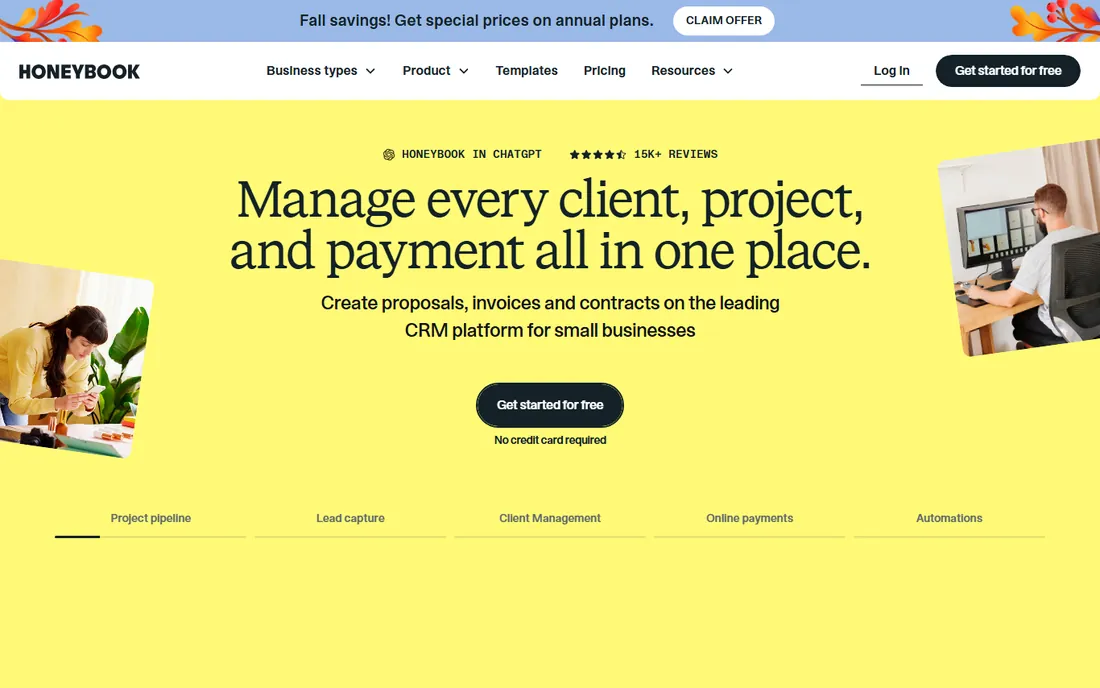
HoneyBook is the client-management platform most US-based creative freelancers end up on. The core loop is inquiry to proposal to contract to invoice to payment, all inside one polished system with a client portal that keeps files and messages organized. Every plan includes unlimited clients and projects, so growth does not force an upgrade.
The honest catch is the total cost. The subscription starts at $29 a month billed annually, but card payments add 2.9% plus $0.25 per transaction, and the February 2025 price hike still stings for long-time users. The Starter plan also lacks scheduling and automations. HoneyBook fits photographers, designers, coaches and consultants whose business runs on booked client work.
What we like- Polished inquiry-to-payment workflow
- Unlimited clients and projects on every plan
- Contracts, invoices and client portal in one place
Watch out for- No permanent free plan
- Payment processing fees stack on top
- Essentials caps at 2 team members before a steep jump to Premium
Starting price$35 per month (Starter)
Free planFree trial
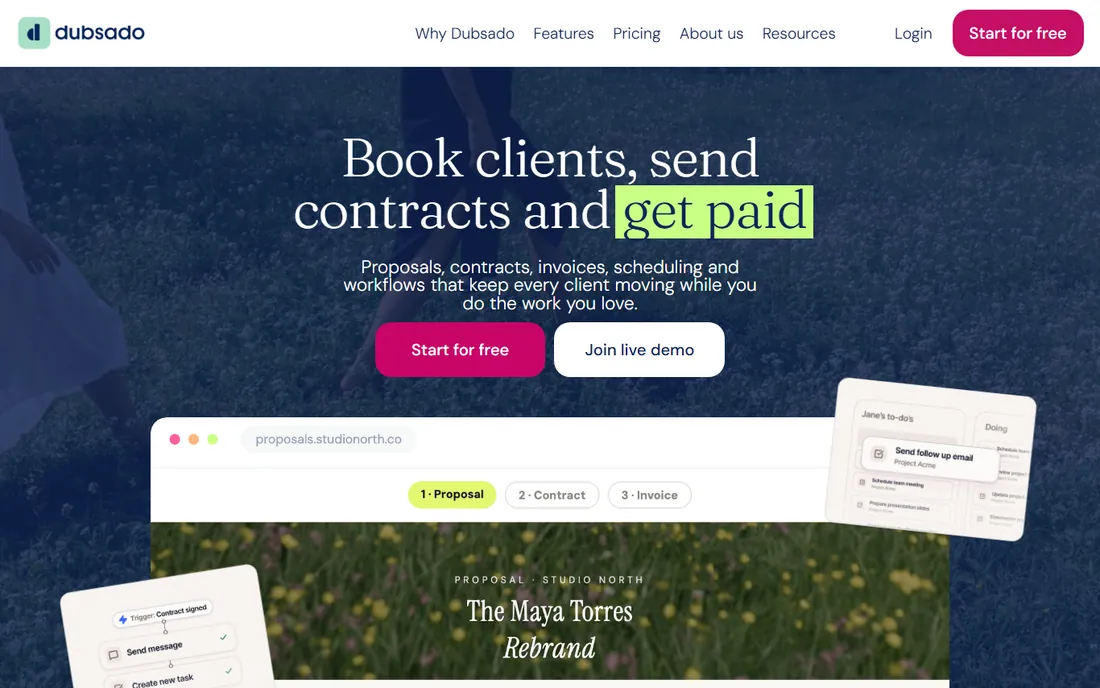
Dubsado does roughly the same job as HoneyBook, with a different philosophy. Where HoneyBook guides you down a fixed path, Dubsado gives you building blocks: forms, questionnaires, contracts, invoices and automated workflows you can wire together however your process works. Power users build genuinely sophisticated client journeys, and the flat pricing means adding team members costs nothing extra.
The trade-off is polish and setup effort. The interface is functional rather than beautiful, and getting the most from Dubsado takes real configuration time. The $35 Starter plan covers the basics while scheduling and automated workflows sit on the $55 Premier tier. Dubsado fits creators who want control over every step of their client process and do not mind building it.
What we like- Deep workflow automation and customizable forms
- One flat price with no per-user fees
- Generous trial with no time limit
Watch out for- Interface is less polished than HoneyBook
- Steeper learning curve to set up well
- Scheduling and advanced automation need the Premier plan
#3
Kit
Best for: Email-first audience CRM for creators
Visit kit.com
Starting price$29 per month (Creator)
Free planYes (up to 10,000 subscribers)
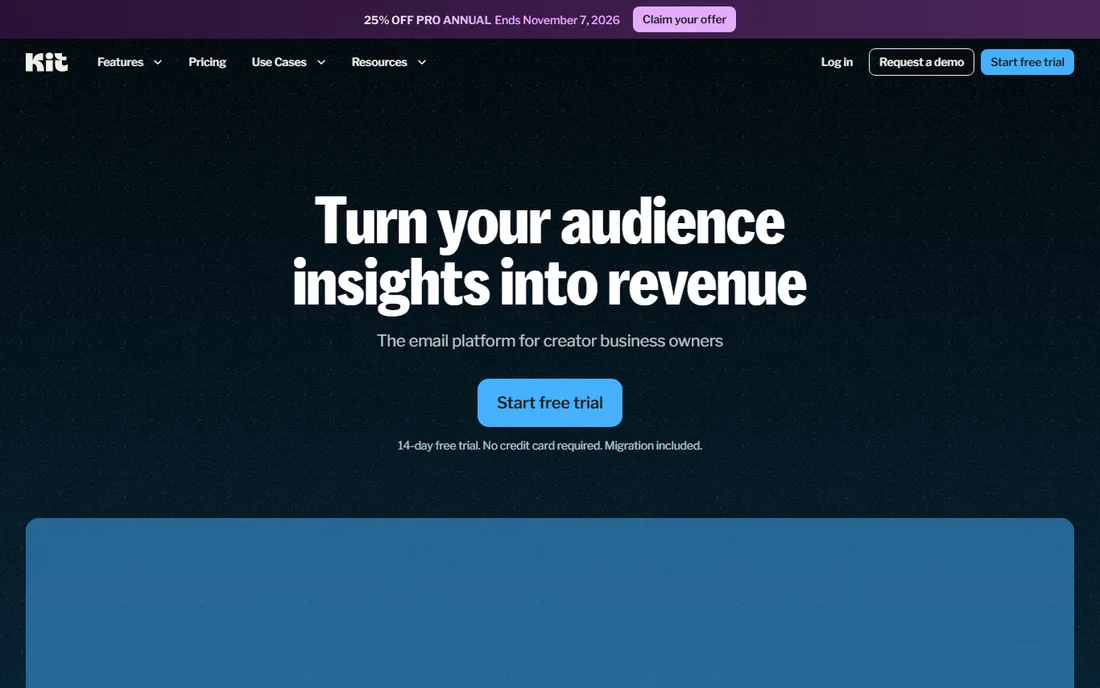
Kit, which you may remember as ConvertKit, is the email platform built specifically for creators. The contact management is organized around what creators actually track: tags, segments, purchase behavior and where each subscriber is in a sequence. The free plan covers up to 10,000 subscribers with unlimited broadcasts, which is unmatched generosity in this category.
The catch is the growth curve. Paid plans start at $29 a month but rise with list size, and the automation, while good, is less deep than ActiveCampaign's. Kit's commerce tools handle digital products and paid newsletters but will not replace a real storefront. Kit fits newsletter writers, bloggers and educators whose list is the business.
What we like- Generous free plan with unlimited broadcasts
- Visual automations and tagging built for creators
- Built-in commerce for digital products
Watch out for- Paid pricing scales with subscriber count
- Automation depth trails ActiveCampaign
- Commerce features are basic next to dedicated platforms
Starting price$29 per month (Creator)
Free planFree trial (14 days)
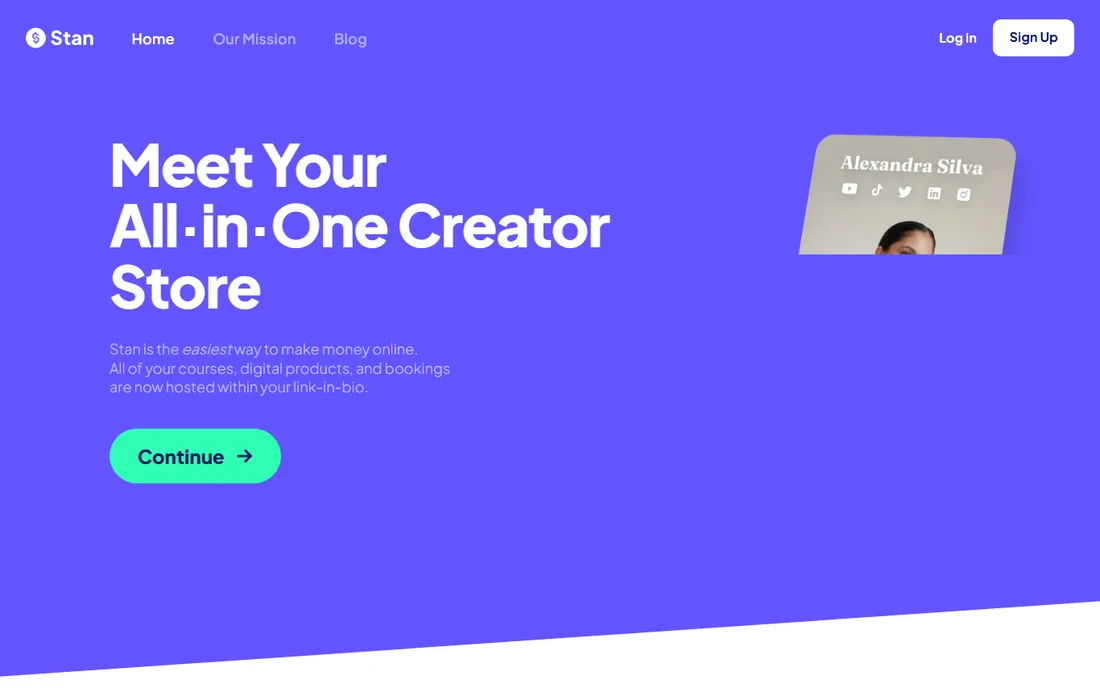
Stan Store skips the CRM label entirely and just sells you a storefront for your link in bio. For $29 a month flat, creators get a mobile-optimized page selling digital products, courses, coaching calls, memberships and community access, with 0% platform fees on every sale. Setup takes minutes, and the whole product assumes your traffic comes from social.
The limitations are real: there is no free plan, only a 14-day trial, and email marketing, funnels and affiliate tools require the $99 Creator Pro tier. You also cannot use your own domain. Stan Store fits creators with an existing social audience who want to monetize quickly without building a website.
What we like- 0% platform transaction fees on both plans
- Bookings, courses, memberships and community in one page
- Simple setup aimed at social audiences
Watch out for- No permanent free plan
- Email marketing needs the $99 Creator Pro plan
- No custom domain support
Starting price$10 per month (Creator)
Free planYes (9% fee per sale)
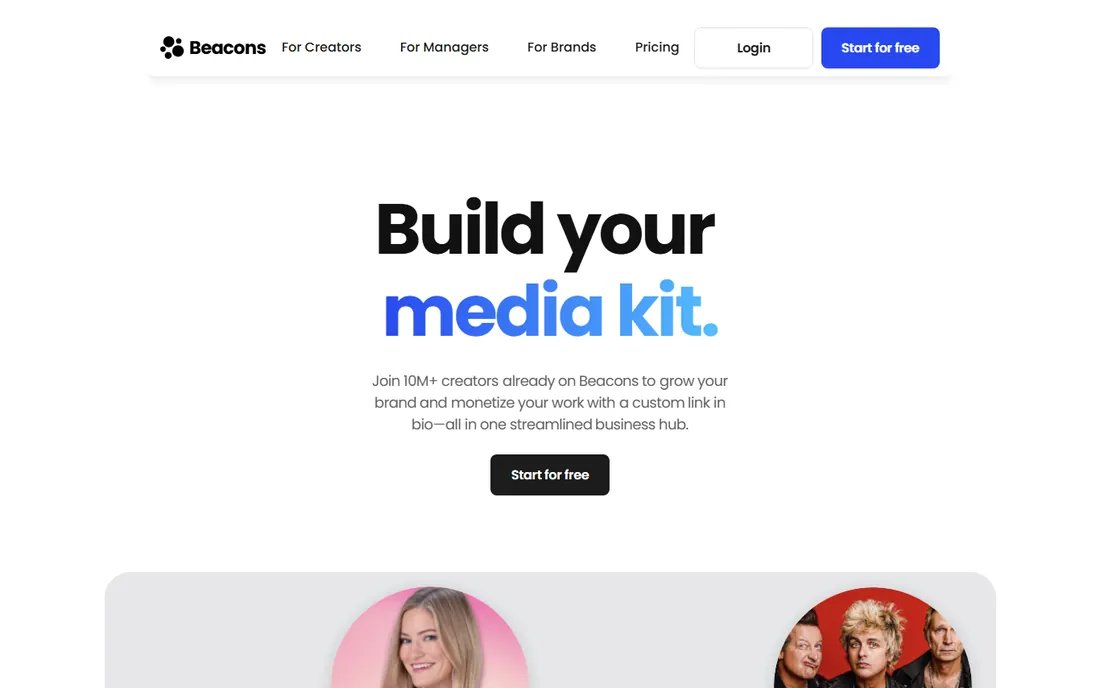
Beacons starts where Stan Store stops: with a genuinely free plan. The free tier includes a link-in-bio page, basic selling tools and standout media-kit features that help creators pitch brand deals, which is a niche no other tool here covers as well. Paid plans add custom domains, email marketing and courses.
The catch is the fee structure. Free and $10 Creator plans take 9% of every sale, which gets expensive fast; you need Creator Plus at $30 a month for 0% fees, roughly the same as Stan's entry plan. The all-in-one breadth can also feel unfocused. Beacons fits creators starting from zero who want to test selling before committing to a subscription.
What we like- Genuinely free plan to start
- Media kit and brand-deal tools for sponsorships
- Broad toolkit from email to stores in one account
Watch out for- 9% seller fee on Free and Creator plans
- Breadth can feel scattered
- 0% fees only on the $30 Creator Plus plan
Starting price$179 per month (Basic)
Free planFree trial (14 days)
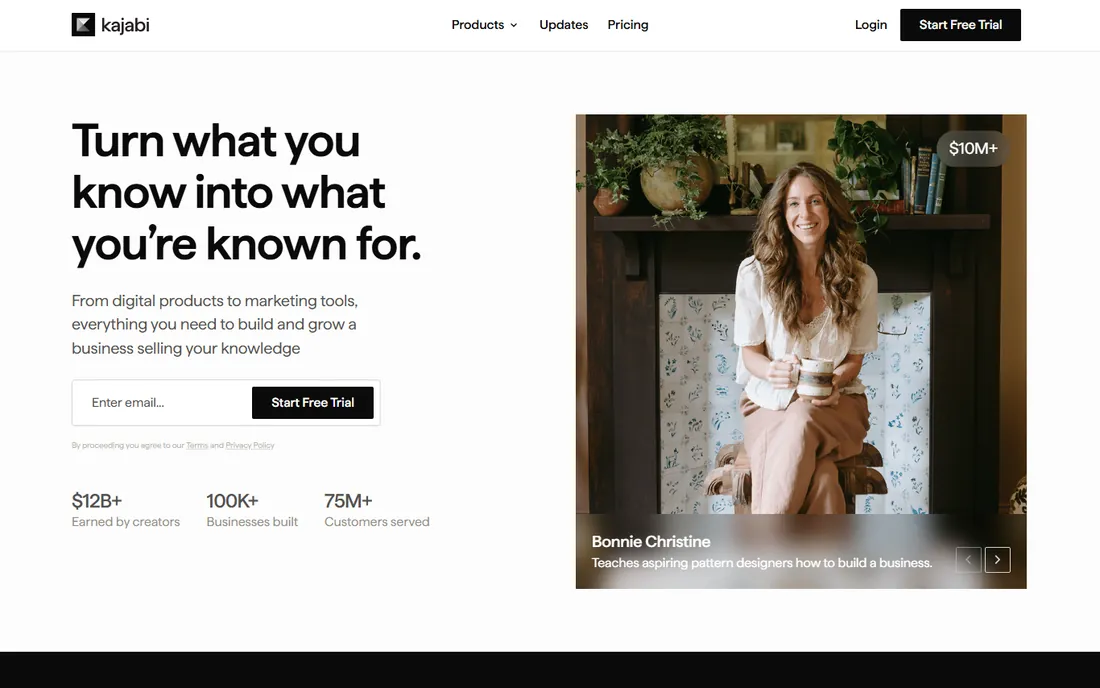
Kajabi is the heavyweight option, an all-in-one business platform with CRM-like contact management built in. Courses, coaching programs, email marketing, funnels, community and payments all live under one login, which eliminates the integration headaches of stitching five tools together. There are no platform transaction fees on any plan.
The catch is price and limits. Kajabi raised prices in January 2026 and retired the cheap Kickstarter plan, so Basic now starts at $179 a month, and contact caps (2,500 on Basic) push growing creators toward higher tiers. It is also far more platform than a creator selling a few digital products needs. Kajabi fits established course creators and coaches running a real education business.
What we like- Website, courses, email, community and payments in one platform
- 0% platform transaction fees
- Strong funnel and pipeline tools
Watch out for- Expensive entry price after the January 2026 increase
- Contact limits force upgrades as your list grows
- Overkill for simple selling
Starting price$15 per month (Starter, billed annually)
Free planFree trial (14 days)
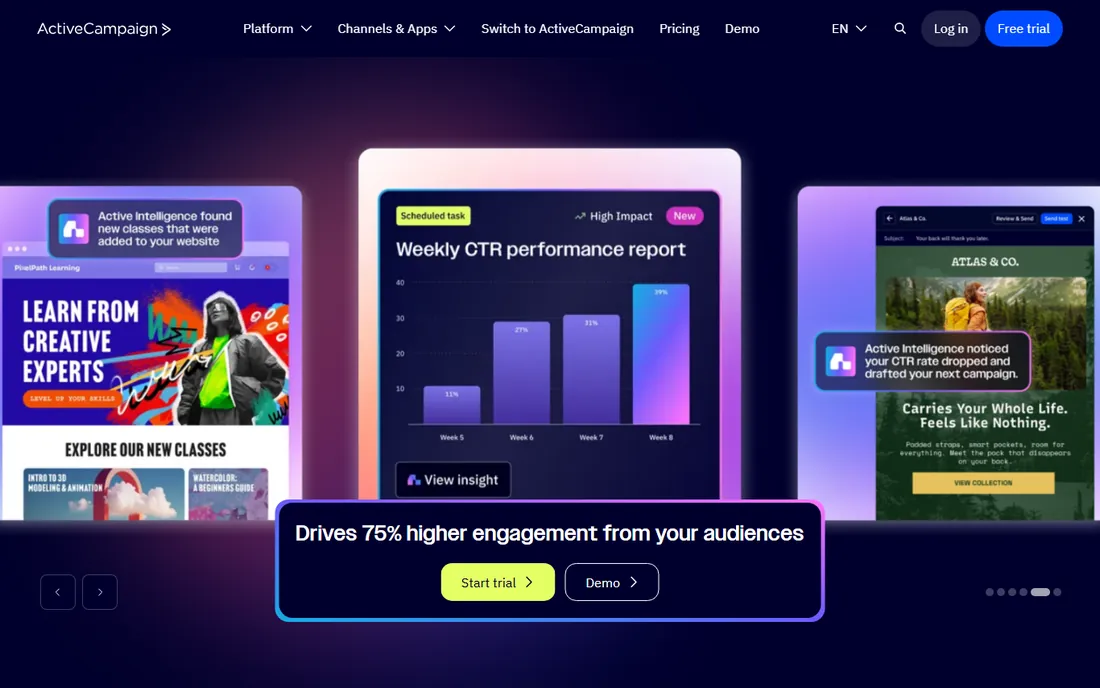
ActiveCampaign is a general marketing automation platform that creators adopted on their own. The automation builder is the best in class under $50 a month: multi-step journeys across email and SMS, conditional content, predictive sending and a real CRM with deal pipelines and lead scoring. At $15 a month to start, it undercuts every creator-specific tool on features per dollar.
The trade-off is that it was not designed for creators. There is no built-in storefront, course hosting or media kit, and the interface assumes marketing vocabulary. Pricing also climbs with contacts. ActiveCampaign fits creators whose business runs on sophisticated email funnels and who do not need the all-in-one packaging.
What we like- Deepest automation builder in this price range
- Built-in CRM with pipelines and lead scoring
- 900+ integrations
Watch out for- No free plan
- Pricing rises with contact count
- Interface can overwhelm beginners
Starting priceFree; paid from $20 per seat/month
Free planYes
HubSpot's free CRM is the best deal in this category, full stop. Contacts, deal pipelines, email tracking, meeting scheduling and live chat cost nothing, and the platform scales into marketing, sales and service hubs as the business grows. For a creator who mainly needs to track leads and clients without paying, nothing else comes close.
The catch is the upsell path. Real automation, advanced reporting and higher limits sit behind paid tiers that start at $20 per seat per month and climb steeply. The free plan is also generic by design, with no creator-specific workflows. HubSpot fits creators who want a proper CRM foundation for free and expect to grow into a bigger operation.
What we like- Best free CRM available with contacts, pipelines and email tracking
- Scales into full marketing and sales suites
- Huge integration ecosystem
Watch out for- Paid tiers get expensive quickly
- Free plan lacks automation depth
- Overkill for creators who only need simple contact tracking
Starting price$60 per month
Free planFree trial
17hats is the quiet workhorse for solo service businesses. One $60-a-month plan covers contacts, lead capture, quotes, contracts, invoicing, project workflows, basic bookkeeping and email, which replaces a stack of separate subscriptions. For a solo consultant or freelancer, the consolidation math is attractive.
The downside is the take-it-or-leave-it pricing. There is no cheaper tier, so light users pay the full $60, and the interface has not kept pace with HoneyBook or Dubsado visually. Automation is solid but less deep than Dubsado's. 17hats fits solo operators who want one login for the whole back office and do not need the newest design trends.
What we like- Contacts, projects, invoicing, bookkeeping and email in one dashboard
- Single flat plan with everything included
- Good for service-based solos
Watch out for- Single $60 plan with no cheaper tier
- Interface feels dated
- Less automation depth than Dubsado
Starting price$13 per month (Essentials)
Free planYes
Mailchimp is the name every creator already knows, and its CRM features are the reason it belongs here. Contact profiles combine email engagement with purchase behavior, tags and segments, which is enough customer management for creators whose funnel is content to email to sale. The free plan and $13 starting price keep the entry cost low.
The catches are well documented. Mailchimp counts unsubscribed contacts toward billing unless you archive them, and costs rise steeply with list size. The CRM itself is basic compared with HubSpot or ActiveCampaign. Mailchimp fits creators already comfortable with the platform who need simple audience management attached to their email.
What we like- Free plan to start
- Contact profiles with purchase and engagement data
- Huge template library and easy setup
Watch out for- Charges for unsubscribed contacts unless archived
- Pricing gets expensive as lists grow
- CRM features are basic next to HubSpot
How we chose
We did not run hands-on tests for this guide. We compared vendor pricing pages, product documentation, public reviews on G2 and Capterra, and creator-community discussions, and we verified that each product is available today and serves creators managing clients, audiences or sales. We included both creator-specific platforms and general CRMs that creators actually use, and we favored tools with published pricing.
What creators should look for
Start from how you make money, not from the feature list. A coach selling 1:1 sessions needs scheduling, contracts and invoicing, which points to HoneyBook or Dubsado. A newsletter writer needs tagging, sequences and deliverability, which points to Kit or ActiveCampaign. A TikTok creator selling digital products needs a checkout on a link in bio, which points to Stan Store or Beacons. The wrong category is the most expensive mistake.
Count the fees, not just the subscription
Creator platforms make money two ways: subscriptions and transaction fees. Stan Store's $29 with 0% fees beats Beacons' free plan once you sell more than about $320 a month, because 9% of sales adds up fast. HoneyBook's payment processing and Kajabi's contact-limit upgrades work the same way. Model a realistic sales month before choosing.
Check who owns your audience data
Your email list and client records are the business. Before committing, check how you export contacts, whether unsubscribes and tags come along, and what happens to your data if you cancel. Kit, ActiveCampaign and HubSpot all offer clean exports; link-in-bio tools vary. Never build your entire audience on a platform you cannot leave.
Automation should match your actual volume
A creator sending one newsletter a week does not need ActiveCampaign's 900 automation recipes, and a coach with five clients does not need Kajabi's pipelines. But if you plan to grow, check that the automation you will need in a year exists on the plan you can afford. Upgrading mid-growth is more disruptive than starting one tier higher.
When a general CRM beats a creator CRM
Creator-specific tools win on packaging: everything you need in one login, designed around how creators work. But they lose on depth and price as you scale. HubSpot's free CRM handles contact management better than any link-in-bio tool, and ActiveCampaign's automation beats every creator platform under $100 a month.
The crossover point usually comes with team size or complexity. The moment you hire a VA, run paid ads, or need real pipeline reporting, a general CRM starts pulling ahead. Many successful creators end up with a hybrid: Stan Store or Beacons for the storefront, Kit or ActiveCampaign for email, and HoneyBook or HubSpot for client management. That is more logins, but each tool does its job well.
Frequently asked questions
What is a CRM for creators?
A CRM for creators is software that manages the business side of a creator career: client contacts and projects, audience email lists, or product sales. HoneyBook and Dubsado handle client work, Kit and Mailchimp handle audiences, and Stan Store and Beacons handle selling through social profiles.
Do I need a CRM as a small creator?
If you have paying clients, yes, even a simple one. Tracking inquiries, contracts and invoices in spreadsheets breaks down fast. If you only publish content without selling anything yet, an email tool with tagging like Kit's free plan is enough until revenue starts.
Which is better for freelancers, HoneyBook or Dubsado?
HoneyBook is more polished and easier to start with, with a guided inquiry-to-payment workflow. Dubsado is more flexible and cheaper per feature, with deeper automation and no per-user fees. Freelancers who want simplicity pick HoneyBook; those who want control pick Dubsado.
Can I run my whole creator business on a free plan?
Partly. Kit's free plan covers email for up to 10,000 subscribers, HubSpot's free CRM covers contact management, and Beacons' free plan covers a link-in-bio storefront. But selling at volume, automation and removing transaction fees all require paid plans eventually.
How much should a creator expect to pay for a CRM?
From $0 to about $60 a month for most solo creators: Kit and HubSpot are free to start, Stan Store and HoneyBook run $29 a month, Dubsado $35 and 17hats $60. Kajabi is the outlier at $179 a month, aimed at creators running full course businesses.
Should I use one all-in-one tool or several specialized ones?
All-in-one tools like Kajabi or 17hats reduce logins and integrations, which matters when you are solo. Specialized tools do each job better: Stan Store for selling, Kit for email, HoneyBook for clients. Most growing creators end up with two or three specialized tools rather than one compromise.
Sources we checked (9)
- https://simply.coach/blog/honeybook-pricing/
- https://theplainmanual.com/honeybook-vs-indy/
- https://www.dubsado.com/pricing/
- https://www.shopspace.io/blog/beacons-vs-stan-store
- https://stan.store/blog/stan-store-pricing/
- https://selfmadesuccess.com/stan-store-review/
- https://paperbell.com/blog/17hats-alternatives/
- https://saascompared.com/blog/mailchimp-vs-convertkit-vs-beehiiv-2026-refresh
- https://www.saasworthy.com/product/activecampaign/pricing
Is your product missing or out of date?
We review this list regularly. Vendors can request a listing, send updated pricing or ask about featured placement.

Shihab Mia · Founder, Rankite
Shihab has spent more than a decade helping SaaS and e-commerce brands grow through search. He writes Rankite's software buying guides from pricing pages, documentation and public user reviews. More about Shihab.