How we make this list: we compare pricing pages, product documentation and public user reviews. Rankite is independent; if a vendor ever pays for a featured spot, that listing is clearly labeled Partner.
Key takeaways
- M-Files, DocuWare, and Laserfiche are the enterprise DMS leaders. All are quote-based, so expect an implementation project rather than self-serve signup.
- Box and Egnyte bring cloud content management with workflow automation at published per-user prices. Box starts at $5 per user per month on its own pricing page.
- airSlate and PandaDoc automate document-centric processes rather than storing files. Note that airSlate's flagship workflow product, formerly airSlate WorkFlow, is now called altaFlow.
- PandaDoc starts at $19 per user per month and owns the agreement workflow: create, approve, sign, and collect payment in one flow.
Quick comparison
| Tool | Best for | Starting price | Free plan |
|---|
 M-Files M-Files | Metadata-driven DMS for regulated industries | See website | Free trial |
 DocuWare DocuWare | Compliance-heavy teams needing DMS plus workflow | See website | Free trial |
 Laserfiche Laserfiche | Enterprises wanting analyst-recognized ECM | See website | No |
 Box Box | Cloud content management with AI and e-signature | $5 per user per month | Free trial |
 Egnyte Egnyte | File sharing with built-in governance | See website | Free trial |
 airSlate airSlate | No-code document workflow automation | See website | Free trial |
 PandaDoc PandaDoc | Agreement workflows from creation to payment | $19 per user per month | Free trial (14 days) |
Is your product missing or out of date?
We review this list regularly. Vendors can request a listing, send updated pricing or ask about featured placement.
Starting priceSee website
Free planFree trial
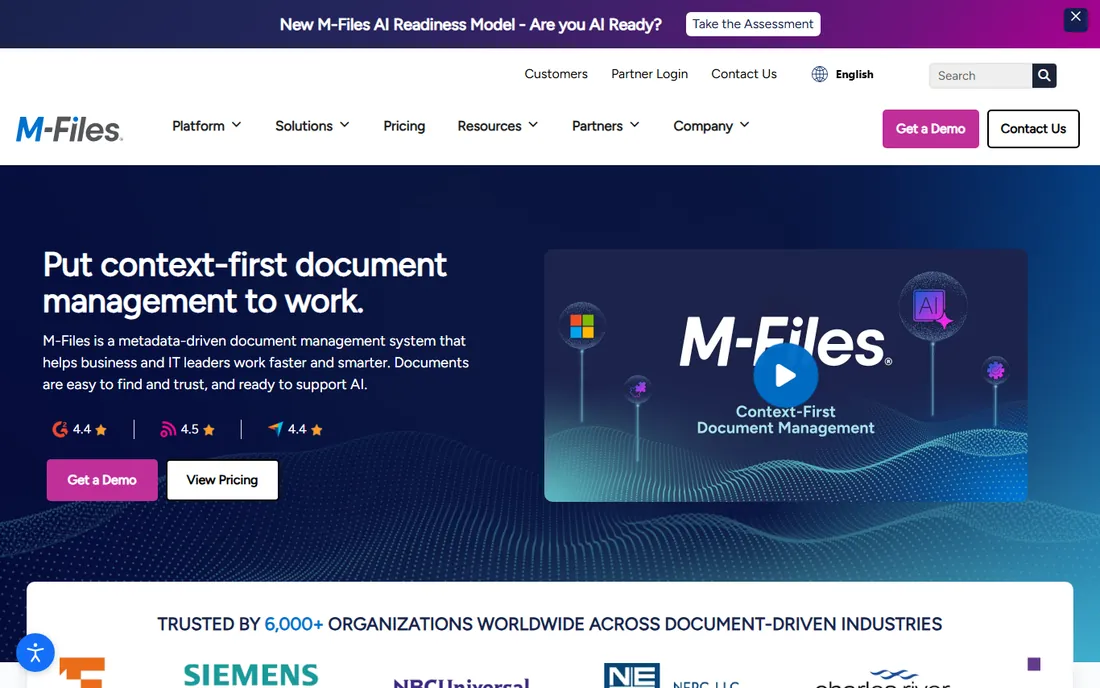
M-Files does not care where you file a document. It cares what the document is. Instead of folders, you tag files with metadata (client, project, document type, date), and the system files and finds them by those properties. A contract lives under the client, the project, and the matter simultaneously, with no duplicates. That model is why engineering, legal, and professional services firms with complex document relationships keep choosing it.
The workflow engine routes documents through reviews and approvals, and governance features handle retention and audit trails for regulated industries. It plugs into Microsoft 365, Teams, and SharePoint so staff work in familiar apps. The cost is planning: the metadata model is foundational, and getting it right takes thought. Pricing is quote-based with a free trial to start. If your documents have rich relationships that folders cannot express, this is the DMS to evaluate first.
What we like- Metadata-based filing eliminates folder chaos
- Strong Microsoft 365 integration
- Flexible cloud, on-premise, or hybrid deployment
Watch out for- Quote-based pricing
- Designing the metadata model takes real planning effort
Starting priceSee website
Free planFree trial
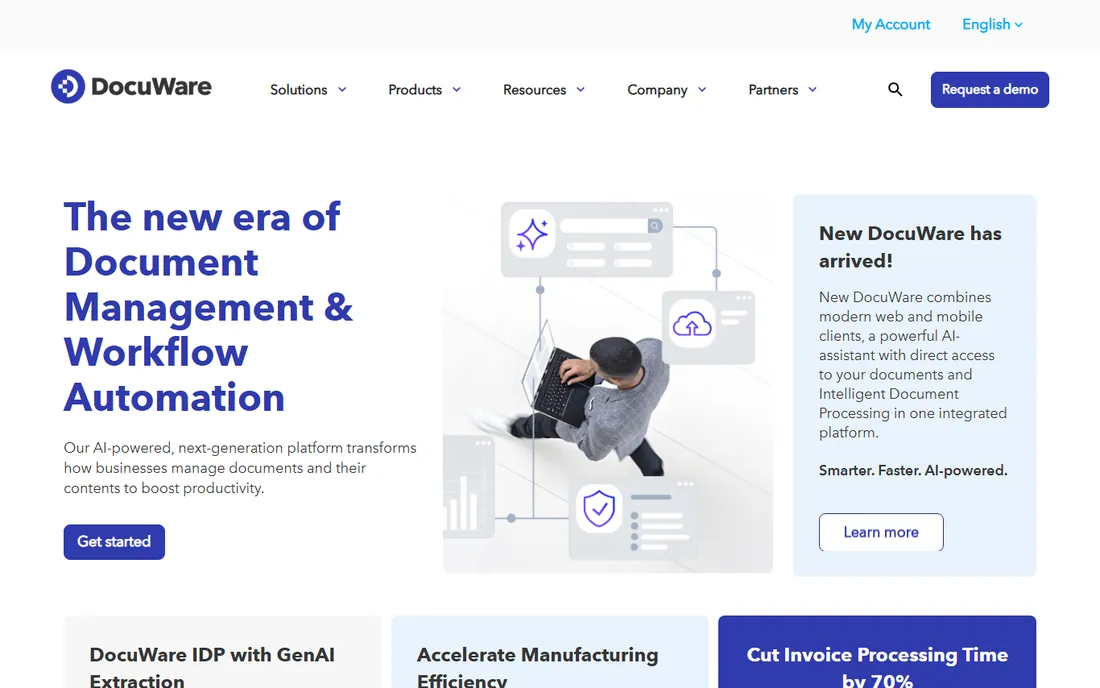
DocuWare is the DMS that compliance officers love. It combines document management with workflow automation and intelligent document processing, and the 2026 platform adds a GenAI-powered assistant with direct access to your documents. The company was named a Challenger in Gartner's 2026 Magic Quadrant for Document Management and positioned in IDC's MarketScape, and it acquired the German AI startup natif.ai in 2024 to deepen its capture capabilities.
Use cases center on invoice processing, employee records, and contract management, with automated retention and audit trails that satisfy auditors. Deployment runs cloud or on-premise. The main friction is pricing: DocuWare does not publish transparent list pricing, so budgeting requires a sales conversation. For healthcare, finance, and manufacturing teams where compliance is non-negotiable, the recognition and feature depth justify the quote process.
What we like- Strong compliance and audit features
- AI-powered IDP with GenAI extraction
- Recognized by Gartner, IDC, and Nucleus in 2026
Watch out for- No transparent public pricing
- Mid-market and enterprise focus means it is not the cheapest option
Starting priceSee website
Free planNo

Laserfiche was named a Leader in the 2026 Gartner Magic Quadrant for Document Management and a Customers' Choice in Gartner Peer Insights, with a 4.7 average rating on G2. The platform pairs document management with process automation: electronic forms, workflow, and AI-powered document processing, plus a Solution Marketplace with hundreds of prebuilt, customizable processes. Government agencies and financial institutions are core customers, and records management with retention workflows is a particular strength.
The trade-offs are real. Pricing is quote-based with no free trial, so evaluation starts with a demo. Users praise the depth but complain about a steep learning curve and an interface that feels dated. Implementation typically runs through Laserfiche or a partner. This is the choice for large organizations that want the analyst-validated ECM with deep records management; smaller teams will find Box or Egnyte faster to deploy.
What we like- Gartner Leader in 2026 for Document Management
- Prebuilt process templates in the Solution Marketplace
- Strong records management
Watch out for- No public pricing and no free trial
- Interface and learning curve draw user complaints
#4
Box
Best for: Cloud content management with AI and e-signature
Visit box.com
Starting price$5 per user per month
Free planFree trial
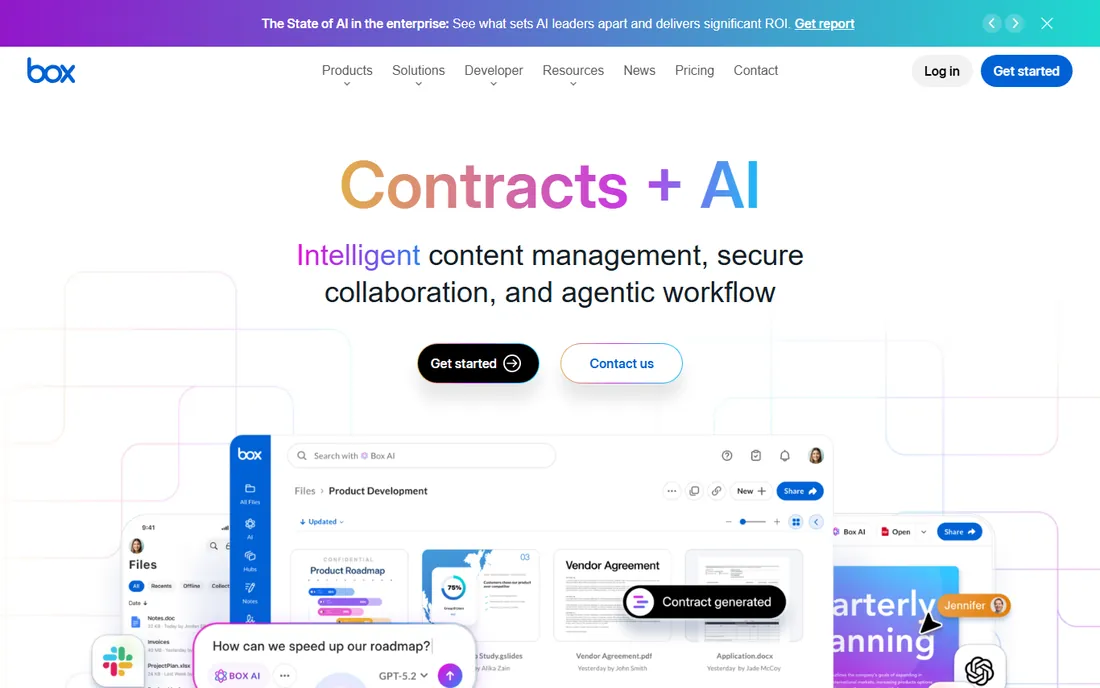
Box turned cloud file storage into an intelligent content management platform. The base is secure file sharing and collaboration, but the 2026 platform layers on Box AI (summaries, Q&A, and metadata extraction using models from OpenAI, Anthropic, and Google), Box Relay for workflow automation, and Box Sign for unlimited e-signatures. Compliance coverage includes HIPAA, FedRAMP, GDPR, and FINRA, which is why regulated enterprises trust it.
Pricing is refreshingly transparent: Business Starter at $5 per user per month, Business at $15, Business Plus at $25, and Enterprise tiers above, with a free trial. The workflow automation handles approvals and document routing well but does not match a dedicated BPM suite for complex processes. For companies that want one cloud platform for storage, collaboration, e-signature, and AI-powered document work, Box is the most complete package at a published price.
What we like- Published pricing from $5 per user per month
- Unlimited e-signatures via Box Sign
- 1,500+ integrations and strong API
Watch out for- Workflow automation is less deep than dedicated BPM tools
- AI features consume AI units on a metered basis
Starting priceSee website
Free planFree trial

Egnyte's pitch is governance built in, not bolted on. It unifies files across cloud and on-premise storage into one repository, then layers continuous compliance monitoring, anomaly detection, and audit trails on top. The AI additions include a conversational assistant, AI search, and AI-powered workflows with e-signature and PDF markup. It is strongest in architecture, engineering, construction, financial services, and life sciences, where large files and strict compliance collide.
The platform works like a local file server, which eases adoption for teams used to drive letters. Pricing starts with a Team plan historically around $10 per user per month, but the current lineup leans toward quote-based Business, Enterprise Lite, Elite, and Ultimate tiers, so confirm pricing directly. A free trial is available. For firms that need serious file governance without abandoning familiar workflows, Egnyte sits between Box's simplicity and the enterprise DMS platforms.
What we like- Governance and compliance built into the platform
- Hybrid cloud and on-premise storage
- AI assistant and workflows
Watch out for- Pricing moved largely to quote-based tiers
- Interface can overwhelm first-time users
Starting priceSee website
Free planFree trial
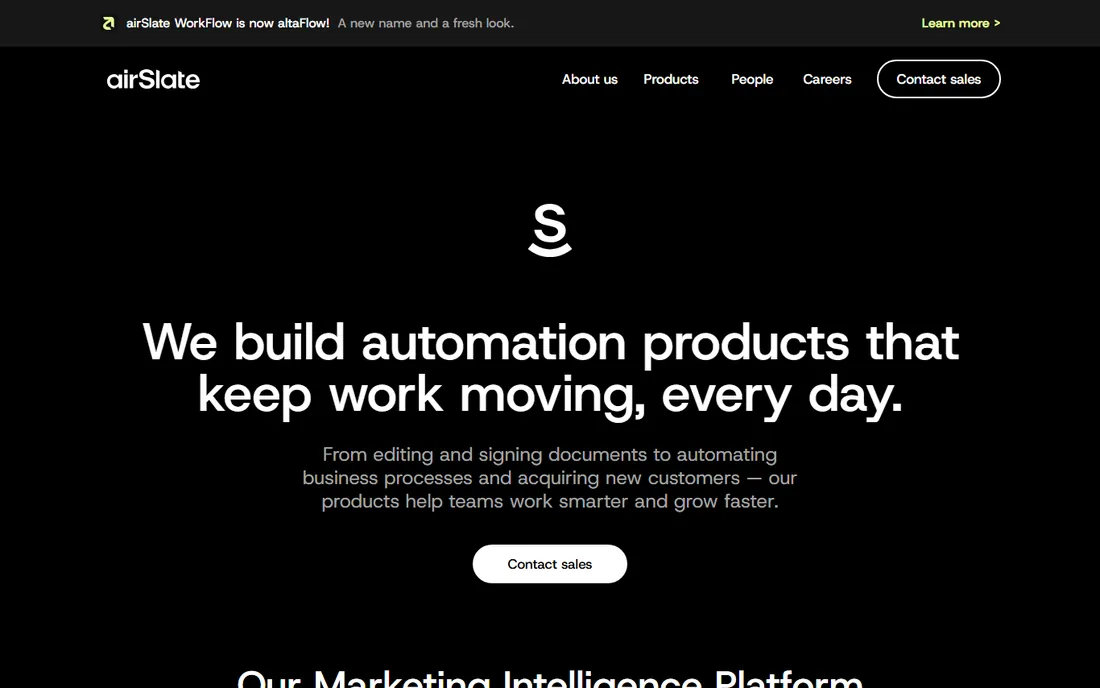
airSlate automates the document workflows that storage platforms leave manual. Its no-code Bots move data between documents and systems: collect information with web forms, route documents for approval, gather legally binding e-signatures, and sync everything to your CRM or cloud storage. The template library covers common business processes across HR, sales, finance, and legal, and the platform integrates with Salesforce, HubSpot, Microsoft 365, and Google Workspace.
One note: airSlate rebranded its flagship workflow product from airSlate WorkFlow to altaFlow, so you will see both names. The company remains airSlate Inc. Pricing is not published transparently, with third-party estimates varying, so get a quote. A free trial is available. This is the pick when your problem is not where documents live but how they move: approvals, data collection, and signatures across systems.
What we like- No-code Bots automate data collection, approvals, and e-signatures
- Large template and form library
- Integrates with CRMs and cloud storage
Watch out for- Pricing is not transparent
- Product renaming (WorkFlow to altaFlow) can confuse buyers
Starting price$19 per user per month
Free planFree trial (14 days)
PandaDoc owns the agreement workflow. You build proposals, quotes, and contracts in a drag-and-drop editor with pricing tables and payment collection, route them through approval workflows, send for e-signature, and track opens and views. The HubSpot, Salesforce, and Pipedrive integrations pull CRM data directly into documents, which is why sales teams adopt it fast. Compliance includes E-SIGN, UETA, HIPAA, and SOC 2.
Pricing starts at $19 per user per month for Essentials (up to 2 seats), with Business at $49 adding approval workflows, content library, and bulk send, and Enterprise on quote. A 14-day free trial is available. It is not a DMS; if you need long-term document archiving and records management, pair it with one of the platforms above. But for teams whose document problem is "get the contract signed and paid," PandaDoc is the most focused tool here.
What we like- Published pricing from $19 per user per month
- Drag-and-drop editor with pricing tables and payments
- Strong CRM integrations
Watch out for- Focused on agreements, not general document storage
- Advanced features need the Business tier
How DMS pricing actually works
Document management pricing falls into three buckets, and they are not comparable at face value. Per-user subscriptions (Box from $5, PandaDoc from $19, Egnyte's lower tiers) charge per seat per month and are the easiest to budget. Platform quotes (M-Files, DocuWare, Laserfiche) bundle licenses, implementation, and support into an annual contract that reflects your user count, storage, and modules. Workflow automation (airSlate) often prices on a mix of users and document volume.
The hidden costs are implementation and migration. Enterprise DMS deployments involve metadata design, workflow configuration, and data migration that can match or exceed the first year's license cost. Ask vendors to separate software from services in the quote. Also confirm user minimums: several platforms require minimum seat counts or annual commitments that make them uneconomical below 10 to 20 users. For smaller teams, the per-user cloud tools are the honest comparison.
What to look for before you buy
Start with findability, not features. The DMS failed if staff still cannot locate documents in under a minute. Test search, metadata, and version control with your real folder structure during the trial. Next, map one real approval workflow end to end: who approves, what happens on rejection, where the audit trail lives. If the vendor cannot demo your workflow, the product does not fit.
Then check the compliance and integration boxes. You need retention policies, access controls, and audit logs that satisfy your industry's regulators, plus clean integrations with the systems where documents originate (email, CRM, ERP, scanners). Finally, plan the migration. Moving years of documents into a new system is the most underestimated part of every DMS project; ask the vendor for a migration plan and reference customers who completed one.
How we chose
We did not deploy these platforms or migrate document libraries, so treat this as desk research, not a hands-on review. We worked from primary sources: vendor homepages and pricing pages (opened directly), product documentation, analyst assessments from Gartner, IDC, and Nucleus, and practitioner reviews on G2, Capterra, and Reddit. We verified every product is sold today under its current name, including airSlate's rename of its WorkFlow product to altaFlow. Where vendors do not publish pricing, we say so instead of repeating third-party estimates. Pricing and plan details are current as of October 2026.
Frequently asked questions
What is the difference between document management and document workflow automation?
Document management stores, organizes, secures, and retains documents. Workflow automation moves documents through processes: approvals, reviews, signatures, and data handoffs. M-Files, DocuWare, and Laserfiche do both; Box and Egnyte lean toward management with workflow add-ons; airSlate and PandaDoc focus on the workflow and agreement side.
How much does document management software cost?
Cloud tools start at $5 to $19 per user per month (Box, PandaDoc). Mid-market platforms run $20 to $50 per user per month. Enterprise DMS (M-Files, DocuWare, Laserfiche) is quote-based and typically involves five-figure annual contracts plus implementation services. Always separate software licenses from implementation in the quote.
Do I need on-premise deployment?
Most teams do not. Cloud DMS now satisfies the compliance needs of most industries, and vendors like Box and Egnyte carry certifications (HIPAA, FedRAMP, SOC 2) that cover regulated use. On-premise or hybrid matters mainly for organizations with strict data residency rules or legacy infrastructure; M-Files, DocuWare, and Egnyte all support it.
Can document management software replace shared drives?
Yes, and that is the most common migration. A DMS replaces shared folders with searchable, permission-controlled, versioned document storage, plus audit trails that shared drives cannot provide. Plan the migration carefully: clean up duplicates, define the metadata or folder model, and migrate in phases rather than all at once.
What is metadata-driven document management?
Instead of filing documents in folders, you tag them with properties like client, project, and document type. The system then organizes and finds documents by those properties, so one file can appear under multiple views without duplication. M-Files pioneered this approach; it suits organizations whose documents have complex relationships.
How long does DMS implementation take?
Cloud tools like Box or Egnyte can be running in days to weeks. Enterprise DMS (M-Files, DocuWare, Laserfiche) typically takes one to six months depending on metadata design, workflow configuration, data migration, and integrations. The migration of existing documents, not the software setup, usually determines the timeline.
Sources we checked (9)
- https://m-files.com/
- https://docuware.com/
- https://laserfiche.com/
- https://box.com/
- https://www.box.com/pricing
- https://www.egnyte.com/
- https://airslate.com/
- https://www.pandadoc.com/
- https://www.pandadoc.com/pricing/
Is your product missing or out of date?
We review this list regularly. Vendors can request a listing, send updated pricing or ask about featured placement.

Shihab Mia · Founder, Rankite
Shihab has spent more than a decade helping SaaS and e-commerce brands grow through search. He writes Rankite's software buying guides from pricing pages, documentation and public user reviews. More about Shihab.