How we make this list: we compare pricing pages, product documentation and public user reviews. Rankite is independent; if a vendor ever pays for a featured spot, that listing is clearly labeled Partner.
Key takeaways
- HHAeXchange and Sandata dominate the EVV market, largely because many states mandate or provide them for Medicaid billing.
- Your state's EVV requirements decide more than any feature list: check whether your state uses an open or closed model before shopping.
- AlayaCare and AxisCare bundle EVV into complete home care platforms, which suits agencies wanting one system.
- CellTrak and Ankota serve agencies that need EVV plus strong field operations and compliance workflows.
Quick comparison
| Tool | Best for | Starting price | Free plan |
|---|
 HHAeXchange HHAeXchange | Medicaid home care EVV compliance | See website | No |
 Sandata Sandata | State EVV program compliance | See website | No |
 CellTrak CellTrak | Home care field operations with EVV | See website | No |
 AlayaCare AlayaCare | Modern all-in-one home care platform | See website | No |
 AxisCare AxisCare | Growing home care agencies | See website | Free trial |
 WellSky WellSky | Enterprise home health and hospice | See website | No |
 Homecare Homebase Homecare Homebase | Medicare home health agencies | See website | No |
 Ankota Ankota | Private duty and Medicaid mixed agencies | See website | No |
 DeVero DeVero | Simple home health documentation with EVV | See website | Free trial |
 Axxess Axxess | Home health agencies wanting modern software | See website | No |
Is your product missing or out of date?
We review this list regularly. Vendors can request a listing, send updated pricing or ask about featured placement.
The best EVV software
Starting priceSee website
Free planNo
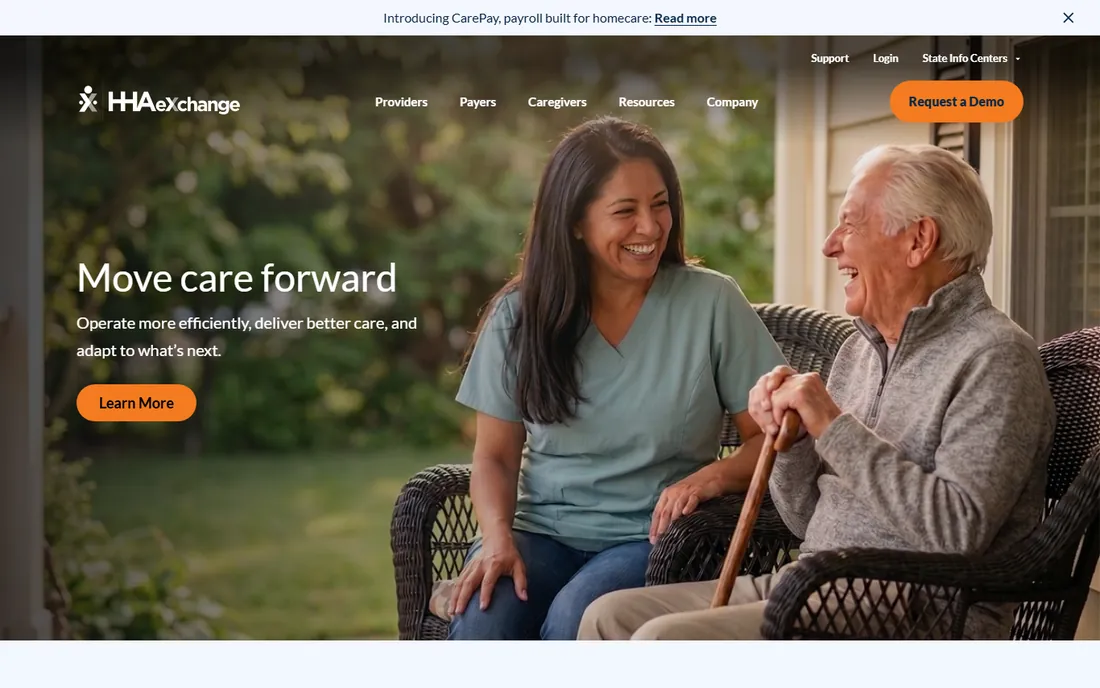
HHAeXchange is the EVV system many agencies do not choose but must use: states and managed care organizations across the US mandate it for Medicaid billing. It handles visit verification, plan of care, billing and payer communication in one compliance-driven platform. Where it is required, it is comprehensive.
The experience is built around compliance rather than delight, and commercial flexibility is limited. But for Medicaid agencies in HHAeXchange states, mastering it is not optional, and its payer connectivity is genuinely deep.
What we like- Deep payer and state integrations
- Widely mandated by states and MCOs
- Handles the full visit lifecycle
Watch out for- Interface reflects its compliance focus
- Pricing varies by state program
Starting priceSee website
Free planNo
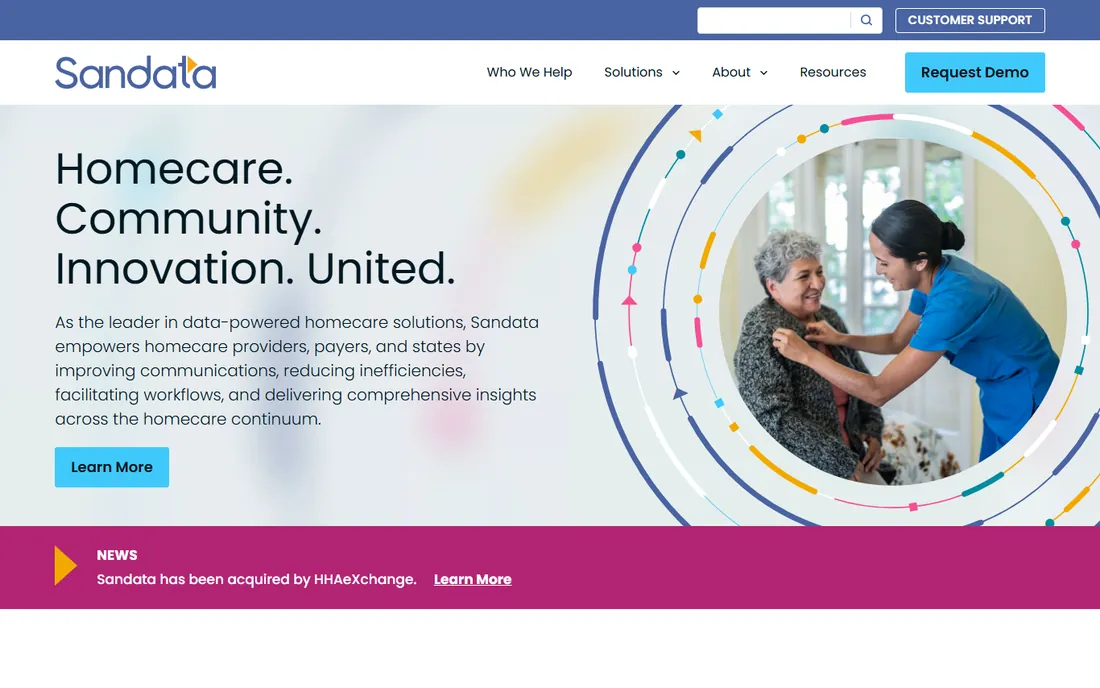
Sandata pioneered electronic visit verification and holds EVV contracts with numerous states. In closed-model states, agencies use Sandata because the state says so. The platform verifies visits, manages claims and enforces compliance at population scale.
Agency choice is limited where Sandata is mandated. But its long operational history means the compliance edge cases, the ones that get claims denied, are well handled.
What we like- The original EVV provider
- Many state contracts
- Proven at massive scale
Watch out for- State-contract driven
- Less agency choice in closed models
Starting priceSee website
Free planNo
CellTrak combines EVV with serious field workforce management: caregiver scheduling, mobile visit documentation, compliance tracking and communication. Large home care organizations with hundreds of caregivers use it to run field operations, not just verify visits.
Smaller agencies may find the depth more than they need. But where the challenge is managing a big distributed workforce compliantly, CellTrak's operational focus stands out.
What we like- Strong caregiver mobile experience
- Good for large field workforces
- Compliance workflows
Watch out for- Enterprise-leaning
- Smaller agencies may find it heavy
Starting priceSee website
Free planNo
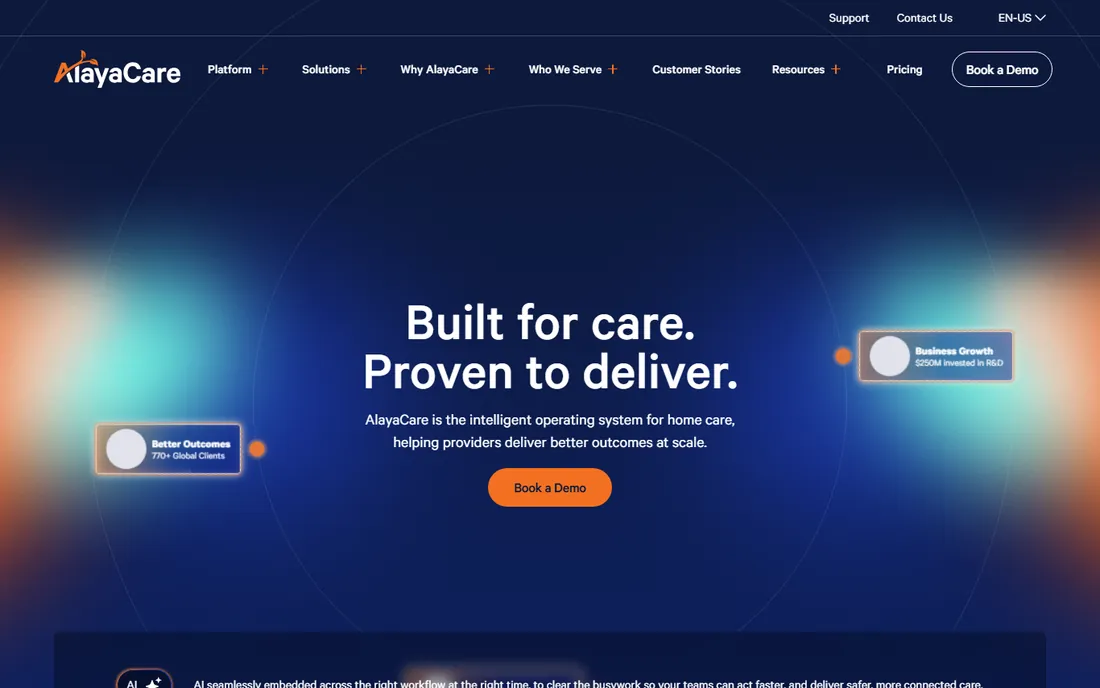
AlayaCare is the modern home care platform: scheduling, clinical documentation, billing, family portals and EVV in a cloud system with genuinely good mobile apps. Agencies wanting one contemporary platform rather than stitched-together tools choose AlayaCare.
The investment matches the capability, and implementation needs planning. But for agencies building for growth, the unified platform beats bolting EVV onto legacy systems.
What we like- Modern cloud platform
- EVV plus scheduling, billing and clinical
- Good mobile apps
Watch out for- Premium pricing
- Implementation takes planning
Starting priceSee website
Free planFree trial
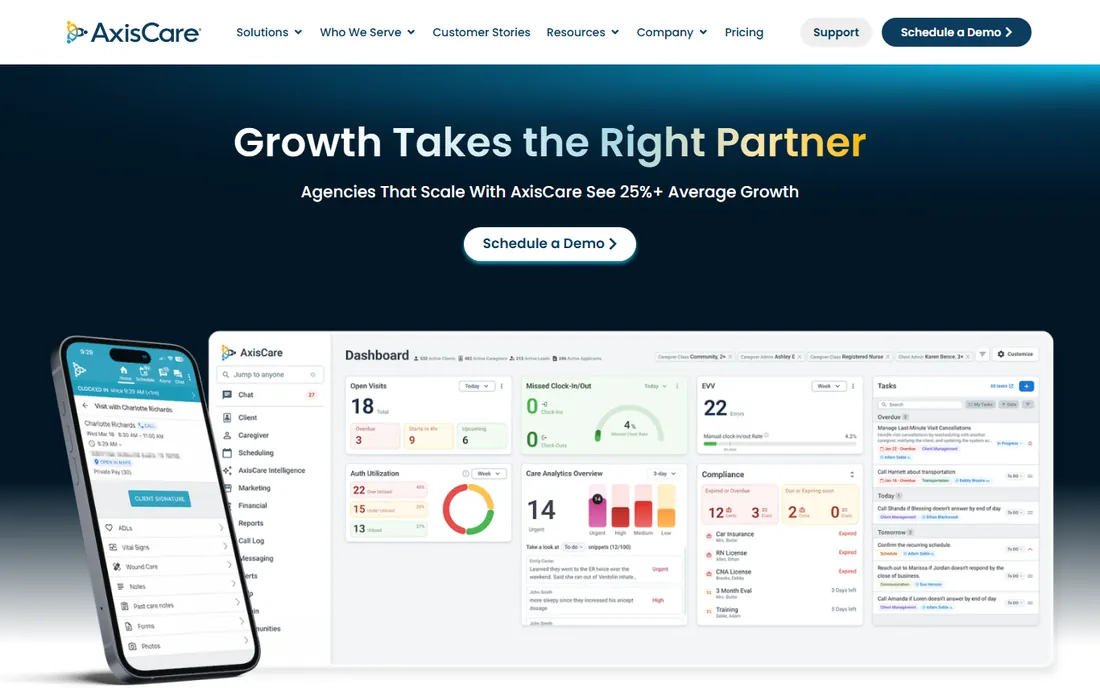
AxisCare targets the growing agency: scheduling, billing, caregiver management and EVV in an affordable, approachable package. New and expanding agencies get operational quickly without enterprise complexity or cost.
Very large or multi-state Medicaid operations may need deeper compliance tooling. But for the typical growing home care agency, AxisCare covers the essentials well at a fair price.
What we like- Affordable and easy to learn
- Good scheduling and billing
- EVV included
Watch out for- Less depth than enterprise platforms
- Fewer state-specific integrations
Starting priceSee website
Free planNo
WellSky (which absorbed ClearCare) offers one of the broadest post-acute software portfolios: home health, hospice, private duty and EVV-capable workflows. Enterprise organizations standardize on it across service lines.
Small agencies will find it oversized. But health systems and large providers wanting one vendor across post-acute care will find WellSky's breadth unmatched.
What we like- Broad post-acute portfolio
- Strong for hospice and home health
- Enterprise scalability
Watch out for- Enterprise sales and implementation
- Can be more than small agencies need
#7
Homecare Homebase
Best for: Medicare home health agencies
Visit hchb.com
Starting priceSee website
Free planNo
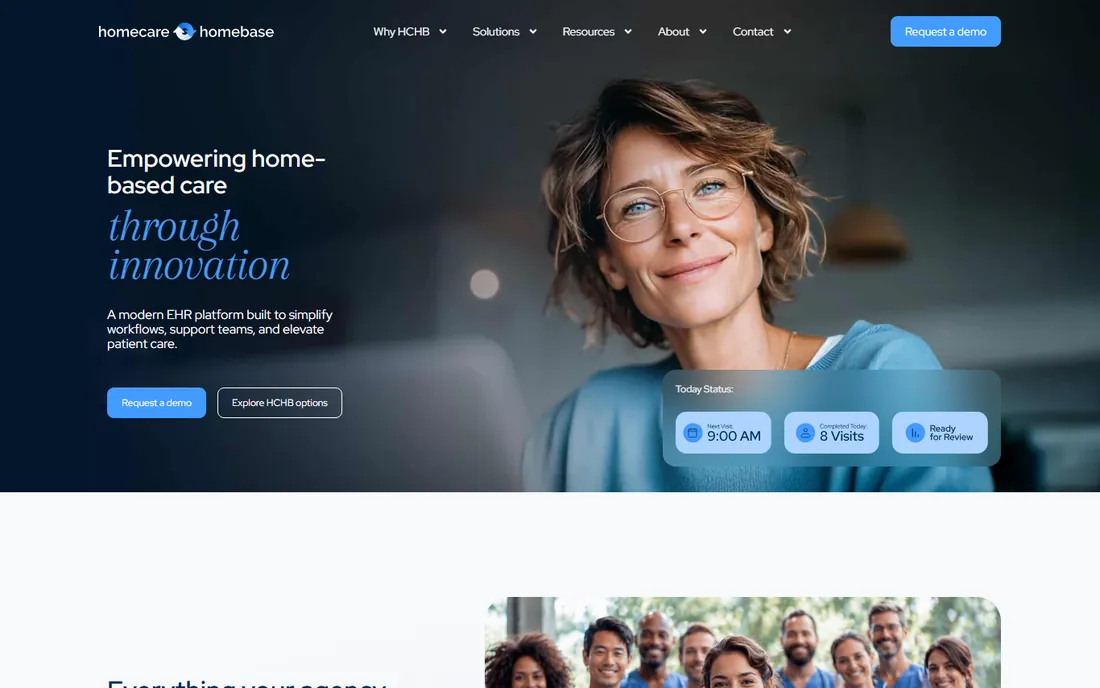
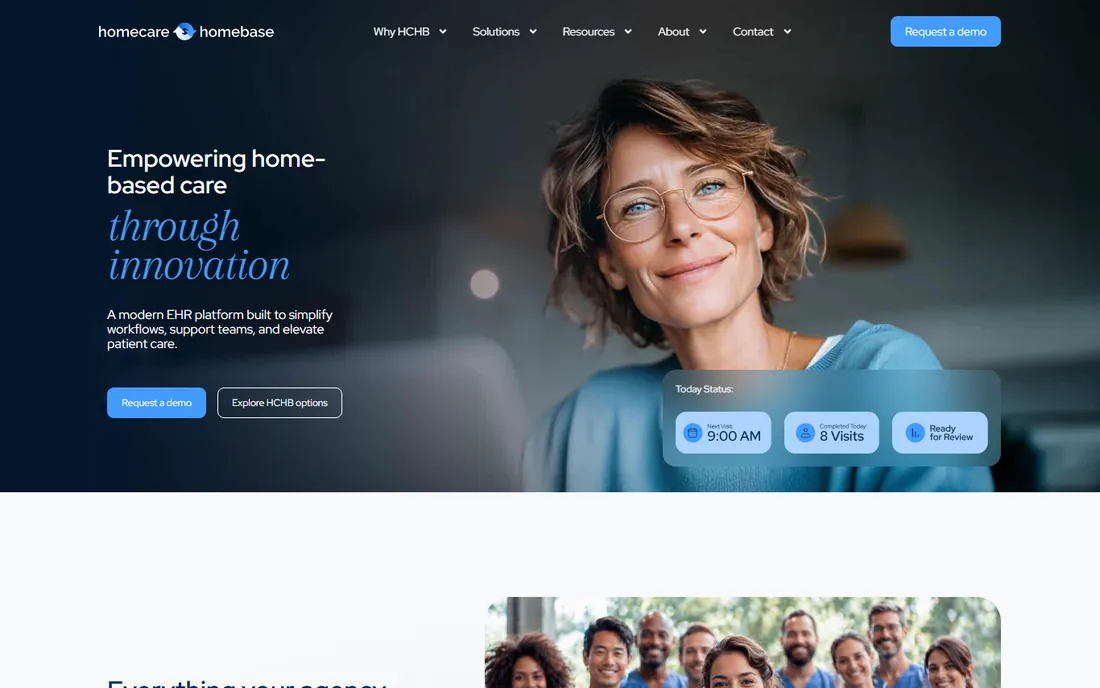
Homecare Homebase dominates Medicare home health: OASIS documentation, physician orders, billing and compliance built for the Medicare world. Agencies running Medicare business alongside Medicaid get EVV-capable visit management in the same system.
Pure non-medical Medicaid agencies may find the Medicare depth unnecessary. But for home health agencies, it remains the category standard.
What we like- Deep Medicare home health workflows
- Strong OASIS and billing
- Large user base
Watch out for- Medicare focus means less for pure Medicaid EVV
- Enterprise pricing
Starting priceSee website
Free planNo
Ankota serves agencies mixing private-pay and Medicaid business: care plans, scheduling, billing and EVV that handle both revenue models. The flexibility suits agencies that do not fit neatly in one box.
The smaller vendor footprint means fewer integrations and references than the giants. But mixed-model agencies often find the big platforms force an either-or choice Ankota avoids.
What we like- Handles private pay and Medicaid together
- Good care planning
- Flexible
Watch out for- Smaller vendor
- Less brand recognition
Starting priceSee website
Free planFree trial
DeVero keeps home health software simple: documentation, scheduling and EVV in a clean package small agencies learn quickly. The affordability and free trial lower the barrier for new agencies.
Complex multi-state operations need more. But agencies that found the big platforms overwhelming will appreciate DeVero's focus on doing the basics well.
What we like- Easy to learn
- Affordable
- Clean documentation workflows
Watch out for- Less depth for complex operations
- Smaller ecosystem
#10
Axxess
Best for: Home health agencies wanting modern software
Visit axxess.com
Starting priceSee website
Free planNo
Axxess built a modern home health platform with an interface that feels current, covering clinical, operational and financial workflows with EVV capabilities. Agencies frustrated by legacy software find it refreshingly usable.
Its track record is shorter than Homecare Homebase's, so references matter. But for agencies choosing between dated incumbents and modern challengers, Axxess represents the new generation.
What we like- Modern interface
- Strong home health workflows
- Growing market presence
Watch out for- Newer than entrenched rivals
- EVV depth varies by state
Open versus closed EVV models decide your options
Before comparing features, learn your state's EVV model. In closed (mandate) models, the state picks the system, usually Sandata or HHAeXchange, and you use it. In open models, you choose any compliant vendor and the state aggregates the data. This single fact eliminates most of the list or opens it entirely.
Then verify the specific compliance details: which visit data elements your state requires, how the aggregator connection works, and what happens to claims when verification fails. A beautiful platform that cannot talk to your state's aggregator is worthless.
How we chose
We compared platforms on EVV compliance depth, state and payer integrations, visit verification methods, scheduling and billing completeness, and fit for different agency types. We verified each vendor's homepage and current positioning, reviewed agency feedback on home care forums and review sites, and weighted real compliance usability over feature lists. We did not operate live agencies on these platforms.
Training caregivers on EVV without the revolt
EVV rollouts fail on the human side more than the technical side. Caregivers, many of whom are not tech-comfortable, experience EVV as surveillance unless you frame it differently. Lead with what it protects: accurate hours mean accurate paychecks, and verified visits protect them against disputes about whether they showed up.
Train on their phones, not in a classroom. The most effective EVV training is ten minutes of hands-on practice: clock in, complete a mock visit note, clock out, in the actual app on the actual phone they will use. Classroom slides do not survive contact with a real shift; muscle memory does.
Plan for the edge cases explicitly. Dead zones without cell service, clients without landlines, shared devices, caregivers covering for each other: every agency has them, and the EVV workflow needs a documented answer for each. When caregivers hit an edge case with no guidance, they improvise, and improvisation creates the compliance gaps auditors find.
Support the first two weeks heavily. Station someone to answer EVV questions during shifts, review the exception reports daily, and fix problems while they are small. Most resistance fades once caregivers see the system working smoothly. The agencies that struggle are the ones that trained once and disappeared.
Finally, use the data fairly. EVV shows arrival times, and the temptation is to punish every late clock-in. Distinguish the patterns that matter (chronic lateness, missed visits) from the noise (traffic, client delays). Caregivers who feel monitored fairly adopt the system; those who feel policed game it.
EVV compliance mistakes that cost claims
The costliest is treating EVV as an IT project instead of an operations change. The software is the easy part; the hard part is every caregiver clocking in and out correctly on every visit, every day. Agencies that assign the rollout to IT and skip the operational training discover the compliance gaps at claim denial time.
Second is ignoring the exception reports. Every EVV system flags visits with problems: missing clock-outs, GPS anomalies, schedule mismatches. These reports are the early warning system, and reviewing them daily catches fixable issues before they become denied claims. Agencies that check exceptions weekly or monthly are always fighting old fires.
Third is the schedule mismatch problem. When the scheduled visit differs from the actual visit, in time, duration or caregiver, and nobody reconciles the difference, claims fail. Build a daily reconciliation habit: someone reviews yesterday's exceptions every morning and corrects them while memories are fresh. Same-day correction takes minutes; month-end correction takes hours and often fails.
Fourth is poor communication with payers about requirements. EVV rules vary by state, by payer and by program, and they change. Assign someone to track the bulletins and update workflows accordingly. The agency that learns about a new requirement from a denial has already paid tuition.
Finally, under-training office staff. Caregivers get the training attention, but the schedulers and billers who handle exceptions need it just as much. A well-trained office team catches the problems caregivers miss, and the combination is what keeps claims clean.
Frequently asked questions
What is EVV?
Electronic Visit Verification electronically confirms home care visits: who provided care, who received it, what service, where, and when. Federal law requires it for Medicaid personal care and home health services.
Does my state require a specific EVV system?
Many states mandate a specific vendor (often Sandata or HHAeXchange); others let agencies choose any compliant system. Check your state Medicaid agency's EVV page before shopping.
How do caregivers verify visits?
Typically through a mobile app with GPS, telephony (calling from the client's phone), or fixed devices. Methods vary by vendor and state requirements.
What happens if a visit is not verified?
Unverified visits can lead to denied or delayed claims. Most systems flag exceptions for correction. Clean verification processes directly protect revenue.
Can small agencies afford EVV software?
Yes. AxisCare, DeVero and similar tools price for small agencies, and in mandated states the required system is often provided or subsidized. Budget for it as a cost of Medicaid business.
Is EVV the same as time tracking?
No. Time tracking records hours worked; EVV verifies specific visit details for compliance and billing. EVV systems include time data, but the compliance requirements go further.
Sources we checked (10)
- https://www.hhaexchange.com/
- https://www.sandata.com/
- https://www.celltrak.com/
- https://www.alayacare.com/
- https://www.axiscare.com/
- https://wellsky.com/
- https://www.hchb.com/
- https://www.ankota.com/
- https://www.devero.com/
- https://www.axxess.com/
Is your product missing or out of date?
We review this list regularly. Vendors can request a listing, send updated pricing or ask about featured placement.

Shihab Mia · Founder, Rankite
Shihab has spent more than a decade helping SaaS and e-commerce brands grow through search. He writes Rankite's software buying guides from pricing pages, documentation and public user reviews. More about Shihab.