How we make this list: we compare pricing pages, product documentation and public user reviews. Rankite is independent; if a vendor ever pays for a featured spot, that listing is clearly labeled Partner.
Key takeaways
- Axon Evidence is the default choice for agencies already on Axon body cameras, but its strength is also its lock-in: mixed hardware fleets pay a penalty.
- VIDIZMO is the strongest alternative for agencies that need hardware-agnostic ingest and on-premises or hybrid deployment.
- NICE Investigate and Genetec Clearance lead on multi-agency collaboration and automated investigation assembly rather than pure camera storage.
- Pricing is quote-based across the category, so evaluate on CJIS compliance, chain of custody automation and redaction workflow, not on a price page.
A patrol shift ends and forty body-worn camera videos, three dashcam files and a dozen phone photos land in the system. Somewhere a detective needs one clip for a charging decision, the prosecutor wants the same clip in a different format, and a FOIA request wants it with every bystander face blurred. On a shared drive, that is three separate hunts. In a digital evidence management system, it is one search.
Evidence management software, usually called DEMS, is built for exactly this. It ingests video, audio, images and documents from body cameras and other sources, keeps an unbroken chain of custody, enforces CJIS-compliant security, redacts faces and plates for public release, and shares files with prosecutors and partner agencies under audit. This guide compares the nine platforms US law enforcement agencies actually evaluate in 2026.
Quick comparison
| Tool | Best for | Starting price | Free plan |
|---|
 Axon Evidence Axon Evidence | Agencies standardized on Axon cameras | See website | Free trial (30-day pilot) |
 VIDIZMO VIDIZMO | Hardware-agnostic ingest with flexible deployment | See website | Free trial |
 NICE Investigate NICE Investigate | Automated investigation assembly and digital case files | See website | Free trial (30-day pilot) |
 Genetec Clearance Genetec Clearance | Multi-agency collaboration and sharing | See website | Free trial (45-day) |
 Motorola CommandCentral Motorola CommandCentral | Agencies inside the Motorola public safety ecosystem | See website | Free trial (30-day evaluation) |
 FileOnQ FileOnQ | Full evidence lifecycle from property room to digital | See website | Demo |
 QueTel QueTel | Evidence tracking with barcode and RFID workflows | See website | Demo |
 Safe Fleet Safe Fleet | Fleet and body-worn video for law enforcement and transit | See website | Free trial |
 Tracker Products Tracker Products | Smaller agencies needing straightforward evidence tracking | See website | Demo |
Is your product missing or out of date?
We review this list regularly. Vendors can request a listing, send updated pricing or ask about featured placement.
The best evidence management software
#1
Axon Evidence
Best for: Agencies standardized on Axon cameras
Visit axon.com
Starting priceSee website
Free planFree trial (30-day pilot)
Axon Evidence, hosted at Evidence.com, is the market leader for a straightforward reason: most US agencies with body cameras already wear Axon devices, and the footage flows into Evidence.com with minimal friction. The platform handles the full chain from capture to courtroom, with automated transcription, redaction tools for FOIA releases, granular permissions and audit trails that satisfy CJIS requirements. Prosecutors and partner agencies get controlled access without DVDs or USB drives.
The honest catch is the ecosystem. Agencies running Motorola, Panasonic or other cameras face extra integration work and cost to bring that footage in, which makes Axon a stronger pick the more Axon hardware you own. Pricing is quote-based and storage-heavy agencies should model costs carefully, since video volume is the real price driver. If your fleet is Axon end to end, this is the path of least resistance. If it is not, price the integration before you commit.
What we like- Deep integration with Axon body cameras and TASERs
- Automated redaction
- CJIS-compliant cloud
- Largest installed base
Watch out for- Works best inside the Axon hardware ecosystem
- Pricing is quote-based and scales with storage
- Switching costs are high
#2
VIDIZMO
Best for: Hardware-agnostic ingest with flexible deployment
Visit vidizmo.com
Starting priceSee website
Free planFree trial
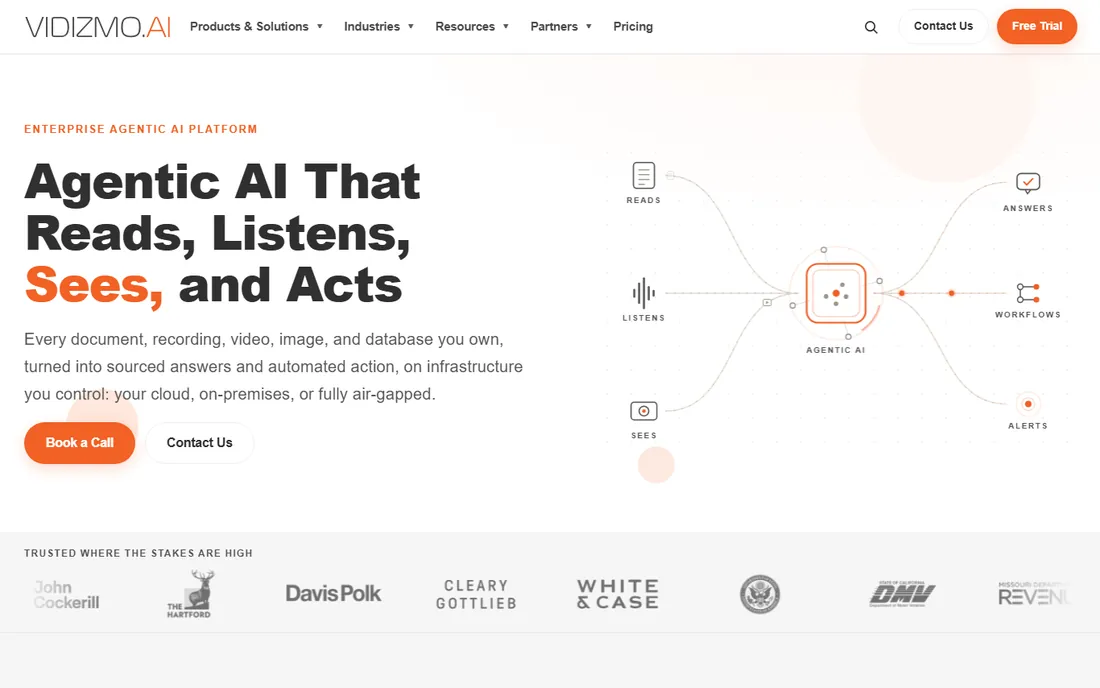
VIDIZMO pitches itself as the anti-lock-in DEMS, and for agencies with mixed hardware that pitch lands. The platform ingests evidence from any body camera brand, dash camera, CCTV system, drone, interview room or mobile device, across hundreds of media formats, so existing camera investments survive a platform switch. Deployment is flexible: pure cloud, on-premises or hybrid, which matters for agencies with data sovereignty rules or CJIS interpretations that frown on public cloud.
AI-powered redaction handles faces, license plates and on-screen text for FOIA and disclosure work, and granular permissions control multi-agency sharing. The trade-offs are scale of ecosystem: fewer neighboring agencies run it than run Axon, and pricing is quote-based. For departments that refuse single-vendor hardware lock-in or need on-premises deployment, VIDIZMO is the first alternative to evaluate.
What we like- Ingests from any camera brand and 255+ media formats
- Cloud, on-premises and hybrid deployment
- AI redaction
- Strong access controls
Watch out for- Smaller installed base than Axon
- Quote-based pricing
- Implementation needs planning for large migrations
#3
NICE Investigate
Best for: Automated investigation assembly and digital case files
Visit nice.com
Starting priceSee website
Free planFree trial (30-day pilot)
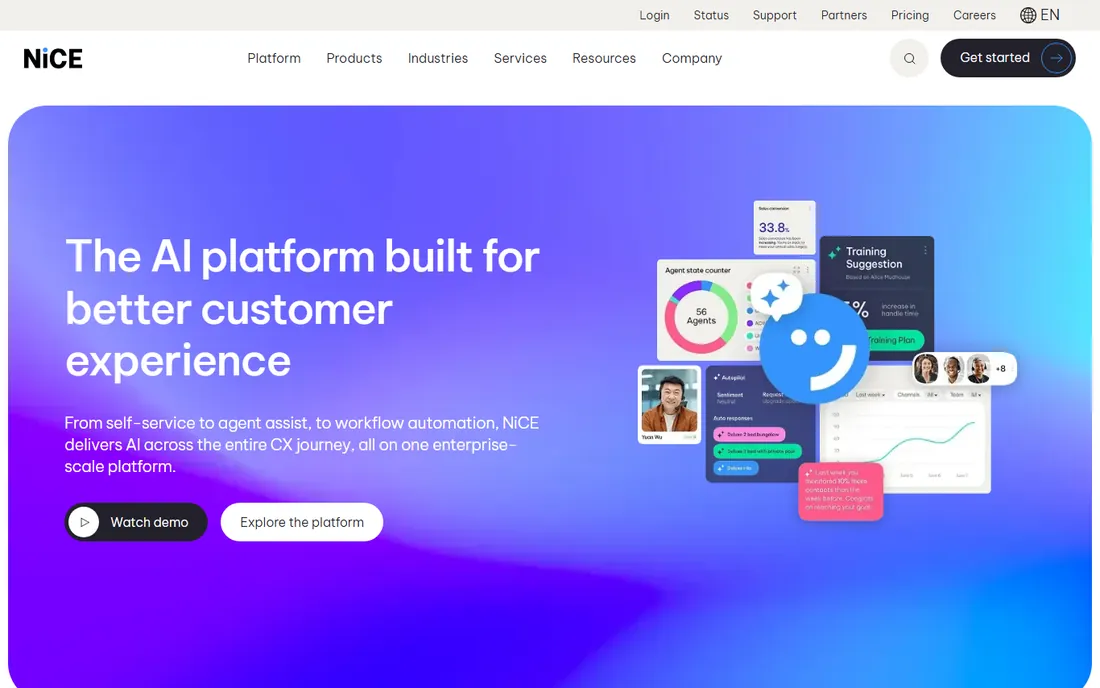
NICE Investigate aims higher in the workflow than pure storage: it pulls evidence from disparate sources and assembles it into a digital case file, so investigators stop hunting across systems. The platform includes a digital portal for sharing with prosecutors, defense and courts, with audit trails on every share. For agencies drowning in case assembly busywork, the automation story is compelling.
This is enterprise software with enterprise implementation. Expect a real deployment project, training, and quote-based pricing sized for mid-size and large agencies. Small departments will find it heavy. But for agencies where investigators spend their weeks assembling files from five systems, NICE Investigate attacks the actual bottleneck rather than just storing the video.
What we like- Assembles digital case files automatically
- Digital portal for prosecutors and courts
- Strong analytics
- Broad public safety footprint
Watch out for- Enterprise-grade complexity and pricing
- Implementation is a project, not a signup
- Overkill for small agencies
#4
Genetec Clearance
Best for: Multi-agency collaboration and sharing
Visit genetec.com
Starting priceSee website
Free planFree trial (45-day)
Genetec Clearance grew out of Genetec's video management background, and it shows in the collaboration design. The platform is built around agencies, businesses and the public contributing footage to shared investigations, with redaction and access controls managing who sees what. It accepts footage from many sources rather than one camera brand, and the 45-day free trial gives a real evaluation window.
The caveat is heritage: agencies deep in body-worn camera workflows may find Axon or Motorola more native to their daily routines. Pricing is quote-based. Where Clearance shines is the multi-agency investigation, a robbery with footage from three departments and two businesses, where sharing and redaction matter more than camera docking. Evaluate it on that workflow.
What we like- Built for cross-agency sharing
- Automated redaction
- Hardware-agnostic
- 45-day trial is generous
Watch out for- Genetec's roots are video surveillance, less body-cam native
- Quote-based pricing
- Feature depth varies by deployment
Starting priceSee website
Free planFree trial (30-day evaluation)
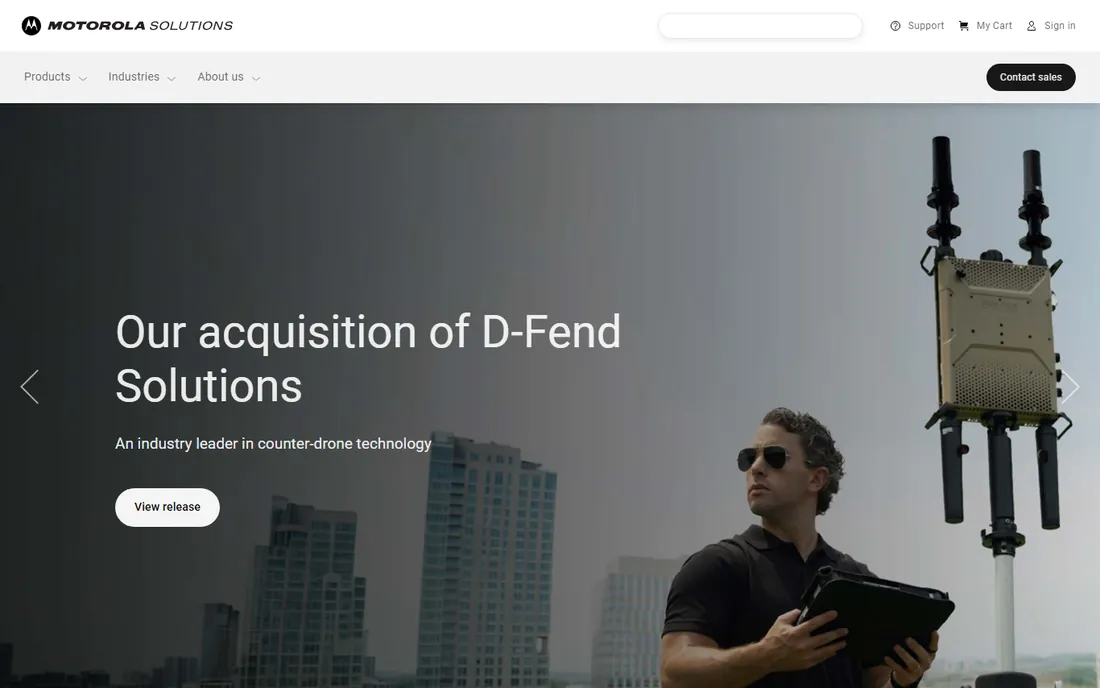
Motorola Solutions sells the whole public safety stack, radios, body cameras, in-car video, dispatch, records, and CommandCentral is the evidence layer that ties it together. For agencies already standardized on Motorola hardware, footage flows from camera to cloud to case file with the integration work already done, and the broader suite means one vendor relationship for support and compliance.
Outside that ecosystem the value proposition thins, the same lock-in dynamic as Axon in reverse. Pricing is quote-based and the platform's breadth can overwhelm small agencies that just need evidence storage. If your department runs Motorola radios and cameras, CommandCentral deserves the shortlist. If not, weigh the switching cost honestly.
What we like- Tight fit with Motorola radios, cameras and dispatch
- End-to-end public safety suite
- CJIS-compliant
- Strong enterprise support
Watch out for- Best value inside the Motorola ecosystem
- Quote-based pricing
- Can be complex for smaller departments
#6
FileOnQ
Best for: Full evidence lifecycle from property room to digital
Visit fileonq.com
Starting priceSee website
Free planDemo
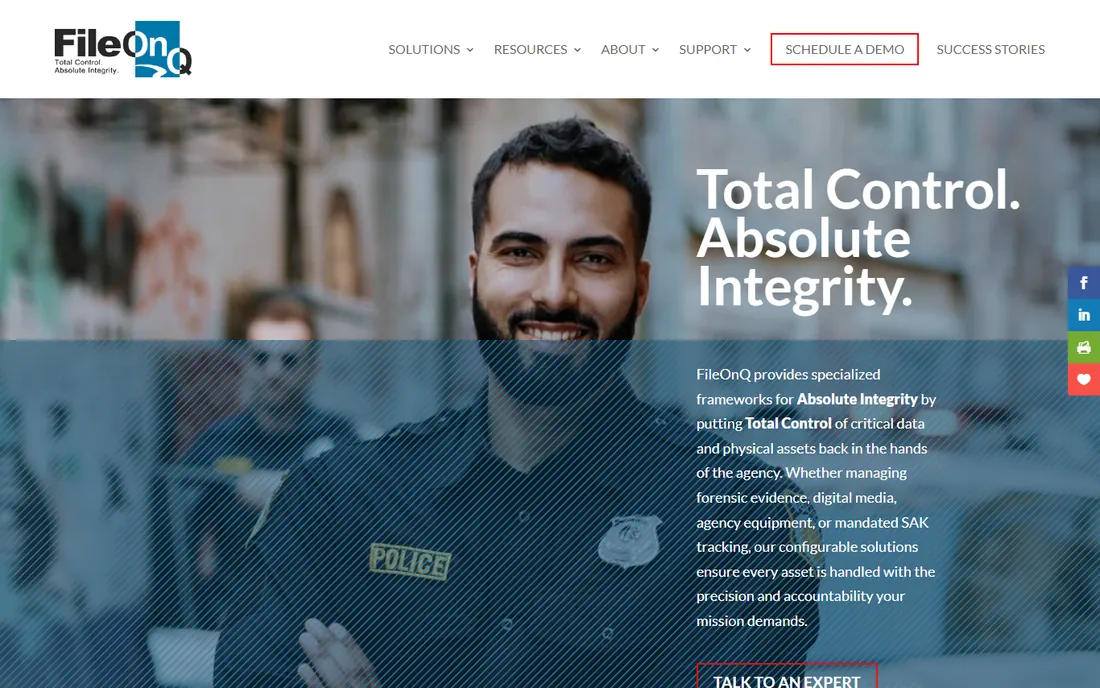
FileOnQ has served law enforcement since the 1990s, and its strength is the full evidence lifecycle: the same system that tracks a physical evidence bag in the property room manages the digital video of the same case. EvidenceOnQ handles intake, barcode tracking, chain-of-custody documentation, retention scheduling and disposition, while DigitalOnQ covers the media side with hardware-agnostic ingest and permission-based sharing.
The interface shows its age next to cloud-native competitors, and AI redaction is less central than at Axon or VIDIZMO. Implementation typically involves professional services. But for agencies that want one system of record spanning the property room and the server room, with decades of CJIS-adjacent experience behind it, FileOnQ remains a serious contender.
What we like- Covers physical and digital evidence in one system
- Long public safety track record
- Barcode and chain-of-custody workflows
- Configurable
Watch out for- Interface reflects its long history
- Implementation needs services
- Less AI redaction focus than newer platforms
#7
QueTel
Best for: Evidence tracking with barcode and RFID workflows
Visit quetel.com
Starting priceSee website
Free planDemo

QueTel approaches evidence management from the tracking discipline: barcode and RFID workflows that document every touch of every item, digital or physical, with audit-ready chain of custody. Its TraQ and evidence products serve both law enforcement agencies and corporate security teams, and the modular design lets departments adopt the pieces they need.
It is tracking-first rather than video-first, so agencies whose pain is body-cam redaction at FOIA scale should pair it with or prefer a video-centric DEMS. The company keeps a lower profile than the giants, which means demos and reference calls matter more in evaluation. For property and evidence units where custody documentation is the audit risk, QueTel's tracking depth is the draw.
What we like- Strong barcode and RFID evidence tracking
- Audit-ready chain of custody
- Serves law enforcement and corporate security
- Modular products
Watch out for- Tracking-first rather than video-first
- Smaller marketing presence
- Demos needed to assess fit
#8
Safe Fleet
Best for: Fleet and body-worn video for law enforcement and transit
Visit safefleet.net
Starting priceSee website
Free planFree trial
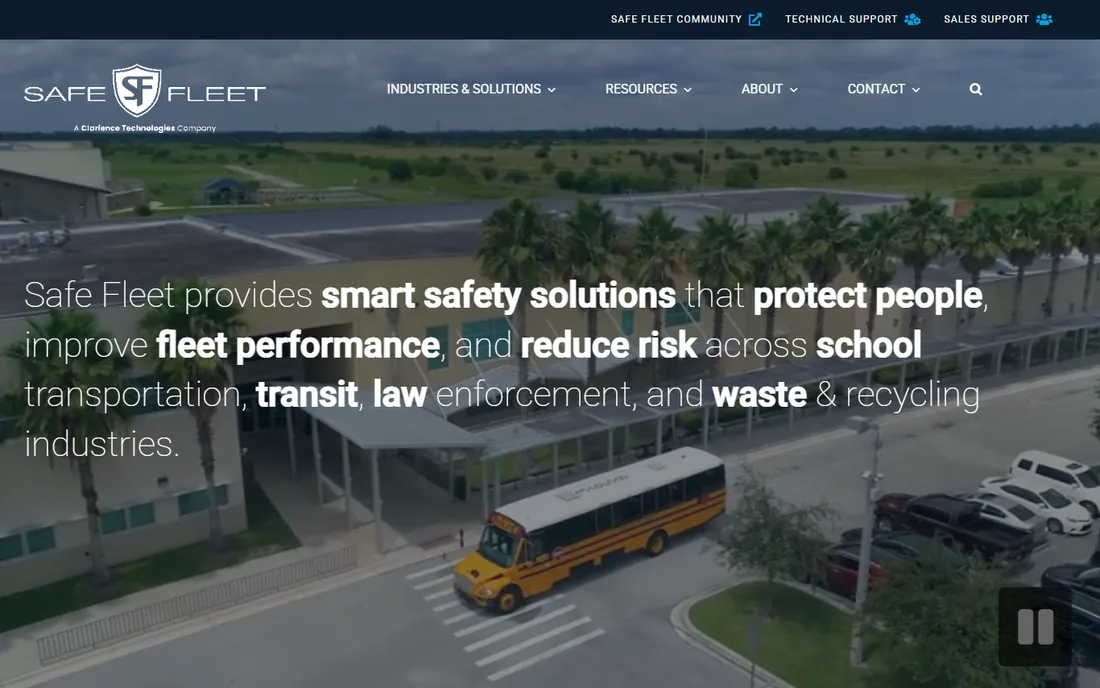
Safe Fleet's evidence management grew out of fleet video, in-car and body-worn systems for law enforcement and transit agencies, and it stays close to that core. If the requirement is managing video from patrol cars and body cameras with reliable ingest, storage and retrieval, it covers the job without the complexity of a full investigation platform. The trial program is straightforward.
The scope is the limit: agencies wanting automated case assembly, deep multi-agency collaboration or property-room tracking will outgrow it. And Safe Fleet is one product inside a large parent portfolio, so roadmap attention is shared. For departments whose evidence is overwhelmingly vehicle and body-worn video, that focus is a feature.
What we like- Purpose-built for fleet and body-worn video
- Serves law enforcement and transit agencies
- Straightforward trial program
- Video-focused workflows
Watch out for- Narrower than full DEMS suites
- Less case assembly depth
- Parent-company product among many
Starting priceSee website
Free planDemo
Tracker Products' SAFE system targets the agencies the enterprise suites overlook: small departments that need reliable evidence tracking, barcode workflows and chain-of-custody documentation without a six-figure implementation. The product is deliberately straightforward, which keeps deployment and training manageable for a property officer who also does three other jobs.
Video management depth trails the DEMS leaders, and the vendor is small, so support and roadmap depend on a lean team. For a small agency replacing spreadsheets and paper logs, though, Tracker Products hits the actual need at a price the budget can absorb. Evaluate it against the property room's daily workflow, not against Axon's feature list.
What we like- Straightforward evidence tracking workflows
- Affordable for small agencies
- Barcode support
- Simpler implementation
Watch out for- Less video management depth
- Smaller vendor
- Fewer integrations than enterprise suites
How we chose
We evaluated these platforms against vendor documentation, public safety technology coverage, the awesome-digital-evidence-management vendor survey, and buyer guides published in 2026. We did not run hands-on trials. Every platform here exists today and serves US law enforcement as a current product. We weighted CJIS compliance posture, chain of custody automation, body-camera and multi-source ingest, redaction for FOIA and disclosure, multi-agency sharing, deployment flexibility and fit for different agency sizes, from small departments to large enterprises.
Deployment: cloud, on-premises or hybrid
Deployment is the first decision, and it constrains everything after. Cloud DEMS removes server maintenance and scales storage automatically, which suits agencies without dedicated IT staff. On-premises keeps data inside the agency's walls, which some CJIS interpretations and local policies require. Hybrid splits the difference, often with sensitive material local and the rest in the cloud.
Axon and Motorola lean cloud. VIDIZMO and FileOnQ offer on-premises and hybrid paths. Get your legal and IT stakeholders to agree on the deployment constraint before you shortlist, because half the platforms drop out on this question alone. Also confirm where data resides geographically and who holds the encryption keys; CJIS compliance is about the security agreement and audit trail, not just the vendor's marketing page.
What to check before you buy
Start with ingest. List every camera brand, dashcam, drone, interview room system and phone your agency uses, then confirm each one in a live demo with your own files. Hardware-agnostic claims vary in practice, and proprietary formats are where migrations stall.
Then test the redaction workflow end to end. Take a real body-cam clip, redact faces and plates, and time it. FOIA volume is the workload that breaks understaffed agencies, so the redaction tool's speed and accuracy matter more than most feature checklists admit. Ask whether redaction is automated, manual or a mix, and whether the audit trail records every redaction decision.
Check the chain of custody model. Every access, share and export should log who, what and when, immutably. Ask how the system handles retention schedules and legal holds, because deleting evidence too early is as dangerous as losing it. Finally, price the storage. Video volume grows every year, and quote-based pricing means you need a five-year storage model, not a first-year quote. Get the per-terabyte economics in writing.
Frequently asked questions
What is CJIS compliance and why does it matter?
CJIS, the FBI's Criminal Justice Information Services security policy, sets the security requirements for systems handling criminal justice data. A DEMS used by a US law enforcement agency must meet these requirements around access control, encryption, auditing and personnel security. Ask vendors for their CJIS documentation and how they support your agency's compliance, rather than accepting a badge at face value.
How does chain of custody work in a DEMS?
Every file gets an immutable audit trail recording who captured, accessed, shared, redacted or exported it, with timestamps. That trail is what makes the evidence defensible in court. When evaluating, ask whether the audit log can be altered by administrators, how exports are tracked, and whether the system produces chain-of-custody reports a prosecutor can actually use.
Can these systems redact faces automatically for FOIA requests?
Yes, most platforms on this list include AI redaction that detects faces, license plates and on-screen text across video frames. Quality varies, and human review is still standard before release. Time the workflow in a demo with your own footage, since redaction speed at FOIA scale is often the real bottleneck.
Cloud or on-premises: which is right for our agency?
Cloud suits agencies without dedicated IT staff and scales storage automatically. On-premises suits agencies with strict data sovereignty rules or CJIS interpretations requiring local control. Hybrid splits sensitive and routine material. Decide with your legal and IT stakeholders first, since the choice eliminates half the shortlist.
How painful is migrating from our current system?
Migration effort tracks media volume and format variety. Proprietary camera formats are the hard part; standard formats move more easily. Ask vendors for a migration plan with timelines, whether they handle transcoding, and for reference agencies of similar size that migrated. Run a pilot with a real evidence subset before committing.
Do these platforms integrate with records management and dispatch?
The ecosystem vendors, Axon, Motorola and NICE, integrate most deeply with their own records, dispatch and analytics products. Hardware-agnostic platforms integrate through APIs and standard interfaces. Map your current RMS and CAD systems and confirm each integration in the demo, not on a slide.
Sources we checked (9)
- https://www.axon.com
- https://www.vidizmo.com
- https://www.nice.com
- https://www.genetec.com
- https://www.motorolasolutions.com
- https://www.fileonq.com
- https://www.quetel.com
- https://www.safefleet.net
- https://www.trackerproducts.com
Is your product missing or out of date?
We review this list regularly. Vendors can request a listing, send updated pricing or ask about featured placement.

Shihab Mia · Founder, Rankite
Shihab has spent more than a decade helping SaaS and e-commerce brands grow through search. He writes Rankite's software buying guides from pricing pages, documentation and public user reviews. More about Shihab.