How we make this list: we compare pricing pages, product documentation and public user reviews. Rankite is independent; if a vendor ever pays for a featured spot, that listing is clearly labeled Partner.
Key takeaways
- Motorola CommandCentral and Hexagon lead on scale and ecosystem depth for large and regional agencies.
- Mark43 is the strongest cloud-native option for agencies that want fast deployment without on-premises servers.
- Tyler Technologies and CentralSquare fit agencies already running their broader public safety suites.
- Caliber, Southern Software and Omnigo serve small to mid-size agencies at lower total cost.
- Zetron suits control rooms that need radio dispatch, call handling and CAD from one vendor.
It is 2:14 in the morning when the call comes in. A caller reports a structure fire two streets over from a school, and the dispatcher has maybe ninety seconds to get the right units moving. The CAD screen is where that happens. It recommends units based on location and status, pushes the call to mobile terminals in the rigs, tracks who is en route and who is on scene, and keeps a timestamped record of everything. When CAD works, the dispatcher thinks about the emergency. When it does not, the dispatcher fights the software while the clock runs. This list covers the systems that 911 centers, police departments, fire districts and EMS agencies actually buy, from the giants that run the largest metros to the specialists that serve single-county agencies.
Quick comparison
| Tool | Best for | Starting price | Free plan |
|---|
 Motorola CommandCentral Motorola CommandCentral | Large agencies wanting an end-to-end command center | See website | No |
 Hexagon Hexagon | Multi-agency and regional dispatch operations | See website | No |
 Tyler Technologies Tyler Technologies | Agencies standardizing on the Tyler public safety suite | See website | No |
 Mark43 Mark43 | Agencies wanting cloud-native CAD with fast deployment | See website | No |
 CentralSquare CentralSquare | Agencies wanting the largest US installed base | See website | No |
 Zetron Zetron | Control rooms needing radio dispatch plus CAD | See website | No |
 Caliber Public Safety Caliber Public Safety | Law enforcement agencies wanting CAD plus RMS | See website | No |
 Southern Software Southern Software | Small to mid-size agencies wanting affordable integrated CAD | See website | No |
 Omnigo Omnigo | Agencies needing dispatch plus incident management | See website | No |
Is your product missing or out of date?
We review this list regularly. Vendors can request a listing, send updated pricing or ask about featured placement.
Computer-aided dispatch software, compared
Starting priceSee website
Free planNo
Motorola's CommandCentral suite is the closest thing public safety has to a default choice. PremierOne CAD sits inside a portfolio that covers 911 call handling, radio, video, records and analytics, all from one vendor. For a large agency or a consolidated regional center, that single-vendor story simplifies procurement, integration and accountability. When something breaks at 3 a.m., there is one throat to choke.
The honest catch is everything that comes with enterprise scale. Pricing is quote-only and sits at the top of the market. Implementations run for months and demand serious project management from the agency side. A 20-dispatcher county center will pay for capability it may never use. Motorola fits best where the operation is big enough to absorb the cost and complex enough to need the integration.
What we like- Deep ecosystem from call handling to records
- PremierOne CAD is proven at major-metro scale
- Strong mobile and field tools
Watch out for- Quote-only enterprise pricing
- Implementations are long and complex
- Smaller agencies can find it more system than they need
Starting priceSee website
Free planNo
Hexagon's public safety division sells to agencies that dispatch across boundaries. HxGN OnCall Dispatch is built for regional centers where police, fire and EMS from multiple jurisdictions share the queue, and its mapping and location tools are among the best in the category. Agencies consolidating several dispatch centers into one tend to look at Hexagon early.
The trade-off is the classic enterprise bargain. This is powerful software that expects a professional implementation team and a patient procurement process. Smaller agencies often find the cost and complexity hard to justify. Hexagon wins where the dispatch problem is genuinely complicated: many agencies, many disciplines, one screen.
What we like- HxGN OnCall Dispatch handles complex multi-jurisdiction workflows
- Strong mapping and location intelligence
- Proven internationally
Watch out for- Enterprise pricing and long sales cycles
- Configuration requires experienced implementers
- Interface can feel dated next to cloud-native rivals
#3
Tyler Technologies
Best for: Agencies standardizing on the Tyler public safety suite
Visit tylertech.com
Starting priceSee website
Free planNo

Tyler's CAD products, including New World and Enterprise CAD, make the most sense inside a Tyler shop. When CAD, records, mobile and jail management share one data model, officers stop retyping the same incident three times. Tyler has spent years acquiring its way into that position, and for agencies that standardize on it, the integration dividend is real.
The catch is commitment. Tyler pricing is quote-only, and once the whole stack is Tyler, leaving gets expensive. Agencies should also press on the product roadmap during evaluation, since a suite vendor's attention is always divided across many products. Buy Tyler when you want the suite, not just the CAD.
What we like- CAD integrates tightly with Tyler RMS, mobile and corrections products
- New World and Enterprise CAD are widely deployed
- Single vendor for the full public safety stack
Watch out for- Pricing is quote-only
- Suite lock-in makes future switching expensive
- Some agencies report slow feature delivery
#4
Mark43
Best for: Agencies wanting cloud-native CAD with fast deployment
Visit mark43.com
Starting priceSee website
Free planNo
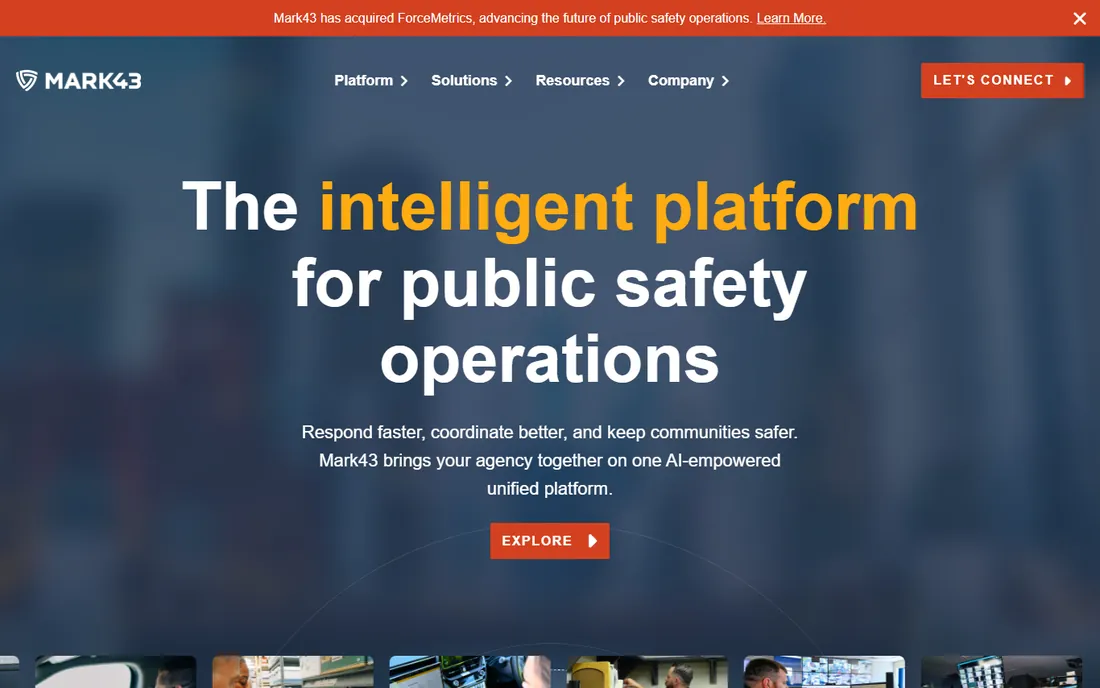
Mark43 is the insurgent on this list. Where the incumbents sell servers and multi-year rollouts, Mark43 sells a cloud platform that updates itself and deploys in weeks. Dispatchers get a modern interface, supervisors get real-time analytics, and the IT department gets to stop babysitting CAD servers. Its customer list, from big-city police departments to federal agencies, keeps growing.
The honest question to ask is about fit at the extremes. The largest consolidated centers with exotic workflows should validate that Mark43 handles their edge cases. Agencies with policies requiring on-premises data should confirm the cloud architecture satisfies their rules. For the broad middle of American law enforcement, Mark43's speed and usability are a genuine break from the category's norms.
What we like- True cloud-native architecture with automatic updates
- Fast implementations measured in weeks
- Modern interface dispatchers learn quickly
Watch out for- Quote-only pricing
- Less proven at the very largest metro scale
- Agencies with strict data-sovereignty rules need to vet the cloud model
Starting priceSee website
Free planNo
CentralSquare claims the largest footprint in US public safety software, and the number of agencies running its CAD, records and mobile products is hard to argue with. For a mid-size agency, that installed base means peer references are easy to find, user groups are active, and the vendor has seen your exact workflow before. The portfolio covers the full incident lifecycle from 911 call to final report.
Buyers should be precise about which product they are evaluating. CentralSquare grew through acquisitions, and several CAD product lines live under one roof. Ask for the specific product name, its roadmap, and references from agencies running that exact product. With that diligence done, CentralSquare is a safe and well-supported choice.
What we like- Massive installed base with deep public safety domain knowledge
- CAD, RMS, mobile and NG911 in one portfolio
- Strong presence in mid-size agencies
Watch out for- Product line is broad after years of acquisitions, so ask which CAD you are actually buying
- Quote-only pricing
- Implementations vary by product
#6
Zetron
Best for: Control rooms needing radio dispatch plus CAD
Visit zetron.com
Starting priceSee website
Free planNo
Zetron approaches dispatch from the communications side. Its strength is the control room: IP-based radio dispatch, NG911 call taking, voice logging, fire station alerting and CAD working as one system. Agencies that think of dispatch as a communications problem first will find Zetron's integrated story compelling, and the company has thousands of installations across public safety, transportation and utilities worldwide.
The caveat is focus. Zetron sells a lot of products, and CAD buyers should confirm the CAD module gets the development attention it needs rather than riding along behind the radio business. For combined dispatch and communications centers, though, buying the whole stack from Zetron removes a whole category of integration headaches.
What we like- Integrated radio dispatch, call handling and CAD from one vendor
- Strong in transportation, utilities and federal markets as well as public safety
- Long track record since 1980
Watch out for- Quote-only pricing
- Product breadth can mean CAD is not the star of the portfolio
- Smaller marketing presence than the big CAD-first vendors
Starting priceSee website
Free planNo
Caliber has served US law enforcement since the 1970s, and its platform covers the core workflow: CAD for dispatch, mobile for the field, RMS for records and JailTracker for corrections. For a sheriff's office or municipal police department that wants one vendor for the whole records-to-dispatch chain, Caliber's domain focus shows in the details.
Two things to check. First, the company is now part of the Harris Operating Group, so ask how the roadmap and support have changed under new ownership. Second, confirm the product's current state with a live demo on recent software, since long-lived products in this category can vary in how modern the day-to-day interface feels. For law-enforcement-first agencies, Caliber remains a solid contender.
What we like- Integrated CAD, mobile, RMS and jail management built for law enforcement
- Long history serving US agencies
- Now backed by Harris/Constellation resources
Watch out for- Quote-only pricing
- Product modernization pace is worth probing
- Strongest in law enforcement, thinner for fire and EMS
Starting priceSee website
Free planNo
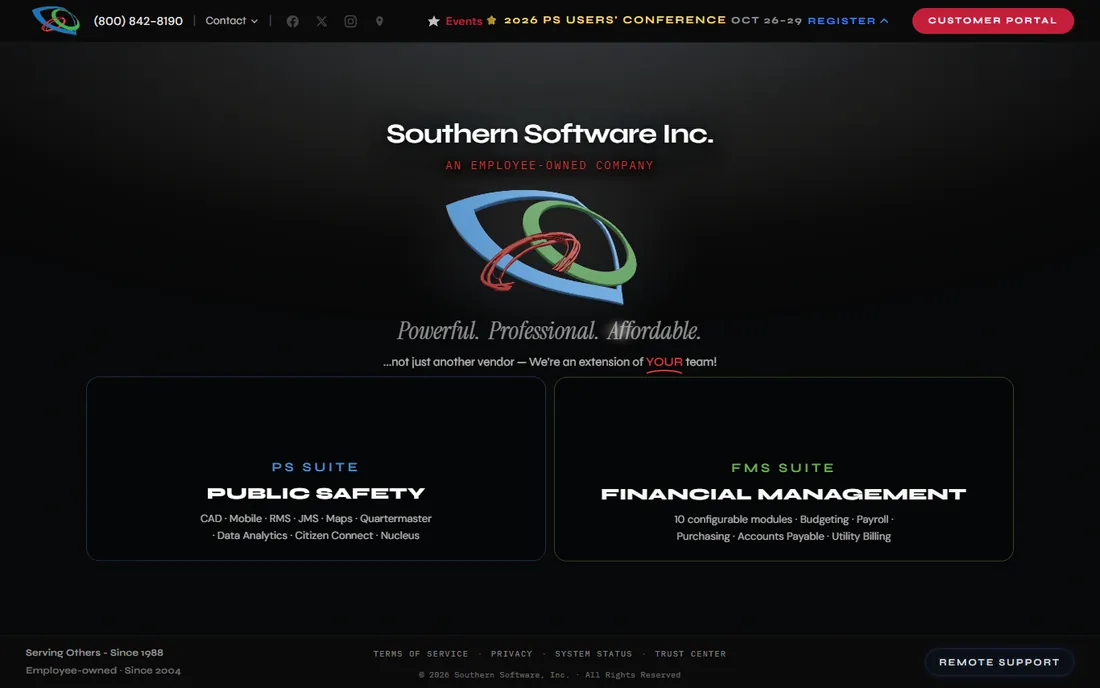
Southern Software is the value pick that small agencies actually buy. One vendor provides CAD, records, dispatch mapping, mobile data and jail management at prices a small department can afford, with support that picks up the phone. For a county with a handful of dispatchers, the integrated suite removes the integration tax that enterprise vendors charge.
Nobody should buy Southern Software for a 500-seat regional center. It is built for the small to mid-size market, and the interface shows its age in places. But within its lane, it delivers the core dispatch workflow reliably and affordably, which is exactly what most of America's smaller agencies need.
What we like- CAD, RMS, mapping, mobile and jail in one affordable suite
- Straightforward pricing conversations
- Responsive support reputation among small agencies
Watch out for- Less suited to very large or multi-state operations
- Interface reflects its long history
- Advanced analytics are thinner than enterprise rivals
#9
Omnigo
Best for: Agencies needing dispatch plus incident management
Visit omnigo.com
Starting priceSee website
Free planNo
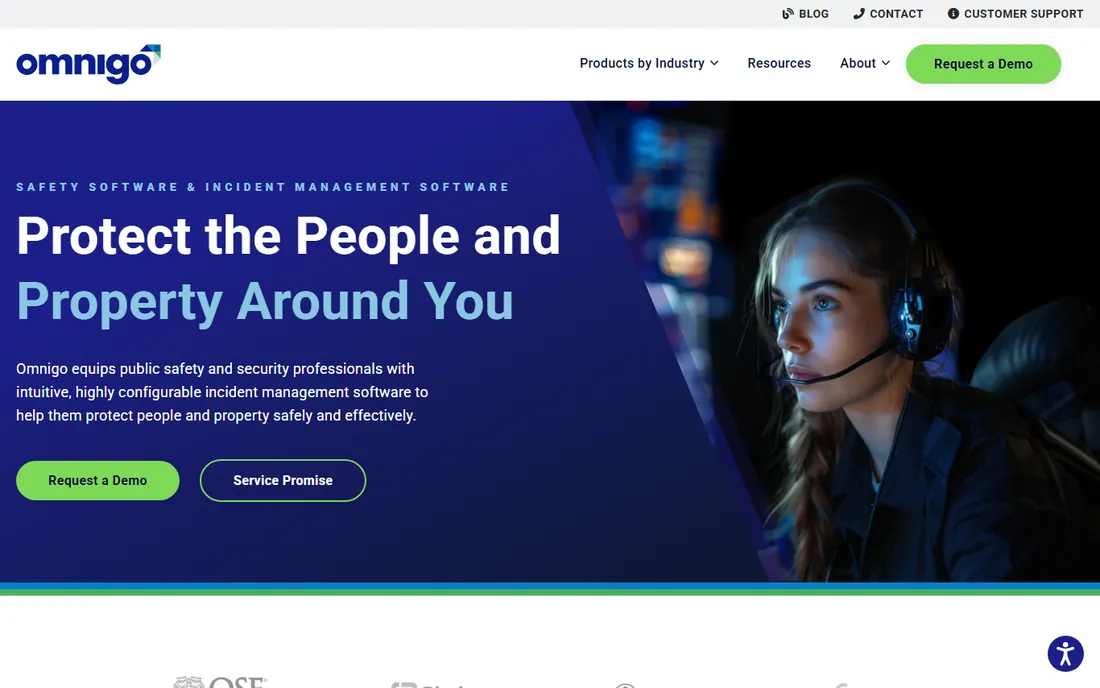
Omnigo sits at the intersection of dispatch and incident management. Agencies that need CAD alongside broader incident reporting, particularly those spanning law enforcement and security operations, get both from one platform. The company offers cloud and on-premises deployment, which gives IT departments a real choice.
The trade-off is specialization. Omnigo serves several markets beyond public safety, so CAD buyers should verify the product's depth against a pure dispatch workflow and ask for public safety references specifically. For agencies whose needs blend dispatch with wider incident management, that breadth is a feature rather than a bug.
What we like- Combines dispatch with incident reporting and records
- Cloud and on-premises options
- Serves law enforcement, healthcare and enterprise security markets
Watch out for- Quote-only pricing
- Public safety is one of several verticals, so depth varies
- Smaller CAD installed base than category leaders
What to evaluate before you buy CAD
CAD procurement goes wrong when agencies buy the demo instead of the deployment. Start with your call volume and workflow complexity. A single-discipline fire district and a multi-agency police-fire-EMS center are buying different products even when the vendor names match. Map your must-have integrations before you talk to vendors: 911 call handling, radio, RMS, mobile data terminals, mapping and any state or federal data interfaces.
Run a scripted demo, not a sales demo
Give every finalist the same scenario based on a real incident type from your jurisdiction. Watch how many clicks it takes to create the call, recommend units, dispatch, track status changes and close out. Count the screens. Ask the dispatcher in the room, not the chief, whether they could learn it on a busy shift.
Price the whole project
The software license is only part of the cost. Add implementation services, data migration, training, hardware, third-party integrations and five years of maintenance. Quote-only pricing makes this harder, so require each vendor to itemize. A cheaper license with expensive services often loses to a pricier license with a fixed-fee implementation.
Check the references that look like you
Every vendor has a flagship reference. Ask for three agencies within 25 percent of your call volume and staff size, then call them without the vendor on the line. Ask what broke during go-live, how long the agency ran parallel systems, and what they would do differently.
How we chose
We reviewed vendor product pages, public documentation, agency case studies and public safety industry coverage, focusing on CAD products actively sold to emergency services in 2026. Every system above handles the core dispatch workflow: call intake, unit recommendation, resource tracking and incident records. We excluded generic fleet dispatch tools, tow-only software and scheduling products without true CAD functionality. Pricing in this category is universally quote-based, so we did not repeat third-party price estimates. We did not claim hands-on testing.
Cloud vs on-premises CAD
The biggest architectural debate in dispatch right now is where the servers live. Traditional CAD runs on servers in the agency's data center or the county IT shop. The agency controls the hardware, the data never leaves the building, and the IT staff owns uptime. The cost is capital expense, maintenance burden and upgrade projects that disrupt operations every few years.
Cloud CAD, led by vendors like Mark43, moves the infrastructure to the vendor. Updates arrive automatically, scaling is someone else's problem, and disaster recovery is built in rather than bolted on. The concerns are real too: CJIS compliance, network dependency during outages, and data control questions that keep chiefs and sheriffs up at night.
Most agencies land on a risk question rather than a technology question. If your network connectivity is solid and your state CJIS authority accepts the vendor's security documentation, cloud CAD removes a huge operational burden. If your policies or your connectivity argue otherwise, the on-premises vendors on this list remain strong. Either way, decide the architecture before you evaluate products, because it eliminates half the field immediately.
Frequently asked questions
How much does computer-aided dispatch software cost?
Vendors do not publish prices. Small-agency CAD suites typically run from tens of thousands into the low hundreds of thousands for the full project including services. Large and regional systems run into the millions over a multi-year contract. Always require itemized quotes covering software, implementation, training and five years of maintenance.
How long does a CAD implementation take?
Cloud-native systems like Mark43 can go live in weeks. Traditional enterprise CAD typically takes six to eighteen months from contract to cutover, including data migration, interface development and training. Plan to run the old and new systems in parallel during the transition.
What is the difference between CAD and RMS?
CAD manages the live incident: taking the call, dispatching units and tracking the response in real time. RMS, records management software, stores the incident data afterward for reporting, investigation and compliance. Most agencies buy both, and the integration between them determines how much double entry your staff endures.
Do I need CAD if my agency is small?
If you dispatch units to calls for service, you need CAD. The question is scale, not whether. Small agencies should look at integrated suites like Southern Software or Caliber rather than enterprise platforms, and should favor vendors with strong small-agency reference lists.
What does NG911 change about CAD?
Next Generation 911 moves emergency calling to IP-based systems that can receive texts, images and video. CAD vendors are adapting with EIDO data exchange and richer location data. When evaluating CAD now, ask how the vendor handles NG911 data formats and what the upgrade path looks like.
Can CAD run in the cloud?
Yes. Cloud-native CAD is an established option, with CJIS-compliant offerings from vendors like Mark43. Many agencies still choose on-premises for policy or connectivity reasons. Confirm your state's CJIS requirements and your network resilience before deciding.
Sources we checked (9)
- https://motorolasolutions.com/
- https://hexagon.com/
- https://www.tylertech.com/
- https://mark43.com/
- https://centralsquare.com/
- https://www.zetron.com/
- https://www.caliberpublicsafety.com/
- https://www.southernsoftware.com/
- https://omnigo.com
Is your product missing or out of date?
We review this list regularly. Vendors can request a listing, send updated pricing or ask about featured placement.

Shihab Mia · Founder, Rankite
Shihab has spent more than a decade helping SaaS and e-commerce brands grow through search. He writes Rankite's software buying guides from pricing pages, documentation and public user reviews. More about Shihab.