How we make this list: we compare pricing pages, product documentation and public user reviews. Rankite is independent; if a vendor ever pays for a featured spot, that listing is clearly labeled Partner.
Key takeaways
- Earned value management splits into dedicated EVM engines (Deltek Cobra), project controls platforms (EcoSys, P6) and schedulers with EVM fields (MS Project, ProjectManager, Smartsheet).
- Deltek Cobra is the EVM cost engine standard for government and defense contracts; Primavera P6 is the scheduling standard it pairs with.
- Planisware serves enterprise PPM with EVM; MS Project and Smartsheet bring EVM basics to the rest of us.
- EVM only works with disciplined baselines and actuals; the software is the smaller half of the implementation.
Quick comparison
Is your product missing or out of date?
We review this list regularly. Vendors can request a listing, send updated pricing or ask about featured placement.
The best earned value management software
Starting priceSee website
Free planNo
Deltek Cobra is the earned value management cost engine that defense, aerospace and government contractors standardize on. It manages the performance measurement baseline, integrates budgets with schedules and actual costs and produces the CPR and IPMR reports that government contracts require.
The compliance depth is the point. Cobra implements ANSI/EIA-748 earned value guidelines natively: baseline control, variance analysis, estimate at completion calculations and the formal reporting formats. Paired with a scheduling tool (usually Primavera P6 or MS Project) and Deltek's cost systems, it forms the complete EVM system.
The honest catch is the enterprise nature. Licensing, implementation and operation assume trained EVM analysts; this is not software a project manager picks up casually. Organizations without EVM-mandated contracts should look at the lighter tools below. For EVMS-compliant programs, Cobra is the benchmark.
What we like- The EVM standard for government contracts
- ANSI-748 compliance
- Deep integration
Watch out for- Enterprise pricing and complexity
- Needs trained EVM staff
Starting priceSee website
Free planNo
Oracle Primavera P6 is the scheduling platform for large complex projects: engineering, construction, energy and government programs with tens of thousands of activities. Its earned value fields (planned value, earned value, actual cost, variances, performance indices) compute from the schedule and resource data natively.
The scale is unmatched. P6 handles the project sizes that break other tools, with resource leveling, multi-project management and the baseline discipline that EVM requires. It is the scheduler that feeds Deltek Cobra in most EVMS implementations.
The trade-off is cost and usability. Licensing is enterprise, the interface is famously dated and effective use requires trained schedulers. Small projects should not touch it. For the large programs where EVM matters, P6 is the scheduling foundation.
What we like- The enterprise scheduling standard
- Native earned value fields
- Massive project capacity
Watch out for- Expensive and complex
- Dated interface
Starting priceSee website
Free planFree trial
Microsoft Project brings earned value to the mainstream: baseline the plan, track progress and actual costs and the earned value tables and reports (BCWS, BCWP, ACWP, variances, CPI, SPI) compute automatically. For project managers who need EVM without enterprise systems, it is the accessible answer.
The ubiquity is the value. Most organizations already license it, most project managers have used it and the EVM fields follow the standard formulas. For internal projects where the discipline matters more than compliance reporting, it does the job.
The honest limits are depth and scale. There is no ANSI-748 compliance framework, no multi-project EVM portfolio and no formal government reporting. It computes the numbers; it does not run an EVMS. For learning EVM and managing non-regulated projects, it is the right starting point.
What we like- Everyone knows it
- Built-in earned value fields
- Affordable
Watch out for- EVM depth is basic
- Single-project focus
Starting priceSee website
Free planNo
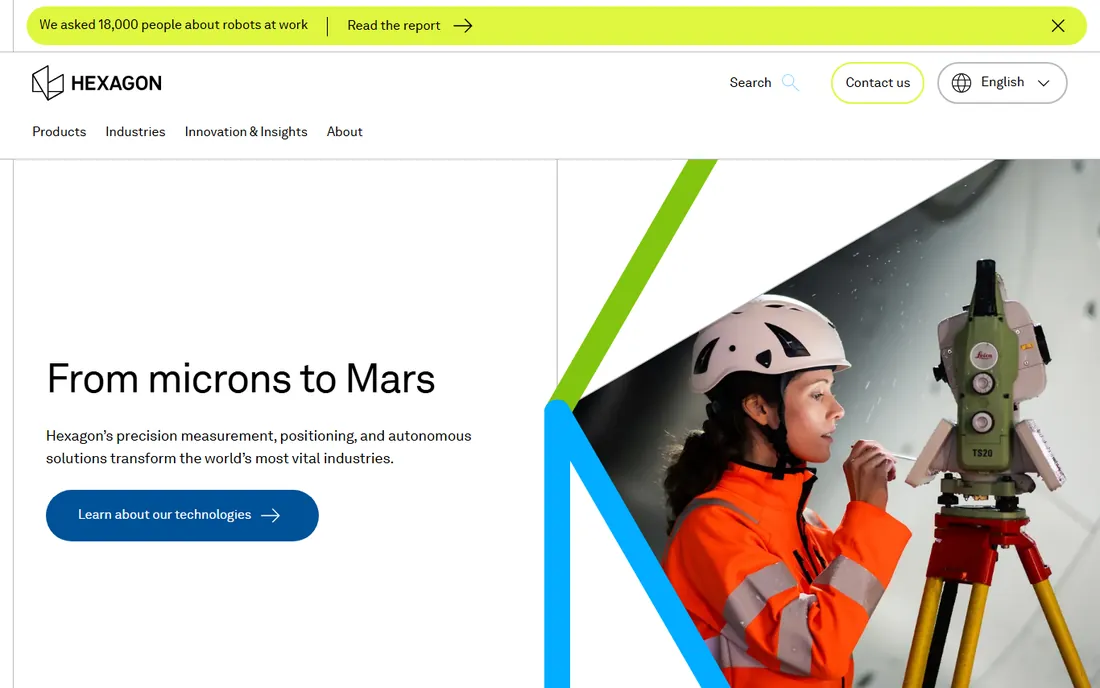
Hexagon EcoSys is the enterprise project controls platform that includes earned value management alongside budgeting, forecasting, change management and portfolio reporting. It serves owners and contractors on large capital projects in energy, infrastructure and resources.
The platform breadth is the story. Instead of separate tools for cost control, scheduling integration and EVM reporting, EcoSys unifies project controls in one system with configurable workflows. The earned value capabilities serve both contractors reporting to owners and owners overseeing portfolios.
The catch is the enterprise scope. Pricing, implementation and the organizational maturity required are enterprise-grade. This is for capital project organizations, not general project management. For that audience, the integrated controls justify the investment.
What we like- Full project controls platform
- EVM plus budgeting and forecasting
- Enterprise integration
Watch out for- Enterprise pricing
- Implementation is significant
Starting priceSee website
Free planNo
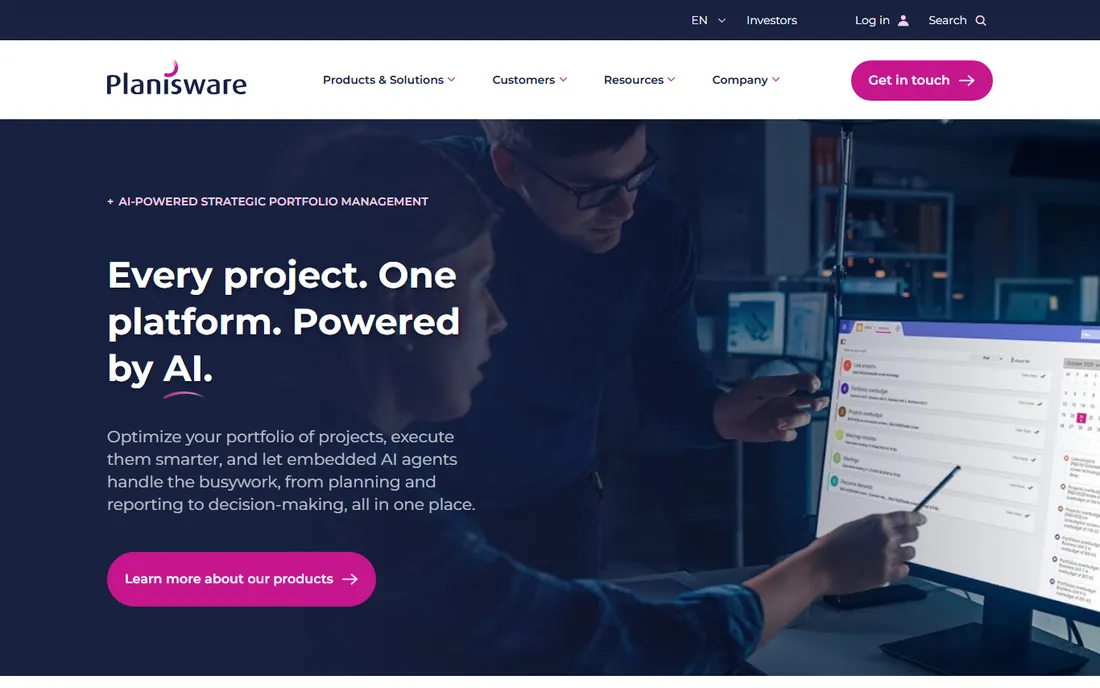
Planisware is the enterprise project portfolio management platform with earned value capabilities: manage the project portfolio, track project performance with EVM metrics and roll up to executive dashboards. It serves new product development, IT and engineering organizations.
The PPM-plus-EVM combination is the value. Organizations that need portfolio governance and project-level earned value get both in one system, with the configurability to match their processes. The resource management and scenario planning add the portfolio dimension that pure EVM tools lack.
The honest trade-off is complexity and price. Configuration is a project, and the EVM depth trails dedicated engines like Cobra. Enterprises wanting one PPM system with credible EVM should evaluate it. EVM-mandated programs still need Cobra.
What we like- Strong portfolio plus project EVM
- Good for NPD and IT
- Configurable
Watch out for- Enterprise pricing
- Complex configuration
Starting priceSee website
Free planNo
Deltek Acumen is the schedule analytics platform that makes EVM trustworthy: it diagnoses schedule quality, runs risk analysis (the former Acumen Risk) and benchmarks project performance. EVM numbers are only as good as the schedule behind them, and Acumen validates that foundation.
The diagnostics are the differentiator. Schedule health checks against industry best practices, forensic delay analysis and Monte Carlo risk modeling turn questionable schedules into credible baselines. Organizations serious about EVM use Acumen to de-risk the schedule before measuring against it.
The boundary is that it complements EVM systems rather than replacing them. You still need Cobra or equivalent for the cost engine. But the schedule quality problem it solves is the most common reason EVM implementations fail. For programs investing in EVM, Acumen protects that investment.
What we like- Best-in-class schedule diagnostics
- Risk analysis
- Improves EVM reliability
Watch out for- Complements rather than replaces EVM systems
- Enterprise pricing
Starting priceSee website
Free planFree trial
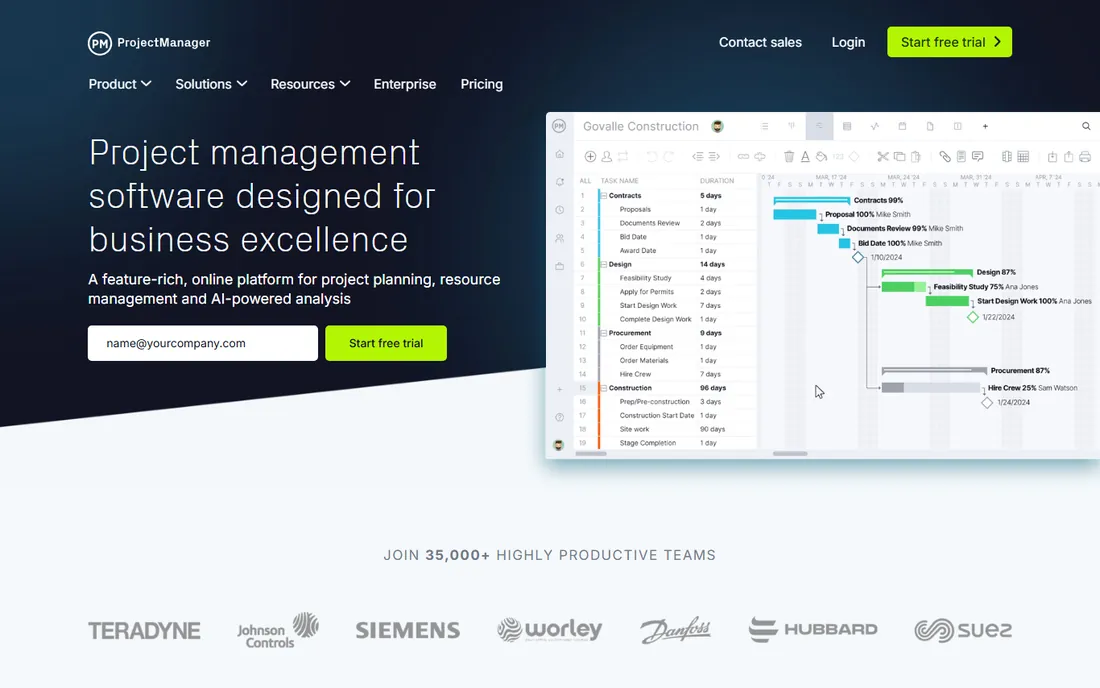
ProjectManager.com is the online project management software with built-in earned value tracking: plan on Gantt charts, track progress and costs and view earned value metrics on dashboards without the enterprise overhead. It suits teams that want EVM visibility in a modern tool.
The accessibility is the pitch. Teams get planned value, earned value and actual cost tracking with variance indicators in software anyone can learn. The dashboards communicate project health to stakeholders who will never open P6.
The honest limits are depth. This is EVM visibility, not an EVMS: no ANSI-748 compliance, no formal government reporting, no complex baseline control. For internal projects and client work where the metrics guide decisions rather than satisfy contracts, it is the pragmatic choice.
What we like- EVM in an easy online tool
- Good dashboards
- Affordable
Watch out for- EVM depth is basic
- Not for compliance programs
Starting priceSee website
Free planFree trial
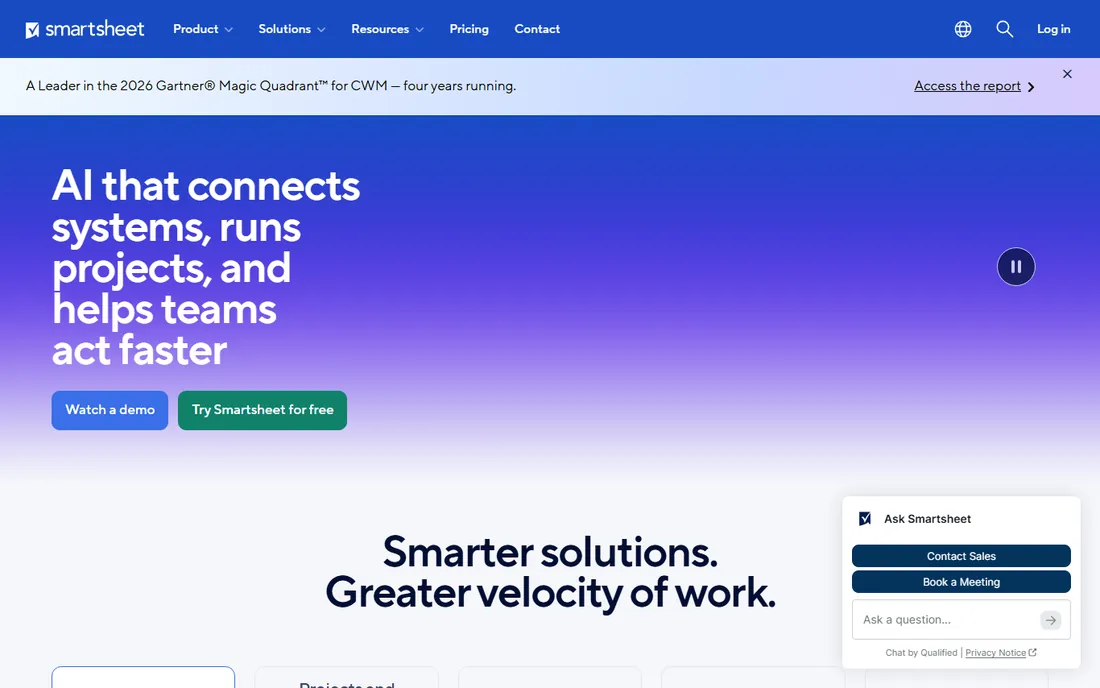
Smartsheet is the spreadsheet-like work platform where many teams build their own EVM tracking: baseline columns, progress inputs, actual costs and formulas computing earned value, variances and indices. Templates and community solutions provide starting points.
The familiarity is the value. Teams that live in spreadsheets adopt EVM tracking without learning new software paradigms. The formulas, automation and dashboards make the homemade EVM system surprisingly capable for small to mid-size projects.
The catch is the homemade nature. You build and maintain the EVM logic yourself, with no compliance framework and no guardrails against methodology errors. It works for disciplined teams on non-regulated projects. For anything requiring real EVMS, use the real tools above.
What we like- Familiar spreadsheet interface
- Flexible EVM formulas
- Easy adoption
Watch out for- Manual EVM setup
- Not a dedicated EVM system
EVM in plain language
Earned value management answers three questions with numbers: how much work did we plan to complete by now (planned value), how much did we actually complete (earned value) and how much did it cost (actual cost). The variances and indices derived from these three numbers tell you whether the project is ahead or behind, over or under budget, and forecast the final cost.
The method only works with a real baseline and honest progress measurement. Garbage baselines produce garbage indices. This is why EVM implementations fail more often from process than from software: the tools compute correctly, but the inputs reflect wishful thinking. Fix the measurement discipline first, then choose the software.
What to check before you buy
Start with the requirement: government contract mandating ANSI-748, internal project discipline or portfolio visibility. Each points to different tools. Second, assess your scheduling maturity; EVM on a bad schedule is numerology. Third, count the trained staff; Cobra without EVM analysts is shelfware.
Fourth, verify the reporting outputs against your contract or stakeholder needs. Fifth, check integration with your scheduling and cost systems; EVM lives on data flow. Finally, budget the implementation and training honestly; the software license is often the smallest cost in an EVM deployment, and the cultural change of honest progress measurement takes longer than any installation.
How we chose
We compared vendor product pages, industry coverage and public review sources, then confirmed every homepage was live in October 2026. Where we could not verify a vendor-published price we say so. Nothing here reflects hands-on testing; assessments come from documentation, feature lists and public user feedback.
Frequently asked questions
What is earned value management?
A project management method that integrates scope, schedule and cost: compare planned value, earned value and actual cost to measure performance and forecast outcomes. It is standard on government and large capital projects.
Do I need special software for EVM?
For basic EVM, MS Project, Smartsheet or ProjectManager.com suffice. For ANSI-748 compliant programs, you need dedicated systems like Deltek Cobra plus a real scheduler. Match the software to the requirement.
What is ANSI-748?
The ANSI/EIA-748 standard defines the guidelines for earned value management systems, required on many US government contracts. Compliance involves 32 guidelines covering organization, planning, accounting, analysis and revisions.
What are CPI and SPI?
Cost Performance Index (earned value divided by actual cost) and Schedule Performance Index (earned value divided by planned value). Values above 1.0 are favorable; below 1.0 unfavorable. They are the headline health metrics of EVM.
How much does EVM software cost?
MS Project and Smartsheet cost tens of dollars per user monthly. Enterprise systems (Cobra, P6, EcoSys, Planisware) are quote-based with significant licensing and implementation costs. The training and process work often exceeds the software cost.
Sources we checked (7)
- https://www.deltek.com
- https://www.oracle.com
- https://www.microsoft.com
- https://hexagon.com
- https://www.planisware.com
- https://www.projectmanager.com
- https://www.smartsheet.com
Is your product missing or out of date?
We review this list regularly. Vendors can request a listing, send updated pricing or ask about featured placement.

Shihab Mia · Founder, Rankite
Shihab has spent more than a decade helping SaaS and e-commerce brands grow through search. He writes Rankite's software buying guides from pricing pages, documentation and public user reviews. More about Shihab.
 Deltek Cobra
 Oracle Primavera P6
 Microsoft Project
 Hexagon EcoSys
 Planisware
 Deltek Acumen
 ProjectManager.com
 Smartsheet