How we make this list: we compare pricing pages, product documentation and public user reviews. Rankite is independent; if a vendor ever pays for a featured spot, that listing is clearly labeled Partner.
Key takeaways
- Digital twin software is enterprise territory: expect quote-based pricing, not published plans, except Azure's pay-as-you-go consumption model.
- Siemens and NVIDIA are converging: Siemens' Digital Twin Composer, launched at CES 2026, builds industrial metaverse scenes with Omniverse libraries.
- Match the tool to the job: physics-based engineering twins (Ansys, Siemens), IoT asset graphs (Azure, PTC), visual simulation (Omniverse), energy assets (GE Vernova).
- Digital twins pay back through predictive maintenance and virtual commissioning, not the software license itself.
- Do not expect free trials on enterprise tiers; Azure's free account is the main way to experiment.
Quick comparison
Is your product missing or out of date?
We review this list regularly. Vendors can request a listing, send updated pricing or ask about featured placement.
The best digital twin software
A digital twin is a live virtual copy of something physical: a factory, a turbine, a grid, a product. Done right, it lets you test changes, predict failures, and commission production lines before committing a single dollar to the real thing. Done wrong, it is an expensive 3D model nobody updates. The cost of getting it wrong is not the software: it is the unplanned downtime, the failed launch, the factory built wrong. Eight platforms dominate this space, and they are not interchangeable.

#1
Siemens Xcelerator
Best for: end-to-end industrial digital thread
Visit siemens.com
Starting priceSee website
Free planNo
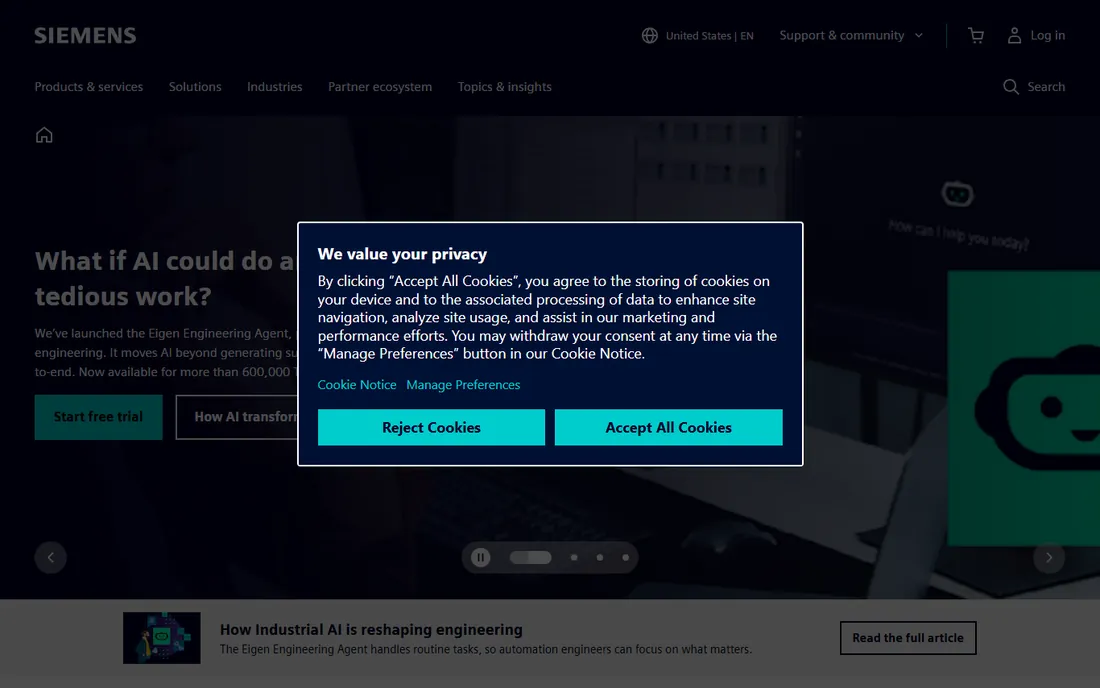
Siemens offers the most complete digital twin story in industry: design, simulation, manufacturing execution, and operations data connected through the Xcelerator portfolio. At CES 2026, Siemens launched Digital Twin Composer, which builds photorealistic industrial metaverse environments using NVIDIA Omniverse libraries, and PepsiCo is using it to twin US plants, reportedly catching up to 90% of issues before physical build.
The honest catch is that buying Siemens is a project, not a purchase. For engineering-led enterprises unifying design through operations, nothing else covers the full thread.
What we like- The most comprehensive digital twin across design, manufacturing, and operations
- Digital Twin Composer builds industrial metaverse scenes at scale
- Deep NVIDIA Omniverse partnership
Watch out for- Enterprise sales process
- Portfolio breadth means complexity in scoping

#2
NVIDIA Omniverse
Best for: physically accurate visual simulation
Visit nvidia.com
Starting priceSee website
Free planNo
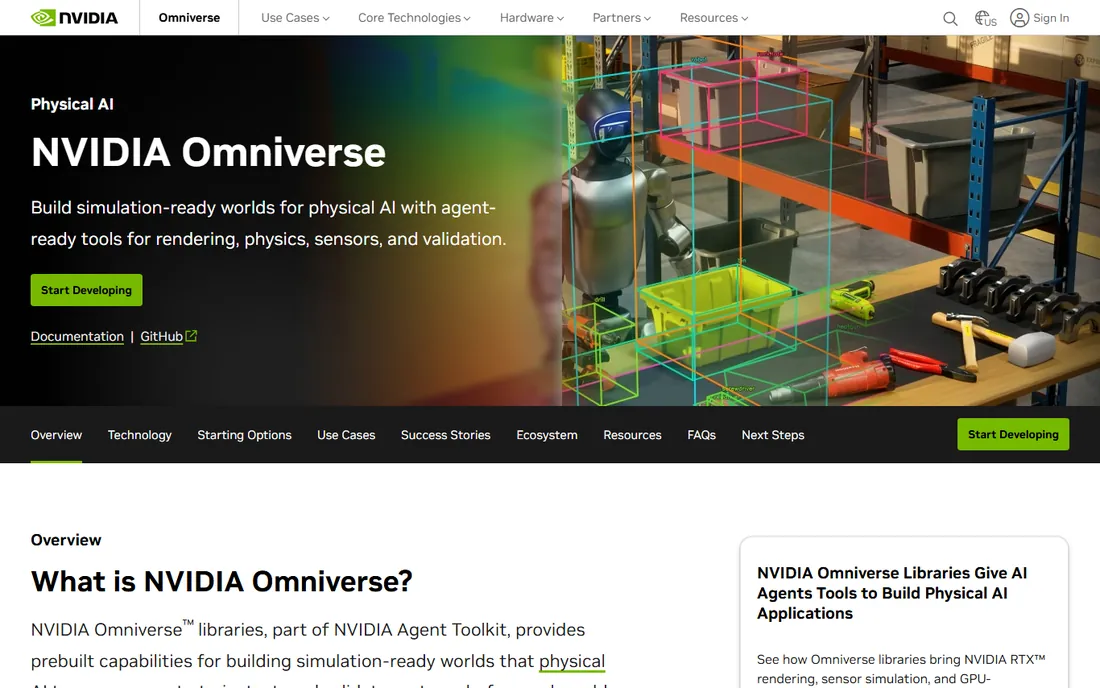
Omniverse is the simulation backbone of the industrial metaverse: libraries and APIs for OpenUSD scene data, RTX rendering, physics, sensor simulation, and validation that teams use to build simulation-ready worlds for physical AI. Siemens, Delta Electronics, and robotics companies build on it for industrial facility twins, robot simulation, and synthetic data generation.
The honest catch is that Omniverse is a toolkit, not a twin you configure. You need developers. If your digital twin needs physically accurate visuals, sensor simulation, or AI training data, it is the foundation everyone builds on.
What we like- OpenUSD-based interoperability across tools
- RTX rendering with GPU-accelerated physics and sensor simulation
- Strong robotics and synthetic data workflows
Watch out for- Developer-heavy, not an out-of-the-box twin product
- Hardware requirements are real
Starting priceSee website
Free planNo
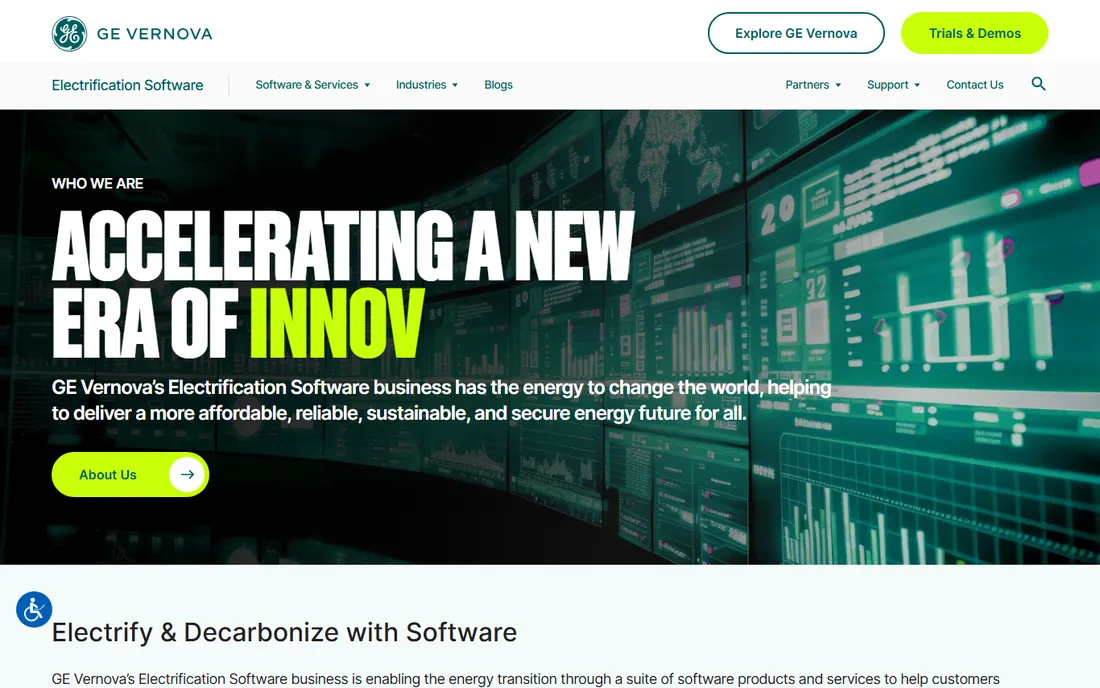
GE Vernova's software business, the former GE Digital, targets the energy transition: grid orchestration, asset performance management, and AI-driven insights for utilities and industrial plants. Pre-built asset twins accelerate deployment, and the platform is used by a large share of Fortune 500 utilities.
The honest catch is scope. If you run power plants, grids, or heavy industrial assets, this is home turf. If you build consumer products, look elsewhere.
What we like- Purpose-built for utilities and energy assets
- 350+ pre-built industrial asset twins
- AI-driven asset performance management
Watch out for- Energy-focused, not a general-purpose twin platform
- Enterprise pricing

#4
Ansys Twin Builder
Best for: physics-based engineering twins
Visit ansys.com
Starting priceSee website
Free planFree trial
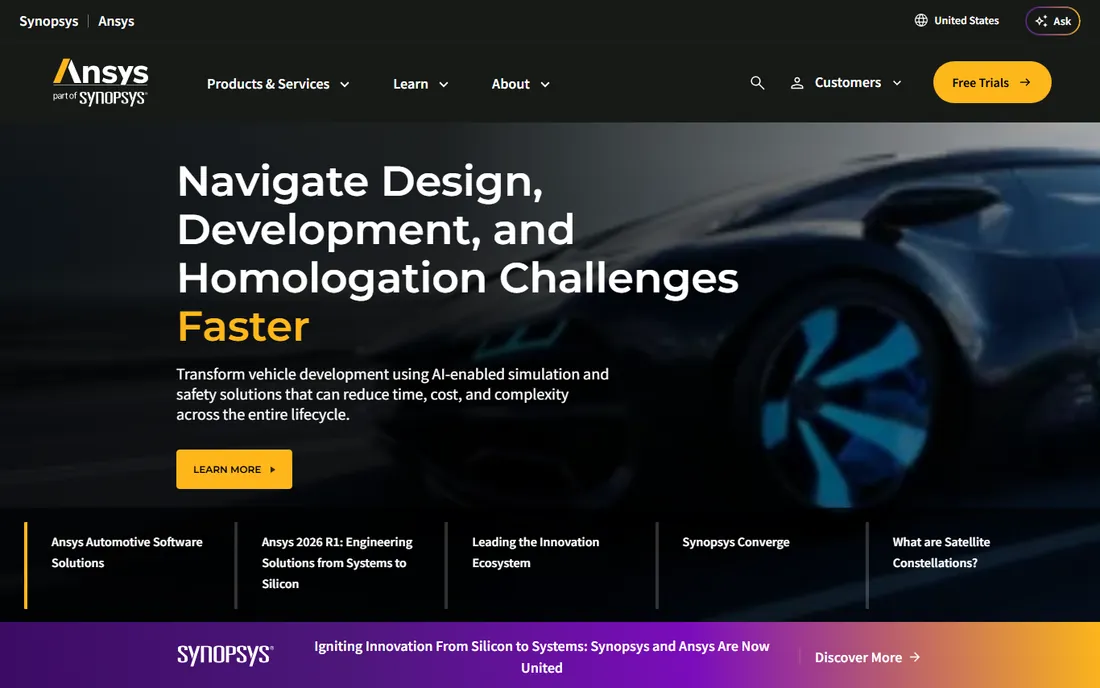
Ansys Twin Builder turns high-fidelity simulation into real-time digital twins: reduced-order physics models that run at operational speed, multi-domain system simulation, and fault simulation for predictive maintenance. Where other platforms model the asset, Ansys models the physics inside it.
The honest catch is that it is an engineering tool, not an operations dashboard. For engineering teams that need their twin to predict how a product behaves under stress, it is the accuracy leader.
What we like- Reduced-order physics models for real-time twins
- Multi-domain system simulation
- Free trials available
Watch out for- Engineering-tool complexity
- Enterprise licensing

#5
PTC ThingWorx
Best for: industrial IoT asset modeling
Visit ptc.com
Starting priceSee website
Free planNo
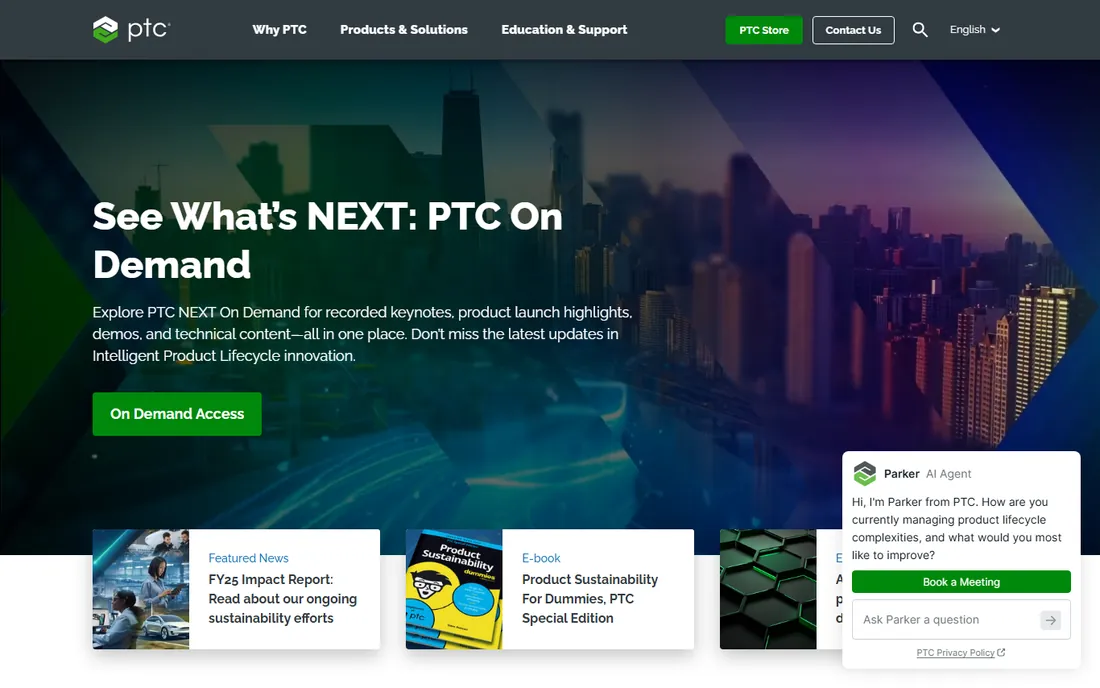
PTC ThingWorx is the industrial IoT platform for building digital twins of connected assets: low-code app development, real-time modeling and monitoring, anomaly detection, and AR-enabled service workflows through Vuforia. It sits inside PTC's broader product lifecycle portfolio, which 95% of Fortune 500 discrete manufacturers use.
The honest catch is ecosystem fit. It shines brightest alongside PTC's CAD and PLM tools. For manufacturers standardizing on PTC, ThingWorx is the natural twin layer.
What we like- Low-code industrial app development
- Real-time asset modeling with built-in analytics
- AR workflows through Vuforia
Watch out for- Quote-based enterprise licensing
- Best within the PTC ecosystem
Starting pricePay as you go
Free planFree Azure account
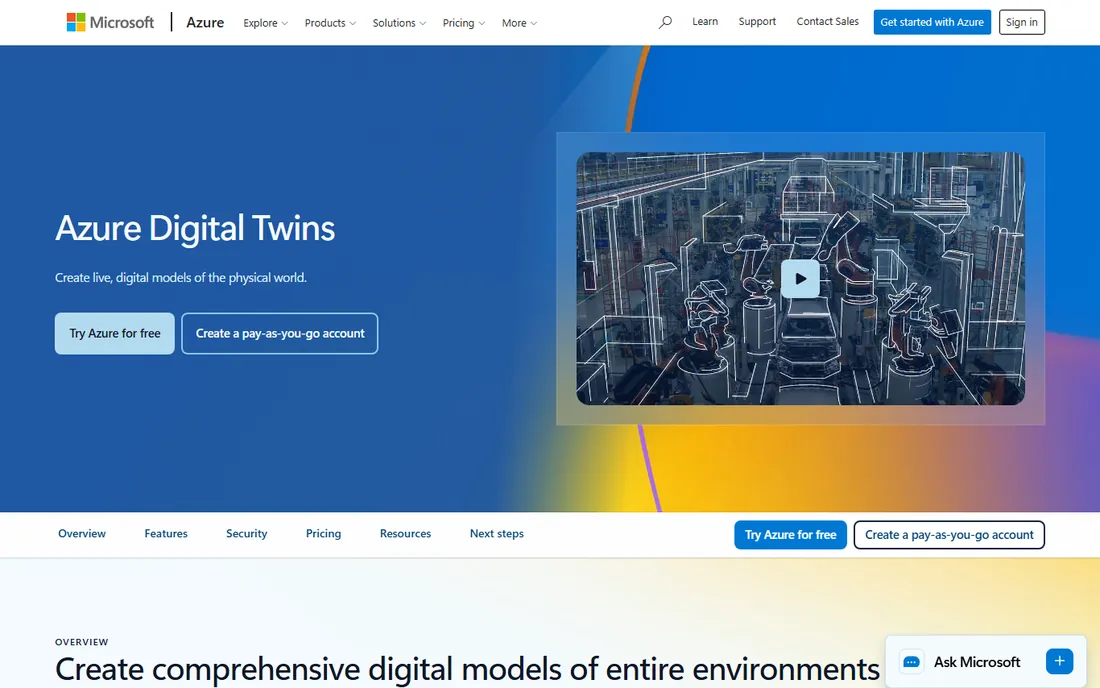
Azure Digital Twins lets you model entire environments, from buildings to cities, as live graphs fed by IoT Hub, with an open modeling language (DTDL), real-time event routing to Azure analytics, and enterprise security. Consumption pricing means you pay for what you use, and the free Azure account is the main way to experiment with digital twins without a sales call.
The honest catch is that you build the twin; Microsoft provides the platform. For cloud teams already on Azure, it is the most accessible path to a real digital twin.
What we like- Open DTDL modeling language
- Pay-as-you-go consumption pricing
- Deep integration with IoT Hub and Azure analytics
Watch out for- Developer platform, not a packaged twin
- Azure lock-in
Starting priceSee website
Free planNo

AVEVA is the industrial software leader for process industries: design, engineering, operations, and asset performance unified through its CONNECT cloud platform. Its open, agnostic approach integrates with existing systems rather than replacing them, and it was named a Visionary in Gartner's 2026 Magic Quadrant for Industrial AIoT Platforms.
The honest catch is that it is built for plants and processes, not discrete products. For chemicals, oil and gas, and power operators, AVEVA is the incumbent twin platform.
What we like- Deep domain expertise in chemicals, oil and gas, and power
- Open and agnostic platform
- CONNECT cloud unifies industrial data
Watch out for- Process-industry focus
- Enterprise sales cycle

#8
Dassault 3DEXPERIENCE
Best for: product lifecycle virtual twins
Visit 3ds.com
Starting priceSee website
Free planNo
Dassault Systemes' 3DEXPERIENCE platform creates virtual twins of products and the processes that make them, from design and simulation through manufacturing and service. Automotive, aerospace, and industrial equipment leaders use it to validate products virtually before physical prototyping, and the cloud platform now serves startups as well as global enterprises.
The honest catch is scope management. The platform does everything, which makes scoping a deployment critical. For product companies that want the twin to start at design, it is the lifecycle leader.
What we like- Virtual twins spanning design through manufacturing and operations
- Strong in automotive, aerospace, and consumer products
- Cloud platform scales from startups to enterprises
Watch out for- Platform breadth is complex
- Enterprise pricing
How we chose
We compared eight digital twin platforms in October 2026 using vendor homepages and product pages, plus 2026 enterprise digital twin comparisons from industry publications. We prioritized twin fidelity, real-time data integration, physics and simulation depth, IoT platform integration, industry fit, and deployment model. No vendor paid for placement, and nothing here is based on hands-on product testing.
Match the twin to the job
Digital twins are not one thing. Physics-based twins (Ansys, Siemens) simulate how things behave. IoT asset twins (Azure, PTC, GE Vernova) mirror what is happening now. Visual simulation twins (Omniverse, Dassault) show what could happen. Process twins (AVEVA) optimize how plants run.
Most failed twin projects picked the wrong type. A predictive maintenance program needs physics or asset models, not a pretty 3D scene. A factory layout project needs visual simulation, not sensor graphs. Define the decision the twin will improve, then pick the platform built for that decision.
The business case is maintenance and commissioning
Twins pay back in two places. Predictive maintenance uses the twin to spot failures before they happen, cutting unplanned downtime, which is the most expensive kind. Virtual commissioning uses the twin to validate production lines and control logic before physical build, which is where Siemens' customers report catching the vast majority of issues early.
Price the project against those returns, not against the software license. A twin that prevents one major outage or one line redesign pays for years of platform costs. A twin built because competitors have one does not.
One more thing to price: the data work. Twins need clean, connected data from sensors, PLCs, MES, and ERP systems, and most organizations underestimate that integration effort. The platforms with the strongest connector ecosystems, like Siemens Xcelerator and PTC, reduce that cost. Budget for data integration as its own line item, not as an afterthought.
Frequently asked questions
What is digital twin software?
Software that creates a live virtual model of a physical asset, process, or system, fed by real-time data, used to monitor, simulate, predict, and optimize the real thing.
How much does digital twin software cost?
Enterprise platforms are quote-based; expect six figures annually for serious deployments. Azure Digital Twins uses pay-as-you-go consumption pricing, which is the most accessible entry point.
What is the best digital twin software?
For industrial manufacturing, Siemens Xcelerator. For visual simulation, NVIDIA Omniverse. For energy assets, GE Vernova. For engineering physics, Ansys Twin Builder. For cloud IoT twins, Azure Digital Twins.
What is the difference between a digital twin and a 3D model?
A 3D model is static geometry. A digital twin is connected to live data, updates in real time, and can simulate future states. Without the data connection, it is just a model. Start the data work early.
Do I need IoT sensors for a digital twin?
For operational twins that mirror live conditions, yes. For design and commissioning twins that simulate before build, historical and engineering data can be enough to start.
Can small companies use digital twin software?
Yes, selectively. Azure's consumption pricing and free account make experimentation cheap, and Dassault's cloud platform serves startups. But most platforms target enterprises, so scope the project tightly.
Sources we checked (10)
- https://www.siemens.com/
- https://www.nvidia.com/en-us/omniverse/
- https://www.gevernova.com/software
- https://ansys.com/
- https://ptc.com/
- https://azure.microsoft.com/en-us/products/digital-twins
- https://www.aveva.com/
- https://www.3ds.com/
- https://cio.economictimes.indiatimes.com/tools/best-digital-twin-software/128109826
- https://www.barchart.com/story/news/36909679/siemens-brings-the-industrial-metaverse-to-life-with-digital-twin-composer
Is your product missing or out of date?
We review this list regularly. Vendors can request a listing, send updated pricing or ask about featured placement.

Shihab Mia · Founder, Rankite
Shihab has spent more than a decade helping SaaS and e-commerce brands grow through search. He writes Rankite's software buying guides from pricing pages, documentation and public user reviews. More about Shihab.
 GE Vernova
 Azure Digital Twins
 AVEVA
AVEVA