How we make this list: we compare pricing pages, product documentation and public user reviews. Rankite is independent; if a vendor ever pays for a featured spot, that listing is clearly labeled Partner.
Key takeaways
- Data science platforms split into lakehouse engineering (Databricks), collaborative data science (Dataiku, Domino), visual analytics (Alteryx, KNIME), AutoML (DataRobot, H2O.ai) and enterprise incumbents (SAS, IBM).
- Databricks dominates modern data engineering and ML at scale; Dataiku wins for collaborative teams mixing coders and analysts.
- Alteryx and KNIME serve the analyst-led workflow; DataRobot and H2O.ai automate model building.
- Domino Data Lab now operates from domino.ai; RapidMiner is part of Altair.
Quick comparison
| Tool | Best for | Starting price | Free plan |
|---|
 Databricks Databricks | lakehouse data and ML at scale | See website | Free trial |
 Dataiku Dataiku | collaborative data science | See website | Free tier |
 Alteryx Alteryx | analyst-led analytics | See website | Free trial |
 KNIME KNIME | free visual data science | Free | Yes |
 RapidMiner RapidMiner | visual ML (Altair) | See website | Free tier |
 H2O.ai H2O.ai | open-source AutoML | See website | Yes |
 DataRobot DataRobot | enterprise AutoML | See website | Free trial |
 Domino Domino | enterprise MLOps | See website | No |
 SAS SAS | enterprise analytics standard | See website | Free tier |
 IBM IBM | enterprise AI and analytics | See website | Free tier |
Is your product missing or out of date?
We review this list regularly. Vendors can request a listing, send updated pricing or ask about featured placement.
Starting priceSee website
Free planFree trial
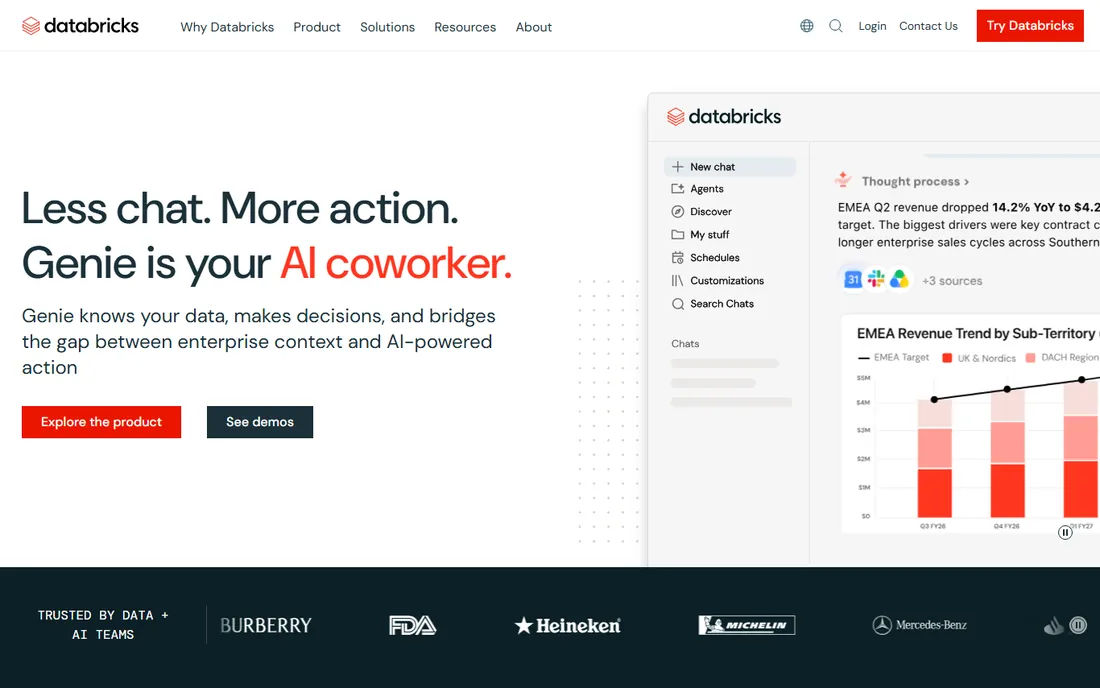
Databricks is the data and AI platform built on the lakehouse architecture: data engineering, SQL analytics and machine learning on one platform with Delta Lake unifying the storage. Organizations processing serious data volumes standardize on it.
The scale story is unmatched. Spark-based processing handles data sizes that break other tools, notebooks support Python, SQL, R and Scala collaboratively and MLflow manages the model lifecycle. The Unity Catalog governs data and AI assets.
The honest costs are usage and skill. Consumption pricing rewards efficient workloads and punishes wasteful ones; FinOps discipline matters. Teams need data engineering capability to get full value. For the modern data stack at scale, it is the default platform.
What we like- The lakehouse standard
- Scales to massive data
- Strong MLflow MLOps
Watch out for- Costs scale with usage
- Needs data engineering skills
Starting priceSee website
Free planFree tier
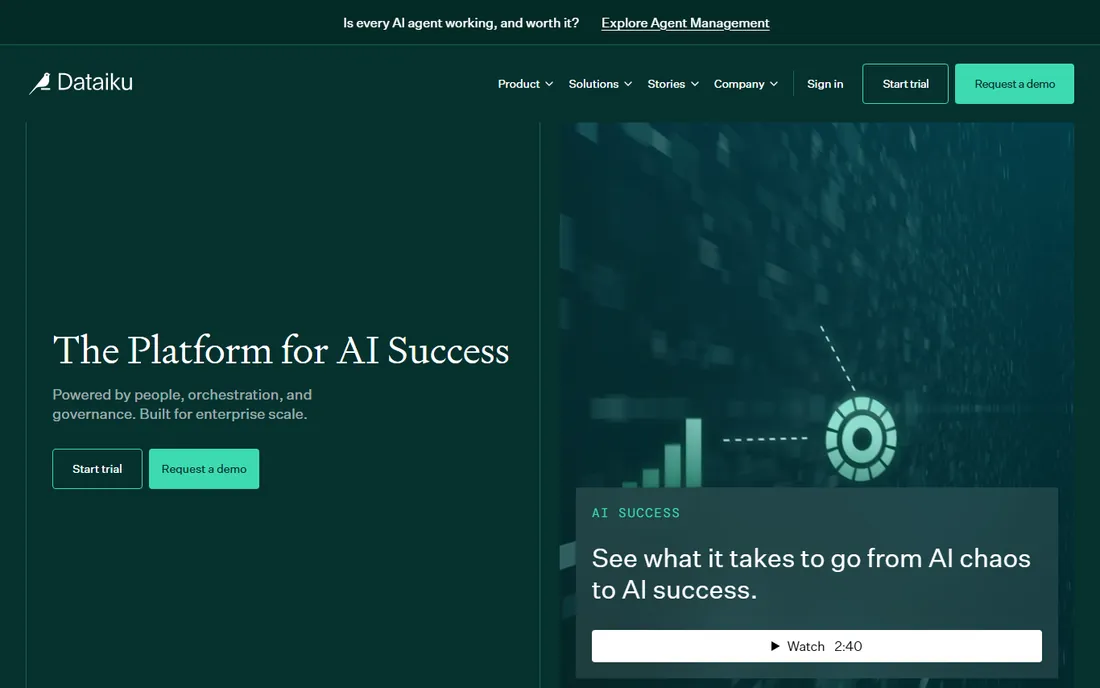
Dataiku is the collaborative data science platform where analysts, data scientists and engineers work together: visual recipes for no-code data prep, notebooks and code for data scientists and shared projects with governance. It bridges the skill divide that splits most data teams.
The collaboration is the differentiator. The flow-based interface makes data pipelines visible and auditable, while coders drop into Python and R where needed. MLOps features deploy and monitor models, and the governance tools satisfy regulated industries.
The trade-off is price and weight. Enterprise licensing suits organizations with real data teams; small teams may find it heavy. Pure coders sometimes prefer Databricks' notebook-native feel. For the mixed-skill data organization, Dataiku is the unifying platform.
What we like- Coders and no-coders collaborate
- Great visual recipes
- Strong governance
Watch out for- Enterprise pricing
- Can feel heavy for pure coders
Starting priceSee website
Free planFree trial
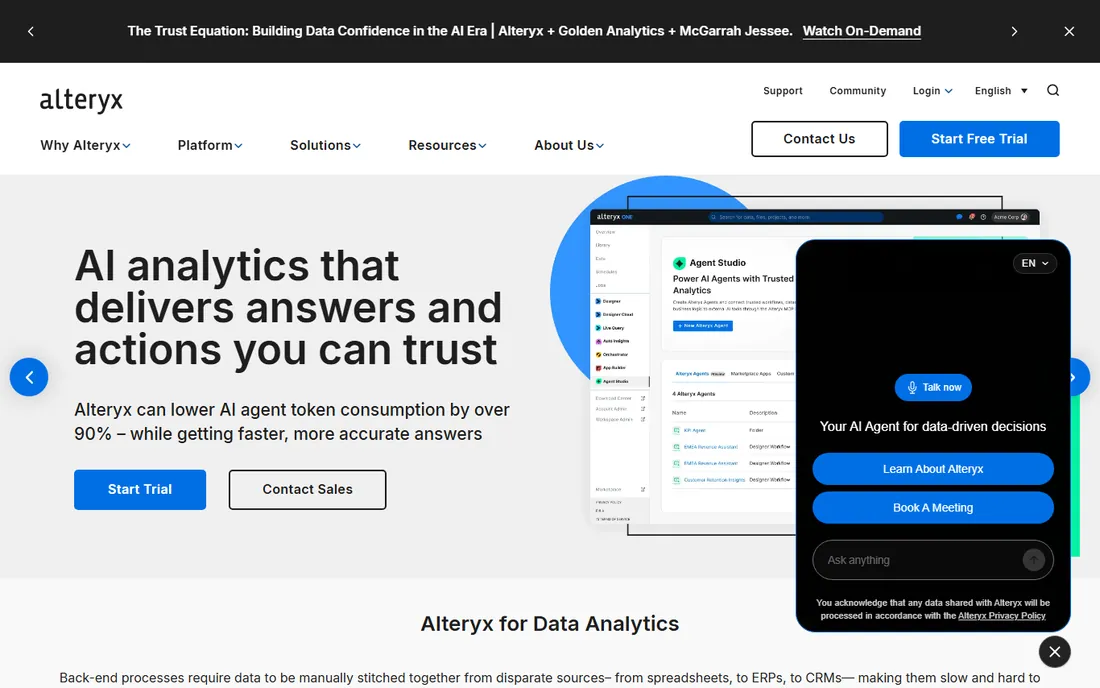
Alteryx is the analytics platform that lets business analysts build sophisticated data workflows without coding: drag-and-drop tools for blending, transforming and analyzing data, with spatial, predictive and reporting capabilities built in.
The analyst empowerment is the story. Teams that would wait weeks for data engineering help build their own pipelines in days. The tool palette covers most analytical needs, and the community shares workflows and solutions.
The honest catch is price and architecture. Licensing is premium, and the desktop-server heritage shows against cloud-native competitors. For analyst-led organizations with the budget, the productivity is real. For engineering-led teams, Databricks or Dataiku fit better.
What we like- Analysts build real data workflows
- Huge tool palette
- Strong community
Watch out for- Premium pricing
- Desktop heritage
Starting priceFree
Free planYes
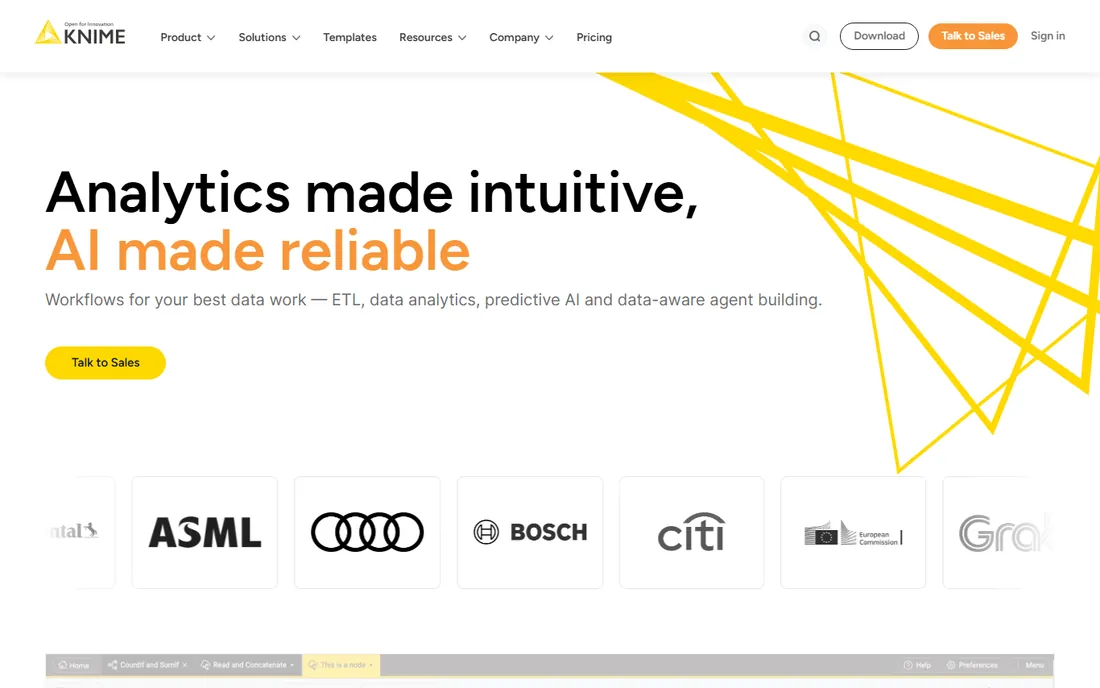
KNIME is the free open-source visual data science platform: build data workflows by connecting nodes visually, from data blending through machine learning to reporting, with thousands of community extensions. The desktop analytics platform costs nothing.
The free value is remarkable. Individuals and teams get real data science capability without licenses, and the visual approach teaches data thinking. The extensions cover text mining, cheminformatics, deep learning and more.
The trade-off is polish and enterprise. The interface is functional rather than modern, and server deployment, scheduling and collaboration need the commercial KNIME Server. For learning, prototyping and budget-constrained teams, it is the free answer.
What we like- Free and open source
- Visual workflows
- Strong community
Watch out for- Interface dated
- Enterprise features cost
Starting priceSee website
Free planFree tier
RapidMiner, now part of Altair, is the visual machine learning platform: design ML workflows visually, from data prep through model training and validation, without writing code. It suits analysts and domain experts entering machine learning.
The visual ML is accessible. AutoML features suggest approaches, the workflow view makes modeling transparent and the Altair integration connects to the broader engineering analytics portfolio.
The honest position is the middle. The community and ecosystem are smaller than Databricks or Dataiku, and enterprise pricing applies at scale. For the Altair customer or the analyst-led ML team, it is a solid choice.
What we like- Visual machine learning
- Good for non-coders
- Altair backing
Watch out for- Smaller community than leaders
- Enterprise pricing
Starting priceSee website
Free planYes
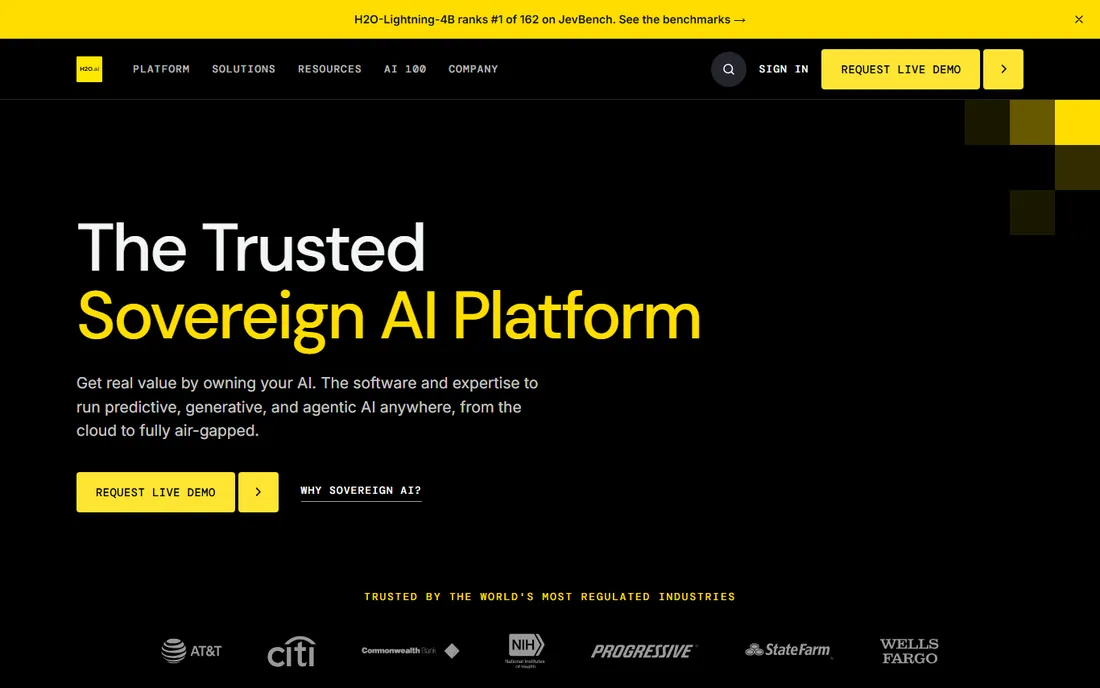
H2O.ai offers the leading open-source AutoML: H2O-3 automatically trains and tunes machine learning models, ranking them on leaderboards, free for anyone to use. The commercial H2O AI Cloud adds enterprise MLOps and support.
The open-source quality is exceptional. Data scientists get state-of-the-art automated modeling without licenses, and the algorithms are genuinely fast. The community and documentation are strong.
The trade-off is the enterprise jump. Production MLOps, governance and support need the commercial platform at enterprise prices. Technical users get the most from the open source. For AutoML capability without the DataRobot price, start here.
What we like- Excellent open-source AutoML
- Fast algorithms
- Free to start
Watch out for- Enterprise platform costs
- Needs technical users
Starting priceSee website
Free planFree trial
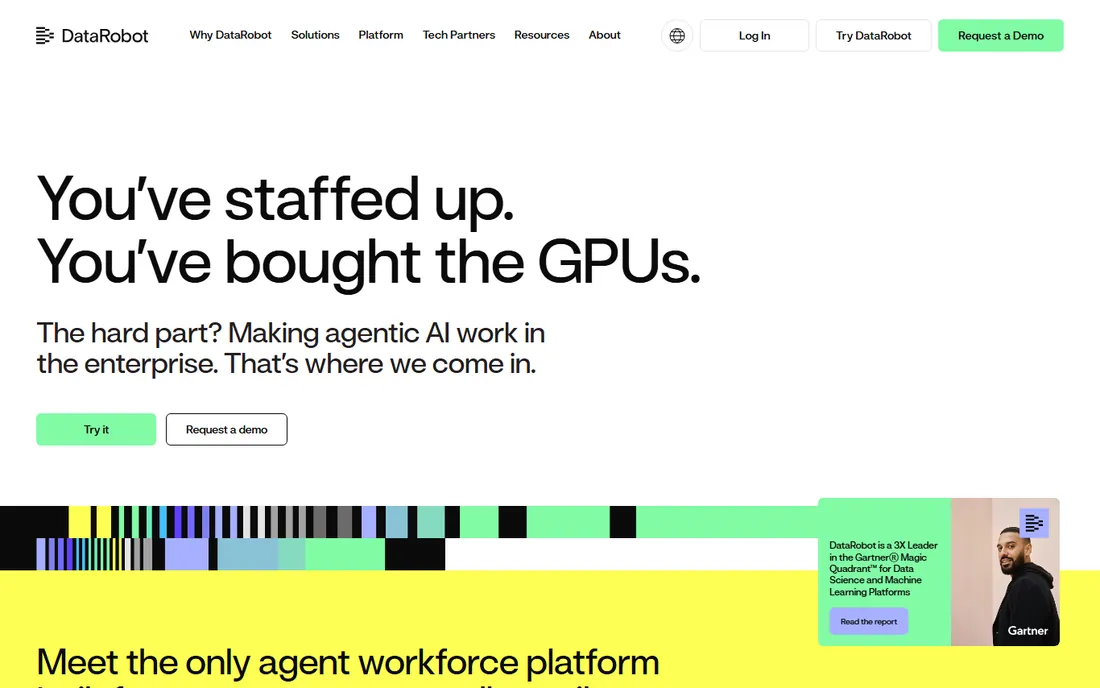
DataRobot is the enterprise automated machine learning platform: upload data, get optimized models with explanations, deploy and monitor them in production. It brings ML to organizations without large data science teams.
The automation depth leads the category. Model selection, feature engineering and tuning happen automatically with transparent documentation of what was built. Business analysts build credible models; data scientists accelerate their work.
The honest costs are price and control. Enterprise licensing is significant, and purists want more modeling control than automation allows. For the organization that needs ML results without a research team, it delivers.
What we like- The AutoML leader
- Strong MLOps
- Good for business users
Watch out for- Enterprise pricing
- Less control than code
Starting priceSee website
Free planNo
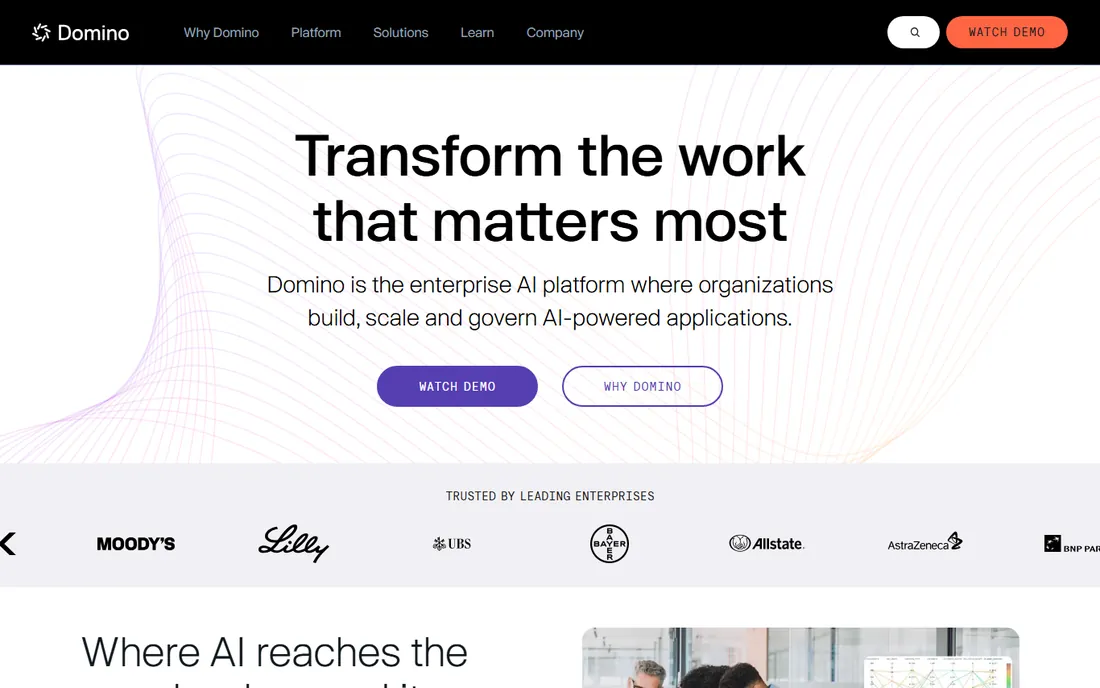
Domino, now operating from domino.ai, is the enterprise MLOps platform for organizations where model governance matters: reproducible experiments, model deployment, monitoring and audit trails for data science teams in regulated industries.
The governance depth is the differentiator. Every experiment is reproducible, every model version tracked and every deployment auditable, which satisfies the compliance requirements that block ML in banking, insurance and pharma.
The boundary is maturity and price. This is enterprise software for organizations with established data science practices; beginners should start elsewhere. For regulated ML at scale, it is the governance standard.
What we like- Serious MLOps for regulated industries
- Reproducible research
- Strong governance
Watch out for- Enterprise only
- Needs data science maturity
Starting priceSee website
Free planFree tier
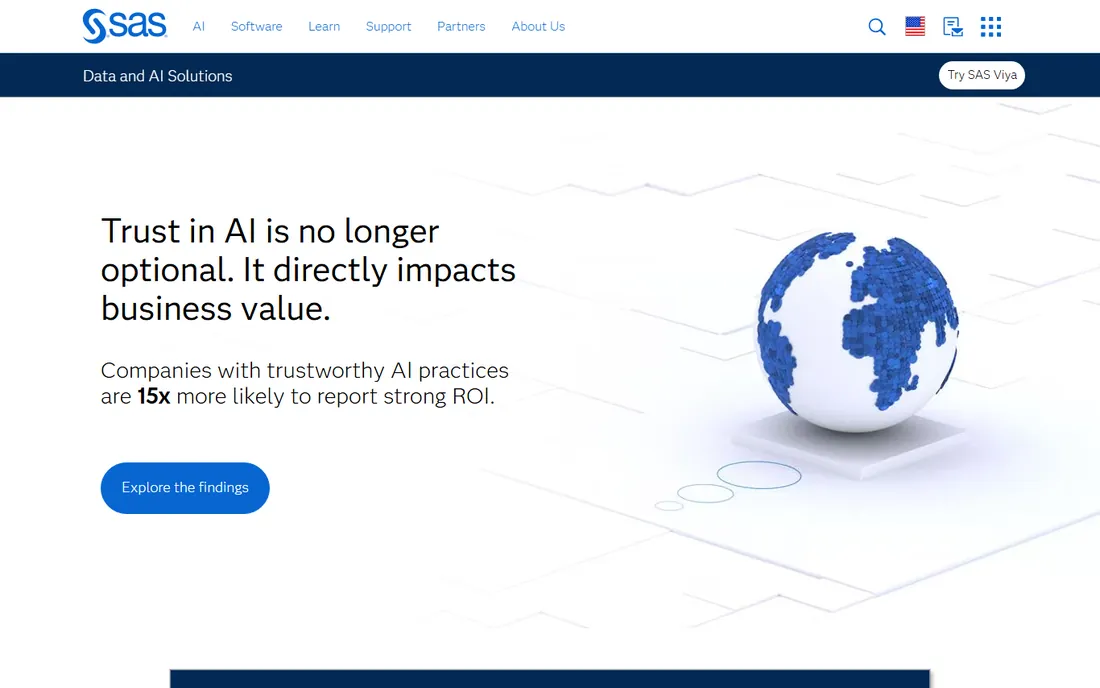
SAS is the analytics incumbent that enterprises in banking, government and healthcare still standardize on: deep statistical procedures, the Viya cloud platform and industry solutions refined over decades. The trust runs deep where it matters.
The statistical depth is unmatched. Procedures validated over decades, regulatory acceptance and an army of trained practitioners make it the safe choice for high-stakes analytics. Viya brings the platform to the cloud era.
The honest trade-offs are price and language. Licensing is premium, and the SAS language creates lock-in that open-source shops avoid. New projects often choose Python ecosystems. For the regulated enterprise with SAS heritage, it remains the standard.
What we like- Decades of statistical depth
- Trusted in regulated industries
- Viya modernizes
Watch out for- Premium pricing
- SAS language lock-in
Starting priceSee website
Free planFree tier
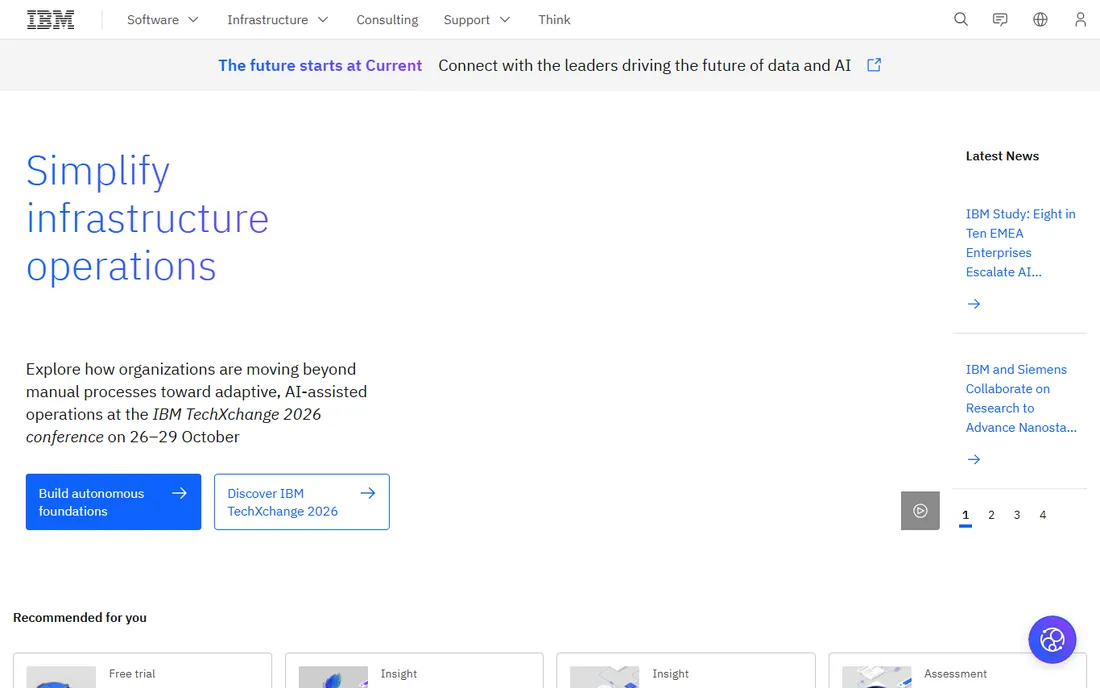
IBM's data science story centers on watsonx: the AI and data platform with watsonx.ai for model building, watsonx.data for the lakehouse and governance tooling for regulated AI. Enterprises already on IBM infrastructure get the integrated path.
The enterprise AI positioning is the pitch. Governance, transparency and IBM's consulting arm address the organizational barriers to AI adoption, not just the technical ones. SPSS retains its loyal base for traditional statistics.
The trade-off is complexity. The portfolio is vast, the sales process enterprise and the data science community smaller than the open-source world. For the IBM-standard enterprise pursuing governed AI, watsonx is the platform answer.
What we like- Watsonx AI platform
- Enterprise trust
- Broad portfolio
Watch out for- Complex portfolio
- Enterprise sales
Code vs. visual vs. AutoML
Data science platforms serve three workflows. Code-first (Databricks notebooks, H2O) suits data scientists who want control. Visual (Alteryx, KNIME, Dataiku recipes) suits analysts and mixed teams who think in workflows. AutoML (DataRobot, H2O AutoML) suits organizations that want models without modelers.
Most organizations need more than one. Data engineers build pipelines in code, analysts explore visually and business teams consume AutoML models. The platform decision should cover the team's actual skill mix, not the aspirational one. Buying AutoML when you have ten data scientists wastes their talent; buying Databricks when you have ten analysts wastes the license.
What to check before you buy
Start with the team's skills and the data reality: coders, analysts or business users; gigabytes or petabytes. Second, define the use cases: exploration, production ML, reporting or all three. Third, check governance needs; regulated industries need audit trails the free tools lack.
Fourth, verify the data connections for your warehouses and sources. Fifth, model the total cost including compute, not just licenses; usage-based platforms punish inefficiency. Finally, trial with your real data and real questions; vendor demos always look easy.
How we chose
We compared vendor product pages, analyst coverage and practitioner sources, then confirmed every homepage was live in October 2026. Domino now redirects to domino.ai, which we list as the current URL. RapidMiner's site returned a bot-block response but the domain is live, so we kept the URL as-is. Where we could not verify a vendor-published price we say so. Nothing here reflects hands-on testing; assessments come from documentation, feature lists and public user feedback.
Frequently asked questions
What is the best data science platform for beginners?
KNIME (free, visual) or Dataiku's free tier for learning the concepts. H2O's open-source AutoML for modeling without deep expertise. Start free, then buy when the use case is proven.
Do I need a data science platform or just Python?
Individual data scientists often need just Python and libraries. Platforms add collaboration, governance, deployment and scale for teams and production. Buy the platform when the team or the production requirements demand it.
What is AutoML?
Automated machine learning: the platform selects algorithms, engineers features and tunes models automatically. It democratizes modeling for non-experts and accelerates experts. DataRobot and H2O.ai lead the category.
How much do data science platforms cost?
Open-source tools (KNIME, H2O-3) are free. Cloud platforms use consumption pricing that scales with usage. Enterprise licenses (DataRobot, SAS, Domino) are quote-based and significant. Model compute costs, not just licenses.
What is MLOps?
Machine learning operations: deploying, monitoring and governing models in production. Domino, Dataiku, Databricks (MLflow) and DataRobot all offer MLOps; it matters when models serve real decisions.
Sources we checked (10)
- https://www.databricks.com
- https://www.dataiku.com
- https://www.alteryx.com
- https://www.knime.com
- https://rapidminer.com
- https://h2o.ai
- https://www.datarobot.com
- https://domino.ai
- https://www.sas.com
- https://www.ibm.com
Is your product missing or out of date?
We review this list regularly. Vendors can request a listing, send updated pricing or ask about featured placement.

Shihab Mia · Founder, Rankite
Shihab has spent more than a decade helping SaaS and e-commerce brands grow through search. He writes Rankite's software buying guides from pricing pages, documentation and public user reviews. More about Shihab.