How we make this list: we compare pricing pages, product documentation and public user reviews. Rankite is independent; if a vendor ever pays for a featured spot, that listing is clearly labeled Partner.
Key takeaways
- Most data masking tools are enterprise products with quote-based pricing. Only Redgate, DATPROF, K2view, IRI, and Tonic.ai offer trials you can start without a sales call.
- If your databases are mostly SQL Server or Oracle, Redgate Data Masker and Oracle Data Masking and Subsetting fit your existing workflows better than a general platform.
- Delphix, Informatica, and IBM Optim suit large organizations that need masking plus test data provisioning, subsetting, and virtualization in one program.
- Finding the sensitive data is half the job. Tools with built-in discovery and classification (K2view, IRI, Delphix) save weeks compared to masking columns you identify by hand.
- Masking must preserve referential integrity. Every tool here handles it, but verify how yours treats cross-database and cross-schema relationships before you buy.
Quick comparison
Is your product missing or out of date?
We review this list regularly. Vendors can request a listing, send updated pricing or ask about featured placement.
The best data masking software
Starting priceSee website
Free planNo
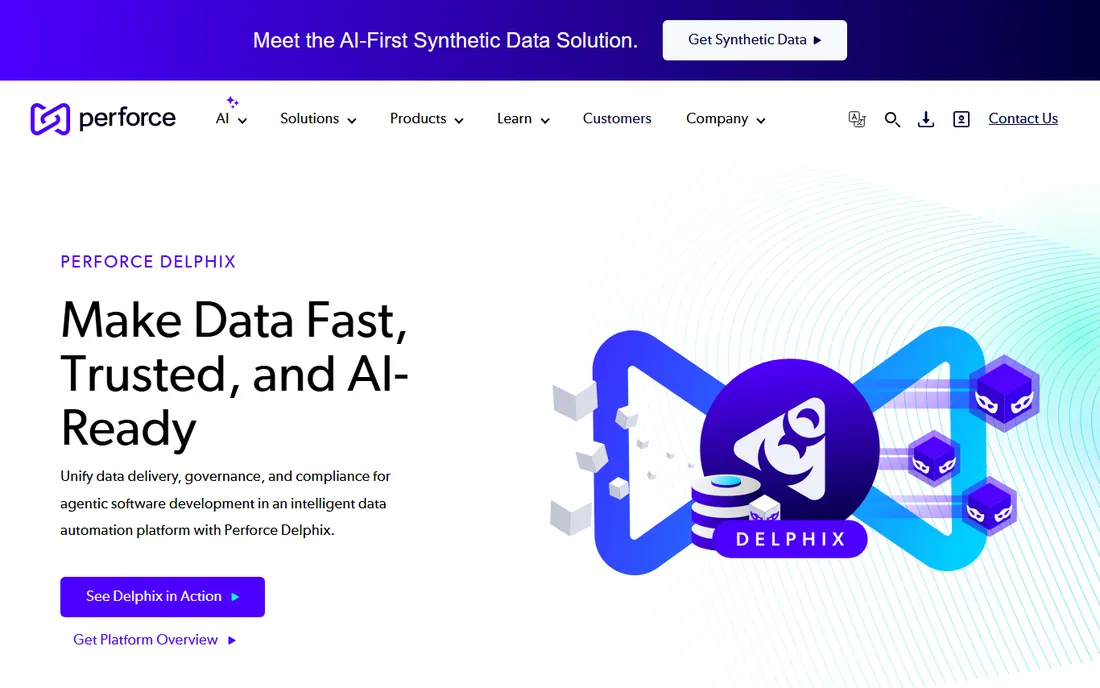
Delphix, now part of Perforce, approaches masking as one piece of test data management. Instead of just scrambling columns, it provisions masked, virtual copies of databases that developers can spin up in minutes. For large organizations with dozens of non-production environments, that combination of masking and fast provisioning is the real value.
The platform discovers sensitive data, applies masking algorithms that keep data realistic, and generates audit reports that compliance teams can hand to regulators. The downside is the buying process: pricing is quote-based, implementations are measured in months, and a small team with one database will find it far heavier than necessary. Delphix fits enterprises running a formal test data program, not a startup masking a single Postgres instance.
What we like- Combines masking with virtual test data delivery
- Strong compliance reporting for auditors
- Broad database and file support
Watch out for- Quote-only pricing with enterprise sales cycles
- Overkill for a single database

#2
Tonic.ai
Best for: developers needing realistic test data fast
Visit tonic.ai
Starting priceSee website
Free planFree trial
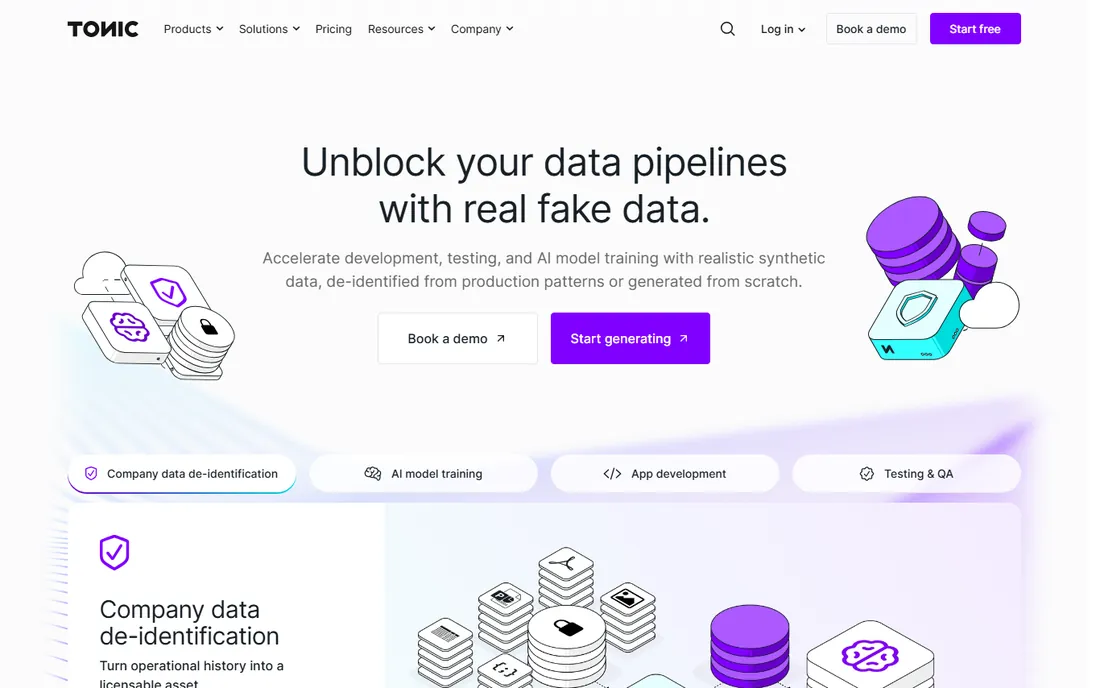
Tonic.ai built its reputation on making test data that actually behaves like production data. Its masking keeps formats, distributions, and cross-table relationships intact, so tests catch the bugs that only appear with realistic data. Developers can connect a database, configure masking, and get a safe copy without filing a ticket with a data team.
The company offers a trial so you can evaluate it on your own schema, which is rare in this category. Pricing is not published and is negotiated per deal, and reviewers consistently describe it as premium. For engineering-led teams that treat test data as infrastructure, the cost is defensible. For occasional masking jobs, simpler tools will do.
What we like- De-identifies data while keeping it realistic for testing
- Self-serve trial without a sales call
- Strong generator library for common data types
Watch out for- Pricing is opaque and quote-based
- Smaller teams may find it expensive

#3
DATPROF Privacy
Best for: teams that want masking without heavy setup
Visit datprof.com
Starting priceSee website
Free planFree trial
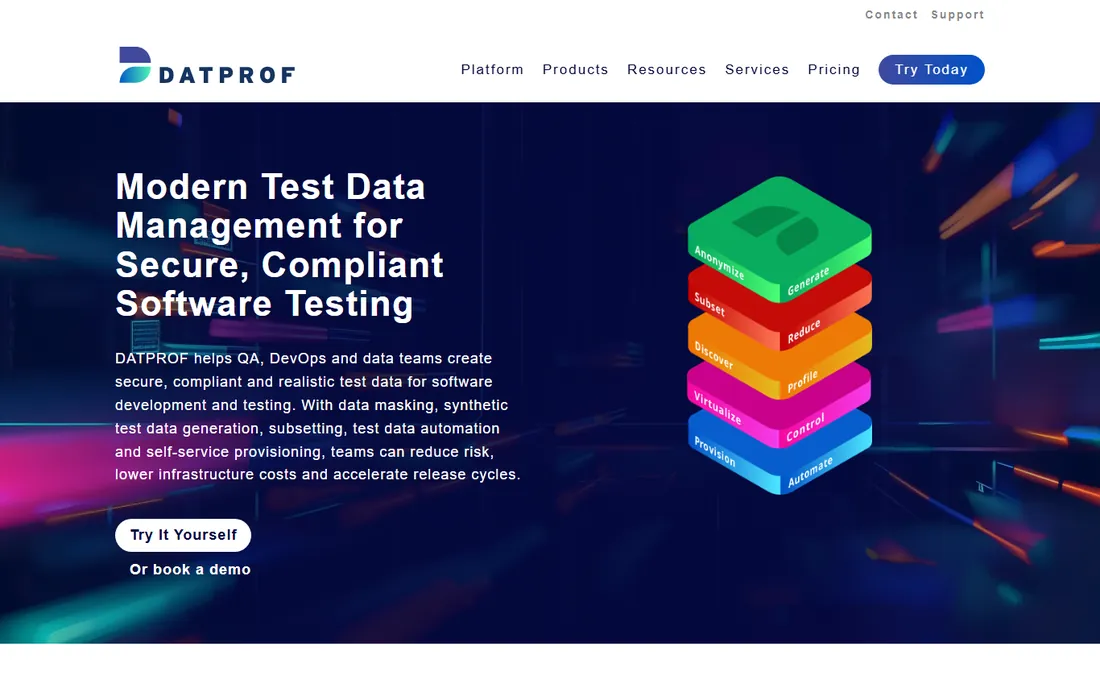
DATPROF Privacy targets the middle of the market: teams that need real masking but cannot justify a six-month enterprise deployment. The product uses templates and reusable rule sets, so common patterns like masking names, emails, and national IDs do not require custom development. It connects to the major relational databases and runs masking jobs on a schedule.
Being a smaller vendor cuts both ways. You get focused support and a product that does one thing well, but the integration ecosystem and community resources are thinner than the big names. Pricing is quote-based, though the sales process is lighter than the enterprise suites. It is a sensible shortlist candidate for mid-size companies that find Delphix or Informatica too heavy.
What we like- Straightforward setup compared to enterprise suites
- Template-based masking rules
- Handles relational databases well
Watch out for- Smaller vendor with a narrower ecosystem
- Fewer public reviews to cross-check
Starting priceSee website
Free planFree trial
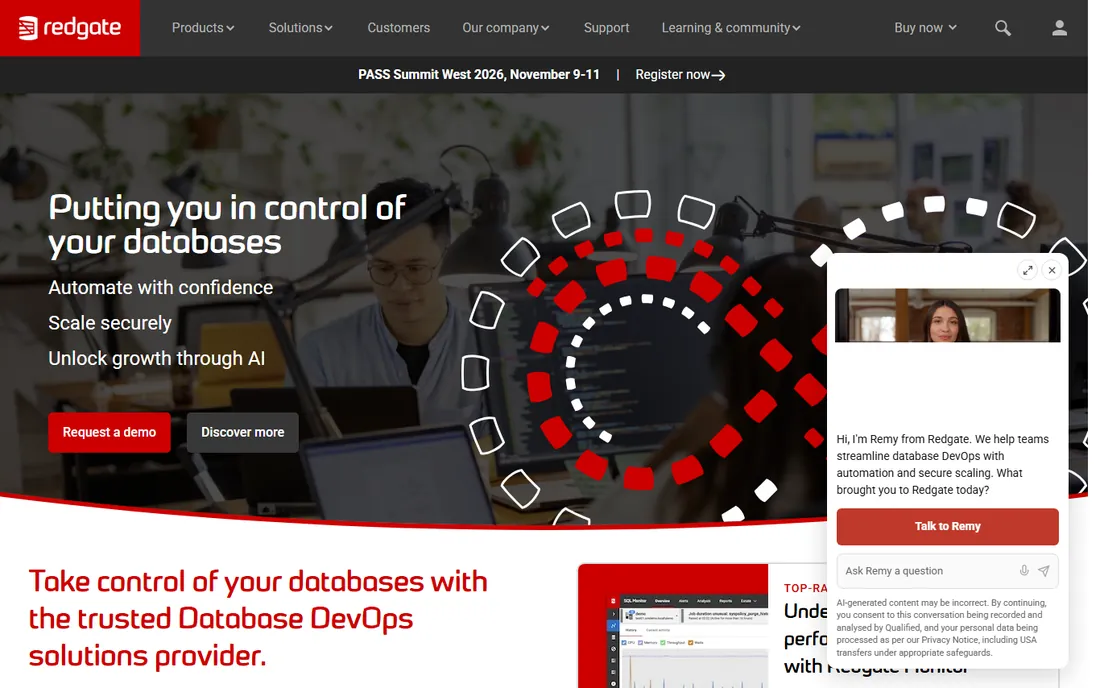
Redgate Data Masker is the pragmatic choice for database teams. It masks data inside SQL Server and Oracle workflows, with rule sets you can store, version, and rerun as part of a deployment pipeline. If your team already uses Redgate tools for database DevOps, masking slots into the same process instead of becoming a separate project.
Pricing deserves attention: Redgate moved Data Masker to a capacity model based on the total volume of production data you mask from, with annual true-ups between tiers. A trial is available, and per-user pricing history suggests mid-market affordability, but get a written quote for your actual data volume before budgeting. For SQL-centric shops, the workflow fit is hard to beat.
What we like- Lives inside the database workflows DBAs already use
- Rule-based masking is repeatable and versionable
- Integrates with the Redgate DevOps toolchain
Watch out for- Pricing is now capacity-based per terabyte, which penalizes large databases
- Engine scope is narrower than full platforms

#5
K2view
Best for: discovery, masking, and synthetic data in one
Visit k2view.com
Starting priceSee website
Free planFree trial
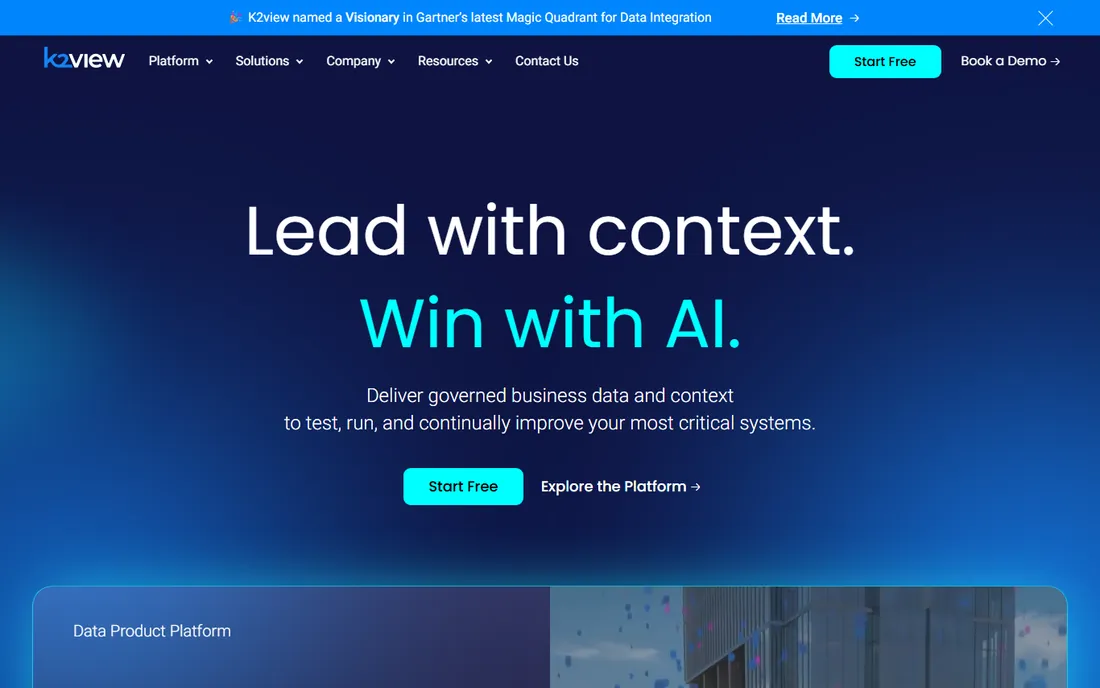
K2view organizes data around business entities, a customer, an order, an account, rather than around tables. That design pays off in masking: when you mask a customer, every related record across systems stays consistent, which is exactly what breaks in table-by-table approaches. Built-in discovery scans sources for sensitive data, and the same platform can generate synthetic data when masking real data is not enough.
The homepage offers a free start, so you can explore before engaging sales. The trade-off is scope: K2view is a data platform, not a point tool, so evaluating it properly takes longer than a single-purpose masker. Organizations dealing with PII scattered across many systems will get the most from it.
What we like- Data discovery finds PII across sources automatically
- Entity-based approach keeps related data consistent
- Synthetic data generation included
Watch out for- Platform breadth means a longer evaluation
- Pricing requires a sales conversation

#6
IRI FieldShield
Best for: high-volume masking in existing ETL jobs
Visit iri.com
Starting priceSee website
Free planFree trial (30 days)
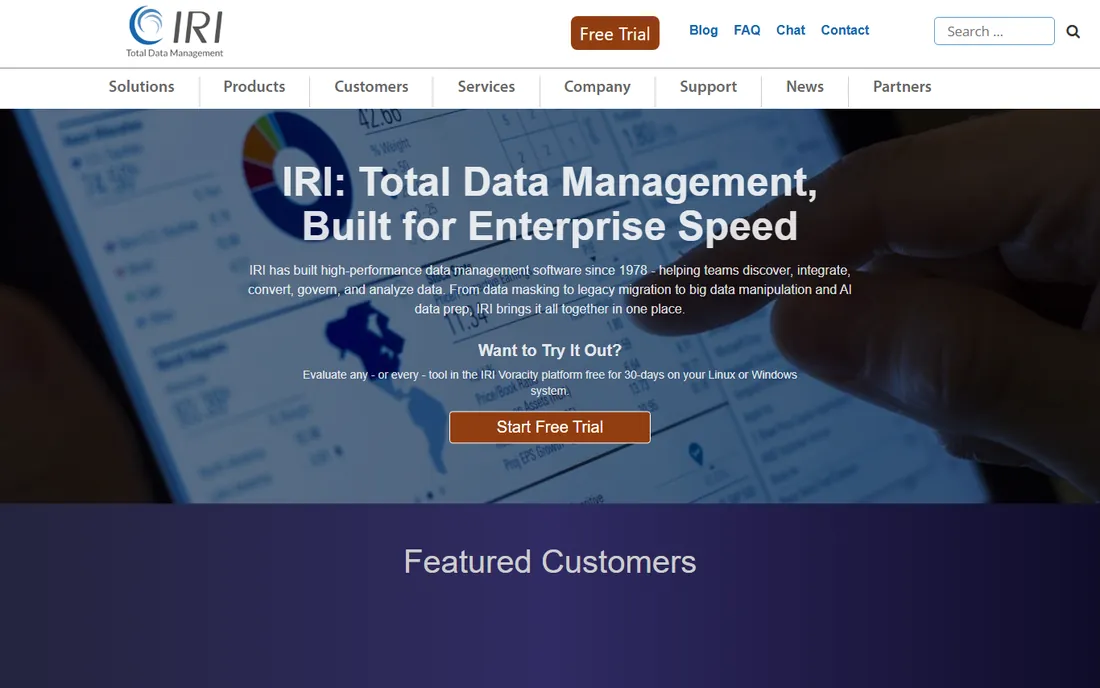
IRI FieldShield is built for speed and volume. It masks data inside ETL jobs and batch workflows, which suits organizations that already move large amounts of data through pipelines and want masking to happen in transit. The masking functions are granular, covering everything from simple substitution to format-preserving encryption, and it handles structured and semi-structured sources.
IRI offers a 30-day trial of its platform products, which is enough to benchmark performance on your own data. The product's age shows in the interface, and the documentation assumes a technical reader. Shops already invested in IRI's ecosystem get the most value; everyone else should weigh the learning curve against the throughput advantage.
What we like- Very fast masking for large data volumes
- Runs inside existing ETL and data workflows
- Granular control over masking functions
Watch out for- Interface and documentation feel dated
- Best value comes as part of the wider IRI Voracity platform
Starting priceSee website
Free planNo
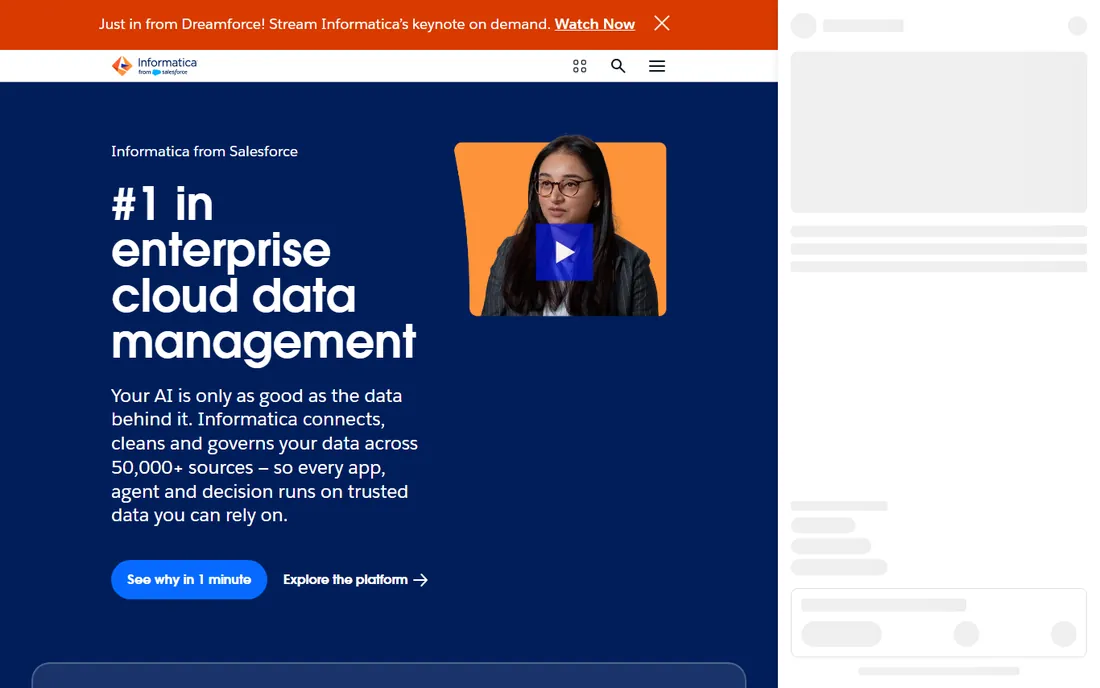
Informatica's Persistent Data Masking sits inside its Intelligent Data Management Cloud, now under the Salesforce umbrella. The strength is integration: discovery, classification, masking, and test data management share one metadata foundation, so masked data stays consistent with the lineage and governance records the rest of the platform maintains. For organizations already running Informatica for integration or data quality, adding masking is a natural extension.
Everything about the buying process is enterprise: quote-based pricing, demos through sales, and implementations that involve professional services. There is no trial or self-serve path. If your data estate spans hundreds of sources and you already speak Informatica, it belongs on the shortlist. Otherwise, the overhead will swamp the benefit.
What we like- Masking integrated with a broad data management platform
- Strong data discovery and classification
- Scales to very large estates
Watch out for- Enterprise pricing and sales process
- Complexity is overkill outside large environments

#8
IBM InfoSphere Optim Data Privacy
Best for: IBM and mainframe-heavy environments
Visit ibm.com
Starting priceSee website
Free planNo
IBM InfoSphere Optim has masked sensitive data in large enterprises for decades, and its deepest strength remains environments other tools barely touch: Db2 on z/OS, IMS, and legacy systems where the sensitive data often lives. The suite combines masking with data archiving and test data management, which appeals to organizations consolidating tools under one IBM relationship.
The familiar IBM caveats apply. Licensing is complex, the buying process runs through sales, and the interface reflects its long history rather than modern design trends. Regulated enterprises with mainframe estates and existing IBM agreements will find it a natural fit. Cloud-native teams should look elsewhere.
What we like- Deep support for Db2, mainframe, and legacy systems
- Archiving and test data management in one suite
- Trusted in regulated industries
Watch out for- IBM sales and licensing complexity
- User experience lags modern competitors

#9
Oracle Data Masking and Subsetting
Best for: Oracle database shops and OEM users
Visit oracle.com
Starting priceSee website
Free planNo
Oracle Data Masking and Subsetting is a licensed pack for Oracle Enterprise Manager, which means it is really an option for one audience: organizations standardized on Oracle Database. Within that world it works well, masking sensitive columns in place while preserving application logic, and subsetting extracts smaller representative samples so test databases stop consuming production-sized storage.
The limitations are structural. It is an Oracle-only product licensed on top of Oracle Database, so heterogeneous estates need something else. Pricing follows Oracle's familiar quote-based model. If your production data lives in Oracle and your DBAs live in Enterprise Manager, this is the path of least resistance. If not, it is not an option at all.
What we like- Built for Oracle Database with deep engine integration
- Subsetting shrinks test databases as it masks
- Managed through Enterprise Manager
Watch out for- Oracle-only, with limited value for heterogeneous estates
- Licensed as a paid pack on top of the database
Start with discovery. Masking only protects the sensitive data you know about, and most breaches of non-production data involve columns nobody remembered were sensitive. Tools with automated discovery and classification scan your schemas, flag likely PII, and map it across tables. If a vendor expects you to hand over a complete column list on day one, budget weeks of manual analysis before masking begins.
Then check referential integrity. Masked data that breaks foreign keys, unique constraints, or application logic is useless for testing. Ask each vendor exactly how masking propagates across related tables, schemas, and databases, and test it on a copy of your real schema during the trial. Format-preserving masking matters too: a masked email should still look like an email, or your validation logic will reject every test record.
Finally, consider where masking runs. In-place masking modifies a copy of production data; on-the-fly masking transforms data as it moves through a pipeline. In-place is simpler for static test environments. Pipeline masking fits organizations that refresh test data continuously. Match the architecture to how your team actually works, not to the vendor's preferred diagram.
Masking, subsetting, and synthetic data: know the difference
Vendors often bundle three related techniques, and buyers confuse them. Masking replaces sensitive values in real data with realistic substitutes: the structure and most of the content stay real, only the sensitive fields change. It is the right choice when tests need production-like data volumes and distributions.
Subsetting extracts a smaller, representative slice of production data and masks it. A 4 TB production database becomes a 200 GB test database that still covers the edge cases. Use it when storage costs or refresh times for full copies have become painful.
Synthetic data is generated from scratch to mimic production patterns without containing any real records. It is the safest option for the most sensitive data and the best choice when regulations forbid using production data at all, even masked. The trade-off is fidelity: synthetic data can miss the weird edge cases that only real data contains. Many teams end up combining approaches, masking where fidelity matters and synthesizing where risk is highest.
Frequently asked questions
What is the difference between data masking and data encryption?
Encryption protects data in storage and transit but reverses with a key, so anyone with access still sees real values. Masking permanently replaces sensitive values with fakes in non-production copies. Use encryption to protect production; use masking to make test and analytics environments safe to share.
Will masking break referential integrity in my test database?
It should not, if the tool is configured correctly. Good masking tools propagate the same masked value across every table that references it, preserving joins and foreign keys. Always validate on a schema copy during the trial, especially across databases and schemas.
Can masked data still be useful for testing and analytics?
Yes, when masking preserves formats and distributions. A masked phone number should still be ten digits, and masked transaction amounts should keep realistic ranges. Format-preserving masking and consistent substitution are the features that keep test data useful.
How do I find all the PII in my databases before masking?
Use a tool with automated discovery and classification rather than manual column lists. Discovery scans schemas, samples data, and flags likely sensitive fields using patterns and machine learning. Expect to review and refine its findings; no discovery tool is perfect on the first pass.
Does data masking satisfy GDPR and HIPAA requirements?
Masking is a recognized safeguard under both, but it is not a complete compliance program by itself. Regulators look for masking combined with access controls, audit trails, and policies governing non-production data. The compliance reporting features in enterprise tools exist precisely to document this for auditors.
How we chose
We opened each vendor's homepage and, where available, pricing and product pages on 2026-10-14, recording published prices and trial terms exactly as stated. We read product documentation to confirm supported databases, masking techniques, and deployment models, then checked public reviews on G2, TrustRadius, and Reddit for recurring praise and complaints. We excluded vendors that had been acquired into unrelated products and used current brand names where renames had occurred. No vendor paid for placement, and we did not run hands-on masking jobs.
Sources we checked (9)
- https://www.delphix.com/
- https://tonic.ai/
- https://www.datprof.com/
- https://red-gate.com/
- https://k2view.com/
- https://www.iri.com/
- https://informatica.com/
- https://www.ibm.com/
- https://www.oracle.com/
Is your product missing or out of date?
We review this list regularly. Vendors can request a listing, send updated pricing or ask about featured placement.

Shihab Mia · Founder, Rankite
Shihab has spent more than a decade helping SaaS and e-commerce brands grow through search. He writes Rankite's software buying guides from pricing pages, documentation and public user reviews. More about Shihab.
 Delphix
 Redgate Data Masker
 Informatica