How we make this list: we compare pricing pages, product documentation and public user reviews. Rankite is independent; if a vendor ever pays for a featured spot, that listing is clearly labeled Partner.
Key takeaways
- Segment, mParticle, and Tealium are the established enterprise CDPs, all priced by quote.
- RudderStack and Hightouch take the composable approach: your data warehouse stays the source of truth.
- Amperity and BlueConic are strongest for retail and e-commerce brands focused on identity and growth.
- Treasure Data, now Treasure AI, positions its CDP for AI-native marketing at enterprise scale.
- Only Segment, RudderStack, and Hightouch offer free entry points; the rest start with a demo or quote.
Quick comparison
| Tool | Best for | Starting price | Free plan |
|---|
 Segment Segment | Warehouse-native data pipeline | See website | Yes |
 mParticle mParticle | Paid media performance | See website | No |
 Tealium Tealium | Real-time enterprise data orchestration | See website | No |
 Amperity Amperity | Identity resolution for consumer brands | See website | No |
 Treasure AI Treasure AI | AI-native marketing at scale | See website | No |
 RudderStack RudderStack | Developer-first, warehouse-first CDP | See website | Yes |
 Hightouch Hightouch | Composable activation from the warehouse | See website | Yes |
 BlueConic BlueConic | E-commerce growth and personalization | See website | No |
Is your product missing or out of date?
We review this list regularly. Vendors can request a listing, send updated pricing or ask about featured placement.
Starting priceSee website
Free planYes
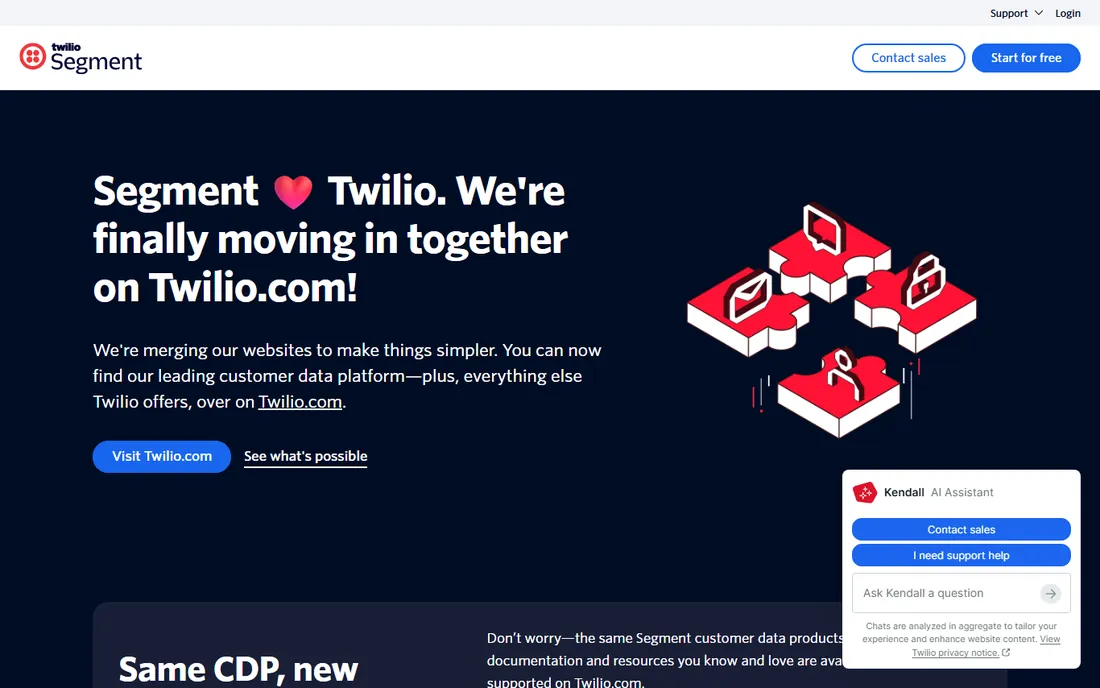
Segment is the CDP most data teams know. It collects first-party data from every touchpoint, cleans it, and activates it across more than 750 destinations, or straight into your data warehouse. The Unify product builds persistent customer profiles, and Engage turns those profiles into audiences and real-time journeys.
The warehouse-native direction is the differentiator. Linked Events enrich real-time actions with warehouse intelligence, and Profile Sync keeps identity consistent across the stack. Since the Twilio combination, Segment also pairs with communications and AI tooling on one platform.
The honest catch is cost. Pricing is quote-based and scales with monthly tracked users, and costs can climb quickly past the free tier. For companies already living in their warehouse, it is the most mature option. For smaller teams, the price conversation comes early.
What we like- 750-plus integrations
- Strong warehouse-native architecture
- Free tier for getting started
Watch out for- Quote-based pricing scales fast
- Twilio integration adds complexity
Starting priceSee website
Free planNo
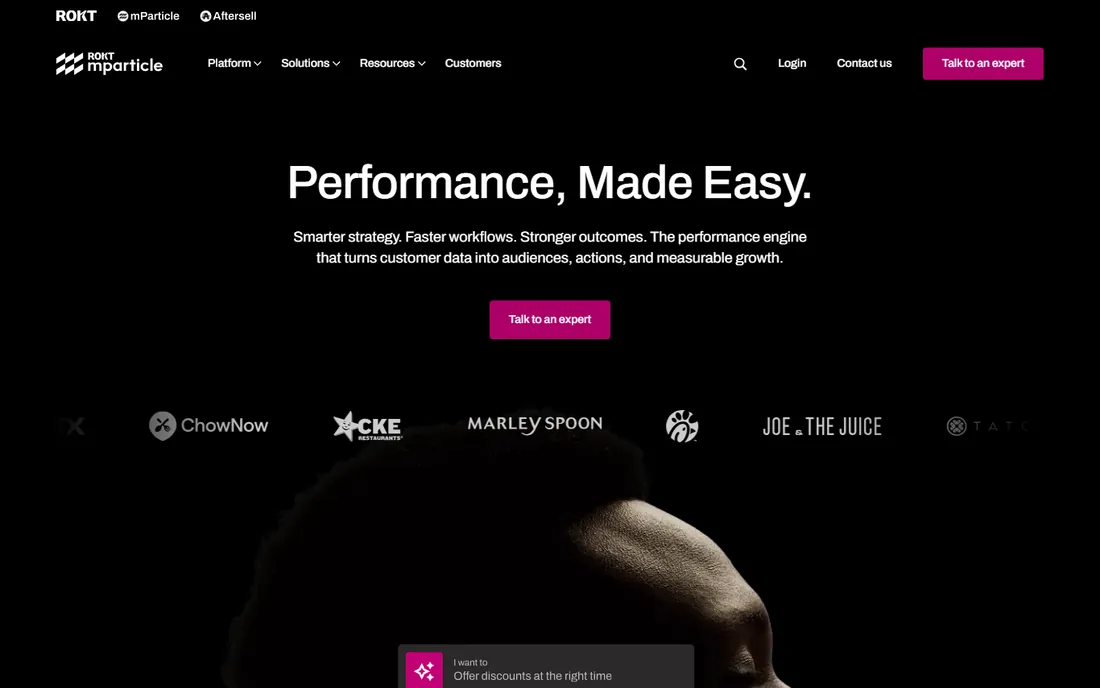
mParticle, now part of Rokt, positions its CDP as a performance engine for marketers. The platform collects data in real time from apps, web, and server sources, resolves identity with its IDSync technology, and activates audiences across more than 300 integrations. The headline feature is Match Boost, which claims to lift ad platform match rates up to 2x without extra spend.
Data quality is the deeper strength. Data Plans act as contracts between engineering and marketing, catching bad events before they pollute downstream systems. Predictive Audiences score churn and conversion likelihood so marketers can act before the moment passes.
The tradeoff is accessibility. There is no free tier and pricing runs through sales, which suits enterprise buyers but freezes out smaller teams. For brands spending heavily on paid media, the match-rate story makes it worth the call.
What we like- Real-time data quality and governance
- Match Boost improves ad match rates
- Strong mobile SDKs
Watch out for- No self-serve free tier
- Enterprise sales process
Starting priceSee website
Free planNo
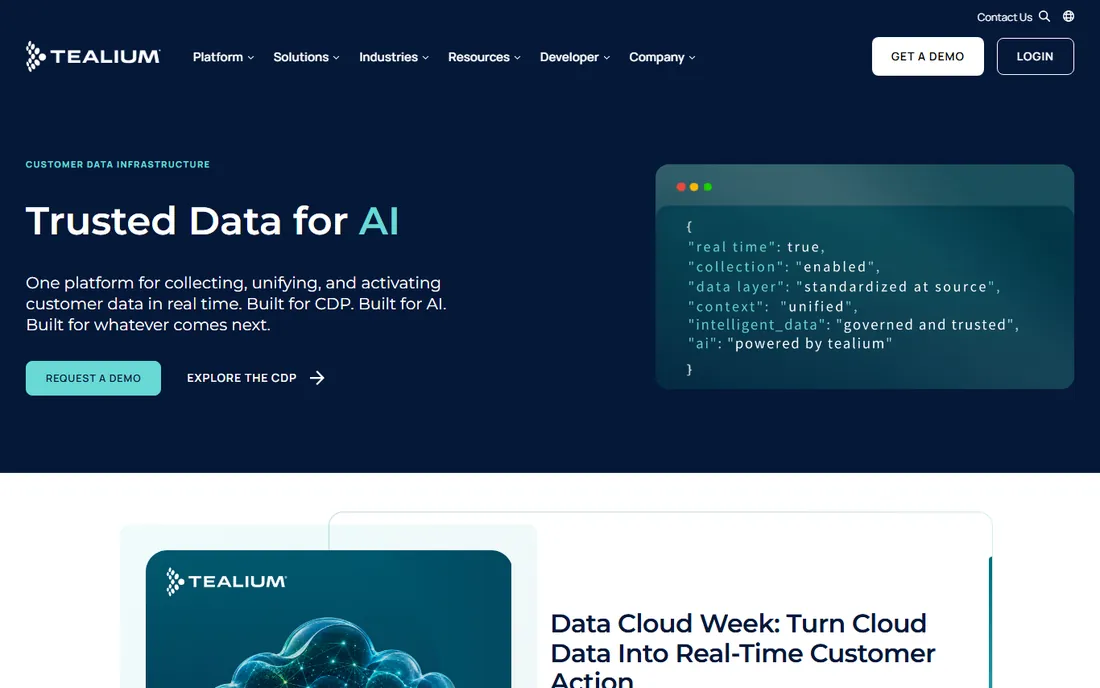
Tealium is the enterprise workhorse of the CDP category. Its Customer Data Hub combines tag management, an API hub, and the AudienceStream CDP with machine learning, orchestrating billions of events daily for more than 850 enterprise customers. The 1,300-plus integration ecosystem is the largest here.
The real-time story is what enterprises buy. Identity resolves as events arrive, consent enforcement runs through every activation, and the Predict ML product scores audiences on the fly. Recent releases push AI at the edge and agentic configuration, aiming to make the platform manageable by conversation.
The honest catch is that this is unapologetically enterprise software. Pricing is custom, implementations are projects, and small teams will find it heavy. For regulated industries and global brands that need real-time everything, it is the reference choice.
What we like- 1,300-plus prebuilt integrations
- Real-time identity resolution
- Strong consent and privacy controls
Watch out for- Enterprise-only pricing and complexity
- Implementation takes planning
Starting priceSee website
Free planNo
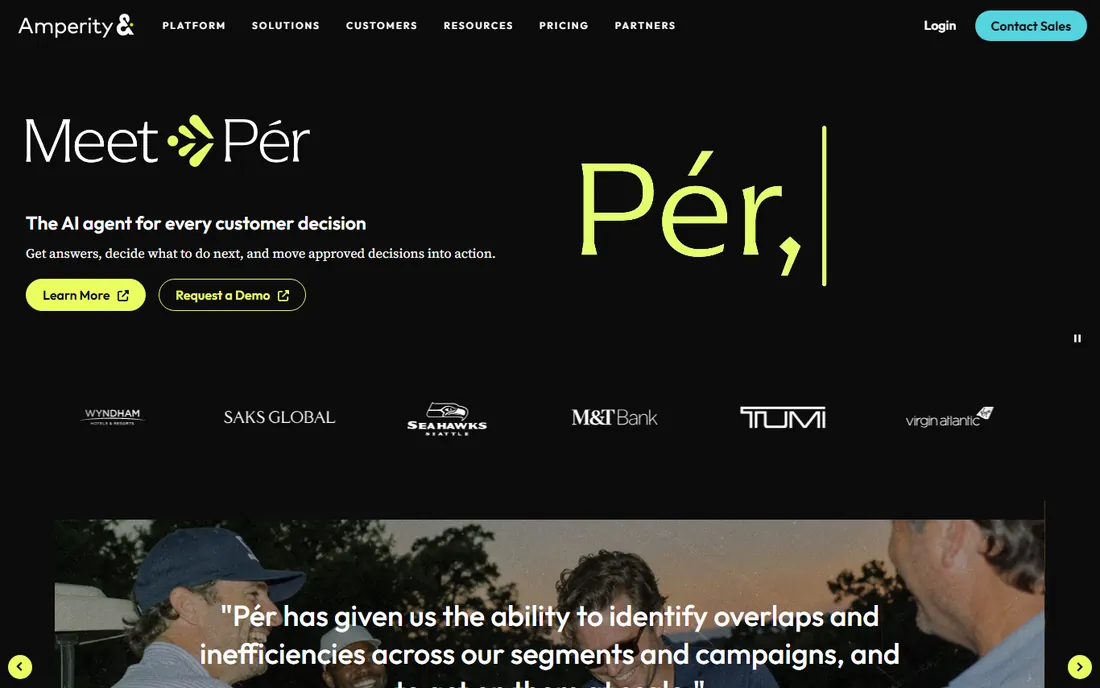
Amperity built its name on identity resolution. Its AI-powered engine stitches fragmented records into persistent customer profiles with unusual accuracy, which is why airlines, hotels, and retailers with messy omnichannel data choose it. More than 400 brands use the platform.
The product has moved beyond plumbing. The Customer Data Cloud adds segmentation, journey orchestration, and predictive attributes, and the new Customer Data Agent lets marketers ask plain-language questions and get live segments and journeys back. Time to value is genuinely fast for an enterprise CDP.
The tradeoff is focus. Amperity is built for consumer brands, retail, travel, and hospitality; B2B buyers will find less to grab onto. Pricing is enterprise and quote-based. For a consumer brand drowning in duplicate profiles, it is the identity specialist.
What we like- Best-in-class AI identity resolution
- Fast time to value
- New Customer Data Agent for marketers
Watch out for- Consumer-brand focus limits B2B fit
- Premium pricing
Starting priceSee website
Free planNo
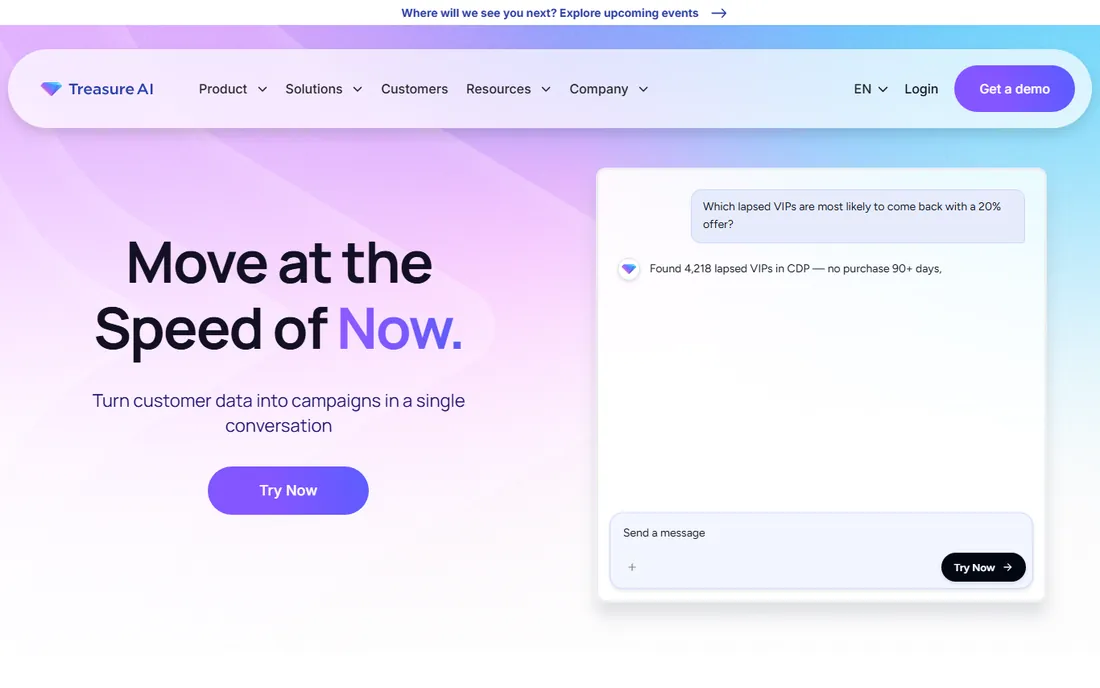
Treasure Data has rebranded as Treasure AI, an agentic experience platform built on its enterprise CDP. The underlying product unifies customer data at massive scale, ingesting from hundreds of sources, with a hybrid architecture that works whether your warehouse is the source of truth or not.
The AI layer is the current pitch. Agent Hub offers purpose-built agents for marketing, service, and data teams, all running on identity-resolved customer data, and Treasure Code lets technical teams operate the platform as code. The "No Compute" pricing model promises predictable economics without usage anxiety.
The honest catch is transition noise. The Treasure AI rebrand is fresh, and buyers may find mixed branding across materials. It is also firmly enterprise: expect a sales cycle. For large brands wanting an AI-native CDP, the platform depth is real.
What we like- Hybrid CDP works with or without a warehouse
- Strong AI agent layer
- Predictable "No Compute" pricing option
Watch out for- Rebrand in progress creates confusion
- Enterprise-only motion
Starting priceSee website
Free planYes
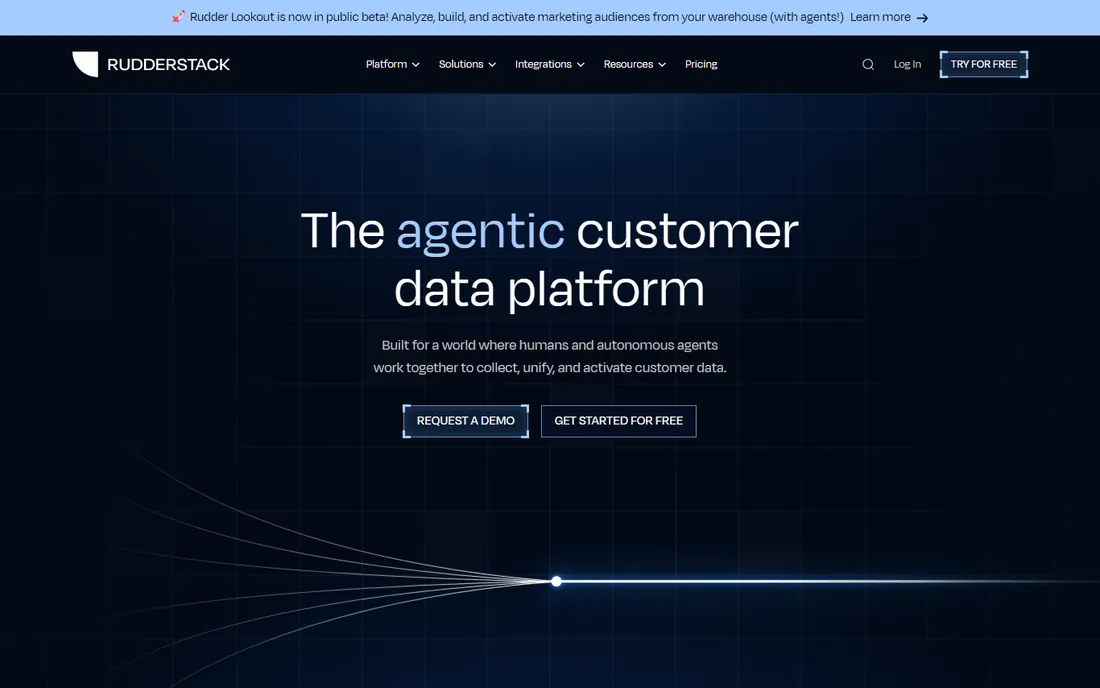
RudderStack is the CDP for companies that already trust their warehouse. Instead of storing your data in a vendor black box, it collects events, routes them through your warehouse, and builds customer 360 profiles there. Your data stays yours, governed by your rules.
The developer experience is the draw: SDKs for every platform, transformations in flight, a data catalog for governance, and now agentic workflows that build tracking plans and audiences from natural language. The free tier lets data teams prove value before spending.
The tradeoff is audience. RudderStack is built for data teams, not marketers, and getting full value needs engineering involvement. For a mid-size company with a warehouse and a data team, it delivers CDP power at a fraction of packaged-CDP cost.
What we like- Warehouse is the source of truth
- Open-source roots
- Free tier and developer-friendly pricing
Watch out for- Less marketer-friendly than packaged CDPs
- Needs data team involvement
Starting priceSee website
Free planYes
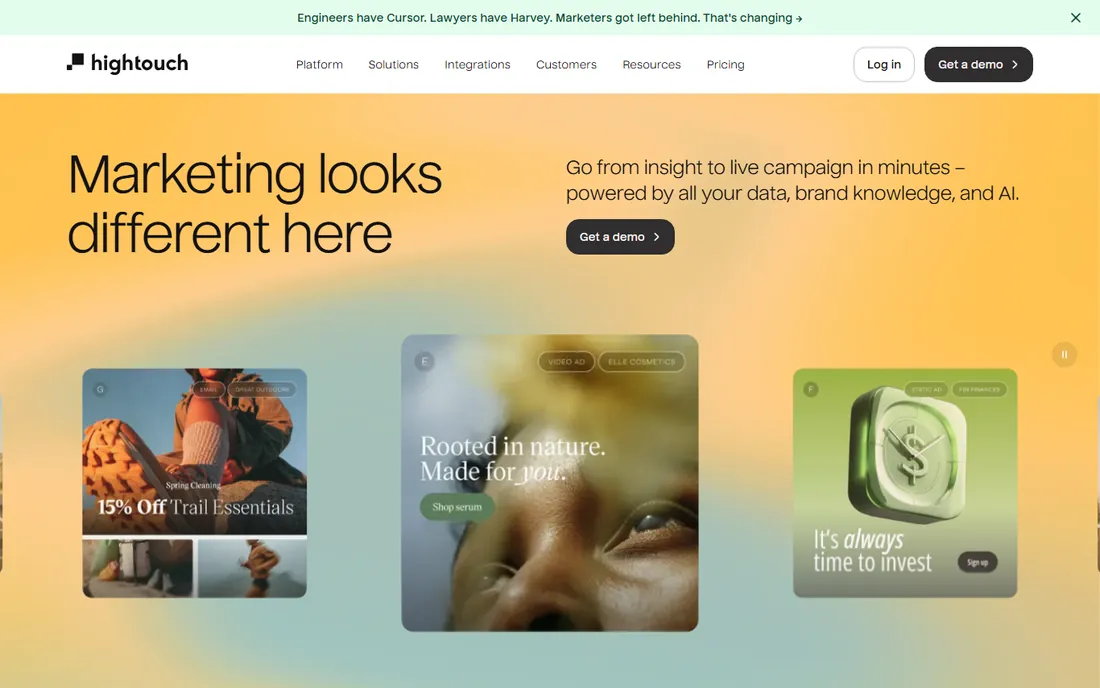
Hightouch pioneered the composable CDP: instead of copying data into a vendor system, it syncs audiences and customer data directly from your warehouse to more than 300 destinations. The Customer Studio gives marketers a no-code audience builder, and identity resolution unifies profiles without duplicating storage.
The platform has grown into a full marketing data suite with journey orchestration, AI decisioning, and an ad studio for on-brand creative. Because Hightouch never stores your data, security reviews go faster and warehouse ROI goes further.
The honest catch is the prerequisite. You need a functioning warehouse with modeled data before Hightouch does anything, and syncs run on schedules rather than true real time (streaming options are expanding). For warehouse-mature teams, it is the cleanest activation layer available.
What we like- Activates warehouse data to 300-plus destinations
- Marketer-friendly audience builder
- Never stores your data
Watch out for- Requires a warehouse to start
- Reverse-ETL syncs are batch by default
Starting priceSee website
Free planNo
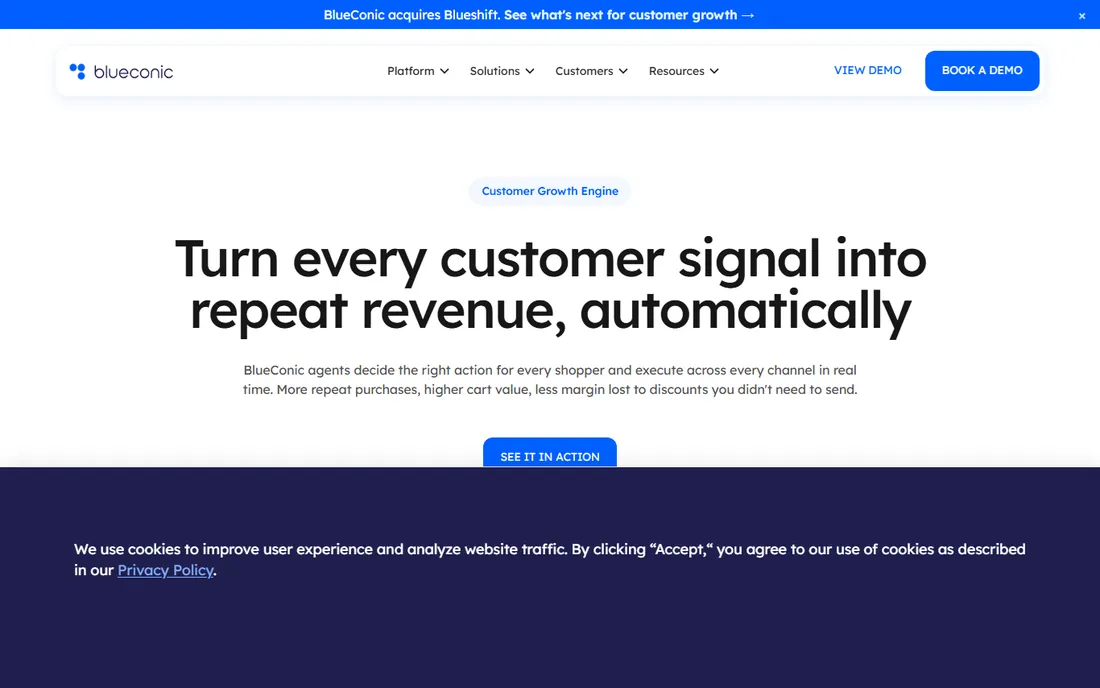
BlueConic is the pure-play CDP for e-commerce and consumer brands. It unifies first-party data into persistent individual profiles, then activates them across the existing stack: Klaviyo, Meta, Shopify, Braze, and more. The pitch is growth, not plumbing.
Growth Plays are the differentiator: pre-configured campaign programs for cart recovery, replenishment, and acquisition that launch in 90 days or less, run by marketers without an IT queue. AI agents decide the right action for each shopper from one live profile, with guardrails marketers control.
The tradeoff is scope. BlueConic is built for B2C e-commerce and retail; complex B2B or data-team-driven use cases fit less naturally. Pricing is quote-based with no free tier. For a mid-size e-commerce brand that wants profiles turned into revenue, it is purpose-built.
What we like- Pure-play CDP built for marketers
- Growth Plays launch revenue campaigns fast
- Works with existing stack
Watch out for- E-commerce focus narrows fit
- No free tier
How we chose
We focused on established CDPs a mid-size company can actually buy: real customer bases, clear identity resolution, and activation across the marketing stack. We reviewed vendor documentation and pricing pages, and weighed public reviews from G2, Capterra, and Reddit. We skipped platforms whose sites are being retired, such as Lytics, now part of Contentstack.
Packaged vs composable: which CDP architecture fits
The biggest decision is architectural. Packaged CDPs like Segment, mParticle, Tealium, and Amperity store and unify your data in their own system. They are easier to adopt without a data team and offer real-time activation, but you pay for the storage and the data lives outside your control.
Composable CDPs like RudderStack and Hightouch keep your warehouse as the source of truth and activate from it. They cost less, avoid data duplication, and fit companies with data teams, but they need a working warehouse and are weaker on real-time use cases.
A practical rule: if you have a warehouse and a data team, go composable. If marketing needs to move fast without engineering, go packaged. Treasure AI's hybrid approach splits the difference for enterprises.
What to ask on every CDP sales call
Ask how identity resolution actually works. Deterministic matching is precise but limited; probabilistic matching finds more profiles but introduces error. Ask for match rates on data like yours, not a generic benchmark.
Ask about pricing mechanics. Most CDPs price on monthly tracked users, events, or profiles, and costs scale with success. Model your growth for two years and ask what the bill looks like at each stage.
Ask about time to value. Enterprise CDPs can take months to implement. Ask for a reference customer of your size and industry, and ask how long their first live audience took.
Ask who owns the data. If you leave, how do you export your unified profiles? A CDP that makes exit hard is a risk, not a feature.
Frequently asked questions
What is a customer data platform?
A customer data platform collects first-party customer data from every touchpoint, unifies it into persistent individual profiles through identity resolution, and makes those profiles available to marketing, sales, and service tools. Unlike a CRM, it handles behavioral and anonymous data, not just known contacts.
How much does a customer data platform cost?
Enterprise CDPs are quote-based and typically price on monthly tracked users, events, or unified profiles. Expect five to six figures annually for mid-size companies. Segment, RudderStack, and Hightouch offer free tiers to start; the rest begin with a sales conversation.
What is the difference between a CDP and a CRM?
A CRM stores data about known contacts and sales interactions. A CDP unifies behavioral, transactional, and anonymous data from every channel into one profile, including people who have never bought. CDPs serve marketers and personalization; CRMs serve sales and service.
Do I need a data warehouse to use a CDP?
Not necessarily. Packaged CDPs like Segment, mParticle, and Amperity work without one. Composable CDPs like RudderStack and Hightouch require a warehouse as the foundation. If you already have Snowflake, BigQuery, or Databricks, composable is usually cheaper and cleaner.
How long does CDP implementation take?
It varies widely. Composable tools can activate in weeks if the warehouse is ready. Packaged enterprise CDPs typically take one to three months for the first use case, longer for full deployment. Ask vendors for a time-to-first-audience commitment.
What happened to Lytics?
Lytics was acquired by Contentstack and its standalone site is being retired, with the product becoming part of the Contentstack platform. Existing customers can keep logging in during the transition. We excluded it from this list for that reason.
Sources we checked (9)
- https://segment.com/
- https://mparticle.com/
- https://tealium.com/
- https://amperity.com
- https://treasuredata.com/
- https://www.rudderstack.com/
- https://hightouch.com/
- https://www.blueconic.com/
- https://www.globenewswire.com/news-release/2026/10/06/3375567/0/en/tealium-brings-greater-visibility-to-ai-influenced-customer-journeys-with-chatgpt-ads-connectors.html
Is your product missing or out of date?
We review this list regularly. Vendors can request a listing, send updated pricing or ask about featured placement.

Shihab Mia · Founder, Rankite
Shihab has spent more than a decade helping SaaS and e-commerce brands grow through search. He writes Rankite's software buying guides from pricing pages, documentation and public user reviews. More about Shihab.