How we make this list: we compare pricing pages, product documentation and public user reviews. Rankite is independent; if a vendor ever pays for a featured spot, that listing is clearly labeled Partner.
Key takeaways
- ION Commodities is the market-share leader with a portfolio covering RightAngle, OpenLink, Aspect, Allegro and TriplePoint.
- Cloud-native SaaS options (Molecule, Quoreka, Gen10, AEGIS) mean faster go-lives and no upgrade projects for smaller trading firms.
- Agiboo's Agiblocks targets agricultural commodities (sugar, cocoa, coffee, grains) with industry-specific workflows.
- CTRM pricing is quote-based across the board; implementation and integration usually cost as much as the first year of licenses.
- Match the system to your commodities: energy specialists differ sharply from ags and metals specialists.
Quick comparison
| Tool | Best for | Starting price | Free plan |
|---|
 RightAngle (ION) RightAngle (ION) | large multi-commodity trading operations | See website | No |
 OpenLink (ION) OpenLink (ION) | complex enterprise energy and commodities portfolios | See website | No |
 Agiboo Agiboo | sugar, cocoa, coffee and grain traders | See website | No |
 Molecule Molecule | energy traders wanting modern SaaS ETRM | See website | No |
 Quoreka Quoreka | trading houses wanting one platform across the value chain | See website | No |
 Gen10 Gen10 | physical commodity traders who want AI-assisted workflows | See website | No |
 Brady Technologies Brady Technologies | European energy, metals and softs traders | See website | No |
 AEGIS Hedging AEGIS Hedging | producers and consumers running hedge programs | See website | No |
Is your product missing or out of date?
We review this list regularly. Vendors can request a listing, send updated pricing or ask about featured placement.
The best CTRM software
Starting priceSee website
Free planNo
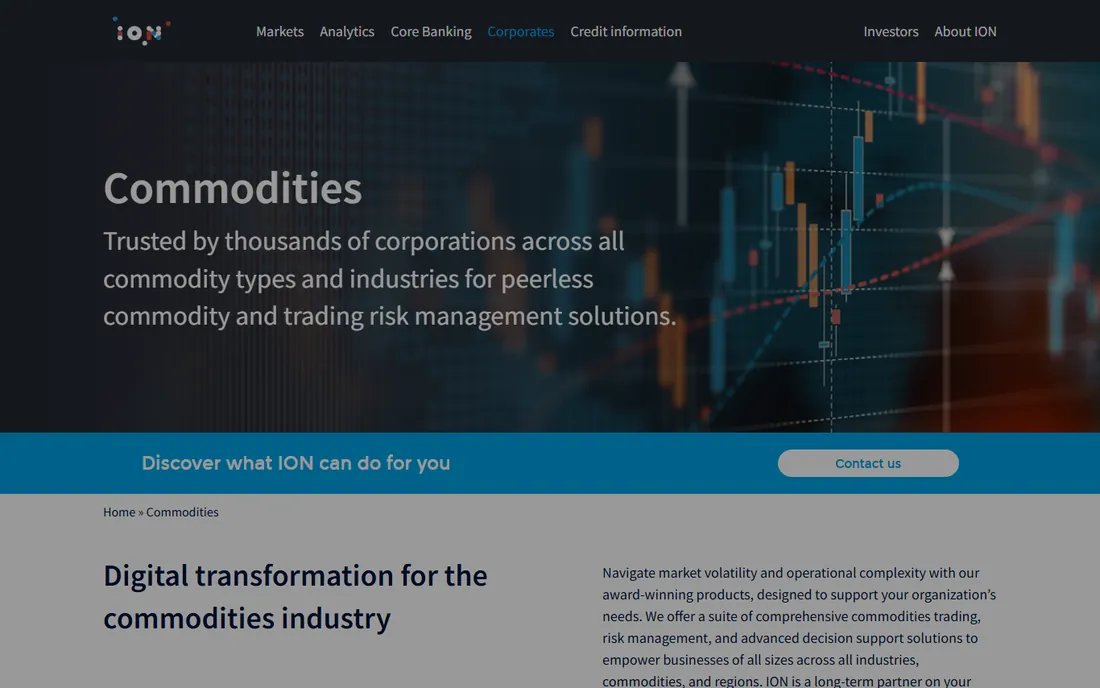
RightAngle is ION's workhorse CTRM for commodity merchants, particularly strong in crude, refined products, NGLs and agricultural supply chains. It covers the full deal lifecycle from capture through scheduling, logistics, risk and settlement, with the kind of depth in physical operations that spreadsheet-based shops eventually outgrow.
As part of ION Commodities, RightAngle customers get access to complementary products for market data, credit risk and portfolio analytics, plus a large peer community. The honest catch is that this is big-ticket enterprise software: implementations run for months, customization is the norm, and total cost depends heavily on user count, commodities and modules. Mid-size firms should also look at ION's SaaS offerings like Aspect before defaulting to RightAngle.
What we like- Deep functionality across liquid hydrocarbons, NGLs and agriculture
- Strong scheduling and logistics
- Part of ION's 1,200-client commodities community
Watch out for- Enterprise implementation timelines
- Pricing and modules require scoping with ION sales
#2
OpenLink (ION)
Best for: complex enterprise energy and commodities portfolios
Visit iongroup.com
Starting priceSee website
Free planNo
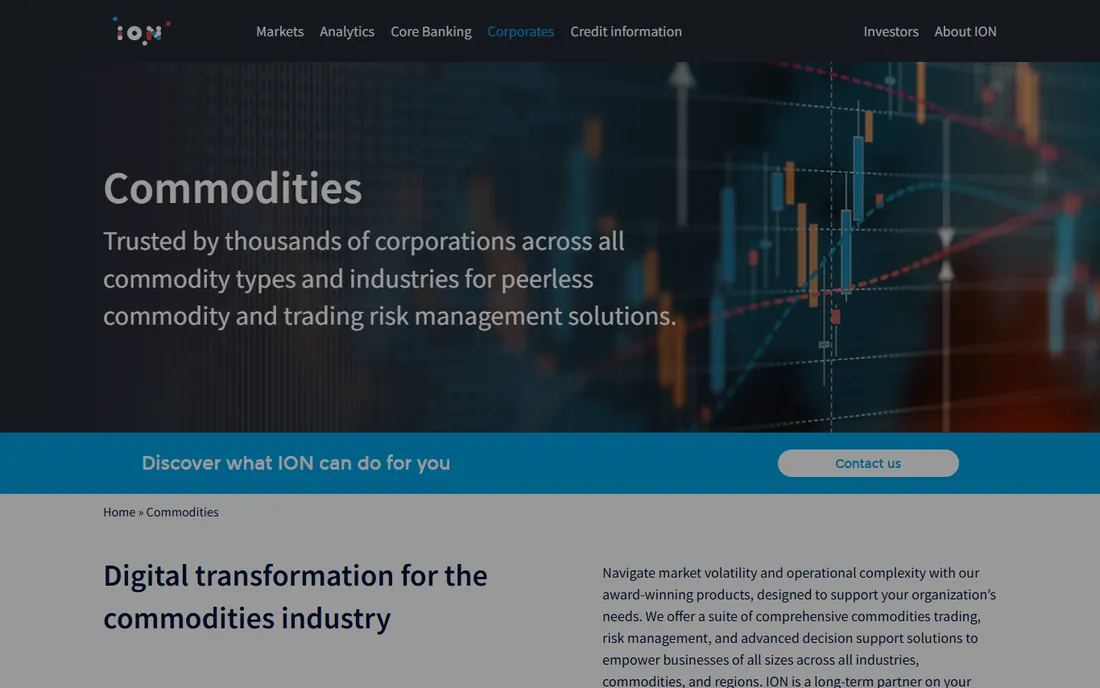
OpenLink has long been the default choice for large energy companies with complicated books: power and gas utilities, oil majors and financial institutions trading across physical and financial instruments. Its risk engine, curve management and regulatory reporting depth remain the benchmark competitors get measured against.
ION now delivers OpenLink through ION Cloud as well as on-premises, which has shortened upgrades for existing customers. Recent wins like EDP's selection for power and gas retail show it still lands flagship deals. The catch is scale economics: OpenLink implementations are major programs, and firms with simpler portfolios often get live faster and cheaper on Molecule or Aspect.
What we like- Handles the most complex cross-asset portfolios in the industry
- Strong in power, gas and renewables
- Deployable on ION Cloud
Watch out for- Significant implementation effort
- Can be more system than smaller firms need
Starting priceSee website
Free planNo
Agiboo was founded on a simple observation: before 2010, real CTRM was a luxury only large trading houses could afford. Its Agiblocks platform focuses tightly on agricultural commodities, with dedicated functionality for sugar, cocoa, coffee and grains, covering contracts, logistics, forex, hedging and real-time risk in one system.
Customers praise the position screens and the way complex trading situations stay visible in a single view. Deployment options include on-premises, cloud-hosted and SaaS. The honest catch is focus: if you trade energy or metals alongside ags, Agiblocks will not cover those books, so multi-commodity houses need to look elsewhere or run two systems.
What we like- Purpose-built for agricultural commodities with commodity-specific workflows
- Clean, modern interface
- Affordable for small and mid-size firms
Watch out for- Narrow commodity focus (not for energy or metals)
- Smaller vendor with partner-led delivery
Starting priceSee website
Free planNo
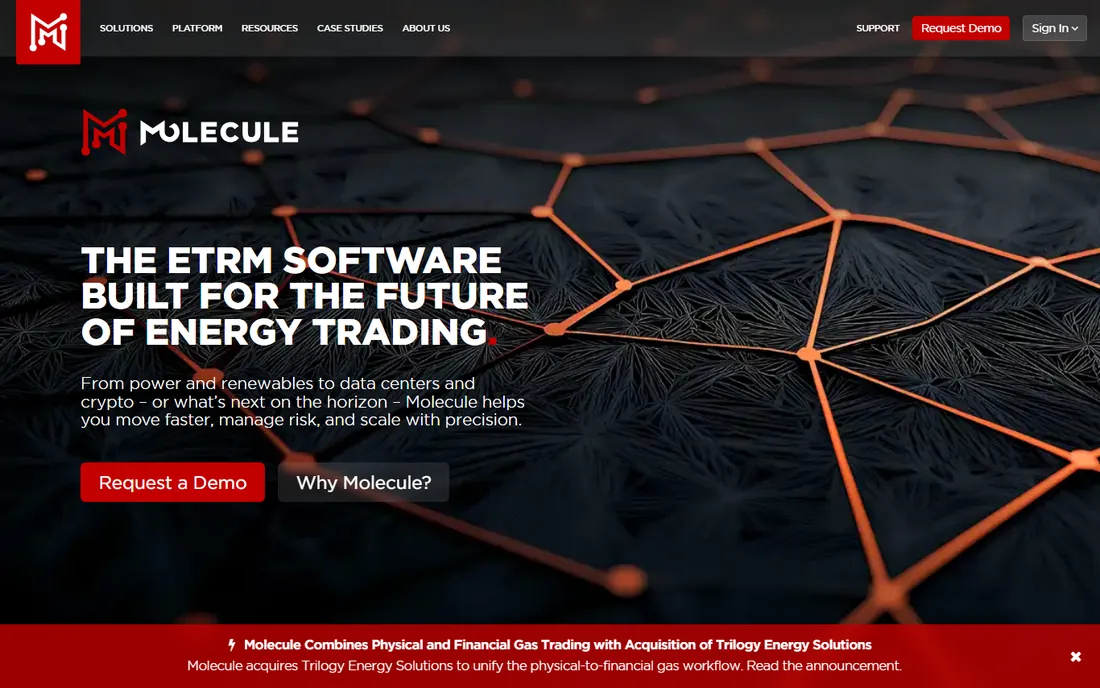
Molecule set out to make ETRM software as pleasant as consumer apps, and it largely succeeded: Houston-based, founded in 2012, it delivers trade capture, risk, settlements and reporting as a cloud service with an API-first architecture. It supports 50+ commodities with particular strength in power, renewables, gas and crude, and its 2025 growth investment plus the Trilogy Energy Solutions acquisition extended its physical gas capabilities.
The SaaS model means no upgrade projects and transparent, frequent releases, which is a genuine relief for teams burned by legacy on-premises systems. The catch is commodity fit: Molecule is an energy trading system first, so agricultural merchants with complex physical logistics should verify coverage of their specific workflows before committing.
What we like- True cloud-native multi-tenant SaaS with frequent releases
- API-first design
- Strong usability and fast implementation
Watch out for- Energy-centric (power, gas, renewables, crude)
- Less depth in agricultural physical operations
#5
Quoreka
Best for: trading houses wanting one platform across the value chain
Visit eka1.com
Starting priceSee website
Free planNo
Quoreka is the new name for Eka Software Solutions, and the rebrand signals its current pitch: an operating system for commodity-driven businesses that runs CTRM and ETRM alongside stockyard management, warehousing and supply chain visibility on one cloud-native platform. For trading houses tired of stitching separate systems together, the single-source-of-truth story is compelling.
The platform breaks the old monolithic CTRM into modular apps, which the company says enables faster implementation and adoption. With offices across the Americas, Asia, Australia and EMEA and customers in agriculture, energy, metals and manufacturing, it has genuine multi-commodity breadth. The catch is transition noise: research the product under both names, and insist on reference customers in your commodity segment.
What we like- Unifies CTRM, ETRM, stockyard, warehouse and supply chain visibility
- Cloud-native
- Serves 100+ customers across ags, energy and metals
Watch out for- Recent rebrand from Eka means older reviews and case studies sit under the old name
- Enterprise sales cycle
#6
Gen10
Best for: physical commodity traders who want AI-assisted workflows
Visit gen10.net
Starting priceSee website
Free planNo
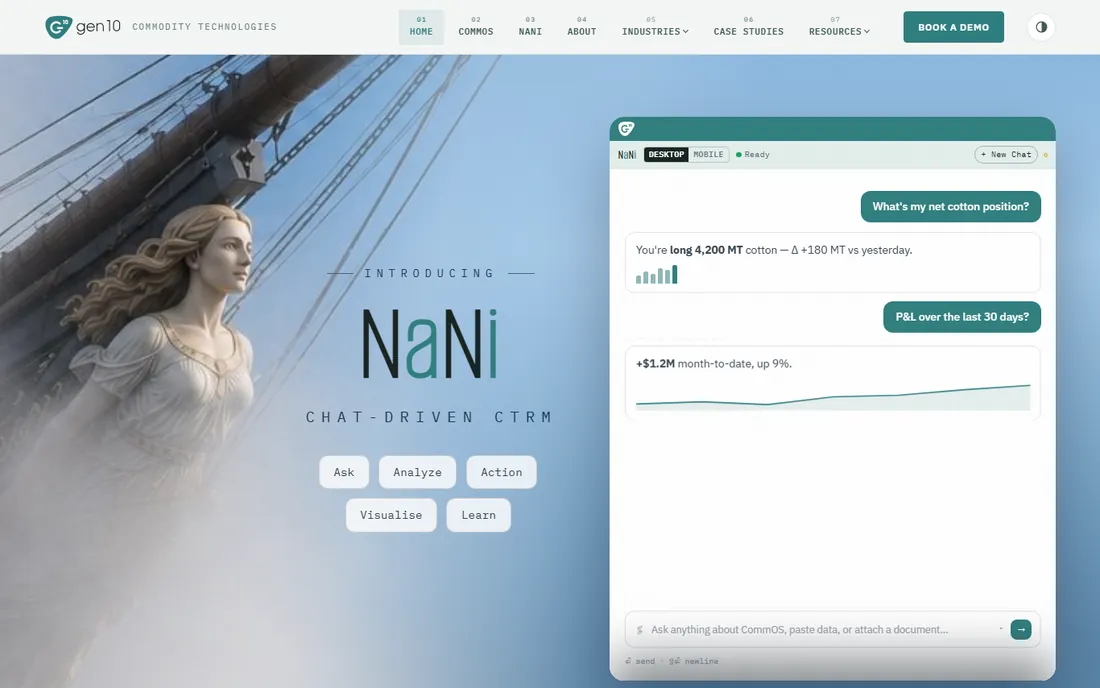
Gen10's headline feature in 2026 is NaNi, a chat-driven interface layered over its CommOS system of record: traders ask "what is my net cotton position?" and get answers, charts and analysis from live data, governed by an AI orchestration layer. Underneath sits a connected commodity management platform covering contracts, positions, stock, costs, documents and logistics.
The company brings 25 years of experience in physical commodities, with particular depth in metals, biomass and agricultural supply chains, and its ecosystem approach lets firms add apps for specific needs rather than buying a monolith. The catch is that the AI layer is genuinely new: pilot it on your own data and verify the governance controls before letting it near production decisions.
What we like- CommOS platform with conversational AI (NaNi) for plain-language queries
- Strong in metals, biomass and ags
- 25 years of domain expertise
Watch out for- UK-headquartered with smaller US presence
- AI features are new and still maturing
Starting priceSee website
Free planNo
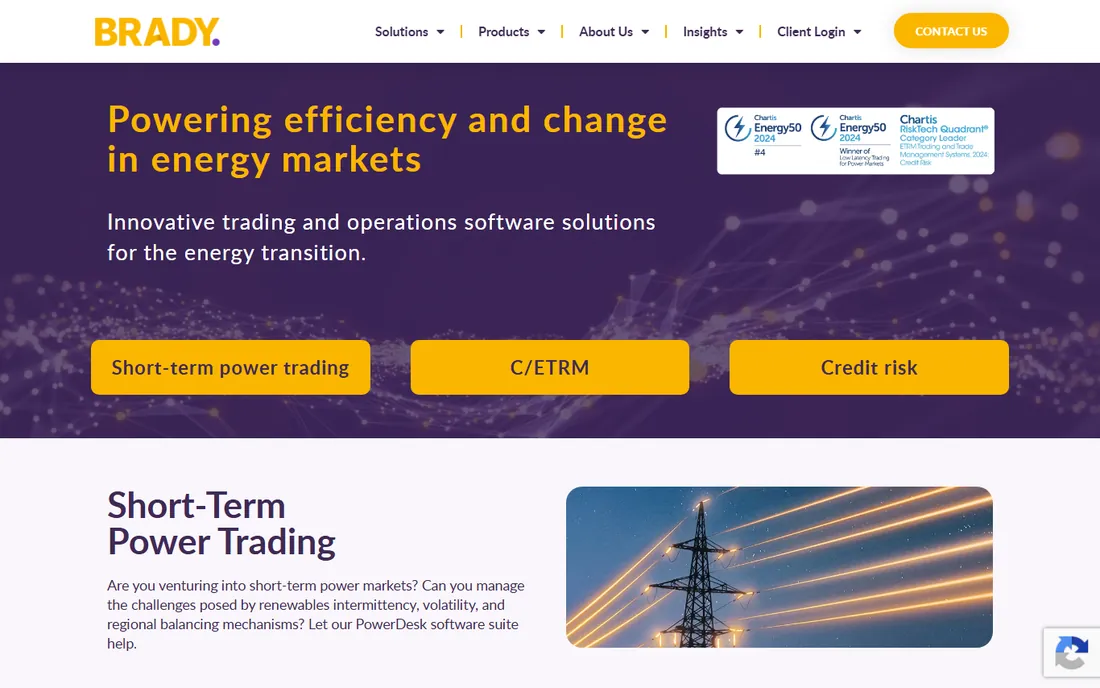
Brady is the largest European-headquartered CTRM vendor, with around 400 customers spanning energy, metals, softs and agricultural commodities. Its platform covers the full operation from trade capture through risk management, physical operations, back-office financials and treasury settlement, and its PowerDesk suite targets short-term power markets and the renewables transition.
Brady's deep London Metal Exchange expertise makes it a natural shortlist candidate for metals traders and LME clearing members. The honest catch for US readers is geography: while Brady serves global clients, its densest partner and support network is European, so American buyers should validate implementation resources stateside.
What we like- 30+ years in commodity markets
- Strong LME and European energy coverage
- Credit risk and treasury modules included
Watch out for- Strongest footprint is European
- US buyers should confirm local support and references
Starting priceSee website
Free planNo
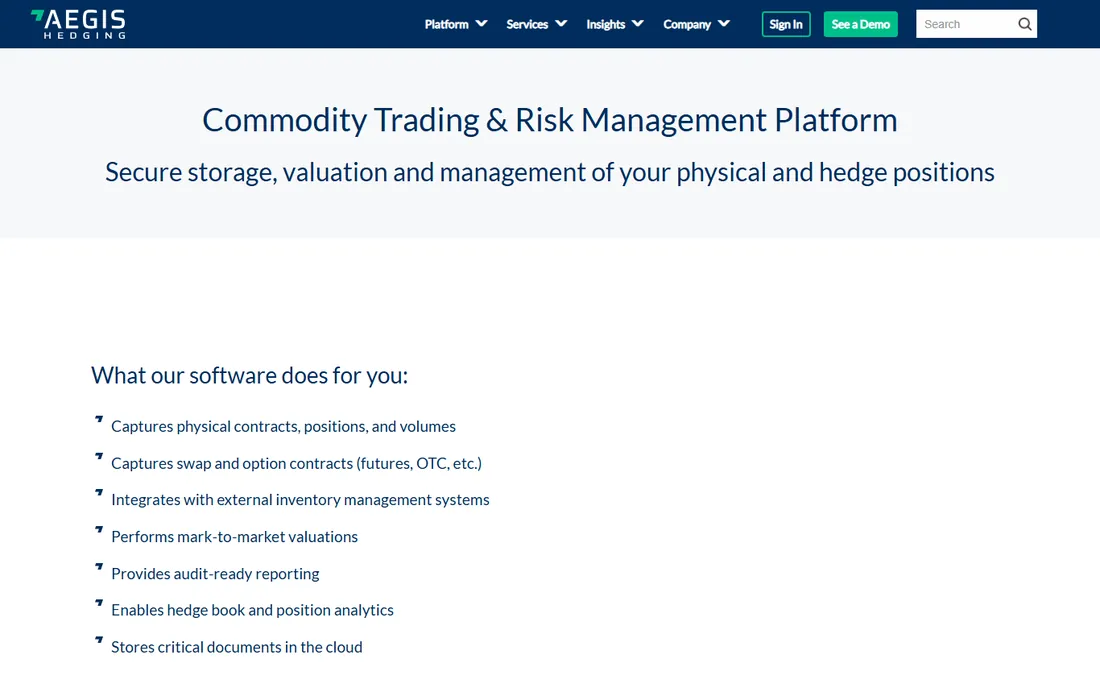
AEGIS Hedging approaches CTRM from the hedging side: its platform captures physical contracts, positions and volumes alongside swaps and options, performs mark-to-market valuations, integrates with inventory systems and produces audit-ready reporting. For producers, consumers and marketers whose primary need is managing a hedge book rather than running a speculative trading operation, that focus is a feature.
The platform's position analytics and document storage suit finance teams that need clean, defensible hedge accounting. The catch is scope: AEGIS is not trying to be a full front-to-back trading system for merchant trading houses, so firms with active proprietary trading desks will likely need a broader CTRM alongside it.
What we like- Built around hedge workflows: physical and derivative positions, mark-to-market, audit-ready reporting
- Cloud document storage
Watch out for- Hedging-centric rather than full trading-house CTRM
- Best as part of an AEGIS advisory relationship
How we chose
We evaluated vendors using product documentation, vendor press releases, industry analyst commentary (ComTech Advisory, Chartis) and public reviews on G2, Capterra and CTRM Center. We prioritized functional fit for commodity trading and risk workflows, deployment options, vendor stability and relevance to small and mid-size US firms. We did not conduct hands-on testing; assessments reflect publicly available information as of October 2026.
How to buy CTRM without regret
Define your commodities first, in writing. Energy, agriculture, metals and environmental credits each have vendors that specialize in them, and a system excellent for power trading can be mediocre for grain merchandising. Shortlist only vendors with live customers in your exact commodities, then call those references yourself.
Run the numbers honestly
CTRM total cost is licenses plus implementation plus integration plus internal staff time, and the second and third items usually exceed the first. Ask every vendor for a fixed-scope implementation proposal with named deliverables, and ask what happens to pricing when you add users, commodities or entities in year two. SaaS vendors (Molecule, AEGIS) make this math simpler; enterprise suites (RightAngle, OpenLink) make it negotiable but harder to predict.
Pilot with your dirtiest data
Give finalists a sample of your actual contracts, including the awkward ones: provisional pricing, quality claims, multi-leg logistics. Watch how each system handles mark-to-market on your book and how long position reporting takes. The vendor that handles your messiest trades gracefully is usually the right one, regardless of the slideware.
The cloud question, settled
The industry's center of gravity has moved to cloud delivery, and 2026 made it obvious: even ION now leads with ION Cloud, and the SaaS-native vendors release features monthly while on-premises customers wait for upgrade windows. For a small or mid-size firm, cloud CTRM usually means lower upfront cost, faster go-live and no server maintenance. The remaining reasons to stay on-premises are specific: data residency requirements, existing infrastructure investments, or IT policies that mandate it. If none of those apply to you, shortlist cloud-first.
Frequently asked questions
What does CTRM software do?
CTRM (Commodity Trading and Risk Management) software manages the full lifecycle of physical commodity trades: contract capture, scheduling and logistics, position tracking, mark-to-market valuation, risk measurement and settlement. It replaces spreadsheets with a controlled system of record for what a trading firm owns, owes and is exposed to.
How much does CTRM software cost?
Pricing is quote-based for every major vendor. SaaS platforms typically charge per user per month, while enterprise suites license by module and user count with separate implementation fees. Expect total first-year costs from the low six figures for SaaS up to seven figures for enterprise deployments, driven mostly by implementation scope.
What is the difference between CTRM and ETRM?
ETRM (Energy Trading and Risk Management) is the energy-market subset of CTRM, focused on power, gas and related instruments with features like curve management and scheduling. CTRM is the broader term covering all physical commodities including agriculture, metals and softs. Many vendors sell one platform covering both.
How long does CTRM implementation take?
SaaS CTRM deployments can go live in weeks to a few months for standard scopes. Enterprise suites like RightAngle or OpenLink typically take six to eighteen months depending on commodities, integrations and customization. Data migration from spreadsheets and legacy systems is usually the longest pole.
Can a small trading firm afford CTRM?
Yes, more than ever. SaaS vendors like Molecule, Agiboo and AEGIS specifically target small and mid-size firms with per-user pricing and fast implementations. The old model of million-dollar on-premises projects still exists at the enterprise end, but it is no longer the only option.
Should we replace spreadsheets with CTRM?
If more than a few people touch your position or P&L spreadsheets, or if audit and counterparty scrutiny is increasing, yes. Spreadsheets create version-control risk, key-person dependency and no audit trail. A CTRM gives you one version of positions and exposures that the whole firm can trust.
Sources we checked (7)
- https://iongroup.com/commodities/
- https://agiboo.com/
- https://molecule.io/
- https://eka1.com/
- https://gen10.net
- https://www.bradytechnologies.com
- https://aegis-hedging.com/commodity-trading-risk-management-software
Is your product missing or out of date?
We review this list regularly. Vendors can request a listing, send updated pricing or ask about featured placement.

Shihab Mia · Founder, Rankite
Shihab has spent more than a decade helping SaaS and e-commerce brands grow through search. He writes Rankite's software buying guides from pricing pages, documentation and public user reviews. More about Shihab.