How we make this list: we compare pricing pages, product documentation and public user reviews. Rankite is independent; if a vendor ever pays for a featured spot, that listing is clearly labeled Partner.
Key takeaways
- Crowdfunding and crowdsourcing solve different problems: raising money from a crowd versus getting work done by a crowd.
- Kickstarter and Indiegogo are the top picks for product launches, GoFundMe for personal causes, and Patreon for recurring creator income.
- For business problems, 99designs crowdsources design, Topcoder crowdsources software, HeroX crowdsources innovation, and Kaggle crowdsources data science.
- Fees matter: reward platforms take about 8 to 10 percent of what you raise, while talent platforms charge per project, prize, or contest package.
- The crowd does not show up by itself; most successful campaigns bring their own audience to the platform.
Quick comparison
| Tool | Best for | Starting price | Free plan |
|---|
 Kickstarter Kickstarter | creative and product launches | 5% of funds raised (only if the campaign funds) | Yes (free to launch; no fees if the goal is missed) |
 Indiegogo Indiegogo | tech and gadget campaigns | 5% of funds raised (plus 3% + $0.20 processing per transaction) | Yes (free to launch; no fees if the goal is missed) |
 GoFundMe GoFundMe | personal causes and charity fundraisers | 0% platform fee (2.9% + $0.30 processing per donation) | Yes |
 Patreon Patreon | recurring income for creators | 10% of processed payments (plus payment processing fees) | Yes (free to start; you pay only as you earn) |
 99designs 99designs | logo and brand design through contests | From US$349 per design contest (plus a 5% platform fee) | Yes (free to browse and post a brief) |
 Topcoder Topcoder | software, data, and design work through competitions | See website (quote-based, enterprise pricing) | No (free for community members competing; clients pay per challenge) |
 HeroX HeroX | innovation challenges and R&D problems | See website (custom challenge packages) | Yes (free to join and compete in challenges) |
 Kaggle Kaggle | machine learning competitions and data science talent | Free (community competitions; featured competitions are custom-priced) | Yes |
Is your product missing or out of date?
We review this list regularly. Vendors can request a listing, send updated pricing or ask about featured placement.
A small coffee equipment company in Portland had a grinder prototype that testers loved, but no budget for a first production run. Instead of a loan, the founders ran a reward campaign: thirty days, a working demo video, and honest weekly updates. They raised four times their goal and, more valuable than the money, got hundreds of pre-orders and a mailing list of people who already believed in the product. Crowdsourcing works when you treat the crowd as partners, not as an ATM.
Starting price5% of funds raised (only if the campaign funds)
Free planYes (free to launch; no fees if the goal is missed)
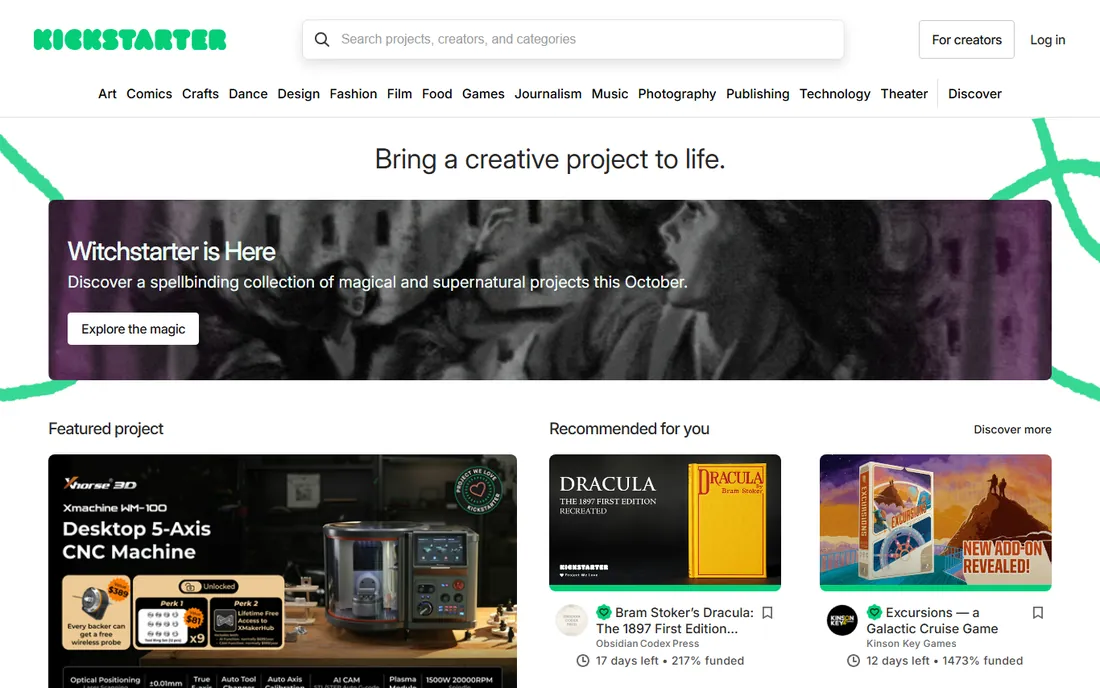
Kickstarter remains the first name in reward crowdfunding for a reason. Its all-or-nothing rule means backers are only charged if the goal is met, which lowers their risk and gives successful campaigns a credibility halo that carries into retail. The built-in pledge manager and late pledge tools also help creators keep selling after the campaign ends.
The trade is control for reach. Projects must fit Kickstarter's creative categories and rules, and the platform takes its 5 percent cut plus payment processing only when you succeed. Campaigns that treat launch day as the start of marketing, not the end of it, consistently outperform those that assume the crowd will find them.
What we like- The largest reward-crowdfunding backer community
- All-or-nothing model builds urgency and trust
- Strong culture of creative projects and repeat backers
Watch out for- Strict project rules and category limits
- All-or-nothing means a near miss yields zero
- Fees plus processing take roughly 8 to 10 percent of pledges
Starting price5% of funds raised (plus 3% + $0.20 processing per transaction)
Free planYes (free to launch; no fees if the goal is missed)
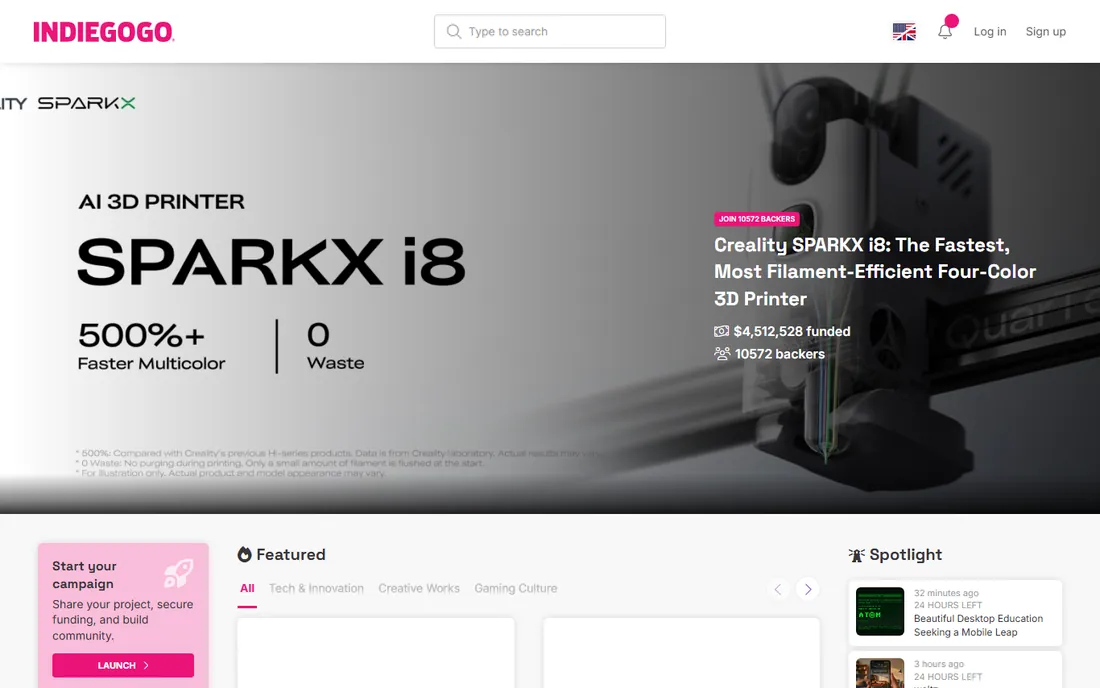
Indiegogo has reinvented itself as the campaign-to-commerce platform, especially for tech and hardware. Since its late 2025 platform upgrade, it runs an advanced pledge manager, late pledge sales, and post-campaign optimization tools that make it feel like a full storefront rather than a one-time fundraiser. Every campaign is now fixed funding, so creators only collect when goals are hit.
Fees mirror Kickstarter: 5 percent platform plus 3 percent and $0.20 per transaction in the US. The honest difference is audience and tooling. Tech and gadget creators often find a warmer reception here, while creative projects still tend to do better on Kickstarter.
What we like- Strong in tech, hardware, and innovation categories
- Advanced pledge manager and post-campaign selling tools
- Rebuilt platform with wider payment method support
Watch out for- Smaller organic backer community than Kickstarter
- Fee structure now nearly identical to Kickstarter, so no cost edge
- Reserve holds can delay some payouts
Starting price0% platform fee (2.9% + $0.30 processing per donation)
Free planYes
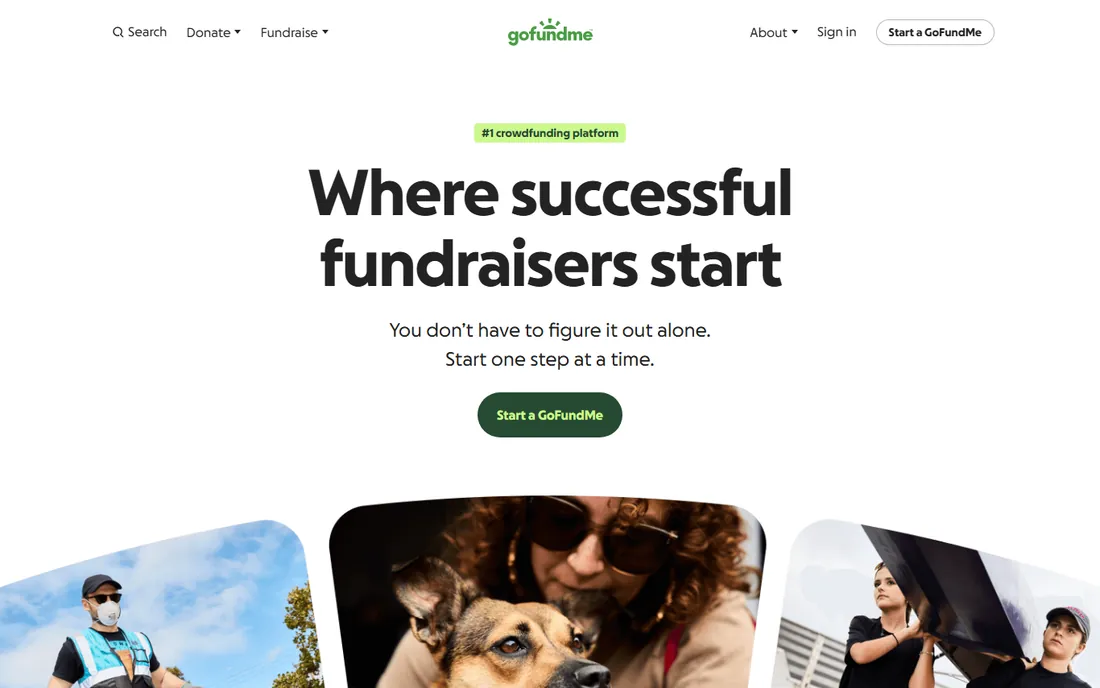
GoFundMe is the platform people reach for when life happens: medical bills, memorials, disaster relief, classroom supplies. There is no platform fee, and you do not need to hit a goal to receive donations, so it fits the way real fundraising actually works for personal causes.
It is not a product launch tool, and it does not try to be one. Discovery is weak by design, since most fundraisers are shared person to person. If your goal is to fund a business product, Kickstarter or Indiegogo will serve you better; if you need to rally support around a person or a cause, GoFundMe is the standard.
What we like- No platform fee on donations
- Keep what you raise with no goal requirement
- Massive public trust for medical, emergency, and community causes
Watch out for- Not built for product launches or business projects
- Relies on your own network for momentum
- Processing fees still apply to every donation
Starting price10% of processed payments (plus payment processing fees)
Free planYes (free to start; you pay only as you earn)

Patreon turns fans into paying members, which is a fundamentally different job than running a one-time campaign. Podcasters, artists, educators, and writers use it to sell tiers of access, bonus content, and community perks on a recurring basis. The platform keeps a 10 percent commission on processed payments plus processing fees, and you pay nothing until you earn.
The catch is the same as everywhere in the creator economy: Patreon does not supply the audience. Creators who thrive here treat membership as a product with real value, not a tip jar with a link. If your business needs steady patron income rather than a single funding spike, this is the model to copy.
What we like- Predictable monthly revenue from memberships
- Built-in community, messaging, and content tools
- No upfront costs, fees scale with earnings
Watch out for- 10 percent commission plus processing is steep on small pledges
- You must bring your own audience
- Competing free content makes conversion hard
Starting priceFrom US$349 per design contest (plus a 5% platform fee)
Free planYes (free to browse and post a brief)
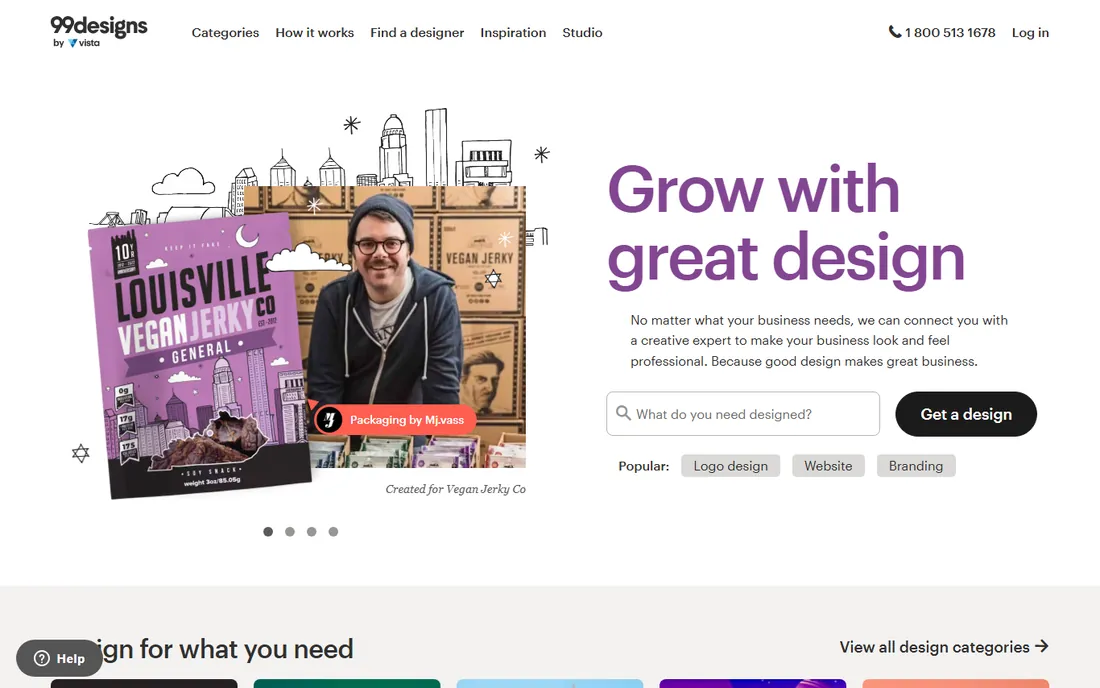
99designs crowdsources creativity instead of cash: post a brief, and designers from around the world submit competing concepts. For logos, brand identity, packaging, and web design, seeing thirty to ninety directions for a fixed price beats interviewing freelancers one by one. Contest packages run from US$349 to US$1,399 for illustration categories, with logo contests from US$299.
The package tier matters more than most buyers expect. Bronze opens the contest to every designer level, while Gold and Platinum restrict entry to mid and top-level designers, and the quality gap is real. Budget for the 5 percent platform fee at checkout, and pick the guaranteed option if you want maximum participation.
What we like- Dozens of concepts from competing designers for one fixed price
- Full copyright ownership included
- Tiered packages filter designer quality levels
Watch out for- Quality varies by package tier, with budget tiers attracting junior designers
- A 5 percent client fee is added at checkout
- Refining a concept needs a one-to-one project after the contest
#6
Topcoder
Best for: software, data, and design work through competitions
Visit topcoder.com
Starting priceSee website (quote-based, enterprise pricing)
Free planNo (free for community members competing; clients pay per challenge)
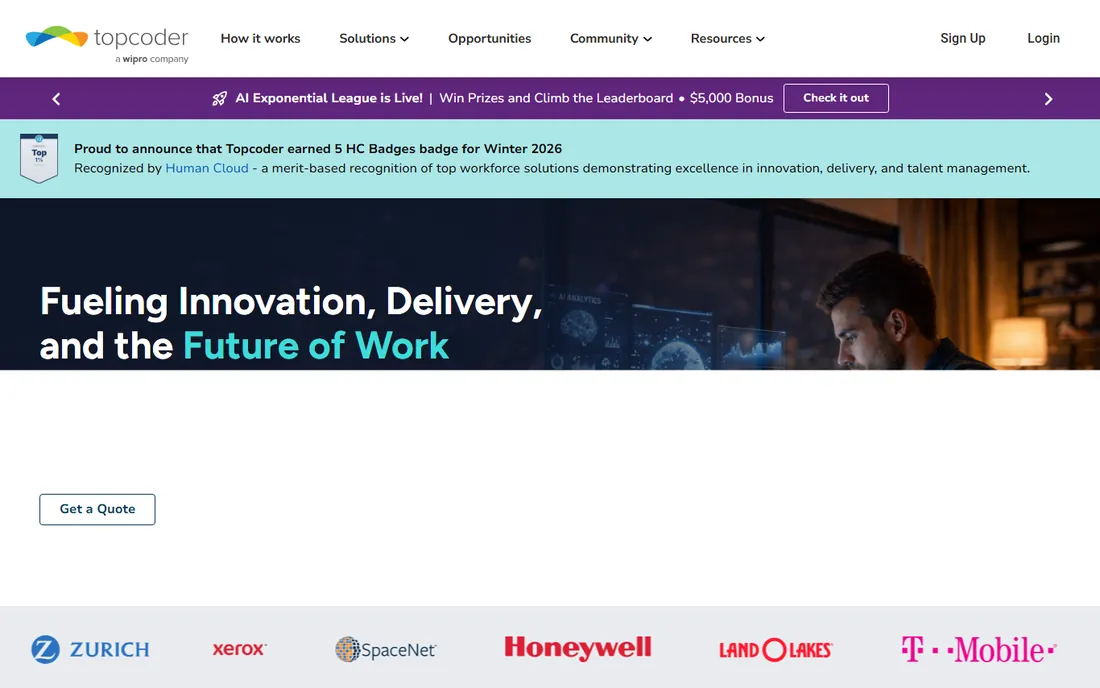
Topcoder turned coding into a sport decades ago, and its challenge model still stands apart: you define the problem, the crowd competes, and you pay for the winning outcomes. Companies use it for rapid prototyping, app development, data science, and QA, with a copilot managing the process so you do not need to become a crowdsourcing expert.
This is an enterprise-grade platform, and pricing reflects that. There is no public price list, so expect a conversation about scope before you get numbers. For mid-size and larger companies with defined technical problems, the speed of parallel workstreams is the selling point.
What we like- Outcome-based model means you pay for results, not hours
- Huge global community of developers, designers, and data scientists
- Handles everything from prototyping to QA
Watch out for- No public pricing, so budgeting takes a sales conversation
- Best suited to well-specified problems
- Enterprise orientation can overwhelm small budgets
Starting priceSee website (custom challenge packages)
Free planYes (free to join and compete in challenges)
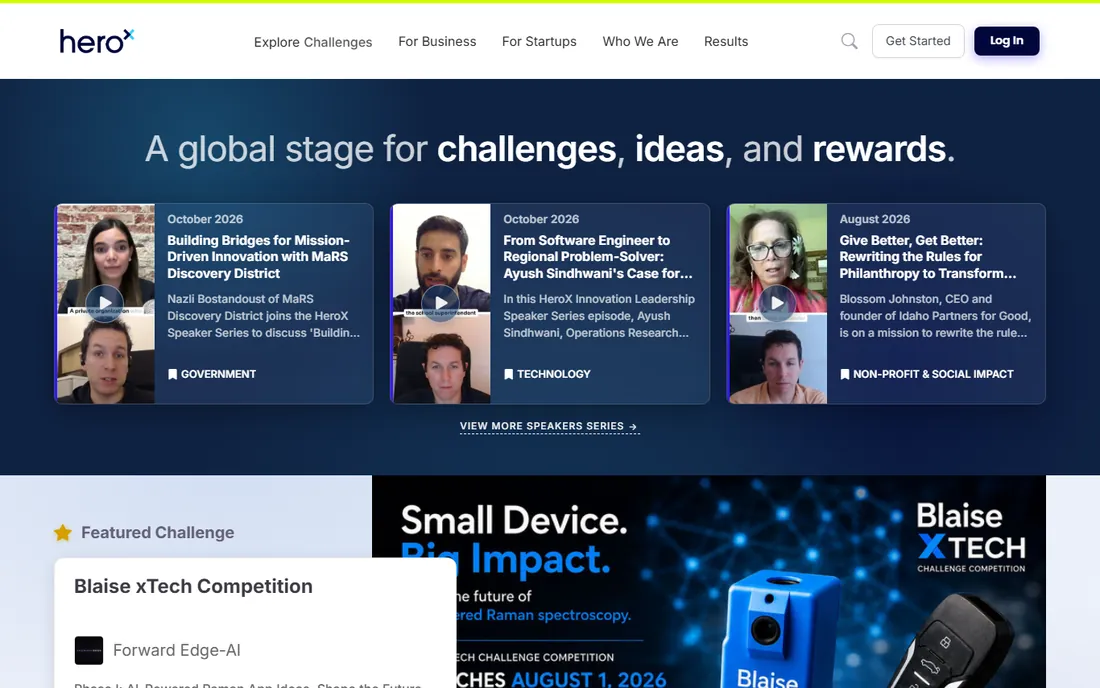
HeroX is where organizations post problems they cannot solve internally and offer prize money for answers. NASA has run lunar exploration challenges here, and companies use it for everything from engineering design to social innovation. Challenges typically run three to four months, and the prize purse is what draws serious solvers.
For a business, the model flips traditional consulting: instead of paying for effort, you pay for the winning solution. That only works if the prize is attractive and the problem is well defined, which is why HeroX pairs clients with challenge experts. Pricing is custom, so plan for a scoping call.
What we like- Purpose-built for prize-based innovation challenges
- Strong track record with NASA, universities, and enterprises
- Lets organizations build and curate their own crowd
Watch out for- Pricing is custom and not published
- Challenges need a meaningful prize purse to attract talent
- Better suited to research problems than routine work
#8
Kaggle
Best for: machine learning competitions and data science talent
Visit kaggle.com
Starting priceFree (community competitions; featured competitions are custom-priced)
Free planYes
Kaggle, owned by Google, is the default arena for machine learning competitions. Companies post datasets and prize money, and thousands of data scientists compete to build the best model. Community competitions are free to run on a self-service basis, while featured competitions with serious prize purses are handled through their enterprise team.
The value goes beyond the winning model. A well-run Kaggle competition doubles as recruiting, benchmarking, and research, since you see how many approaches perform on your actual data. The caveat is that leaderboard scores do not always transfer to production value, so treat results as a starting point, not a finished product.
What we like- The largest data science community in the world
- Free self-service competitions for research and learning
- Leaderboards give you honest, comparable results
Watch out for- Featured competitions with big prizes require enterprise engagement
- Competitors optimize for the leaderboard, not always for business value
- Quality depends on how well you frame the problem
We reviewed each platform's official pricing pages, fee documentation, and product guides, then checked those claims against public reviews on G2 and Capterra and real campaign discussions on Reddit. We focused on what matters to small and mid-size businesses: total cost of raising or buying through the platform, who actually shows up in the crowd, what kinds of projects succeed, and how much work the platform does versus the organizer. We never claim hands-on testing; every fact here comes from published vendor pages and public user feedback.
Picking the right type of crowdsourcing
Start by naming what you want from the crowd. If you need money, choose between reward crowdfunding (Kickstarter, Indiegogo), personal fundraising (GoFundMe), or recurring memberships (Patreon). If you need work, choose between design (99designs), software and data (Topcoder, Kaggle), or open innovation (HeroX).
Budget for the real cost
Platform fees are only part of the picture. Reward campaigns lose roughly 8 to 10 percent to platform and processing fees combined, and failed campaigns cost you the weeks of preparation. Talent platforms price by project, prize, or contest package, so define the problem tightly before asking for a quote. On every platform, the hidden cost is your own time spent promoting the campaign or writing the brief.
The crowd is a multiplier, not a source
The most consistent finding across platforms is that successful campaigns bring their own audience. Kickstarter campaigns with strong pre-launch email lists fund at far higher rates. Kaggle competitions with clear problem statements attract better solvers. Treat the platform as infrastructure and bring the marketing, the network, or the dataset yourself.
Read the terms before you launch
All-or-nothing funding means a near miss pays nothing, so set goals you can actually reach. Refund policies, intellectual property terms, and payout schedules vary widely. On talent platforms, confirm who owns the winning work and what usage rights you receive. The fine print decides whether a successful campaign becomes a successful outcome.
When crowdsourcing beats hiring
Crowdsourcing shines when the problem benefits from many minds: design exploration, algorithm development, innovation scouting, and product validation. It struggles with work that needs deep context, ongoing iteration, or tight confidentiality. A practical rule: crowdsource the parts of a problem where diverse attempts add value, and hire directly for the parts where one trusted person needs to own the outcome.
Frequently asked questions
Which crowdsourcing platform is best for raising money for a product?
Kickstarter is the best-known choice for creative products, and Indiegogo is strong for tech and gadgets. Both charge 5 percent of funded amounts plus payment processing, and both now use all-or-nothing funding. Pick based on where your target backers already browse, since most campaigns succeed by bringing their own audience.
How much do crowdfunding platforms charge?
Expect about 8 to 10 percent of what you raise to go to platform and processing fees on Kickstarter and Indiegogo. GoFundMe charges no platform fee but takes 2.9 percent plus $0.30 per donation for processing. Patreon takes 10 percent of processed payments plus processing fees. Always model fees against your real goal before launching.
Can I crowdsource work for my business, not just funding?
Yes. 99designs runs design contests, Topcoder runs software and data science challenges, HeroX hosts prize-based innovation challenges, and Kaggle runs machine learning competitions. These platforms are built for companies that need outcomes from a crowd rather than money from one.
Is it free to launch a campaign?
Launching is free on Kickstarter, Indiegogo, GoFundMe, and Patreon; you pay only when money moves. Design contests and innovation challenges cost real money upfront: 99designs contests start at US$349, while Topcoder and HeroX price per project. Kaggle community competitions are free to host.
What happens if my campaign does not reach its goal?
On Kickstarter and Indiegogo, all-or-nothing funding means backers are not charged and you pay no fees if the goal is missed. GoFundMe lets you keep whatever you raise regardless of the goal. Patreon memberships are ongoing, so there is no goal to miss; income simply reflects your member count.
How do I pick between Kickstarter and Indiegogo?
Choose Kickstarter for creative categories like games, design, film, and publishing, where its large backer community browses actively. Choose Indiegogo for tech and hardware, where its pledge manager and post-campaign selling tools work more like a storefront. Fees are nearly identical, so audience fit and tooling should decide.
Sources we checked (12)
- https://www.kickstarter.com/
- https://www.indiegogo.com/
- https://help.indiegogo.com/article/596-fees
- https://www.gofundme.com/
- https://www.patreon.com/
- https://99designs.com/
- https://99designs.com/pricing/illustrations
- https://www.topcoder.com/
- https://www.herox.com/
- https://www.kaggle.com/
- https://www.tiing.co/blog/crowdfunding/kickstarter-alternatives/
- https://www.shopify.com/pk/blog/crowdfunding-fees
Is your product missing or out of date?
We review this list regularly. Vendors can request a listing, send updated pricing or ask about featured placement.

Shihab Mia · Founder, Rankite
Shihab has spent more than a decade helping SaaS and e-commerce brands grow through search. He writes Rankite's software buying guides from pricing pages, documentation and public user reviews. More about Shihab.