How we make this list: we compare pricing pages, product documentation and public user reviews. Rankite is independent; if a vendor ever pays for a featured spot, that listing is clearly labeled Partner.
Key takeaways
- Flutter (free, Google) and React Native (free, Meta) are the two dominant frameworks; both are open source with massive ecosystems.
- Expo is the recommended way to start React Native projects, free to develop with paid cloud builds from $19 a month.
- Kotlin Multiplatform (free, JetBrains) shares business logic while keeping fully native UI, ideal for teams with native developers.
- .NET MAUI (free, Microsoft) replaced Xamarin and is the natural pick for C# shops shipping to mobile, tablet, and desktop.
Quick comparison
| Tool | Best for | Starting price | Free plan |
|---|
 Flutter Flutter | polished cross-platform apps from a single codebase | Free | Yes |
 React Native React Native | React teams shipping real native apps | Free | Yes |
 Expo Expo | the fastest way to build and ship React Native apps | Free; EAS from $19/month | Yes |
 Kotlin Multiplatform Kotlin Multiplatform | sharing business logic while keeping native UI | Free | Yes |
 .NET MAUI .NET MAUI | C# teams targeting mobile, tablet, and desktop | Free | Yes |
 Ionic Ionic | web teams building mobile apps with HTML and TypeScript | Free | Yes |
 NativeScript NativeScript | JavaScript apps with truly native UI and full API access | Free | Yes |
Is your product missing or out of date?
We review this list regularly. Vendors can request a listing, send updated pricing or ask about featured placement.
#1
Flutter
Best for: polished cross-platform apps from a single codebase
Visit flutter.dev
Starting priceFree
Free planYes
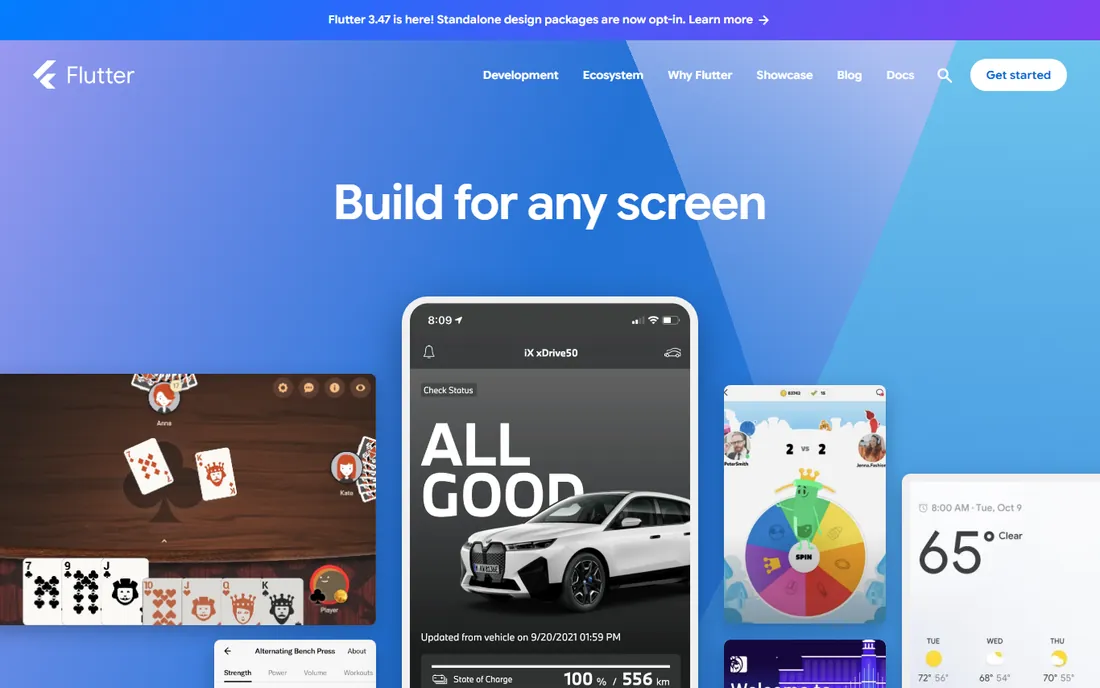
Flutter is Google's open-source UI toolkit for building natively compiled apps for iOS, Android, web, and desktop from one Dart codebase. It renders its own widgets through its graphics engine instead of using native controls, so the app looks identical on every platform. Hot reload shows code changes instantly without losing app state. The latest stable release, 3.47, continues the steady cadence Google maintains.
The widget library is the standout: Material and Cupertino widget sets cover Android and iOS design languages, and the package ecosystem on pub.dev supplies everything from payments to maps. Google uses Flutter internally in apps like Google Pay, which keeps the framework honest about production readiness.
The honest trade-offs: Dart is a fine language but a less common hire than JavaScript or Kotlin, and Flutter apps are larger than native ones. Apps that must feel perfectly native on each platform need extra customization. For startups and teams that want one codebase with a custom, branded UI, Flutter is the strongest all-rounder.
What we like- Consistent UI on every platform
- Hot reload speeds development
- Huge widget and package ecosystem
Watch out for- Dart is a less common language
- App sizes run larger
- Platform-specific feel needs extra work
Starting priceFree
Free planYes
React Native, from Meta, brings React's declarative UI model to iOS and Android: write JavaScript or TypeScript components that render to real native views, with full access to platform APIs. It is MIT-licensed open source, used in production at Meta, Microsoft, and Shopify. The New Architecture with TurboModules and Fabric, now default, closed much of the historical performance gap.
The hiring advantage is real: React developers are the largest pool of front-end talent, and much of their knowledge transfers directly. The npm ecosystem supplies libraries for almost everything, and the community keeps the framework current with six minor releases in the past year alone.
The catch is that cadence: staying current takes effort, and apps with heavy native requirements still need Swift or Kotlin engineers for native modules. The official docs now recommend starting with Expo, which handles the build and release complexity. For React shops, React Native remains the pragmatic default.
What we like- Uses React and JavaScript/TypeScript
- Renders real native UI controls
- Enormous library ecosystem
Watch out for- Version churn is fast
- Complex apps need native module work
- Bridge overhead on heavy animation
#3
Expo
Best for: the fastest way to build and ship React Native apps
Visit expo.dev
Starting priceFree; EAS from $19/month
Free planYes
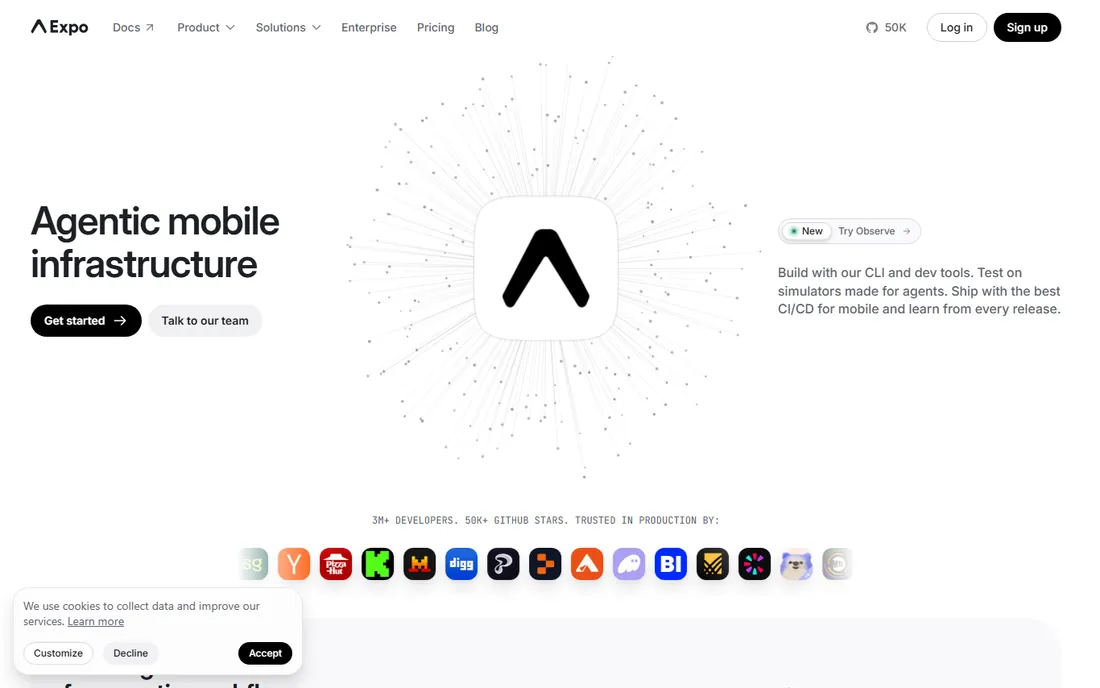
Expo is a framework and toolchain on top of React Native: file-based routing, maintained native packages for camera, push notifications, and everything else every app needs, plus EAS cloud services that build binaries, submit to stores, and push over-the-air updates without app store review. The framework is free and open source; EAS has a free tier (15 Android and 15 iOS builds a month, 1,000 update users) with paid plans from $19 a month.
The release strategy is the smart part: Expo publishes three SDKs a year, each pinned to a tested React Native version, so upgrades arrive as validated bundles instead of a DIY dependency chase. EAS Update alone is worth it for many teams: push bug fixes to users in minutes instead of waiting days for store review.
The honest catch: apps depending on native SDKs that fight Expo's build process need custom development builds, and the free build quotas suit indie projects, not busy teams. For new React Native apps, Expo is the default choice and the official recommendation.
What we like- Official recommended starting point for React Native
- Cloud builds and OTA updates
- No Xcode or Gradle wrangling
Watch out for- Some native SDKs need custom builds
- Cloud build quotas on free plan
#4
Kotlin Multiplatform
Best for: sharing business logic while keeping native UI
Visit kotlinlang.org
Starting priceFree
Free planYes
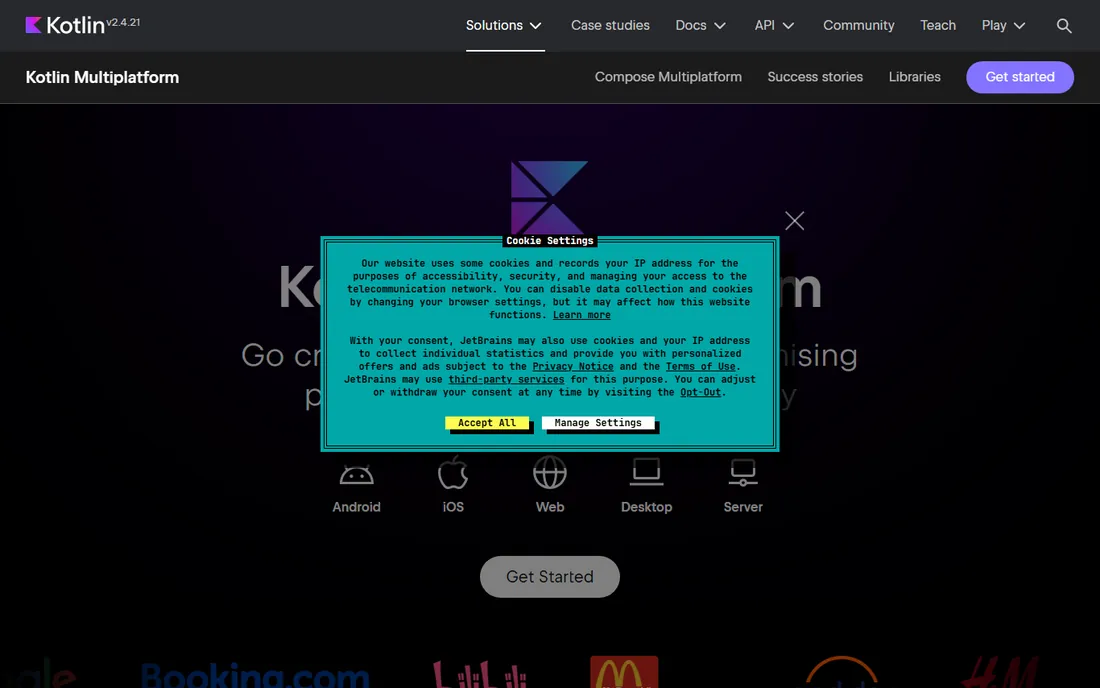
Kotlin Multiplatform, from JetBrains, takes a different philosophy: share the business logic, networking, and data layers in Kotlin while writing the UI natively on each platform. It reached stable status in 2023, and Compose Multiplatform for shared UI went stable for iOS in 2025. It is Apache 2.0 licensed and free.
The gradual adoption story is the appeal: add KMP to an existing native app one module at a time instead of rewriting it. Teams keep their native developers, their native UI, and their platform-specific polish while eliminating duplicated logic, which is where most cross-platform bugs hide. Netflix, VMware, and Philips run it in production.
The catch is complexity: you still need iOS and Android expertise for the UI layers, so it does not replace a mobile team the way Flutter can. The library ecosystem is growing but thinner. For companies with existing native apps or native developers, KMP is the lowest-risk path to code sharing.
What we like- Native performance and platform UI
- Gradual adoption in existing apps
- Compose Multiplatform for shared UI
Watch out for- IOS tooling needs a Mac and Xcode
- Smaller ecosystem than Flutter or React Native
Starting priceFree
Free planYes
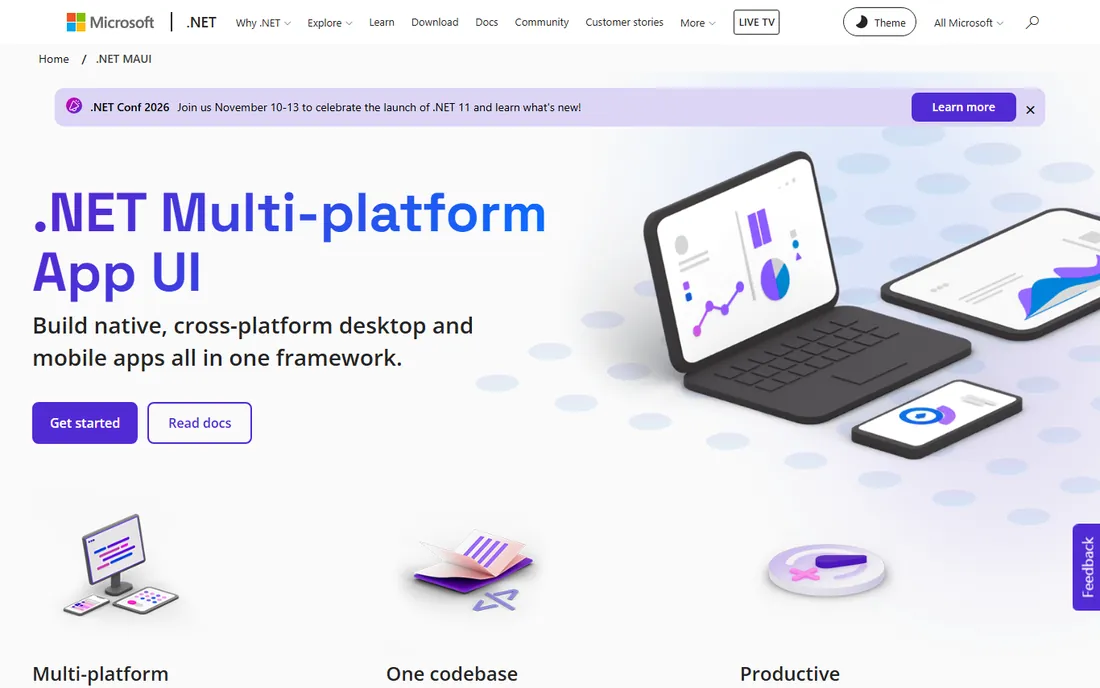
.NET MAUI is Microsoft's cross-platform framework for building apps with C# and XAML that run on Android, iOS, iPadOS, macOS, and Windows from a single codebase. It is the evolution of Xamarin.Forms, which Microsoft retired in 2024; Xamarin developers migrate to MAUI. It is free, open source, and ships with the .NET SDK.
The desktop reach is the differentiator: no other framework on this list covers Windows and macOS desktop alongside mobile from one codebase this cleanly. Visual Studio's emulators, hot reload, and debugging make the development experience strong, and the open-source Syncfusion and Community toolkits add dozens of production controls.
The honest catch: the community is smaller, so third-party libraries and Stack Overflow answers are thinner than for Flutter or React Native. For .NET shops and enterprise teams already on the Microsoft stack, MAUI is the obvious and only real choice.
What we like- One C# codebase for five platforms
- Visual Studio tooling
- Free and open source
Watch out for- Smaller community than Flutter or React Native
- UI polish needs effort
Starting priceFree
Free planYes
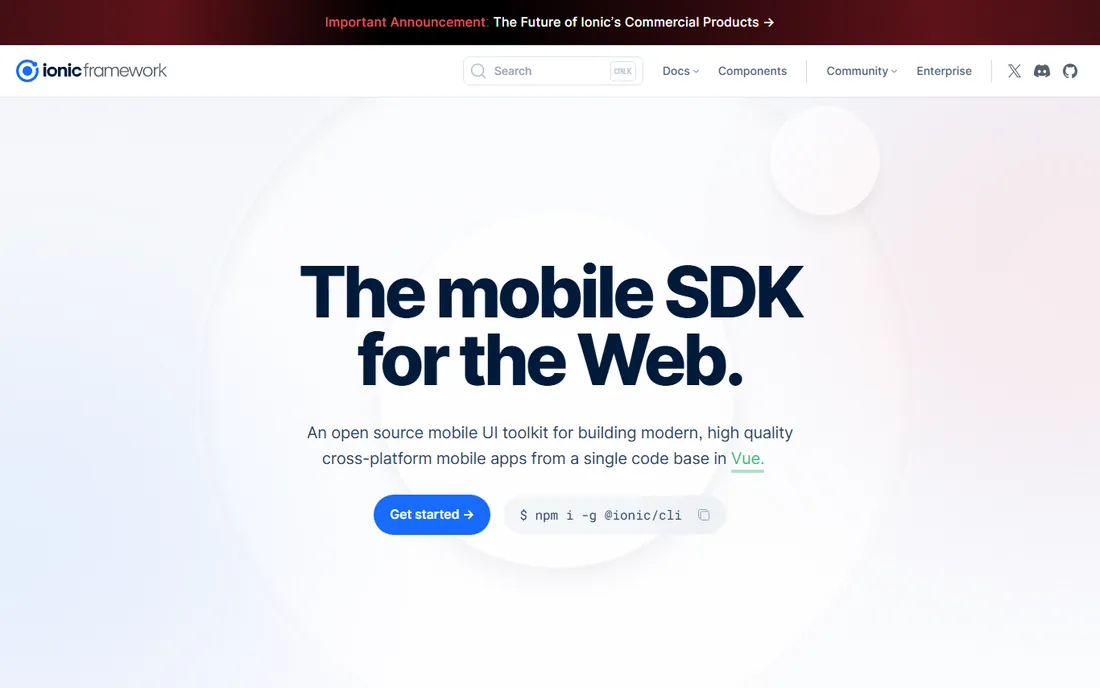
Ionic is an open-source UI toolkit for building cross-platform apps with web technologies: HTML, CSS, and TypeScript, using Angular, React, or Vue. Capacitor wraps the web app in a native shell with access to camera, GPS, notifications, and biometrics, and the same codebase deploys as a progressive web app. Now maintained under OutSystems after the Drifty acquisition lineage, it remains MIT licensed and free.
The web-team advantage is total: if your developers build web apps, they can build mobile apps with almost no new learning. The component library adapts to iOS and Android design patterns automatically, and PWAs give you a web presence from the same code for free.
The catch is the WebView: performance and feel trail truly native rendering on animation-heavy or gesture-heavy apps, and power users can sometimes tell. For business apps, internal tools, and content-driven products, Ionic's reach across web, PWA, and stores is unmatched.
What we like- Use Angular, React, or Vue with web skills
- Ships web, PWA, and native from one codebase
- MIT licensed
Watch out for- WebView-based UI can feel less native
- Performance on heavy animation lags native
Starting priceFree
Free planYes
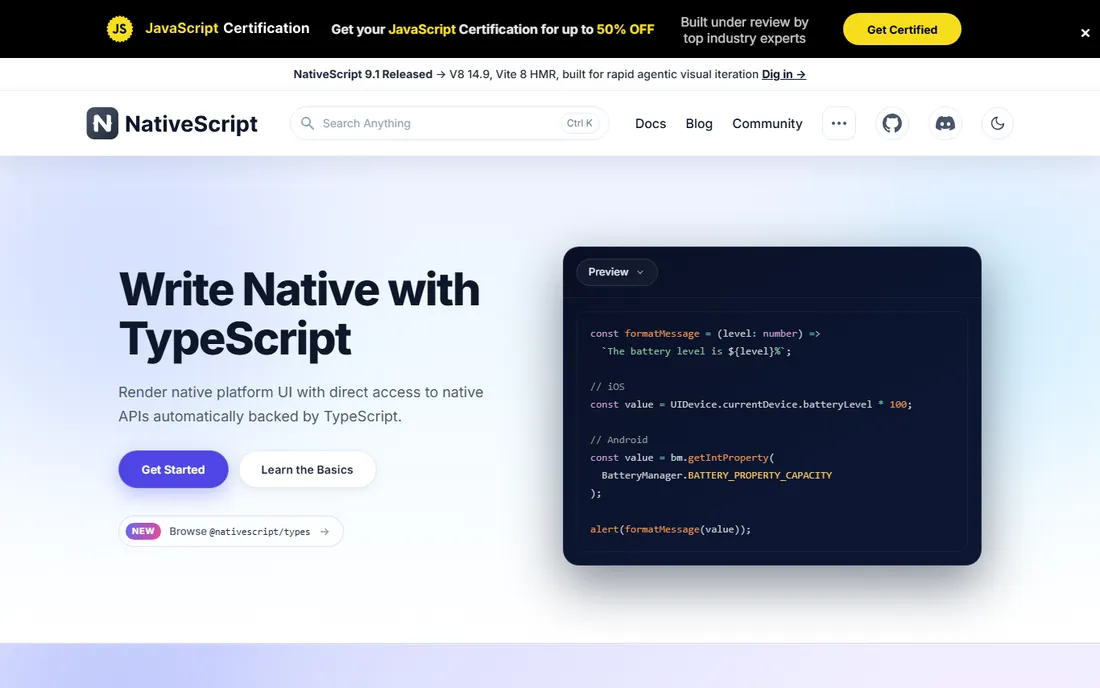
NativeScript is a JavaScript-based open-source framework for building truly native iOS and Android apps from one codebase. Unlike Ionic, it renders with the native platform's UI engine, and its reflection-based runtime gives JavaScript direct access to every native API without binding layers. It supports Angular and Vue, and it is now stewarded under the OpenJS Foundation.
The API access is the standout: use any iOS or Android API directly from JavaScript, and reuse native libraries from CocoaPods and Maven without wrappers. Apps feel native because they are native at the UI layer, while the code stays in familiar JavaScript and TypeScript.
The catch is scale: the community and plugin ecosystem are the smallest on this list, which means more DIY work and slower answers. For JavaScript teams that want native UI without learning Swift or Kotlin, NativeScript remains a solid, genuinely free option.
What we like- Renders with native platform UI, no WebView
- Direct access to all native APIs
- Angular and Vue support
Watch out for- Smallest community on this list
- Plugin ecosystem thinner than rivals
How we chose
We compared cross-platform mobile development tools using official documentation, release histories, and license terms, alongside developer discussions on Reddit, Hacker News, and Stack Overflow. We weighed platform coverage, performance approach, ecosystem maturity, hiring practicality, and cost. All seven tools are free and open source. We did not perform hands-on testing.
Picking by your team's skills
The framework decision usually makes itself: React developers pick React Native with Expo, Dart enthusiasts or UI-focused teams pick Flutter, C# shops pick .NET MAUI, web teams pick Ionic, native teams that want to share logic pick Kotlin Multiplatform, and JavaScript teams wanting native UI pick NativeScript.
Consider hiring as well as building: React Native and Flutter have the largest talent pools, which matters when the founding team moves on. Also weigh the app's nature: games and animation-heavy products favor Flutter's rendering engine, while platform-integrated utilities favor native UI approaches.
One codebase or two native apps
Cross-platform saves roughly half the development cost, but the savings are not free: every framework adds abstraction, and platform-specific bugs still happen. The break-even is clearest for startups, MVPs, and business apps where time to market beats pixel-perfect platform feel.
Go native when the app is the product's core differentiator on feel: high-end consumer apps, games, and apps deeply integrated with one platform's latest features. Even then, Kotlin Multiplatform can share the logic layer while keeping native UI. Most small companies should start cross-platform and go native only where the metrics justify it.
Frequently asked questions
Which is better, Flutter or React Native?
Flutter offers more consistent UI and performance through its own rendering engine, plus web and desktop from the same code. React Native offers real native UI and the largest JavaScript talent pool. Choose by your team's language: Dart teams pick Flutter, React teams pick React Native.
Is cross-platform app development good enough for production?
Yes. Apps from Google Pay to Shopify run on cross-platform frameworks in production. The trade-offs appear at the extremes: heavy 3D, complex animations, or deep platform integration. Most business and consumer apps ship fine on one codebase.
What replaced Xamarin?
.NET MAUI replaced Xamarin.Forms. Microsoft ended Xamarin support in 2024, and Xamarin developers migrate their apps to MAUI, which extends the same concepts to desktop platforms alongside mobile.
Do I need Expo to use React Native?
No, but it is recommended. The official React Native docs suggest starting new apps with Expo, which handles builds, updates, and native configuration. Bare React Native makes sense when adding RN screens to an existing native app or when you need full control of the native projects.
Is Kotlin Multiplatform the same as Flutter?
No. Flutter shares the entire app including UI through its own rendering engine. Kotlin Multiplatform shares business logic while each platform keeps its native UI, with Compose Multiplatform available for sharing UI where wanted.
Are these frameworks really free?
Yes. All seven are free and open source, with no per-app or per-developer license fees. The costs are in development time and optional services: Expo's paid cloud builds, Apple Developer accounts ($99/year), and Google Play registration ($25 one-time) apply regardless of framework.
Sources we checked (9)
- https://flutter.dev
- https://reactnative.dev
- https://expo.dev
- https://kotlinlang.org/multiplatform/
- https://dotnet.microsoft.com/apps/maui
- https://ionicframework.com
- https://nativescript.org
- https://en.wikipedia.org/wiki/Flutter_(software
- https://en.wikipedia.org/wiki/Kotlin_Multiplatform
Is your product missing or out of date?
We review this list regularly. Vendors can request a listing, send updated pricing or ask about featured placement.

Shihab Mia · Founder, Rankite
Shihab has spent more than a decade helping SaaS and e-commerce brands grow through search. He writes Rankite's software buying guides from pricing pages, documentation and public user reviews. More about Shihab.