How we make this list: we compare pricing pages, product documentation and public user reviews. Rankite is independent; if a vendor ever pays for a featured spot, that listing is clearly labeled Partner.
Key takeaways
- AI app generators grew up in 2026: the best now ship a database, authentication, hosting, and payments from a single prompt, not just a pretty front end.
- Pricing is almost entirely credit-based, so the real cost depends on how much you iterate; free tiers are generous but serious builds burn credits fast.
- Code ownership is the dividing line: Replit, v0, and Emergent let you own and export real code, while simpler builders keep you inside their walls.
- The right pick depends on the job: Lovable and Bolt for fast full-stack prototypes, v0 for React UI quality, Replit for a real dev environment, Base44 and Blink for business apps with billing built in.
Quick comparison
| Tool | Best for | Starting price | Free plan |
|---|
 Lovable Lovable | prompt-to-app with visual iteration | $25 per month | Yes |
 Bolt Bolt | rapid in-browser full-stack prototypes | $25 per month | Yes |
 v0 v0 | high-quality React and Next.js interfaces | $30 per month | Yes |
 Replit Replit | real dev environment with AI agent | $20 per month | Yes |
 Emergent Emergent | production-ready code you own | $17 per month | Yes |
 Base44 Base44 | business apps with billing built in | $16 per month (billed annually) | Yes |
 Blink Blink | full-stack apps with Stripe from one prompt | Free to start | Yes |
Is your product missing or out of date?
We review this list regularly. Vendors can request a listing, send updated pricing or ask about featured placement.
The best ai app generator
Starting price$25 per month
Free planYes
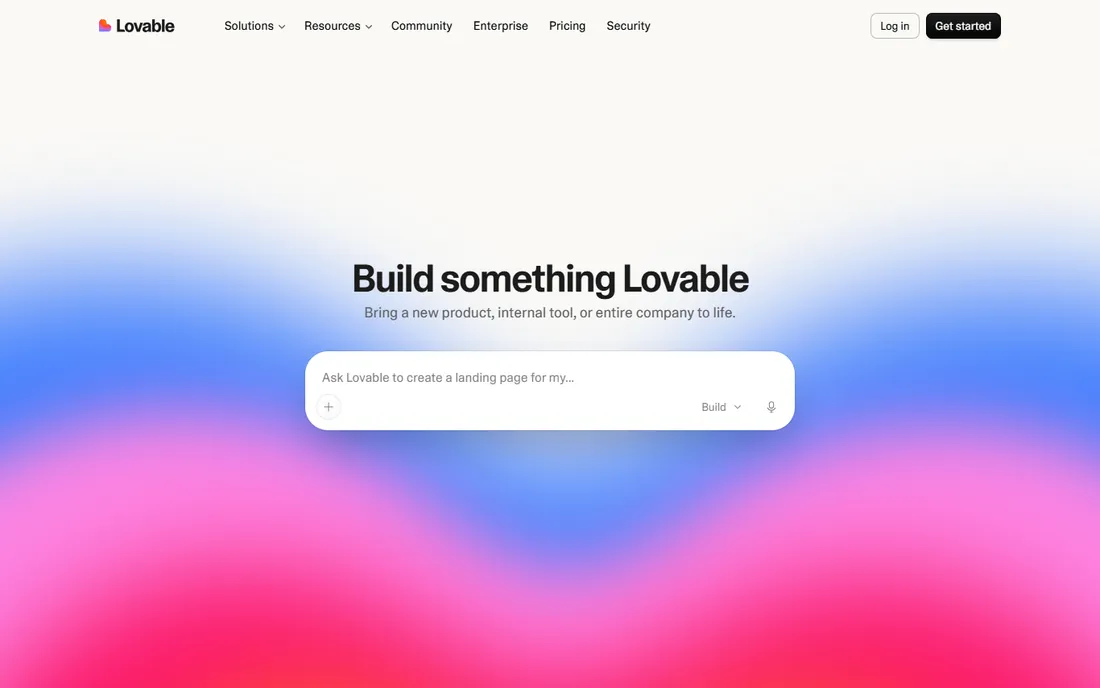
Lovable, formerly GPT Engineer, became one of the defining AI app builders of the last two years by doing one thing extremely well: you describe the app, it builds a working full-stack product. The 2026 platform handles hosting, authentication, payments, and integrations end to end, and the homepage now pitches entire businesses running on Lovable-built software, with case studies of companies retiring SaaS contracts in favor of custom builds.
What reviewers praise is the iteration loop. You chat with the AI, watch it build in real time, and refine visually until the result looks right. The design quality of the output is consistently high, which is why designers and marketing teams gravitate to it. GitHub sync means the code is not trapped, and Supabase provides a real database behind the scenes.
The honest catch is the credit meter. Every build and refinement consumes credits, and ambitious projects burn through them faster than the subscription suggests. Lovable Cloud added Postgres and auth, but it remains a web-focused builder. For prototypes, MVPs, and internal tools built fast by non-developers, it is one of the two best starting points.
What we like- Turns plain-English descriptions into full-stack apps with Supabase backend
- GitHub sync and one-click deploy
- Polished UI output that needs little restyling
Watch out for- Credit-metered pricing gets expensive on big iterations
- Complex backend logic still needs a developer's eye
#2
Bolt
Best for: rapid in-browser full-stack prototypes
Visit bolt.new
Starting price$25 per month
Free planYes
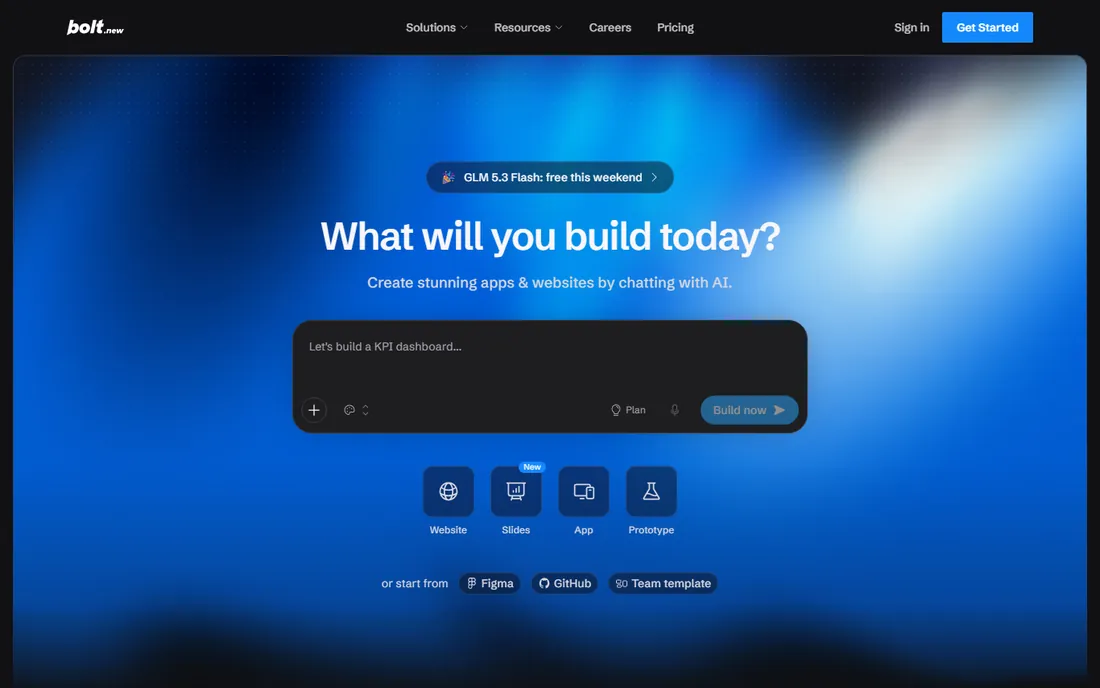
Bolt.new, from the StackBlitz team, is the fastest-feeling builder on this list. You open the browser, describe what you want, and watch a full-stack app assemble itself: front end, backend, and deployment, all in one tab. The 2026 platform added intelligent model routing that picks the right AI model per task, plus Bolt Cloud for enterprise-grade backend infrastructure with hosting, databases, and integrations.
The appeal is momentum. There is no environment to configure, no repository to clone, no deployment pipeline to set up. For hackathons, client demos, and validating an idea over a weekend, nothing gets you from prompt to live URL faster. The free tier is generous enough to build real things before paying.
The trade-off is cost control and code quality. Token-based pricing means a big, ambitious app can consume a surprising amount of credit, and the generated code sometimes needs a developer to tidy it before it is truly production-ready. Treat Bolt as the best prototyping engine here, and plan a hardening pass before real users arrive.
What we like- Everything runs in the browser with no setup
- Automatic model routing balances quality and cost
- Bolt Cloud adds backend infrastructure including databases
Watch out for- Token consumption pricing punishes large projects
- Generated projects can need cleanup before production
#3
v0
Best for: high-quality React and Next.js interfaces
Visit v0.dev
Starting price$30 per month
Free planYes
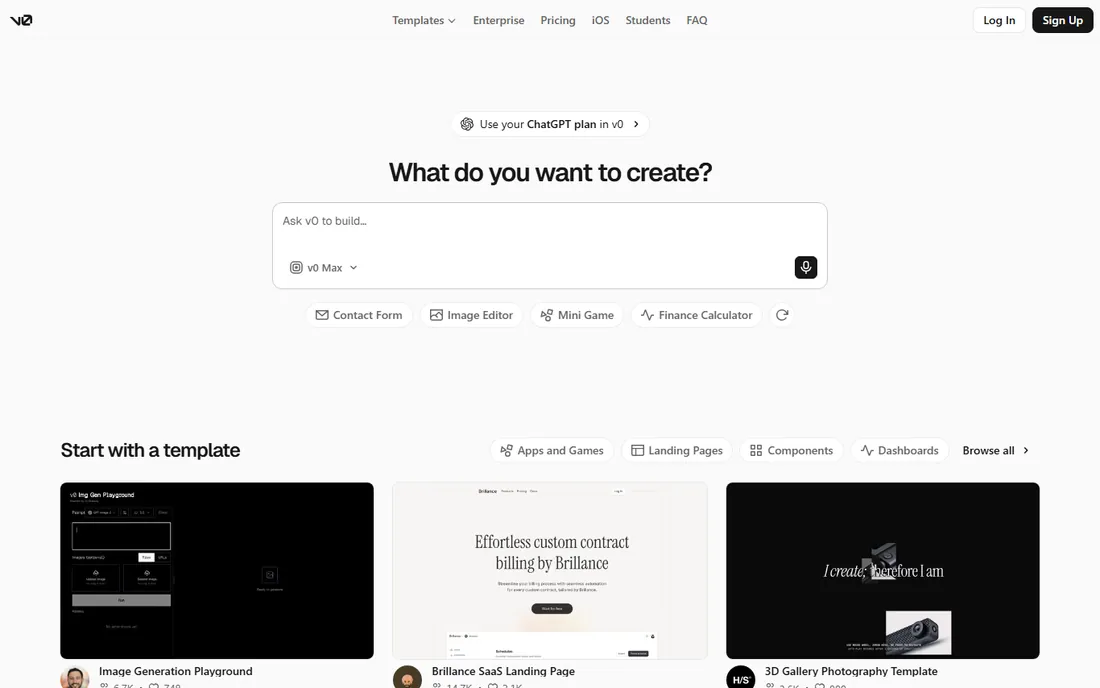
v0 by Vercel started as a component generator and in 2026 became a full agentic builder: it plans, creates tasks, connects databases, and deploys to production, all from a prompt. The homepage promise is "prompt, build, publish," with visual design mode for fine-tuning, templates for speed, and automatic integrations with your favorite tools and APIs.
The reason to choose v0 is interface quality. The generated React and Next.js output looks like it came from a design team, not a robot, and because it lives in the Vercel ecosystem, deployment is genuinely one click. For teams already on Next.js, v0 slots into the existing workflow instead of creating a parallel universe.
The honest catch is backend depth. v0 has closed the gap with agentic database connections, but it still shines brightest at the front end; complex server logic and non-React stacks are not its home turf. It also assumes you are comfortable in the React world. For beautiful, shippable web interfaces built at speed, it remains unmatched.
What we like- The best-looking generated UI in the category
- Deep Vercel integration with one-click deploy
- GitHub sync and design systems support
Watch out for- Historically UI-focused with thinner backend depth
- Assumes comfort with the React ecosystem
Starting price$20 per month
Free planYes
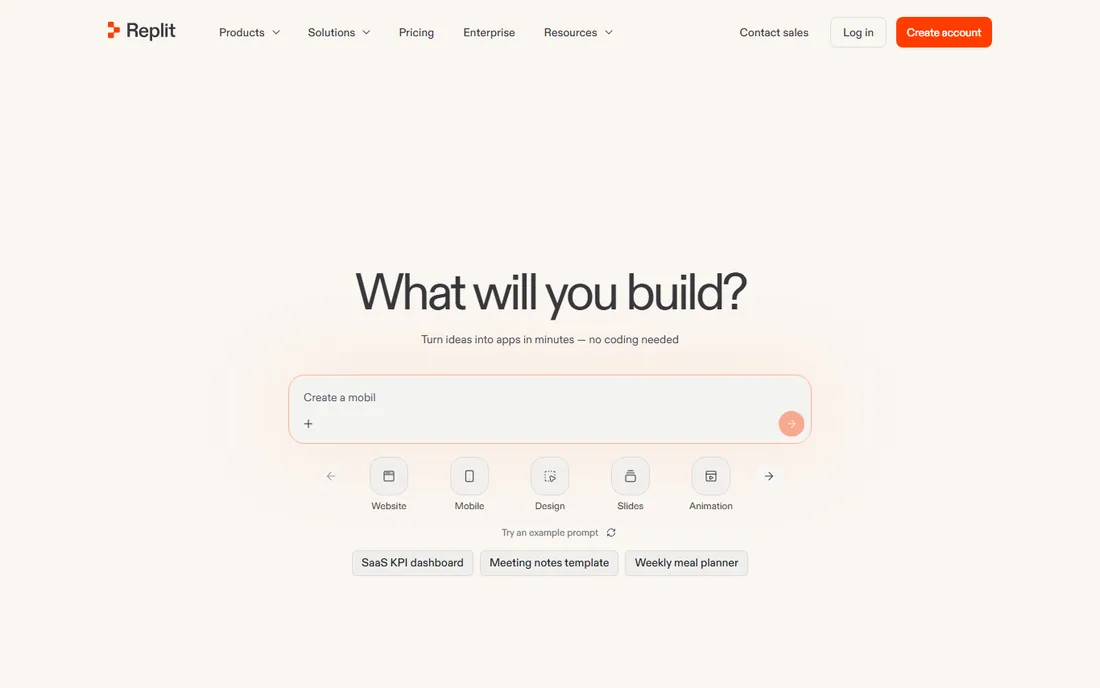
Replit is the builder for people who want AI assistance inside a real coding environment. The 2026 platform centers on an AI agent that writes production-ready code from your description, backed by full-stack infrastructure: authentication, database, hosting, and monitoring built in, plus 100-plus integrations from OpenAI to Stripe. A free mode lets you brainstorm and create without token costs.
What sets Replit apart is that the result is a real project in a real workspace. Developers can inspect, edit, and extend everything the agent produces, which makes it the best choice when the AI-built app needs to grow into a serious codebase. Enterprise controls like SSO, SAML, and SOC 2 compliance are available for teams.
The catch is control. The agent's habit of rewriting files can annoy experienced developers, and while building starts cheap, Replit's deployment and hosting carry separate billing that adds up at scale. It is the most "real developer tool" on this list, which is both its strength and its learning curve.
What we like- A genuine development environment, not a walled garden
- Built-in auth, database, hosting, and monitoring with zero setup
- Intelligent model routing cuts AI costs
Watch out for- The agent can overwrite files in ways that frustrate developers
- Deployment billing is separate and adds up
Starting price$17 per month
Free planYes
Emergent's pitch is aimed at the biggest anxiety about AI builders: what do you actually own at the end? The answer here is everything. You describe the app in natural language, Emergent generates production-ready code, and you own it outright, with GitHub integration for version control and the freedom to download, modify, or host anywhere. Plans start at $17 per month for individuals, undercutting most competitors.
The platform covers web and mobile apps, dashboards, ecommerce, and SaaS tools, with built-in hosting, secure databases, and APIs so the app runs well as more users arrive. With a claimed 10 million-plus creators, it has scale behind it, and the conversational workflow means no drag-and-drop learning curve.
The honest catch is maturity. Emergent is newer than Lovable or Replit, so community resources, templates, and third-party integrations are thinner. The chat-led building style is liberating for some and vague for others who prefer visual control. But on the metric that matters most, code you own at a fair price, it is the strongest value here.
What we like- Generates real, production-ready code that you fully own
- GitHub integration and freedom to host anywhere
- Plans start lower than most rivals
Watch out for- Newer platform with a smaller community
- The chat-led workflow suits some builders more than others
Starting price$16 per month (billed annually)
Free planYes
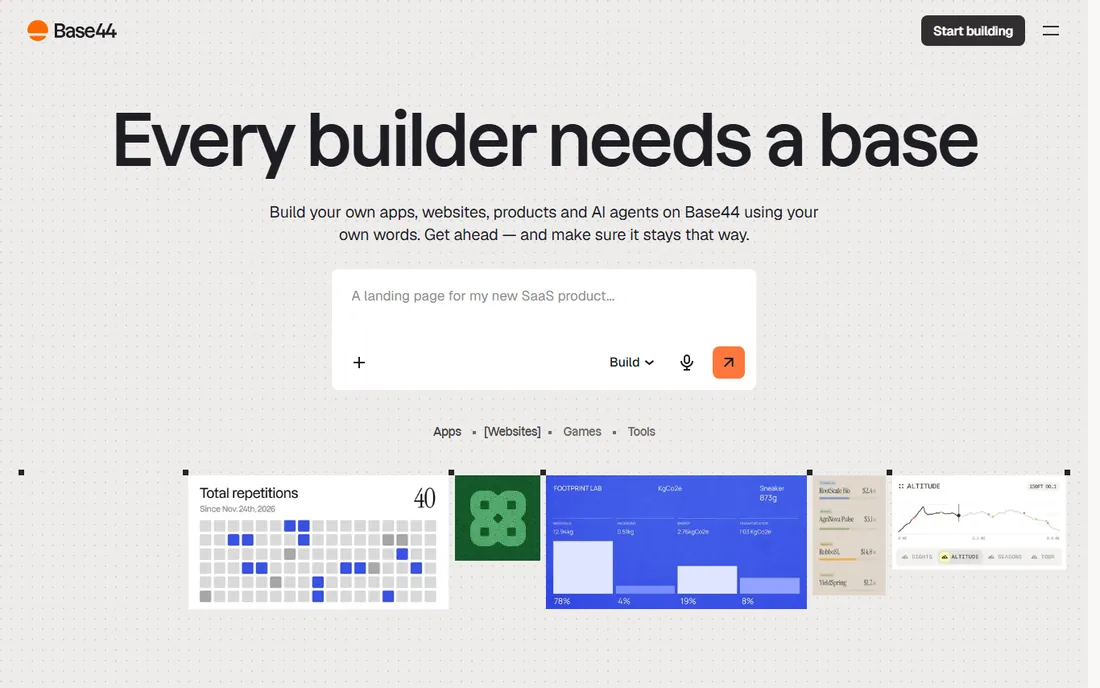
Base44 carved out a distinct position: the AI builder for people who want to charge money from day one. Describe the app and get a working product with database, authentication, payments, and hosting already wired, plus built-in marketing tools to grow after launch. The free plan includes monthly credits with no credit card required, and paid plans start at $16 per month billed annually.
The 2026 platform added AI agents that work alongside your apps, connecting to your tools and automating workflows while you sleep. For founders and small teams, the appeal is the completeness of the package: fewer integrations to configure, fewer services to pay for, one bill. The Wix acquisition in 2025 brought resources and distribution.
The trade-off is independence. Wix owns the roadmap now, which is fine until it is not. Credit-based pricing also means heavy iteration costs real money, so plan builds in clear phases. For business apps where monetization is part of the MVP, Base44's built-in billing is a genuine advantage over prettier but payment-less rivals.
What we like- Apps ship with backend, auth, payments, and hosting built in
- Free plan needs no credit card
- Built-in marketing tools for growth after launch
Watch out for- Acquired by Wix, so the long-term roadmap is theirs
- Credit limits shape how much you can iterate
#7
Blink
Best for: full-stack apps with Stripe from one prompt
Visit blink.new
Starting priceFree to start
Free planYes
Blink is the ambitious newcomer: describe the software your business needs and get an app with its own SQL database, email and social sign-in, Stripe payments, and production hosting, live on your domain. The same app ships to web, iOS, and Android, and you can add chat, images, voice, and search with no API keys. It starts free with no credit card.
What caught attention in 2026 is how complete the "one prompt" promise is. Database tables designed from your description, staff and customer views separated by role, subscriptions and invoices through Stripe, all presented as already wired rather than as integrations to configure. The homepage showcases business software, CRMs, booking systems, and mobile field apps built from single prompts.
The honest catch is verification. Blink is newer than the established names, and some of its visibility comes from promotional rankings rather than independent testing. Pricing beyond the free start is not clearly published, which makes cost planning hard. It is worth a serious look for business apps, but test it on a real project before committing anything critical.
What we like- Every app gets a real SQL database, auth, and hosting from the prompt
- Stripe checkout and subscriptions set up in one message
- Ships to web, iOS, and Android
Watch out for- Newer entrant with marketing that outruns independent reviews
- Pricing beyond the free start is not clearly published
How we chose
We compared AI app generators on what actually matters to buyers: full-stack capability (database, auth, hosting), code ownership and export, pricing model transparency, iteration experience, and production readiness. We reviewed current vendor homepages and 2026 product announcements, cross-checked against independent comparisons and practitioner discussions, and weighted fit for non-technical founders and small teams building real products. We did not claim hands-on testing; all facts come from vendor-published material and independent reviews.
What to check before you build
Start with the end state. A weekend prototype and a product with paying users are different things, and most AI builders are optimized for the first. Before you invest weeks of prompting, decide what "done" looks like: real users, real data, real money. Then verify the tool can get there.
Confirm code ownership in writing
This is the single most important question. Can you export the full source, does it sync to GitHub, and can a normal developer take over without the platform? Tools that answer yes (Replit, v0, Emergent) give you an escape hatch. Tools that hedge keep you renting.
Model the credit burn
Nearly every builder meters AI usage through credits or tokens. The subscription price is the entry fee; iteration is the real cost. During any trial, build something close to your real project and watch the credit consumption. Budget for at least twice the iteration you expect, because the first version is never the last.
Test the backend, not just the UI
Beautiful generated interfaces are table stakes now. The failures happen in auth flows, database permissions, payment webhooks, and edge cases. Before committing, build the hardest part of your app first: the login flow, the checkout, the permissions model. If the tool handles those cleanly, the rest will follow.
Where AI app generation is heading
The 2026 shift is from generation to completeness. The winners are not the tools with the prettiest output but the ones that ship the boring infrastructure: databases, auth, payments, hosting, and the AI gateway inside the app itself. Expect pricing to stay credit-based, expect every builder to add agents, and expect the gap between "demo" and "product" to keep narrowing. The practical move is to pick the tool whose escape hatch you trust, because the only certainty is that your app will outgrow its first version.
Frequently asked questions
What is an AI app generator?
It is a tool that turns natural-language descriptions into working software: you describe the app, and the AI generates the interface, backend logic, database, and deployment. Most 2026 tools produce full-stack web apps from a single prompt.
Can AI really build a production app?
It can build a working app with real database, auth, and hosting, and thousands of founders ship on these tools. Production readiness still needs human review: security, edge cases, performance under load, and legal compliance are your responsibility, not the AI's.
How much does it cost to build an app with AI?
Free tiers let you prototype at no cost. Paid plans run $16 to $30 per month, but credit or token metering means heavy iteration costs extra. Budget for the subscription plus a realistic credit burn based on a trial build.
Do I own the code an AI builder generates?
It depends on the tool. Replit, v0, and Emergent give you real code with GitHub sync that you own outright. Some builders keep the app inside their platform with limited export. Confirm ownership before building anything you might need to migrate.
Do I need to know how to code?
No, and that is the point. Non-developers ship real apps on all seven tools here. But understanding basics like databases, authentication, and APIs helps you prompt better and spot when the AI gets something wrong.
What is the difference between an AI app generator and a low-code platform?
AI app generators build from natural-language prompts and are optimized for speed from idea to working app. Low-code platforms use visual development with more manual control and stronger enterprise governance. AI generation is now appearing inside low-code platforms too, blurring the line.
Sources we checked (9)
- https://lovable.dev/
- https://bolt.new/
- https://v0.dev/
- https://replit.com/
- https://emergent.sh/
- https://www.base44.com/
- https://blink.new/
- https://layout.dev/blog/best-ai-app-builders-2026-comparison
- https://thesoftwarescout.com/best-ai-app-builders-2026/
Is your product missing or out of date?
We review this list regularly. Vendors can request a listing, send updated pricing or ask about featured placement.

Shihab Mia · Founder, Rankite
Shihab has spent more than a decade helping SaaS and e-commerce brands grow through search. He writes Rankite's software buying guides from pricing pages, documentation and public user reviews. More about Shihab.