How we make this list: we compare pricing pages, product documentation and public user reviews. Rankite is independent; if a vendor ever pays for a featured spot, that listing is clearly labeled Partner.
Key takeaways
- NICE, Verint and Genesys lead with AI-powered interaction analytics built into their CCaaS platforms.
- Observe.AI and Cresta are the AI-native challengers, focused on agent coaching and real-time assistance.
- Talkdesk and Five9 offer strong analytics inside leading cloud contact center platforms.
- Calabrio brings analytics to the mid-market with approachable deployment.
Quick comparison
| Tool | Best for | Starting price | Free plan |
|---|
 NICE NICE | enterprises wanting the deepest interaction analytics | See website (custom quote) | No |
 Verint Verint | organizations prioritizing analytics-driven CX | See website (custom quote) | No |
 Genesys Genesys | Genesys Cloud customers unifying analytics | See website (custom quote) | No |
 Five9 Five9 | practical analytics for Five9 operations | See website (custom quote) | No |
 Talkdesk Talkdesk | modern cloud centers wanting AI insights | See website (custom quote) | No |
 Observe.AI Observe.AI | AI-powered agent coaching and QA | See website | No |
 Cresta Cresta | real-time agent guidance during conversations | See website | No |
 Calabrio Calabrio | mid-market analytics without enterprise overhead | See website | No |
Is your product missing or out of date?
We review this list regularly. Vendors can request a listing, send updated pricing or ask about featured placement.
#1
NICE
Best for: enterprises wanting the deepest interaction analytics
Visit nice.com
Starting priceSee website (custom quote)
Free planNo
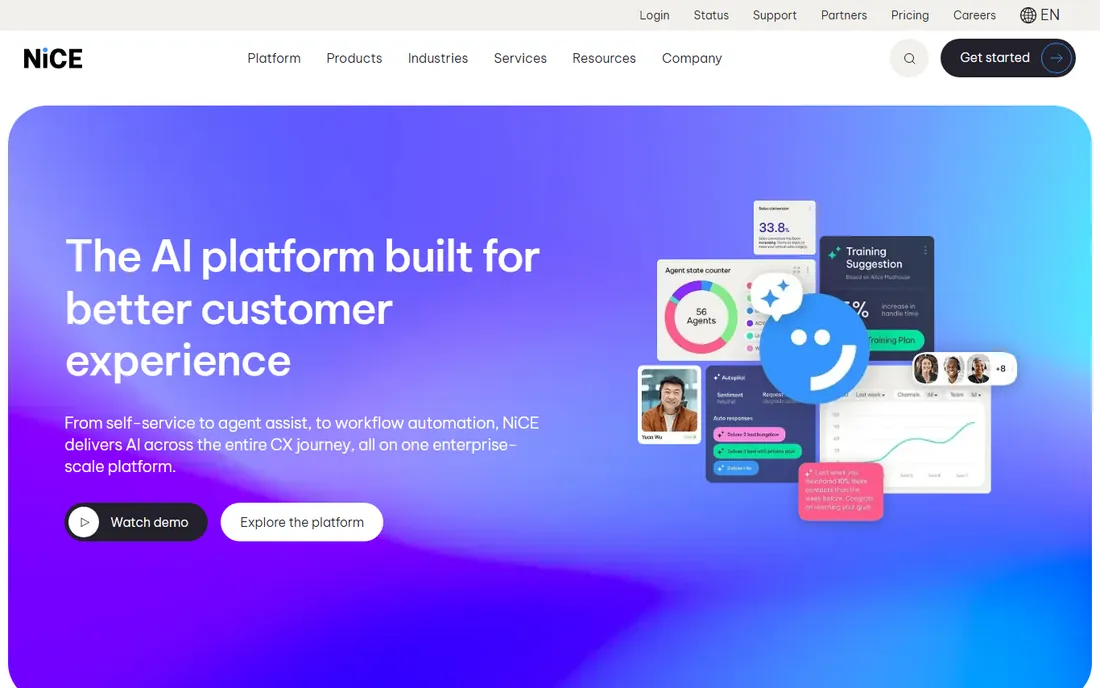
NICE's analytics, powered by the Enlighten AI models trained on contact center data, turn every interaction into insight: sentiment, intent, agent performance and customer effort scored automatically across 100% of contacts. The depth of the AI, trained specifically on service conversations rather than general language, shows in accuracy.
The enterprise reality applies: custom pricing, substantial implementation, complexity that needs dedicated administration. But for large operations where interaction analytics drives workforce, quality and CX decisions, the depth justifies the investment. It is the safe choice that analysts rank first.
What we like- Market-leading AI analytics
- Enlighten AI purpose-built
- Massive scale proven
Watch out for- Enterprise pricing and complexity
- Implementation is significant
#2
Verint
Best for: organizations prioritizing analytics-driven CX
Visit verint.com
Starting priceSee website (custom quote)
Free planNo
Verint's interaction analytics mines voice and digital conversations for the patterns that matter: emerging issues, compliance risks, agent coaching opportunities and customer sentiment trends. The AI capabilities keep pace with the market leaders, and the deployment flexibility (cloud, hybrid, on-prem) suits regulated industries.
The broad portfolio can confuse buyers about which products they need. Pricing is custom. Organizations with deep analytics requirements and complex deployment constraints find Verint's flexibility valuable.
What we like- Strong interaction analytics heritage
- Good AI
- Flexible deployment options
Watch out for- Quote-based pricing
- Product portfolio complexity
Starting priceSee website (custom quote)
Free planNo
Genesys Cloud's analytics benefit from native data: every interaction, routing decision and agent action feeds models that predict intent, churn risk and best next actions. The unified reporting spans voice and digital without integration gaps. Predictive engagement identifies website visitors who need help.
Standalone analytics value outside Genesys is limited. Pricing is enterprise. For Genesys Cloud customers, the native analytics avoid the data integration tax that third-party tools impose.
What we like- Native platform data
- Predictive engagement
- Unified reporting
Watch out for- Best inside Genesys
- Enterprise pricing
Starting priceSee website (custom quote)
Free planNo
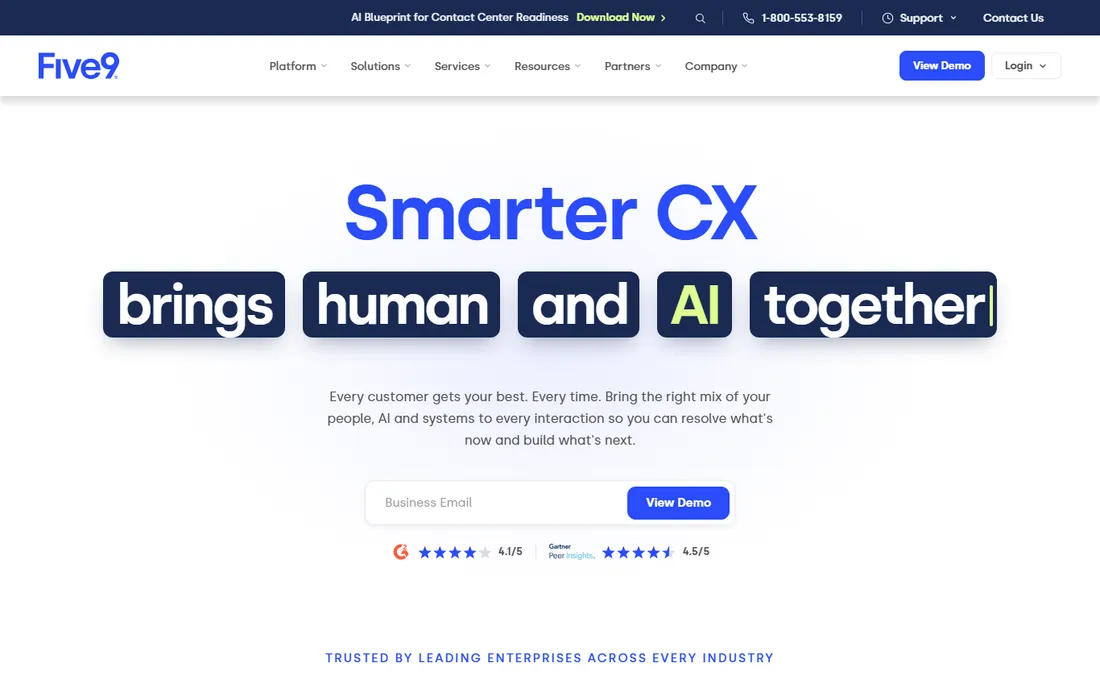
Five9's analytics turn its CCaaS data into operational insight: real-time dashboards, historical reporting, and AI features (transcription, sentiment, summaries) that help supervisors manage live. The practicality stands out: less theoretical, more "what do I do about the queue right now."
Pure-play analytics vendors offer more depth in specific analyses. This is the integrated operational choice. Five9 customers get analytics that understand their platform intimately.
What we like- Tight CCaaS integration
- Actionable dashboards
- Good AI features
Watch out for- Depth less than pure analytics plays
- Enterprise pricing
Starting priceSee website (custom quote)
Free planNo
Talkdesk built a modern CCaaS with AI woven through: interaction analytics, agent assist, and quality automation that feel native rather than bolted on. The usability exceeds legacy platforms, and the AI features are genuinely useful rather than demo-ware.
The track record is shorter than the giants, which matters to conservative buyers. Pricing is enterprise. Cloud-native contact centers that value modern UX alongside capable analytics find it compelling.
What we like- Modern architecture
- Strong AI (Talkdesk AI)
- Good usability
Watch out for- Enterprise pricing
- Younger than NICE/Verint
Starting priceSee website
Free planNo
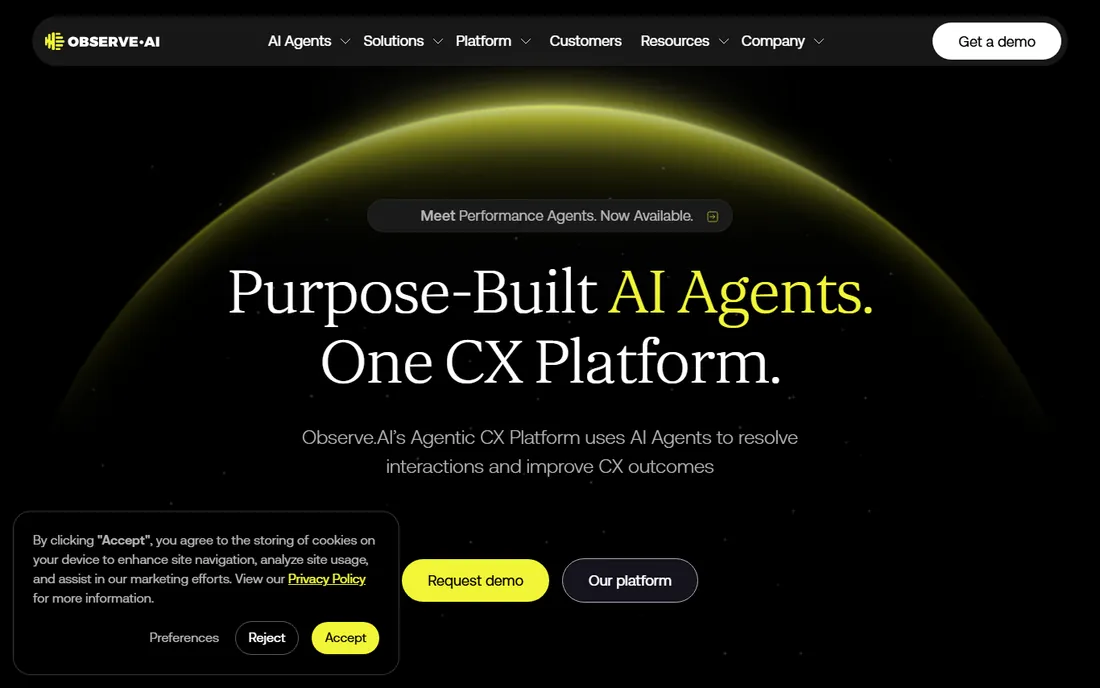
Observe.AI focuses on the agent performance loop: analyze 100% of interactions, surface coaching moments, track improvement, repeat. The coaching workflows are the best in the category, turning analytics into agent development systematically. Contact centers obsessed with quality find the focus refreshing.
Broader analytics (workforce planning, CX strategy) are thinner than the suites. Pricing is not published. For quality-driven operations where coaching is the priority, the specialization wins.
What we like- Excellent coaching workflows
- Accurate interaction analysis
- Focused product
Watch out for- Narrower than full suites
- Pricing not published
#7
Cresta
Best for: real-time agent guidance during conversations
Visit cresta.com
Starting priceSee website
Free planNo
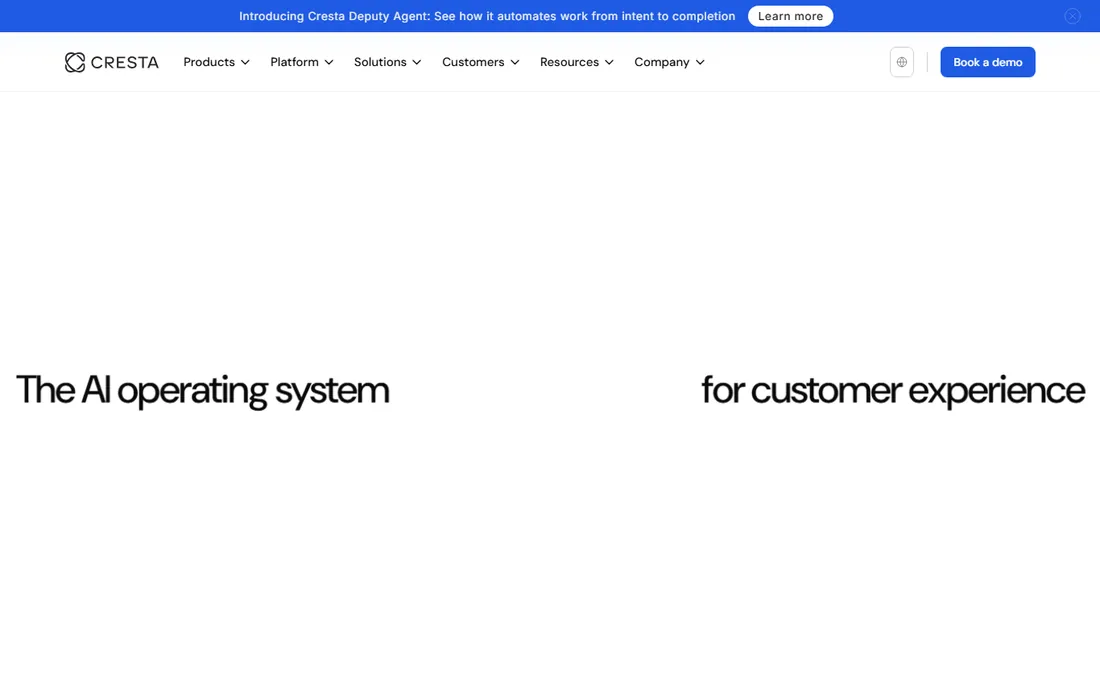
Cresta listens to live conversations and guides agents in real time: suggested responses, knowledge articles, compliance reminders and next-best-actions appearing as the call unfolds. The real-time assistance shortens handle time and improves outcomes measurably. Post-call analytics complete the picture.
Real-time guidance is a newer discipline, and the change management is real: agents need training to use live assistance well. Pricing is not published. Operations ready to augment agents live, not just analyze after, find it transformative.
What we like- Real-time assist during calls
- Strong AI
- Proven ROI in deployments
Watch out for- Newer category
- Pricing not published
Starting priceSee website
Free planNo
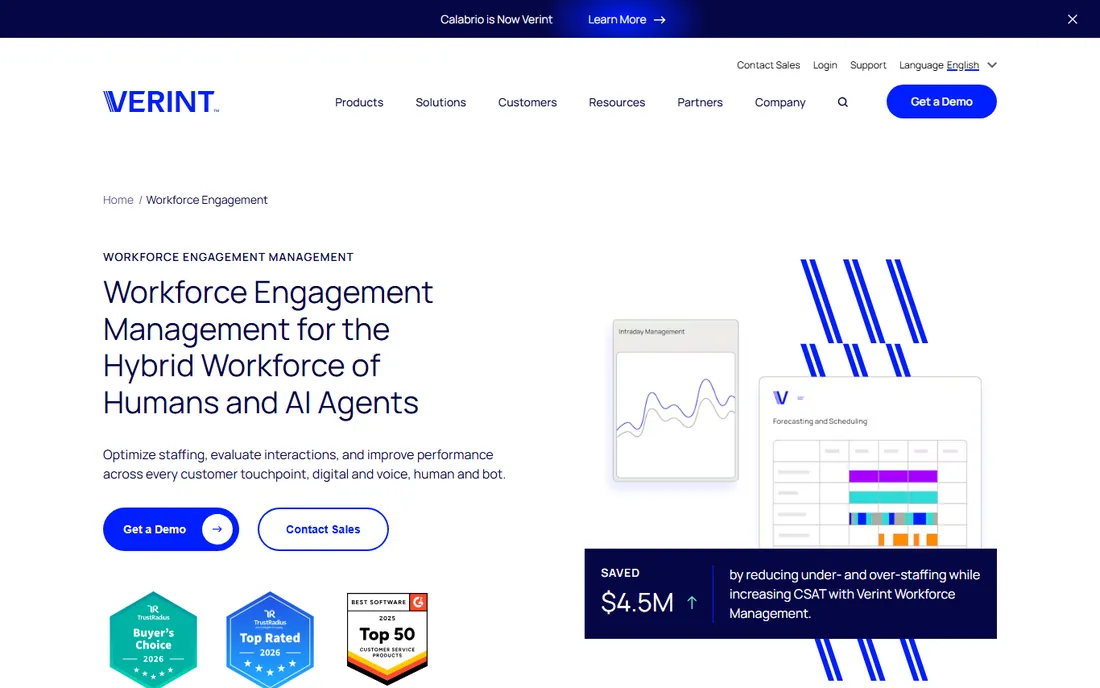
Calabrio brings interaction analytics, quality management and workforce tools to the mid-market with deployments that do not require enterprise consulting teams. The analytics cover the essential questions: what are customers saying, how are agents performing, where are the problems.
The AI sophistication trails NICE and Verint. Enterprise buyers may want more depth. For centers with 50-1,000 agents, the capability-to-complexity ratio is the best in the category.
What we like- Approachable deployment
- Good interaction analytics
- Fair value
Watch out for- AI depth less than leaders
- Smaller vendor
How we chose
We evaluated current contact center analytics platforms on AI capabilities, interaction coverage, usability and market position, cross-checked against analyst reports and practitioner feedback. Every tool listed is actively maintained with a live homepage as of October 2026. We weighted 100% interaction analysis, real-time capabilities and coaching workflows because those define modern value. Pricing is quote-based across the category.
The 100% interaction revolution
The defining shift in contact center analytics is coverage: AI now analyzes every interaction instead of the 2-3% humans sampled. This changes everything. Quality scores reflect reality, not sampling luck. Emerging issues surface in hours, not quarterly reviews. Coaching targets actual behavior patterns, not anecdotes.
The implication for buyers is stark: platforms still built around sampling are obsolete. Evaluate vendors on what their AI actually analyzes (every call? every chat? with what accuracy?) and what actions the analysis drives. Analytics that do not change agent behavior or operational decisions are expensive dashboards. The leaders turn 100% coverage into coaching, staffing and CX improvements systematically.
What to check before you sign
Start with your channel mix. Voice analytics is mature; digital channel (chat, email, messaging, social) analytics varies enormously. Verify each channel you actually use during the trial, with your real interaction data. Vendors demo beautifully on voice and disappoint on your specific digital channels.
Then check the AI accuracy on your data. Generic models trained on other companies' calls may misread your industry's language, accents and terminology. Ask for a proof-of-concept on your interactions and measure precision on the categories you care about. The gap between vendor claims and your reality is where projects fail.
Finally, verify the action workflows. Insights must reach the people who act: supervisors coaching, workforce planners scheduling, product teams fixing root causes. Check the integrations, alerts and case management. Analytics without action workflows is observation, not optimization.
Do not neglect the data privacy and compliance dimension. Interaction analytics processes sensitive customer conversations: verify data retention policies, redaction capabilities (PII masking), and compliance with regulations (GDPR, PCI for payment data, HIPAA for healthcare). The platforms handle this differently, and your legal team's requirements are non-negotiable. Ask specifically about data residency and whether conversation content trains vendor AI models.
Frequently asked questions
What is contact center analytics?
Software that analyzes customer interactions (calls, chats, emails) to measure quality, understand customer needs, coach agents and improve operations. Modern platforms use AI to analyze 100% of interactions automatically.
How much does contact center analytics cost?
Enterprise pricing is quote-based, typically per agent per month. Expect $50-200+ per agent per month depending on capabilities. AI-native point solutions may price differently. Get multiple quotes.
Do I need a separate analytics platform or use my CCaaS built-in?
CCaaS built-ins (NICE, Genesys, Five9, Talkdesk) cover operational needs well. Separate platforms (Observe.AI, Cresta) offer deeper specialization in coaching or real-time assist. Many operations use both: platform analytics for operations, specialists for coaching.
How accurate is AI interaction analytics?
Good enough for trends, coaching and QA automation, with accuracy varying by use case. Sentiment and categorization are reliable; nuanced intent and complex compliance need human validation. Always validate on your own data during trials.
Can analytics help reduce agent attrition?
Yes, indirectly. Better coaching, fairer QA (100% coverage versus sampling bias), and workload insights all improve the agent experience. Analytics that feel like surveillance increase attrition; analytics framed as coaching reduce it. The implementation philosophy matters as much as the technology.
How long does implementation take?
Cloud analytics deployments typically take 6-16 weeks including data integration, model tuning and training. AI accuracy improves over the first few months as models learn your data. Plan for a tuning period, not just a go-live date.
Should analytics be real-time or historical?
Both, for different purposes. Real-time powers supervisor intervention, agent assist and live dashboards. Historical drives coaching, trend analysis and strategic decisions. The best platforms do both well. If you must prioritize, real-time capabilities differentiate more: historical reporting is table stakes.
How do I get supervisors to actually use analytics?
Make it part of their workflow, not another dashboard. Integrate insights into the tools supervisors already use, set up automated alerts for the situations that need intervention, and train on interpretation, not just navigation. Analytics adoption fails when supervisors do not trust the data or do not know what action to take. Start with a few high-value use cases and expand.
The most effective pattern: weekly coaching sessions driven by analytics insights, with supervisors reviewing AI-flagged moments and discussing them with agents. This ritual turns analytics from a reporting tool into a coaching system. Without the ritual, even the best analytics gather digital dust. Measure supervisor engagement with the analytics (login frequency, coaching sessions held, actions taken) and hold them accountable: analytics ROI comes from usage, not licenses.
The root-cause analysis capability deserves special attention during evaluation. The best platforms do not just show that satisfaction dropped; they trace it to specific causes (a policy change, a product issue, a staffing gap) by correlating interaction themes with operational data. This diagnostic power turns analytics from a scoreboard into a problem-solving tool. Ask vendors to demonstrate root-cause analysis on sample data, not just dashboards. The demo that shows "satisfaction dropped 5 points because of shipping delays mentioned in 200 calls" is worth more than any feature checklist. Insist on seeing your use case, not the vendor's idealized scenario. The evaluation that uses your data predicts your results; the generic demo predicts nothing.
Sources we checked (8)
- https://www.nice.com
- https://www.verint.com
- https://www.genesys.com
- https://www.five9.com
- https://www.talkdesk.com
- https://www.observe.ai
- https://www.cresta.com
- https://www.calabrio.com
Is your product missing or out of date?
We review this list regularly. Vendors can request a listing, send updated pricing or ask about featured placement.

Shihab Mia · Founder, Rankite
Shihab has spent more than a decade helping SaaS and e-commerce brands grow through search. He writes Rankite's software buying guides from pricing pages, documentation and public user reviews. More about Shihab.