How we make this list: we compare pricing pages, product documentation and public user reviews. Rankite is independent; if a vendor ever pays for a featured spot, that listing is clearly labeled Partner.
Key takeaways
- Tenna is the most construction-specific option for mixed fleets that need hour-based maintenance and ERP integration, but expect a custom quote and a rollout measured in weeks.
- Samsara and Motive lead on AI dashcams and driver safety. Motive offers 12-month and month-to-month terms, while Samsara typically asks for three years.
- Geotab delivers the deepest engine-diagnostic data and the largest integration marketplace, but you buy through resellers and the platform takes time to learn.
- Fleetio is the only vendor here with published pricing, starting at $4 per vehicle per month, and it sells no hardware, which is why many fleets pair it with a telematics provider.
Quick comparison
| Tool | Best for | Starting price | Free plan |
|---|
 Samsara Samsara | Vehicle-heavy fleets focused on safety and compliance | See website | Free trial (30 days) |
 Geotab Geotab | Data-heavy fleets wanting deep diagnostics and an open platform | See website | No |
 Tenna Tenna | Contractors running mixed fleets of heavy equipment, trucks and tools | See website | No |
 EquipmentShare T3 EquipmentShare T3 | Contractors who both rent and own equipment | See website | No |
 Motive Motive | Fleets wanting strong ELD compliance with flexible contract terms | See website | No |
 Trackunit Trackunit | Equipment-heavy fleets that live on OEM machine data | See website | No |
 Fleetio Fleetio | Maintenance-first shops that want published pricing | $4 per vehicle/month (billed annually) | Free trial (14 days) |
 Clue Clue | Mid-size contractors unifying fragmented GPS and OEM feeds | See website | No |
Is your product missing or out of date?
We review this list regularly. Vendors can request a listing, send updated pricing or ask about featured placement.
The best construction telematics software
An idle excavator burns close to a gallon of diesel an hour while doing nothing. U.S. Department of Energy research puts heavy-duty idling at roughly 0.8 gallons per hour, and more than 1 gallon per hour with auxiliary loads engaged (Argonne National Laboratory). Multiply that across a dozen machines and a few trucks, and you are paying a full-time salary to equipment that is parked. Construction telematics software exists to make that waste visible, then to turn location, engine hours, fault codes and fuel data into maintenance schedules, dispatch decisions and job costing.
The platforms below split into two camps. Samsara, Motive and Geotab grew up around on-road vehicles, with strong safety cameras, ELD compliance and deep diagnostics. Tenna, EquipmentShare T3, Trackunit and Clue were built around the jobsite, with mixed fleets of heavy equipment, tools and attachments as the starting point. Fleetio is maintenance software that plugs into telematics feeds. Match the camp to your fleet before comparing features.
#1
Samsara
Best for: Vehicle-heavy fleets focused on safety and compliance
Visit samsara.com
Starting priceSee website
Free planFree trial (30 days)
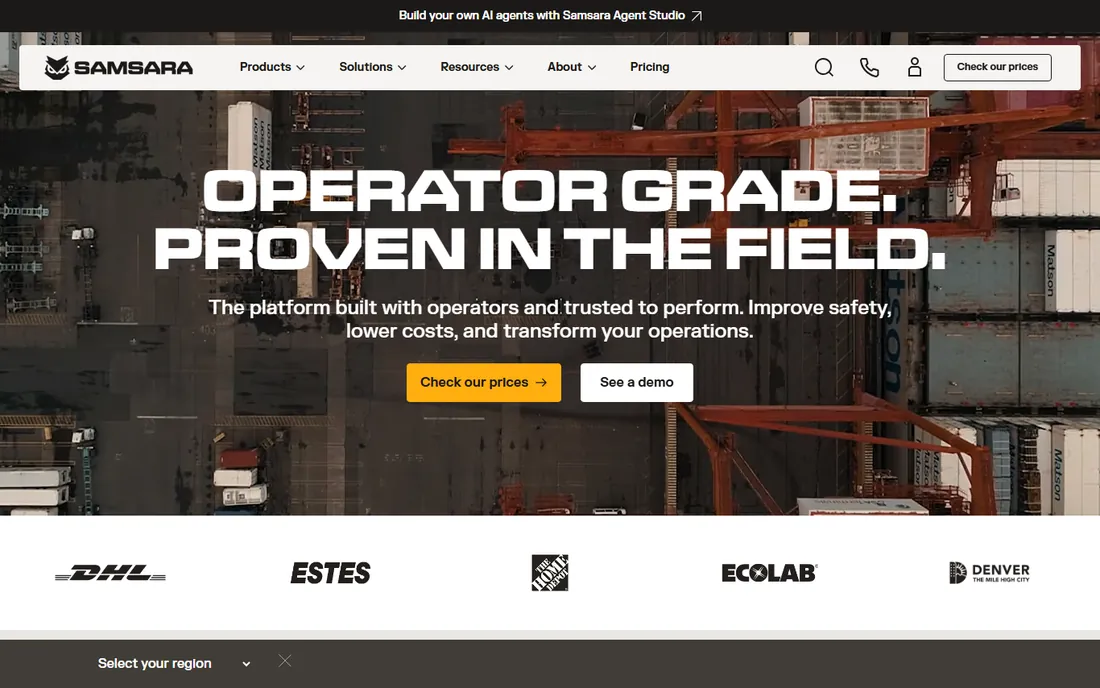
Samsara is the default choice when the fleet is mostly trucks and the safety team drives the purchase. Its AI dashcams flag harsh braking, speeding and distracted driving, and the video clips feed directly into coaching workflows, so managers review incidents instead of scrubbing through raw footage. GPS updates every 2.5 seconds, and live sharing links let a dispatcher send a customer a real-time view of a truck without a phone call.
The catch is commercial rather than technical. Samsara does not publish pricing, quotes run per vehicle per month with hardware on top, and three-year terms are the norm, with the remaining balance typically due if you exit early. The hardware is proprietary, so there is no bring-your-own-device option.
What we like- Strongest native AI dashcam platform
- 2.5-second GPS refresh with live location sharing
- FMCSA-certified ELD with a broad integration marketplace
Watch out for- Three-year contracts are standard with costly early termination
- Quote-only pricing that climbs with cameras and add-ons
- Heavy-equipment workflows lag construction-first rivals
#2
Geotab
Best for: Data-heavy fleets wanting deep diagnostics and an open platform
Visit geotab.com
Starting priceSee website
Free planNo
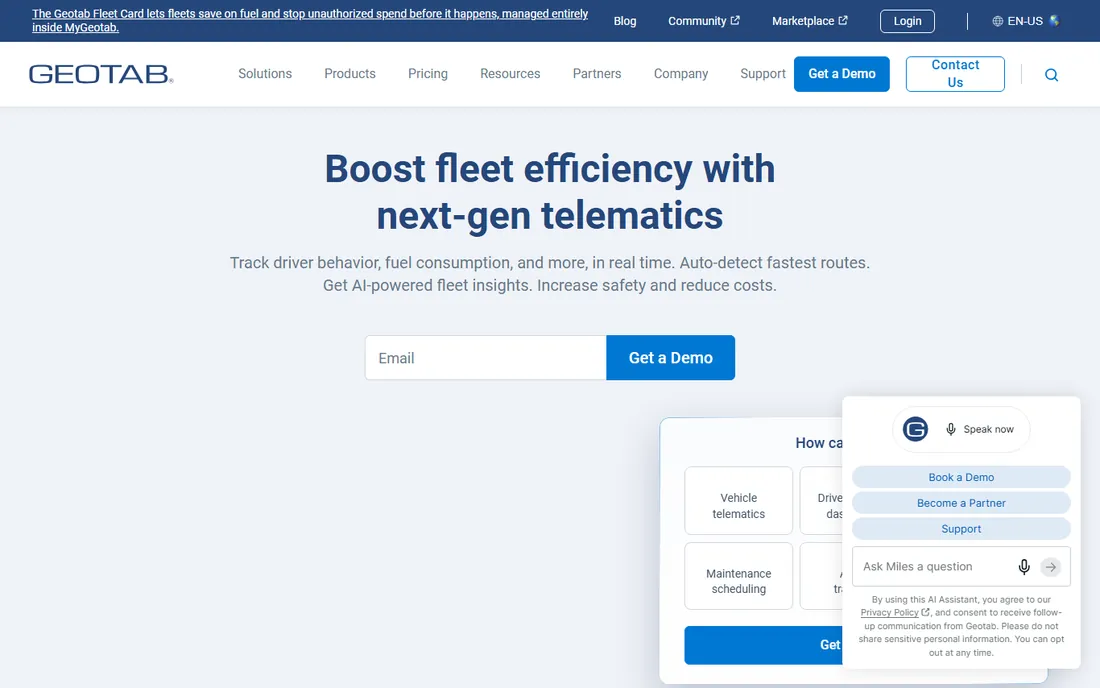
If your fleet manager lives in reports and wants every diagnostic code a machine can produce, Geotab is the data platform. Its GO devices read thousands of engine fault codes, and rules can turn those codes into email or text alerts, scorecards and maintenance triggers. The open SDK and large marketplace mean almost any ERP, fuel card or maintenance system can be wired in, which matters when the telematics platform has to feed the accounting system rather than replace it.
You buy through authorized resellers rather than a direct sales team, so pricing, terms and support quality vary by reseller. Users praise the reporting depth and complain about the learning curve. Fleets with someone technical enough to configure rules and reports get more analytical power per dollar here than anywhere else.
What we like- Deepest engine-diagnostic coverage with thousands of fault codes
- Marketplace of 430-plus integrations plus an open SDK
- Strong EV planning and fleet benchmarking tools
Watch out for- Sold only through authorized resellers, so support quality varies
- Steeper learning curve with maps users call clunky
- Cameras come through partners rather than natively
#3
Tenna
Best for: Contractors running mixed fleets of heavy equipment, trucks and tools
Visit tenna.com
Starting priceSee website
Free planNo
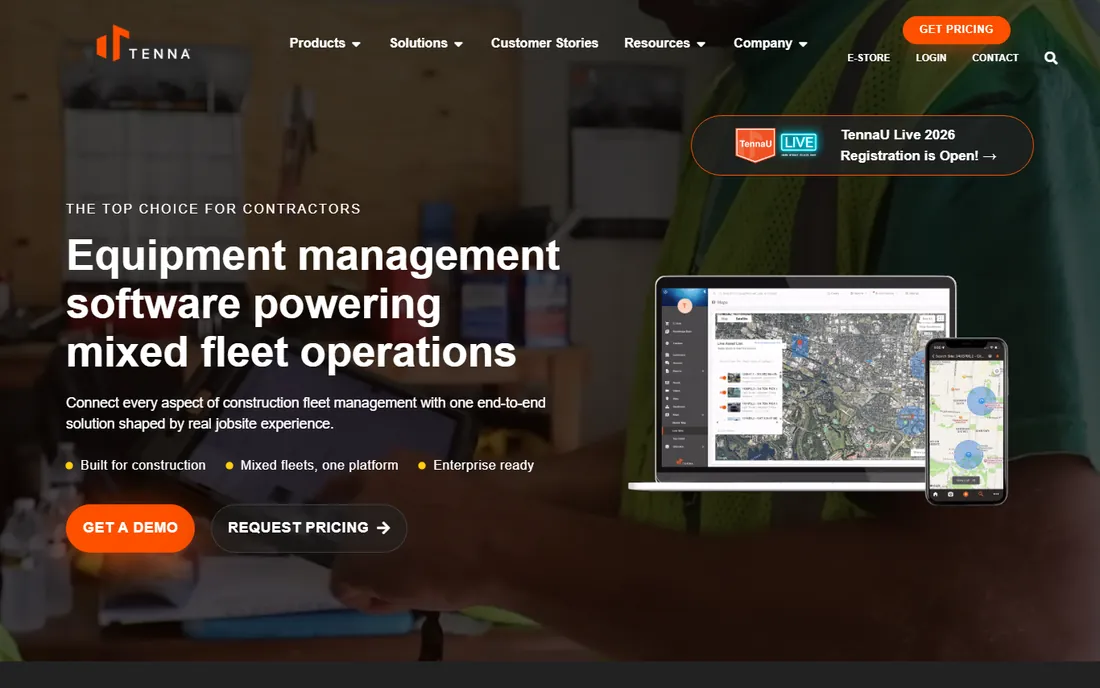
Tenna was built by people who have run construction fleets, and it shows in the workflows. One dashboard covers heavy equipment, on-road vehicles, tools, attachments and materials, with GPS trackers, Bluetooth tags and QR codes matched to the asset type. Maintenance scheduling keys off engine hours and meter readings, and fault codes from CAN bus data create alerts the shop can act on the same day. AI dashcams, dispatching and job costing sit in the same system instead of three separate logins.
That depth comes with enterprise buying friction: custom pricing, project-managed deployments of 4 to 12 weeks, and typical multi-year contracts. It fits mid-size to large contractors who will use the ERP integration and utilization reporting to guide buy, rent or sell decisions. Smaller shops that just need dots on a map will find it heavy and expensive.
What we like- Built around construction workflows from day one
- Preventive maintenance scheduled off engine hours, not calendar dates
- ERP integrations with Viewpoint, Sage and Foundation plus OEM data feeds
Watch out for- Enterprise quotes only with project-managed deployments
- Onboarding typically takes 4 to 12 weeks
- More platform than a non-construction fleet would ever use
Starting priceSee website
Free planNo
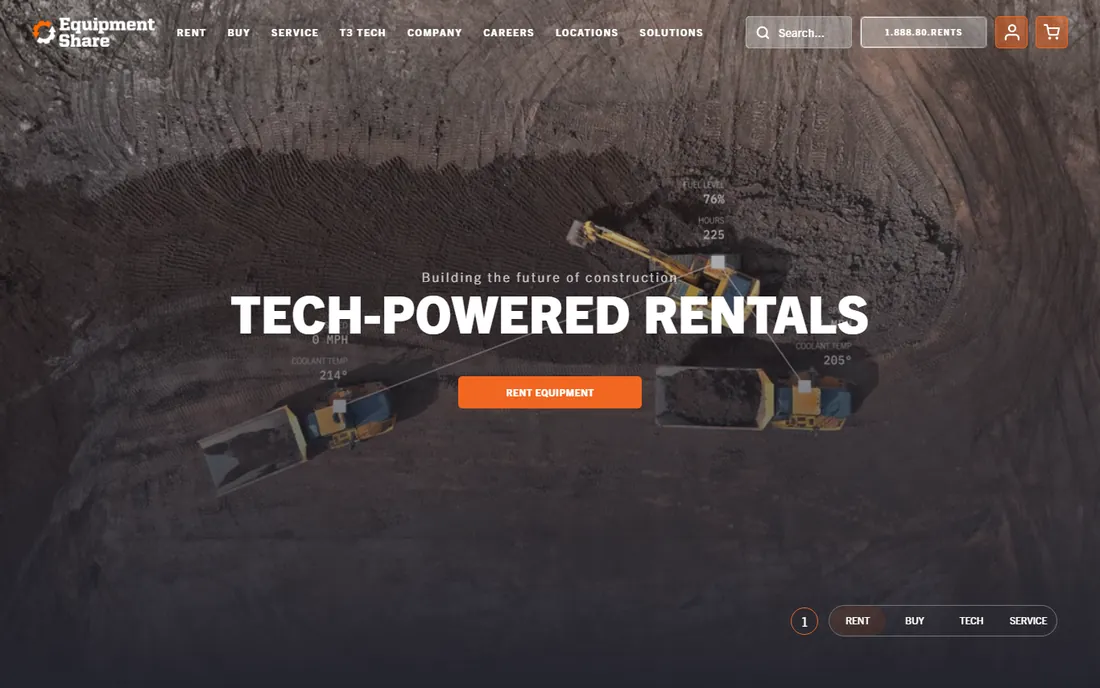
EquipmentShare started as a rental company and built T3 to run its own connected fleet before offering it to contractors. That origin shapes the product: telematics, keyless access control, maintenance, logistics and analytics share one platform, and the company behind it operates hundreds of branches renting the same categories of equipment its software tracks. For a contractor already renting from EquipmentShare, the rented machines arrive connected, which removes the usual hardware installation project.
As a pure software buy, T3 is harder to evaluate: pricing is quote-based and public plan documentation is thin. It fits contractors with blended rent-and-own fleets who want tracking, access control and utilization in one place. Fleets with no EquipmentShare relationship should weigh it against Tenna and Trackunit, which sell software as their core business.
What we like- Telematics tied to a nationwide rental fleet and jobsite services
- OEM-agnostic hardware and software stack
- Access control, logistics and analytics in one platform
Watch out for- Strongest value for EquipmentShare rental customers
- Pricing not published
- Newer as a standalone software purchase than as a rental-fleet system
#5
Motive
Best for: Fleets wanting strong ELD compliance with flexible contract terms
Visit gomotive.com
Starting priceSee website
Free planNo
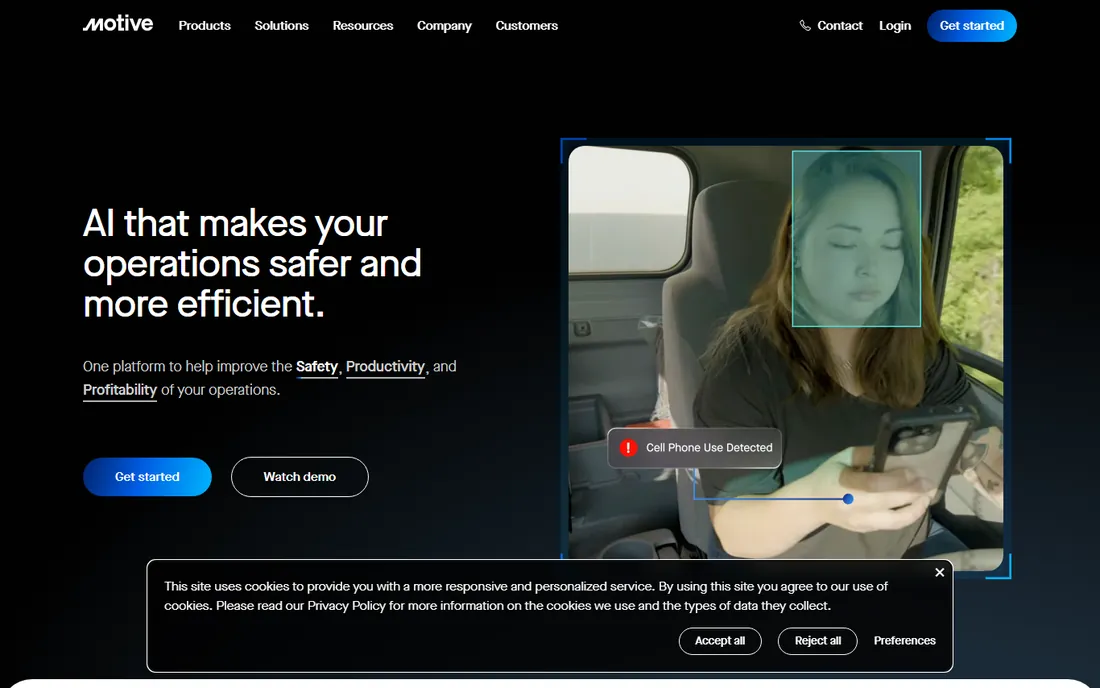
Motive earns its place with buyers who refuse to sign a three-year telematics contract. Where Samsara typically wants 36 months, Motive offers 12-month and even month-to-month terms, which makes it the lower-risk way to test AI dashcams and ELD compliance across a fleet. The platform covers GPS tracking, vehicle diagnostics, hours-of-service logs, IFTA reporting and dispatch in one system, and its driver app is well regarded by the people who actually log hours in it.
Trade-offs show up in construction-specific depth: the bench of construction ERP connections is thinner than Tenna or Clue, and non-powered asset tracking is minimal, so a fleet with many attachments and tools needs a second system. For road-heavy contractor fleets that value compliance and cameras over iron-specific workflows, Motive is the pragmatic middle ground.
What we like- 12-month and month-to-month terms available, no three-year lock-in
- Strong native AI dashcams with driver coaching
- FMCSA-certified ELD is a core strength
Watch out for- Quote-only pricing with no public rate card
- Construction ERP integrations are limited
- Minimal tracking for non-powered assets and tools
Starting priceSee website
Free planNo
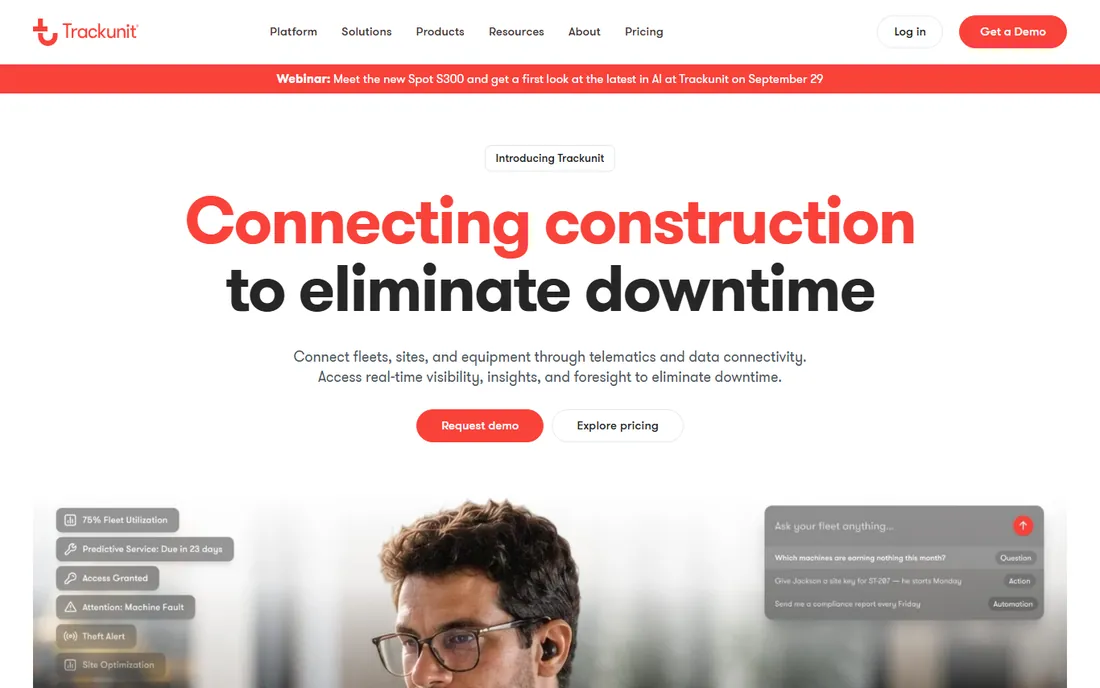
For fleets where the iron matters more than the trucks, Trackunit goes deeper into machine data than anyone else on this list. Its telematics devices pull location, utilization and CAN bus diagnostics from heavy equipment, and the platform ingests feeds from more than 100 OEM systems, so a mixed fleet of Cat, Volvo, Komatsu and Deere machines reports into one view. Kin Bluetooth tags extend tracking to non-powered assets and tools, and the Iris data platform is built to normalize all of it for utilization and downtime analysis.
Trackunit is an equipment-intelligence company first and a compliance company second. ELD, IFTA and driver-safety tooling are limited compared with Samsara or Motive, and there is no native dashcam ecosystem. It fits rental companies, large contractors and OEM dealers that want to cut downtime with machine data. Fleets that need compliance paperwork handled should look elsewhere.
What we like- More than 100 OEM data feeds with CAN bus depth
- Kin Bluetooth tags cover non-powered assets
- Iris platform harmonizes mixed-fleet data in one interface
Watch out for- Enterprise pricing by quote only
- Limited ELD and compliance tooling
- No native video telematics for driver coaching
#7
Fleetio
Best for: Maintenance-first shops that want published pricing
Visit fleetio.com
Starting price$4 per vehicle/month (billed annually)
Free planFree trial (14 days)
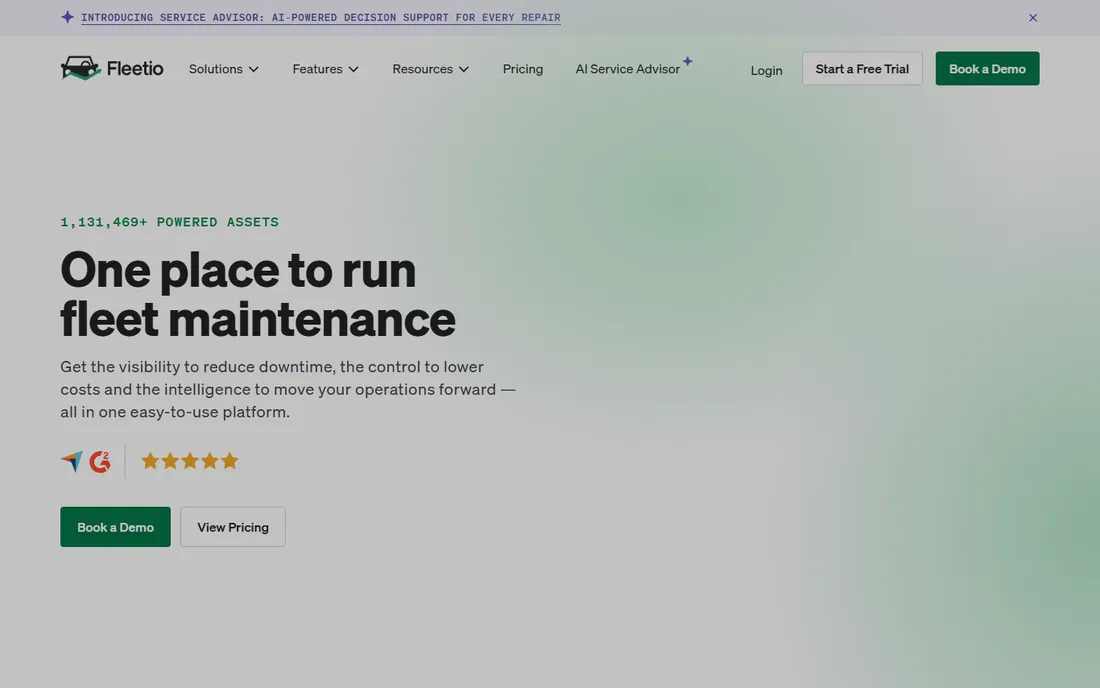
Fleetio is the odd one out here, and deliberately so: it sells no GPS hardware at all. It is fleet maintenance software that ingests location, odometer and fault-code data from telematics providers like Samsara and Geotab through integrations, then runs inspections, preventive maintenance schedules, work orders, parts and fuel tracking on top. Pricing is public and simple: Essential at $4 per vehicle per month billed annually ($5 month to month), Professional at $7 and Premium at $10, with a 14-day free trial and no credit card required.
That makes Fleetio the maintenance layer many fleets bolt onto a telematics platform rather than a replacement for one. If you already pay for Samsara or Geotab hardware, Fleetio gives the shop work orders, service history and cost tracking those platforms handle thinly. If you have no telematics at all, Fleetio alone will not put dots on a map.
What we like- Published pricing from $4 per vehicle per month
- Unlimited users on every plan
- More than 50 telematics integrations pull GPS and fault data in
Watch out for- Software only, with no native GPS hardware or cameras
- Fault alerts depend on whichever telematics provider you connect
- 5-vehicle minimum on subscriptions
#8
Clue
Best for: Mid-size contractors unifying fragmented GPS and OEM feeds
Visit getclue.com
Starting priceSee website
Free planNo
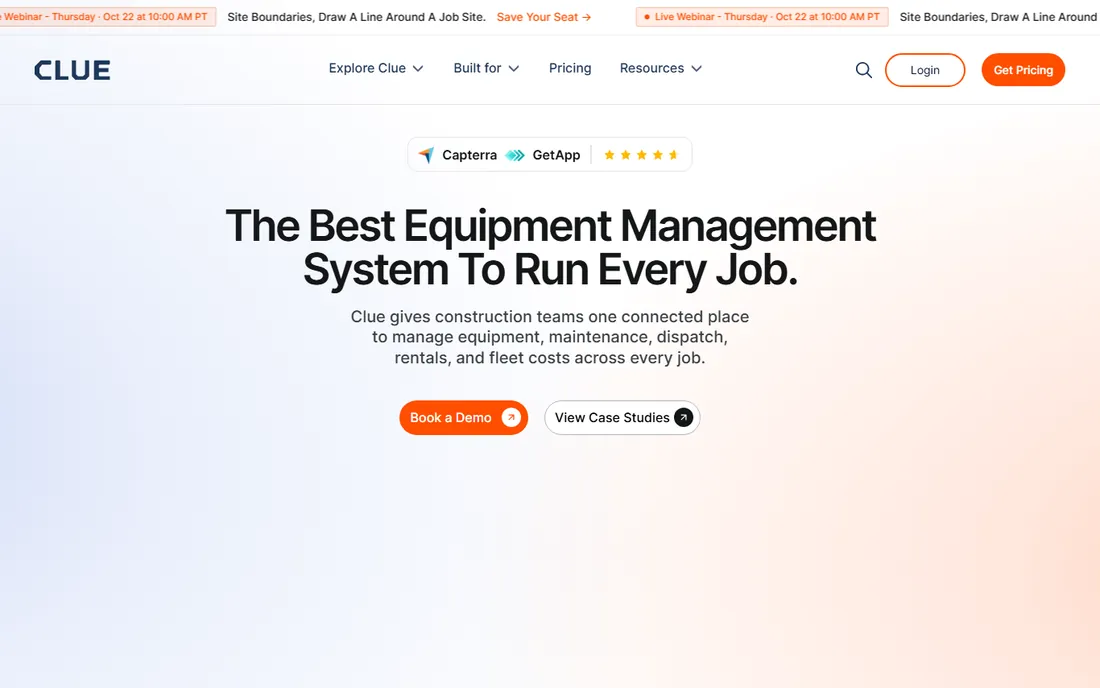
Clue solves a problem the big telematics vendors created: five tracking portals that never agree with each other. Contractors running Cat, Komatsu and Deere machines alongside aftermarket GPS trackers end up with fragmented location, hour and fuel data. Clue pulls those feeds into one dashboard and wires them into maintenance, dispatch, inspections and job costing, with engine-hour-based alerts and AI flags for abnormal usage patterns. Status reads as working, idle or in transit per asset, which is the exact vocabulary an equipment manager thinks in.
The hardware-agnostic approach is both the appeal and the limit: you keep your devices and OEM subscriptions, but Clue does not sell a turnkey tracked fleet. Pricing is custom, and as a newer vendor it cannot match the reference lists of Samsara or Geotab. For mid-size contractors whose core pain is fragmented data, it is the most targeted fix here.
What we like- Unifies GPS, OEM telematics and ERP data in one operational view
- More than 80 integrations across GPS, OEM, ERP and fuel systems
- Working, idle and transit status per asset with AI productivity alerts
Watch out for- Custom quotes only
- Newer vendor with a shorter track record than the incumbents
- Hardware-agnostic, so devices still come from elsewhere
What to check before you sign a telematics contract
Hardware: who owns it, who installs it, and what happens at renewal
Some vendors bundle proprietary hardware into the contract, others let you bring OEM feeds or aftermarket devices. Ask who pays for installation, who owns the devices if you leave, and whether hardware costs are amortized into the monthly rate or billed upfront. A cheap per-vehicle quote with $300 devices per asset is not cheap.
Contract length and exit terms
Telematics contracts range from month-to-month to three years, and the difference is worth tens of thousands of dollars. Ask specifically what happens on early termination: some vendors bill the full remaining balance. If you are testing a platform, favor the vendor that lets you start with a one-year term even if the monthly rate is slightly higher.
OEM data and AEMP 2.0 support
For mixed fleets, the AEMP 2.0 telematics standard (ISO 15143-3) is what lets machines from different manufacturers report hours, location and fuel in one format. If your fleet mixes brands, confirm which OEM feeds each platform ingests natively rather than through a paid add-on, and ask how fault codes flow from the machine to a work order.
Maintenance depth
Every vendor claims maintenance, but the range runs from basic mileage reminders to hour-based preventive schedules with parts, labor tracking and mechanic workflows. If the shop will live in this system, confirm work orders, inspections and service history are included in your tier, not gated behind the top plan.
How construction telematics is actually priced
Almost nobody here publishes a rate card, and the one vendor that does, Fleetio, sells a different product. Expect per-asset, per-month quotes with three variables moving the number: the feature tier, the hardware (bundled, financed or purchased), and the contract length. Third-party buyer data for 2026 puts core vehicle telematics roughly between $25 and $60 per vehicle per month on multi-year terms, with cameras pushing toward the top.
Treat the quote as the starting bid. Implementation fees, training, API access and premium support are frequently line items, and reseller-sold platforms like Geotab add another layer of variance. Model the three-year total including hardware before you compare, because a low monthly rate on a 36-month term with devices billed upfront can cost more than a higher rate on a one-year term you can exit.
How we chose
We ranked platforms on construction fit rather than generic fleet features: mixed-fleet coverage across heavy equipment, vehicles, tools and attachments; depth of machine diagnostics beyond GPS dots; integrations with construction ERPs and OEM systems; compliance tooling; and honest pricing transparency. Research drew on vendor pricing pages and documentation, 2026 comparison guides, and public user reviews on G2 and Capterra, with attention to what reviewers flagged as limitations. No vendor paid for placement, and none provided test accounts.
Frequently asked questions
How much does construction telematics software cost?
Most vendors quote per asset per month with custom pricing; 2026 buyer data generally lands between $25 and $60 per vehicle per month on multi-year terms, plus hardware. Fleetio is the exception, with published pricing from $4 per vehicle per month for maintenance software that needs a separate telematics feed for GPS. Model the three-year total including devices before comparing quotes.
Do I need to buy hardware, or can I use my equipment's built-in telematics?
Both paths work. Platforms like Trackunit and Clue ingest OEM telematics feeds from manufacturers like Caterpillar, Volvo and Komatsu, often through the AEMP 2.0 standard. Samsara and Motive primarily use their own proprietary hardware. If your machines are new enough to have factory telematics, favor a platform that ingests those feeds so you are not paying for redundant devices.
What is AEMP 2.0, and why does it matter?
AEMP 2.0 (ISO 15143-3) is the industry standard that lets mixed-brand equipment report telematics data, hours, location, fuel, fault codes, in a common format. Without it, each manufacturer's portal speaks its own language and you juggle logins. Platforms with native AEMP 2.0 support unify mixed fleets in one dashboard, which is the main reason construction-specific vendors emphasize it.
How long does implementation take?
It ranges from days to months. Software-only tools like Fleetio can be live in days to weeks since there is no hardware to install. Hardware-based rollouts with project management, like Tenna's, typically take 4 to 12 weeks including device installation, integrations and training. Ask for a written timeline with milestones before signing.
Can telematics software replace my fleet maintenance system?
Sometimes, but often they work as a pair. Telematics platforms track location, hours and fault codes; maintenance systems manage work orders, parts, labor and service history. Several vendors on this list cover both lightly, but many fleets run a telematics provider for tracking plus Fleetio or a CMMS for the shop, connected by integration. Decide which system the mechanics will open every day, and make that one the maintenance system of record.
Sources we checked (9)
- https://www.fleetio.com/pricing
- https://www.tenna.com/blog/best-construction-telematics-software/
- https://www.getclue.com/blog/best-construction-fleet-management-software
- https://www.getclue.com/blog/best-construction-equipment-tracking-software
- https://www.constructionplacements.com/construction-equipment-tracking-software/
- https://gethapn.com/blog/hapn-vs-tenna/
- https://oxmaint.com/industries/fleet-management/samsara-geotab-motive-telematics-comparison-fleet-2026
- https://tech.co/fleet-management/samsara-vs-motive
- https://www.capterra.com/p/160948/Tenna/
Is your product missing or out of date?
We review this list regularly. Vendors can request a listing, send updated pricing or ask about featured placement.

Shihab Mia · Founder, Rankite
Shihab has spent more than a decade helping SaaS and e-commerce brands grow through search. He writes Rankite's software buying guides from pricing pages, documentation and public user reviews. More about Shihab.