How we make this list: we compare pricing pages, product documentation and public user reviews. Rankite is independent; if a vendor ever pays for a featured spot, that listing is clearly labeled Partner.
Key takeaways
- A construction CRM is not a generic CRM with a new label. It tracks bids with hard deadlines, estimates, and the handoff from signed contract to the field.
- Commercial contractors that live on bid invitations should look at FollowUp CRM or Projul first; both were built around bid and pipeline workflows.
- Residential builders and remodelers get the most from Buildertrend's client portal, selections and change-order handling.
- Roofing and exterior contractors are best served by JobNimbus or AccuLynx, which speak the language of insurance claims and measurements.
- Small service contractors can start on Jobber ($49/month) or even HubSpot's free CRM and graduate when bid volume demands it.
Quick comparison
| Tool | Best for | Starting price | Free plan |
|---|
 FollowUp CRM FollowUp CRM | commercial contractors and subs managing bid pipelines | See website | No |
 Projul Projul | full-service contractors that want one platform from lead to invoice | $4,788/year (Core) | No |
 Buildertrend Buildertrend | residential builders and remodelers managing homeowners | From $339/month (billed annually) | No |
 JobNimbus JobNimbus | roofing contractors that want CRM plus production boards | See website | No |
 AccuLynx AccuLynx | roofing companies managing insurance restoration jobs | See website | No |
 Jobber Jobber | small service contractors that need quoting, scheduling and invoicing in one | $49/month (Core, month-to-month) | Free trial (14 days) |
 Contractor Foreman Contractor Foreman | contractors that want estimating and job costing on a budget | $49/month | No |
 HubSpot HubSpot | contractors that generate leads through marketing | Free (Starter from $7/seat/month) | Yes |
Is your product missing or out of date?
We review this list regularly. Vendors can request a listing, send updated pricing or ask about featured placement.
The best construction CRM software
Starting priceSee website
Free planNo
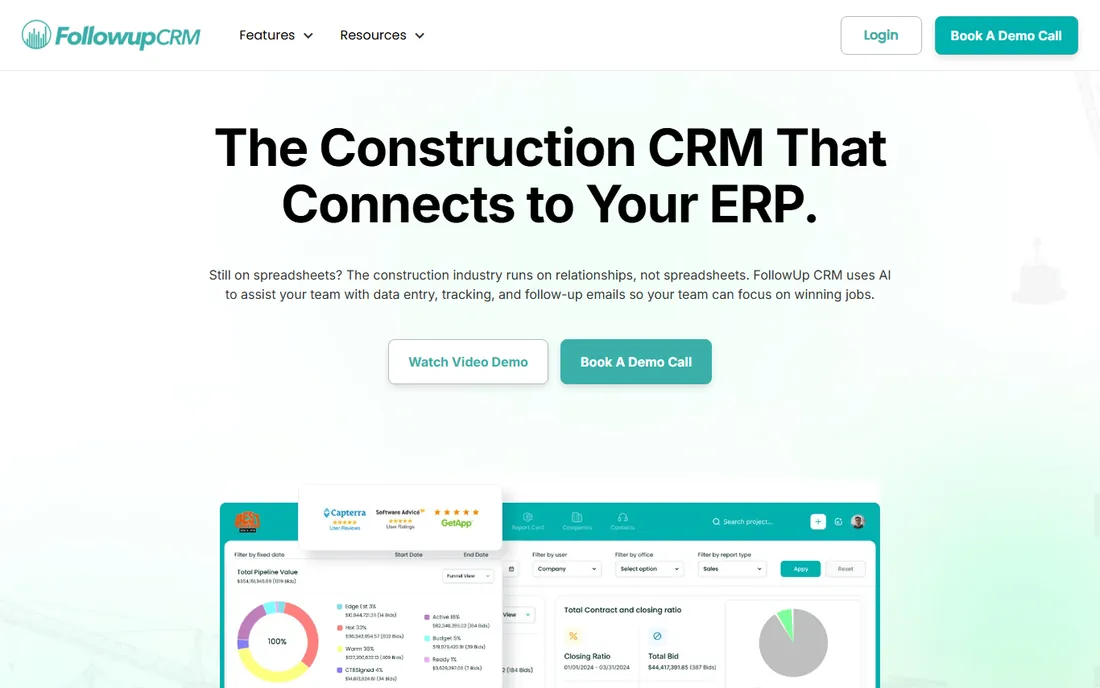
A roofing subcontractor gets twelve bid invitations in a week, each with its own deadline, documents and contact. FollowUp CRM was built for exactly that chaos. Its pipeline stages match how construction firms sell: lead intake, bid, proposal, negotiation, close. Bid calendars and deadline reminders keep estimators from missing the dates that decide revenue.
It also integrates with construction ERPs like Foundation, Viewpoint and Sage, which matters for specialty contractors whose accounting lives elsewhere. Pricing requires a quote. If your CRM need is primarily bid and proposal tracking, this is the strongest purpose-built option.
What we like- Bid calendars and deadline tracking built in
- Integrates with construction ERPs
- Built for the pre-contract phase
Watch out for- Quote-only pricing
- Focused on sales, not project execution
#2
Projul
Best for: full-service contractors that want one platform from lead to invoice
Visit projul.com
Starting price$4,788/year (Core)
Free planNo
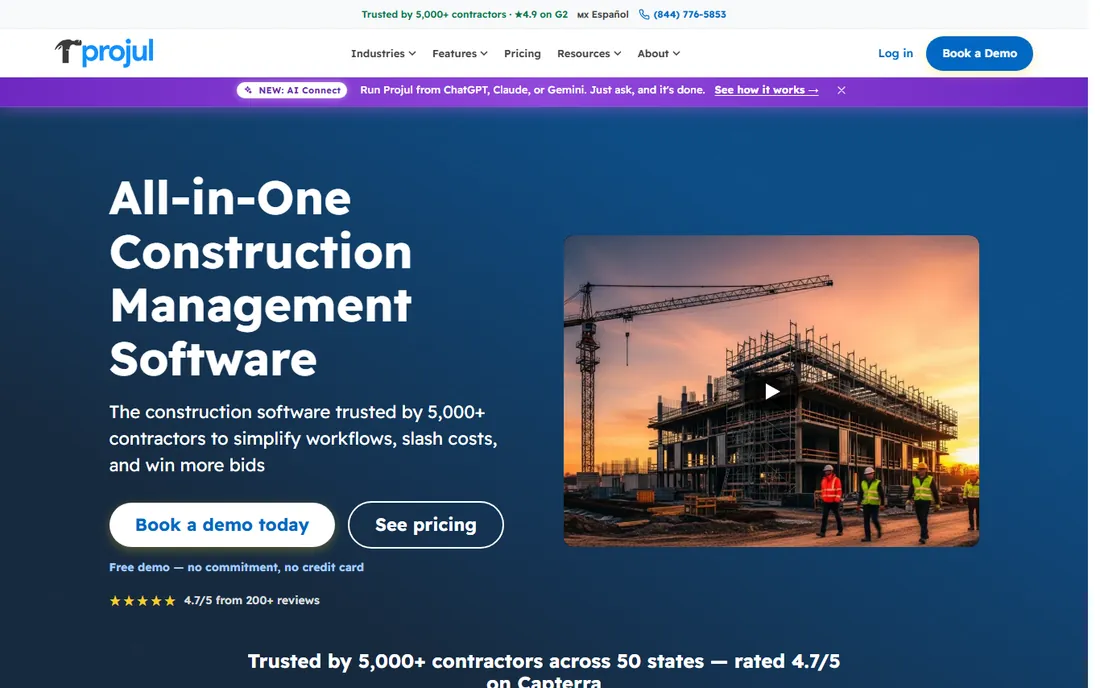
Projul was built by contractors who were tired of generic software, and the pricing shows it. Core starts at $4,788 a year, Core+ at $7,188, and Pro at $14,388, all flat rate. Your whole crew gets access whether you have five people or fifty. Per-user tools like Buildertrend get expensive fast by comparison.
The CRM is one module of a full platform that covers estimating, scheduling, job costing and invoicing. That is the strength and the limitation: you cannot buy just the CRM, and if you run anything besides construction, you will need a separate tool. For a general contractor ready to consolidate, the value is real.
What we like- Flat-rate pricing with no per-user fees
- CRM connects to estimating, scheduling and job costing
- Built by contractors
Watch out for- CRM cannot be bought standalone
- Construction-only, no use for other businesses
Starting priceFrom $339/month (billed annually)
Free planNo
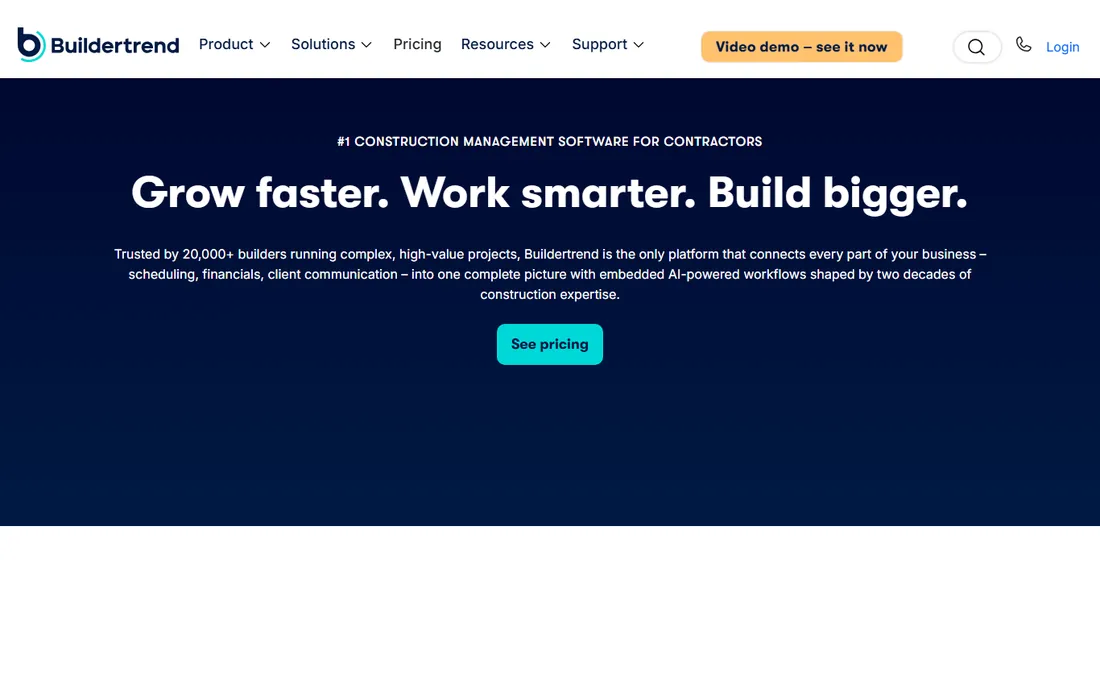
Buildertrend is the default recommendation for residential construction, and the reason is the homeowner experience. The client portal handles selections, change orders, daily logs and payments in one place, which cuts the back-and-forth that eats a remodeler's week. The CRM tracks leads into that same system, so nothing gets retyped.
Pricing starts around $339 a month on annual billing and climbs with users and add-ons. A ten-person team lands near five figures a year. The interface shows its age next to newer tools. But for a home builder or remodeler whose clients expect transparency, Buildertrend remains the safest pick.
What we like- Client portal homeowners actually use
- Selections and change orders
- Strong project management alongside CRM
Watch out for- Pricing starts high and scales per user
- Interface feels dated to some users
#4
JobNimbus
Best for: roofing contractors that want CRM plus production boards
Visit jobnimbus.com
Starting priceSee website
Free planNo
JobNimbus built its name in roofing, and the product reflects it. Contacts, estimates and jobs flow through boards that mirror how a roofing company actually works, from inspection to material order to final invoice. The mobile app keeps field crews in the loop without office visits.
Pricing is not published, so expect a sales conversation. The CRM side is solid for a trade contractor but lighter than FollowUp CRM for companies whose main problem is bid management. Roofers and exterior contractors who want one system from lead to completed job should put it on the shortlist.
What we like- Roofing-specific workflows
- Boards for production tracking
- Strong mobile app for field crews
Watch out for- Pricing not published
- CRM depth is lighter than dedicated sales tools
#5
AccuLynx
Best for: roofing companies managing insurance restoration jobs
Visit acculynx.com
Starting priceSee website
Free planNo
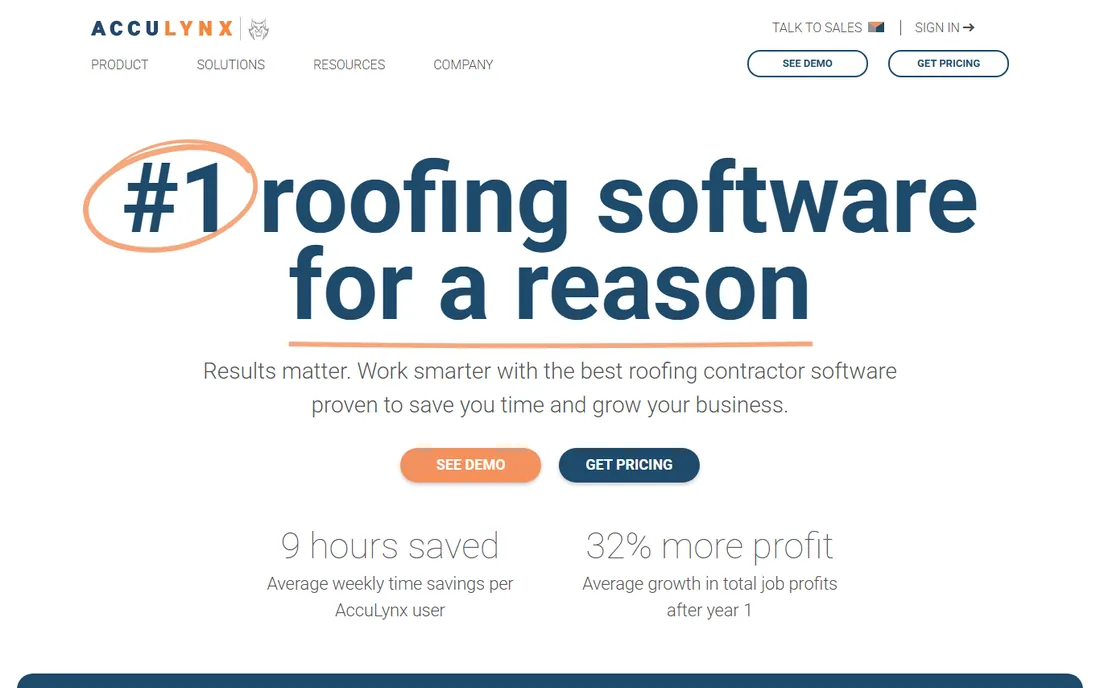
AccuLynx goes deeper into roofing than anyone else on this list. Insurance claim tracking, photo documentation, and integrations with aerial measurement tools make it the choice for restoration-heavy roofing companies. The CRM tracks the long, document-heavy sales cycles that insurance jobs create.
That specialization is also the boundary. If you do general remodeling alongside roofing, parts of AccuLynx will feel constraining. Pricing requires a quote. For a roofing company doing significant insurance work, the fit is hard to beat.
What we like- Insurance claim tracking
- Aerial measurement integrations
- Purpose-built for roofers
Watch out for- Niche focus limits flexibility
- Quote-based pricing
#6
Jobber
Best for: small service contractors that need quoting, scheduling and invoicing in one
Visit getjobber.com
Starting price$49/month (Core, month-to-month)
Free planFree trial (14 days)
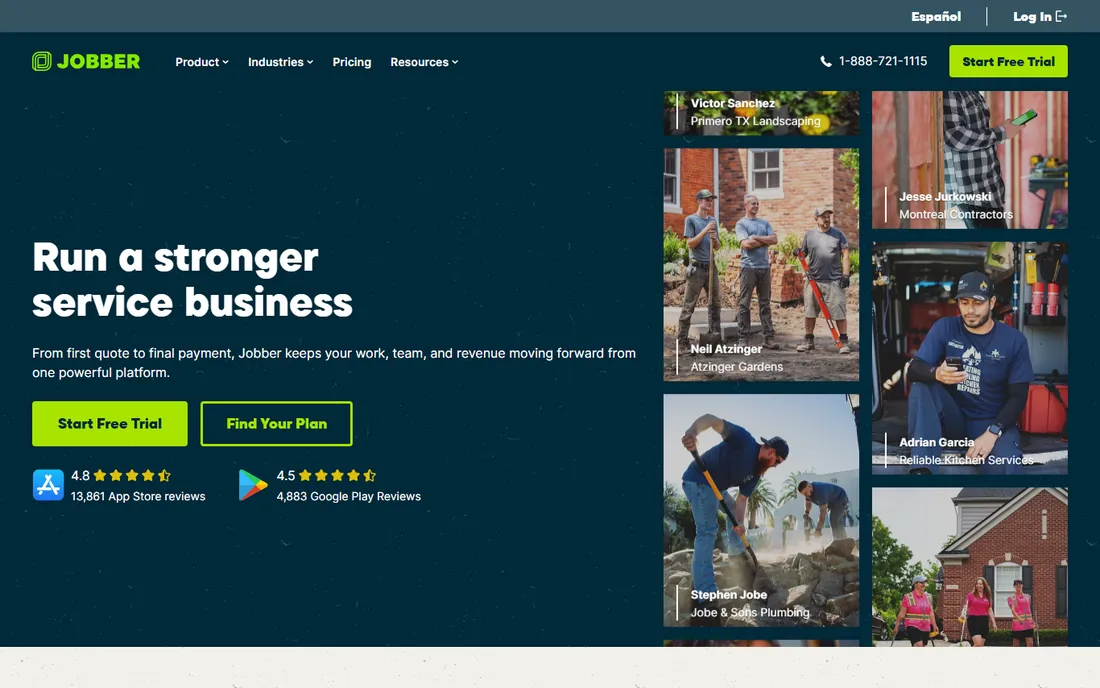
Jobber is the friendly entry point. Core costs $49 a month with no commitment, or $29 billed annually, and includes quoting, invoicing, scheduling, a client hub and the mobile app. Connect and Grow add automations, QuickBooks sync and job costing for growing teams. Pricing is published and honest, which is rare in this category.
The CRM is serviceable but basic: client records, quote follow-ups, and reminders, without real pipeline management or bid tracking. A handyman, HVAC or landscaping contractor will love it. A commercial GC juggling forty bids will outgrow it. The 14-day free trial of Grow needs no credit card.
What we like- Transparent published pricing
- Easy to learn
- Strong mobile app
- No annual contract required
Watch out for- CRM features are basic
- Better for same-day service than multi-week projects
Starting price$49/month
Free planNo
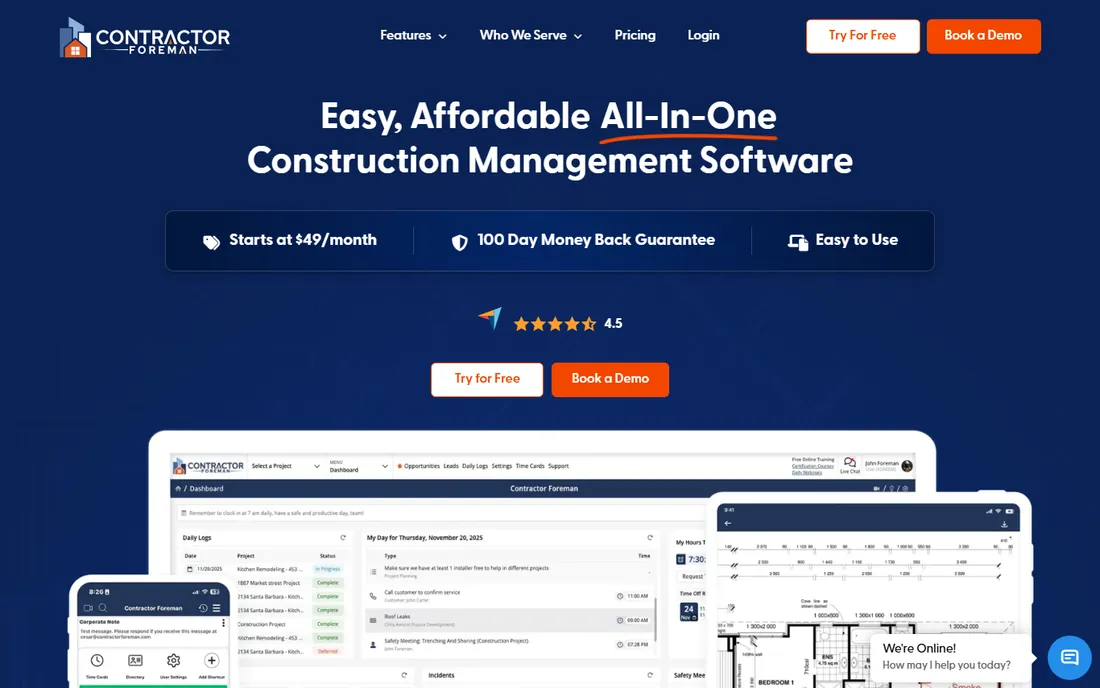
Contractor Foreman's claim is value: a full construction management platform starting at $49 a month. Estimating, scheduling, daily logs, job costing and a serviceable CRM come in one subscription. For a small contractor comparing per-user tools that cost five times as much, the math is compelling.
The tradeoff is polish. The interface is functional, and the CRM module exists to support the project tools rather than the other way around. There is no free plan. If your priority is affordable estimating with client tracking attached, it is worth a trial.
What we like- Very affordable
- Estimating plus project management in one
- Unlimited users on some plans
Watch out for- Interface is functional rather than polished
- CRM is secondary to project tools
#8
HubSpot
Best for: contractors that generate leads through marketing
Visit hubspot.com
Starting priceFree (Starter from $7/seat/month)
Free planYes
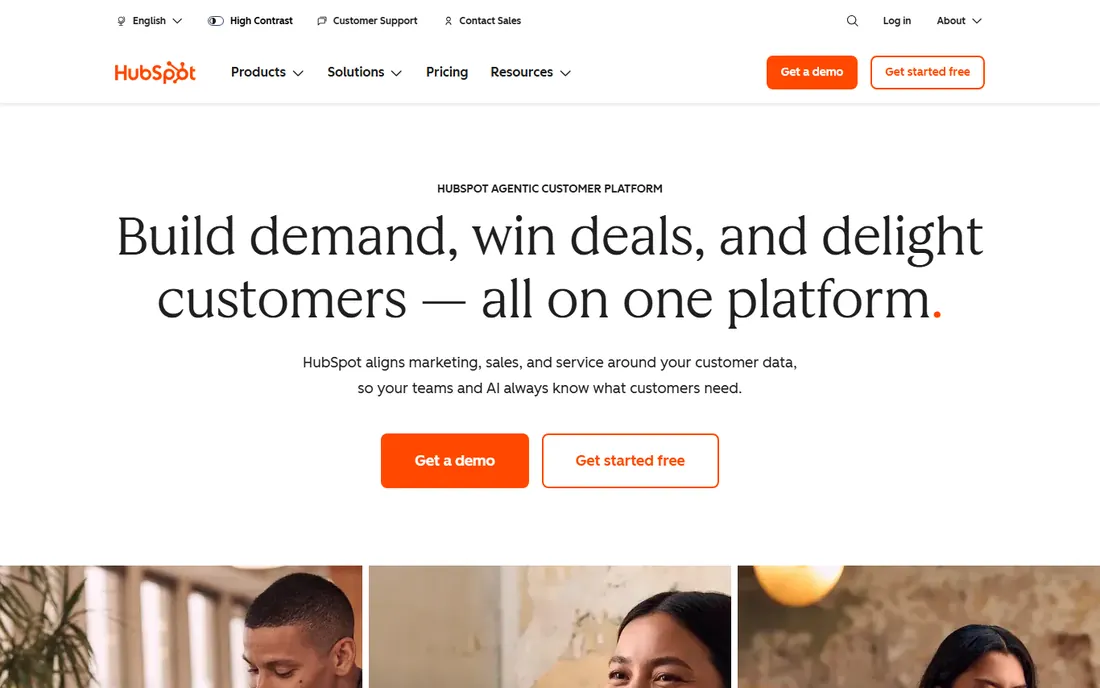
HubSpot is the generic CRM on this list, and it earns its place for one reason: contractors that live on inbound marketing. If your leads come from Google Ads, SEO and content, HubSpot's free CRM plus its marketing tools give you lead capture, pipeline tracking, email automation and reporting that no construction-native tool matches.
What you do not get is anything construction-specific. Bid deadlines, estimates and job costing need custom properties or integrations. Starter plans begin at $7 per seat per month. Use HubSpot when marketing drives your pipeline; use a construction tool when bids drive it.
What we like- Free CRM is genuinely capable
- Strong marketing automation
- Easy adoption
Watch out for- No construction-specific features
- Bid tracking needs custom setup
How to pick the right one for your trade
Start with your sales motion, not the feature list. A commercial subcontractor chasing bid invitations needs bid calendars and deadline tracking, which points to FollowUp CRM. A residential remodeler needs homeowner communication, which points to Buildertrend. A roofer needs claim tracking, which points to JobNimbus or AccuLynx. The trade decides the tool.
Second, decide whether you want the CRM inside a full platform or standalone. Projul, Buildertrend and Jobber bundle CRM with estimating, scheduling and invoicing. FollowUp CRM and HubSpot focus on the sales side and integrate with your other systems. Bundles simplify; best-of-breed fits better when you already have systems you like.
Third, count the real cost per user. Flat-rate tools like Projul get cheaper per person as you grow. Per-user tools like Buildertrend get more expensive. Model your team size in two years, not today.
Fourth, test the mobile app on an actual job site. Your estimators and foremen will live in this software on phones with gloves on. A CRM that only works well on a desktop will not get used.
How we chose
We evaluated construction CRMs against the workflows contractors actually run: lead intake, bid tracking, estimating, client communication and the handoff to the field. Pricing comes from vendor pages and documentation checked in October 2026, including Projul's published flat rates and Jobber's published plan structure. Vendors that do not publish pricing are listed as See website. Confirm current pricing before buying.
The spreadsheet trap
Most contractors we describe are upgrading from spreadsheets, a whiteboard, or the owner's memory. The trap is buying a powerful CRM and using it like a spreadsheet: contacts entered but never followed up, bids tracked but deadlines ignored. The software only pays for itself when the follow-up process changes with it.
That means assigning one owner to the pipeline, setting follow-up rules for every stage, and reviewing the bid calendar weekly. The contractors who get value from these tools are not the ones with the most features. They are the ones whose every lead gets a next step and a date.
Frequently asked questions
What is construction CRM software?
A CRM built for how contractors sell: tracking leads through bids, estimates, proposals and signed contracts, with features like bid calendars, deadline reminders, estimate tracking and handoff to project management. Generic CRMs lack the bid and trade-specific workflows.
How much does construction CRM software cost?
It ranges widely. Jobber starts at $49 a month and Contractor Foreman at $49 a month. Projul charges flat annual rates from $4,788 a year. Buildertrend starts around $339 a month. Enterprise-oriented tools like FollowUp CRM and AccuLynx use quote-based pricing.
Is HubSpot good for construction companies?
It is good for contractors whose leads come from marketing, since the free CRM plus marketing automation is unmatched. It lacks construction-specific features like bid tracking and estimating, so commercial contractors with heavy bid volume usually prefer a purpose-built tool.
Which CRM is best for roofing contractors?
JobNimbus and AccuLynx are the roofing specialists. JobNimbus covers CRM through production boards; AccuLynx adds insurance claim tracking and measurement integrations. Roofers doing insurance restoration lean toward AccuLynx.
Do I need a CRM if I already have project management software?
Yes, if you lose track of bids and follow-ups. Project management tools like Procore take over after the contract is signed. A CRM covers everything before that: leads, bids, proposals and close. Many firms run both and connect them.
Can a small contractor start with a free CRM?
Yes. HubSpot's free CRM handles contacts, pipelines and follow-up reminders for a solo operator or small crew. Move to a construction-specific tool when bid volume or trade-specific workflows outgrow it.
Sources we checked (7)
- https://projul.com/blog/crm-construction-guide
- https://technologyadvice.com/blog/sales/best-construction-crm/
- https://blog.hubspot.com/marketing/best-crm-for-construction
- https://www.constructionplacements.com/best-construction-crm-software-for-contractors/
- https://www.followupcrm.com/blog/post/top-10-best-crms-for-construction
- https://contractortoolstack.com/software/jobber/
- https://fieldservicepro.io/blog/jobber-pricing/
Is your product missing or out of date?
We review this list regularly. Vendors can request a listing, send updated pricing or ask about featured placement.

Shihab Mia · Founder, Rankite
Shihab has spent more than a decade helping SaaS and e-commerce brands grow through search. He writes Rankite's software buying guides from pricing pages, documentation and public user reviews. More about Shihab.