How we make this list: we compare pricing pages, product documentation and public user reviews. Rankite is independent; if a vendor ever pays for a featured spot, that listing is clearly labeled Partner.
Key takeaways
- A bad estimate costs you twice: once when you lose the bid, once when you win it wrong. The software is cheap compared to either mistake.
- STACK ($299/user/mo, free version) is the most approachable cloud takeoff and estimating tool; Clear Estimates ($59/mo annual) is the simplest for remodelers.
- Enterprise and heavy civil need different tools: Procore for connected project delivery, HCSS HeavyBid for heavy civil, RSMeans ($396/yr) for authoritative cost data.
- Most dedicated estimating tools are quote-based; we verified published pricing where it exists and say so where it does not.
Quick comparison
| Tool | Best for | Starting price | Free plan |
|---|
 Procore Procore | large contractors needing connected project delivery | See website | No |
 STACK STACK | cloud takeoff and estimating for GCs and trades | $299/user/mo | Yes |
 ProEst (Autodesk) ProEst (Autodesk) | experienced estimators wanting unlimited users | See website | No |
 Buildertrend Buildertrend | residential contractors needing all-in-one management | See website | No |
 Buildxact Buildxact | small residential builders wanting simplicity | See website | No |
 PlanSwift PlanSwift | trade contractors doing desktop takeoff | See website | No |
 Clear Estimates Clear Estimates | remodelers wanting fast, template-based estimates | $59/mo (billed annually) | No |
 HCSS HeavyBid HCSS HeavyBid | heavy civil and infrastructure contractors | See website | No |
 Bluebeam Bluebeam | PDF-based takeoff and markup across the industry | $260/user/yr | No |
 RSMeans Data Online RSMeans Data Online | authoritative, localized construction cost data | $396/yr | No |
Is your product missing or out of date?
We review this list regularly. Vendors can request a listing, send updated pricing or ask about featured placement.
The best construction cost estimating software
#1
Procore
Best for: large contractors needing connected project delivery
Visit procore.com
Starting priceSee website
Free planNo
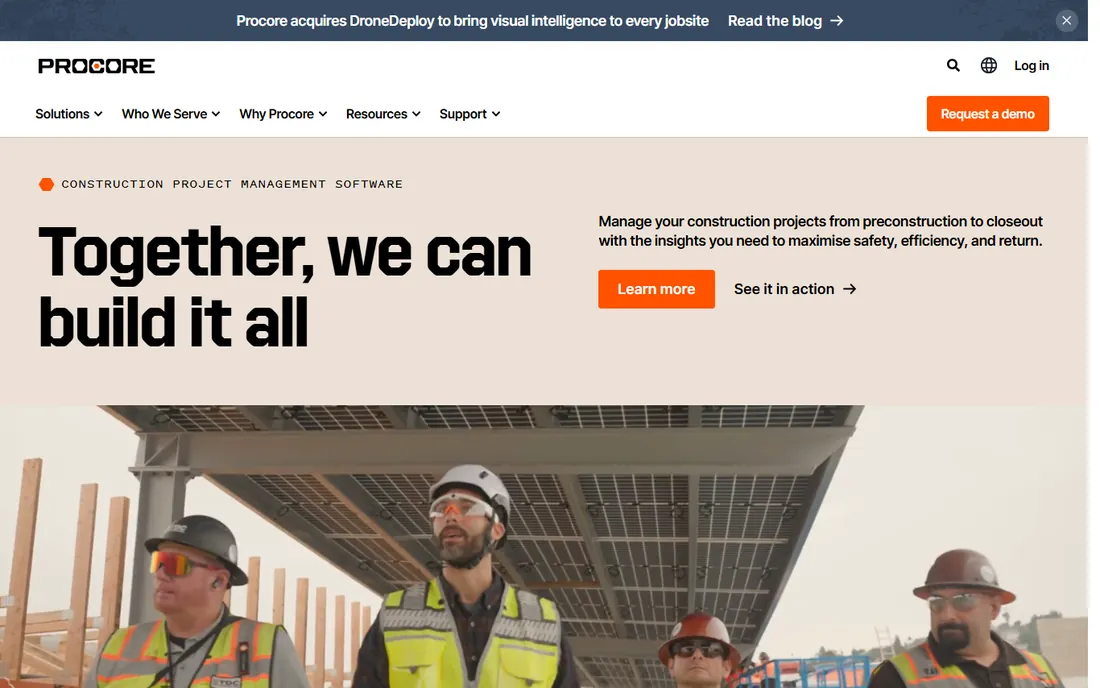
Procore is the platform most large contractors run their projects on, and estimating is one piece of it. Procore Estimating connects takeoff and bidding to the same platform that runs project management, field operations, quality and financials, so estimates flow into budgets and bids become executable projects.
The strength is the ecosystem. Hundreds of integrations, mobile apps for field teams, document and drawing management, and reporting that spans the project lifecycle. For general contractors, subcontractors and owners running multiple active projects, having estimating inside the same system as execution removes the handoff errors that spreadsheets and standalone tools create.
The trade-off is scope and price. Pricing is quote-based, tied to annual construction volume and modules, and third-party reports start around $375 per month. If your only problem is producing estimates, Procore is more platform than you need. If your problem is connecting estimating to everything else, it is the default choice and the best construction cost estimating software for large contractors.
What we like- The industry's leading construction management platform
- Estimating connects to field, financials and scheduling
- Huge integration ecosystem
Watch out for- Quote-based pricing tied to construction volume
- Overkill if you only need estimating
Starting price$299/user/mo
Free planYes
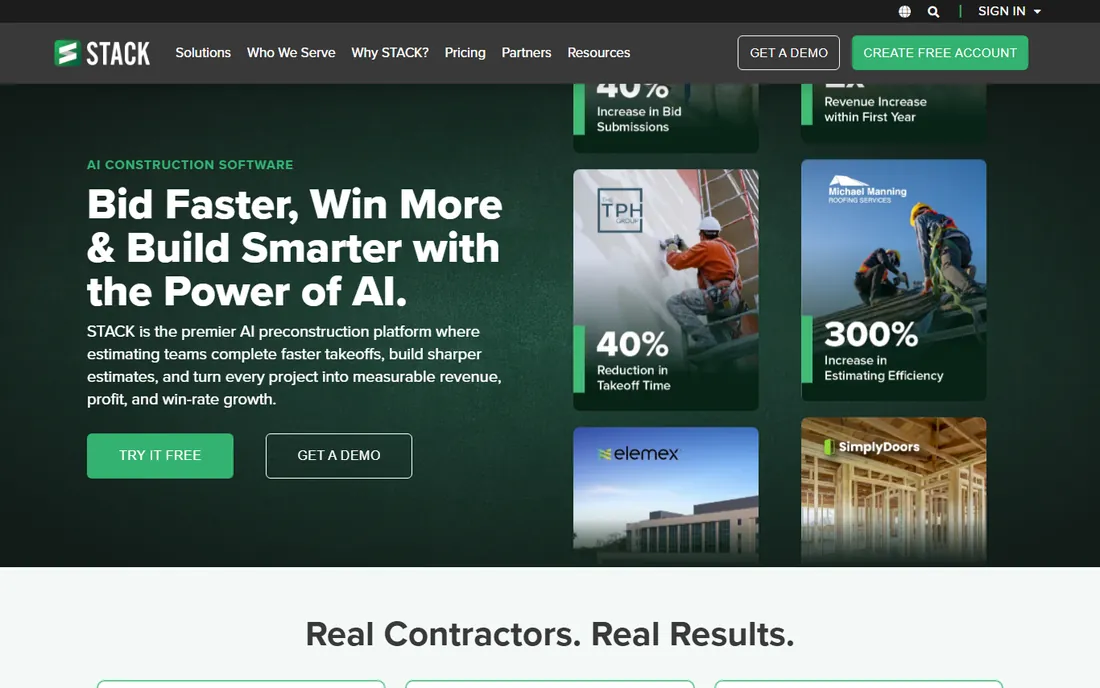
STACK is the cloud takeoff and estimating tool most estimators actually enjoy using. The Takeoff & Estimate plan starts at $299 per user per month, with a free version available for evaluation, and the pricing is published right on the site, which is rare in this market.
The product covers the preconstruction workflow: digital takeoff with quantity, labor and material measurement, flexible estimating with pre-built items and assemblies, unlimited plans and projects, and proposals that go straight from the estimate. STACK also offers Build & Operate for field management from $49 per user per month, and a full platform bundle from $348.
STACK suits mid-size GCs and specialty subcontractors that want speed: upload plans, measure digitally, build estimates from assemblies and bid same-day. The learning curve is short, and teams report getting up and running in hours. For cloud-first estimating without enterprise overhead, STACK is the pick.
What we like- Published pricing from $299/user/mo with a free version
- Fast cloud takeoff with pre-built assemblies
- Quick to learn
Watch out for- More estimating-focused than full project management
- Per-user pricing adds up
#3
ProEst (Autodesk)
Best for: experienced estimators wanting unlimited users
Visit autodesk.com
Starting priceSee website
Free planNo
ProEst is the veteran of this list, estimating since 1976, now owned by Autodesk. The platform combines digital takeoff, estimating, bid management and reporting with a pricing model that charges a flat annual rate for unlimited users, which makes it cost-effective for companies with five or more estimators.
The strengths are depth and integrations. Customizable cost databases, professional reporting, and direct integration with Procore, QuickBooks, Acumatica, CMiC, Buildertrend and Vista mean ProEst slots into the accounting and project management stack that mid-to-large GCs already run. The Autodesk ownership adds BIM and design ecosystem connections.
Pricing is quote-based, with third-party reports around $5,000 per year. The interface reflects its heritage more than cloud-native competitors. For experienced estimating teams that want a proven, deep tool with predictable per-company pricing, ProEst remains a strong choice.
What we like- Decades of estimating heritage since 1976
- Unlimited-user pricing model
- Now backed by Autodesk's ecosystem
Watch out for- Pricing not published on the vendor site
- Desktop-era workflows less modern than cloud natives
Starting priceSee website
Free planNo
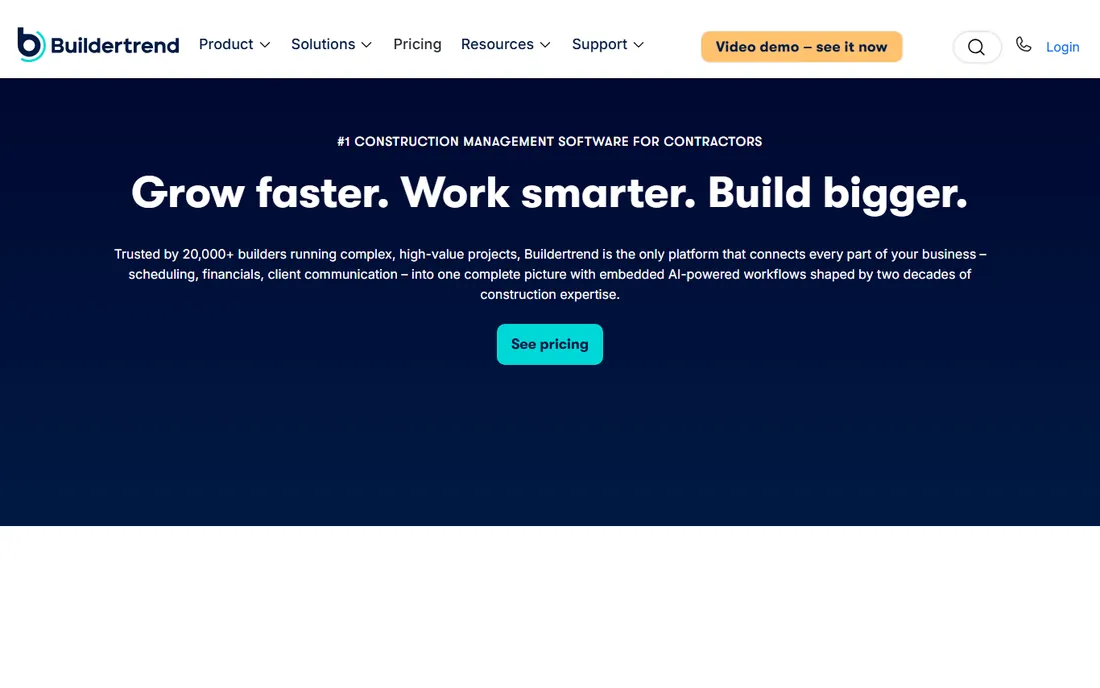
Buildertrend is the residential contractor's all-in-one. Founded in 2006, it combines estimating and takeoff with project scheduling, CRM, client communication, payments and job management in a single platform built for home builders and remodelers.
The residential specialization is the point. Templates, workflows and the client portal are designed around how residential projects run: homeowners who want updates, change orders that need approval, and selections that need tracking. The estimating feeds directly into scheduling and financials, so the bid becomes the project plan.
Pricing is quote-based. Commercial contractors will find the residential framing limiting. For custom home builders and remodelers that want one platform from estimate to closeout, Buildertrend is the category leader.
What we like- The top-rated platform for residential contractors
- Estimating plus scheduling, CRM and client portal
- Strong adoption
Watch out for- Quote-based pricing
- Residential focus limits commercial use
Starting priceSee website
Free planNo
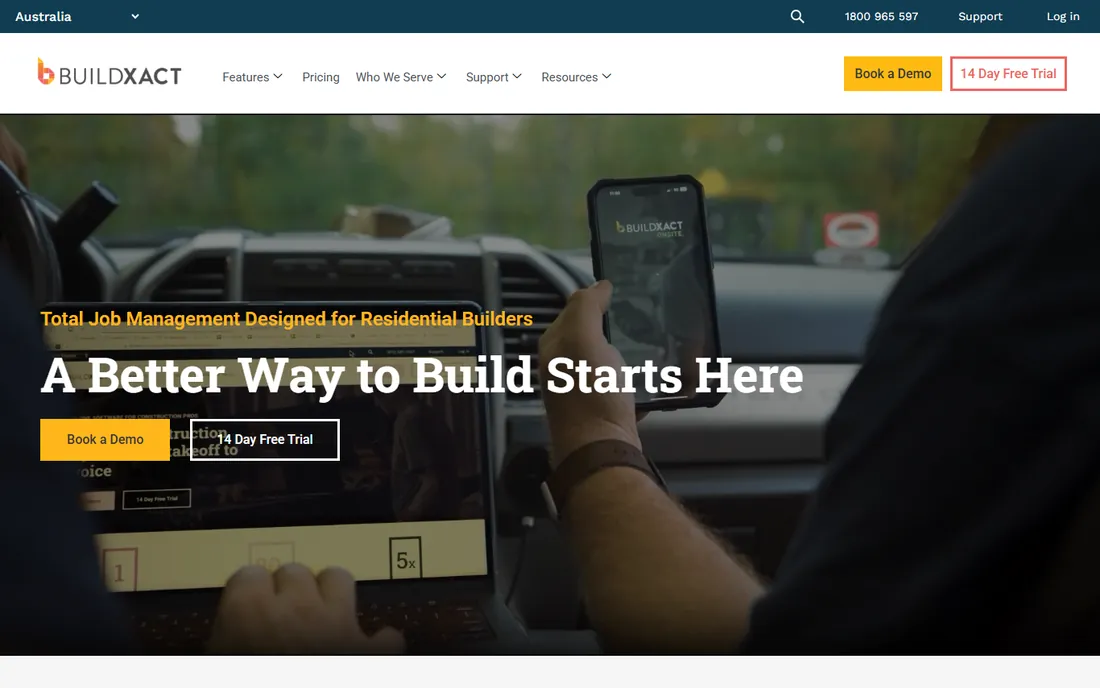
Buildxact is the Australian import that made residential estimating simple. Founded in 2011, it targets small builders, remodelers and specialty contractors with a workflow that goes from plan upload to scaled takeoff to professional quote in one streamlined flow.
The simplicity is deliberate. Where enterprise tools overwhelm small teams, Buildxact gives them exactly what they need: accurate takeoffs, estimates built from real supplier pricing, quotes that look professional, and project management tools like scheduling and invoicing to run the job afterward. Support gets strong reviews for responsiveness.
Pricing is not clearly published on the site, so expect a sales conversation. For small residential operations that find Buildertrend too much and spreadsheets too little, Buildxact hits the sweet spot.
What we like- Purpose-built for small residential builders
- Fast takeoff-to-quote workflow
- Includes scheduling and invoicing
Watch out for- Pricing not clearly published
- Smaller ecosystem than Buildertrend
Starting priceSee website
Free planNo
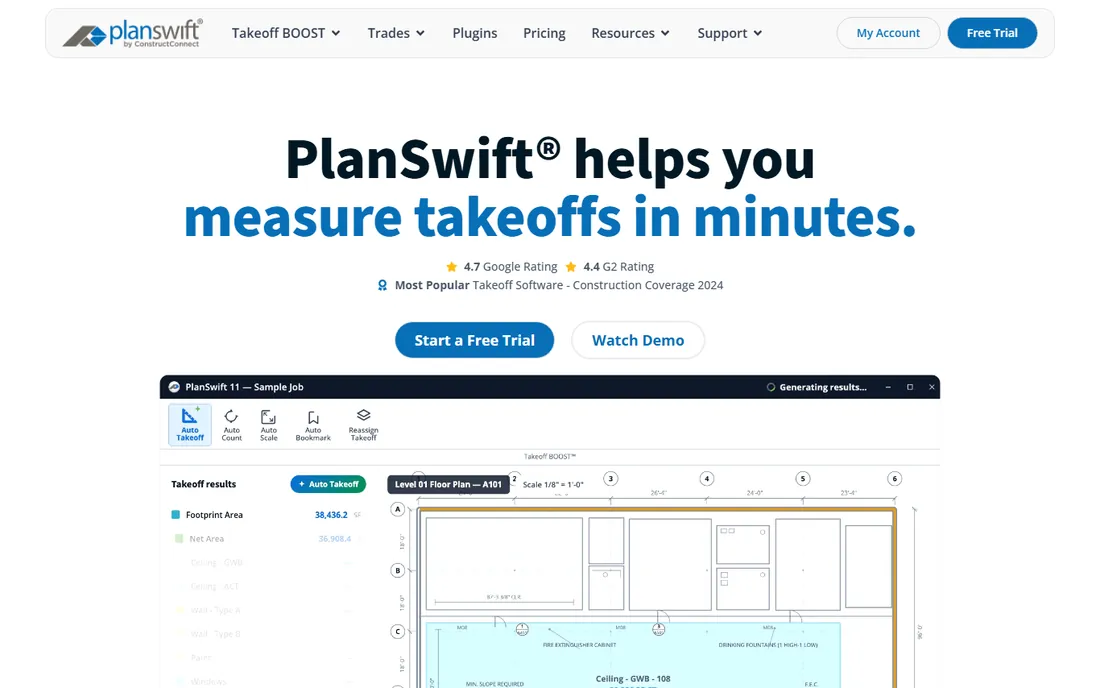
PlanSwift is the desktop takeoff tool that trade contractors have trusted for years. Now part of ConstructConnect, it offers on-screen digital takeoff with assembly-based estimating: point, click and drag on digital plans to measure, then build estimates from trade-specific assemblies and parts.
The strengths are speed and specialization. For electrical, plumbing, HVAC, concrete and other trades doing repetitive takeoffs, the trade-specific plugins and assembly libraries make bidding fast. The learning curve is low, and training is included. Third-party reports put pricing around $1,749 per year.
The limitation is architecture. PlanSwift is desktop software, which means local installs, local files and less natural collaboration than cloud tools like STACK. Pricing is not published on the vendor site. For trade contractors that want fast, proven desktop takeoff, it remains a workhorse.
What we like- Fast on-screen takeoff with trade-specific plugins
- Low learning curve
- One-time purchase history
Watch out for- Desktop software in a cloud world
- Pricing not published on the site
Starting price$59/mo (billed annually)
Free planNo
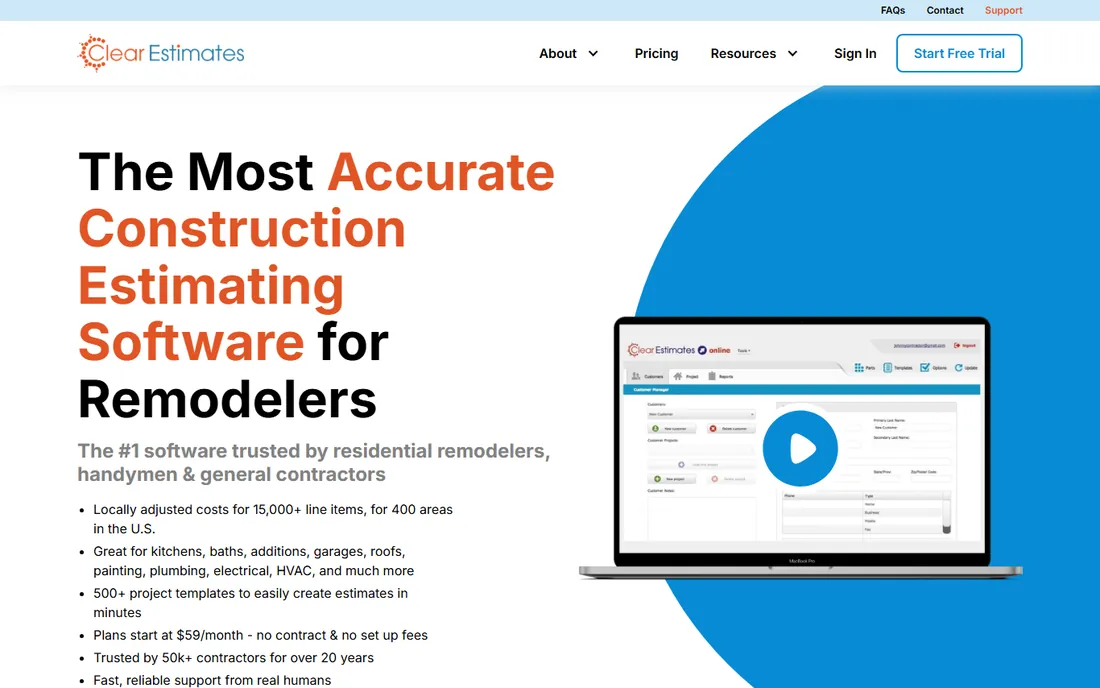
Clear Estimates is the simplest tool on this list, and that is the appeal. Pricing is transparent: Standard from $59 per month billed annually ($79 monthly), Pro from $99 per month billed annually ($119 monthly), with a 30-day free trial and no contract.
The product is built for residential remodelers and contractors: a 13,000-plus line item pricing database updated quarterly with labor and material rates, 400-plus preloaded templates, unlimited estimates and customers, built-in e-signature and payable invoices. The Pro plan adds AI-powered plan uploads, Buildertrend integration and CRM connections via Zapier.
Clear Estimates will not replace STACK or PlanSwift for heavy takeoff work. But for remodelers that need fast, accurate, professional estimates without learning a complex system, it is the fastest path from a walkthrough to a signed proposal.
What we like- Published pricing from $59/mo annual
- 13,000-plus line item database
- 400-plus preloaded templates
- 30-day trial
Watch out for- Residential remodeling focus
- Lighter takeoff than dedicated tools
#8
HCSS HeavyBid
Best for: heavy civil and infrastructure contractors
Visit hcss.com
Starting priceSee website
Free planNo
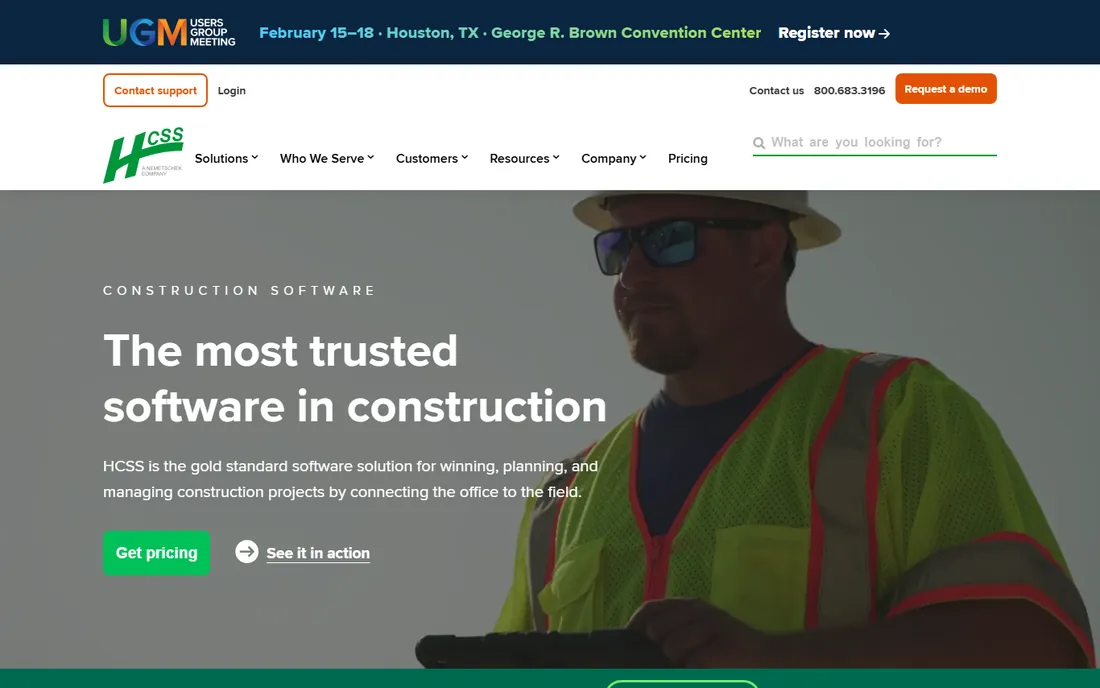
HCSS HeavyBid is the heavy civil specialist. Founded in 1986, HCSS builds software for the contractors that build roads, bridges and infrastructure, and HeavyBid is its estimating and bid management platform, designed around the cost structures of heavy civil work: equipment-heavy crews, production rates and DOT bid formats.
The platform centralizes proposals, cost data and submissions, automates complex calculations, tracks bid status and deadlines, and analyzes historical bid performance to sharpen future bids. Integration with the rest of the HCSS suite (scheduling, field, safety, telematics) connects the estimate to execution.
Pricing is quote-based. Building contractors will find the heavy civil framing wrong for their work. For heavy civil and infrastructure firms, HeavyBid is the category standard and the tool most competitors are measured against.
What we like- The specialized leader in heavy civil estimating
- Bid management and historical analysis
- Excellent support reputation
Watch out for- Quote-based pricing
- Overkill for building construction
Starting price$260/user/yr
Free planNo
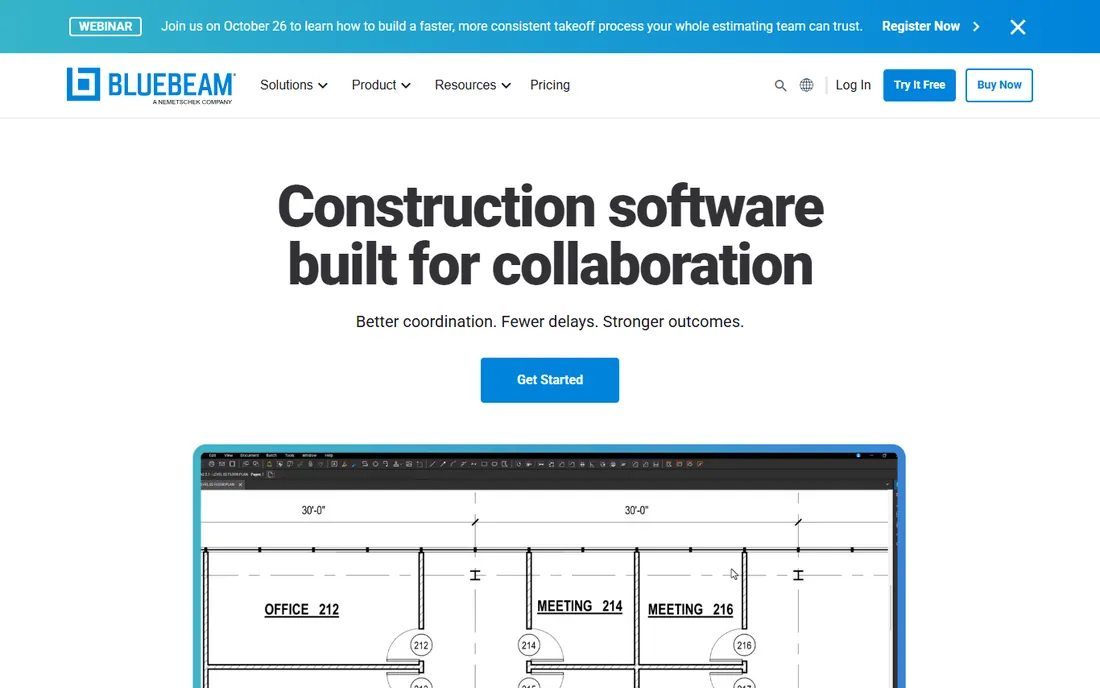
Bluebeam is the PDF tool the entire construction industry runs on. Revu, its flagship, handles PDF creation, markup, measurement and collaboration, with subscription plans published on the site: Basics from $260 per user per year, Core $330, Complete $440, and the AI-powered Max at $590.
For estimating, the relevant features are measurement and takeoff: set drawing scale, measure length, area, perimeter, counts, angles and volume, overlay and compare drawings, and link quantities to Excel. Studio Sessions enable real-time collaboration on the same documents. Note that Revu 20 reaches end of support in July 2026 and end of life in December 2026, so plan the subscription transition.
Bluebeam is not a cost database or a bid management system. But nearly every estimator uses it for plan review and quantity takeoff, and paired with RSMeans data or an estimating platform, it covers the measurement half of the workflow.
What we like- Published pricing from $260/user/yr
- The industry-standard PDF markup tool
- Powerful measurement and collaboration
Watch out for- PDF-first, not a full estimating database
- Revu 20 reaches end of life December 2026
#10
RSMeans Data Online
Best for: authoritative, localized construction cost data
Visit rsmeans.com
Starting price$396/yr
Free planNo

RSMeans is not estimating software in the usual sense. It is the construction industry's standard cost database, and RSMeans Data Online makes it a cloud tool: material, labor and equipment costs, searchable by keyword or CSI MasterFormat, localized to more than 970 locations across North America, with quarterly updates.
Pricing is published: Core from $396 per year for instant access to costs, Complete from $1,019 per year for deeper data and historical analysis, and Complete Plus from $5,973 per year with ML-powered predictive costs forecasting up to three years out. The platform includes basic estimating tools, square foot models and eTakeoff integration for plan-based measurement.
Every estimator on this list benefits from RSMeans data, whether directly or through integrations. If your estimates need defensible, localized unit costs, this is the source. It complements takeoff tools rather than replacing them.
What we like- Published tiers from $396/yr
- The industry-standard cost database
- Localized to 970-plus North American locations
Watch out for- Data, not a takeoff tool
- The full predictive tier is expensive
How we chose
We researched vendor documentation, product materials and construction software comparisons in October 2026. Every price above comes from the vendor's own pricing page; where vendors do not publish pricing we say so rather than repeating third-party figures. We weighted trade fit, takeoff quality, cost data authority and pricing transparency, and we included both full estimating platforms and the data and markup tools that estimators actually use alongside them.
Matching the software to your trade and project size
The single biggest predictor of fit is what you build. Heavy civil contractors should start with HCSS HeavyBid. Residential builders and remodelers should look at Buildertrend, Buildxact or Clear Estimates. Mid-size commercial GCs and specialty trades should evaluate STACK, ProEst and PlanSwift. Nobody should buy Procore just for estimating; buy it when you need estimating connected to project delivery.
Project size matters too. A two-person remodeling shop does not need unlimited-user enterprise pricing or BIM integration. A 50-person GC does not need a template-based remodeler tool. Match the tool's center of gravity to your typical project, not your aspirations. The vendors will happily sell you more than you need.
Data is the third axis. Whatever tool you choose, your estimates are only as good as your cost data. RSMeans Data Online exists precisely because localized, current unit costs are hard to maintain yourself. Budget for authoritative cost data alongside the software, and check which tools integrate with it before you commit.
Where estimating implementations actually go wrong
The first failure is the empty database. Estimating software without your assemblies, your labor rates and your historical costs is a very expensive calculator. The tools that win are the ones whose databases you actually populate. Budget weeks, not days, for building your cost library, and assign an owner to maintain it.
The second failure is the estimator who will not switch. Experienced estimators have workflows that work, and new software threatens their speed. The tools with the shortest learning curve (STACK, Clear Estimates) face less resistance, but process matters more: run the new tool in parallel with the old method for a few bids, prove the accuracy, then cut over. Never mandate a switch on a deadline bid.
The third failure is measuring the wrong thing. Teams track estimate speed, but the metric that matters is bid accuracy: estimated cost versus actual cost, and win rate at target margins. Instrument both from the start. Software that makes you faster at producing wrong numbers is worse than the spreadsheet it replaced.
Frequently asked questions
What is construction cost estimating software?
Construction cost estimating software helps contractors predict project costs before work begins. It typically includes digital takeoff (measuring quantities from plans), cost databases with material, labor and equipment rates, assembly and template libraries, bid management, and reporting. Advanced tools add BIM integration, historical cost analysis and AI-assisted measurement. The goal is accurate, defensible bids produced faster than spreadsheets allow.
How much does construction estimating software cost?
Published pricing ranges widely. Clear Estimates starts at $59 per month billed annually. Bluebeam starts at $260 per user per year. STACK's Takeoff & Estimate starts at $299 per user per month. RSMeans Data Online starts at $396 per year. Enterprise tools like Procore, ProEst, Buildertrend, HCSS HeavyBid and PlanSwift are quote-based, with third-party reports from roughly $1,500 to $20,000-plus per year depending on scale.
What is the difference between takeoff and estimating?
Takeoff is measuring quantities from construction plans: how many square feet of drywall, how many linear feet of conduit, how many cubic yards of concrete. Estimating is pricing those quantities: applying labor, material and equipment costs to produce a total project cost. Takeoff tools (PlanSwift, Bluebeam, STACK's takeoff) measure; estimating tools (ProEst, Clear Estimates, RSMeans) price. Most modern platforms do both.
Should small contractors buy estimating software?
Small residential contractors and remodelers benefit most from simple tools like Clear Estimates or Buildxact, which pay for themselves in professional-looking proposals and faster quoting. The key is matching the tool to the business: a two-person shop does not need enterprise estimating, but it does need to stop losing bids to arithmetic errors in spreadsheets.
What is RSMeans data?
RSMeans is the construction industry's standard cost database, maintained with localized material, labor and equipment costs for more than 970 North American locations, updated quarterly. Estimators use it to validate costs, build estimates from unit prices and defend bids with authoritative data. RSMeans Data Online makes it available as a cloud subscription starting at $396 per year.
Sources we checked (14)
- https://www.procore.com/
- https://www.stackct.com/
- https://www.stackct.com/pricing
- https://www.autodesk.com/
- https://buildertrend.com/
- https://www.buildxact.com/
- https://www.planswift.com/
- https://www.clearestimates.com/
- https://www.clearestimates.com/pricing
- https://www.hcss.com/
- https://www.bluebeam.com/
- https://www.bluebeam.com/pricing
- https://www.rsmeans.com/
- https://www.rsmeans.com/products/online
Is your product missing or out of date?
We review this list regularly. Vendors can request a listing, send updated pricing or ask about featured placement.

Shihab Mia · Founder, Rankite
Shihab has spent more than a decade helping SaaS and e-commerce brands grow through search. He writes Rankite's software buying guides from pricing pages, documentation and public user reviews. More about Shihab.