How we make this list: we compare pricing pages, product documentation and public user reviews. Rankite is independent; if a vendor ever pays for a featured spot, that listing is clearly labeled Partner.
Key takeaways
- Invicti (formerly Acunetix) is the consolidation pick: one scanner covering web apps and APIs, with proof-based scanning that re-checks vulnerabilities to cut false positives.
- OWASP ZAP costs nothing and integrates into CI pipelines, which makes it the default first DAST tool for teams with more engineers than budget.
- Burp Suite remains the standard for human-led testing, while StackHawk and Bright Security are built for developers who want findings inside pull requests, not PDFs.
- Enterprise buyers already on Qualys or Veracode should stay in those ecosystems; Detectify suits teams that want external attack-surface monitoring plus application scanning.
- Expect to run authenticated scans, not just anonymous crawls: most real vulnerabilities hide behind login forms, and every tool on this list handles that differently.
Your last penetration test found the SQL injection in March. It is October now, and your team has shipped three deploys a week since then. That gap is what DAST tools exist to close. Dynamic application security testing probes your running application the way an attacker would, sending malformed input, testing session handling, and crawling every page it can reach, all without reading a line of your source code.
DAST fits cloud-hosted apps especially well because it does not care where your code lives or what language it is written in. If the app answers HTTP requests, a DAST scanner can test it. The tools below range from a free open source scanner to enterprise platforms that fold DAST into a wider application security program. Pick based on how often you deploy, who will read the findings, and whether you need a human in the loop.
Quick comparison
| Tool | Best for | Starting price | Free plan |
|---|
 Invicti Invicti | enterprises consolidating web and API scanning | See website | Free trial |
 OWASP ZAP OWASP ZAP | budget-conscious teams adding DAST to CI | Free (open source) | Yes |
 Burp Suite Burp Suite | manual penetration testing and security researchers | See website | Yes (Community Edition) |
 Rapid7 InsightAppSec Rapid7 InsightAppSec | organizations already invested in Rapid7 | See website | Free trial |
 StackHawk StackHawk | development teams scanning inside CI/CD | See website | Free trial |
 Bright Security Bright Security | dev teams wanting AI-assisted DAST | See website | Free trial |
 Qualys WAS Qualys WAS | existing Qualys customers extending to web apps | See website | Free trial |
 Veracode Veracode | AppSec programs combining SAST and DAST | See website | Free trial |
 Detectify Detectify | teams wanting attack-surface monitoring plus app scans | See website | Free trial |
Is your product missing or out of date?
We review this list regularly. Vendors can request a listing, send updated pricing or ask about featured placement.
The best cloud security DAST software
Starting priceSee website
Free planFree trial
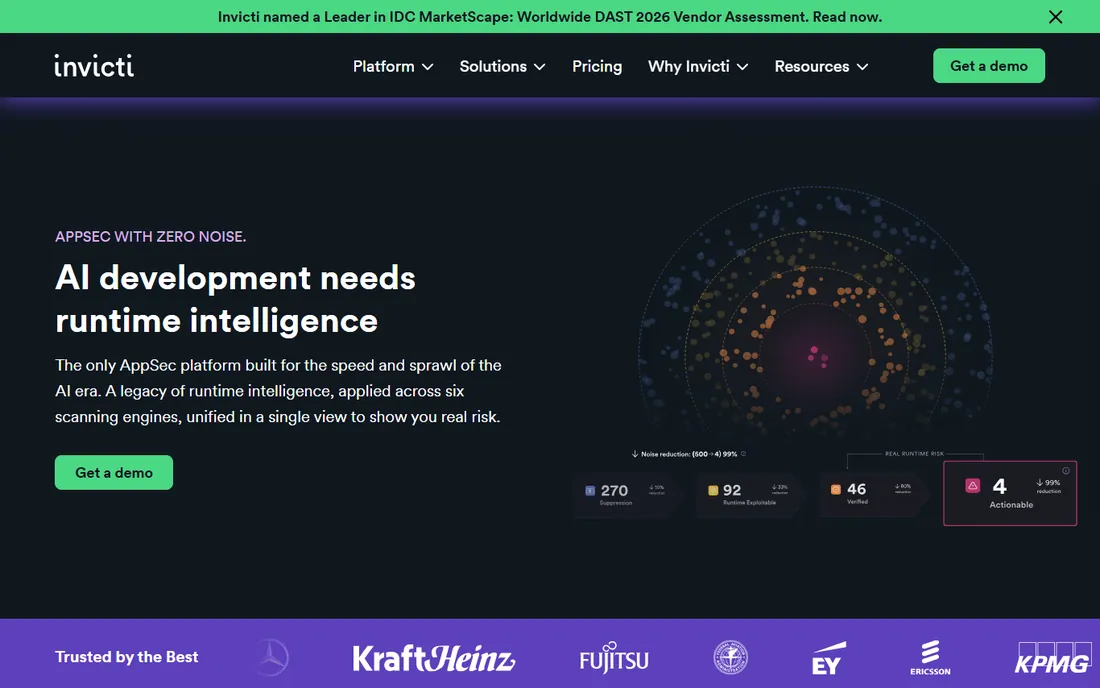
Invicti absorbed Acunetix, and the combined product is now the most complete scanner-first platform on this list. Its headline feature is proof-based scanning: when it reports a vulnerability, it attempts to confirm it safely, so your developers spend less time chasing false alarms. For security teams that route findings to busy engineering backlogs, that accuracy is worth more than raw scan speed.
The platform handles modern single-page applications and APIs, including authenticated areas behind complex login flows. The honest catch is the buying process. Pricing is quote-based, and the numbers land in enterprise territory, which puts it out of reach for small teams. If you run a security program with dedicated staff and a large application portfolio, Invicti is the scanner to beat. If you are a five-person startup, start with ZAP.
What we like- Proof-based scanning re-verifies findings to reduce false positives
- Covers web apps and APIs in one platform
- Strong authenticated scanning
Watch out for- Pricing is quote-based and sits at the enterprise end
- Smaller teams may find the feature set more than they need
Starting priceFree (open source)
Free planYes
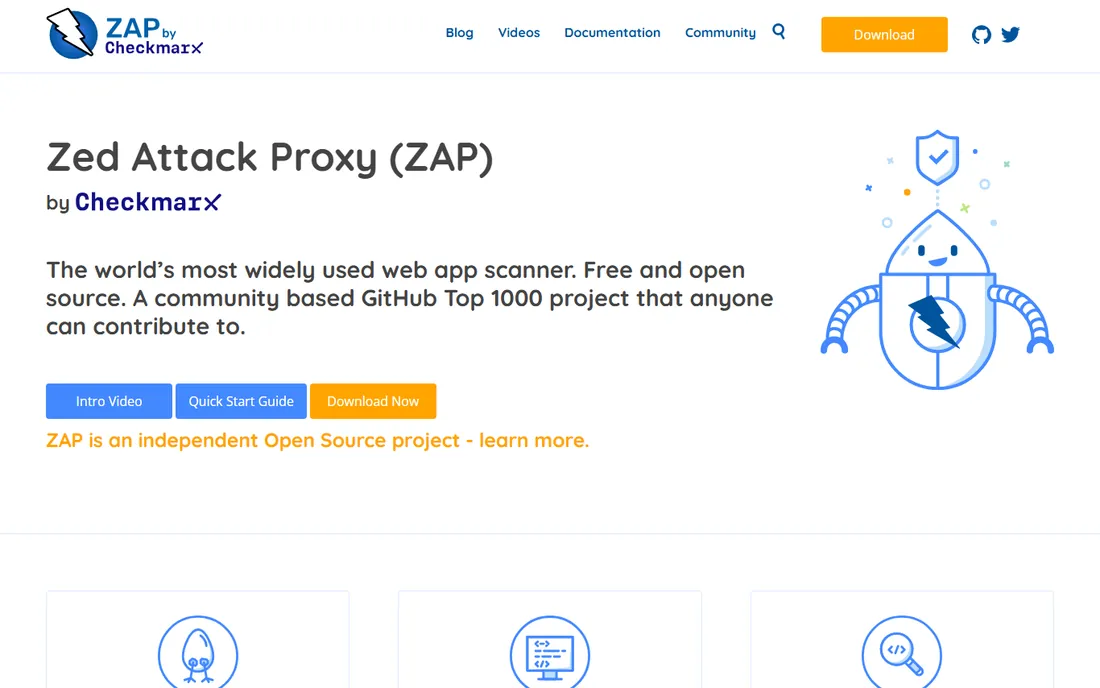
OWASP ZAP is maintained by a global community under the OWASP umbrella, and it is the reason small teams can do DAST at all. It spiders your application, runs active attacks against the pages it finds, and plugs into CI servers through its automation framework, so every build can get a baseline security scan without a license discussion. For the price of some setup time, you get coverage that would have cost six figures a decade ago.
The trade is expertise. ZAP reports what it finds, but tuning scan policies, handling authentication, and separating signal from noise takes someone who understands web security. It also lacks the polished reporting and ticketing integrations that managers like. Used by a competent engineer, it punches far above its price. Used blindly, it produces long reports nobody reads.
What we like- Completely free with no scan limits
- Active community and regular releases
- Automation framework built for pipelines
Watch out for- Results need a knowledgeable operator to interpret
- The interface feels dated next to commercial tools
Starting priceSee website
Free planYes (Community Edition)
Burp Suite is not really a scanner you schedule; it is the workbench professional testers live in. The proxy intercepts traffic between browser and app, the repeater lets you tweak requests by hand, and the intruder automates custom attack patterns. When a company hires a penetration tester, this is almost certainly what they open first. No automated tool on this list matches it for depth once a skilled human drives.
That human is also the requirement. Burp Suite Professional is priced per user, and the free Community Edition throttles the scanner enough that you will feel it. Teams that want push-button scheduled scans should look at Invicti or InsightAppSec instead. But for validating scanner findings, hunting business-logic flaws, and training your team to think like attackers, Burp Suite has no substitute.
What we like- The industry-standard toolkit for human testers
- Unmatched proxy and repeater workflow
- Huge extension library
Watch out for- The free edition is deliberately limited
- Automated scanning is weaker than its manual tooling
#4
Rapid7 InsightAppSec
Best for: organizations already invested in Rapid7
Visit rapid7.com
Starting priceSee website
Free planFree trial
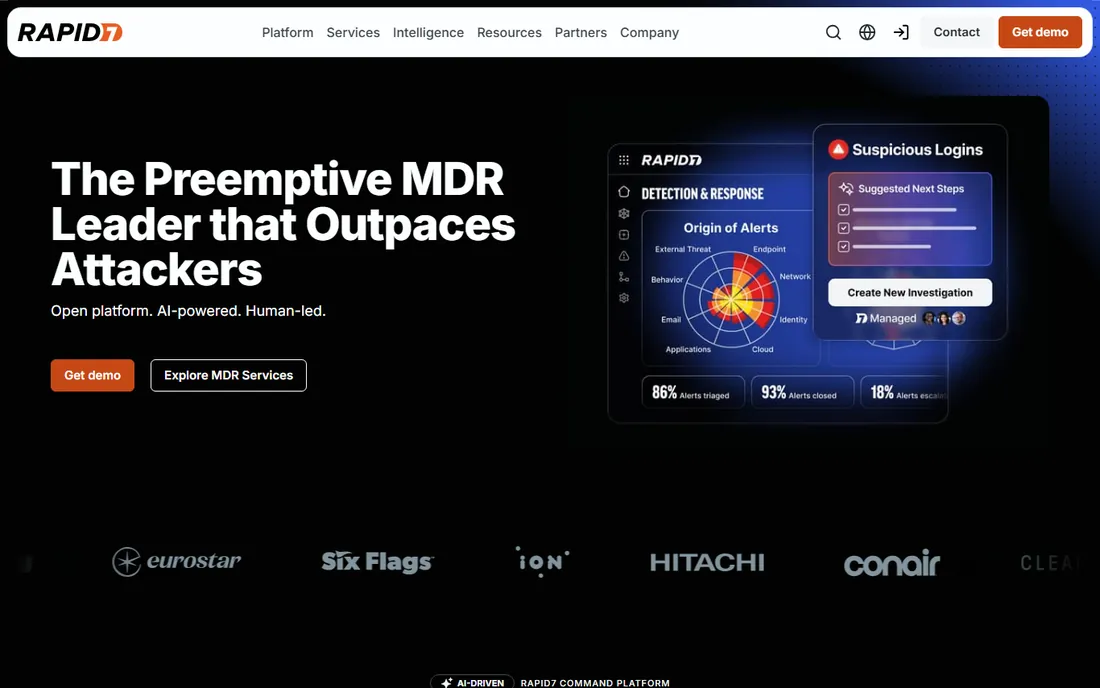
InsightAppSec is Rapid7's cloud DAST offering, and its main selling point is convenience. Scans run from Rapid7's cloud, results flow into the same console as your infrastructure vulnerability data, and remediation tracking stays in one place. For a security team that already pays for InsightVM, adding application scanning here is simpler than onboarding a separate vendor.
The attack replay feature re-runs exploits to confirm vulnerabilities, which keeps false positives down. The pricing model charges by application, so a company with dozens of small internal apps can face a bigger bill than expected. If you are not already a Rapid7 shop, compare carefully with Invicti before committing. If you are, InsightAppSec is the path of least resistance.
What we like- Cloud-based scanning with no infrastructure to maintain
- Pairs with Rapid7 vulnerability management
- Attack replay confirms findings
Watch out for- Pricing scales with app count, which adds up fast
- Best value only inside the Rapid7 ecosystem
Starting priceSee website
Free planFree trial
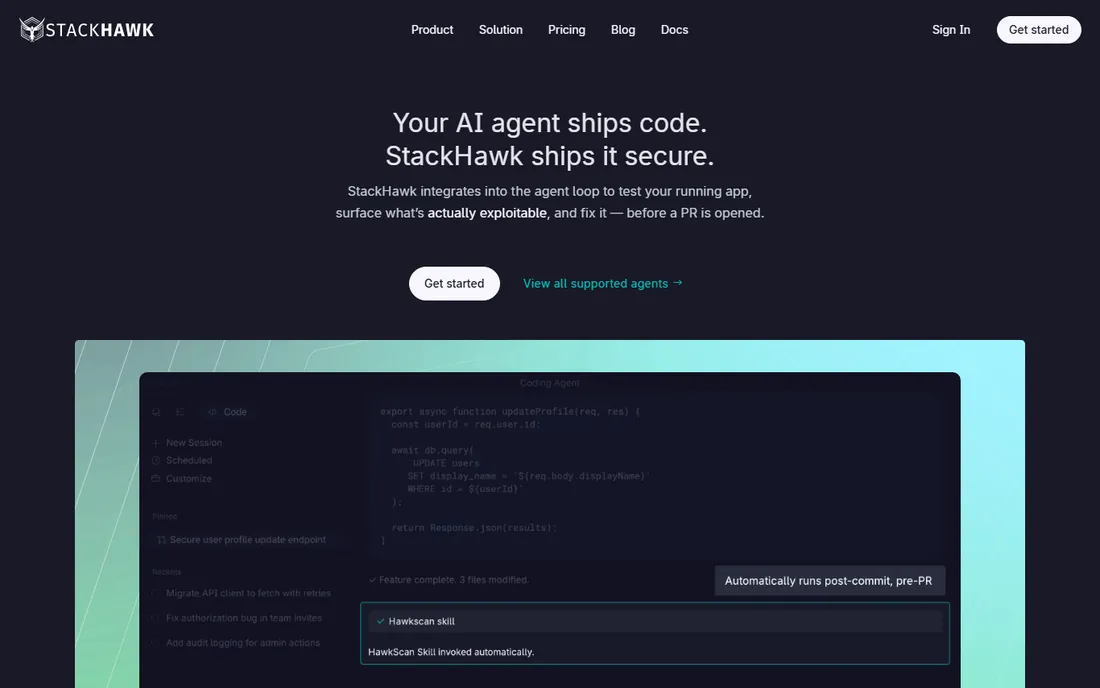
StackHawk takes the position that developers should run security scans themselves, in the pipeline, before code merges. You define your app and its authentication once, and scans run on every build with findings delivered where developers already work. The guidance attached to each finding explains the fix in developer terms rather than auditor terms, which shortens the path from report to patch.
It is deliberately narrower than Invicti or Burp Suite: the focus is automated scanning of web apps and APIs in CI, not deep manual testing or sprawling enterprise portfolios. Teams that scan dozens of legacy apps with exotic authentication may hit limits. For a modern engineering org that deploys often and wants security feedback at pull-request speed, StackHawk fits the workflow better than tools built for security teams.
What we like- Built API-first for pipeline integration
- Findings map to code with fix guidance
- Reasonable learning curve for developers
Watch out for- Less depth than enterprise scanners on complex apps
- Pricing tiers can surprise as scan volume grows
Starting priceSee website
Free planFree trial
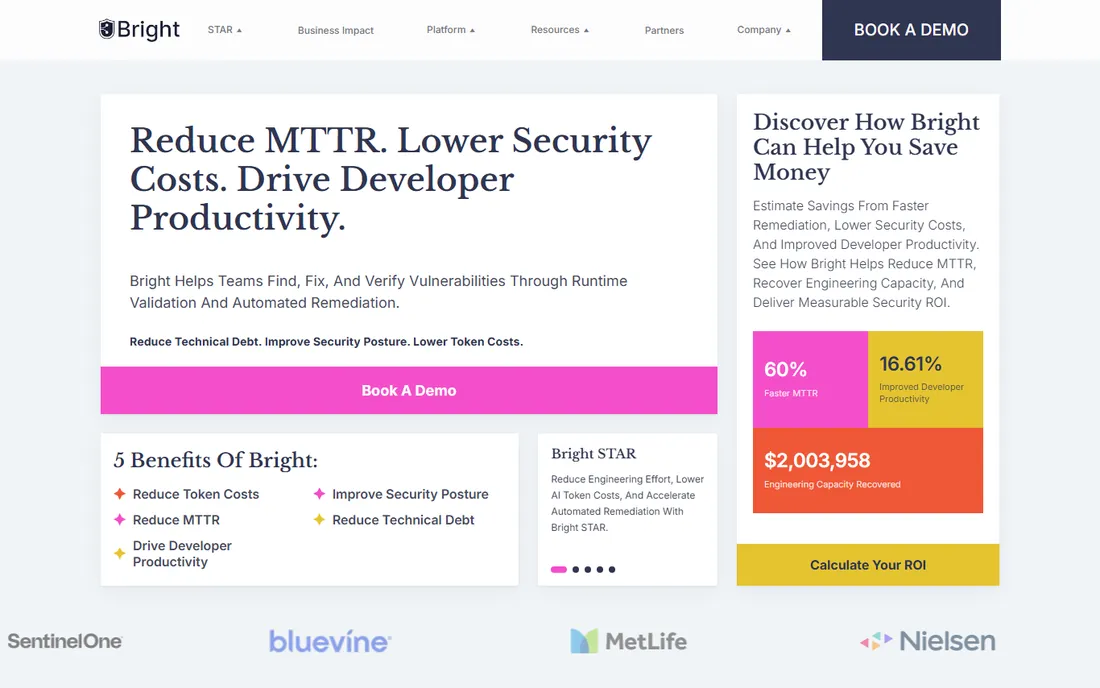
Bright Security positions itself as DAST rebuilt for how software ships now: APIs, single-page apps, and fast release cycles. Its AI layer works on two problems that plague every scanner, false positives and vague remediation advice, by validating findings and explaining fixes in context. Integrations with CI systems and ticketing tools keep the workflow inside engineering rather than in a separate security silo.
The honest weakness is tenure. Bright is newer than Invicti, Rapid7, or Veracode, and large enterprises sometimes hesitate with younger vendors regardless of technical merit. The product itself reviews well with development teams. If your priority is a scanner developers will actually use, Bright deserves a trial slot. If your procurement process demands a decade of references, look at the bigger names.
What we like- AI helps reduce false positives and suggests fixes
- Developer-friendly integrations
- Handles modern app architectures well
Watch out for- Younger company with a smaller track record
- Enterprise procurement teams may want more references
#7
Qualys WAS
Best for: existing Qualys customers extending to web apps
Visit qualys.com
Starting priceSee website
Free planFree trial
Qualys Web Application Scanning is the DAST module of the Qualys cloud platform, and it makes most sense for organizations already scanning infrastructure with Qualys. Findings land in the same dashboards, asset inventory stays unified, and compliance reports cover apps and servers together. For a CISO consolidating vendors, that single-pane view has real value.
As a standalone DAST purchase, it is less exciting. The scanning engine is capable, with authenticated crawling and API support, but the user experience lags the developer-focused tools on this list. Pricing follows the Qualys model of asset-based subscriptions. If your company already runs Qualys, WAS is the obvious add-on. If not, you will find friendlier options at Invicti or StackHawk.
What we like- Lives inside the Qualys cloud platform teams already know
- Strong compliance reporting
- Scalable for large app counts
Watch out for- The interface reflects its enterprise heritage
- Standalone buyers get more innovation elsewhere
Starting priceSee website
Free planFree trial
Veracode sells an application security platform, not just a scanner, and DAST is one module alongside static analysis and open source risk scanning. That matters for organizations building a formal AppSec program: one vendor, one policy engine, and reports that show coverage across testing types. Compliance-driven buyers in finance and healthcare often land here for exactly that reason.
The trade is that Veracode's DAST is good rather than best-in-class on its own. A team buying only dynamic scanning will find sharper tools elsewhere. Pricing is quote-based and aimed at mid-market and enterprise budgets. Choose Veracode when you want the whole program under one roof. Choose a specialist when DAST is the only gap you need to fill.
What we like- Unified platform for static, dynamic, and software composition analysis
- Strong policy and reporting for compliance
- Mature enterprise support
Watch out for- DAST alone is not its standout
- Pricing is enterprise-grade across the board
#9
Detectify
Best for: teams wanting attack-surface monitoring plus app scans
Visit detectify.com
Starting priceSee website
Free planFree trial
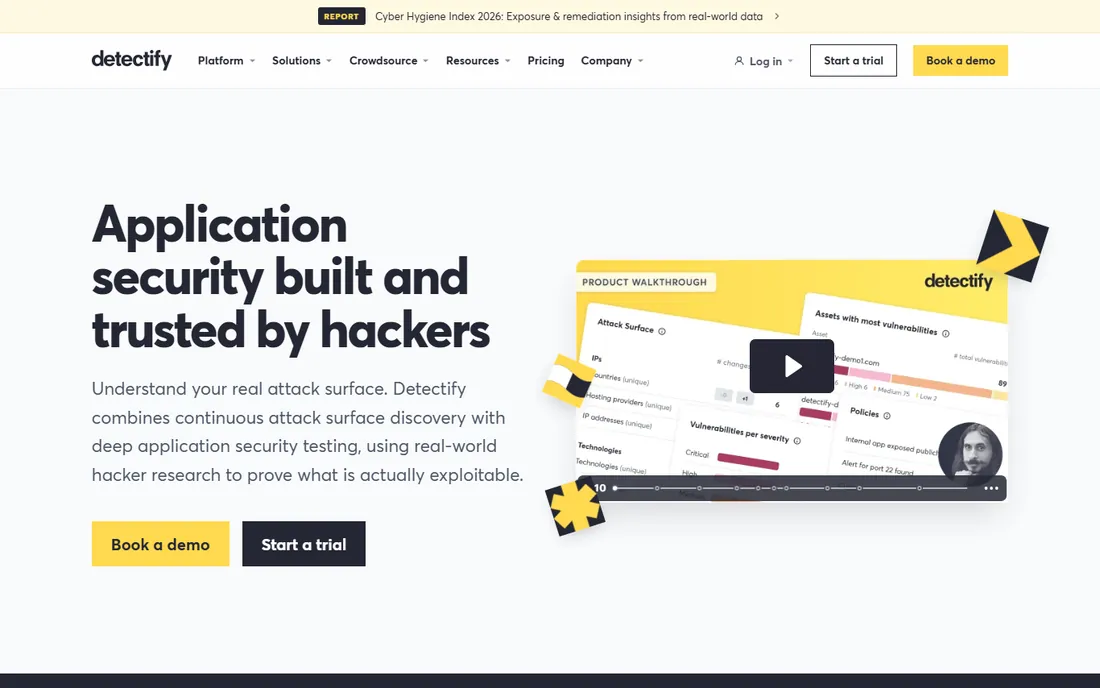
Detectify takes a different angle: its researcher community submits attack payloads, which get rolled into the scanning engine, so tests reflect what hackers are trying right now. It also discovers your external attack surface, subdomains and exposed services you forgot about, then scans the applications it finds. Setup is fast, and the whole thing feels built for teams without a dedicated AppSec engineer.
Depth is the compromise. For thorough testing of complex authenticated applications, Invicti or Burp Suite go further. Detectify's strength is breadth and currency: knowing about every internet-facing asset and testing each against current attack techniques. Small and mid-size companies with cloud-hosted apps and lean security staffing get the most from it.
What we like- Crowdsourced payloads from ethical hackers keep tests current
- Combines external surface discovery with app scanning
- Quick setup
Watch out for- Depth is lighter than dedicated enterprise scanners
- Pricing can climb with asset counts
How we chose
We compared DAST tools the way a buyer would: by reading vendor pricing pages and documentation, checking public reviews on G2, Capterra, and Reddit threads from working security engineers, and mapping features against real buying criteria like authenticated scanning, API support, CI/CD integrations, and reporting quality. We weighted fit for company size heavily, because a scanner perfect for a bank is wrong for a startup. No vendor paid for placement, and we did not claim hands-on testing of any product.
What to check before you buy a DAST scanner
Price and feature lists only tell half the story. These are the details that decide whether a scanner earns its keep after the contract is signed.
Authenticated scanning
Most serious vulnerabilities sit behind a login. Ask how the scanner handles your authentication: recorded login sequences, form-based auth, SSO, or API tokens. A scanner that only tests your public pages will miss the flaws that matter.
CI/CD integration
If your team deploys weekly or faster, point-in-time scans go stale within days. Look for scanners with pipeline plugins and APIs that can run automatically on builds and fail the build on critical findings. This is where StackHawk and Bright shine and where older enterprise tools sometimes lag.
False positive handling
Every scanner cries wolf sometimes. The question is how much of your team's time that costs. Proof-based re-testing, like Invicti's, and AI validation, like Bright's, directly reduce triage work. Ask vendors for their false positive rates and how findings get confirmed.
Pricing model
Some vendors charge per application, others per user, others by scan volume. Count your applications honestly, including staging environments and internal tools, because per-app pricing can double the quote you expected.
Where DAST fits in a security program
DAST is one testing method, not a complete program. Static analysis (SAST) reads your source code and catches flaws early in development, while DAST tests the running app and finds what SAST misses: configuration errors, authentication problems, and issues that only appear at runtime. Mature teams run both.
Neither replaces penetration testing. An automated scanner follows patterns; a human tester chains small weaknesses into real attacks and finds business-logic flaws no scanner understands. A sensible cadence is continuous DAST in your pipeline, SAST on every commit, and a human pen test once or twice a year, or after major changes.
Frequently asked questions
What is DAST in cloud security?
DAST, dynamic application security testing, probes a running web application by sending it crafted requests and observing the responses, the same way an attacker would. It needs no source code access, which makes it a natural fit for cloud-hosted apps, third-party software, and APIs. It finds runtime issues like injection flaws, broken authentication, and misconfigurations.
Can DAST replace penetration testing?
No. DAST is excellent at finding known vulnerability patterns across your whole application on a schedule. A penetration tester thinks creatively, chains vulnerabilities together, and tests business logic that no scanner understands. Use DAST for continuous coverage and pen tests for depth, ideally once or twice a year.
How long does a DAST scan take?
It depends on application size and scan depth. A quick baseline scan of a small app can finish in under an hour; a thorough authenticated scan of a large application can run for many hours or overnight. Most teams schedule deep scans weekly and run lighter scans on every deployment.
Does DAST work on APIs?
Yes, modern DAST tools accept API definitions like OpenAPI or Swagger files and test endpoints directly, including authenticated ones. API coverage varies by product, so verify support for your API style, REST, GraphQL, or otherwise, before buying.
What causes false positives in DAST?
Scanners infer vulnerabilities from application responses, and unusual but harmless behavior can look like a flaw. Tools with proof-based re-testing or AI validation cut the noise substantially. Expect to spend some triage time on any scanner, and budget for it in the first month.
Sources we checked (9)
- https://www.invicti.com/
- https://www.zaproxy.org/
- https://portswigger.net/
- https://www.rapid7.com/
- https://www.stackhawk.com/
- https://brightsec.com/
- https://qualys.com/
- https://www.veracode.com/
- https://detectify.com/
Is your product missing or out of date?
We review this list regularly. Vendors can request a listing, send updated pricing or ask about featured placement.

Shihab Mia · Founder, Rankite
Shihab has spent more than a decade helping SaaS and e-commerce brands grow through search. He writes Rankite's software buying guides from pricing pages, documentation and public user reviews. More about Shihab.