How we make this list: we compare pricing pages, product documentation and public user reviews. Rankite is independent; if a vendor ever pays for a featured spot, that listing is clearly labeled Partner.
Key takeaways
- NEC and Cognitec lead in accuracy benchmarks for high-security deployments.
- Microsoft Azure Face and Amazon Rekognition offer the easiest API access.
- FaceFirst focuses on retail and event security applications.
- This technology carries significant privacy and regulatory obligations.
Quick comparison
| Tool | Best for | Starting price | Free plan |
|---|
 NEC NEC | high-accuracy enterprise biometrics | See website | No |
 Cognitec Cognitec | face recognition specialists | See website | No |
 Microsoft Azure Face Microsoft Azure Face | developer-friendly face APIs | See website | Yes |
 Amazon Rekognition Amazon Rekognition | AWS-integrated image analysis | See website | Yes |
 FaceFirst FaceFirst | retail and event security | See website | No |
 Trueface Trueface | edge-based face recognition | See website | No |
 Kairos Kairos | developer face recognition APIs | See website | Yes |
 Luxand Luxand | face recognition SDKs | See website | No |
Is your product missing or out of date?
We review this list regularly. Vendors can request a listing, send updated pricing or ask about featured placement.
A note on responsible use
Face recognition is regulated differently across jurisdictions, with some regions restricting or banning certain uses. Organizations deploying it need legal review, clear consent policies and data protection measures. This article compares vendors on technical merit; compliance with applicable law is the buyer's responsibility.
What face recognition software does
Face recognition software detects faces in images or video and matches them against enrolled databases for identification or verification. Applications include access control, airport security, retail loss prevention and device sign-in. The tools here range from cloud APIs developers integrate in hours to enterprise biometric platforms for critical infrastructure.
#1
NEC
Best for: high-accuracy enterprise biometrics
Visit nec.com
Starting priceSee website
Free planNo
NEC's Bio-IDiom face recognition consistently ranks at the top of NIST accuracy benchmarks and runs in airports, border control and national ID systems worldwide. Its enterprise platform handles massive watchlists with speed.
Deployments are large, complex and expensive, sold through enterprise channels. For critical infrastructure where accuracy is paramount, NEC is the reference standard.
What we like- Top NIST benchmark accuracy
- Proven in airports and borders
- Enterprise scale
Watch out for- Enterprise pricing
- Complex deployments
- Regulatory scrutiny
Starting priceSee website
Free planNo
Germany-based Cognitec specializes in face recognition technology for integrators and enterprises, with strong benchmark performance and products for video screening and photo databases.
As a focused vendor, it offers deep expertise but a smaller ecosystem than giants. Integrators building biometric solutions value its specialization.
What we like- Focused expertise
- Strong accuracy
- Good for integrators
Watch out for- Smaller company
- Enterprise sales
- Narrower ecosystem
Starting priceSee website
Free planYes
Azure AI Face provides cloud APIs for face detection, verification and identification that developers integrate quickly, with a free tier for getting started. It runs in Microsoft's compliance-heavy cloud.
Microsoft has limited access to sensitive capabilities, requiring approval for identification scenarios, reflecting its responsible AI policies. Developers should review current use-case eligibility before building.
What we like- Easy API integration
- Free tier
- Microsoft ecosystem
Watch out for- Microsoft has restricted some features
- Approval needed for certain uses
- Cloud-only
Starting priceSee website
Free planYes
Amazon Rekognition offers face detection and comparison as part of AWS's image analysis service, with a free tier and pay-as-you-go pricing. AWS shops add face capabilities to applications with minimal effort.
It is a general image service rather than a biometric specialist, with lower accuracy ceilings than NEC or Cognitec. For application features rather than security-critical identification, it suffices.
What we like- Easy AWS integration
- Free tier
- Scales effortlessly
Watch out for- Accuracy trails specialists
- Limited face-specific features
- AWS lock-in
Starting priceSee website
Free planNo
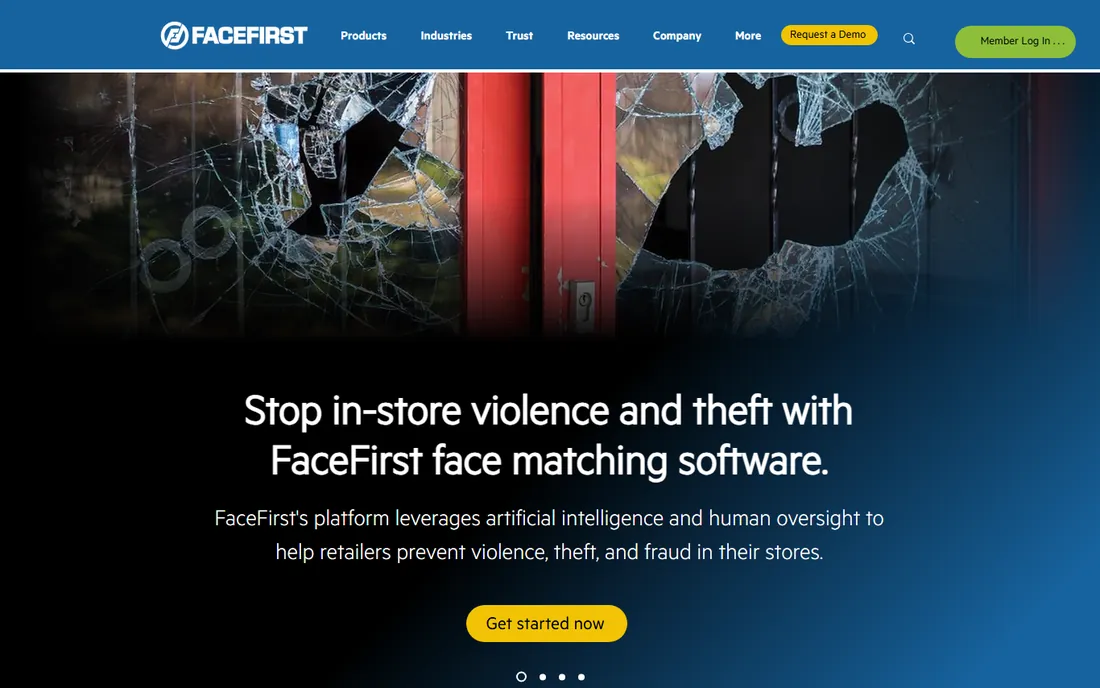
FaceFirst provides face recognition for retail loss prevention, event security and transportation, alerting staff in real time when persons of interest appear. Its deployments are well documented.
Retail face recognition faces public and regulatory pushback in many regions; buyers need thorough legal review. The technology works as advertised for its designed scenarios.
What we like- Retail-focused
- Real-time alerts
- Proven deployments
Watch out for- Controversial use cases
- Pricing by quote
- Public scrutiny
Starting priceSee website
Free planNo
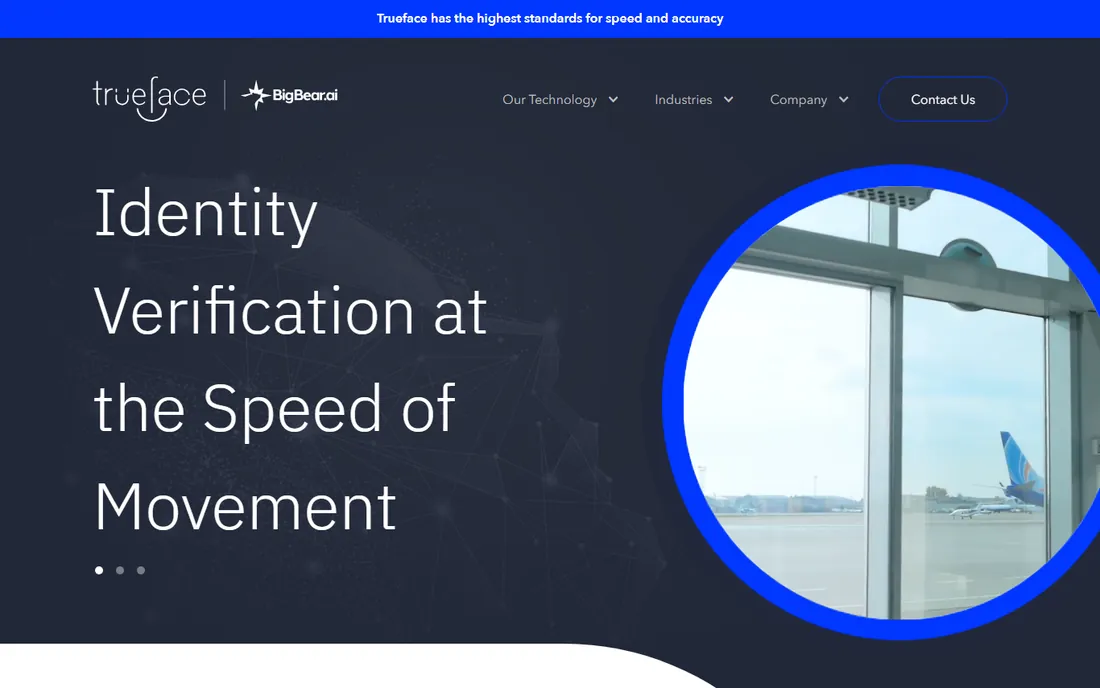
Trueface, now part of Pangiam, specialized in edge-based face recognition running on devices without cloud connectivity, suited to access control and check-in. On-device processing addresses some privacy concerns.
Corporate changes mean buyers should confirm current product status. The edge architecture remains attractive where cloud is impractical or prohibited.
What we like- On-device processing
- No cloud needed
- Good for access control
Watch out for- Smaller vendor
- Acquired by Pangiam
- Evolving product line
Starting priceSee website
Free planYes
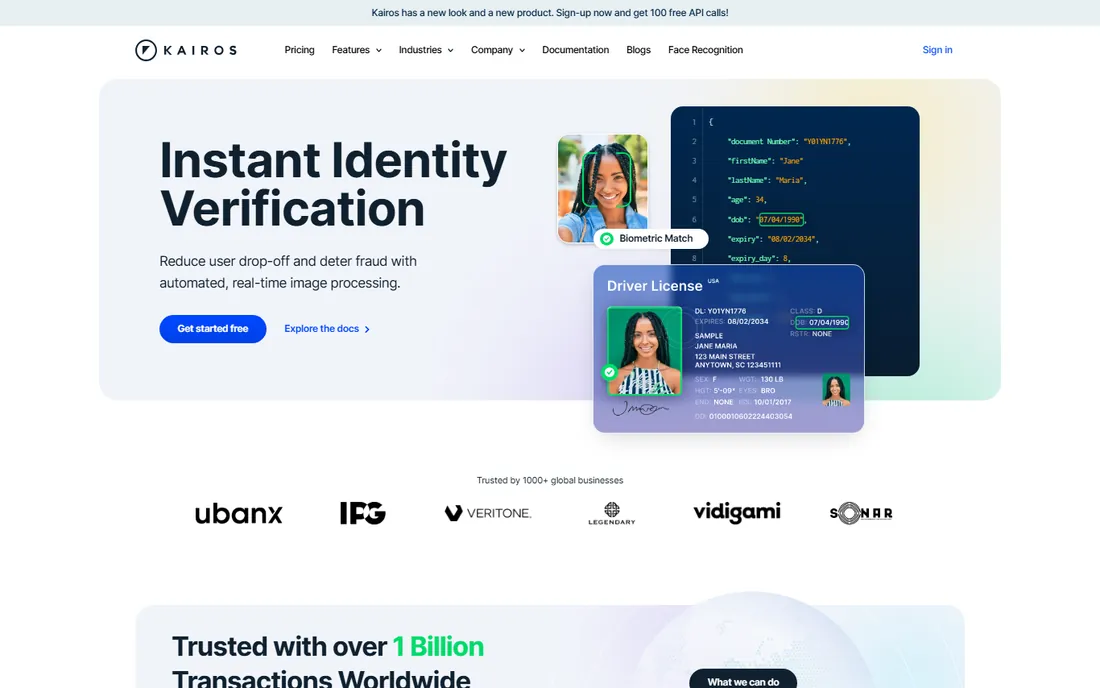
Kairos offers straightforward face recognition APIs for developers with a free tier, making it easy to prototype identification and verification features.
It lacks the benchmark pedigree and enterprise depth of NEC or Cognitec. For developer experimentation and small applications, the simplicity appeals.
What we like- Simple developer APIs
- Free tier
- Quick prototyping
Watch out for- Smaller company
- Accuracy unproven at scale
- Limited enterprise features
Starting priceSee website
Free planNo
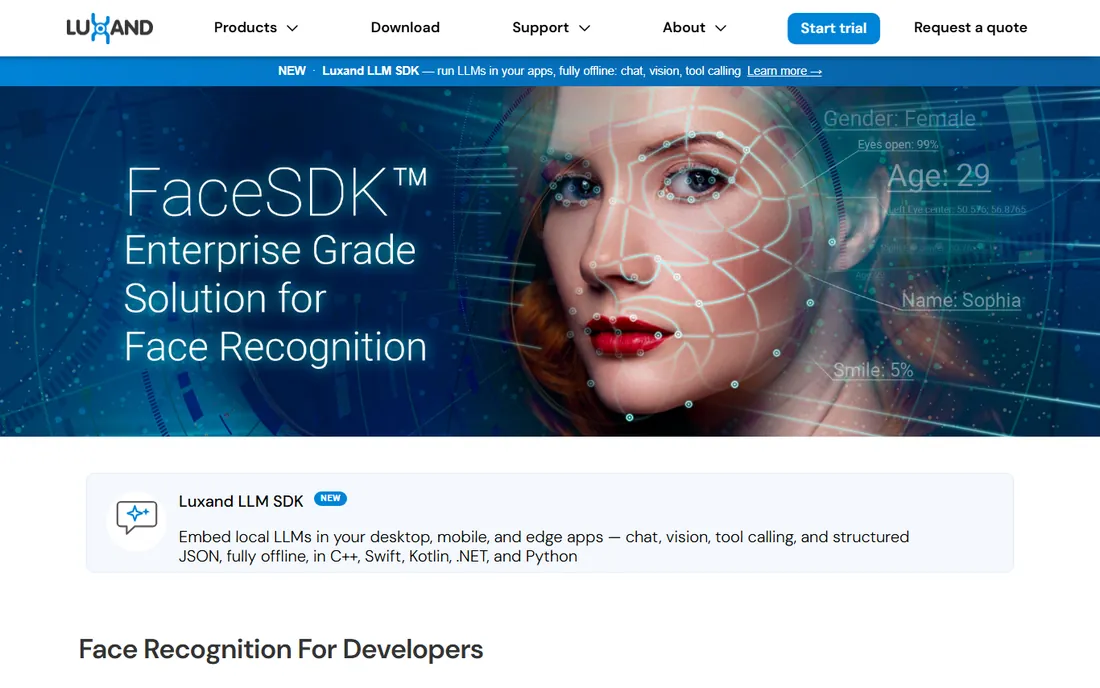
Luxand sells face recognition SDKs for Windows, Linux, macOS, iOS and Android at accessible prices, serving developers embedding face detection in products for years.
Accuracy and support trail the top tier. Budget-conscious developers needing basic face capabilities find it practical.
What we like- Affordable SDKs
- Cross-platform
- Long track record
Watch out for- Less accurate than leaders
- Smaller support
- Dated documentation
How we chose
We reviewed vendor product pages, NIST benchmark publications and industry coverage. We compared accuracy claims, deployment models, API accessibility, edge vs cloud architectures and pricing accessibility. We excluded consumer device features like phone sign-in. We did not claim hands-on testing.
Buying guide: choosing face recognition software
Start with legal review. Regulations vary enormously by jurisdiction and use case; some deployments need consent frameworks, data protection impact assessments or are prohibited. Engage counsel before evaluating technology.
Match accuracy to stakes. Security-critical identification needs benchmark leaders like NEC or Cognitec. Application features tolerate cloud APIs. Do not use general image services for high-stakes identification.
Consider edge vs cloud. On-device processing keeps biometric data local, easing some privacy concerns but requiring capable hardware. Cloud APIs simplify deployment but move sensitive data offsite.
Accuracy and bias considerations
NIST testing shows accuracy varies by algorithm and demographics; leading vendors publish results. Buyers should demand demographic performance data and test on their own populations. Responsible deployment includes ongoing monitoring for disparate performance.
Building a compliant deployment
Responsible face recognition starts before vendor selection. Define the specific problem and confirm face recognition is proportionate; many goals are achievable with less invasive methods. Conduct a data protection impact assessment documenting necessity, data flows, retention and safeguards. Establish clear consent or legal basis, publish notices where required, and set strict retention limits with automatic deletion. Limit database enrollment to what the use case needs and audit access regularly. Train staff on the system's limitations, including that no algorithm is perfect and human review should govern consequential decisions. Revisit the assessment annually or when the deployment changes.
Alternatives worth considering first
Many problems assigned to face recognition have less invasive solutions. Access control works well with badges, mobile credentials or fingerprints, which avoid the privacy burden of face databases. Customer analytics can use anonymized people-counting instead of identification. For watchlist screening, consider whether the watchlist could be smaller or the checking less continuous. Regulators and the public increasingly ask whether face recognition was necessary or merely convenient; having a documented answer protects the project. When face recognition genuinely is the right tool, its accuracy and auditability should be demonstrably better than the alternatives for your specific task.
Testing before you commit
Never deploy face recognition on vendor claims alone. Run a pilot on your actual population, lighting and camera angles; lab accuracy rarely transfers directly. Measure false accepts and false rejects separately, because their costs differ enormously by use case. Test demographic performance explicitly rather than assuming averages apply. Include adversarial testing: printed photos, masks, and poor lighting. Run the pilot long enough to capture real-world variation across days and seasons. Document results and compare against the alternative you would use otherwise. A pilot that reveals problems is a success; it is far cheaper than discovering them in production.
Frequently asked questions
What is the best face recognition software?
NEC and Cognitec for accuracy-critical enterprise use; Azure Face and Rekognition for developer APIs; FaceFirst for retail security scenarios.
How much does face recognition software cost?
Cloud APIs are pay-as-you-go with free tiers. Enterprise biometric platforms are quote-based, often significant. SDKs like Luxand are affordably licensed.
Is face recognition legal?
It depends on jurisdiction and use case. Some regions heavily restrict it; the EU AI Act and various US state laws impose requirements. Always get legal advice.
What is the difference between detection and recognition?
Detection finds faces in an image; recognition identifies who they are by matching against a database. Recognition carries far greater privacy implications.
How accurate is face recognition?
Top algorithms exceed 99 percent accuracy in NIST tests under good conditions. Real-world accuracy depends on image quality, lighting and demographics.
Can face recognition run on-device?
Yes. Trueface and similar edge solutions process on local hardware without cloud, which some privacy frameworks prefer.
Which is better: Azure Face or Rekognition?
Azure Face offers more face-specific features with responsible-use gating; Rekognition integrates more simply for AWS shops. Neither matches biometric specialists for critical identification.
What regulations govern face recognition?
Rules vary widely: the EU AI Act imposes strict requirements, several US states and cities restrict government or commercial use, and other countries have their own frameworks. Always obtain local legal advice.
How do I evaluate vendor accuracy claims?
Ask for NIST FRTE results and demographic breakdowns, then test on your own population and conditions. Marketing accuracy figures rarely reflect your deployment reality.
Should face recognition databases be encrypted?
Absolutely. Biometric templates deserve strong encryption at rest and in transit, strict access controls, and audit logging. Treat them with the same care as passwords, since biometrics cannot be changed.
What is liveness detection?
Technology that confirms a real person is present rather than a photo or video, preventing spoofing attacks. Essential for access control and verification scenarios.
What is face verification vs identification?
Verification confirms you are who you claim, like signing into a phone, matching one face to one enrolled template. Identification searches a database to determine who someone is. Identification is far more privacy-sensitive.
How long should biometric data be retained?
As short as possible for the purpose: real-time screening may need no retention at all, while access logs have defined periods. Automatic deletion policies beat manual processes.
Can face recognition be fooled by photos?
Basic systems can; liveness detection prevents it by requiring real presence. Any security deployment should include anti-spoofing measures.
What is a watchlist in face recognition?
A database of enrolled faces the system checks against, such as authorized staff or persons of interest. Watchlist management and accuracy directly affect results.
What is NIST FRTE?
The National Institute of Standards and Technology's Face Recognition Technology Evaluation, the industry benchmark for accuracy. Ask vendors for their latest results.
Does face recognition work with masks?
Accuracy drops significantly with masked faces. Some algorithms handle partial occlusion better; test your specific scenario.
How does lighting affect face recognition?
Poor lighting degrades accuracy significantly. Good deployments ensure consistent, frontal illumination at capture points and test across day and night conditions.
Sources we checked (8)
- https://www.nec.com
- https://www.cognitec.com
- https://www.azure.microsoft.com
- https://www.aws.amazon.com
- https://www.facefirst.com
- https://www.trueface.ai
- https://www.kairos.com
- https://www.luxand.com
Is your product missing or out of date?
We review this list regularly. Vendors can request a listing, send updated pricing or ask about featured placement.

Shihab Mia · Founder, Rankite
Shihab has spent more than a decade helping SaaS and e-commerce brands grow through search. He writes Rankite's software buying guides from pricing pages, documentation and public user reviews. More about Shihab.