How we make this list: we compare pricing pages, product documentation and public user reviews. Rankite is independent; if a vendor ever pays for a featured spot, that listing is clearly labeled Partner.
Key takeaways
- ScorebuddyCX (renamed from Scorebuddy in June 2026) is the most QA-native pick: AI Auto Scoring across 100% of interactions plus coaching and learning in one platform.
- EvaluAgent and Playvox are the value plays, with published per-user pricing ($35 and $15 respectively) in a category where most vendors hide their prices.
- Observe.AI and CallMiner bring the deepest conversation intelligence, but expect enterprise sales cycles, implementation projects and custom quotes.
- Balto is the outlier: real-time guidance during the call rather than scoring after it, which suits sales and collections teams more than compliance QA.
- Talkdesk makes sense only if you want QA inside a full contact-center platform; as a standalone QA buy it is overkill.
Quick comparison
| Tool | Best for | Starting price | Free plan |
|---|
 ScorebuddyCX ScorebuddyCX | QA teams wanting AI auto-scoring on every interaction | $24/user/month | Free trial |
 EvaluAgent EvaluAgent | QA plus coaching and learning in one affordable platform | $35/user/month (AutoQM & Improvement) | No |
 Playvox Playvox | QA paired with workforce management | $15/user/month (Starter) | No |
 MaestroQA MaestroQA | Support teams that want QA running fast | See website | No |
 Observe.AI Observe.AI | Enterprise conversation intelligence | See website | No |
 CallMiner CallMiner | Deep speech analytics at enterprise scale | See website | No |
 Balto Balto | Real-time agent guidance during calls | See website | No |
 Talkdesk Talkdesk | QA built into a full contact-center platform | $85/user/month (CX Cloud Digital Essentials) | Free trial |
Is your product missing or out of date?
We review this list regularly. Vendors can request a listing, send updated pricing or ask about featured placement.
The best call center QA software
Starting price$24/user/month
Free planFree trial
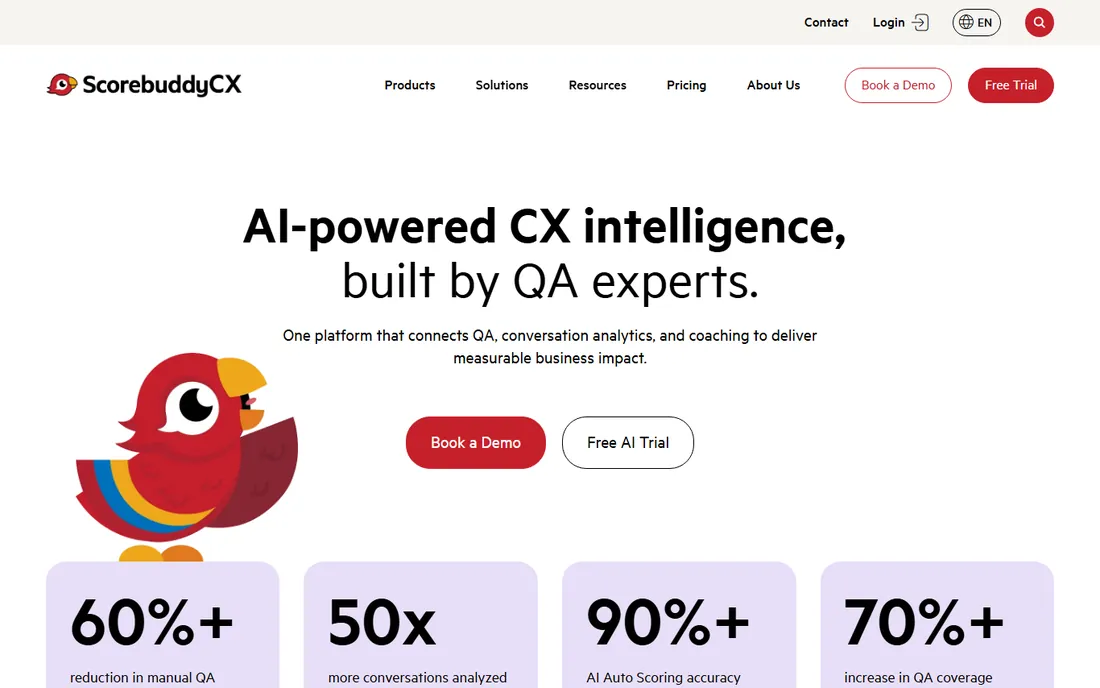
Scorebuddy spent a decade as the QA specialist's QA tool, then renamed to ScorebuddyCX in June 2026 to reflect a wider platform: conversation analytics, coaching and business intelligence alongside the scorecards. The core pitch has not changed. AI Auto Scoring grades every interaction against your scorecards, which ends the sampling problem that defines traditional QA, and the company claims 90%+ scoring accuracy with 300-plus organizations across 25 countries as proof.
For regulated industries the audit trail matters as much as the scores, and this is where the QA-native design shows: calibration workflows, versioned scorecards and defensible records come standard rather than as add-ons. The honest knocks are commercial, not functional. Pricing lives behind sales conversations (third-party directories list it from about $24 per user per month), and the rebrand means you will find reviews under both names. If your buying team is the QA team itself rather than IT, start here.
What we like- AI Auto Scoring evaluates 100% of voice, chat and email interactions
- Built by QA specialists with flexible scorecards and calibration
- Integrated coaching and learning tools
Watch out for- Rebranded from Scorebuddy in June 2026, so reviews and docs are split across two names
- Pricing is not published on its own site
- Smaller US presence than Observe.AI or Talkdesk
#2
EvaluAgent
Best for: QA plus coaching and learning in one affordable platform
Visit evaluagent.com
Starting price$35/user/month (AutoQM & Improvement)
Free planNo
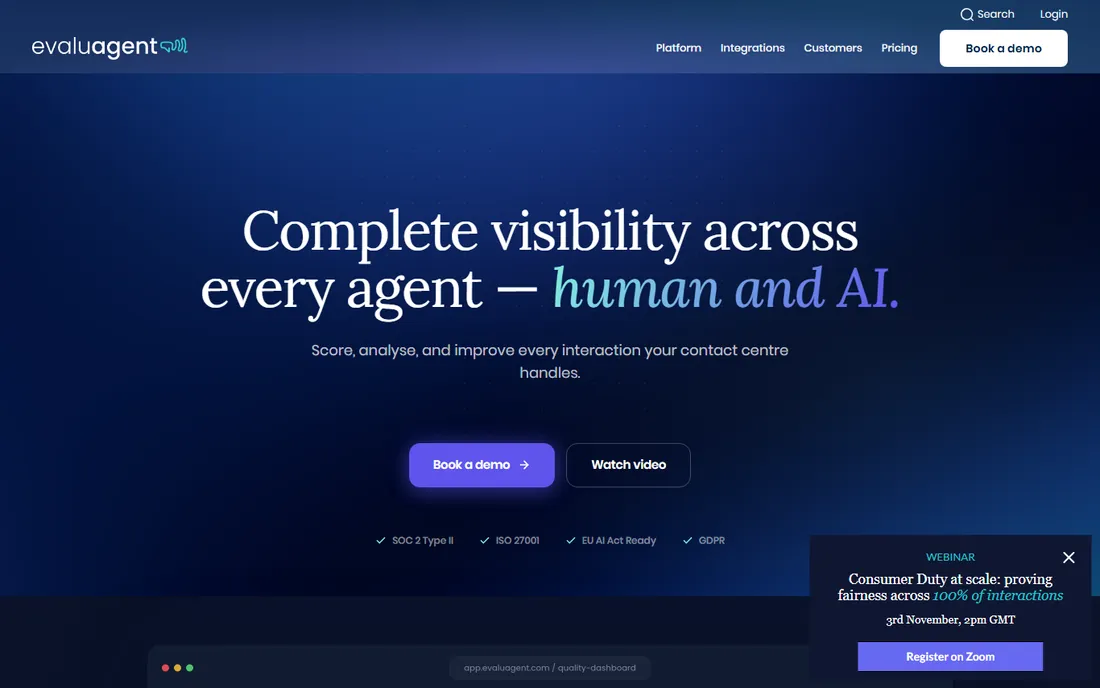
EvaluAgent is the rare QA vendor that publishes prices: $35 per user per month for AutoQM & Improvement, $65 for the full conversation-intelligence tier. That transparency, plus a platform that bundles scoring, coaching and learning instead of selling them as modules, made it a favorite of mid-size contact centers, particularly in the UK where the company was founded in 2012. Reviewers consistently praise the support team and the visual dashboards that show agents their own progress.
The trade-offs are real. There is no free trial, so evaluation means a sales-led pilot. Ease-of-use scores on Capterra and G2 sit below several rivals, and multiple reviewers describe the initial setup as fiddly: get the structure wrong early and you fight it for months. Teams buying primarily for the newest AI auto-scoring tend to prefer ScorebuddyCX or Observe.AI. Teams that want scoring, coaching and training records in one sensibly priced system will forgive the learning curve.
What we like- Combines auto-QA, coaching workflows and a built-in LMS
- Published pricing in a secretive category
- Strong customer service reputation on review sites
Watch out for- No free trial
- Ease-of-use scores trail rivals like MaestroQA and Playvox
- Auto-scoring feels first-generation next to AI-native competitors
Starting price$15/user/month (Starter)
Free planNo
Playvox answers a different question from pure QA tools: what if quality, coaching and scheduling lived in one system? Its tiered pricing is unusually transparent for this market, with Starter at $15, Professional at $30 and Enterprise at $40 per user per month, and the platform covers scorecards, coaching, peer recognition, team communication and workforce management. For BPOs and mid-size centers tired of stitching point tools together, that consolidation is the pitch.
Read the fine print before budgeting. Onboarding fees are mandatory and scale with the tier, from around $3,000 to $7,000, and the two most interesting modules (Quality Management & Coaching, WFM) are quote-only. Benchmark data suggests real deployments land well above list once modules and implementation are counted. Playvox fits operations leaders buying a workforce platform with QA inside. Pure QA buyers get more scoring depth per dollar from ScorebuddyCX or EvaluAgent.
What we like- Clear tiered pricing ($15/$30/$40 per user per month)
- QA, coaching, recognition and WFM under one roof
- Broad integration list including Salesforce and Zendesk
Watch out for- One-time onboarding fees run $3,000 to $7,000 by tier
- Quality Management & Coaching and WFM modules are custom quote
- Per-user costs climb steeply with add-ons
Starting priceSee website
Free planNo
MaestroQA built its name serving support teams at software and e-commerce companies rather than giant outsourced call centers, and the product reflects it: grading workflows that fit ticket-based QA, calibration that does not require a consultant, and integrations with the helpdesks support teams already use. Reviewers on G2 consistently rate it above EvaluAgent and Playvox for usability, and deployment is measured in weeks rather than quarters.
The catch is the standard enterprise opacity: no published pricing, no free trial, everything through sales. It also lacks the deep conversation-intelligence bench of Observe.AI or CallMiner, so if your goal is mining 100% of calls for business insight rather than grading agent performance, look there. For a support leader who needs QA running this quarter without an implementation project, MaestroQA is the pragmatic pick.
What we like- Purpose-built for customer support QA rather than generic call centers
- Fast deployment with responsive onboarding
- High ease-of-use scores on G2
Watch out for- Pricing is entirely quote-based
- Smaller vendor with fewer enterprise references than Observe.AI or CallMiner
- Less depth in speech analytics
Starting priceSee website
Free planNo
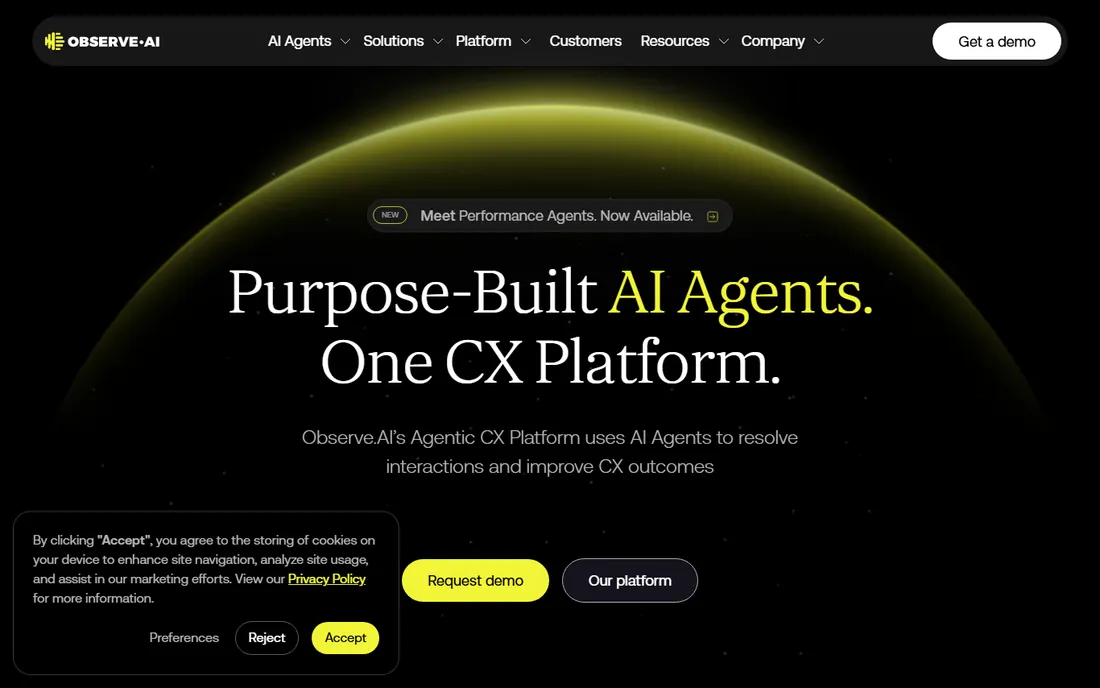
Observe.AI sits at the AI-heavy end of the category. Its platform transcribes and analyzes every call, surfaces coaching moments automatically, and feeds QA scores from the same intelligence layer, which means the scores and the coaching finally agree with each other. Large enterprises with hundreds of agents use it to find the patterns no sampling program could: the objection handling that kills deals, the compliance phrases agents skip, the sentiment shifts that predict churn.
Everything about buying it is enterprise-grade too. There is no public pricing and no self-serve trial; expect discovery calls, a scoped pilot and an implementation plan. Teams under 50 agents will find the cost and complexity hard to justify against ScorebuddyCX or EvaluAgent. But if your contact center is a strategic operation and QA data needs to drive business decisions, Observe.AI is the heavyweight option.
What we like- Among the deepest AI analysis of voice conversations in the industry
- Strong coaching automation built on the insights
- Serious enterprise customer base
Watch out for- Quote-only pricing with enterprise sales cycles
- Implementation is a real project, not a signup
- Overkill and overpriced for teams under 50 agents
Starting priceSee website
Free planNo
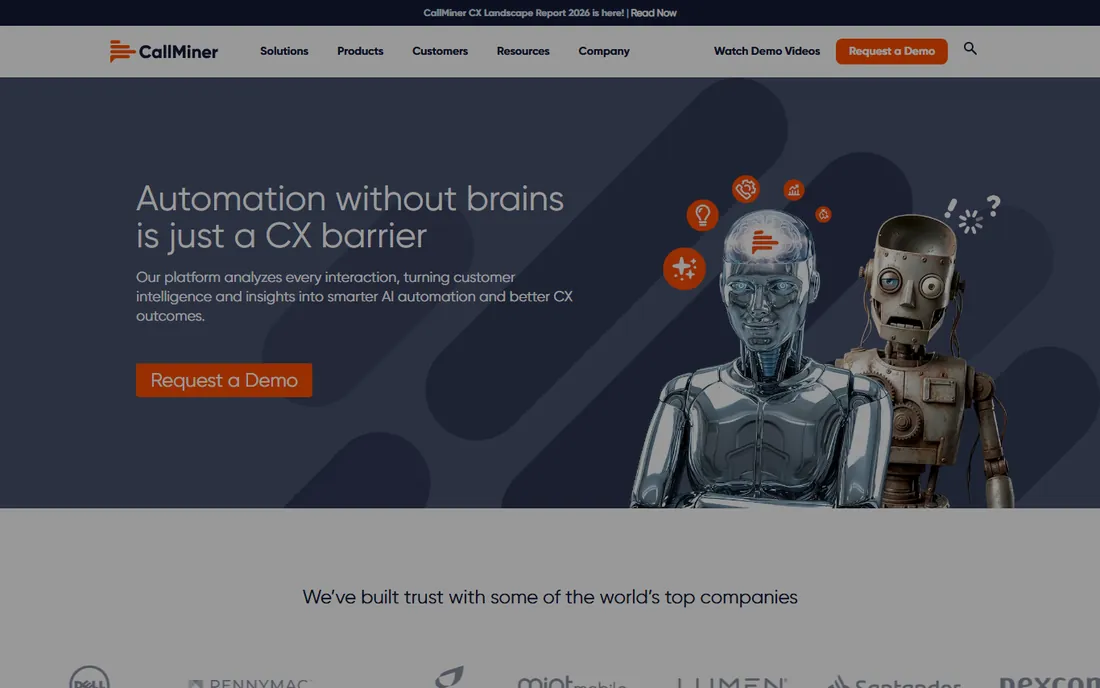
CallMiner has been doing conversation analytics longer than almost anyone, and it shows in the categorization engine: it finds patterns across millions of interactions with a reliability newer AI vendors are still chasing. Banks, insurers and healthcare organizations with strict compliance needs have relied on it for years, and its scoring holds up under regulatory scrutiny. When the requirement is "analyze everything and prove it," CallMiner remains a default shortlist entry.
The buying experience is old-school enterprise: custom quotes, long cycles, implementation that needs your team's time. The interface feels its age next to Observe.AI or ScorebuddyCX, and smaller teams will drown in capability they never use. Choose CallMiner when scale, compliance and analytical depth outweigh speed and simplicity. Everyone else should shortlist the newer vendors first.
What we like- The veteran of speech analytics with the most mature categorization engine
- Analyzes 100% of interactions across voice and text
- Strong in regulated industries
Watch out for- Enterprise pricing and sales process with no public numbers
- Implementation demands internal resources
- Dated UX compared with newer rivals
#7
Balto
Best for: Real-time agent guidance during calls
Visit balto.ai
Starting priceSee website
Free planNo
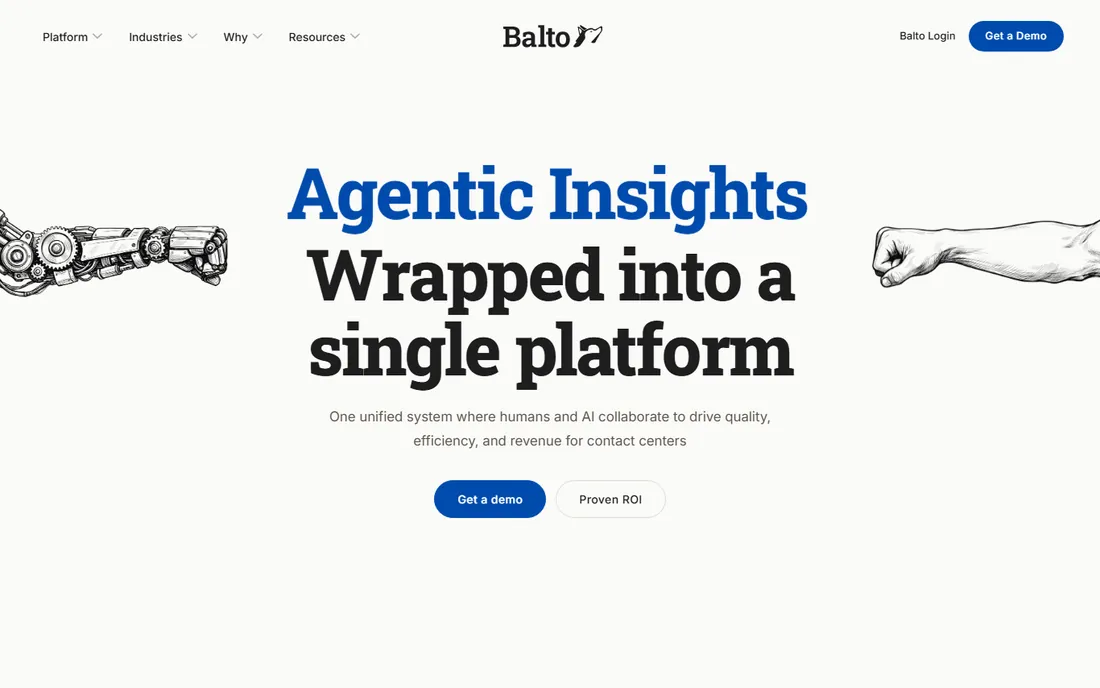
Balto does not grade calls after they happen. It listens live and tells the agent what to say next: the right rebuttal, the required disclosure, the upsell prompt, the compliance checklist ticking off in real time. For sales floors and collections teams, that in-the-moment guidance moves conversion numbers in ways post-call coaching cannot, and the platform tracks every call for what was said and what was missed.
Understand what you are buying, though. Balto is a real-time coaching layer, not a QA scoring system; most customers run it alongside a QA tool rather than instead of one. Pricing is quote-only and the sales motion is enterprise. If your problem is "agents say the wrong thing on live calls," Balto is uniquely good. If your problem is "we need to score and calibrate quality," pick from the other seven.
What we like- Coaches agents live during the call with real-time prompts and checklists
- Tracks 100% of conversations for compliance and best practice
- Measurable impact on sales conversion
Watch out for- It guides rather than scores, so it does not replace a QA platform
- Quote-only pricing
- Best suited to sales and collections, less to support QA
Starting price$85/user/month (CX Cloud Digital Essentials)
Free planFree trial
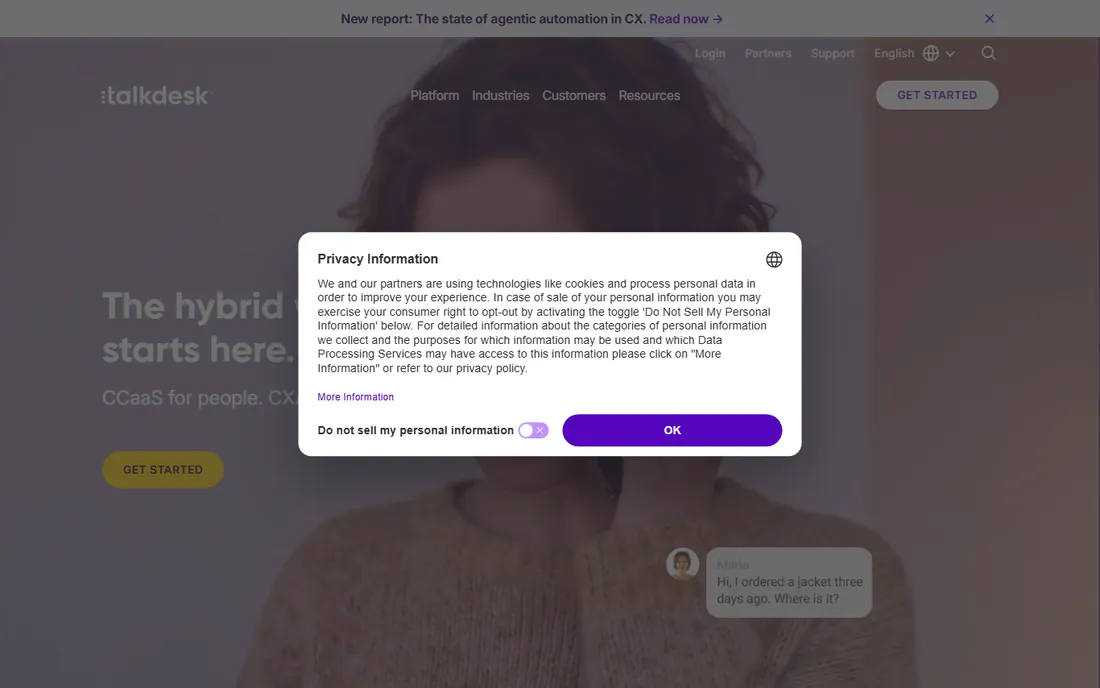
Talkdesk belongs on this list for one reason: many buyers do not need a separate QA vendor at all. Its CX Cloud editions bundle quality management, screen recording, coaching and performance management inside the contact-center platform, with Digital Essentials at $85 and Voice Essentials at $105 per user per month. If you are already moving your contact center to Talkdesk, or choosing a CCaaS and QA together, the integrated route saves you an integration project and a second vendor relationship.
As a standalone QA purchase it makes little sense. You would be buying a contact-center platform to get scorecards, the editions assume multi-year commitments with telco and usage fees excluded, and QA specialists will find ScorebuddyCX or EvaluAgent deeper at lower cost. Evaluate Talkdesk when the platform decision and the QA decision are the same decision. Otherwise, shortlist the specialists.
What we like- Quality management, screen recording and performance tools inside the CCaaS
- Published edition pricing from $85 per user per month
- Free trial available
Watch out for- QA is a module in a big platform, not a specialist product
- Prices assume multi-year commitments with telco fees on top
- Massive overkill as a standalone QA buy
What to look for in call center QA software
Coverage: sampling vs. 100%
The single biggest divide in this category. Traditional QA scores a sample of interactions per agent per month; AI auto-scoring tools (ScorebuddyCX, Observe.AI, CallMiner) evaluate everything. Full coverage finds the compliance miss and the coaching moment that sampling never catches. Ask vendors exactly what "100% coverage" includes: voice only, or chat, email and social too, and whether scoring runs on every interaction or a configurable subset.
Auto-scoring accuracy and calibration
AI scores are only useful if your QA team trusts them. Ask for the vendor's accuracy figures and how they are measured, then run your own calibration: have humans and the AI score the same calls and compare. The best tools make this easy with built-in calibration workflows and versioned scorecards. Treat any vendor that will not discuss accuracy methodology as a red flag.
The coaching loop
Scores that sit in a dashboard change nothing. Check how scores become coaching: automated coaching assignments, agent-facing dashboards, dispute workflows when agents disagree with scores, and learning modules tied to skill gaps. EvaluAgent's built-in LMS and ScorebuddyCX's coaching tools exist because the score is the beginning of the workflow, not the end.
Integrations with your contact-center stack
QA software is only as good as its data feed. Confirm native integrations with your CCaaS or telephony (Five9, Genesys, Talkdesk, Aircall), your helpdesk (Zendesk, Salesforce, Freshdesk) and your HR or LMS systems. Ask whether call recordings and transcripts flow automatically or need manual upload, and whether the integration is included or a paid add-on.
Compliance and audit needs
Regulated industries need more than scores: immutable audit trails, data retention controls, redaction of payment and personal data, and role-based access. Ask specifically about PCI redaction, regional data residency and who can export recordings. This is where specialists like CallMiner and ScorebuddyCX tend to be stronger than generalist platforms.
Why almost nobody publishes pricing
If you noticed how many entries above say "See website," that is the category working as designed. Most call center QA vendors sell annual contracts priced per agent (or per scored interaction), with implementation, onboarding and integrations quoted separately. Talkdesk is unusually transparent with edition pricing, but even there the headline numbers exclude telco fees and assume multi-year commitments.
A few practical rules. Always ask for the total first-year cost including onboarding: Playvox's $3,000-plus implementation fees are typical, not exceptional. Clarify what counts as a billable user: some vendors charge per agent scored, others per QA reviewer or per supervisor seat, and the difference is enormous. Get the auto-renewal and uplift terms in writing before signing. And pilot with your own calls before committing: scoring accuracy on the vendor's demo data tells you nothing about your accents, your products and your compliance phrases.
How we chose
We focused on tools that exist today and genuinely serve call center QA: AI auto-scoring, scorecard-based evaluation, calibration, coaching workflows or real-time guidance. Research drew on vendor documentation and announcements (including Scorebuddy's June 2026 rebrand), provider-supplied pricing on G2, third-party pricing directories, and public reviews on G2, Capterra, TrustRadius and Reddit. Where vendors do not publish pricing, we say so instead of guessing. No vendor paid for placement.
Frequently asked questions
What is call center QA software?
It is software that evaluates customer service interactions against quality standards. Traditional tools provide digital scorecards, calibration and reporting for human reviewers scoring sampled calls. Newer AI-driven tools auto-score 100% of voice, chat and email interactions, surface coaching moments automatically and analyze conversation trends. Most platforms now combine both approaches.
How much does call center QA software cost?
Published pricing is rare in this category. Where prices are public: Talkdesk from $85 per user per month, EvaluAgent from $35, Playvox from $15 and ScorebuddyCX from about $24. Most other vendors quote annually per agent, with implementation fees and multi-year commitments common. Always ask for total first-year cost including onboarding before comparing.
What is the difference between QA software and conversation intelligence?
QA software focuses on evaluating agent performance against scorecards: scores, calibration, coaching and compliance. Conversation intelligence focuses on mining interactions for business insight: trend analysis, sentiment, churn signals and sales coaching. Tools like Observe.AI and CallMiner do both; specialists like ScorebuddyCX and EvaluAgent lean toward QA, while Balto focuses on live guidance.
Can AI really score calls accurately?
Vendors report high accuracy: ScorebuddyCX claims 90%+ auto-scoring accuracy, for example. Treat such figures as marketing until validated on your own calls, accents and products. The reliable buying process is a calibration pilot: humans and AI score the same sample, you compare, and you set the AI loose on the categories where it agrees with your reviewers. Most teams end up with AI handling routine scoring and humans handling edge cases and calibration.
Do I still need human QA reviewers if I buy AI scoring?
Yes, fewer of them doing higher-value work. AI handles volume and consistency; humans handle calibration, complex judgment calls, coaching conversations and scorecard design. Teams that remove reviewers entirely usually see score quality drift within quarters. The realistic outcome is a smaller QA team focused on coaching and insight rather than grading.
Sources we checked (9)
- https://go.chinesewire.com/article/Scorebuddy-Expands-Beyond-QA-to-Become-ScorebuddyCX-a-Full-Contact-Center-Intelligence-Platform/6a285b3d5c816e00028e1eca
- https://www.softwareadvice.com/za/call-center/scorebuddy-profile/
- https://www.g2.com/products/evaluagent/pricing
- https://www.capterra.com/p/164542/PlayVox/
- https://www.softwareadvice.com/ca/playvox-profile/
- https://www.g2.com/products/talkdesk/reviews?utf8=%E2%9C%93&filters%5Bsentiment_snippet%5D=1496291
- https://www.trustradius.com/compare-products/khoros-service-vs-talkdesk
- https://prospeo.io/s/evaluagent-alternatives
- https://sourceforge.net/software/contact-center-quality-assurance/canada/?page=2
Is your product missing or out of date?
We review this list regularly. Vendors can request a listing, send updated pricing or ask about featured placement.

Shihab Mia · Founder, Rankite
Shihab has spent more than a decade helping SaaS and e-commerce brands grow through search. He writes Rankite's software buying guides from pricing pages, documentation and public user reviews. More about Shihab.