How we make this list: we compare pricing pages, product documentation and public user reviews. Rankite is independent; if a vendor ever pays for a featured spot, that listing is clearly labeled Partner.
Key takeaways
- QuickBooks Online and Xero remain the safest choices, with the deepest features and the largest advisor networks.
- FreshBooks suits service businesses that bill by the hour, while Wave offers genuinely free accounting for tight budgets.
- Zoho Books and KashFlow deliver strong value, especially for businesses already in their ecosystems or UK-based.
- Sage covers the step up to more complex needs, and Bench pairs software with human bookkeepers for hands-off owners.
- Pick based on who does your books: DIY owners, in-house staff, and outsourced accountants each point to different tools.
Bookkeeping moved to the cloud and never looked back
There was a time when the books lived on one computer in the back office, backed up to a USB drive on Fridays. That time is over. Cloud bookkeeping means your accounts are current from anywhere, your accountant sees the same numbers you do, and bank feeds import transactions while you sleep. The practical effect is that small businesses close their books faster and understand their cash position in real time instead of at quarter end.
The category has also split by audience. Some tools assume you do your own books and optimize for simplicity. Others assume an accountant or bookkeeper is involved and optimize for collaboration. A few bundle the human with the software. Choosing well means being honest about which of those you are, because the best software for a DIY owner is not the best software for a firm managing fifty clients.
We compared eight cloud bookkeeping options across that spectrum, from free to full-featured, judging each on core accounting capability, ease of use, integrations, and the ecosystem around it.
Quick comparison
| Tool | Best for | Starting price | Free plan |
|---|
 QuickBooks Online QuickBooks Online | All-round small business accounting | See website | No |
 Xero Xero | Growing businesses and advisors | See website | Free trial |
 FreshBooks FreshBooks | Service businesses and invoicing | See website | Free trial |
 Wave Wave | Free accounting for tiny businesses | Free | Yes |
 Zoho Books Zoho Books | Value with suite integration | See website | Yes |
 Sage Sage | Stepping up in complexity | See website | No |
 Bench Bench | Bookkeeping done for you | See website | No |
 KashFlow KashFlow | UK-focused small business accounting | See website | Free trial |
Is your product missing or out of date?
We review this list regularly. Vendors can request a listing, send updated pricing or ask about featured placement.
The best cloud-based bookkeeping software in 2026
Starting priceSee website
Free planNo
QuickBooks Online is the default for a reason: it does everything a small business needs, from invoicing to inventory to payroll, and your accountant already knows it. The bank feeds are reliable, reconciliation is fast, and the reporting covers what lenders and investors ask for. When a business outgrows simpler tools, this is usually where it lands.
The pricing climbs as you add features and users, and the interface carries the weight of all that capability. But the ecosystem is unmatched: thousands of apps integrate, most bookkeepers are certified, and finding help is never hard. If you want the safe choice with the fewest dead ends, QuickBooks Online is it.
What we like- Deepest feature set, Huge accountant network, Extensive app integrations, Good payroll add-on
Watch out for- Price rises with tiers, Interface can overwhelm, Support quality varies
Starting priceSee website
Free planFree trial
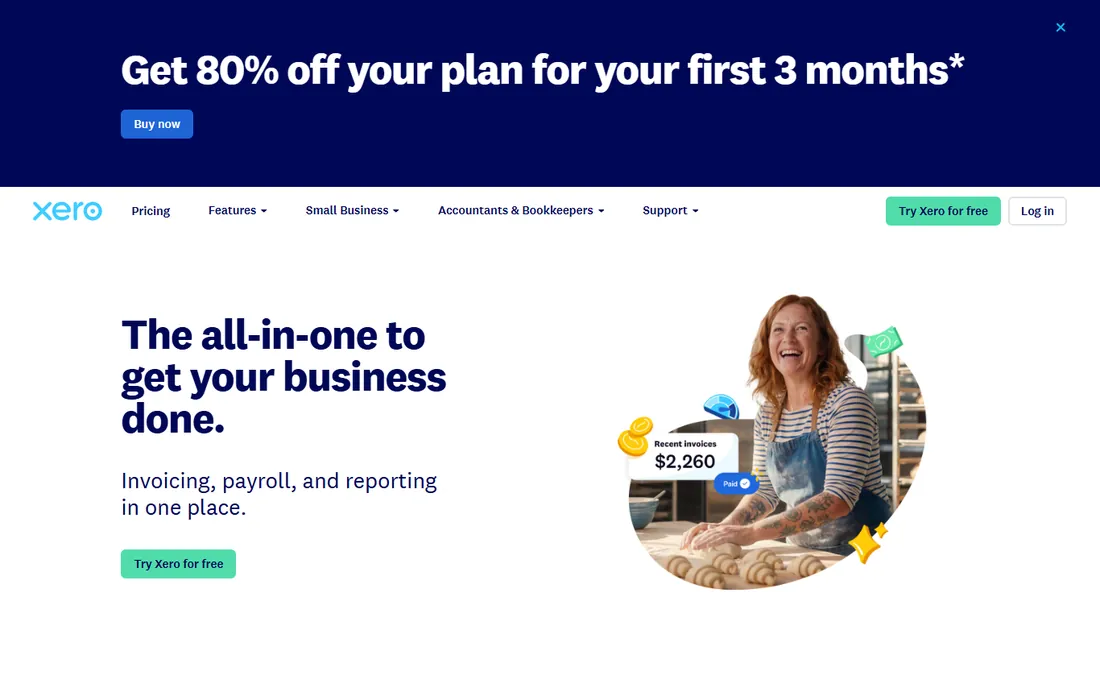
Xero is the favorite of accountants who recommend software for a living, and the reasons show in daily use. The interface is calmer than QuickBooks, bank reconciliation is genuinely pleasant, and unlimited users means your team, your bookkeeper, and your advisor all get access without seat math. Multi-currency works properly, a real advantage for businesses that buy or sell across borders.
Payroll is the gap, strong in a few markets and absent in others, so US employers often pair Xero with a payroll provider. The app marketplace fills most other holes. For businesses that value a clean experience and work closely with an advisor, Xero is the most recommended alternative to QuickBooks for good reason.
What we like- Clean, intuitive interface, Unlimited users, Strong advisor program, Good multi-currency
Watch out for- Payroll limited outside key markets, Some advanced features need add-ons, Smaller US presence than QuickBooks
Starting priceSee website
Free planFree trial
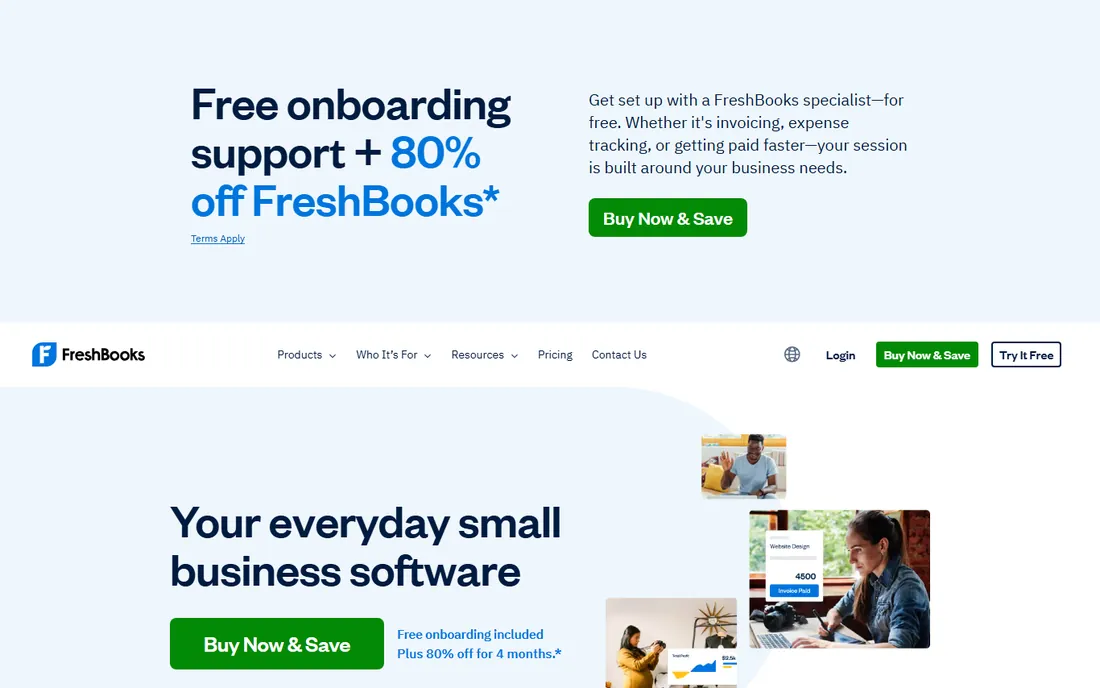
FreshBooks started with freelancers who needed to invoice without learning accounting, and that DNA persists. Time tracking flows into invoices, invoices look professional, and clients can pay online with minimal friction. For agencies, consultants, and trades, the billing workflow is the product, and it is excellent.
The bookkeeping underneath is real but lighter than QuickBooks or Xero: fine for service businesses, thin for inventory or complex needs. Companies that grow into serious accounting often migrate. But if your business sells hours and expertise rather than products, FreshBooks matches how you work better than the generalists.
What we like- Excellent invoicing, Great for time tracking, Easy for non-accountants, Good client-facing polish
Watch out for- Accounting depth is lighter, Inventory minimal, Scales less far
Starting priceFree
Free planYes
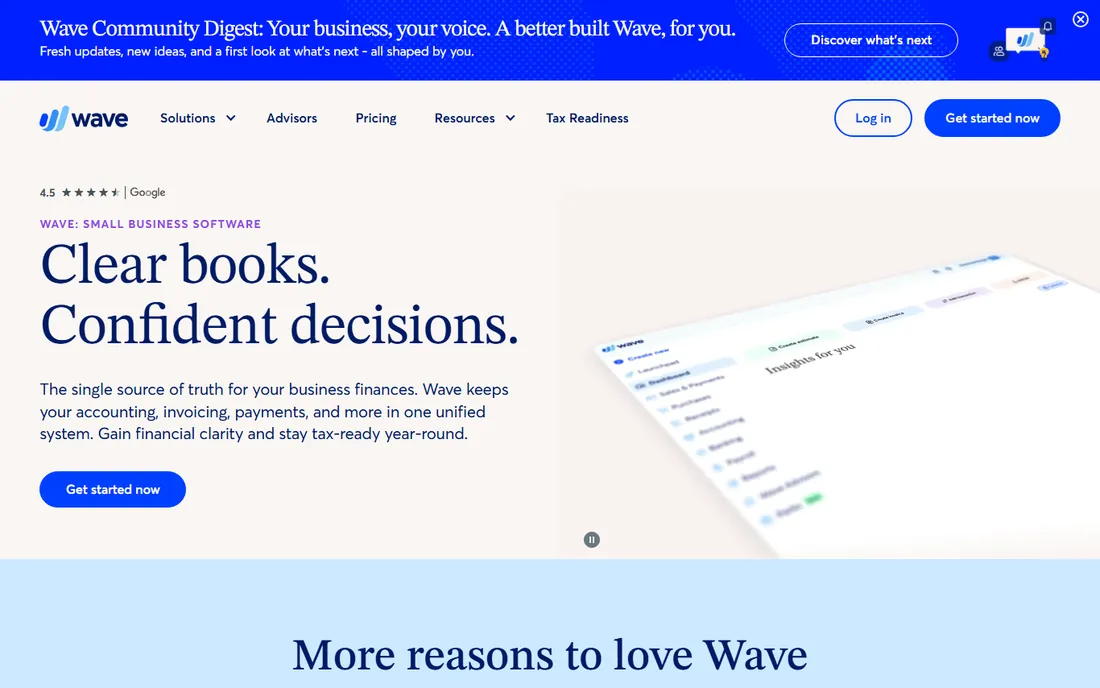
Wave's proposition is startling: real double-entry accounting, invoicing, and receipt scanning for free. The company makes money on payment processing and payroll, which subsidizes the accounting. For freelancers and tiny businesses with simple needs, it removes every excuse for running the books in a spreadsheet.
The limits are real: no inventory, basic reporting, and support that reflects the price. Businesses with employees, inventory, or complexity will outgrow it. But as a starting point, Wave is unmatched value. Many businesses run on it happily for years before needing more.
What we like- Accounting and invoicing free, Simple and approachable, Good for freelancers, No feature gates on core tools
Watch out for- No inventory tracking, Payroll is paid and limited, Support is limited, Fewer integrations
Starting priceSee website
Free planYes
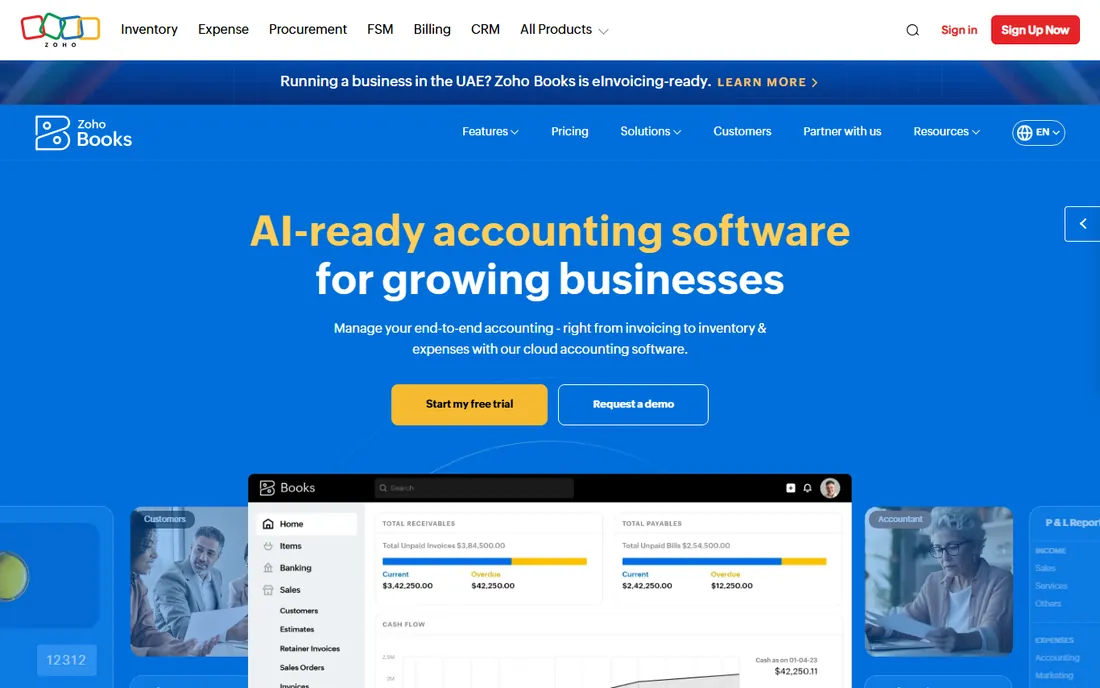
Zoho Books keeps winning on value. The free tier covers businesses with modest revenue, and paid plans stay well below QuickBooks while including invoicing, expenses, inventory, and project billing. If you run Zoho CRM, Inventory, or other Zoho apps, the native integration removes a whole category of busywork.
The interface is functional rather than delightful, and finding a Zoho-savvy accountant is harder than finding a QuickBooks one. But the automation, workflows, and custom modules punch above the price. For cost-conscious businesses, especially those already in the Zoho world, this is the rational choice.
What we like- Generous free tier, Affordable paid plans, Integrates with Zoho suite, Good automation
Watch out for- Interface less refined, Smaller advisor network, Some features need other Zoho apps
Starting priceSee website
Free planNo
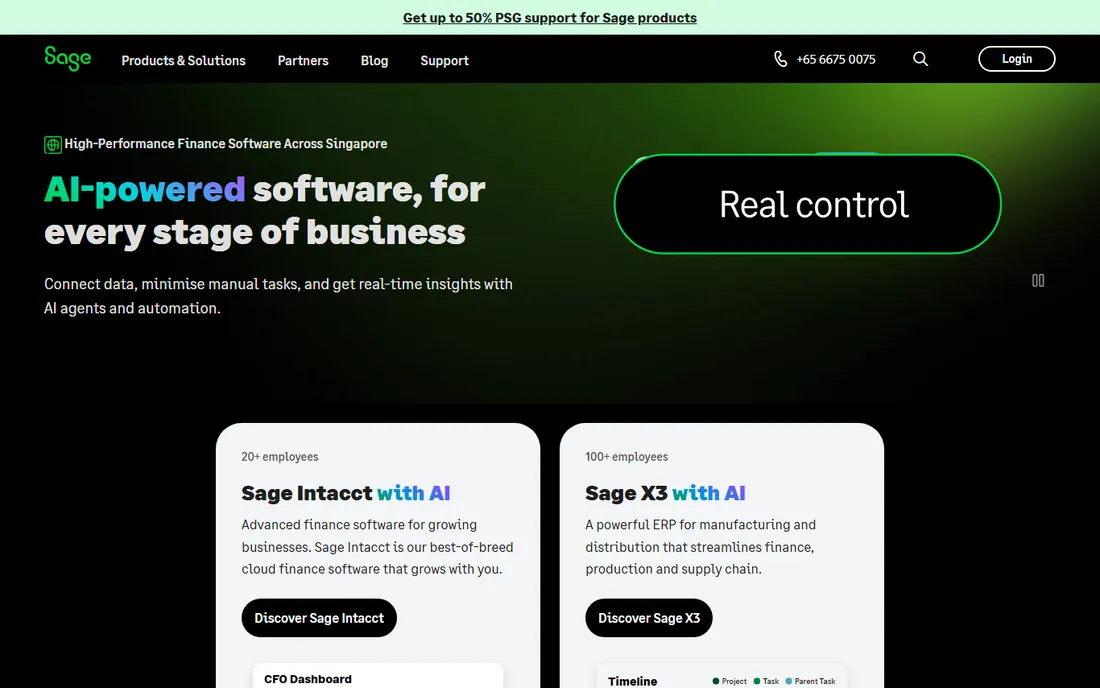
Sage covers more ground than most realize, from small business accounting to mid-market ERP. The small business products handle the step up from freelancer tools: proper inventory, multi-user workflows, and the reporting that growing companies need. In the UK, Australia, and South Africa, Sage is often the default the way QuickBooks is in the US.
The product lineup can confuse, with different Sage products for different sizes, so buy the right one. But the stability matters: Sage has served businesses for decades and is not going anywhere. For companies planning to grow into complexity, starting with Sage avoids a future migration.
What we like- Scales from small to mid-market, Strong in UK and Commonwealth, Good inventory, Established and stable
Watch out for- Interface varies by product, Pricing can confuse, US presence smaller
Starting priceSee website
Free planNo
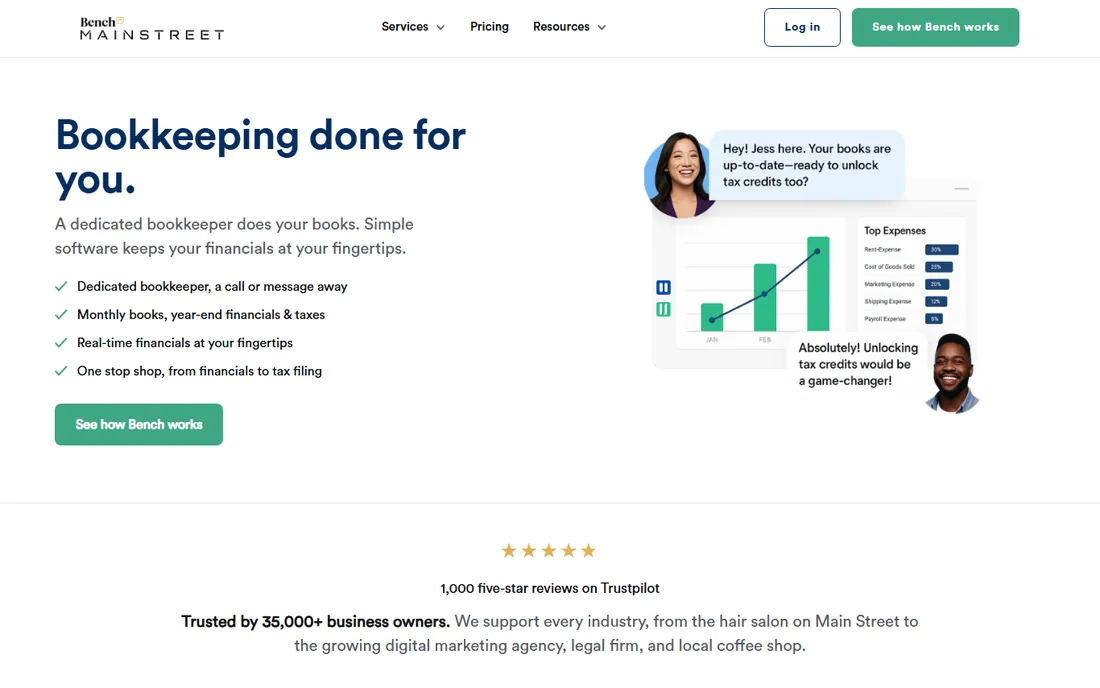
Bench answers a different question: what if you do not want to do bookkeeping at all? The subscription pairs software with a dedicated bookkeeping team that categorizes transactions, reconciles accounts, and delivers tax-ready financials monthly. For owners who view bookkeeping as a chore to delegate, this is the product.
You give up the DIY control and the deep customization of QuickBooks. Complex businesses with inventory or multi-entity needs will find it limiting. But for straightforward service and e-commerce businesses, Bench converts bookkeeping from a task into a utility. The monthly cost is real, but so is the time returned.
What we like- Human bookkeepers included, Tax-ready financials, Simple monthly pricing, Good for hands-off owners
Watch out for- Less DIY control, Not for complex needs, Monthly cost adds up
Starting priceSee website
Free planFree trial
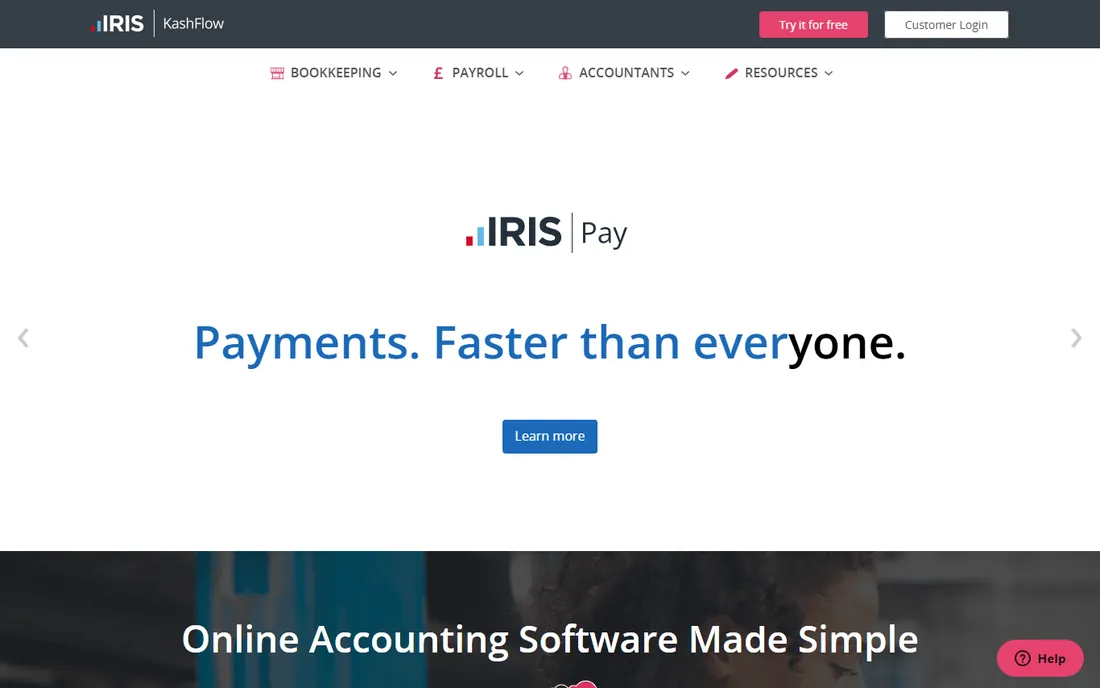
KashFlow is the UK specialist, built around British tax, payroll, and VAT from the ground up. Making Tax Digital compliance is native rather than bolted on, and the language throughout is HMRC, not IRS. For UK sole traders and small companies, that specificity beats the generic international tools.
Outside the UK it is irrelevant, and the ecosystem is smaller than Xero's or QuickBooks'. But within its market, KashFlow's focus is an advantage: every feature assumes UK rules. British small businesses that want software speaking their tax language should shortlist it alongside Xero and Sage.
What we like- Built for UK tax and payroll, Simple for non-accountants, Good Making Tax Digital support, Affordable
Watch out for- UK-only focus, Smaller ecosystem, Fewer integrations than leaders
How we chose
We judged core bookkeeping capability first: invoicing, expenses, bank reconciliation, and reporting that a business can actually run on. Ease of use mattered because the person doing the books is often not an accountant. We weighted the advisor and app ecosystems, since the software you choose determines who can help you and what connects to it.
We included free, value, mainstream, and done-for-you options because bookkeeping buyers have genuinely different needs and budgets. A freelancer and a fifty-person company are not shopping for the same product, and a comparison that pretends otherwise helps neither.
Picking the right fit
Start with who does the books. If it is you and you hate accounting, prioritize simplicity: FreshBooks, Wave, or Zoho Books. If it is your bookkeeper or accountant, ask what they recommend, because their efficiency is your cost. If the answer is nobody, Bench exists for exactly that.
Then consider your trajectory. A freelancer who will stay solo has different needs than a startup planning to triple headcount. The mainstream tools, QuickBooks Online, Xero, and Sage, scale further before forcing a migration. Switching accounting software is painful enough that buying for eighteen months ahead is usually wise.
Finally, test the bank feed and the mobile app before committing. These are the two things you will touch daily, and they vary more between products than the feature lists suggest. A free trial that includes your real bank connection tells you more than any review.
Frequently asked questions
Is free bookkeeping software safe to use?
Yes, with the usual caveats. Wave is a legitimate company with real accounting software; the free tier is subsidized by paid services. Your data is as safe as with any cloud provider. The real question is whether the free tool covers your needs as you grow.
Do I need an accountant if I use bookkeeping software?
The software handles recording; an accountant handles judgment: tax strategy, compliance, and financial decisions. Most small businesses benefit from an accountant at year end even with good software, and growing businesses need one throughout the year.
What is the difference between bookkeeping and accounting software?
In practice, nothing: the terms are used interchangeably for small business tools. Traditionally bookkeeping is recording transactions and accounting is interpreting them. The software here does both, with accountants adding the interpretation layer.
Can I switch bookkeeping software later?
Yes, but it is work. Chart of accounts, historical transactions, and integrations all need migrating, and most businesses underestimate the cleanup. Choose with an eighteen-month horizon to avoid switching twice.
Should I choose the same software as my accountant recommends?
Usually yes. An accountant who knows your software works faster and charges less, catches issues earlier, and can actually see your books. The efficiency gain typically outweighs small feature differences between the top tools.
Sources we checked (8)
- https://quickbooks.intuit.com/
- https://www.xero.com/
- https://www.freshbooks.com/
- https://www.waveapps.com/
- https://www.zoho.com/books/
- https://www.sage.com/
- https://www.bench.co/
- https://www.kashflow.com/
Is your product missing or out of date?
We review this list regularly. Vendors can request a listing, send updated pricing or ask about featured placement.

Shihab Mia · Founder, Rankite
Shihab has spent more than a decade helping SaaS and e-commerce brands grow through search. He writes Rankite's software buying guides from pricing pages, documentation and public user reviews. More about Shihab.