How we make this list: we compare pricing pages, product documentation and public user reviews. Rankite is independent; if a vendor ever pays for a featured spot, that listing is clearly labeled Partner.
Key takeaways
- Klaviyo dominates ecommerce B2C CRM with email, SMS and a built-in customer data platform; a genuinely useful free plan lowers the entry barrier.
- Braze and Iterable lead on cross-channel journey orchestration for larger brands with mobile apps.
- Salesforce and HubSpot offer B2C capabilities inside broader CRM suites, which suits companies that also run B2B sales or service.
- Zendesk covers the service side of B2C CRM: support tickets, AI agents and contact center in one platform.
- Pricing is mostly quote-based at the enterprise tier; only Klaviyo and HubSpot publish usable free tiers.
Quick comparison
| Tool | Best for | Starting price | Free plan |
|---|
 Klaviyo Klaviyo | ecommerce brands running email and SMS | See website | Yes |
 Braze Braze | brands needing cross-channel journeys at scale | See website | Free trial |
 Iterable Iterable | lifecycle marketing teams that want AI assistance | See website | No |
 Salesforce Salesforce | enterprises unifying B2C marketing, sales and service | See website | Free trial |
 HubSpot HubSpot | small and mid-size businesses wanting one platform | See website | Yes |
 Zendesk Zendesk | B2C brands where support is the relationship | See website | Free trial (14 days) |
 Bloomreach Bloomreach | retailers wanting AI-driven personalization | See website | No |
 Insider One Insider One | brands wanting agentic engagement across every channel | See website | No |
Is your product missing or out of date?
We review this list regularly. Vendors can request a listing, send updated pricing or ask about featured placement.
The best B2C CRM software
Starting priceSee website
Free planYes
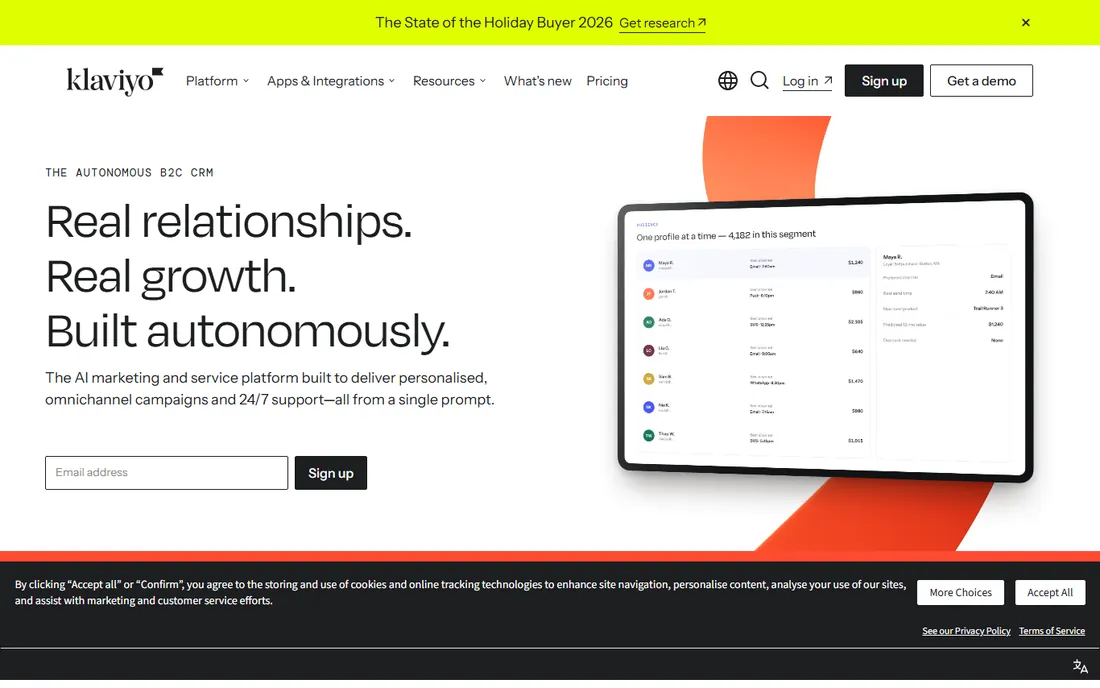
Klaviyo has become the default B2C CRM for direct-to-consumer ecommerce, powering over 205,000 brands. It unifies email, SMS, RCS, WhatsApp and mobile push on one customer data platform, so every message reacts to what customers actually do. Its 2026 positioning as an "autonomous B2C CRM" adds AI agents: Composer audits your flows and builds campaigns from a prompt, and a Customer Agent handles service questions around the clock.
The free plan covers core features for small lists, which makes it easy to start, and the Shopify integration syncs orders, products and customer data in real time. The honest catch is the pricing curve: as your list grows, monthly costs climb steeply, and brands with large SMS programs should model total spend carefully before committing.
What we like- Purpose-built for ecommerce with deep Shopify integration
- Built-in customer data platform
- Free plan with core features for small lists
Watch out for- Costs scale quickly with list size
- SMS pricing adds up
- Reporting can overwhelm beginners
#2
Braze
Best for: brands needing cross-channel journeys at scale
Visit braze.com
Starting priceSee website
Free planFree trial
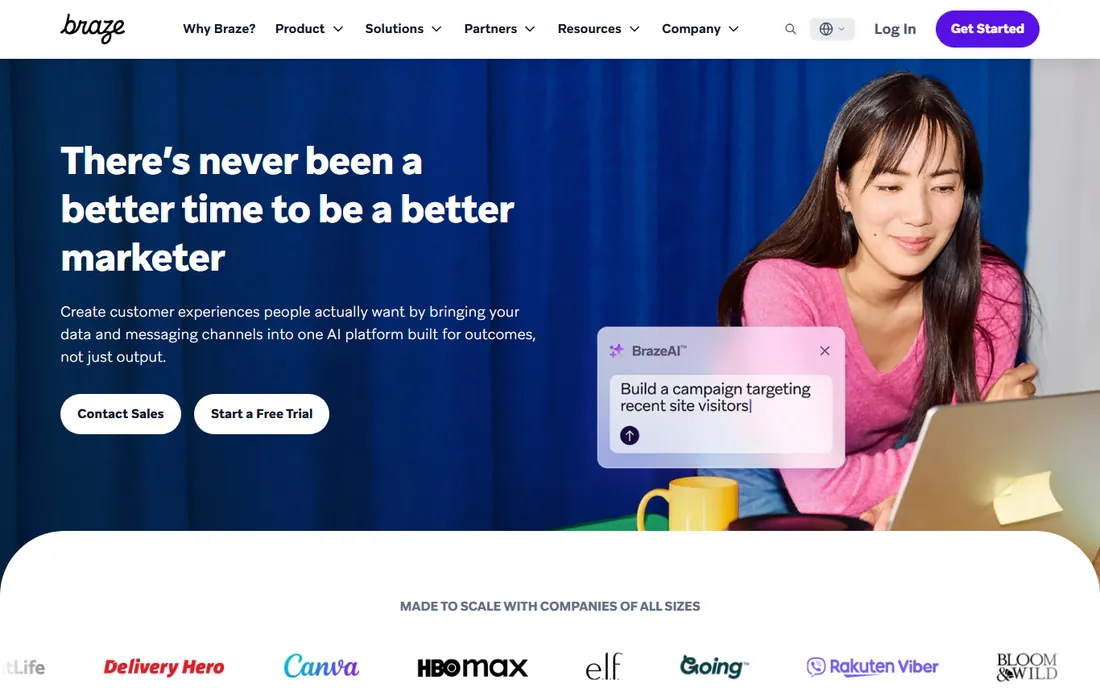
Braze is the customer engagement platform behind many of the world's largest consumer apps, from food delivery to streaming to fintech. Its data platform ingests customer behavior in real time, and marketers build cross-channel journeys across email, push, SMS and in-app messaging without waiting on engineering. BrazeAI now helps teams generate content, optimize send times and discover opportunities.
Analysts placed Braze as a Leader in the 2026 Gartner Magic Quadrant for Multichannel Marketing Hubs, highest in ability to execute. For a mid-size brand with a mobile app and serious lifecycle marketing ambitions, it is the benchmark. The catch is that Braze is built for scale: pricing is quote-based, onboarding takes real effort, and small teams may not use half of what they pay for.
What we like- Real-time data platform with strong journey orchestration
- BrazeAI assists with content and optimization
- Proven with large consumer apps
Watch out for- Enterprise pricing and implementation effort
- Overkill for simple email newsletters
Starting priceSee website
Free planNo
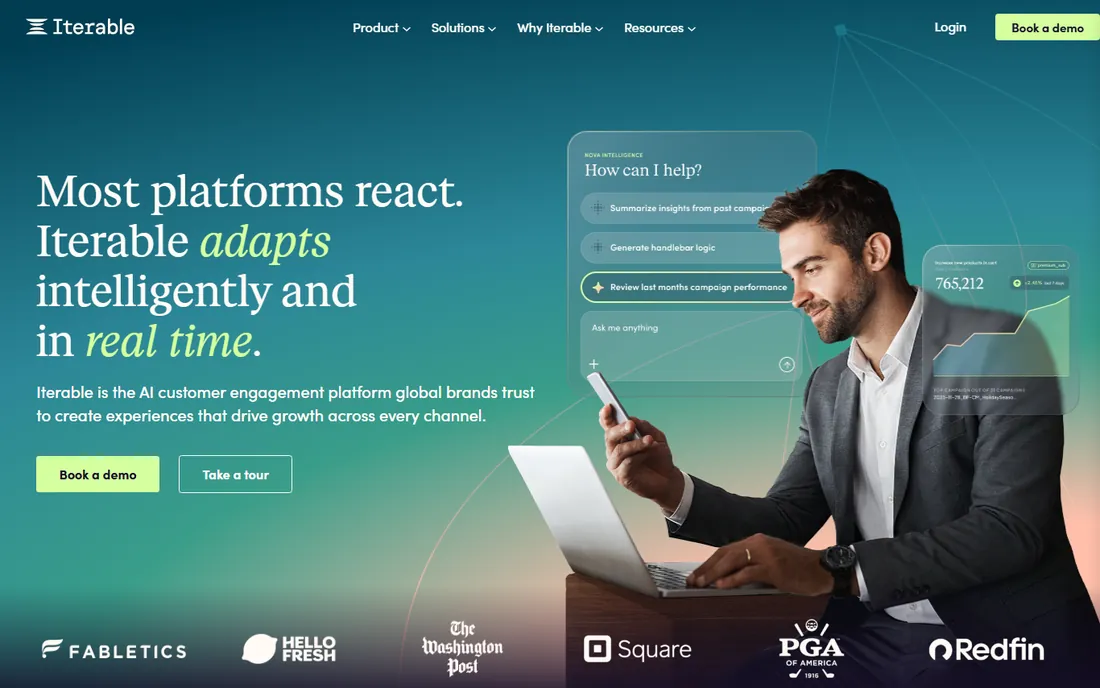
Iterable positions itself as the AI customer engagement platform for brands that live or die on lifecycle marketing. Its journey orchestration handles email, push, SMS and in-app messaging, while the Nova intelligence layer helps marketers build audiences, optimize campaigns and understand what is driving performance. Recent additions like a creative library and global suppression list show a focus on brand safety at scale.
Customers include subscription and ecommerce brands running sophisticated win-back, onboarding and loyalty programs. The platform's governance features suit regulated industries that need tight control over who gets messaged. The catch is access: there is no self-serve free tier, so smaller brands will find Klaviyo or HubSpot easier to start with.
What we like- Strong cross-channel journey builder
- Nova AI layer helps with audiences and optimization
- Good governance controls for regulated industries
Watch out for- No free tier
- Pricing is quote-based and enterprise-oriented
Starting priceSee website
Free planFree trial
Salesforce approaches B2C CRM as part of a unified customer platform. Marketing Cloud handles journeys and personalization, Data Cloud unifies customer profiles, Service Cloud covers support, and Agentforce adds AI agents across all of it. For a large company that also runs B2B sales or complex service operations, keeping everything on Salesforce avoids data silos.
The 2026 homepage leads with the "Agentic Enterprise" story: agents handling research and repetitive work inside guardrails. The honest catch is well known: Salesforce is the most expensive and complex option here, implementations typically need certified partners, and small businesses will drown in functionality they never use. It earns its place for enterprises, not for startups.
What we like- Deepest ecosystem: Marketing Cloud, Data Cloud, Service Cloud and Agentforce on one platform
- Massive integration marketplace
- Enterprise trust
Watch out for- Expensive and complex
- Implementation usually requires consultants
- Overkill for small teams
#5
HubSpot
Best for: small and mid-size businesses wanting one platform
Visit hubspot.com
Starting priceSee website
Free planYes
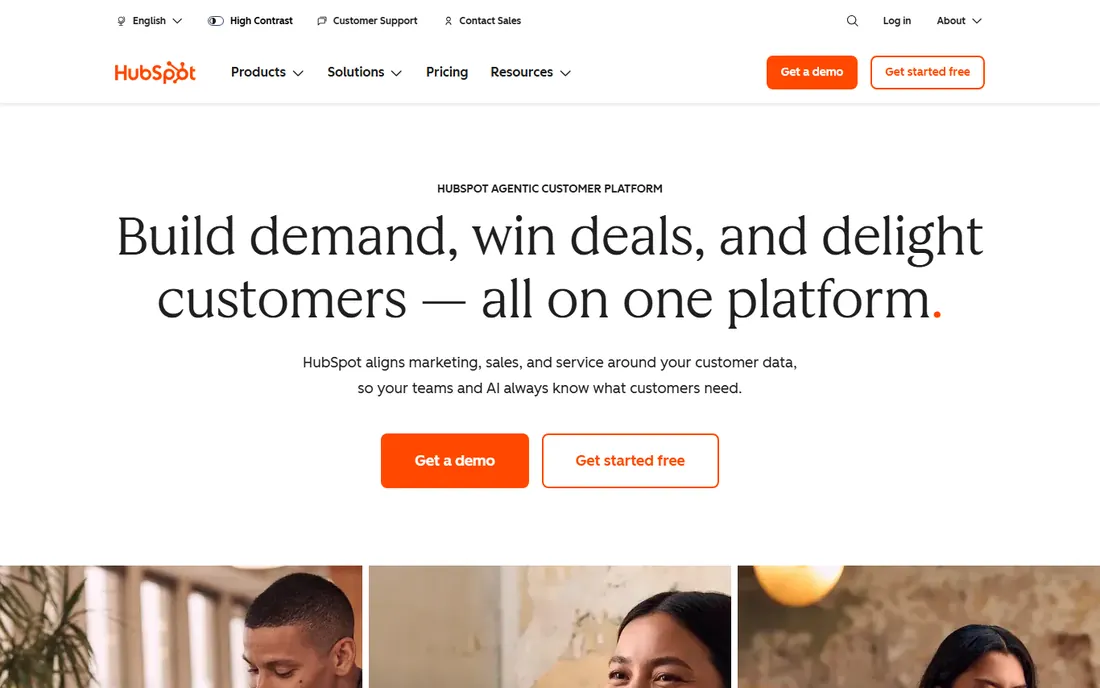
HubSpot is the friendly giant of this list: a Smart CRM with free tools at the core, surrounded by Marketing, Sales, Service, Content and Data Hubs that all read from the same customer record. For a small or mid-size business that needs email marketing, a website, a sales pipeline and support ticketing without stitching five vendors together, it is hard to beat.
The free tier is real, not a trial, and the Starter bundles keep early costs predictable. HubSpot's newer AI agents handle customer inquiries and sales tasks around the clock. The catch is the scaling curve: once your contact database grows and you need advanced automation, monthly bills climb quickly, and pure-play B2C marketers may find Klaviyo's ecommerce depth or Braze's orchestration more capable.
What we like- Genuinely useful free CRM
- Marketing, Sales and Service Hubs share one database
- Easier to learn than enterprise suites
Watch out for- Costs rise fast as contacts and features scale
- Advanced B2C journey features lag Braze and Klaviyo
Starting priceSee website
Free planFree trial (14 days)
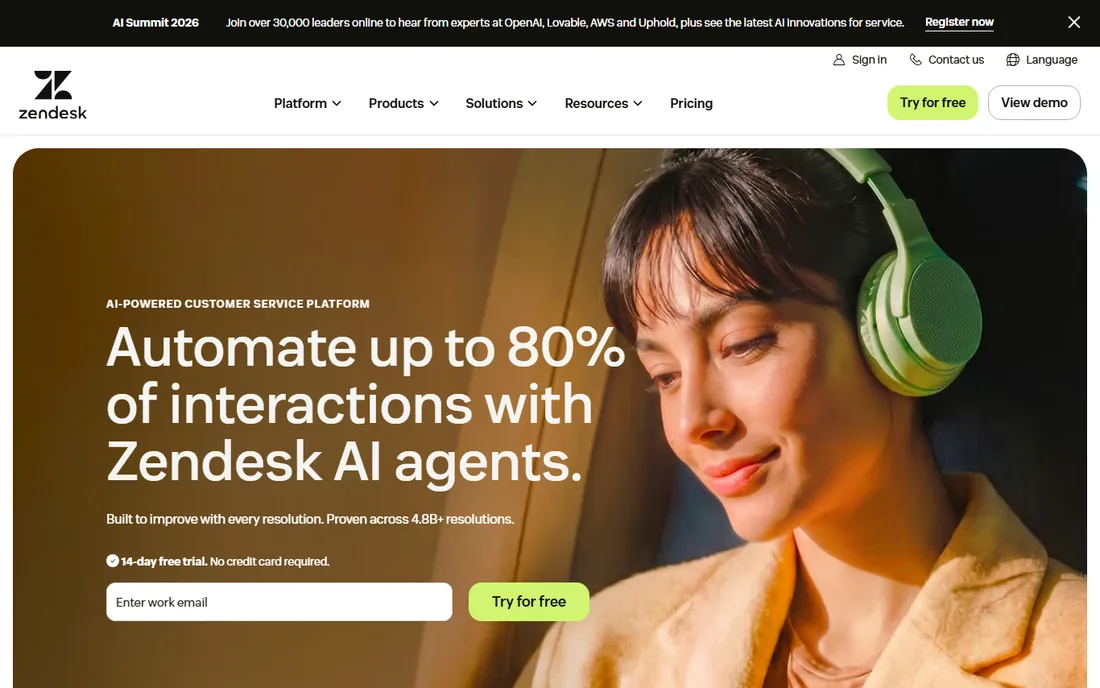
Zendesk belongs on a B2C CRM list because for many consumer brands, support interactions are the customer relationship. Its AI-first platform now automates up to 80% of interactions with AI agents that learn from every resolution, spanning messaging, email, voice and self-service. The contact center, workforce management and quality assurance tools round out a full service operation.
For retailers, subscription brands and marketplaces, Zendesk pairs naturally with a marketing platform like Klaviyo: one handles campaigns, the other handles conversations. The catch is expectations: if you need journey orchestration and promotional campaigns, Zendesk is not that tool. Buy it for service excellence, and integrate it with your marketing stack.
What we like- Complete service platform: ticketing, messaging, voice, knowledge base
- AI agents resolve issues end to end
- 14-day free trial with no credit card
Watch out for- Marketing capabilities are limited
- It is a service platform first, not a campaign tool
Starting priceSee website
Free planNo
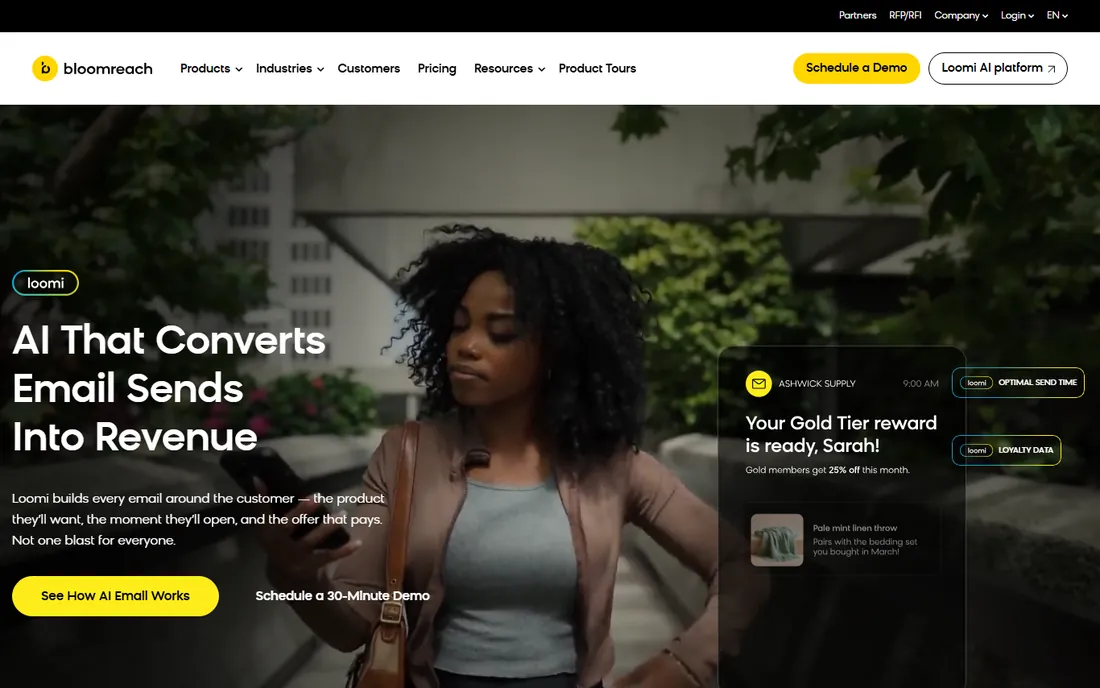
Bloomreach built its name on ecommerce personalization, and its Loomi AI now extends that across email, site search, merchandising and conversational shopping. The pitch is that personalization should be a real-time decision, not a campaign: Loomi reads customer behavior, loyalty signals and live catalog data to pick the next best product or message for each shopper.
Retailers use it to unify product discovery and marketing on one data foundation, and its Clarity conversational shopping tool guides shoppers to purchases in natural language. The catch is fit: Bloomreach is a retail commerce platform first. Non-retail B2C companies (media, fintech, travel) will find Braze or Iterable more aligned with their needs.
What we like- Loomi AI personalizes email, search and merchandising from live catalog data
- Strong ecommerce search and discovery
- Conversational shopping features
Watch out for- Ecommerce-focused
- Quote-based pricing
- Less suited to non-retail B2C
Starting priceSee website
Free planNo
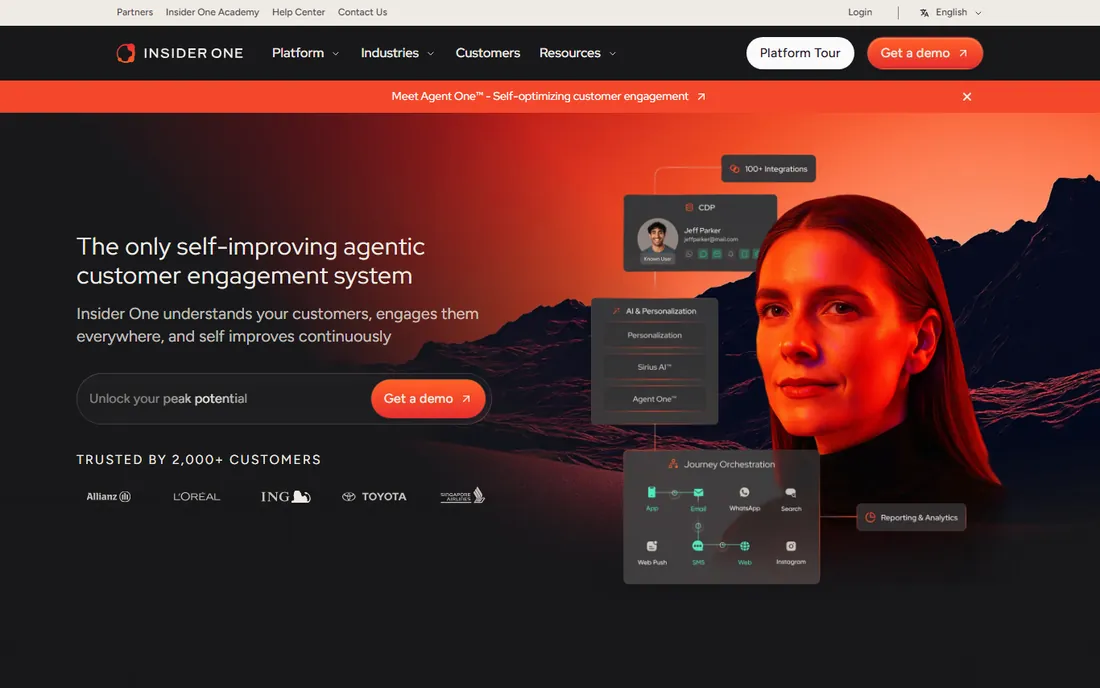
Insider One (formerly Insider) sells what it calls a self-improving agentic customer engagement system: AI agents plan, create, orchestrate and optimize campaigns across SMS, email, WhatsApp, push, web and site search. Its Sirius AI and the newer Agent One layer aim to automate the repetitive parts of campaign management while marketers set strategy and guardrails.
The company claims 2,000+ customers and strong analyst placements, including leadership positions in Gartner and Forrester evaluations of personalization and cross-channel marketing. Channel breadth is a genuine differentiator, especially for brands where WhatsApp or web push matter. The catch is the rebrand: older reviews and case studies sit under the Insider name, so do your homework across both, and expect an enterprise sales process.
What we like- Very broad channel coverage including WhatsApp, web push and site search
- Sirius AI and Agent One automate optimization
- Strong analyst recognition
Watch out for- Recent rebrand from Insider may confuse buyers
- Enterprise sales motion with quote-based pricing
How we chose
We compared platforms using vendor documentation, pricing pages, analyst reports (Gartner, Forrester, IDC) and public reviews on G2, Capterra and TrustRadius. We weighted B2C-specific capabilities (journey orchestration, personalization, channel breadth), data platform strength, fit for small and mid-size US companies, and pricing transparency. We did not perform hands-on testing; all assessments reflect publicly available information as of October 2026.
Picking the right B2C CRM for your stage
If you run an ecommerce store doing under $5M a year, start with Klaviyo. Its free plan, Shopify integration and ecommerce-specific flows (abandoned cart, welcome series, post-purchase) deliver revenue faster than any enterprise platform, and you can migrate later if you outgrow it.
When to go upmarket
Consider Braze or Iterable when you have a mobile app, a lifecycle marketing team, and journeys complex enough that spreadsheets of segments no longer cut it. Consider Salesforce when B2C marketing must share data with B2B sales or enterprise service operations. In both cases, budget for implementation help: these platforms reward expertise and punish guesswork.
Do not forget the service side
Campaigns win customers; support keeps them. Pair your marketing platform with a service tool like Zendesk (or HubSpot Service Hub) from the start, and make sure the two share customer data. The brands with the best retention treat every support ticket as a marketing event, because to the customer, it is.
The AI agent reality check
Every vendor on this list now sells AI agents, and the demos are impressive. Treat them as powerful assistants, not autonomous employees: agents still need clean data, clear guardrails and human review of what they send to customers. The platforms winning in 2026 are the ones where AI reduces manual campaign work (segmentation, content variants, send-time optimization), not the ones promising to replace your marketing team. Pilot the AI features on a low-risk segment before letting them near your best customers.
Frequently asked questions
What is B2C CRM software?
B2C CRM software helps consumer-facing businesses manage relationships with individual customers at scale. It typically combines a customer data platform, campaign and journey orchestration across email, SMS, push and other channels, personalization, and analytics. Some platforms also cover customer service.
How is B2C CRM different from B2B CRM?
B2B CRM centers on sales pipelines, accounts and long deal cycles with small numbers of contacts. B2C CRM handles millions of individual consumers, focusing on behavioral data, lifecycle campaigns, personalization and high-volume messaging. The data models, channels and success metrics differ substantially.
How much does B2C CRM software cost?
It varies widely. Klaviyo and HubSpot offer free tiers, and their paid plans scale with contact counts or message volume, so check the vendor's current pricing page for your list size. Enterprise platforms like Braze, Iterable and Salesforce Marketing Cloud are quote-based, with annual costs driven by data volume, channels and support tier.
Do I need a customer data platform (CDP) with my B2C CRM?
Modern B2C CRMs like Klaviyo, Braze and Insider One include CDP functionality: unifying behavioral, transactional and engagement data into customer profiles. If your CRM already does this well, a separate CDP may be redundant. Consider a standalone CDP only if you need to feed the same data to many other tools.
Can B2C CRM handle SMS and WhatsApp?
Yes, most platforms on this list support SMS, and several (Klaviyo, Braze, Insider One) support WhatsApp and RCS. Messaging costs are usually usage-based on top of platform fees, so model your expected send volumes when comparing prices.
How long does implementation take?
Self-serve platforms like Klaviyo or HubSpot can be sending campaigns within days. Enterprise platforms like Braze, Salesforce or Insider One typically take 6-12 weeks with proper data integration, longer for complex multi-brand setups. Data quality work, not software configuration, usually determines the timeline.
Sources we checked (8)
- https://www.salesforce.com/
- https://hubspot.com/
- https://www.klaviyo.com
- https://www.braze.com/
- https://www.zendesk.com/
- https://iterable.com/
- https://bloomreach.com/
- https://useinsider.com/
Is your product missing or out of date?
We review this list regularly. Vendors can request a listing, send updated pricing or ask about featured placement.

Shihab Mia · Founder, Rankite
Shihab has spent more than a decade helping SaaS and e-commerce brands grow through search. He writes Rankite's software buying guides from pricing pages, documentation and public user reviews. More about Shihab.