How we make this list: we compare pricing pages, product documentation and public user reviews. Rankite is independent; if a vendor ever pays for a featured spot, that listing is clearly labeled Partner.
Key takeaways
- AMOS and Ramco Aviation are the heavyweights for airline MRO, with deep maintenance and engineering coverage.
- TRAX eMRO and Rusada ENVISION suit operators that want modern, mobile-first maintenance workflows.
- Veryon and CAMP Systems dominate business aviation maintenance tracking.
- WinAir is the practical choice for smaller operators, helicopter fleets, and MRO shops.
- Quantum Control and AerData serve component-focused operations: parts traceability and lease records.
Quick comparison
| Tool | Best for | Starting price | Free plan |
|---|
 Ramco Aviation Ramco Aviation | Airline MRO and engineering | See website | No |
 AMOS AMOS | Large airline maintenance operations | See website | No |
 Rusada ENVISION Rusada ENVISION | Modern MRO and airline workflows | See website | No |
 TRAX TRAX | Mobile-first maintenance execution | See website | No |
 Veryon Veryon | Business aviation maintenance tracking | See website | No |
 CAMP Systems CAMP Systems | Engine and APU maintenance programs | See website | No |
 WinAir WinAir | Smaller operators and helicopter fleets | See website | No |
 Quantum Control (Component Control) Quantum Control (Component Control) | Component MRO shops | See website | No |
 AerData (Boeing) AerData (Boeing) | Aircraft records and lease management | See website | No |
Is your product missing or out of date?
We review this list regularly. Vendors can request a listing, send updated pricing or ask about featured placement.
The best aviation software
Starting priceSee website
Free planNo

Ramco Aviation is one of the few systems that covers the entire maintenance organization: engineering records, maintenance planning, materials and inventory, hangar execution, and finance. Its mobile apps put task cards, manuals, and parts issue directly in mechanics' hands, which is where maintenance software either earns its keep or fails. Large airlines and independent MROs run their daily operation on it.
The scope is the challenge. Deploying Ramco touches every department in the maintenance organization, so implementations run long and demand executive sponsorship. Smaller operators will find it more system than they need. For airlines with real fleet complexity, though, the breadth means fewer integrations and one source of truth for the aircraft's maintenance life.
What we like- Deep MRO coverage from engineering to materials to hangar execution
- Strong mobility for mechanics
- Used by major airlines and MROs worldwide
Watch out for- Implementation is a major project
- Interface reflects its enterprise heritage
Starting priceSee website
Free planNo
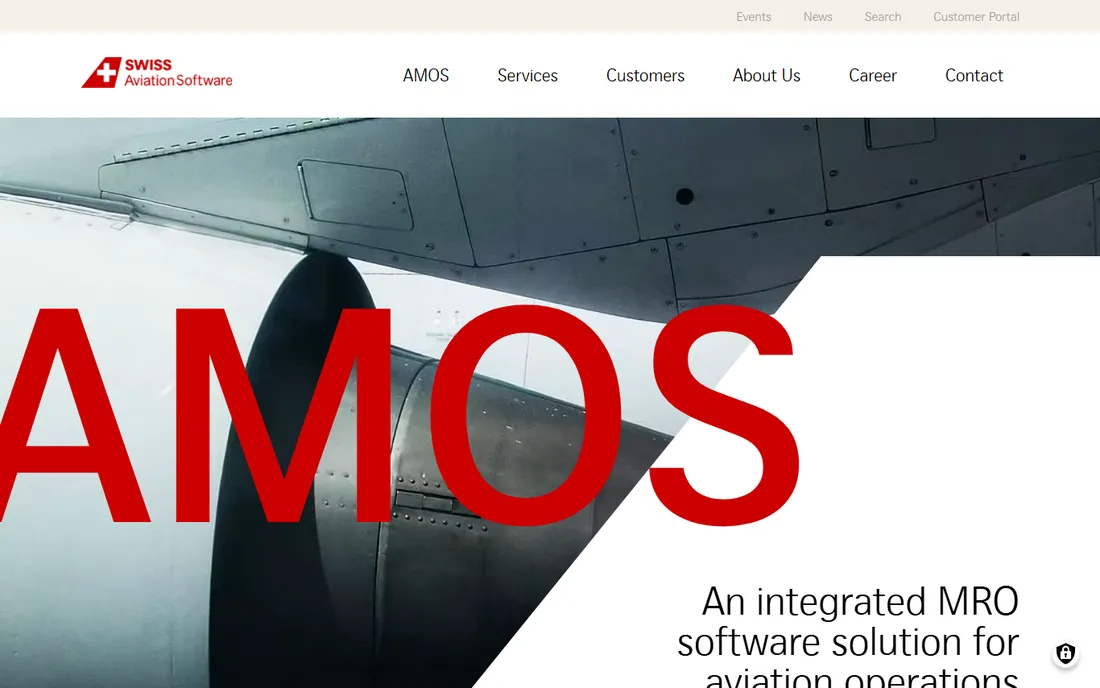
AMOS, from Swiss AviationSoftware, grew up inside airline maintenance departments, and it shows in the depth. Maintenance planning, engineering, materials, line and base maintenance, and component control are all first-class citizens rather than add-ons. Its user community includes some of the world's largest carriers, which means the product roadmap reflects real airline pain.
This is not software you trial on a credit card. Implementations are measured in months, training is substantial, and the pricing fits airline budgets. Operators below a certain fleet size get more value from lighter tools like WinAir or Veryon. But when the shortlist is "systems that can run a 200-aircraft maintenance operation," AMOS is always on it.
What we like- Extremely deep functionality built with airline operators
- Strong community of large airline users
- Proven at very large fleet scales
Watch out for- Significant implementation and training investment
- Best value at large fleet sizes
Starting priceSee website
Free planNo
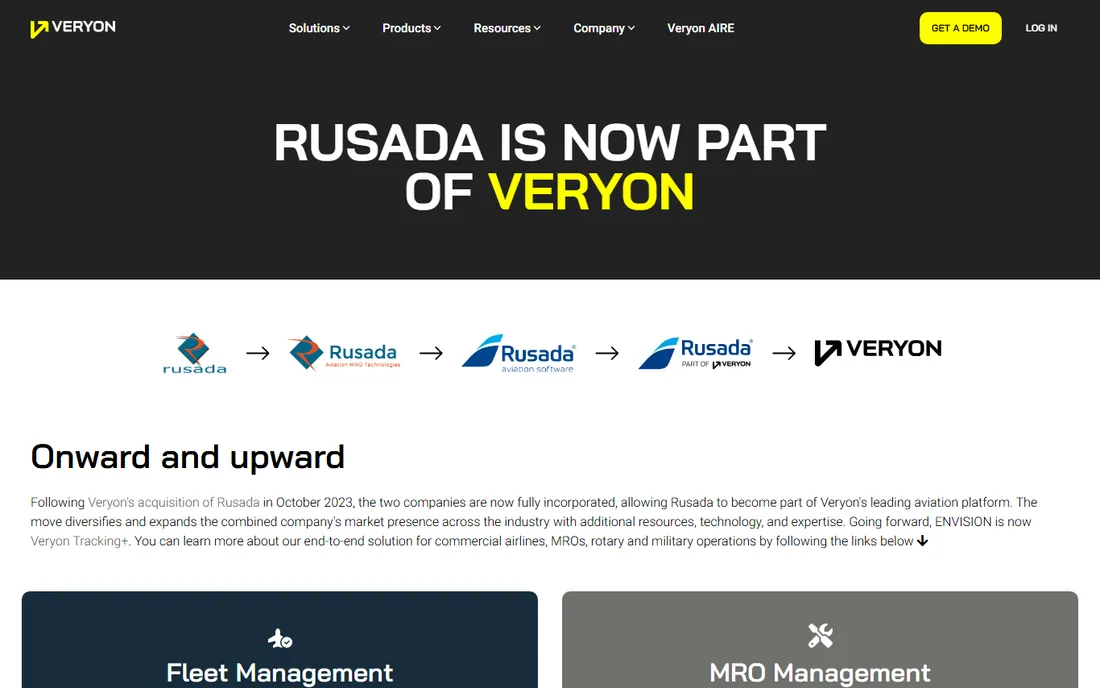
ENVISION positions itself as the modern alternative to the legacy MRO giants. The interface is cleaner, deployment can be cloud-based, and the workflow design reflects current expectations rather than 1990s client-server thinking. It covers the core MRO jobs: maintenance planning, execution, materials, and airworthiness records, with mobile support for the hangar floor.
The installed base is smaller, which cuts both ways: the vendor is hungrier and more responsive, but there are fewer peers to learn from and fewer prebuilt integrations. MRO shops and mid-size operators that find AMOS too heavy and WinAir too light should put ENVISION on the shortlist and judge it on a pilot with real work orders.
What we like- Modern interface compared with legacy MRO systems
- Strong for MRO shops and smaller airlines
- Cloud deployment options
Watch out for- Smaller installed base than AMOS or Ramco
- Fewer third-party integrations
Starting priceSee website
Free planNo

TRAX built its reputation on getting maintenance off paper. Its eMRO system consolidates planning, execution, materials, and records, while the eMobility apps let mechanics receive task cards, record findings, and close work from tablets on the hangar floor. The company cites over a hundred customers across thousands of aircraft, which is serious scale for this niche.
Like all enterprise MRO software, buying TRAX means a sales process and an implementation project, not a signup page. The differentiation is execution focus: where some competitors are strongest in the planning office, TRAX invested in the mechanic's daily workflow. Operators whose bottleneck is hangar productivity rather than planning sophistication should look closely.
What we like- EMRO unifies maintenance on one platform
- EMobility apps enable paperless hangar workflows
- Trusted across thousands of aircraft
Watch out for- Enterprise sales and implementation process
- Pricing is entirely quote-based
Starting priceSee website
Free planNo
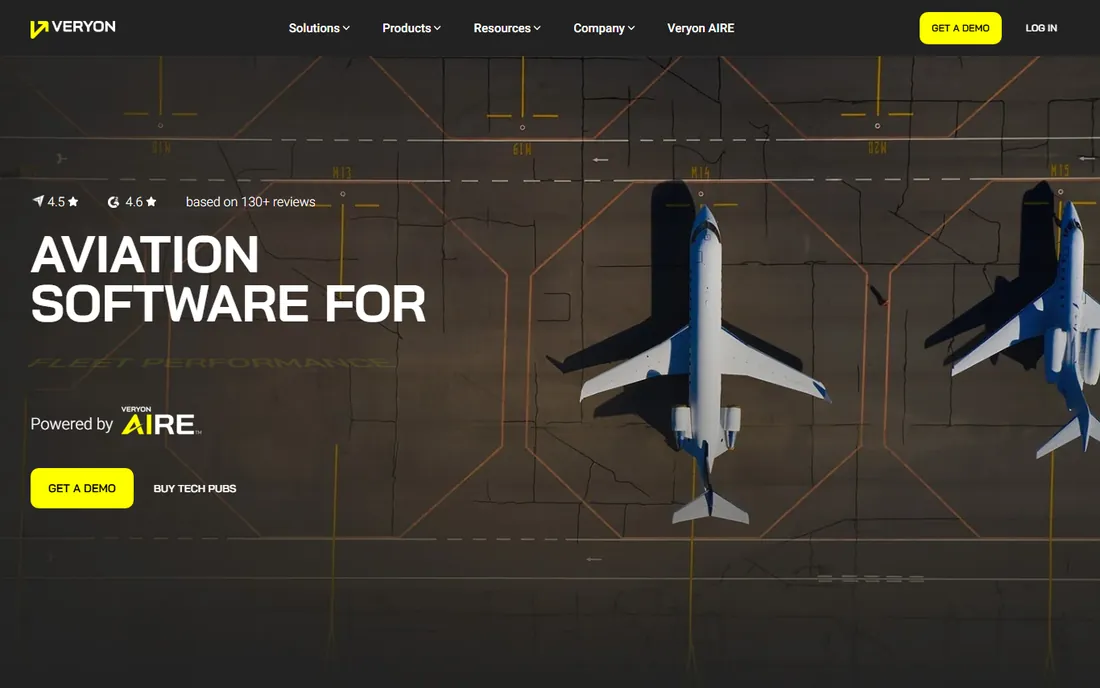
Veryon is the name business aviation trusts for maintenance tracking. It grew from the merger of aviation data businesses including ATP, and its platform tracks airworthiness directives, service bulletins, inspections, and component times for corporate flight departments and charter operators. Integration with technical publications means mechanics work from current manuals, not outdated PDFs.
Airlines will find it too light; it is not an airline MRO system. But for flight departments managing a handful of jets, the fit is exact: compliance tracking without the overhead of an airline-grade ERP. Pricing scales with aircraft and modules, so get a quote scoped to your actual fleet before comparing.
What we like- Purpose-built for business aviation maintenance tracking
- Strong technical publications and logbook integration
- Large bizav customer base
Watch out for- Less suited to airline-scale MRO
- Pricing scales with fleet and modules
Starting priceSee website
Free planNo
CAMP Systems owns a specific and valuable job: tracking engine and APU maintenance programs for business aircraft. Its systems monitor engine health, track life-limited parts, manage maintenance program compliance, and hold decades of reliability data that inform overhaul decisions. For operators, enrollment in CAMP is often as much about resale value as maintenance; buyers trust CAMP-tracked engines.
It is not a hangar management system or a full MRO suite. Think of it as the authoritative record for your engines and APUs, complementary to whatever tracks the airframe. If you operate turbine business aircraft, you likely already know CAMP. If you are evaluating it fresh, the question is program enrollment, not software features.
What we like- Dominant in engine and APU health monitoring for business aviation
- Enormous historical data on component reliability
- Trusted by OEMs and operators
Watch out for- Focused on maintenance programs rather than full MRO
- Interface is utilitarian
Starting priceSee website
Free planNo
WinAir serves the part of aviation the giants overlook: charter operators, helicopter fleets, air ambulance services, and small MRO shops. Its packaged editions for operators, helicopter operations, MROs, and continuing airworthiness management mean you buy the workflows you actually run instead of configuring an airline system down to size. Version 7 brought the interface current.
The trade-off is ceiling height. A 300-aircraft airline will outgrow WinAir's depth in planning and engineering. But for operators with dozens of aircraft, WinAir's implementability is the feature: you can actually get it live without a two-year project. The company's longevity and focused customer base make it the safe pragmatic pick in its segment.
What we like- Practical packages for operators, heliops, MROs, and CAMOs
- Easier to implement than airline-grade systems
- 30+ years in the business
Watch out for- Less depth than AMOS or Ramco for complex airline operations
- Smaller vendor
Starting priceSee website
Free planNo

Quantum Control lives in the component shop: the repair stations that overhaul avionics, accessories, wheels, and brakes. Its workflows match how shops actually work, from receiving and inspection through repair, testing, certification, and invoicing, with the parts traceability that regulators and customers demand. For a repair station, generic MRO software always feels wrong; Quantum Control feels built for the bench.
That specialization is also the boundary. It will not run an airline's fleet planning or a flight department's airworthiness tracking. Component shops evaluating it should compare against doing the job in a generic ERP, where aviation-specific requirements like 8130-3 traceability become expensive customizations. In its niche, it is the reference.
What we like- Built specifically for component repair shops
- Strong parts traceability and work order control
- Handles the repair-station paperwork burden
Watch out for- Niche focus means it is not a full aircraft maintenance system
- Smaller vendor with limited integrations
Starting priceSee website
Free planNo
AerData, part of Boeing, solves the paperwork nightmare of aircraft leasing: digitizing maintenance records, managing lease contracts, and handling the records review when aircraft change hands. Anyone who has watched a lease return stall for months over missing records understands the value. Its software structures the entire records package so transitions move faster.
This is not maintenance software in the hangar sense; no mechanic opens AerData to do a task card. It is for lessors, airlines, and asset managers who live in records and contracts. If your problem is lease compliance and records integrity rather than turning wrenches, AerData is the specialist. Everyone else should look at the MRO systems above.
What we like- Purpose-built for aircraft records digitization and lease transitions
- Boeing backing
- Deep lessor and airline customer base
Watch out for- Narrow focus on records and contracts
- Not a maintenance execution system
How we chose
We focused on the maintenance and airworthiness side of aviation software, per the category's core demand, and selected vendors with real installed bases rather than startup promises. We verified each company's current product line and ownership through their official sites, noting developments like the Veryon consolidation of aviation data businesses. We read operator discussions in aviation maintenance forums, MRO conference coverage, and user reviews, weighting implementation reality, regulatory compliance support, and mobile execution over feature-list length. All enterprise pricing here is quote-based.
Matching software to your operation type
Aviation software is segmented by operation, and buying across segments causes most bad purchases.
Airlines and large MROs
AMOS, Ramco, and TRAX are the shortlist. You need fleet-wide planning, engineering, materials, and hangar execution in one system, with the scalability for hundreds of aircraft. Budget for a long implementation and pick the vendor whose reference customers look like you.
Business aviation and charter
Veryon for maintenance tracking, CAMP for engines, and WinAir if you run your own shop. You need compliance without airline overhead. Do not buy an airline MRO system for a six-aircraft fleet.
Component repair stations
Quantum Control is built for the bench. Generic ERPs and airline systems both fight the repair-station workflow; buy the tool designed for it.
Lessors and asset managers
AerData for records and lease transitions. Your problem is documentation integrity across operators, not maintenance execution.
Implementation realities in aviation
Aviation software projects fail on data and process, not on features. Migrating decades of maintenance records, component times, and airworthiness directives into a new system is the hard part; budget as much for data migration as for licenses. Regulatory approval of the new system and its records matters too, so involve your quality and compliance team from day one, not at go-live.
Training deserves its own line item. Mechanics and planners who have done the job on paper or a legacy system for twenty years need hands-on training, not a webinar. The vendors that include structured training and template libraries, WinAir's aircraft templates are a good example, shorten the path to real adoption.
Frequently asked questions
What is aviation maintenance software?
It is software that manages aircraft maintenance: tracking inspections, airworthiness directives, component life limits, work orders, parts inventory, and the compliance records regulators require. Airlines, MRO shops, business aviation operators, and repair stations all use specialized versions.
How much does aviation maintenance software cost?
Pricing is quote-based across the category and scales with fleet size, modules, and users. Small operators might pay low five figures annually; large airline deployments run into seven figures including implementation. Always get scoped quotes from at least three vendors.
What is the difference between MRO software and maintenance tracking software?
MRO software like AMOS or Ramco runs the whole maintenance organization, including planning, engineering, materials, and hangar execution. Maintenance tracking software like Veryon focuses on airworthiness compliance records for smaller fleets. The right choice depends on your operation's size and complexity.
How long does implementation take?
Small operators can go live in weeks to a few months. Airline-scale deployments typically take 12 to 24 months including data migration, integration, training, and regulatory acceptance. Data migration of historical records is usually the longest phase.
Can small flight departments use this software?
Yes. Veryon, WinAir, and CAMP Systems specifically serve smaller operators and flight departments without the overhead of airline-grade systems. Avoid buying enterprise MRO platforms for a handful of aircraft.
Do these systems handle regulatory compliance?
Yes, compliance is the core value proposition. They track airworthiness directives, service bulletins, life-limited parts, and inspection intervals, and generate the records auditors and regulators require. Confirm the system covers your specific regulatory regime (FAA, EASA, or others) before buying.
Sources we checked (9)
- https://www.ramco.com
- https://www.swiss-as.com
- https://www.rusada.com
- https://trax.aero/
- https://www.veryon.com
- https://www.campsystems.com
- https://winair.ca/
- https://www.componentcontrol.com
- https://www.aerdata.com
Is your product missing or out of date?
We review this list regularly. Vendors can request a listing, send updated pricing or ask about featured placement.

Shihab Mia · Founder, Rankite
Shihab has spent more than a decade helping SaaS and e-commerce brands grow through search. He writes Rankite's software buying guides from pricing pages, documentation and public user reviews. More about Shihab.