How we make this list: we compare pricing pages, product documentation and public user reviews. Rankite is independent; if a vendor ever pays for a featured spot, that listing is clearly labeled Partner.
Key takeaways
- RELEX Solutions, o9 Solutions, and Blue Yonder are the enterprise defaults, with deep forecasting and supply chain breadth that suits large multi-category retailers.
- Board and Centric Software fit retailers that want planning connected to financial plans and product development rather than a standalone forecasting tool.
- Impact Analytics and Toolio are the modern options: AI-native planning with faster implementation for mid-market and growth-stage brands.
- ToolsGroup brings probabilistic forecasting to assortment decisions, which helps retailers that carry long-tail or intermittent-demand products.
Quick comparison
| Tool | Best for | Starting price | Free plan |
|---|
 RELEX Solutions RELEX Solutions | Large retailers wanting unified AI planning | See website | No (demo available) |
 o9 Solutions o9 Solutions | Enterprises planning across supply chain and retail | See website | No (demo available) |
 Blue Yonder Blue Yonder | Retailers needing end-to-end supply chain depth | See website | No (demo available) |
 Board Board | Planning tied to financial and merchandise plans | See website | No (demo available) |
 Centric Software Centric Software | Fashion and CPG brands planning from concept to shelf | See website | No (demo available) |
 Impact Analytics Impact Analytics | AI-native assortment and merchandising decisions | See website | No (demo available) |
 Toolio Toolio | Mid-market brands wanting fast, collaborative planning | See website | No (demo available) |
 ToolsGroup ToolsGroup | Probabilistic forecasting for complex assortments | See website | No (demo available) |
Is your product missing or out of date?
We review this list regularly. Vendors can request a listing, send updated pricing or ask about featured placement.
The best assortment planning software
Starting priceSee website
Free planNo (demo available)
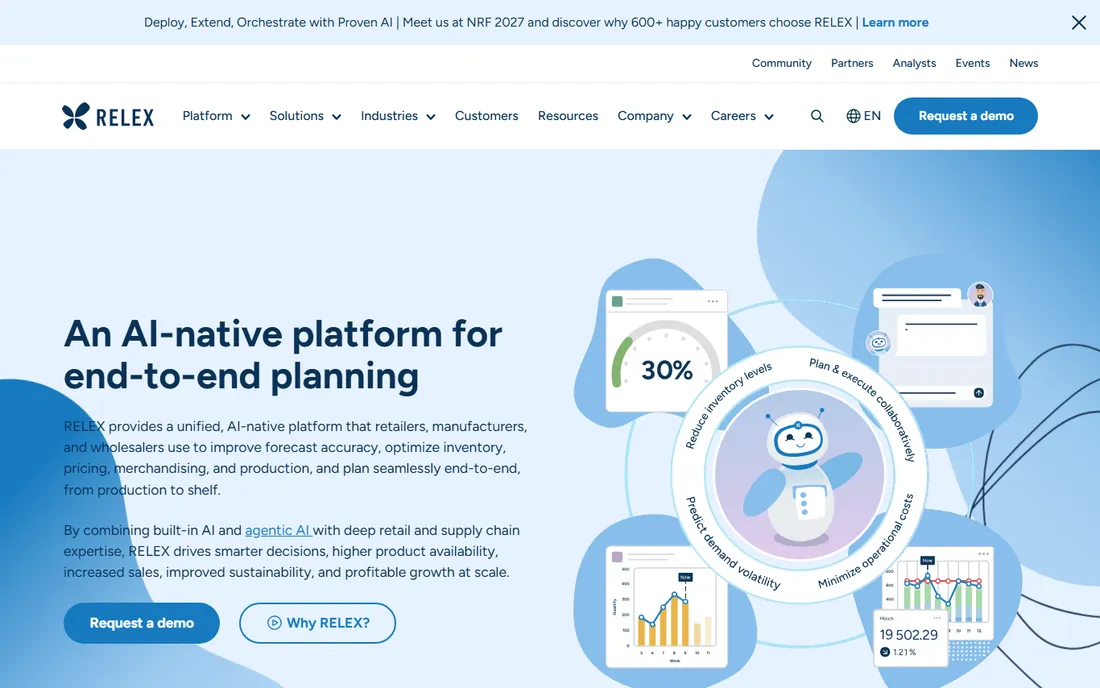
RELEX has become the reference point for AI-driven retail planning, and assortment is a core part of its unified platform rather than a bolt-on module. Demand forecasts, space planning, replenishment, and pricing draw on the same data model, so an assortment decision automatically flows into inventory and shelf plans. The company counts hundreds of enterprise implementations across grocery, hardlines, fashion, and convenience.
The trade to understand is scope. RELEX replaces a whole planning stack, which means the project touches forecasting, replenishment, and often promotions at once. Retailers that only need range planning and nothing else will find lighter tools faster to deploy. Retailers standardizing planning across banners and countries get a platform that was designed for exactly that.
What we like- AI-native platform covering forecasting through replenishment
- Space and assortment planning in one unified model
- Strong grocery, hardlines, and fashion customer base
Watch out for- Enterprise implementation measured in months
- Pricing is quote-based and sized for larger retailers
Starting priceSee website
Free planNo (demo available)
o9 positions its platform as a digital brain for enterprise planning, and assortment planning sits inside a much wider model that spans demand, supply, inventory, and financial planning. The Enterprise Knowledge Graph links these domains so a change in the assortment plan ripples into supply and capacity views. Analyst recognition has been strong, including Leader placements in 2026 Gartner Magic Quadrant reports for supply chain planning.
This is a platform for companies with complex, multi-tier operations and planning teams to match. Implementation is a transformation program, not a software install, and the commercial model reflects that. Mid-market retailers will get more usable value sooner from tools built for their scale, while global enterprises with tangled planning operations are o9's natural audience.
What we like- Enterprise Knowledge Graph connects planning end to end
- Strong scenario planning and what-if analysis
- Named a Leader in 2026 Gartner supply chain planning reports
Watch out for- Built for very large enterprises, not mid-market
- Requires serious internal planning maturity to get value
Starting priceSee website
Free planNo (demo available)
Blue Yonder, formerly JDA, is one of the largest supply chain software companies in the world, and its retail planning suite includes category management, assortment, and space planning alongside forecasting, replenishment, and execution. The platform processes enormous prediction volumes daily, and its customer list spans grocery, apparel, general merchandise, and consumer goods.
For assortment specifically, the appeal is continuity: the range plan connects directly to allocation, replenishment, and store operations without handoffs between vendors. The cost of that continuity is implementation weight. Blue Yonder projects are enterprise programs with consulting, change management, and multi-phase rollouts. Retailers that want assortment planning as a contained, fast project should look at the mid-market tools on this list instead.
What we like- Massive scale with billions of daily AI predictions
- Category management and assortment within a full supply chain suite
- Deep retail industry coverage from grocery to apparel
Watch out for- Suite breadth means longer, heavier implementations
- Assortment is one module inside a much larger platform
#4
Board
Best for: Planning tied to financial and merchandise plans
Visit board.com
Starting priceSee website
Free planNo (demo available)
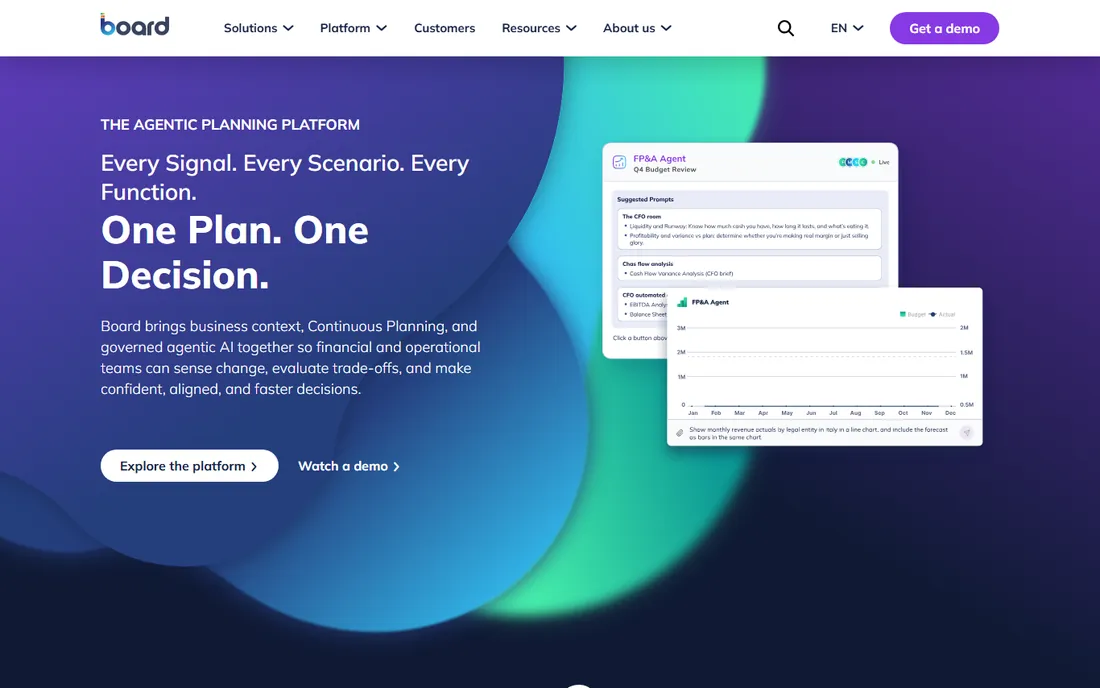
Board takes a different route from the supply chain suites: it is a planning platform that connects finance, merchandising, and operations in one environment. Assortment plans live next to open-to-buy budgets, margin targets, and scenario models, so planners see the financial impact of range decisions immediately. The platform is known for flexibility, with retailers configuring it around their own processes rather than adapting to rigid workflows.
That flexibility is a double-edged sword. Teams with strong planning discipline can build exactly the assortment workflow they want, including custom hierarchies, attributes, and approval flows. Teams expecting a pre-built retail template with best-practice assortments out of the box will do more configuration work than with a purpose-built assortment vendor. Board fits retailers where finance and merchandising plan as one team.
What we like- Unifies financial planning with operational assortment planning
- Flexible modeling that adapts to the retailer's process
- Strong analyst recognition in planning categories
Watch out for- Requires planning expertise to configure well
- Less retail-specific out of the box than pure assortment vendors
Starting priceSee website
Free planNo (demo available)
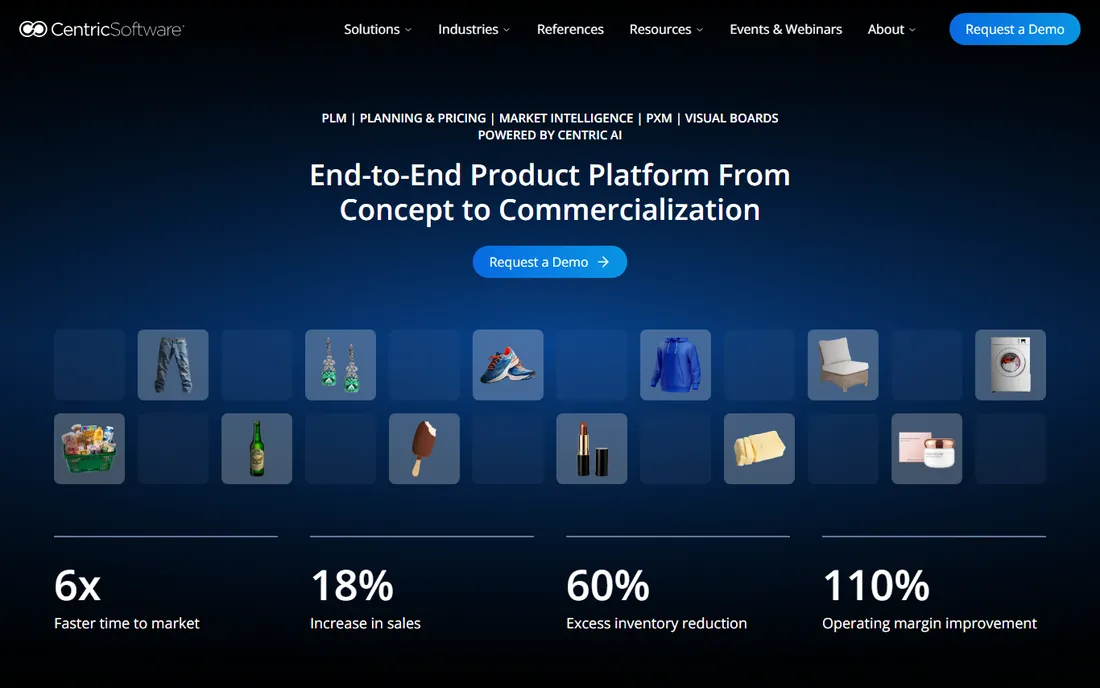
Centric approaches assortment from the product side. Its platform starts with product lifecycle management, where collections are designed and developed, and extends through planning, pricing, and visual merchandising. Assortment decisions stay connected to the product data they came from, and visual boards let merchants build ranges collaboratively with real product imagery and data attached.
This product-centric view is exactly right for fashion, footwear, luxury, and consumer goods brands, where the assortment is a creative decision as much as a numerical one. Grocery and hardlines retailers with simpler product development cycles get less of the PLM advantage. Centric's market intelligence module, which tracks competitor assortments and pricing, is a useful extra for brands that plan against fast-moving rivals.
What we like- Connects assortment to PLM and product development
- Visual boards for collaborative range building
- Market intelligence for competitor assortment tracking
Watch out for- Strongest in fashion, footwear, and CPG rather than grocery
- Full platform value needs multiple modules
Starting priceSee website
Free planNo (demo available)
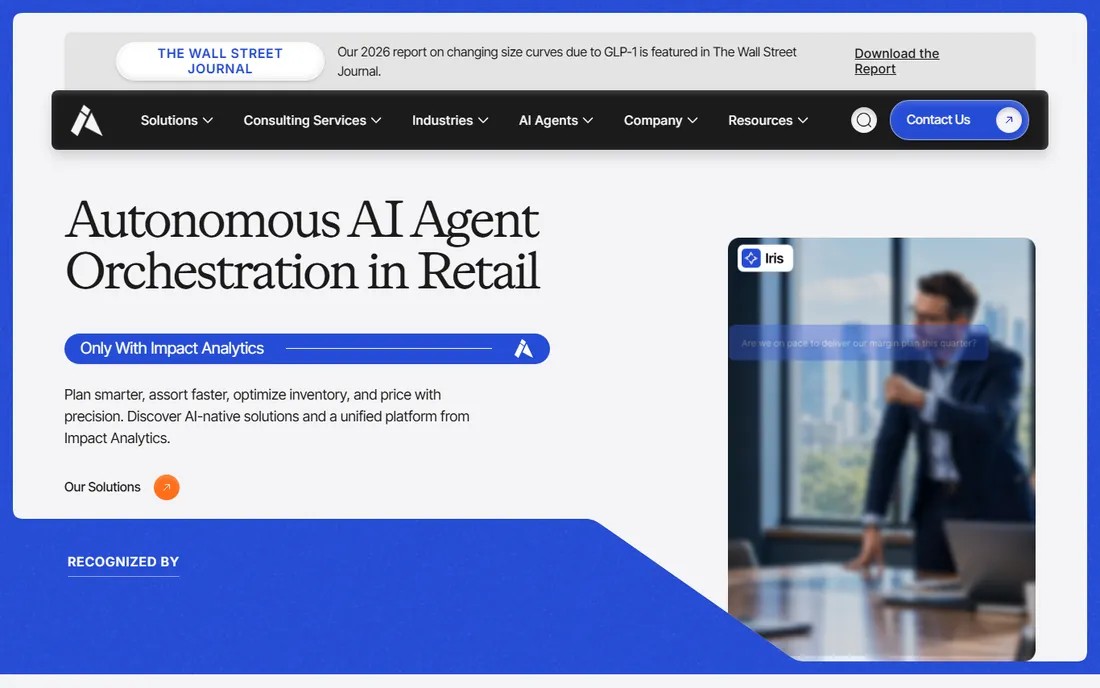
Impact Analytics has built its platform around AI agents that handle specific retail decisions, including assortment planning, allocation, and pricing. Rather than presenting forecasts for planners to interpret, the system pushes toward autonomous recommendations with shared business context across merchandising functions. The customer list includes recognizable retail brands, and the company documents significant client value from its deployments.
For a buyer, the pitch is speed and retail specificity without the implementation weight of a legacy suite. The thing to verify in evaluation is how much autonomy you actually want: agent-driven recommendations work best when the retailer trusts the data inputs and sets clear guardrails. Run a pilot on one category with clean POS history and judge the recommendations against your planners' judgment before committing broadly.
What we like- AI agents built specifically for retail decisions
- Covers assortment, allocation, pricing, and forecasting together
- Strong mid-market and enterprise retail customer logos
Watch out for- Newer brand than the legacy planning suites
- AI-agent positioning needs validation in a pilot
#7
Toolio
Best for: Mid-market brands wanting fast, collaborative planning
Visit toolio.com
Starting priceSee website
Free planNo (demo available)
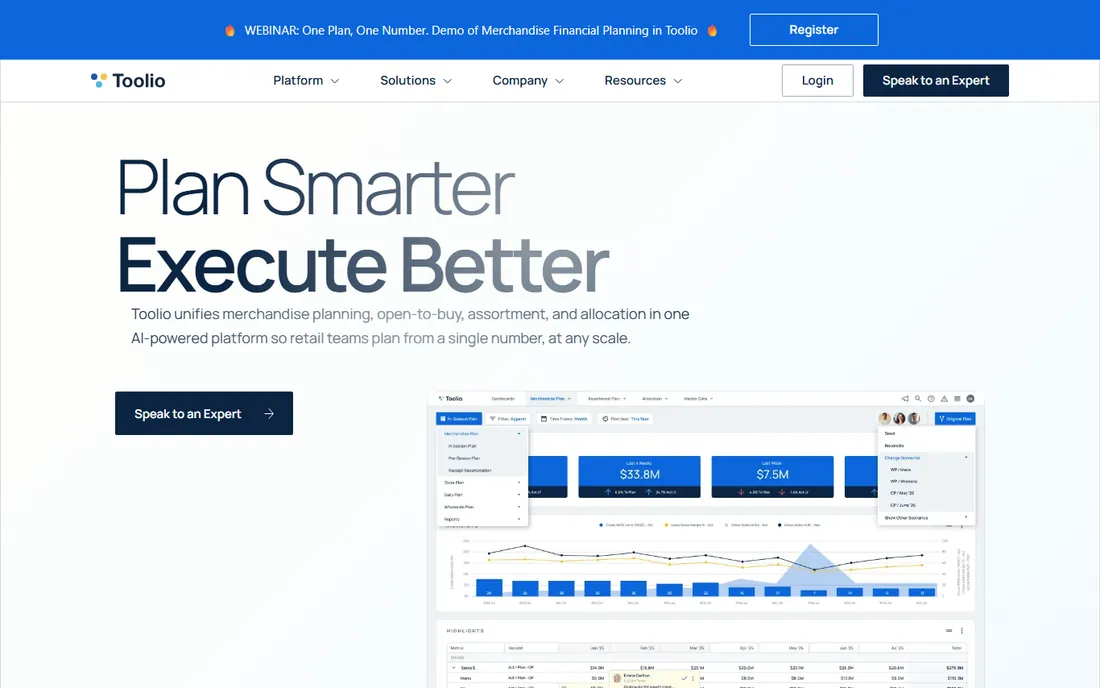
Toolio is the modern mid-market answer to assortment planning. It covers merchandise financial planning, assortment, and allocation in a collaborative interface designed for merchants rather than data scientists. Integrations with Shopify, NetSuite, SAP, and Snowflake get data flowing quickly, and implementations land in weeks rather than quarters.
The practical advantage is adoption. Planning teams actually open Toolio because it fits how merchants think: visual assortments, open-to-buy alongside the range plan, and in-season re-forecasting without analyst support. The limit is scale and depth. Retailers with thousands of stores, complex supply chains, or highly intermittent demand will eventually want the heavier forecasting engines of RELEX or ToolsGroup. For growth-stage brands outgrowing spreadsheets, Toolio is the right weight.
What we like- Built for merchants and planners, not just analysts
- Fast implementation measured in weeks
- Connects to Shopify, NetSuite, and major ERPs
Watch out for- Less suited to the largest multi-banner enterprises
- Forecasting depth is lighter than the AI-heavy suites
Starting priceSee website
Free planNo (demo available)
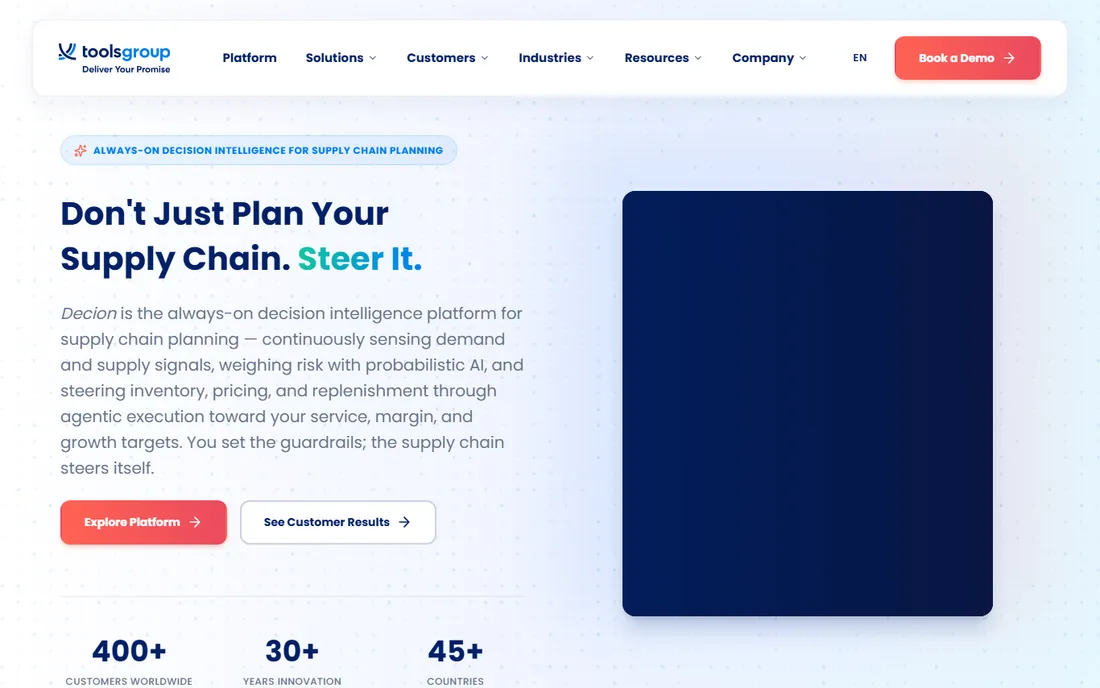
ToolsGroup's differentiator is probabilistic forecasting: instead of a single demand number, it models the range of possible outcomes and plans assortments against that uncertainty. That matters for retailers carrying long-tail products, spare parts, or categories with lumpy demand, where traditional forecasting consistently underperforms. The company serves hundreds of customers across retail, manufacturing, and distribution.
Assortment planners evaluating ToolsGroup should look past the supply chain branding and test the merchandising experience directly. The forecasting science is the strongest reason to choose it; make sure the assortment workflows, store clustering, and size-pack optimization match how your merchants work day to day. For retailers where forecast accuracy on difficult products is the binding constraint, it deserves a serious look.
What we like- Probabilistic AI handles uncertainty and long-tail demand
- Strong in retail, aftermarket, and distribution
- Decades of planning expertise behind the platform
Watch out for- Interface and positioning skew toward supply chain planners
- Assortment buyers should confirm the retail UX meets merchant needs
What to look for before you buy
Match the tool to your planning reality, not to a feature checklist. A 40-store fashion brand and a 2,000-store grocer both do assortment planning, but they need completely different systems. Start by writing down your product hierarchy depth, your store count, how often assortments change, and who actually makes the decisions. Then ask each vendor to show your category, not a generic demo.
Data readiness decides the timeline more than anything else. Every tool on this list needs clean sales history, product attributes, and store hierarchies to produce useful plans. If your product master data is messy or your POS history has gaps, budget time for cleanup before the software can do its job. Ask vendors what minimum data they require and how they handle new products with no history.
Pay attention to the in-season story. Pre-season range planning gets the attention in demos, but the money is often made or lost in season, when planners re-forecast and reallocate. Ask how quickly the system refreshes, whether planners can adjust without analyst help, and how allocation changes flow to stores or warehouses. A tool that plans beautifully in January and cannot react in March is a reporting tool, not a planning tool.
How we chose
We mapped the vendors that appear in retail assortment planning evaluations, analyst reports, and buyer discussions on retail technology forums, then verified each one still sells an assortment planning product in 2026. Two names from older lists needed handling: Logility now operates inside Aptean's portfolio, and JustEnough redirects into ToolsGroup after its acquisition, so ToolsGroup represents that lineage here. All pricing in this category is quote-based, so we list starting prices as available from the vendor and mark the rest accordingly.
Implementation realities nobody puts in the demo
The software license is usually the smaller half of the total cost. Implementation services, data integration, and internal team time typically match or exceed the first-year subscription for enterprise platforms. Ask for a fixed-scope implementation quote with named deliverables, and find out what happens when the timeline slips: who pays for the extra weeks.
Change management is the quiet risk. Assortment planning tools change how merchants work every week, and planners who have run on spreadsheets for a decade do not adopt new workflows because the software is clever. The vendors with the best outcomes invest in training, super-user programs, and planning process redesign alongside the technology. Ask for customer references in your retail vertical and call them.
Finally, plan the exit before you sign. Ask how you get your planning data, forecasts, and model configurations out if you leave, and in what format. Multi-year contracts are standard at the enterprise end; negotiate termination rights and price caps for renewal terms while you still have bargaining power.
Frequently asked questions
What is assortment planning software?
It is software that helps retailers decide which products to carry, in what quantities and sizes, and in which stores or channels. It combines demand forecasting, financial planning, store clustering, and allocation so merchants build ranges based on data rather than instinct and spreadsheets.
How much does assortment planning software cost?
Pricing is quote-based across the category and scales with revenue, store count, and modules. Mid-market tools typically start in the tens of thousands per year, while enterprise suites run into six or seven figures annually including implementation. Always ask for the all-in first-year cost, not just the license fee.
How long does implementation take?
Mid-market tools like Toolio can go live in weeks. Enterprise platforms such as RELEX, o9, and Blue Yonder typically take several months to over a year, depending on data readiness and scope. Data cleanup is the most common cause of delays, so assess your product and sales data quality early.
Can it handle new products with no sales history?
Most modern tools use attribute-based forecasting for new items, comparing them to similar existing products by category, price, color, or style. The quality of these forecasts depends heavily on how rich your product attribute data is, so improving attribution is one of the highest-value prep steps.
Do I need it if I already have demand planning software?
Demand planning forecasts what will sell; assortment planning decides what you will carry and where. Some suites cover both, but many retailers run demand planning in their supply chain system and assortment planning in a merchandising tool. If your range decisions still happen in spreadsheets while forecasts live elsewhere, there is a gap worth closing.
Sources we checked (8)
- https://www.relexsolutions.com
- https://o9solutions.com
- https://blueyonder.com/
- https://board.com/
- https://centricsoftware.com/
- https://impactanalytics.co/
- https://www.toolio.com
- https://toolsgroup.com/
Is your product missing or out of date?
We review this list regularly. Vendors can request a listing, send updated pricing or ask about featured placement.

Shihab Mia · Founder, Rankite
Shihab has spent more than a decade helping SaaS and e-commerce brands grow through search. He writes Rankite's software buying guides from pricing pages, documentation and public user reviews. More about Shihab.