How we make this list: we compare pricing pages, product documentation and public user reviews. Rankite is independent; if a vendor ever pays for a featured spot, that listing is clearly labeled Partner.
Key takeaways
- CLO 3D is the best starting point for 3D garment design and virtual sampling, with the only transparent pricing in the category.
- Browzwear VStitcher and Style3D suit brands that want 3D sampling tied closely to their production workflow.
- Gerber AccuMark, Optitex, and Tukatech are production pattern CAD systems for manufacturers and technical designers.
- NedGraphics covers textile and print design, the step before garment construction.
- Adobe Illustrator and CorelDRAW handle fashion illustration and tech packs, not pattern making.
Quick comparison
| Tool | Best for | Starting price | Free plan |
|---|
 CLO 3D CLO 3D | 3D garment design and virtual sampling | $50/month | Free trial |
 Browzwear VStitcher Browzwear VStitcher | 3D sampling for production workflows | See website | No |
 Optitex Optitex | Integrated 2D and 3D product development | See website | No |
 Gerber AccuMark (Lectra) Gerber AccuMark (Lectra) | Industrial pattern making at scale | See website | No |
 Tukatech (TUKAcad) Tukatech (TUKAcad) | Affordable pattern CAD for small manufacturers | See website | No |
 Style3D Style3D | 3D design with fast rendering | See website | No |
 NedGraphics NedGraphics | Textile and print design | See website | No |
 Adobe Illustrator Adobe Illustrator | Fashion illustration and tech packs | $22.99/month | Free trial |
 CorelDRAW CorelDRAW | Vector illustration for apparel graphics | See website | Free trial |
Is your product missing or out of date?
We review this list regularly. Vendors can request a listing, send updated pricing or ask about featured placement.
The best apparel design software
Starting price$50/month
Free planFree trial
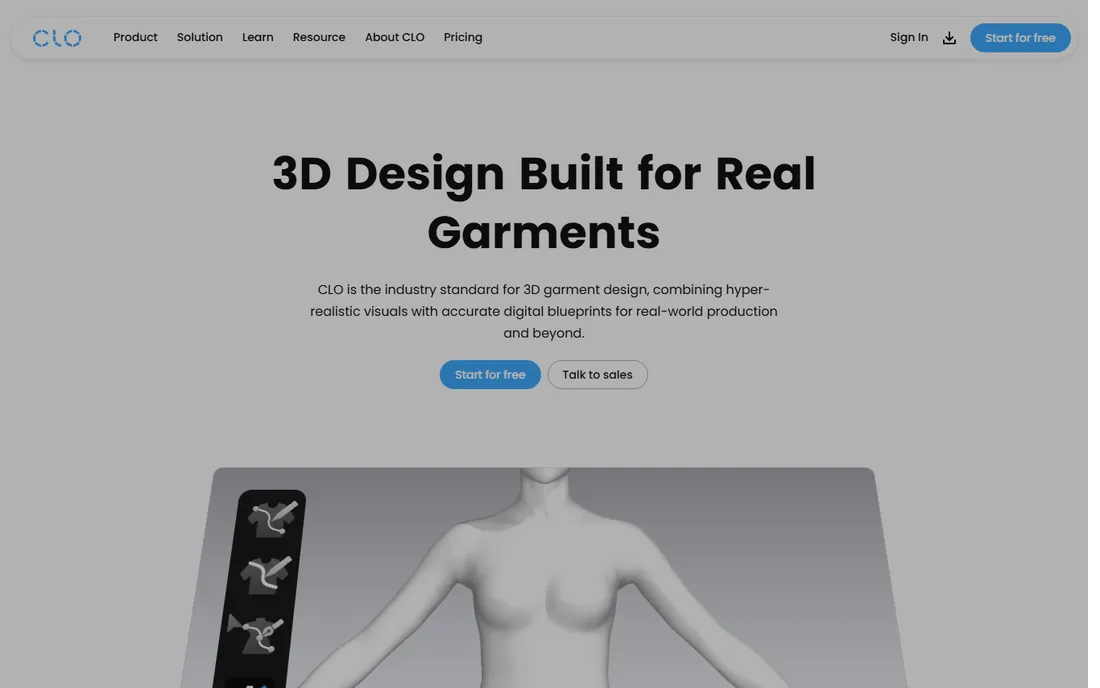
CLO 3D is where most designers meet 3D fashion. You draft or import 2D patterns, sew them virtually, and watch the garment drape on a customizable avatar with fabric-specific physics. Fit maps show exactly where a garment pulls or sags, which means fewer physical samples shipped back and forth to factories. For independent designers and small brands, the $50-a-month individual plan makes professional 3D sampling reachable without an enterprise budget.
The program is honest about what it is not. It will not replace a production pattern system like AccuMark for industrial grading and marker making, and heavy scenes want a strong GPU. But for design development, client presentations, and cutting sample rounds from five to two, nothing else in the category is as accessible.
What we like- True 2D pattern to 3D drape workflow in one program
- Transparent individual pricing
- Strong fabric simulation with fit maps
Watch out for- Demanding on computer hardware for complex garments
- Pattern-making depth trails dedicated CAD systems
Starting priceSee website
Free planNo
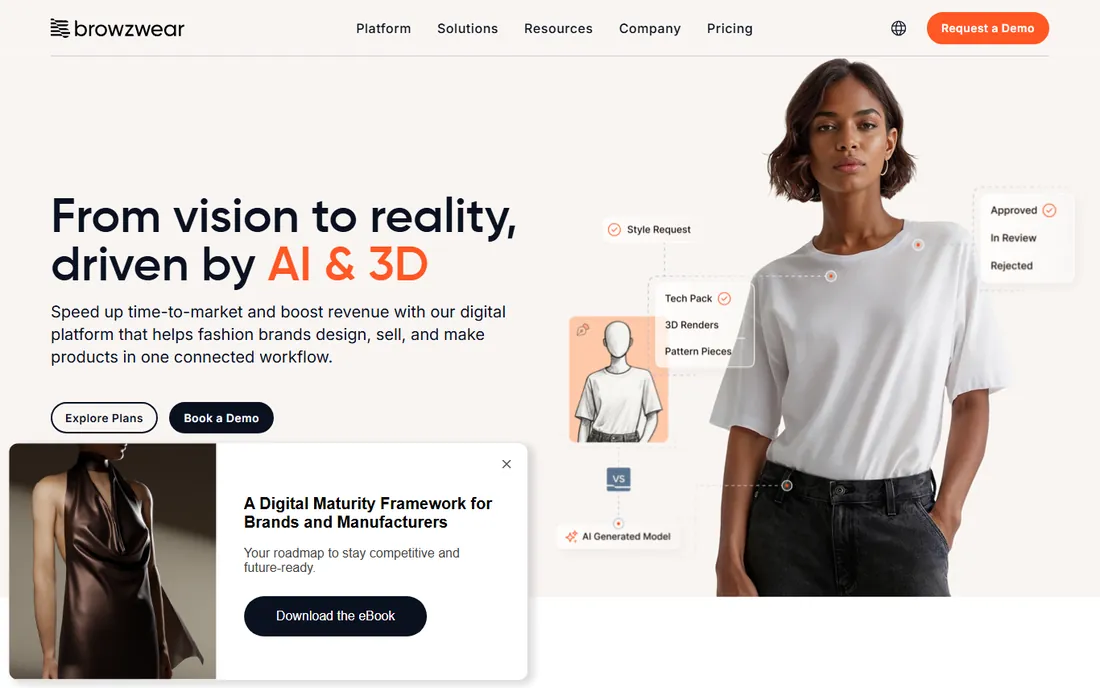
Browzwear comes at 3D from the factory side rather than the sketch side. VStitcher creates digital garments accurate enough that brands approve production from the 3D sample, not a sewn one. That accuracy is the whole pitch: when the 3D twin matches the physical garment, you can skip sample rounds entirely and move costing, fit approval, and even e-commerce imagery onto the digital asset.
This is enterprise software in price and posture. Expect a sales process, implementation support, and training rather than a download-and-go trial. Independent designers will find CLO friendlier and cheaper. Brands producing at volume, where each eliminated sample round saves thousands, are the ones who get the return.
What we like- Built for true-to-life digital twins used in actual production decisions
- Strong PLM and tech pack connections
- Trusted by large global brands
Watch out for- Quote-based pricing with no public numbers
- Steeper learning curve for beginners
Starting priceSee website
Free planNo
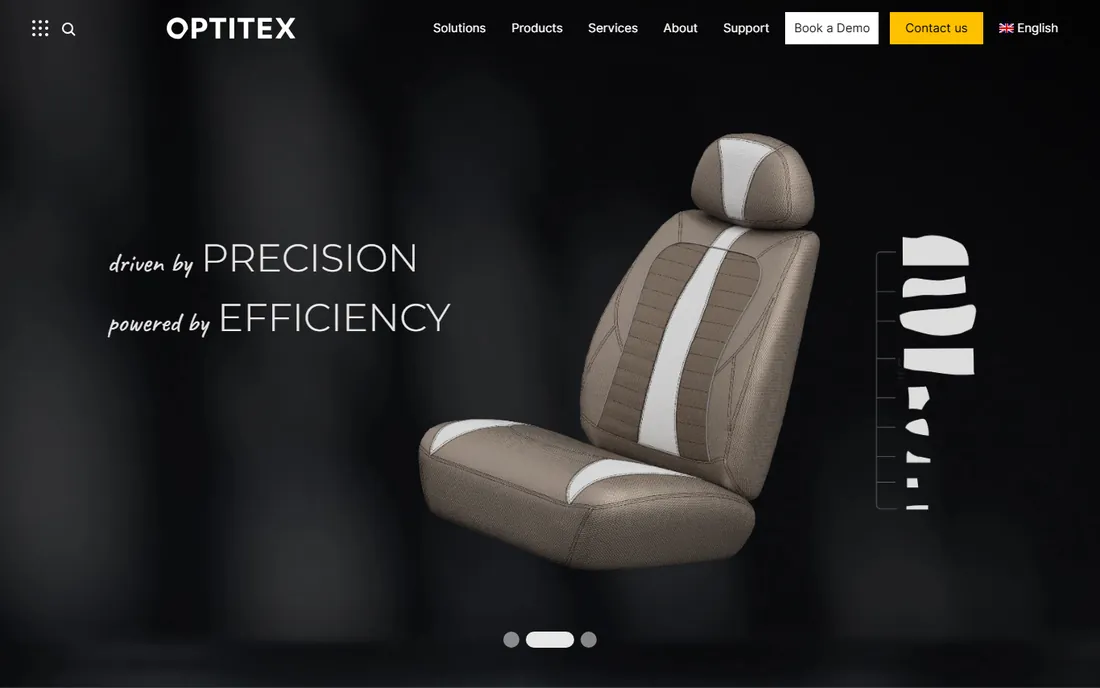
Optitex has been in pattern rooms for over three decades, and its strength is the complete path from pattern draft to production. The 2D CAD handles pattern creation, multi-size grading, and nesting for marker efficiency, while the 3D side visualizes the garment without sewing a sample. For manufacturers, that single-vendor coverage from design through production planning is the appeal.
Ownership has changed: Optitex now operates independently inside FOG Software Group, part of Constellation Software, and merged with NedGraphics in 2024. The product line continues under the Optitex name. Buyers should evaluate it against Gerber AccuMark and Tukatech on grading depth and marker efficiency, where production teams live or die, rather than on 3D rendering flash.
What we like- Combined 2D pattern CAD and 3D visualization in one suite
- Strong grading and marker-making tools
- Decades of industry installations
Watch out for- Interface feels dated next to newer 3D tools
- Pricing is entirely quote-based
#4
Gerber AccuMark (Lectra)
Best for: Industrial pattern making at scale
Visit lectra.com
Starting priceSee website
Free planNo
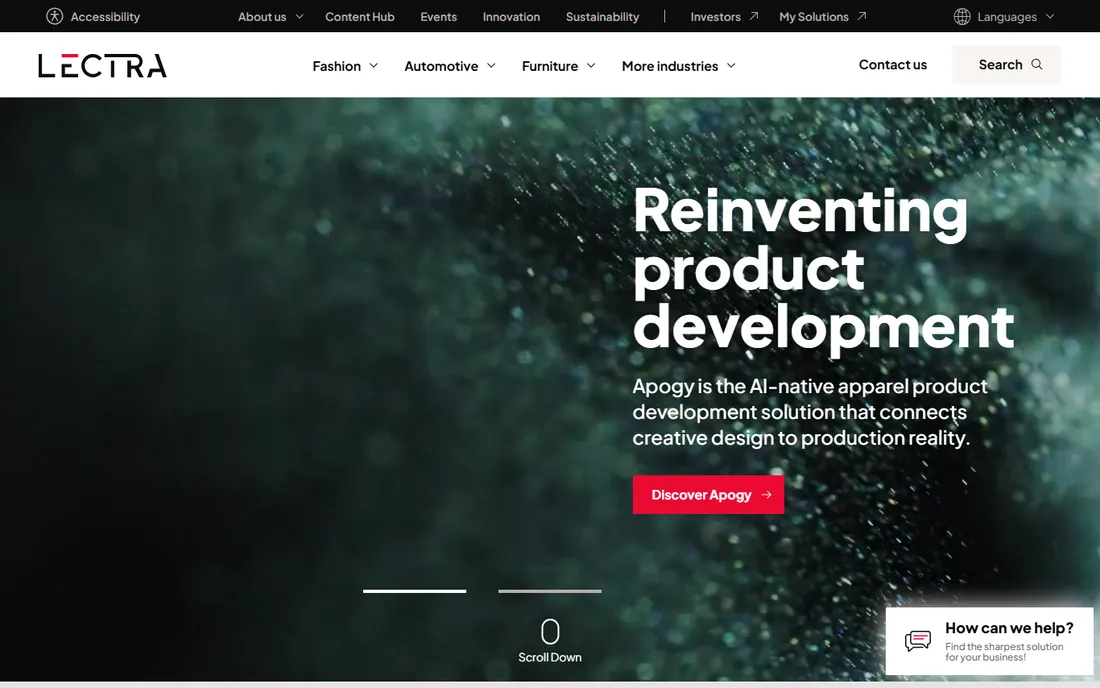
AccuMark is the pattern system that most large-scale apparel production runs on. Its grading, marker making, and production planning tools are the benchmark the industry measures against, and it connects directly to automated cutters in the cutting room. When a factory says "send the marker," this is usually the software that made it. Lectra acquired Gerber Technology in 2021, and AccuMark continues as a Lectra product.
This is not design software in the sketching sense, and it is not priced for hobbyists. Implementation involves training, and often new hardware. But for manufacturers and technical design teams producing at volume, AccuMark's precision in grading and fabric utilization pays for itself in material savings. Evaluate it on marker efficiency and throughput, not on how pretty the 3D looks.
What we like- Industry-standard pattern design, grading, and marker making
- Deep integration with cutting room hardware
- Massive global user base
Watch out for- Enterprise pricing and training requirements
- 3D capabilities trail dedicated 3D design tools
#5
Tukatech (TUKAcad)
Best for: Affordable pattern CAD for small manufacturers
Visit tukatech.com
Starting priceSee website
Free planNo
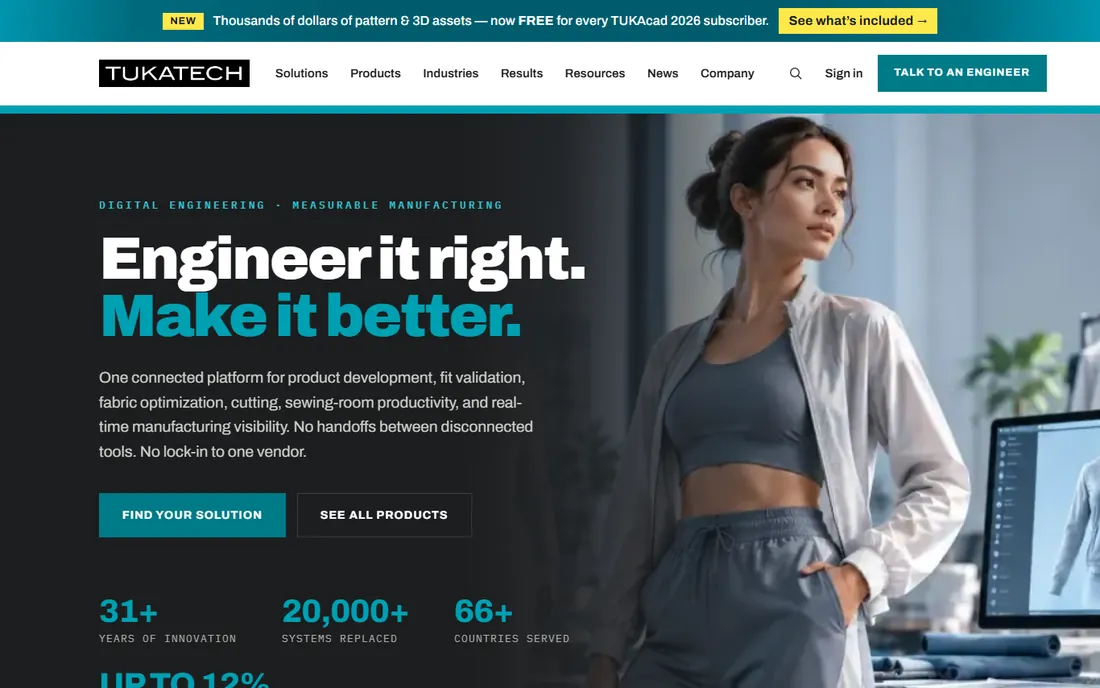
Tukatech built its business serving the manufacturers that Gerber and Lectra price out. TUKAcad covers the real production jobs, pattern drafting, grading, and marker making, in a package aimed at small factories and independent pattern makers. Cloud-based options mean you are not buying a workstation-class PC just to run CAD.
The trade-off is ecosystem. Fewer pattern makers learn Tukatech in school, so hiring trained operators is harder, and some large retail buyers specify Gerber or Lectra file formats in their vendor requirements. Check that your customers accept the file formats before committing. For small manufacturers doing their own production patterns, the value is strong.
What we like- Full pattern making, grading, and marker tools at a lower price point
- Cloud-based options reduce hardware needs
- Aimed at smaller businesses
Watch out for- Smaller ecosystem of trained operators than Gerber or Lectra
- Less brand recognition with large retailers
Starting priceSee website
Free planNo
Style3D is the challenger in 3D fashion design, competing with CLO and Browzwear on simulation quality and speed. Its pitch is iteration velocity: designers can drape, adjust, and re-render garments quickly, which shortens the design review loop. Brands building digital sampling programs evaluate it alongside the bigger names, particularly in Asia where its presence is strongest.
The smaller user community means fewer tutorials, fewer freelancers who know the software, and thinner third-party resources than CLO enjoys. Pricing is quote-based, so individuals cannot just sign up and start. Worth a serious look for brands standardizing on 3D sampling, especially if rendering speed is the bottleneck in your current workflow.
What we like- Fast 3D simulation and rendering for design iteration
- Growing adoption among brands digitizing sampling
- Handles fabric physics credibly
Watch out for- Smaller community and learning resources than CLO
- Enterprise-leaning sales model
Starting priceSee website
Free planNo
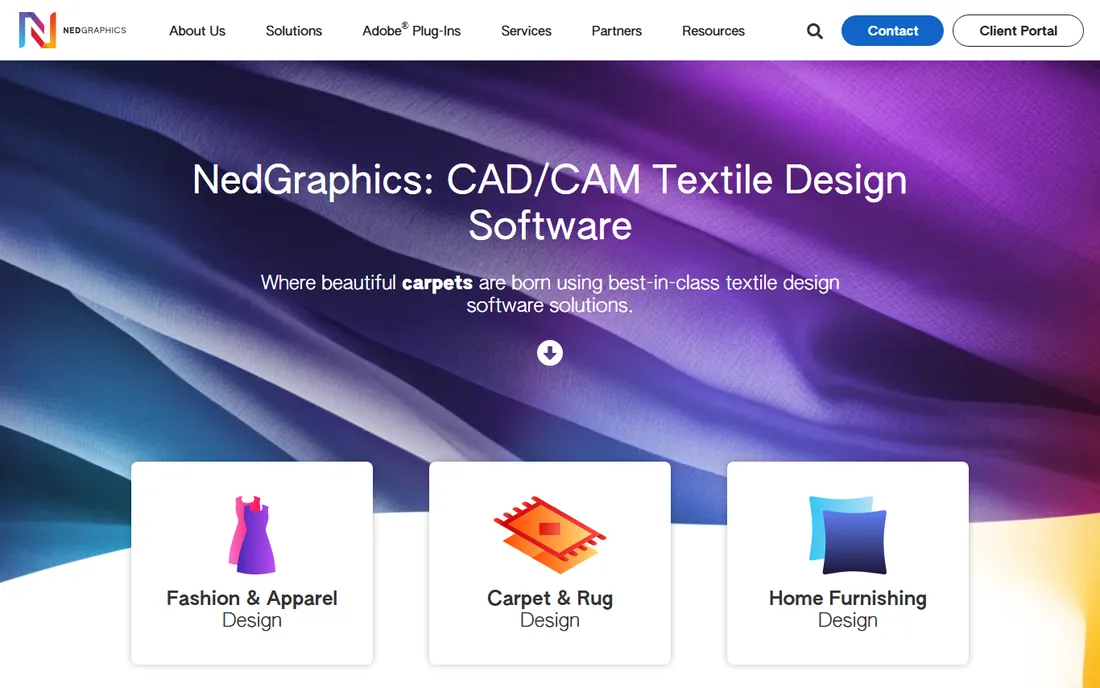
Before a garment exists, somebody designs the fabric. NedGraphics is the specialist for that step: textile print design, weave structures, knit patterns, and colorways, with output ready for production. Print designers in fashion and home furnishings have used it for decades because generic illustration tools do not understand repeat patterns, color separation, or loom constraints.
Note the corporate picture: NedGraphics merged with Optitex under FOG Software Group in 2024, and both operate under shared ownership. The products continue, but buyers should ask about the combined roadmap. If your work is garment construction rather than textile design, this is not your tool. If you design prints and fabrics, few alternatives understand the job as well.
What we like- Purpose-built for textile print, weave, and knit design
- Production-ready artwork output
- Deep industry specialization
Watch out for- Niche focus means it covers only the textile step
- Now merged with Optitex, so watch the product roadmap
#8
Adobe Illustrator
Best for: Fashion illustration and tech packs
Visit adobe.com
Starting price$22.99/month
Free planFree trial
Nearly every fashion designer already knows Illustrator, because it is where sketches, flats, and tech packs get drawn. Technical designers build spec sheets with construction details, measurements, and callouts that factories actually follow. The plugin and template ecosystem for fashion is unmatched, and files move cleanly into Photoshop for presentation boards.
Be clear about its limits: Illustrator draws the garment, it does not draft the pattern or simulate the drape. Pair it with a CAD or 3D tool for production work. The $22.99-a-month single-app plan is the honest price for professionals; students and teams should check Adobe's education and team pricing. For the illustration and communication layer of apparel design, it remains the default.
What we like- Industry standard for fashion flats and technical sketches
- Enormous template and brush ecosystem
- Integrates with Photoshop for presentations
Watch out for- Not a pattern-making tool, despite what some lists claim
- Subscription cost adds up
Starting priceSee website
Free planFree trial
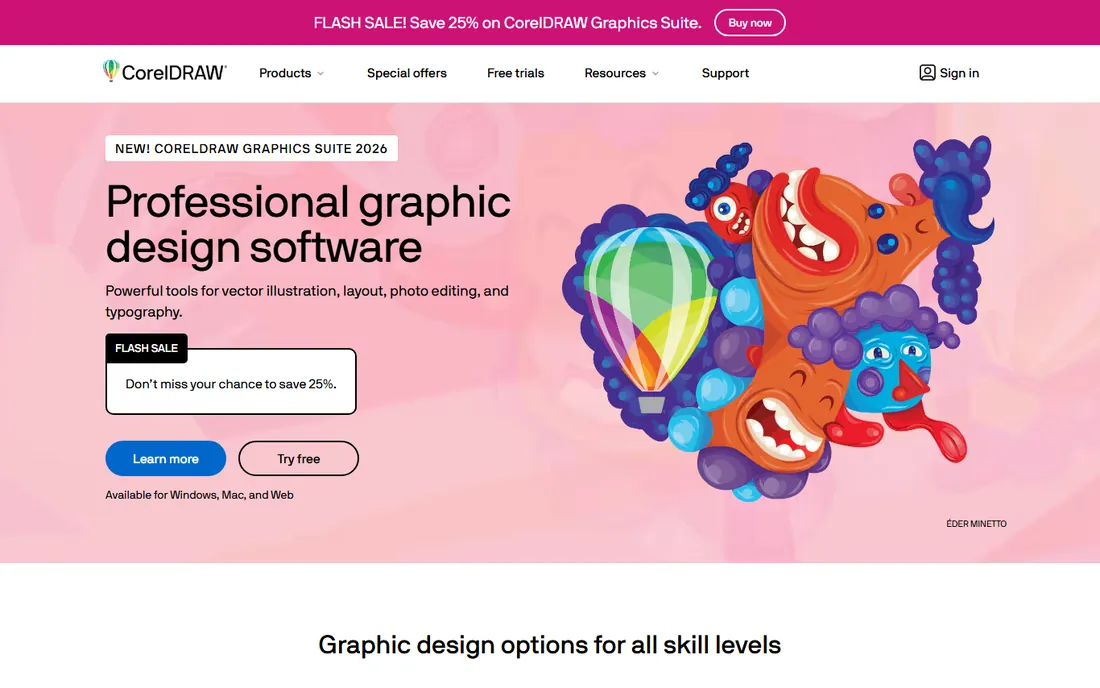
CorelDRAW serves the graphics side of apparel: screen print designs, embroidery artwork, and branding applied to garments. Print shops and decorators have used it for decades, and its typography and vector effects suit bold graphic work. Unlike Adobe's subscription-only model, CorelDRAW still sells a perpetual license, which appeals to shops that dislike renting software.
The fashion industry at large standardized on Adobe, so collaborating with design studios means managing file conversions. For in-house graphics, decorators, and print production, that matters less. Evaluate it on the artwork you produce, not on fashion illustration trends, and confirm the current perpetual versus subscription pricing before deciding.
What we like- Powerful vector tools with a one-time purchase option
- Strong for screen print and embroidery artwork
- Familiar to print shops
Watch out for- Smaller fashion-specific community than Illustrator
- File exchange with Adobe-centric studios needs care
2D vs 3D: which type do you actually need
This is the decision that matters most, so make it before comparing brands. 2D pattern CAD (AccuMark, Optitex, TUKAcad) drafts the flat pattern pieces that factories cut and sew. It is technical, precise, and production-focused. 3D design tools (CLO, VStitcher, Style3D) simulate the finished garment on a virtual body for design review and sampling. They are visual and iterative.
Most brands eventually need both, but start with the bottleneck. If sampling costs and lead times are the pain, start with 3D. If pattern accuracy, grading, and marker efficiency are the pain, start with 2D CAD. Illustration tools (Illustrator, CorelDRAW) and textile design (NedGraphics) sit alongside either path rather than replacing them.
What apparel design software actually costs
The category splits into two pricing worlds. Individual-friendly tools publish prices: CLO 3D at $50 a month and Adobe Illustrator at $22.99 a month let a freelancer start this week. Everything aimed at production, AccuMark, VStitcher, Optitex, Style3D, Tukatech, NedGraphics, is quote-based enterprise software where the price depends on seats, modules, and training.
Enterprise deals in this space typically run from a few thousand dollars a year for a single production seat to six figures for multi-site deployments with training and support. Always separate the software license from implementation: training pattern makers on a new CAD system is a real cost, and undertrained teams blame the software for what is really a skills gap. Ask vendors to quote training and onboarding separately so you can compare honestly.
How to buy without regret
A few practical checks separate good purchases from expensive shelfware in this category.
Match file formats to your supply chain
Your software must speak your factory's language. Ask your manufacturers which CAD formats they accept before you buy anything. A brilliant pattern system that exports files your factory cannot open is worthless, and conversion always loses something.
Test with a real garment
Never buy on a sales demo alone. Give each finalist the same real garment, a pattern, a fabric, a size run, and compare the outputs. Time the full loop from pattern to graded marker or from sketch to approved 3D sample. The differences that matter only show up in real work.
Budget for training, not just licenses
Pattern CAD and 3D simulation are skilled trades. A new system without training produces slow, frustrated operators and a quiet return to the old software. Vendors sell training because it is usually necessary; skipping it is the most common reason implementations fail.
How we chose
We mapped the apparel design category into its real segments, 3D design and sampling, 2D production pattern CAD, textile design, and illustration, and picked the established leaders in each. We verified current ownership and product status, including Lectra's acquisition of Gerber and the FOG-Optitex combination, through vendor announcements and trade press. We checked pricing pages for every published price and marked the rest as See website. User sentiment came from G2, Capterra, Reddit's fashion design communities, and pattern-maker forums, where working professionals are blunt about what production software actually does.
Frequently asked questions
What is the best software for designing clothes?
For 3D garment design and virtual sampling, CLO 3D is the most accessible professional choice. For production pattern making, Gerber AccuMark and Optitex lead. For sketching and tech packs, Adobe Illustrator remains the standard. The right answer depends on whether you need design, production, or both.
Can apparel design software replace physical samples?
Partially. 3D tools like CLO and VStitcher can eliminate several sample rounds for fit and design approval, and some brands approve production from digital twins. Most still sew at least one physical sample for final approval, especially for complex construction or new fabrics.
How much does apparel design software cost?
Individual plans start at $22.99 a month for Illustrator and $50 a month for CLO 3D. Production CAD systems are quote-based, typically starting in the low thousands per seat per year and rising with training and support. Always budget training separately.
Do I need 2D CAD if I have 3D design software?
For production, usually yes. 3D tools visualize and validate, but factories cut from 2D patterns with grading and markers. Some 3D tools generate 2D patterns, but production teams generally trust dedicated CAD for the final marker.
What file formats matter in apparel CAD?
DXF is the common exchange format for pattern data between systems. Ask your manufacturers which versions and formats they accept, and test a round trip, export from your system and import into theirs, before committing to a purchase.
Is Adobe Illustrator enough for fashion design?
For illustration, flats, and tech packs, yes. For pattern drafting, grading, or 3D sampling, no. Most professional workflows pair Illustrator with a CAD or 3D tool rather than asking one program to do everything.
Sources we checked (12)
- https://www.clo3d.com
- https://www.clo3d.com/en/plans
- https://browzwear.com
- https://www.optitex.com
- https://www.lectra.com
- https://www.tukatech.com
- https://www.style3d.com
- https://www.nedgraphics.com
- https://www.adobe.com
- https://www.coreldraw.com
- https://www.textileworld.com/textile-world/knitting-apparel/2021/06/lectra-completes-the-acquisition-of-gerber-technology/
- https://www.prweb.com/releases/optitex-acquired-by-fog-software-group-a-division-of-constellation-software-inc--825085989.html
Is your product missing or out of date?
We review this list regularly. Vendors can request a listing, send updated pricing or ask about featured placement.

Shihab Mia · Founder, Rankite
Shihab has spent more than a decade helping SaaS and e-commerce brands grow through search. He writes Rankite's software buying guides from pricing pages, documentation and public user reviews. More about Shihab.